KIA PV5 is more revealing as a question than as a product
Kia’s PV5 is the brand’s first serious Platform Beyond Vehicle statement, and WRD’s five-part reinterpretation exposes something the official launch material only hinted at: this van’s real strength is not a single body style, but the elasticity of the E-GMP.S architecture beneath it. The source project matters because it does not treat the PV5 as a styling exercise. It treats it as a cultural and technical vessel, then tests that thesis across five very different use cases, from a Kyoto taxi to a fictional high-performance “SuperPBV.” That is a sharper lens than most concept-car showcases, and it lands at a moment when dedicated EV platforms are redefining vans just as decisively as Neue Klasse is redefining BMW’s future battery packaging and efficiency in the BMW iX3 Neue Klasse.
| Model | Base Architecture | Vehicle Type | Known Production Role | Concept Themes in WRD Project |
|---|---|---|---|---|
| Kia PV5 | E-GMP.S | Electric PBV / van | Passenger, Cargo, WAV-oriented modular applications | MK Taxi, A-Team tribute, Beach/Nomad, Dakar Service, SuperPBV |
| Kia PV5 WAV | E-GMP.S | Wheelchair-accessible electric taxi/van | ADA-compliant mobility solution developed with BraunAbility | Real-world proof point behind MK Taxi concept |
| Kia EV6 GT | E-GMP | High-performance electric crossover | Production GT halo for Kia EV lineup | Visual and philosophical basis for SuperPBV |
Kia has already confirmed that the PV5 range is intended for multiple top-hat configurations, including Passenger, Cargo and WAV derivatives, and that alone separates it from legacy van conversions. A purpose-built EV van gains packaging advantages immediately: flat floor, cleaner ingress/egress, easier seat-rail logic, and a more coherent electronics architecture for commercial upfits. WRD understood that and moved beyond decals, adding roof racks, ride-height changes, wide fenders, diffusers and solar integration to show how hardware and identity can evolve together.
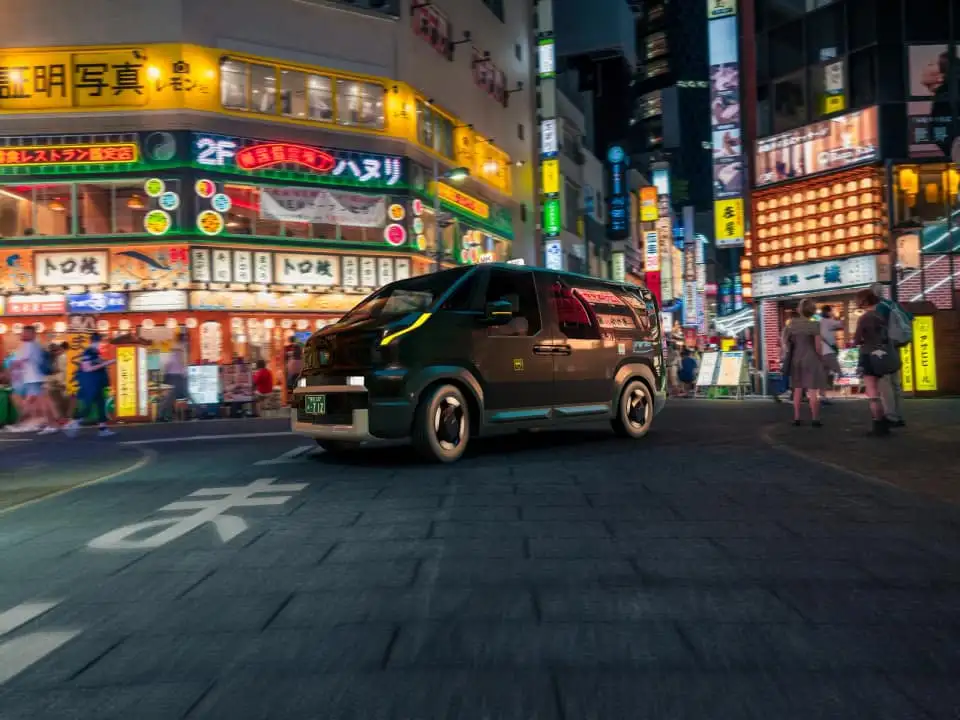
The MK Taxi concept is the least fictional and the most important
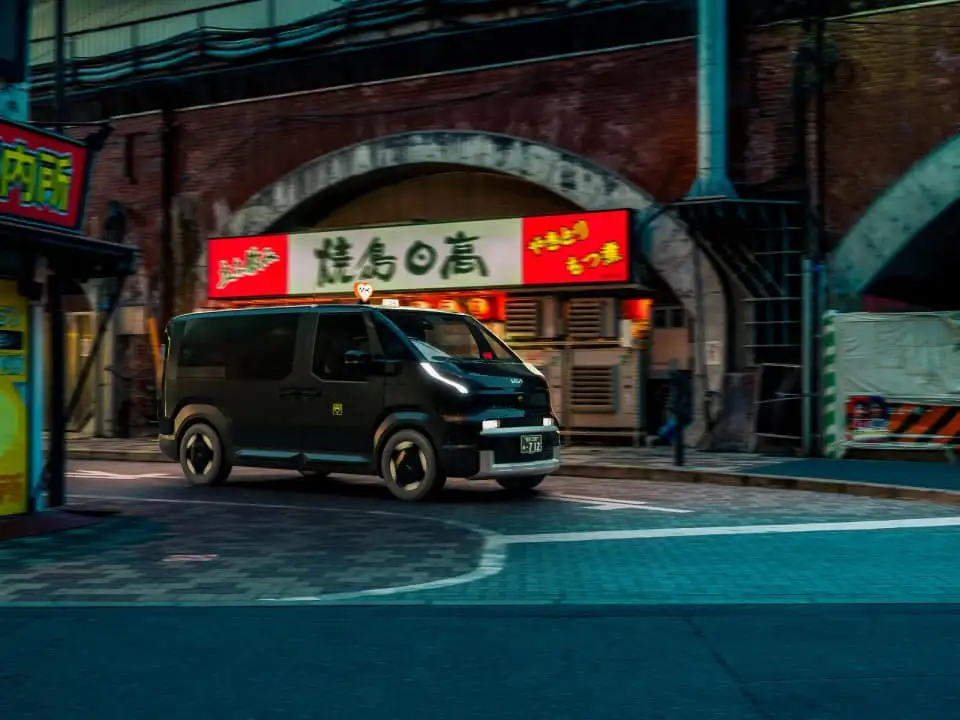
WRD’s strongest concept is the MK Taxi because it begins with a real industrial case, not nostalgia. Kia showed the PV5 WAV at the 2025 New York International Auto Show as an ADA-compliant electric wheelchair-accessible vehicle developed with BraunAbility, and that immediately anchored the taxi idea in product planning rather than fantasy. The decision to map that onto Kyoto’s MK Taxi culture is especially smart because MK’s service image is built on precision, clean presentation and repeatable fleet discipline, three areas where EV vans with low floors and simplified drivetrains can outperform converted ICE rivals.
The cultural backstory adds unusual depth. MK Taxi was founded by a Japanese citizen of Korean descent, and the fleet’s relationship with Korean brands is not incidental. MK worked with Hyundai in the early 2000s and in 2022 ordered 50 IONIQ 5 Lounge units after Hyundai’s EV-only re-entry into Japan. That makes a Korean-branded electric van in MK specification feel less like a speculative render and more like a next chapter in a 20-plus-year procurement relationship. It also places the PV5 into the same broader mobility discussion now shaping robotaxi and urban fleet strategy, a subject explored from the autonomy angle in Waymo and Zoox’s San Francisco battle.
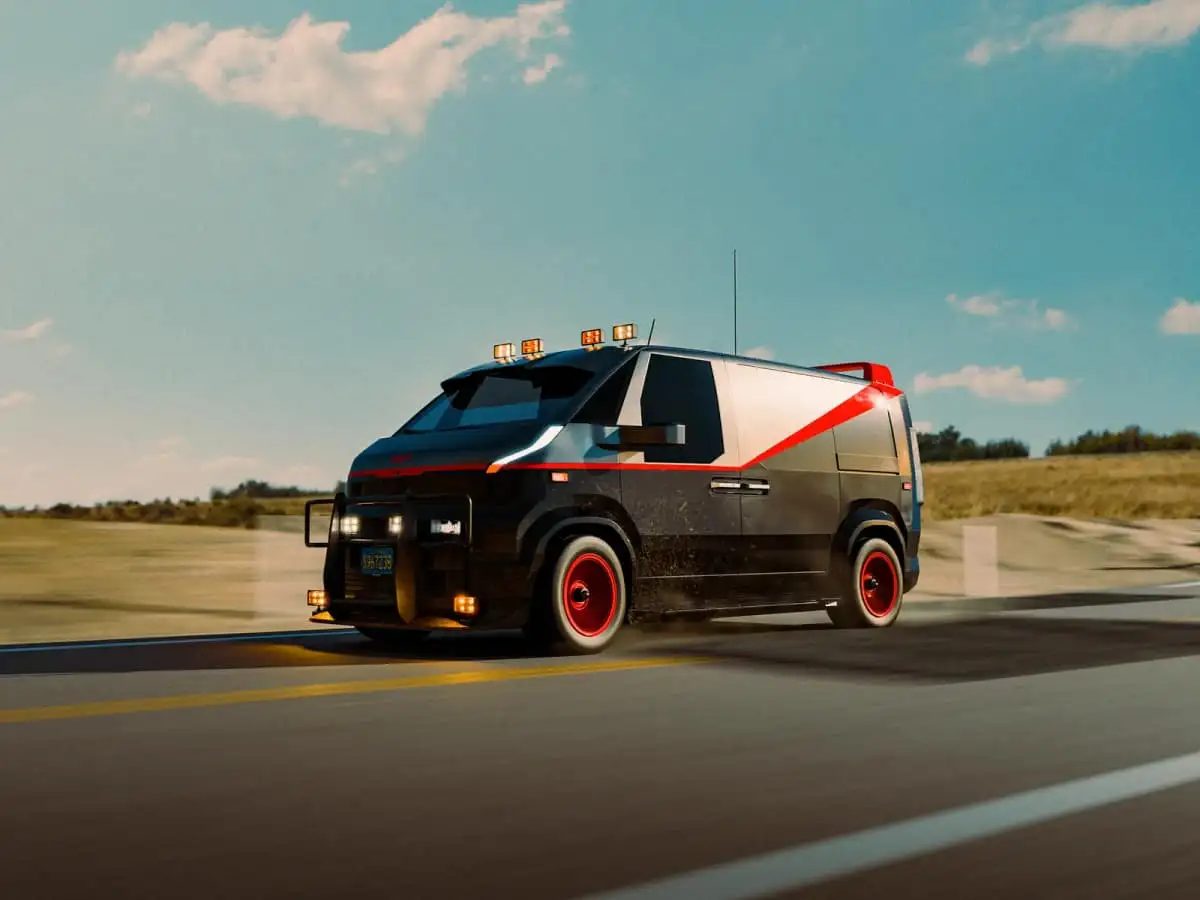
The A-Team tribute works because vans already have hero-car legitimacy
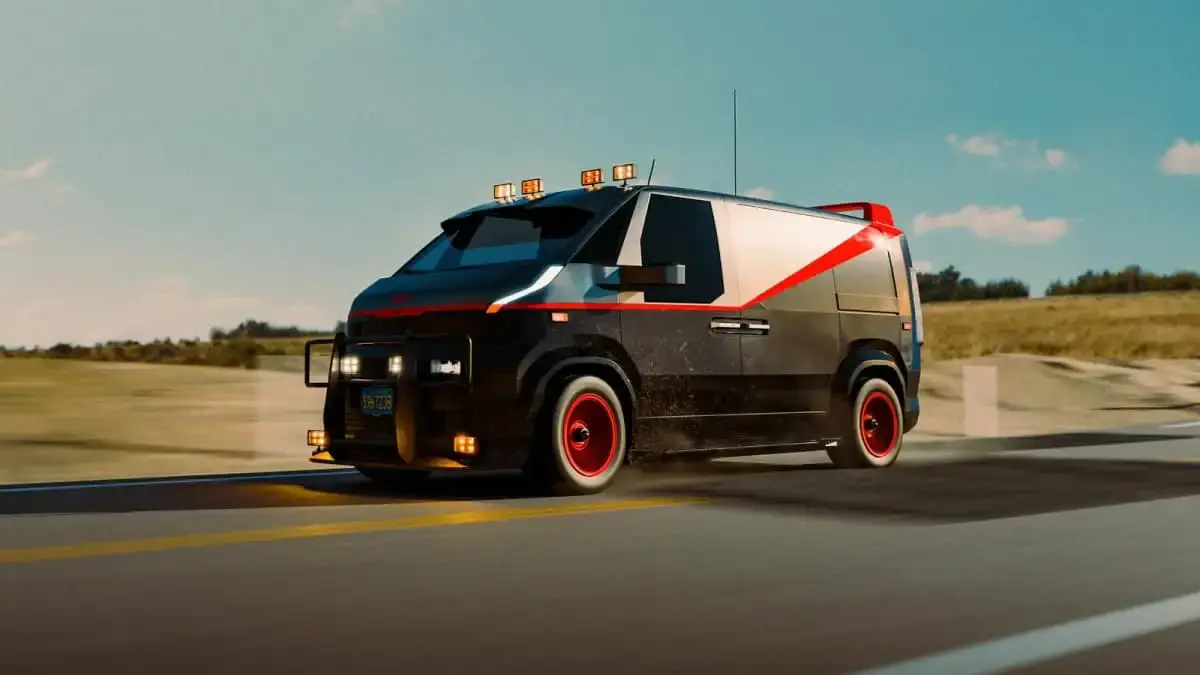
The A-Team PV5 could have been disposable fan service. Instead, it makes a historically valid point about van iconography. The 1983 GMC Vandura became one of television’s most recognizable vehicles with a black-and-grey body, red sweep stripe, red wheels, roof spoiler and auxiliary lighting package, and WRD recreated those details with unusual discipline, right down to the California plate S967238. The payoff is not just visual recognition. It reminds us that a full-size van became a global pop-culture protagonist decades before manufacturers treated vans as aspirational lifestyle objects.
That matters for Kia because brand stretch is now one of its most valuable assets. The company sells EVs, crossovers and GT derivatives with far more confidence than it did ten years ago, and the PV5 needs a cultural bridge into enthusiast consciousness. The A-Team concept provides exactly that, using a format that enthusiasts immediately understand: a screen-accurate tribute built on a next-generation electric base. Kia is already comfortable bending image with products like the Kia Vision Meta Turismo, and this van demonstrates that the same confidence can work below the halo-car level.
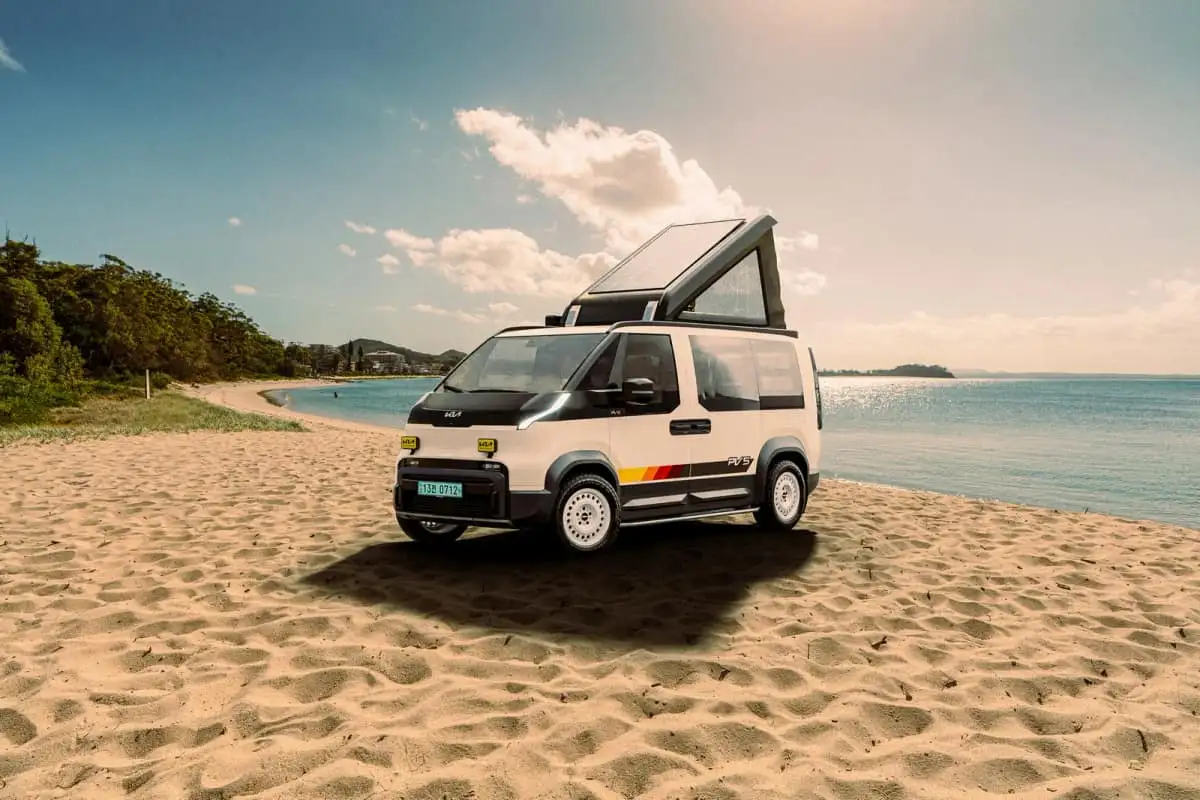
The Beach concept fixes the original hippie van’s environmental contradiction
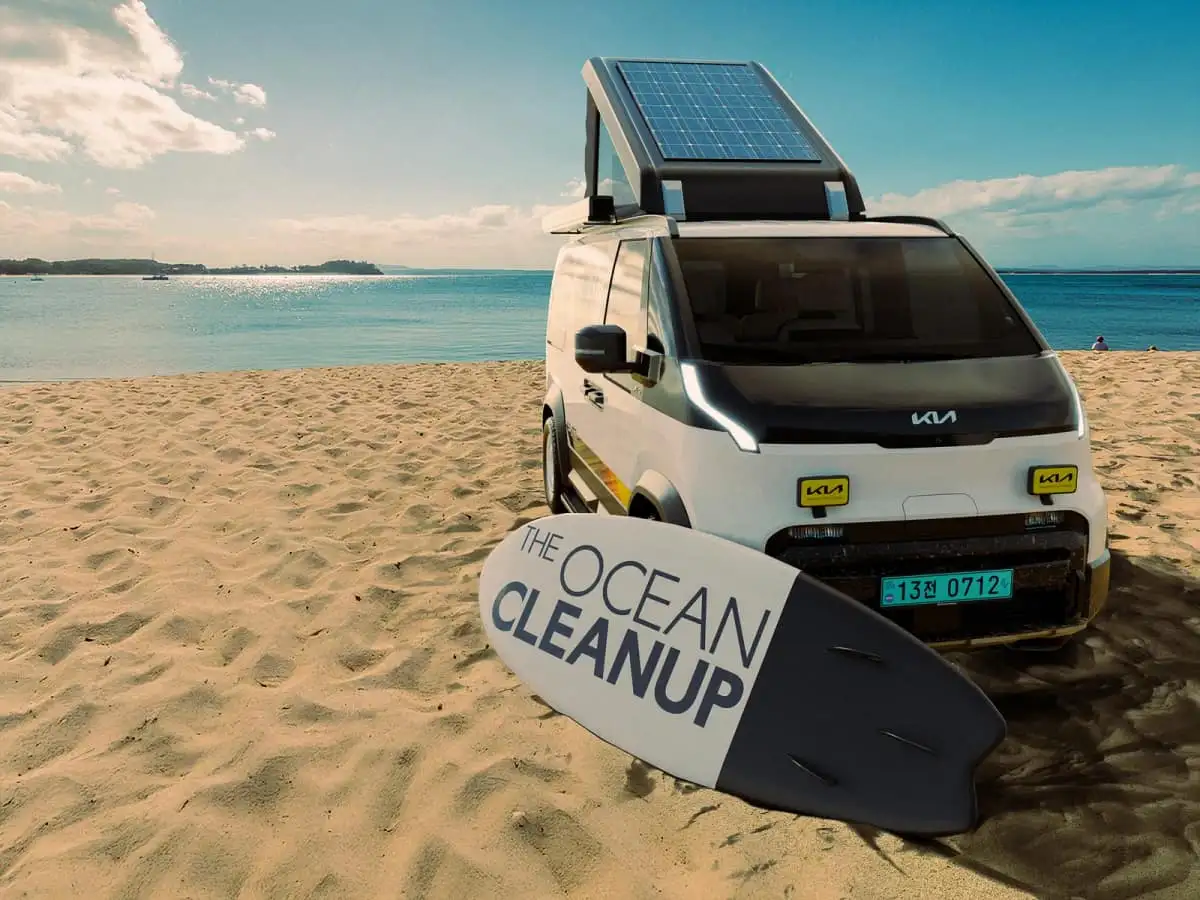
The Volkswagen Type 2 became a counterculture icon after Ben Pon’s 1950 sketch evolved into a rear-engined box with almost limitless social symbolism, but WRD is correct to identify the hypocrisy embedded in the original formula. A 1960s- or 1970s-era bus ran an air-cooled flat-four, emitted heavily, and offered none of the environmental cleanliness later owners projected onto it. Recasting that philosophy through an electric PV5 with a pop-up roof and integrated solar panel is more than aesthetic revisionism. It finally aligns the vehicle with the values that made the old bus meaningful.
The Korean framing through musoyu, or non-possession, is an unexpectedly precise addition because it ties mobility minimalism to a local philosophical tradition rather than generic surf-culture cliché. WRD’s off-white finish, sunset stripe, white steel wheels and accessory pack read plausibly marketable, especially as outdoor EVs are becoming more sophisticated in energy management, charging logic and V2L integration. Kia’s own environmental messaging through The Ocean Cleanup partnership gives this concept a stronger corporate anchor than most lifestyle specials ever receive. Similar product-story discipline is why the Volkswagen ID. Polo narrative works when it focuses on package logic instead of just retro sentiment.
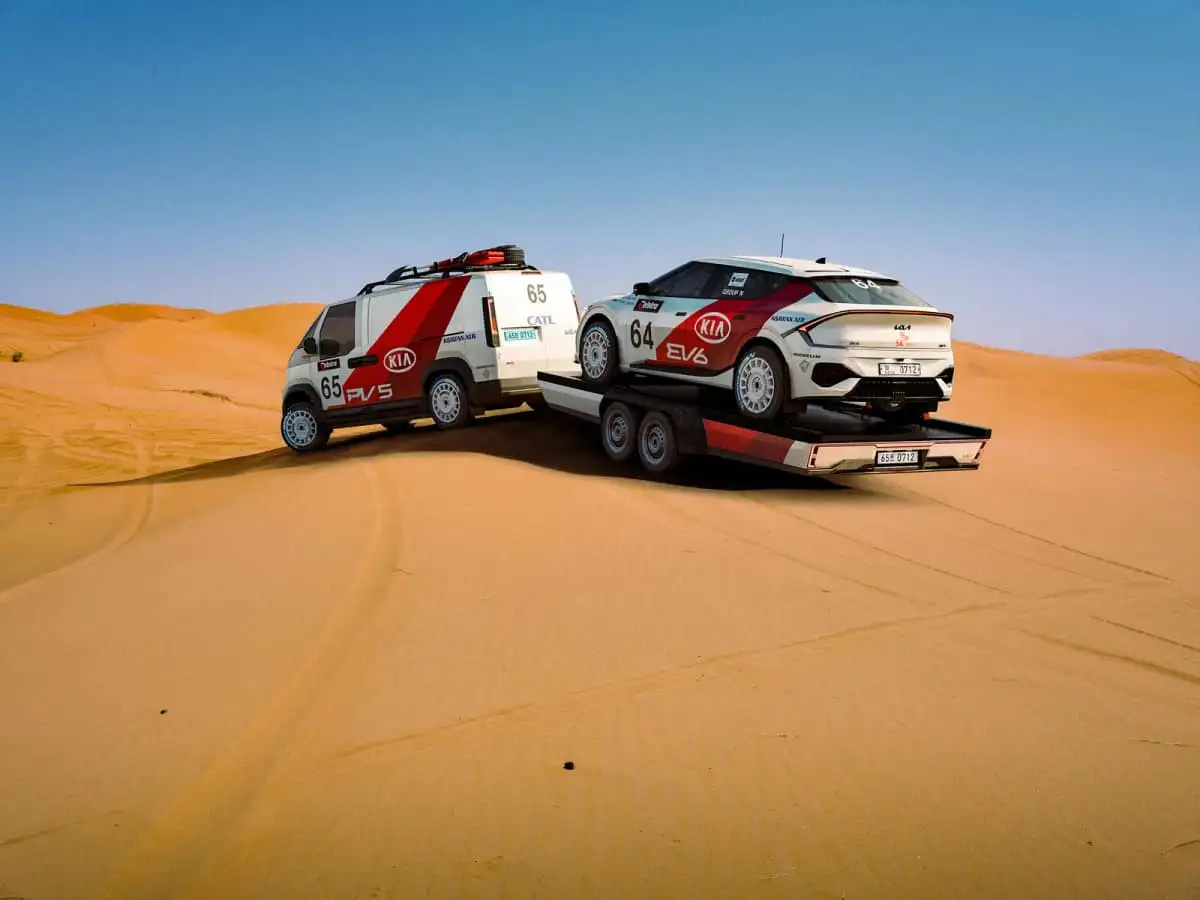
The Dakar Service livery rescues a neglected chapter of Kia competition history
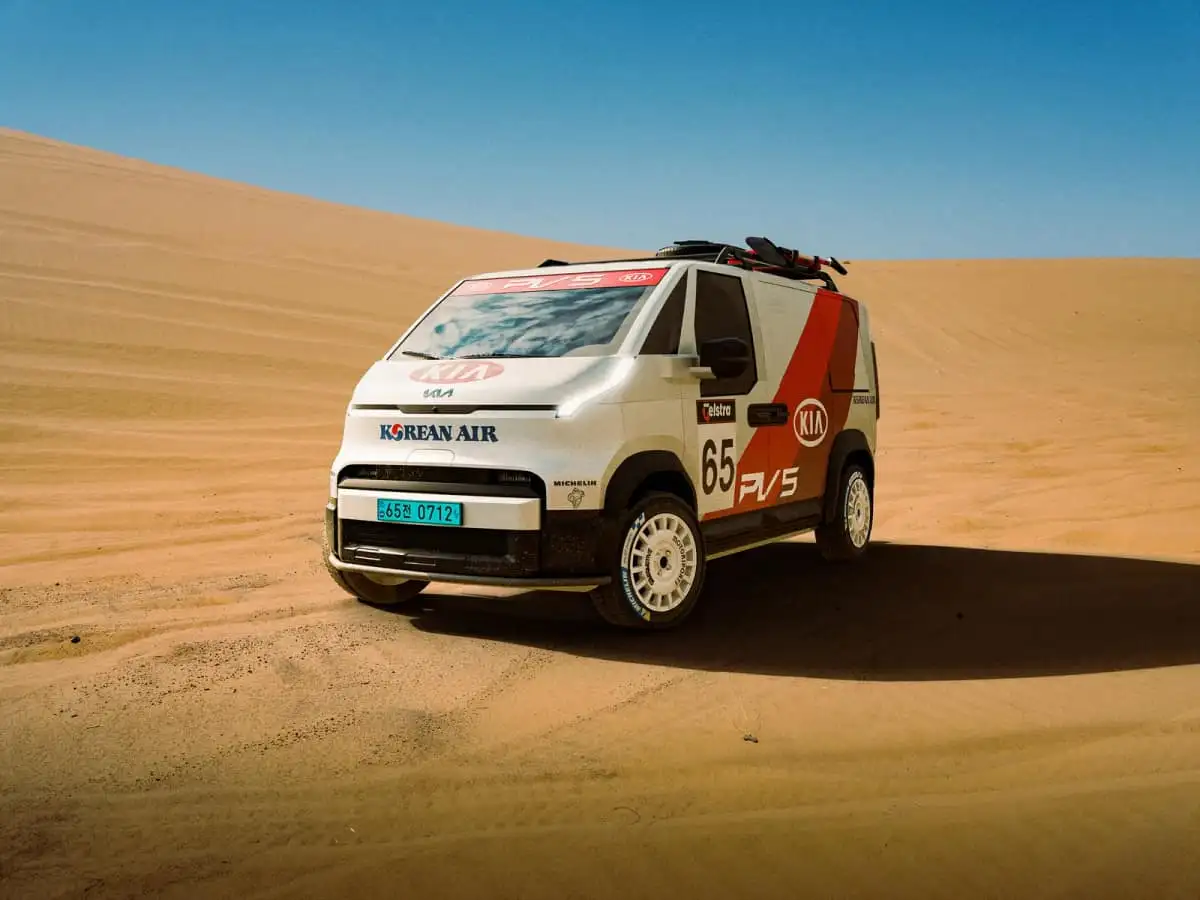
The most journalistically satisfying concept here is the PV5 Dakar Service because it excavates a nearly forgotten Kia motorsport thread. Kia entered the Paris-Dakar Rally with the Sportage in 1993 and campaigned the Sephia in FIA-sanctioned rallies during the mid-1990s under Kia Motorsport Korea, often wearing white paint, a bold red diagonal sweep, old-oval Kia branding, Korean Air sponsorship and Michelin tires. Outside Korea, many enthusiasts simply do not know this program existed, which makes the service-van reinterpretation richer than another race-car tribute.
WRD also gets the motorsport logic right. Factory race efforts are ecosystems built around support vehicles, spares carriers and recovery assets, not just headline cars. Giving the PV5 lifted suspension, Compomotive-style wheels, a spare-laden roof rack, jerry cans, trailer hardware and period-correct graphics makes it feel like a plausible 1996 support unit rather than a mood board. The retro Kia oval logo is a crucial call because it time-stamps the concept immediately. The visual result sits in the same nostalgia-through-accuracy zone that makes pieces like the Porsche 963 Apple livery resonate with racing audiences.

SuperPBV is outrageous, but not mechanically absurd
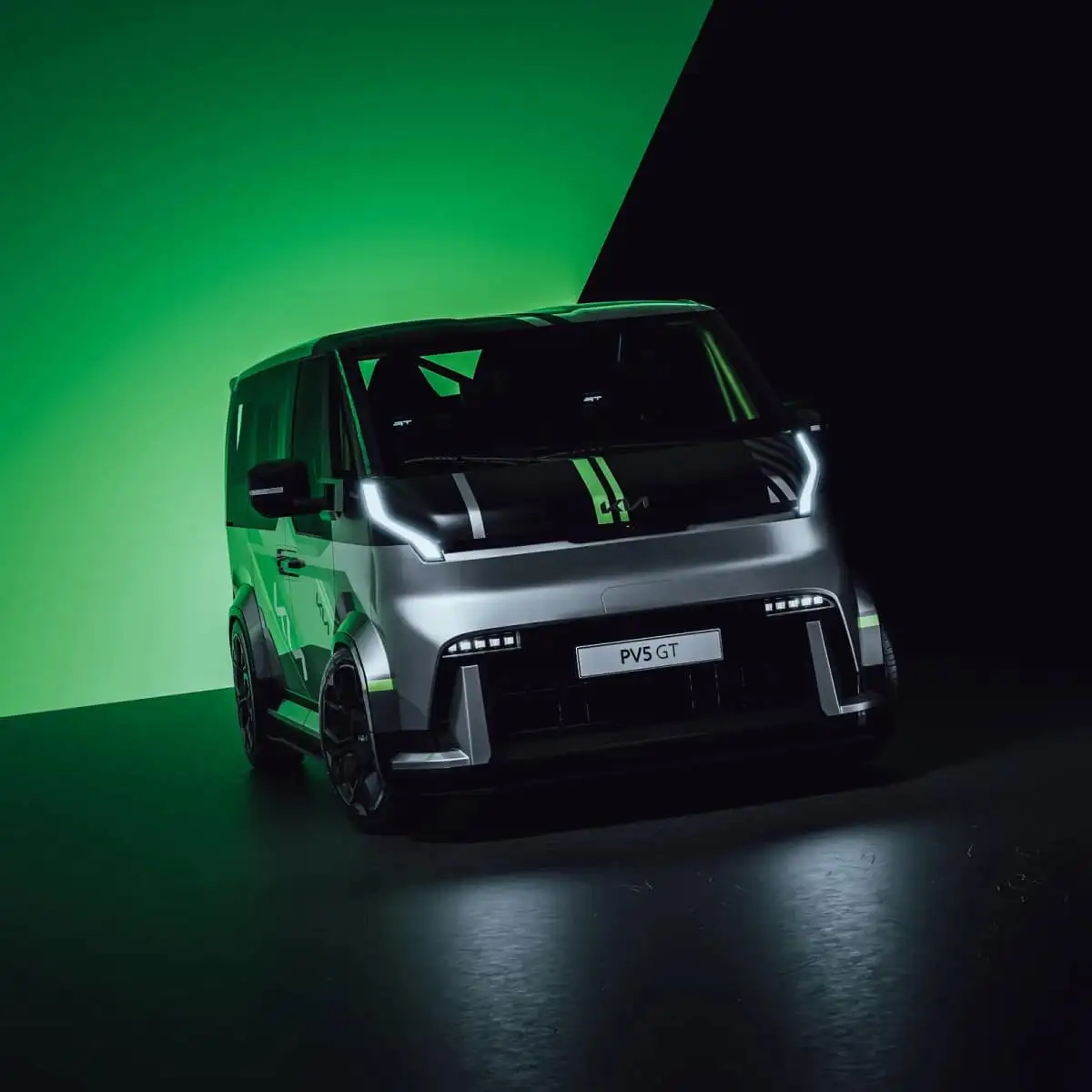
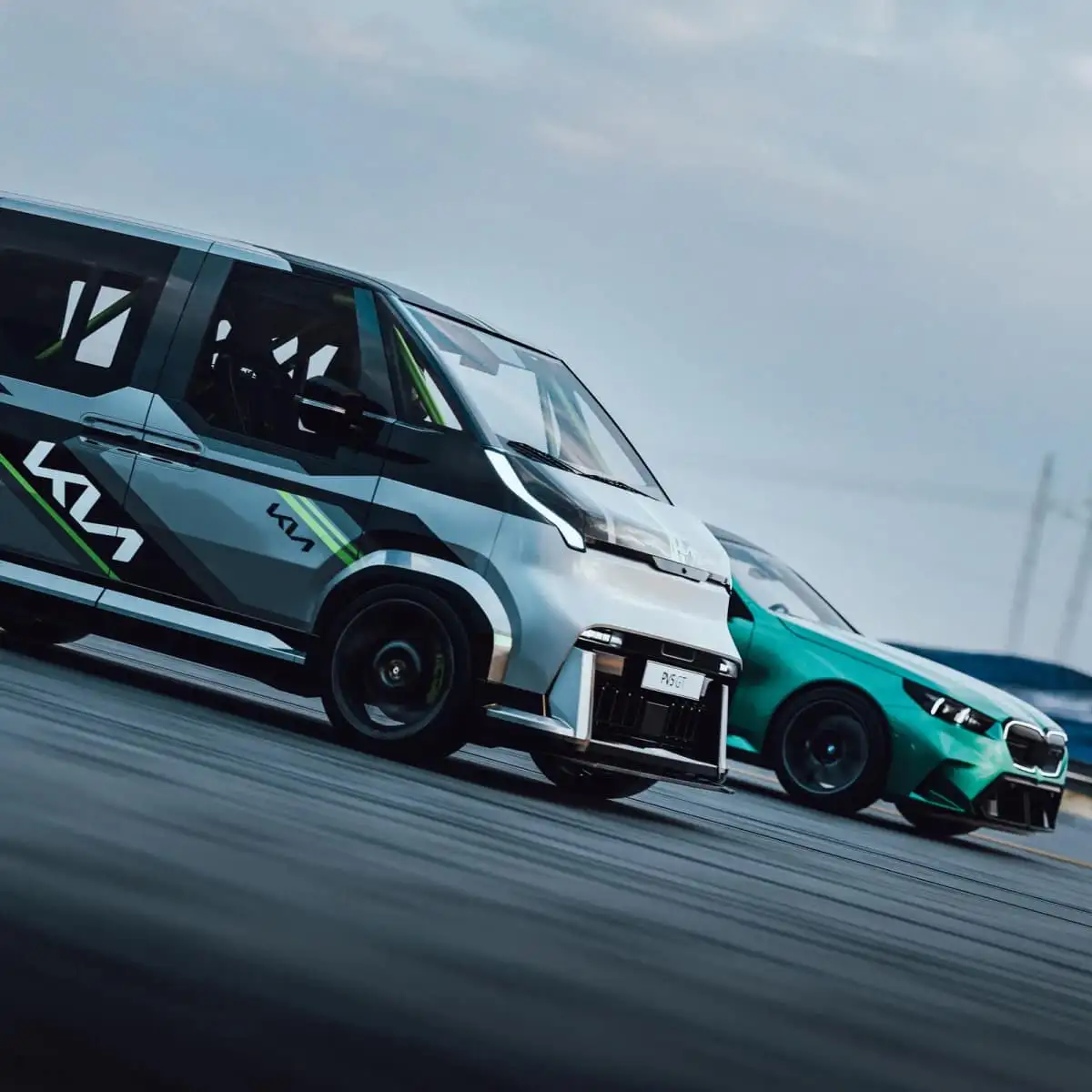
The final concept, called SuperPBV, is the most provocative because it exposes a gap in Kia’s future portfolio. The company already applies GT logic across much of its EV range, with the EV6 GT producing 430 kW and 740 Nm, enough to humble several combustion performance cars in Kia’s own drag-race marketing. Since the PV5 sits on E-GMP.S and Hyundai Motor Group shares motors, inverters and control modules across a wide component library, the idea of a genuinely fast PV5 is far less far-fetched than it sounds.
WRD wisely connects the van to a real genre. Ford’s first Supervan arrived in 1971, Supervan 3 used Cosworth F1-derived power in 1994, and the current electric SuperVan 4.2 has produced roughly 1,470 kW and dominated the Goodwood hillclimb. Renault’s Espace F1 from 1995 remains another reminder that van silhouettes can hide extreme engineering. Against that backdrop, a lowered PV5 with wider arches, a diffuser, neon-accented brake hardware and EV6 GT-inspired graphics does not feel silly. It feels overdue. Kia’s own willingness to pursue image-building oddities, seen in products like the Kia EV4 GT-Line, only strengthens the case.
These five concepts explain what PBV should mean
WRD’s project succeeds because every version starts from something real: a Japanese fleet relationship, a globally syndicated TV van, a counterculture template, a neglected Korean rally archive, and a half-century tradition of absurdly fast promotional vans. That grounding gives the exercise editorial weight. The PV5 does not have to become all five, but the fact that it can convincingly inhabit all five proves Kia’s PBV strategy has genuine dimensionality.
Most brands talk about modularity in software language and fleet procurement language. WRD translated it into enthusiast language without abandoning technical plausibility. That is difficult to do well. The result is one of the clearest arguments yet that the Kia PV5 is not merely a commercial EV. It is a new kind of automotive blank canvas, and one that may shape van culture more deeply than many people expect.