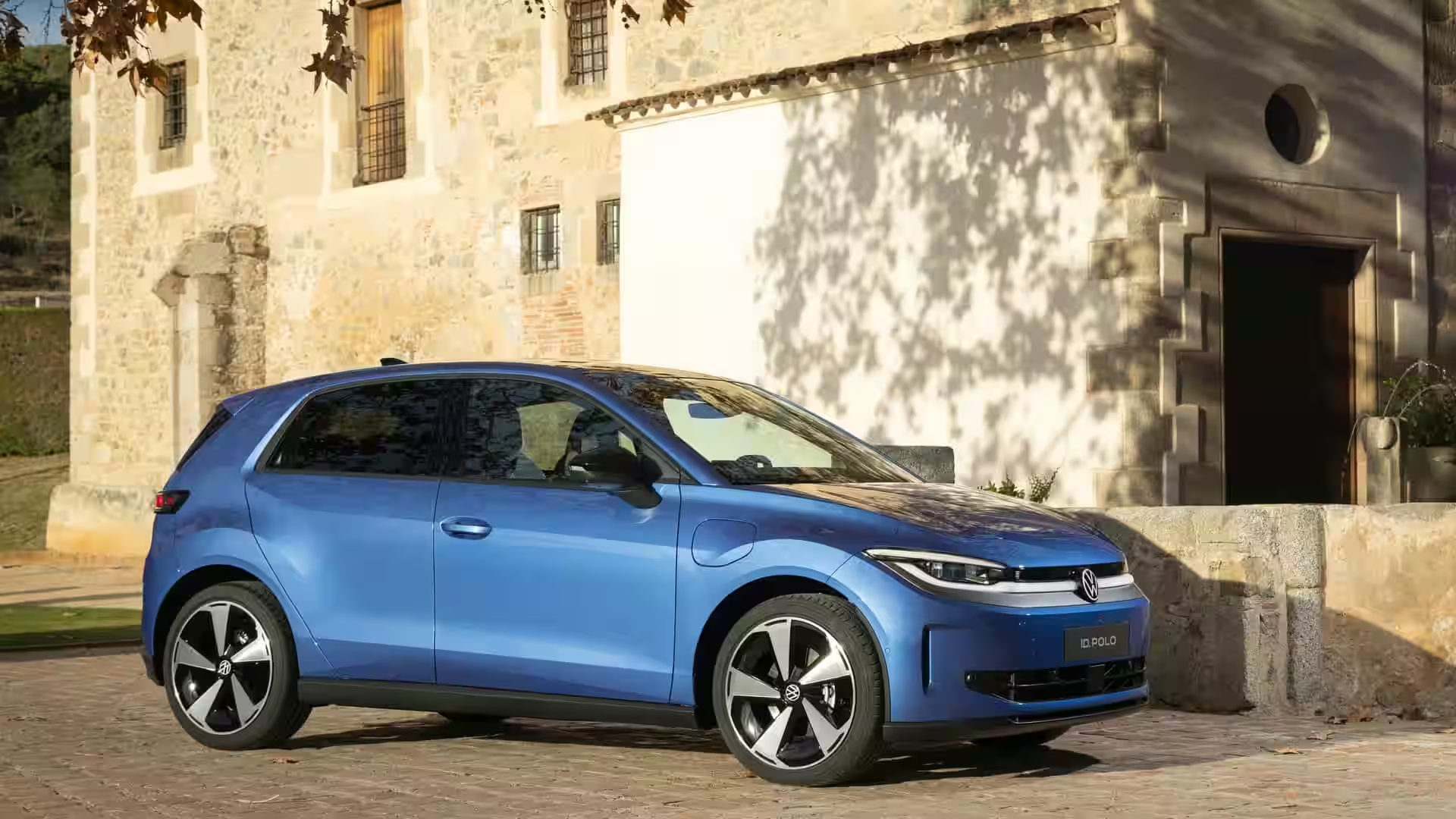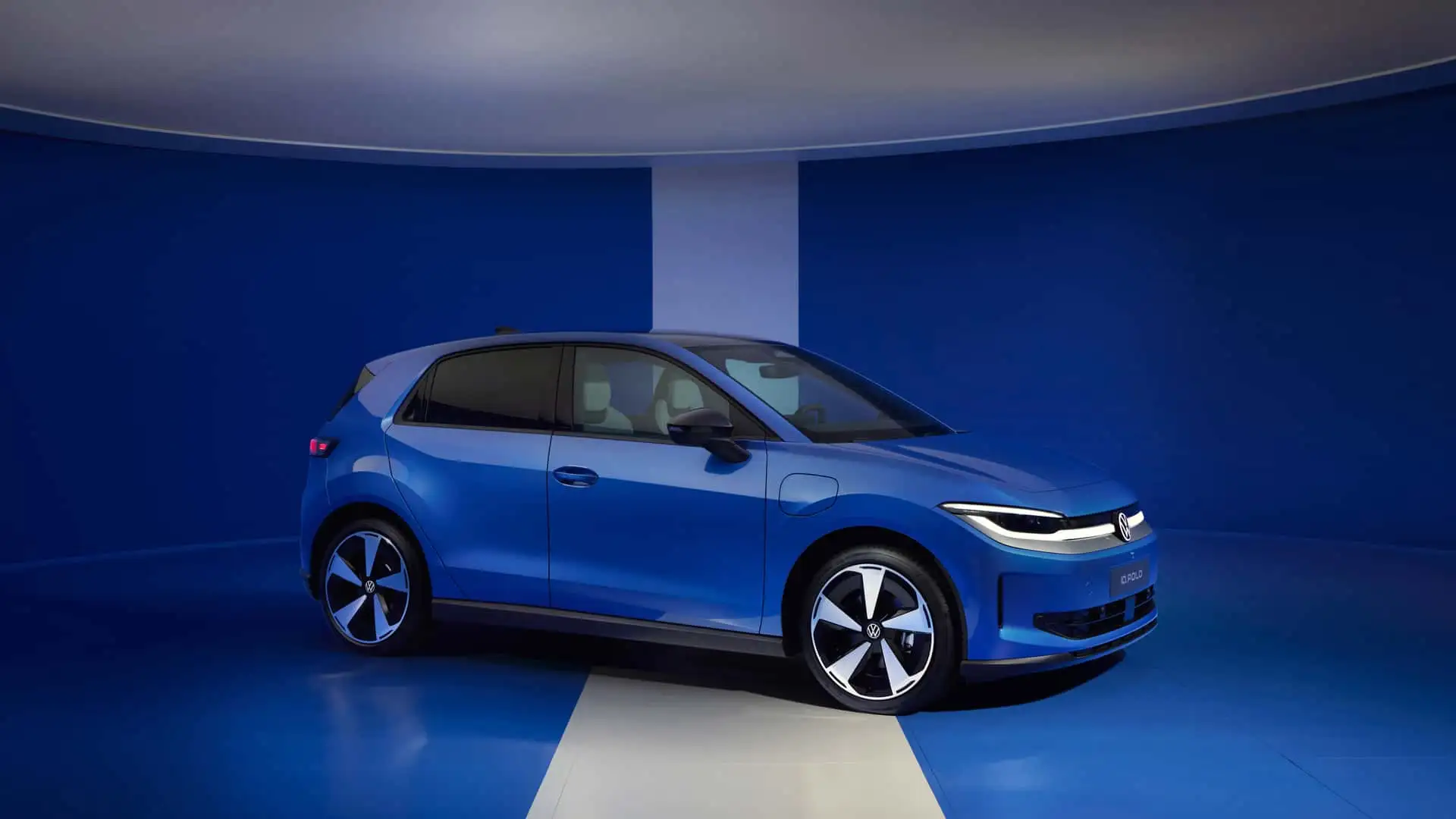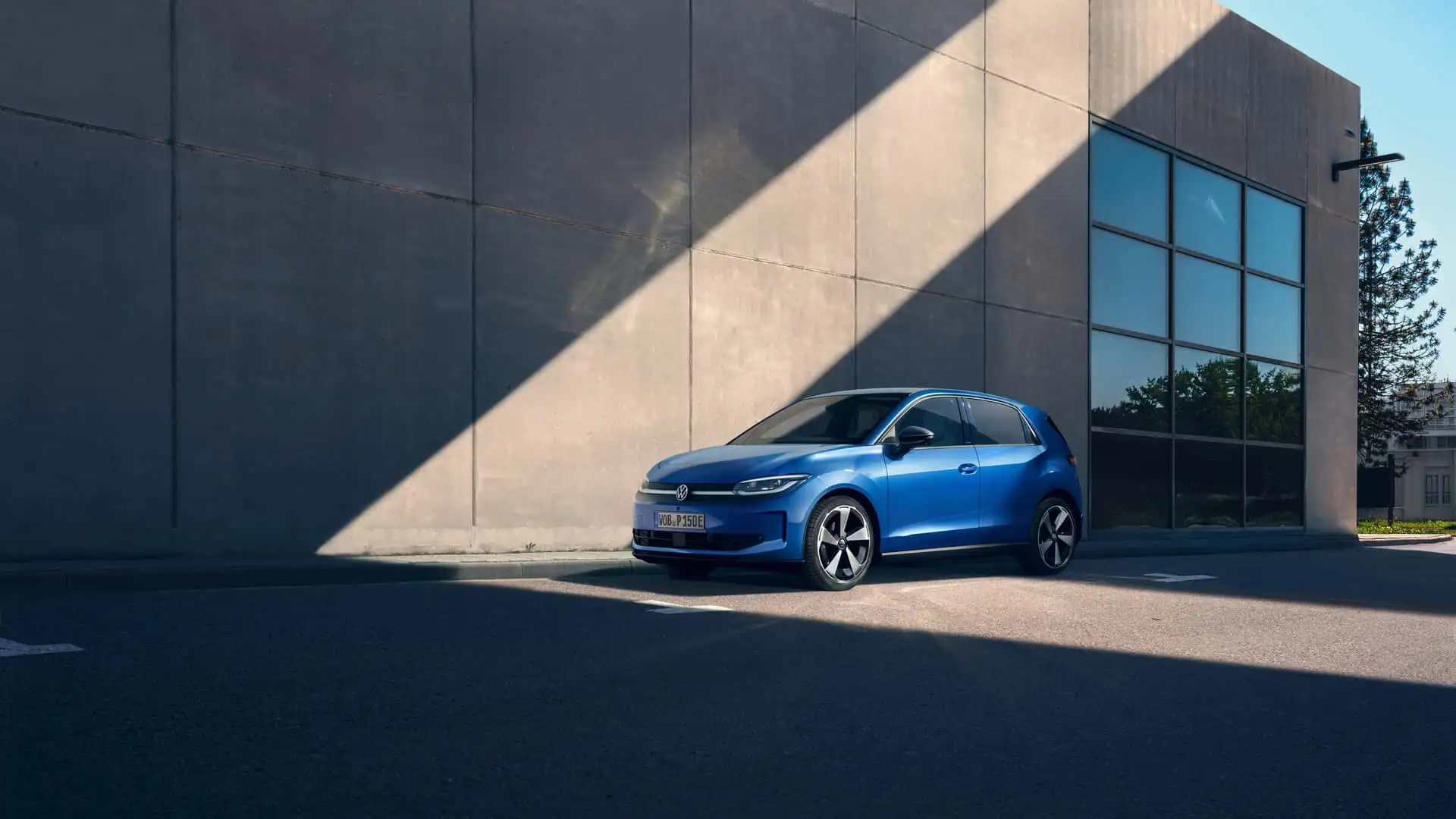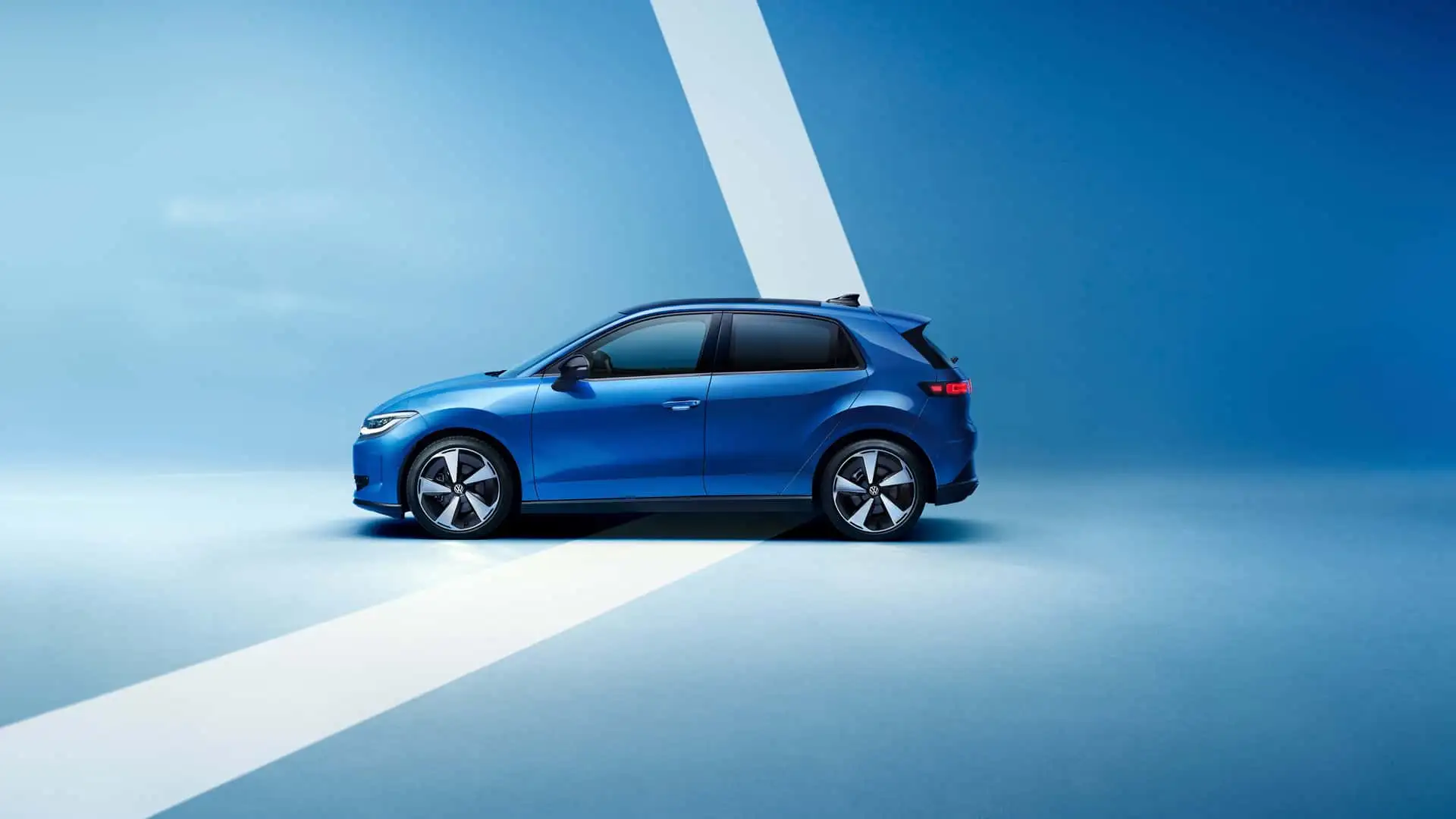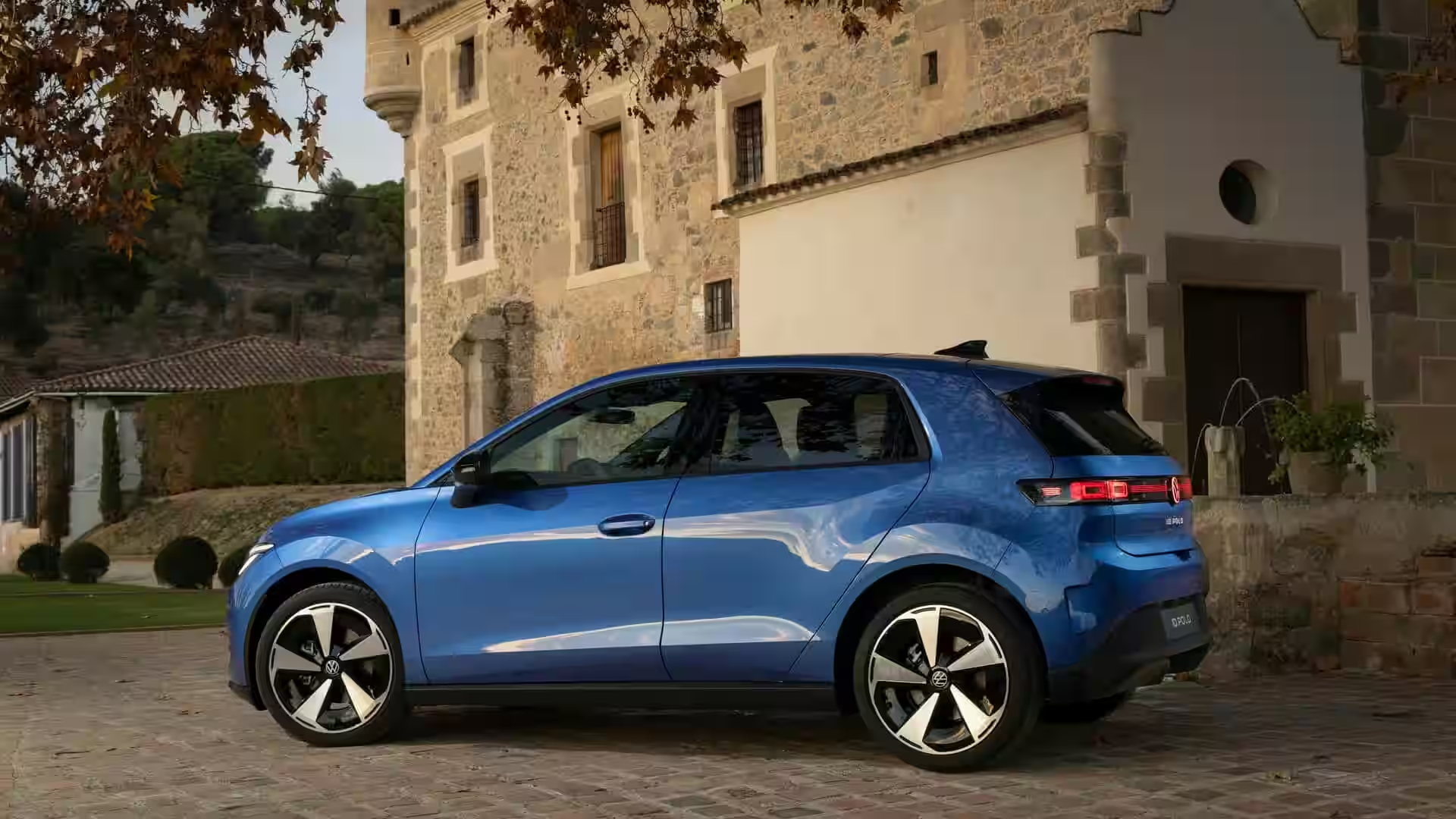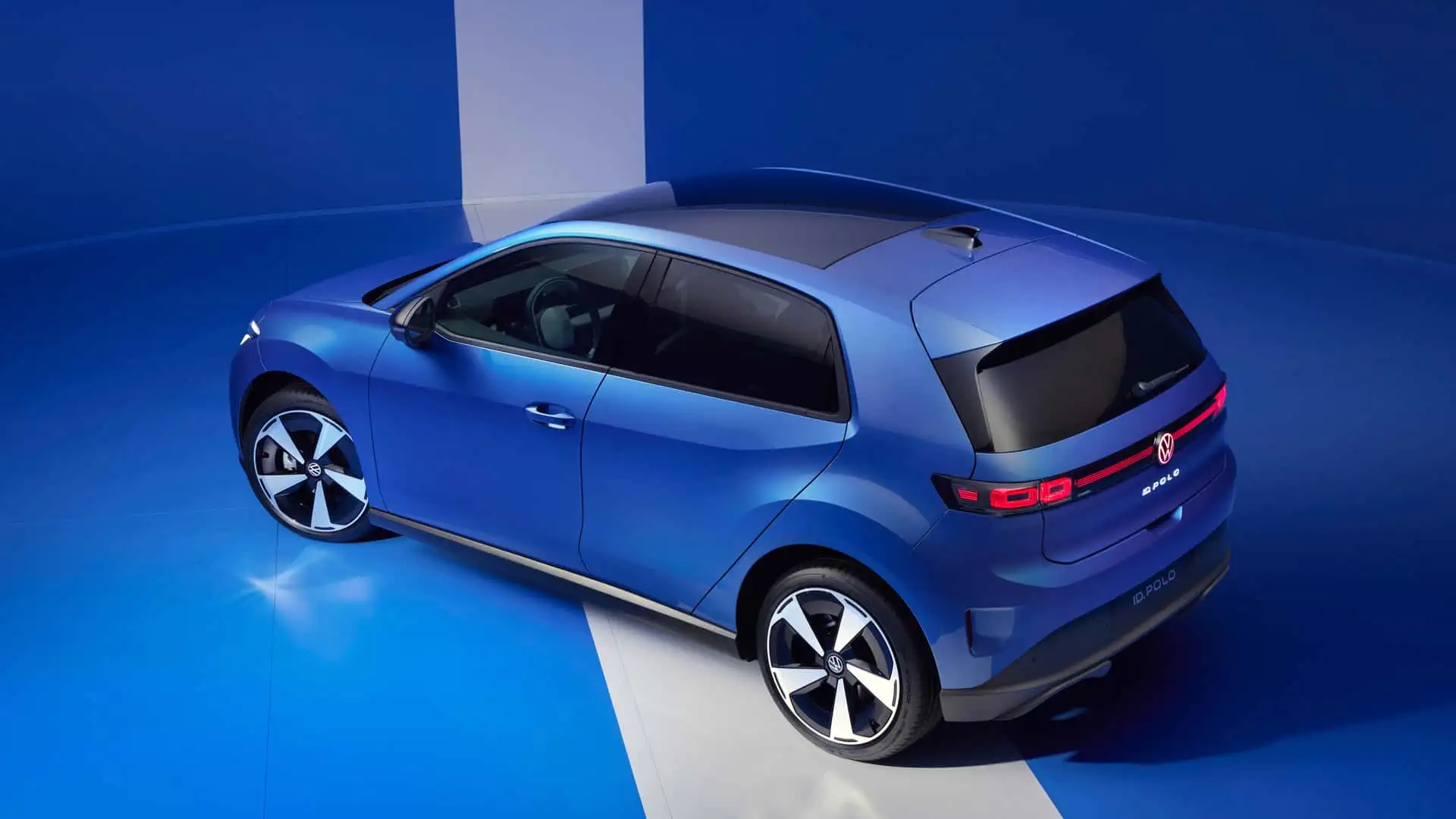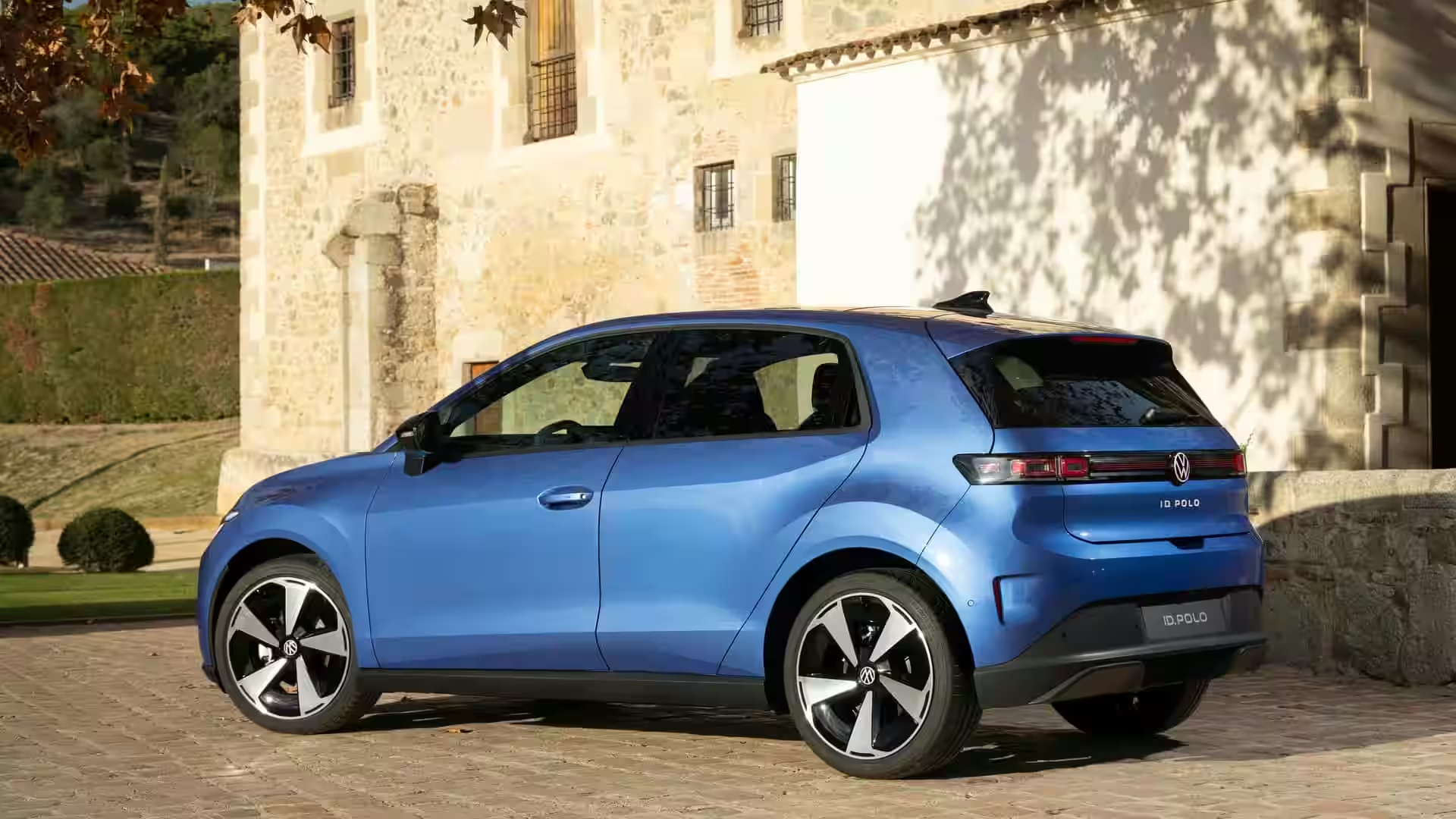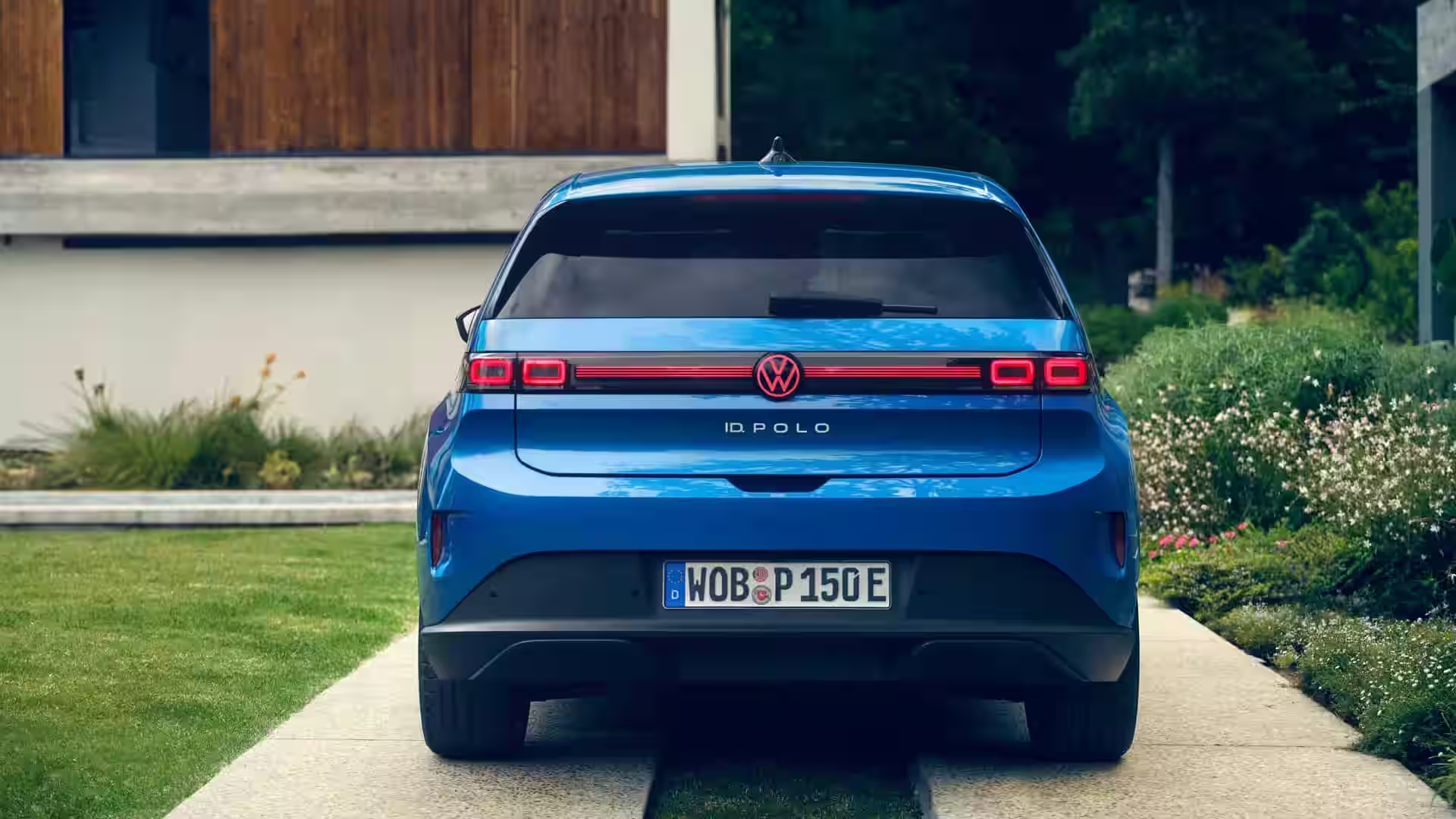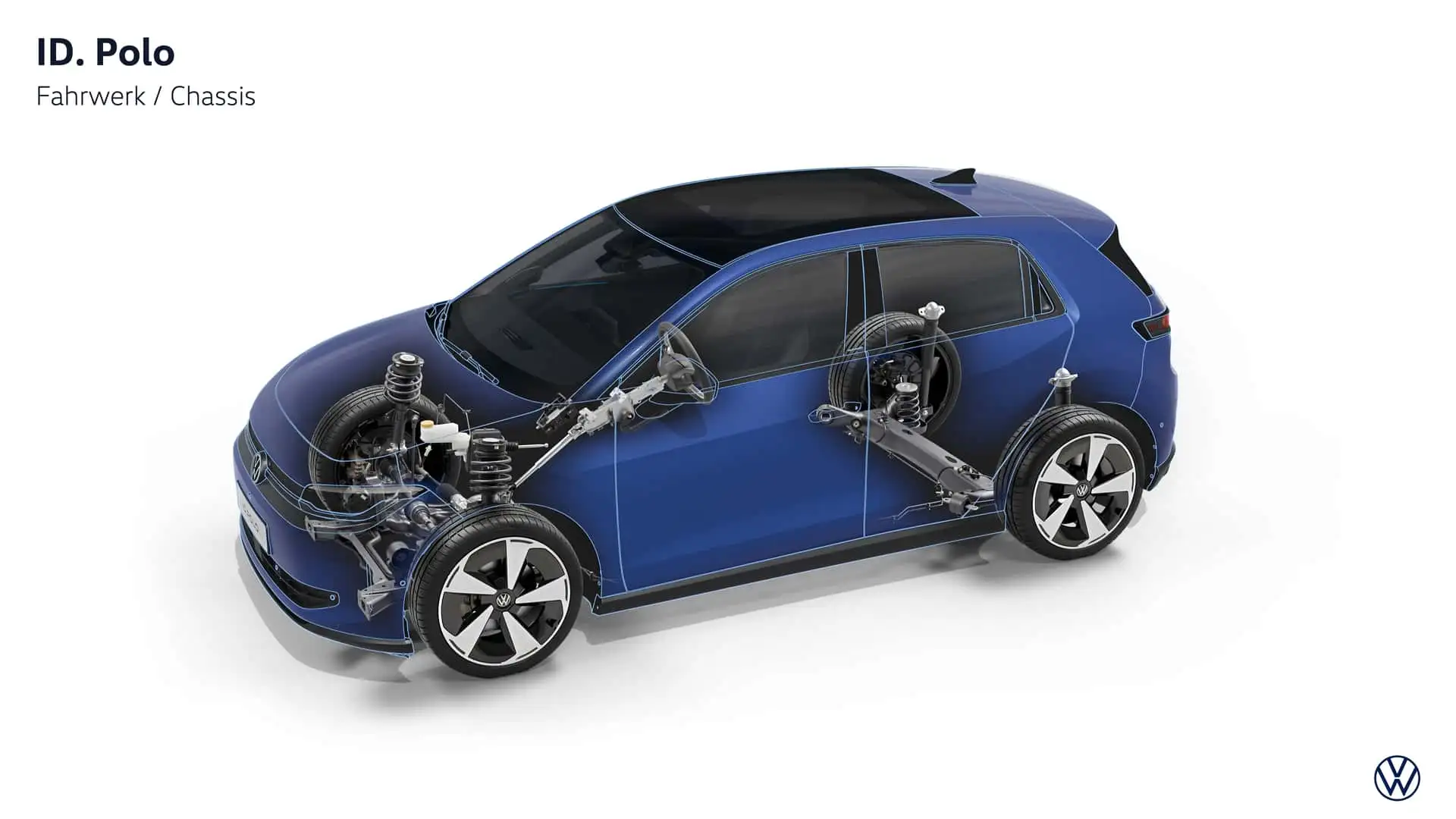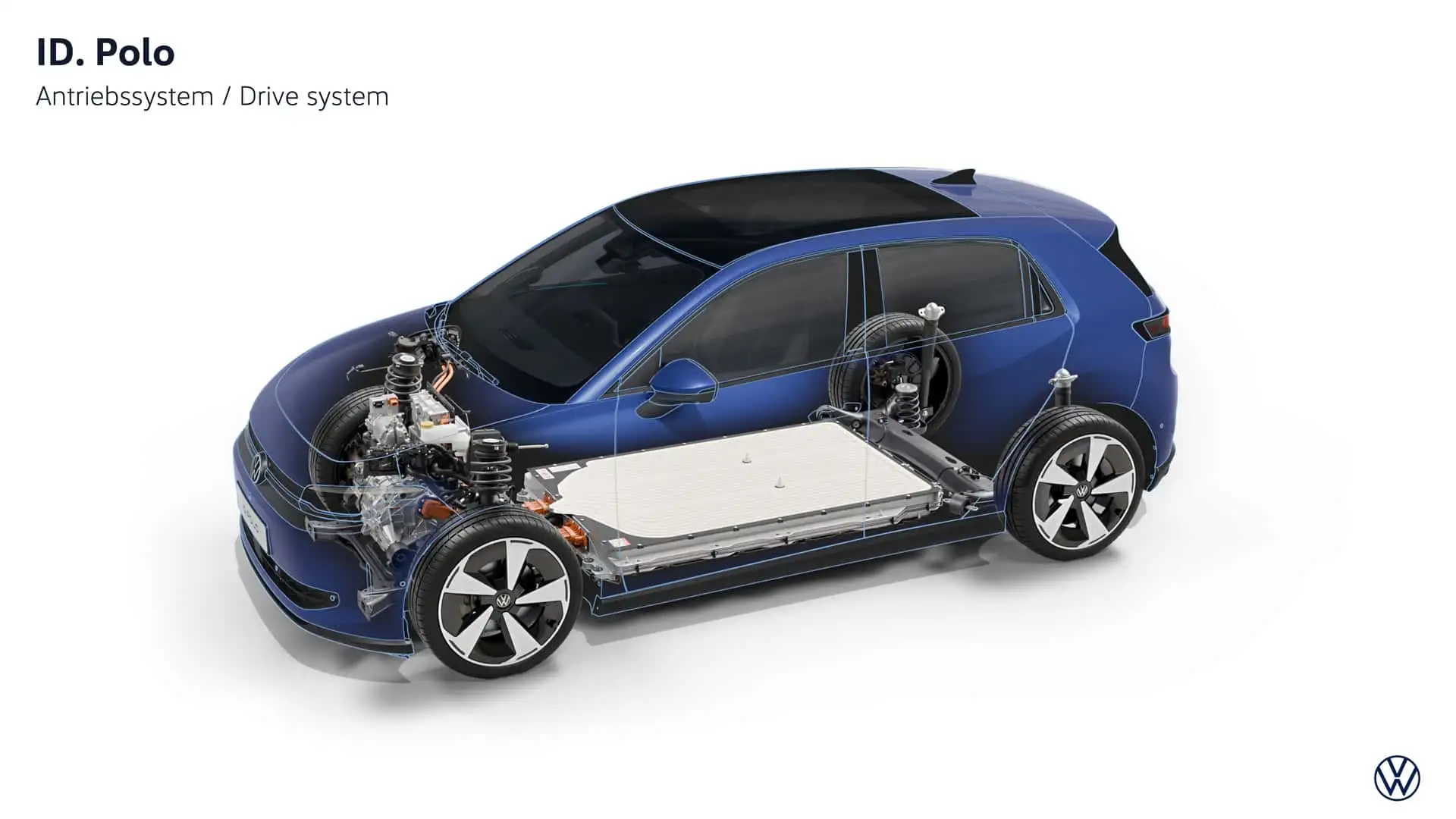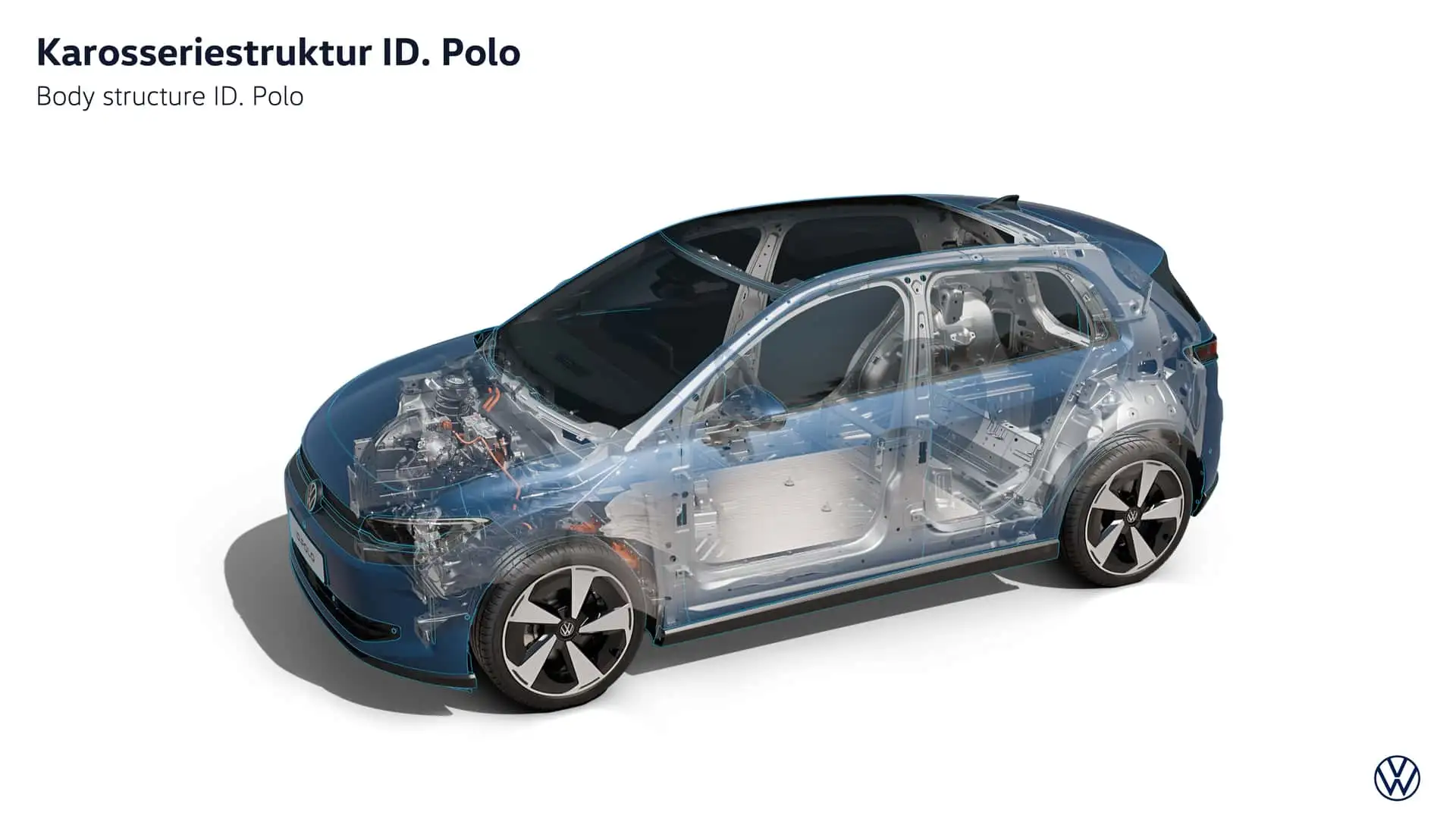
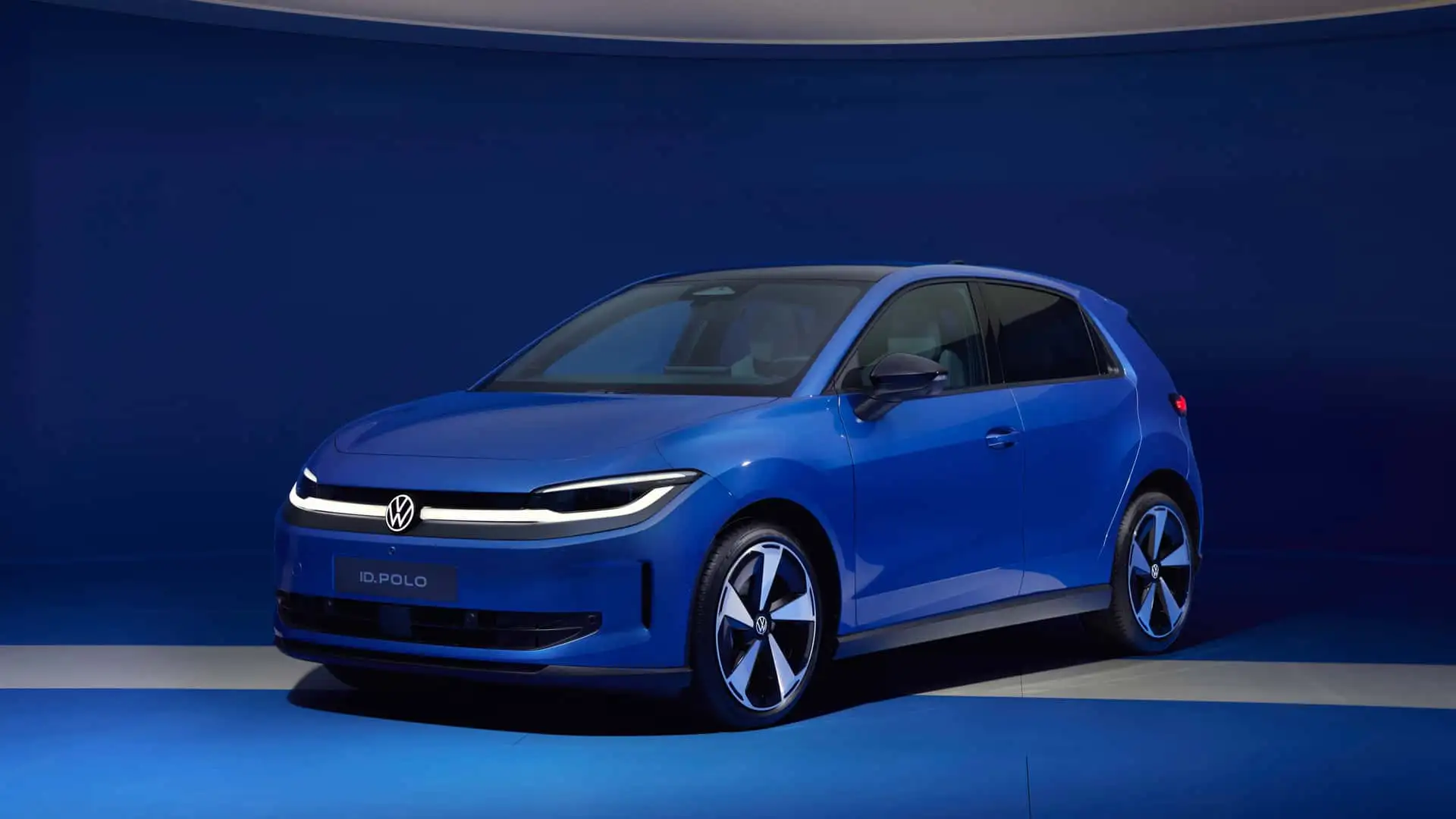
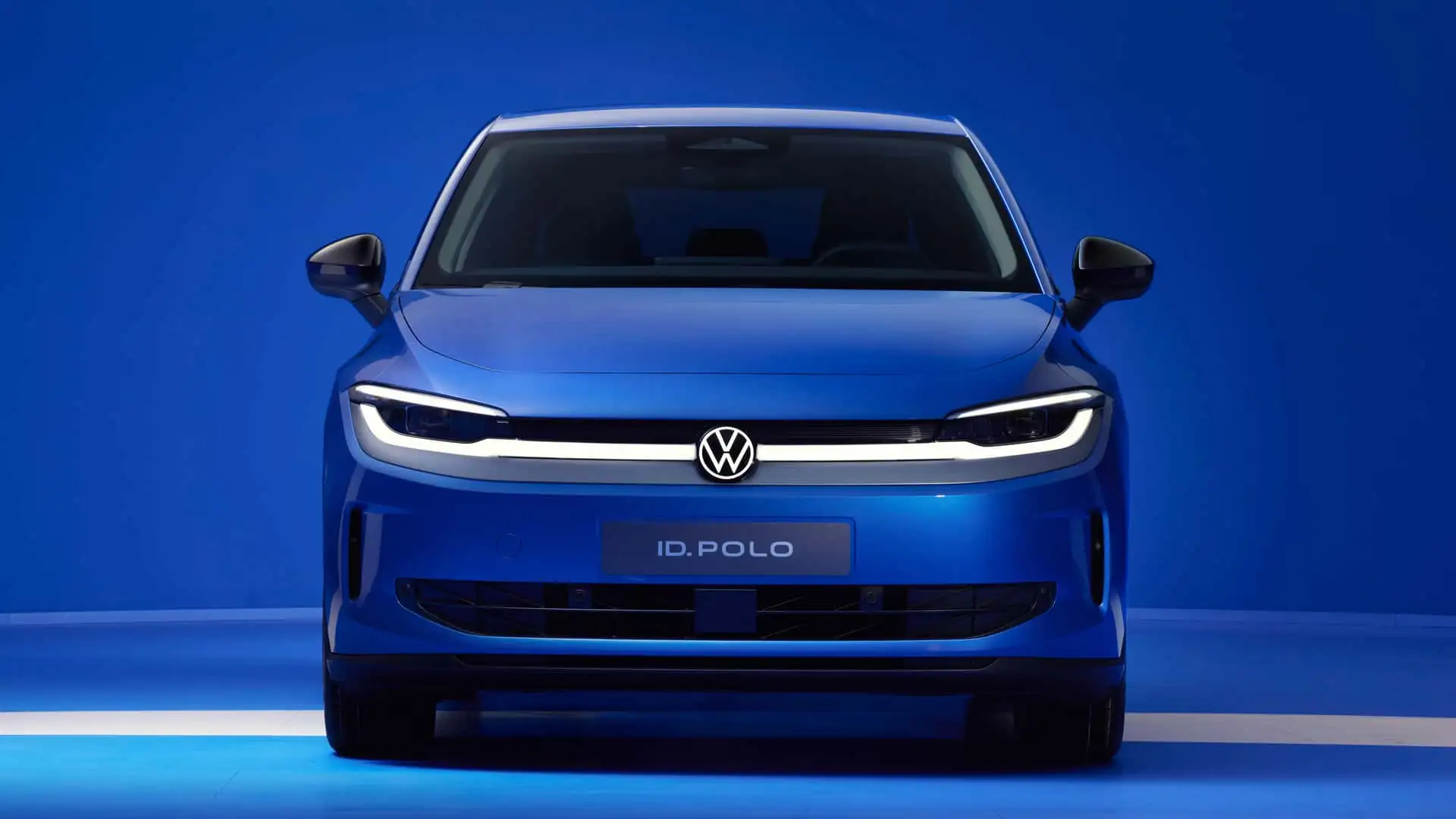
After 51 years of combustion-engine dominance, the Volkswagen Polo gains a fully electric identity that is not merely a rebadge but a clean-sheet engineering statement. The 2026 VOLKSWAGEN ID. POLO, priced from €24,995 in Germany, arrives as the production version of the 2023 ID. 2all concept and represents VW’s most serious attempt yet to democratize electric mobility in the B-segment. Chief Designer Andreas Mindt has penned a body that shares zero panels with the petrol Polo, and the numbers behind it deserve your full attention.
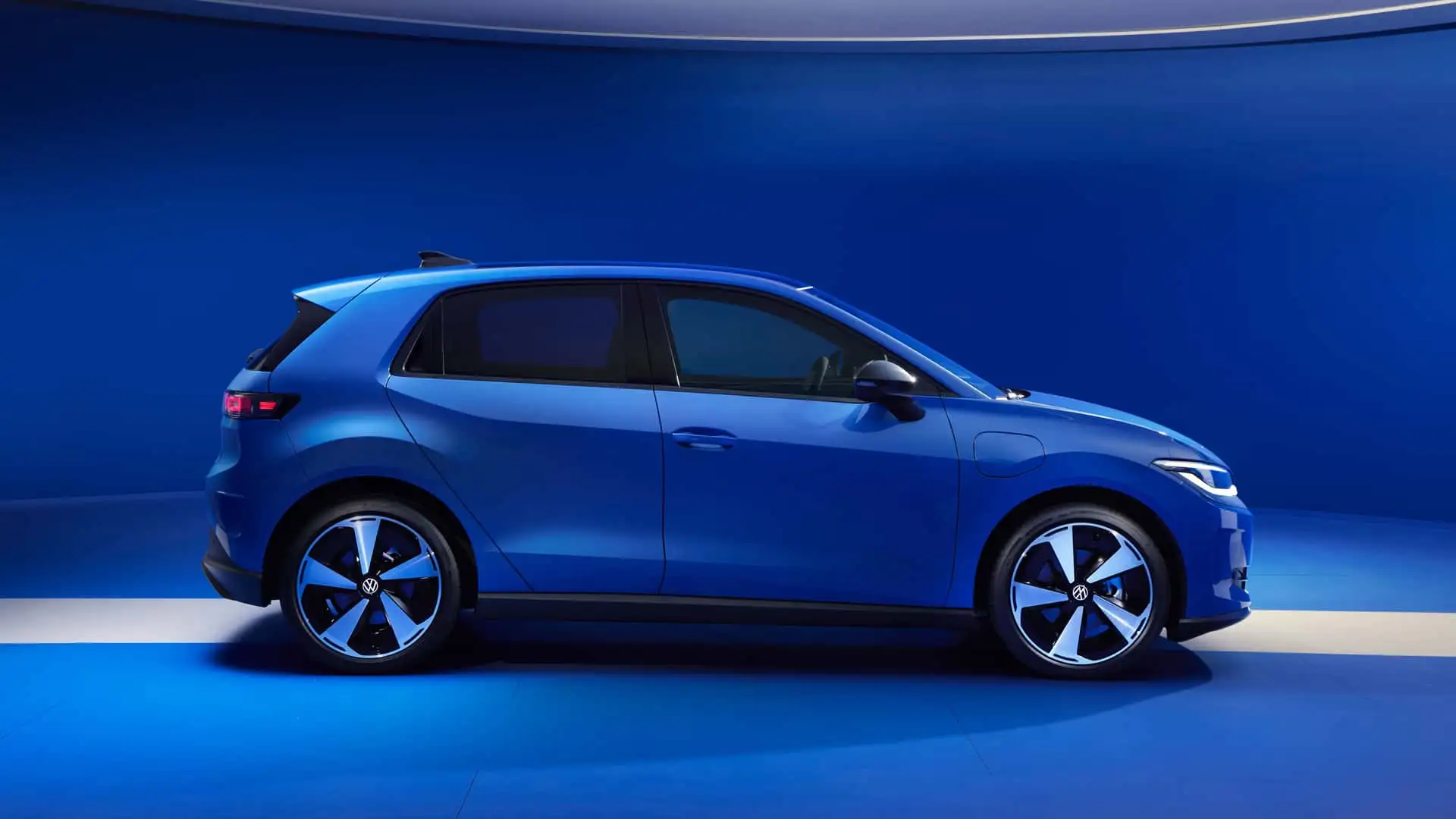
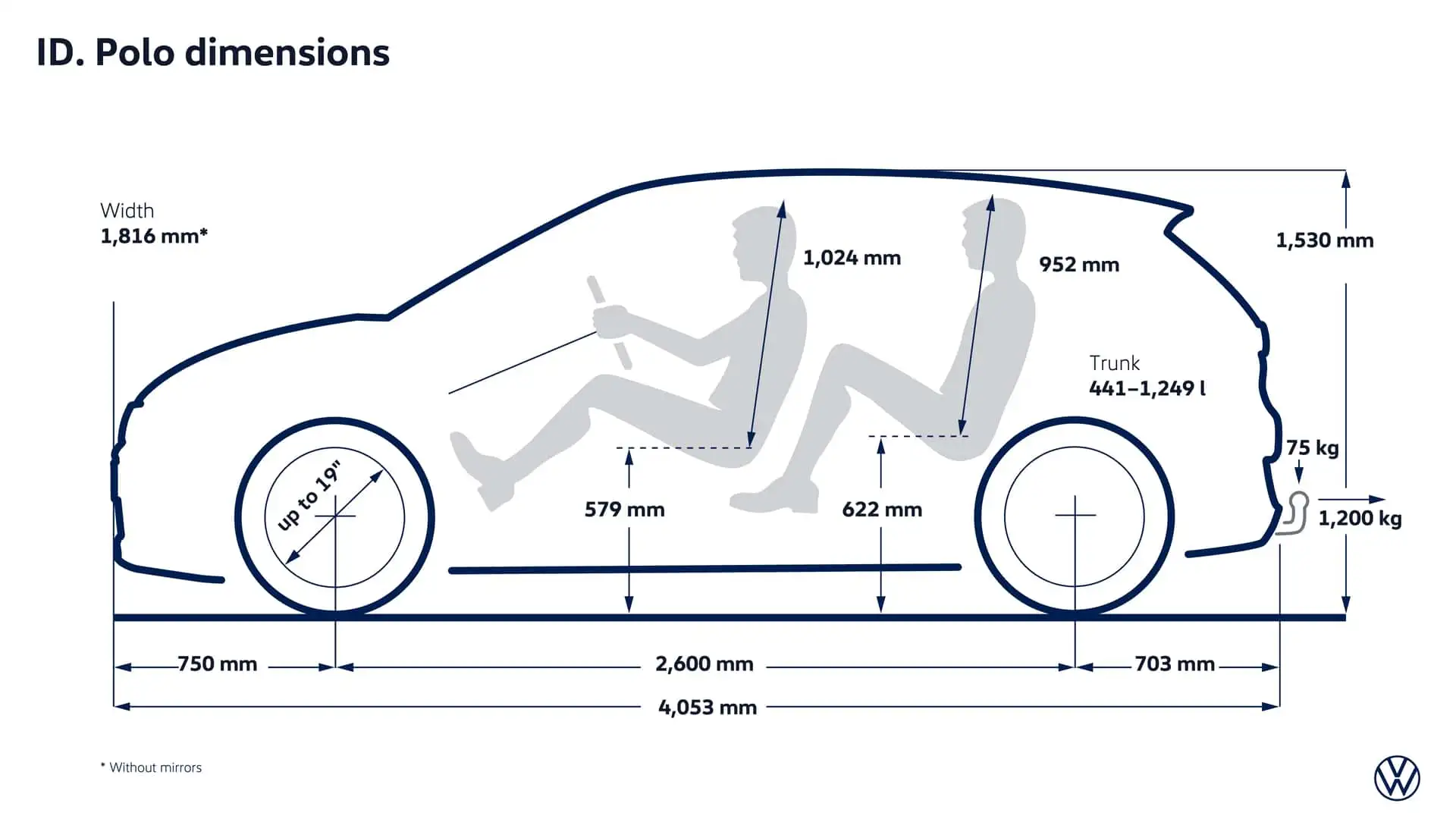
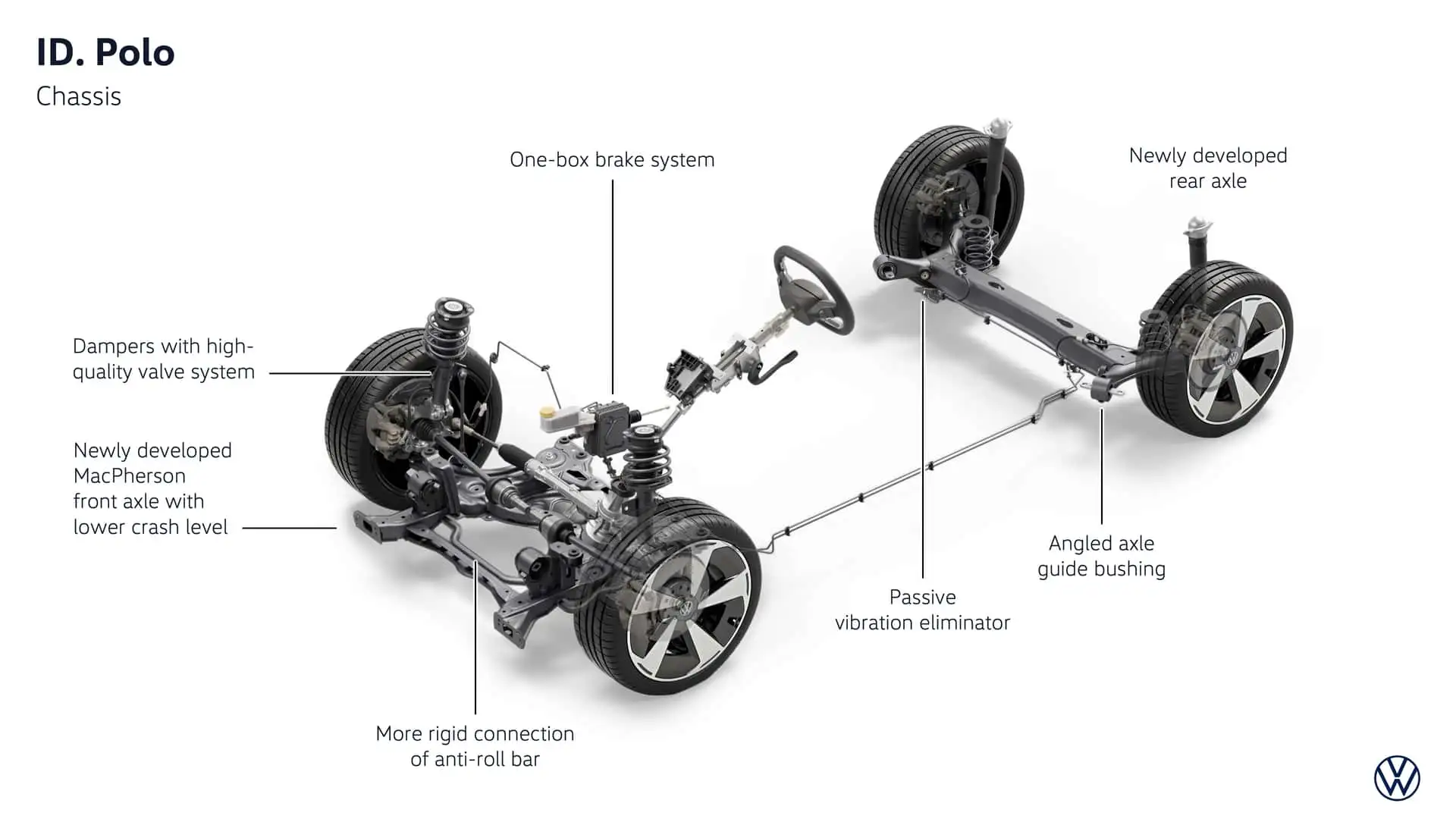
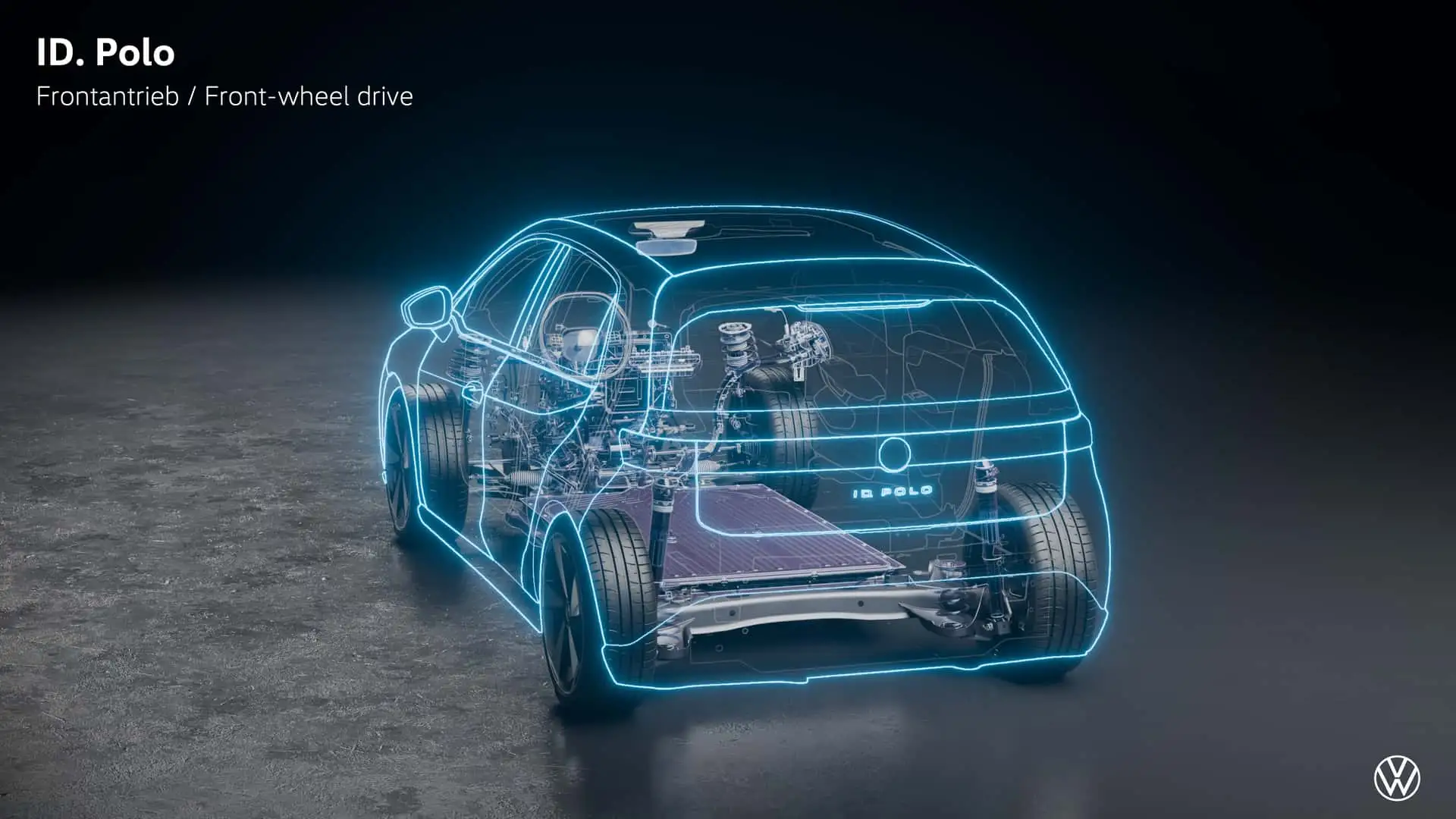
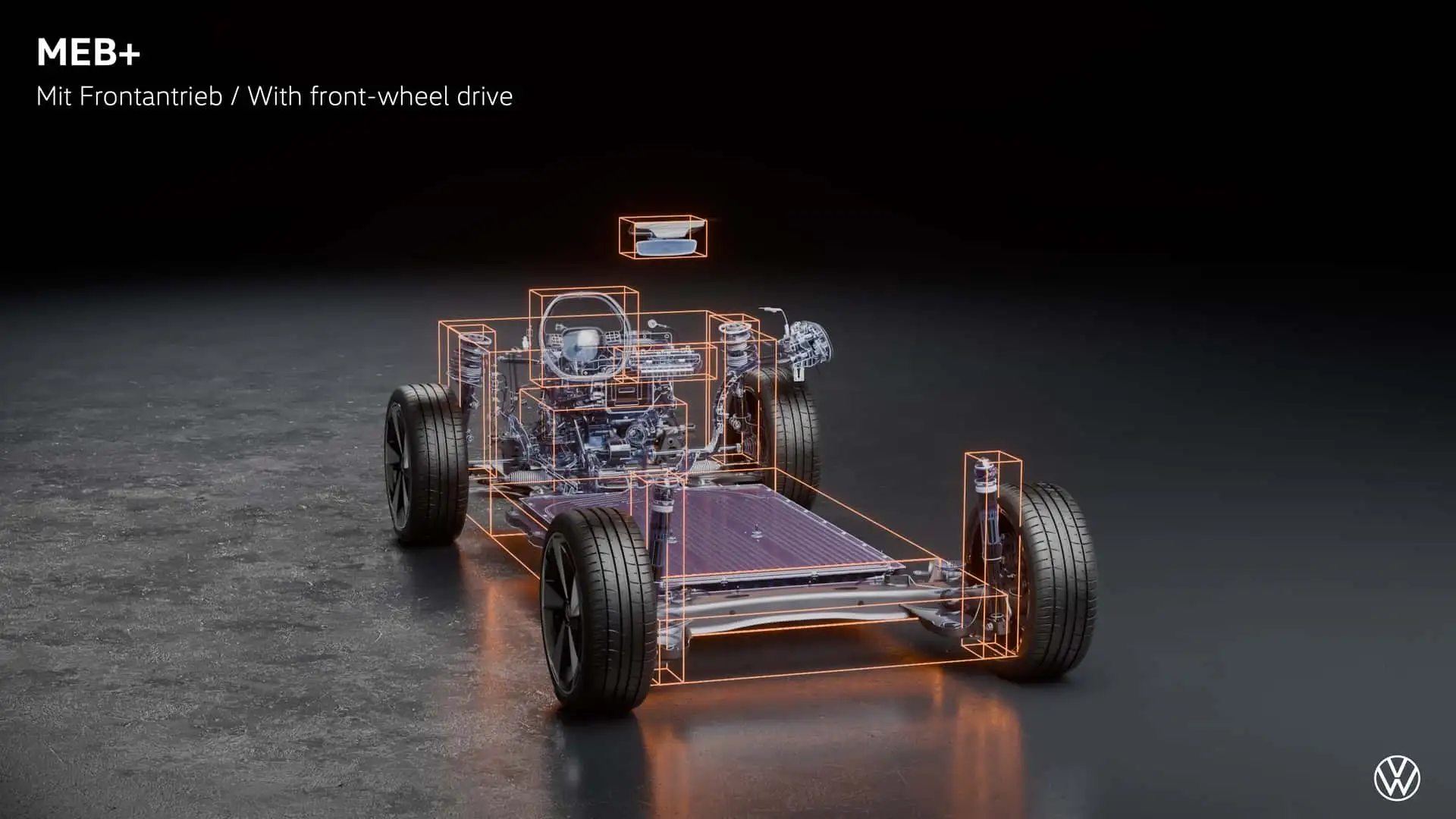
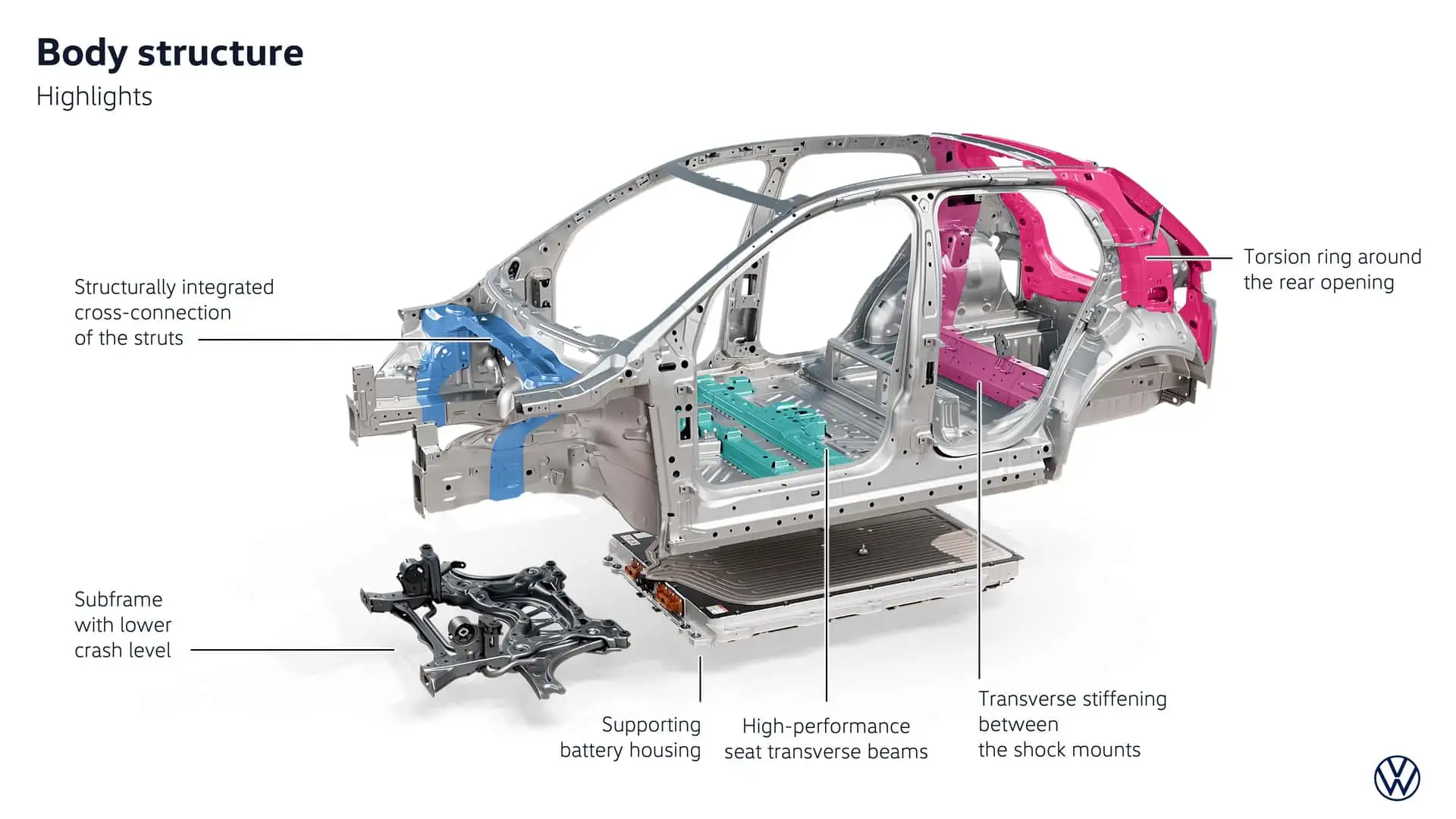
Built on the MEB+ architecture with a front-wheel-drive single-motor layout, the ID. Polo measures 4,053 mm long, 1,816 mm wide, and 1,530 mm tall on a 2,600 mm wheelbase. It is slightly shorter yet noticeably wider than its petrol sibling, a packaging decision dictated entirely by the battery tray beneath the floor. The drag coefficient sits at an impressively slippery 0.26, achieved in part by vertical air curtains integrated into the front bumper.
Powertrain: Three Outputs, Two Battery Chemistries
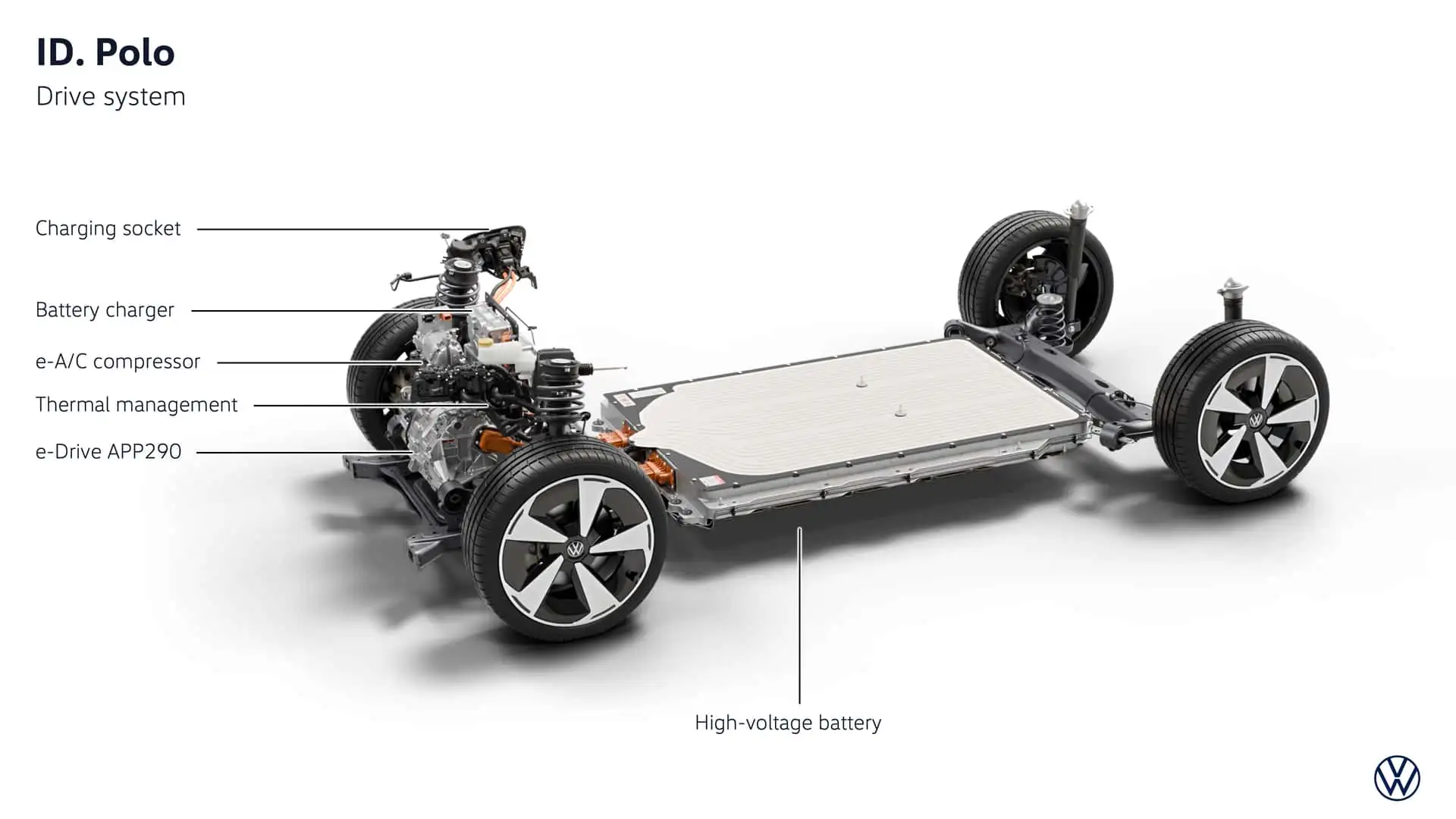
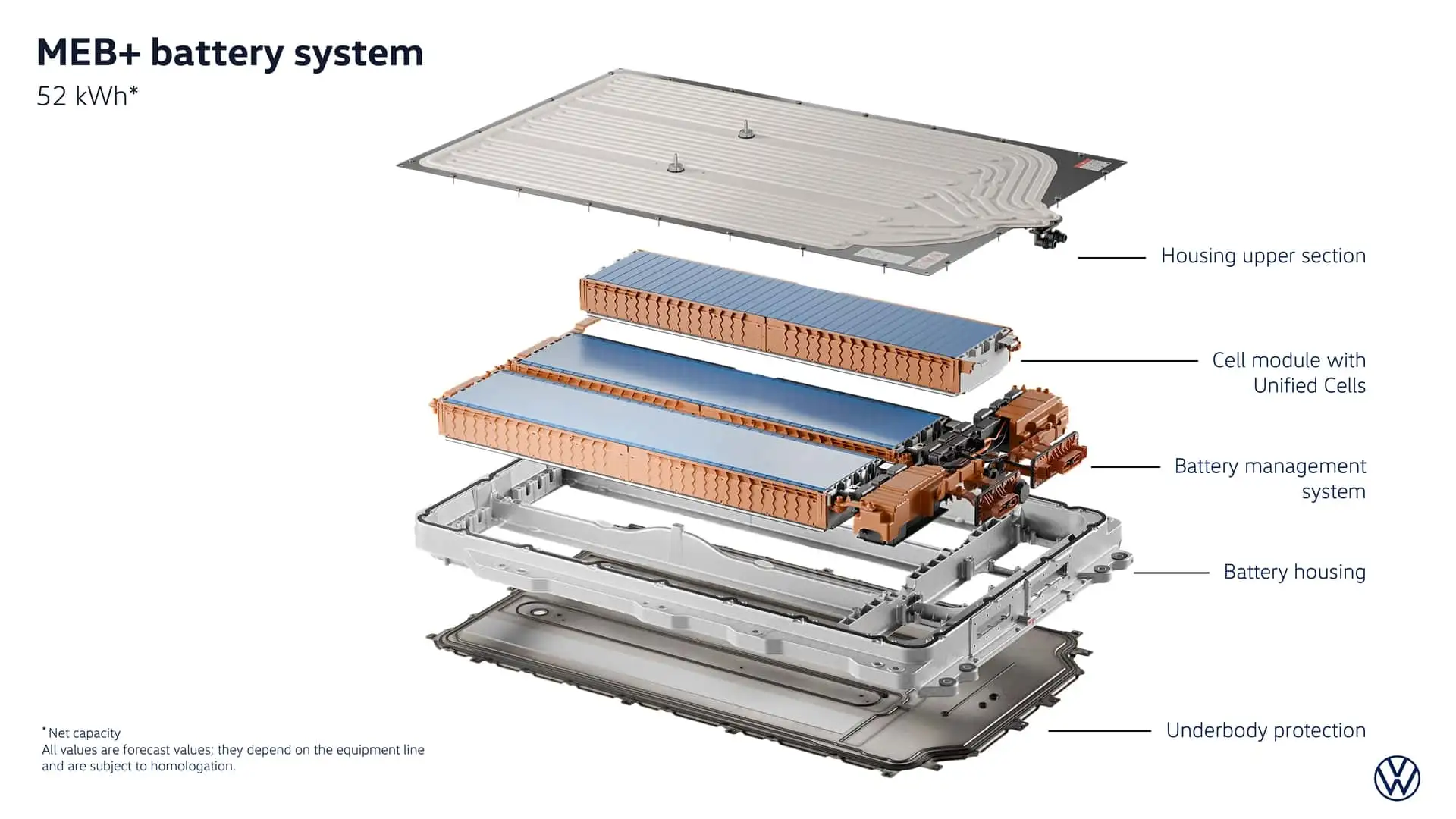
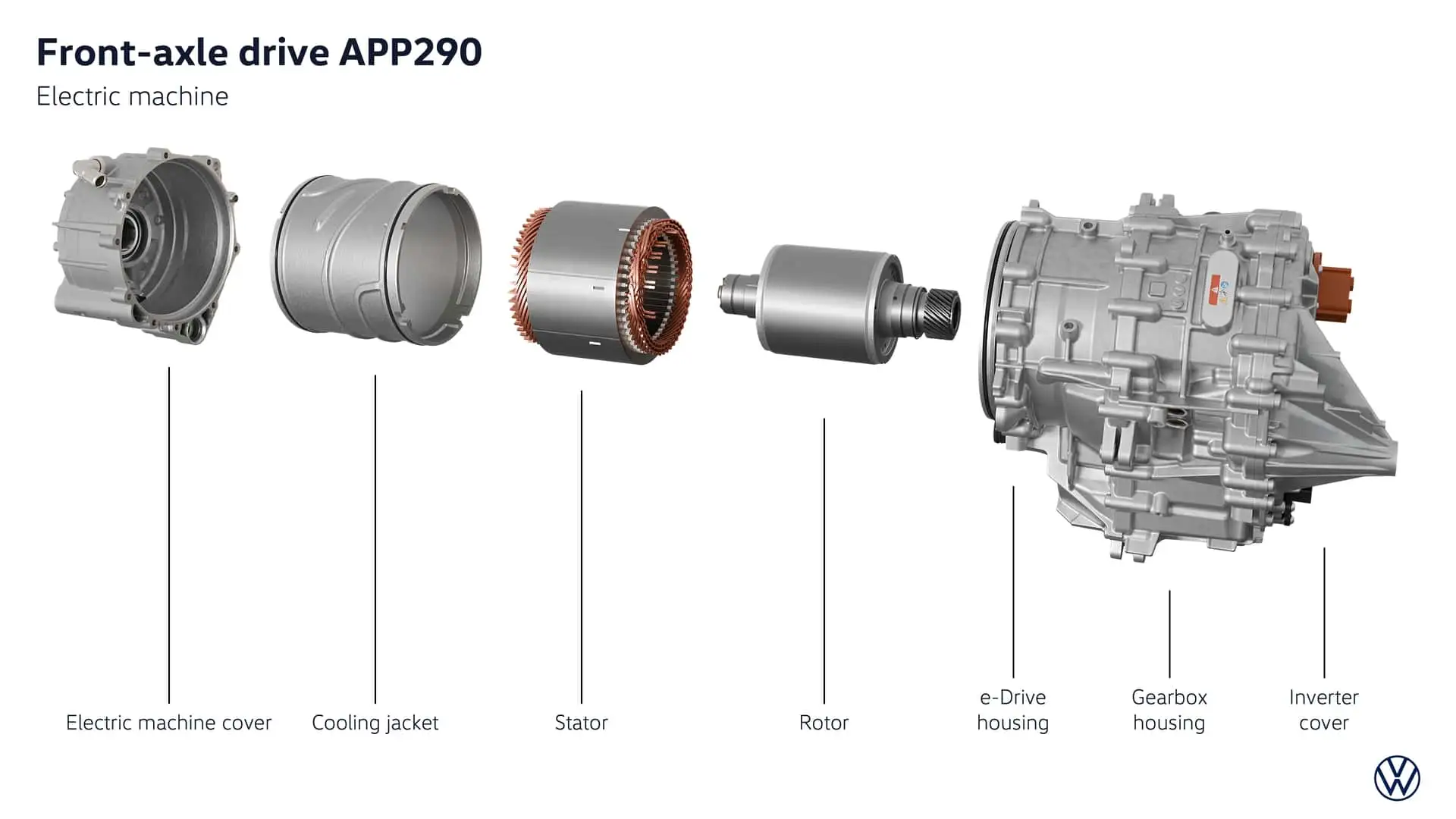
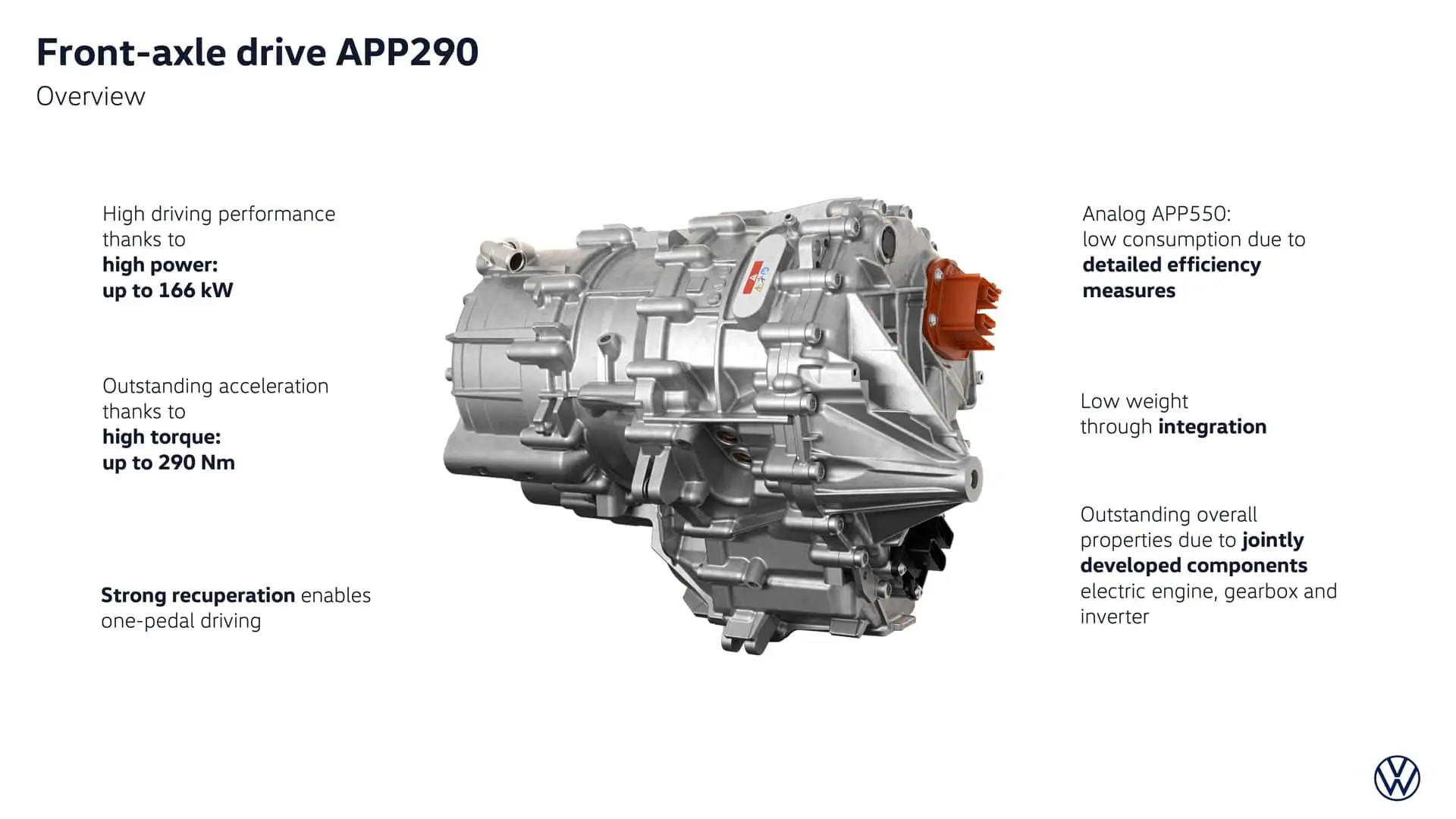
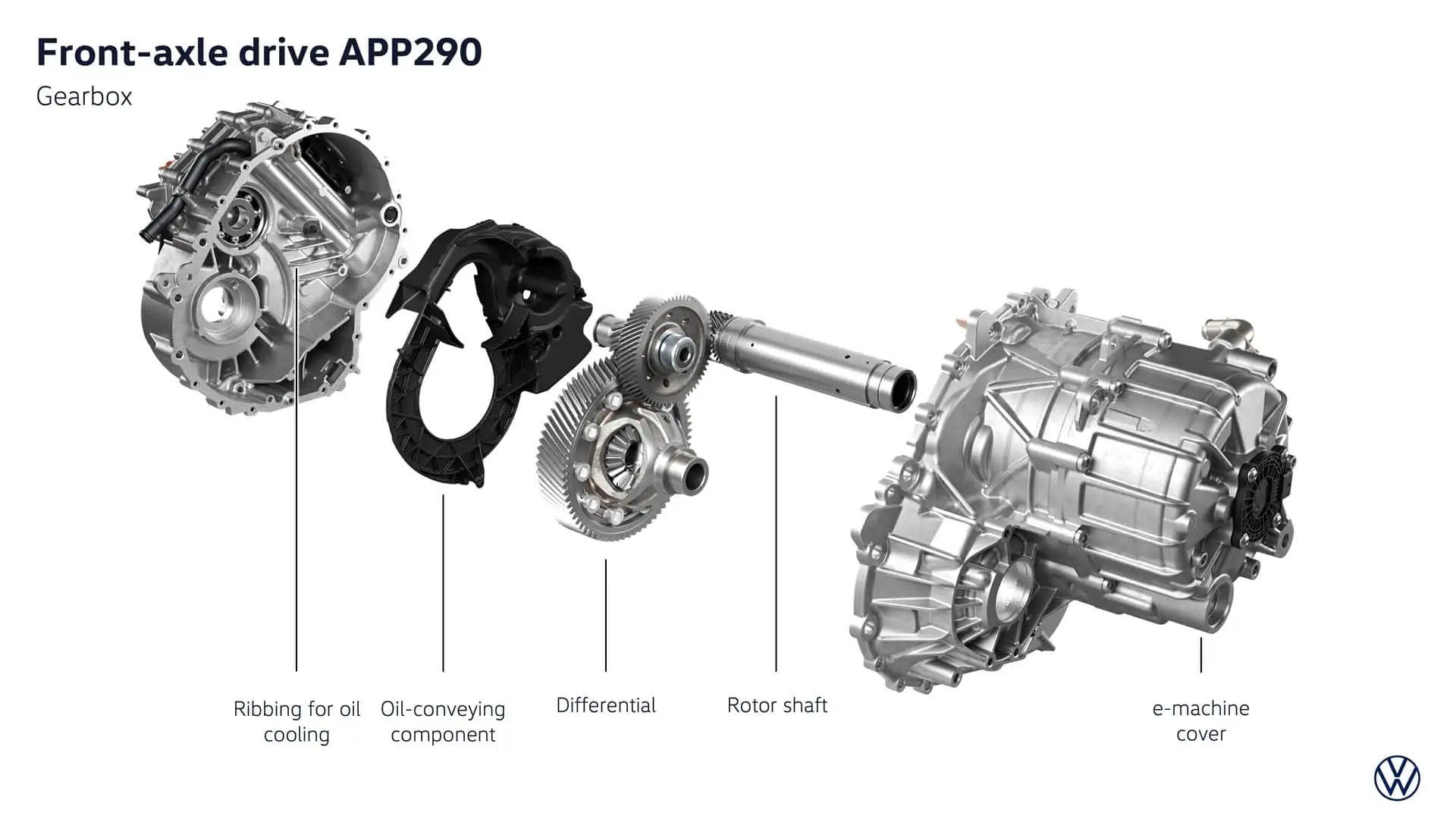
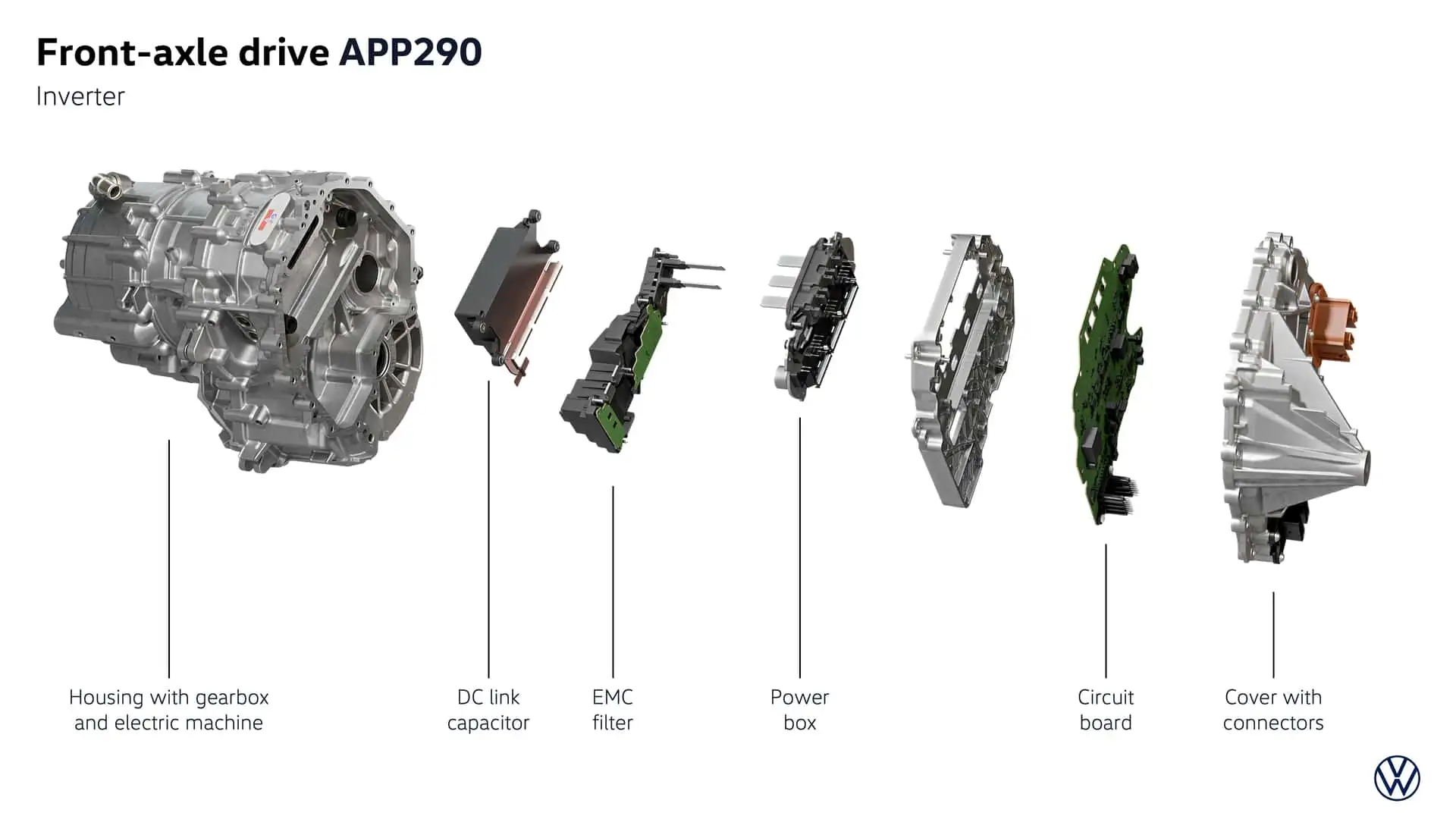
The ID. Polo launches with three power levels — 114 hp, 133 hp, and a range-topping 208 hp — all driving the front wheels through a single permanent-magnet synchronous motor. A hotter ID. Polo GTI with 223 hp is confirmed for later this year. Two battery packs are offered: an LFP (lithium iron phosphate) unit with a net capacity of 37 kWh, and an NMC (nickel-manganese-cobalt) pack of 52 kWh.
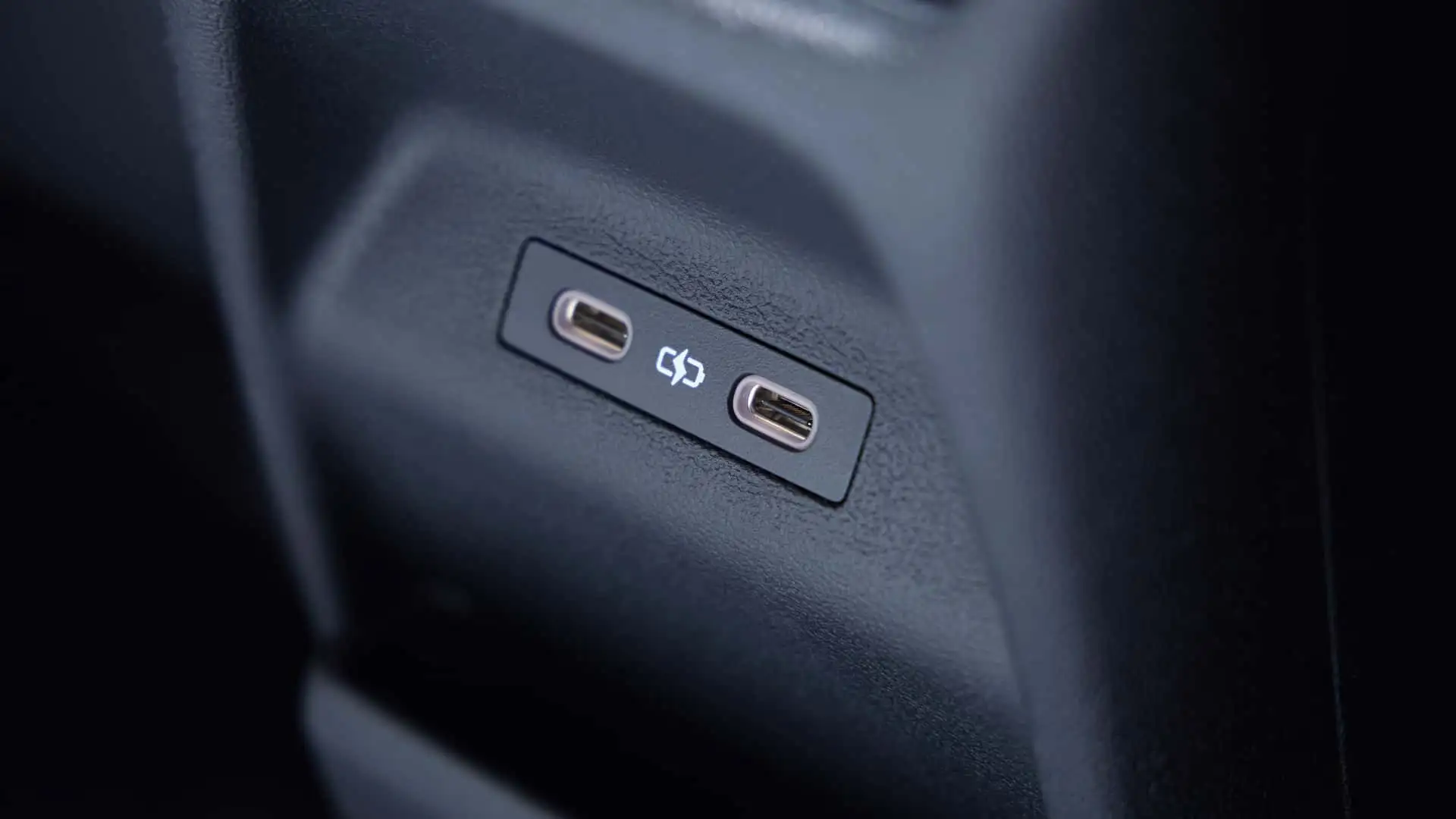
Range estimates stand at 204 miles (329 km) for the smaller battery and 283 miles (455 km) for the larger one on the WLTP cycle. DC fast charging reaches 90 kW for the LFP pack (10–80% in 27 minutes) and 105 kW for the NMC pack (10–80% in 24 minutes). Vehicle-to-Load (V2L) is standard across the range, offering 3.6 kW of bidirectional output — a feature that places this supermini firmly in the modern mobility ecosystem.
| Specification | Value |
|---|---|
| Length / Width / Height | 4,053 mm / 1,816 mm / 1,530 mm |
| Wheelbase | 2,600 mm |
| Drag Coefficient | 0.26 |
| Battery (Net) / Chemistry | 37 kWh LFP / 52 kWh NMC |
| Range (WLTP) | 204 mi (329 km) / 283 mi (455 km) |
| DC Fast Charge (10–80%) | 27 min (90 kW) / 24 min (105 kW) |
| V2L Output | 3.6 kW (standard) |
| Curb Weight | 1,568 kg (LFP) / 1,576 kg (NMC) |
| Cargo Volume | 441 L (15.5 cu ft) |
| Starting Price (Germany) | €24,995 |
The Interior Revolution: Buttons, Screens, and Massage Seats
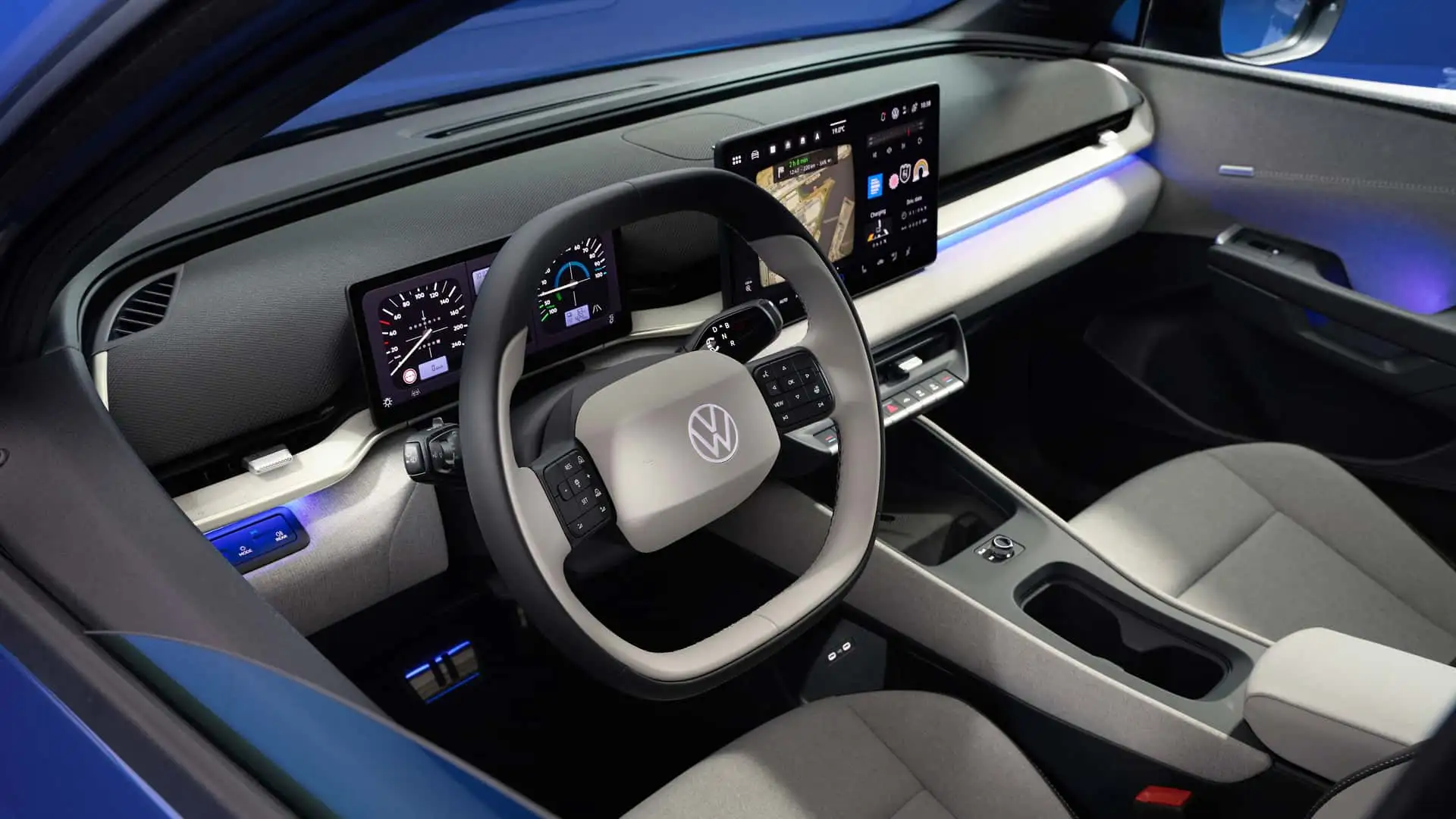
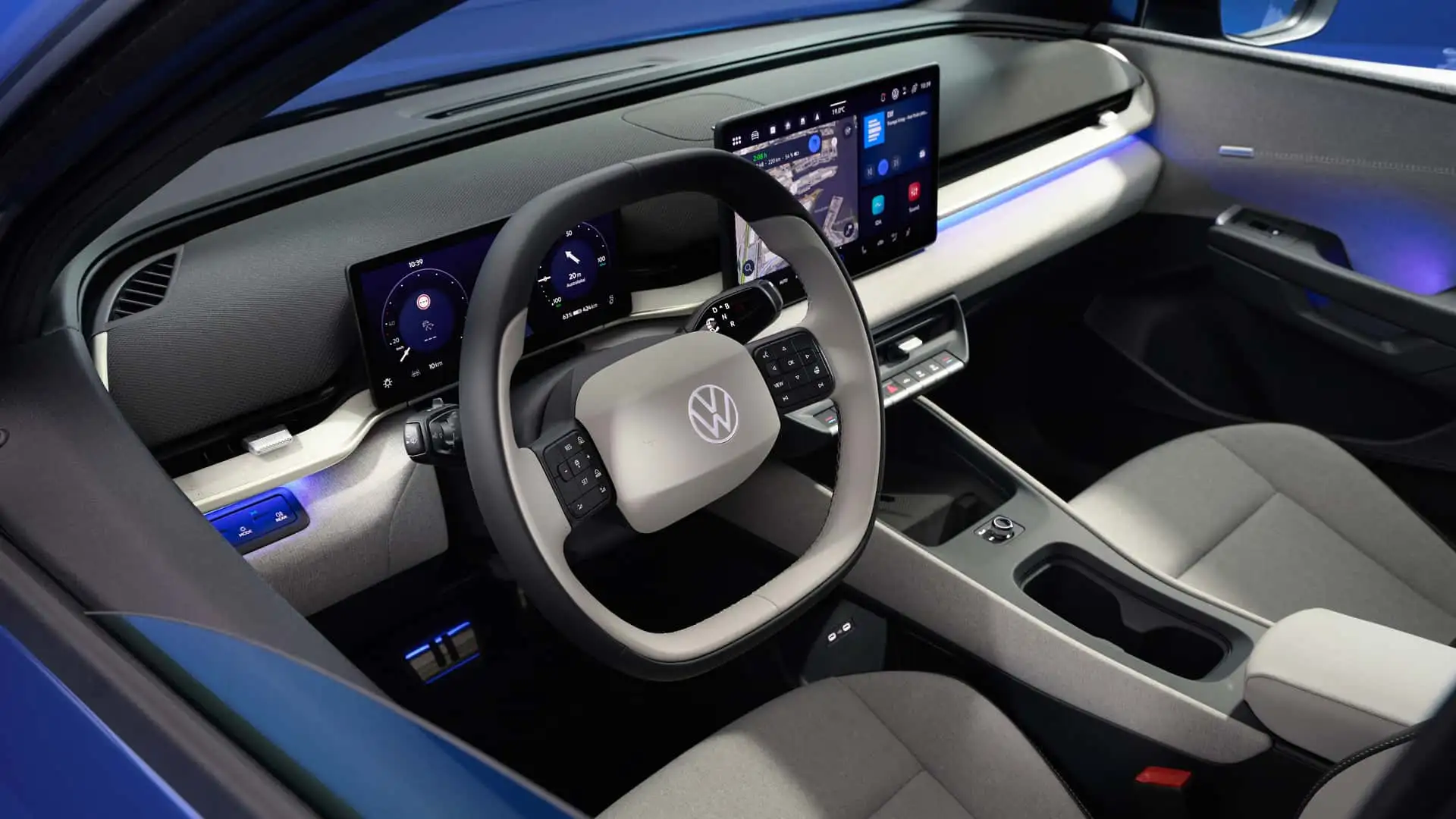
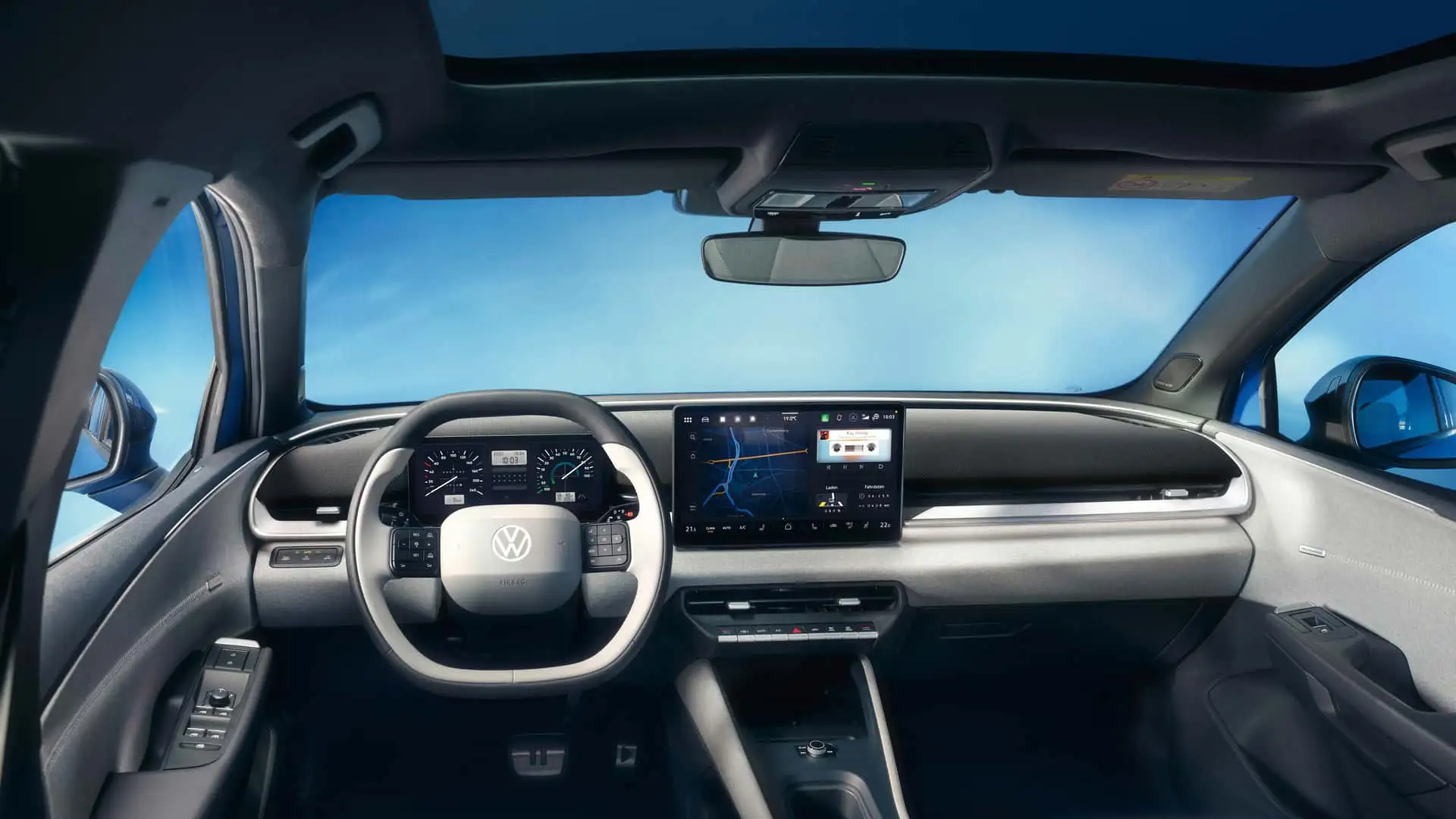
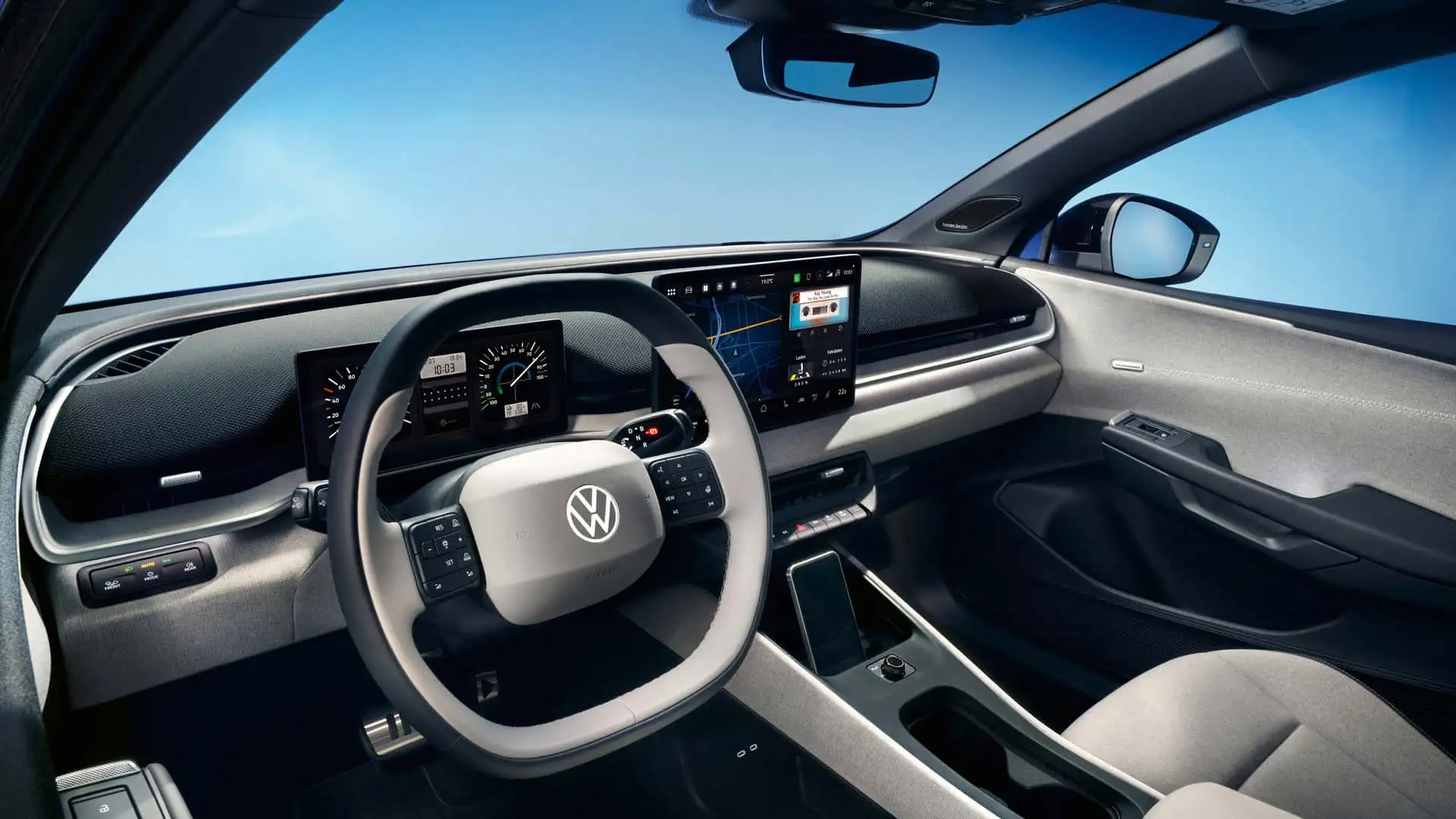
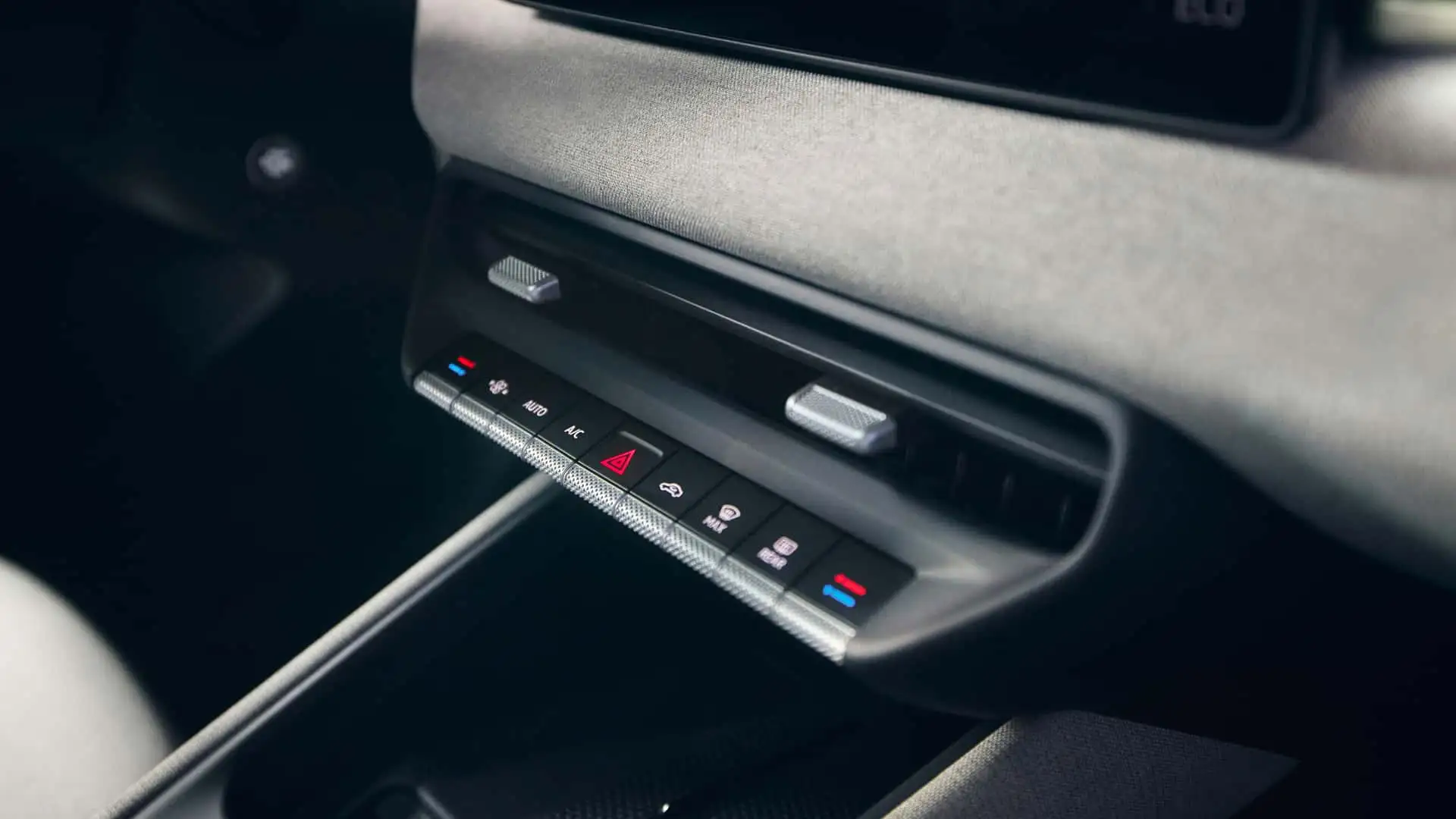
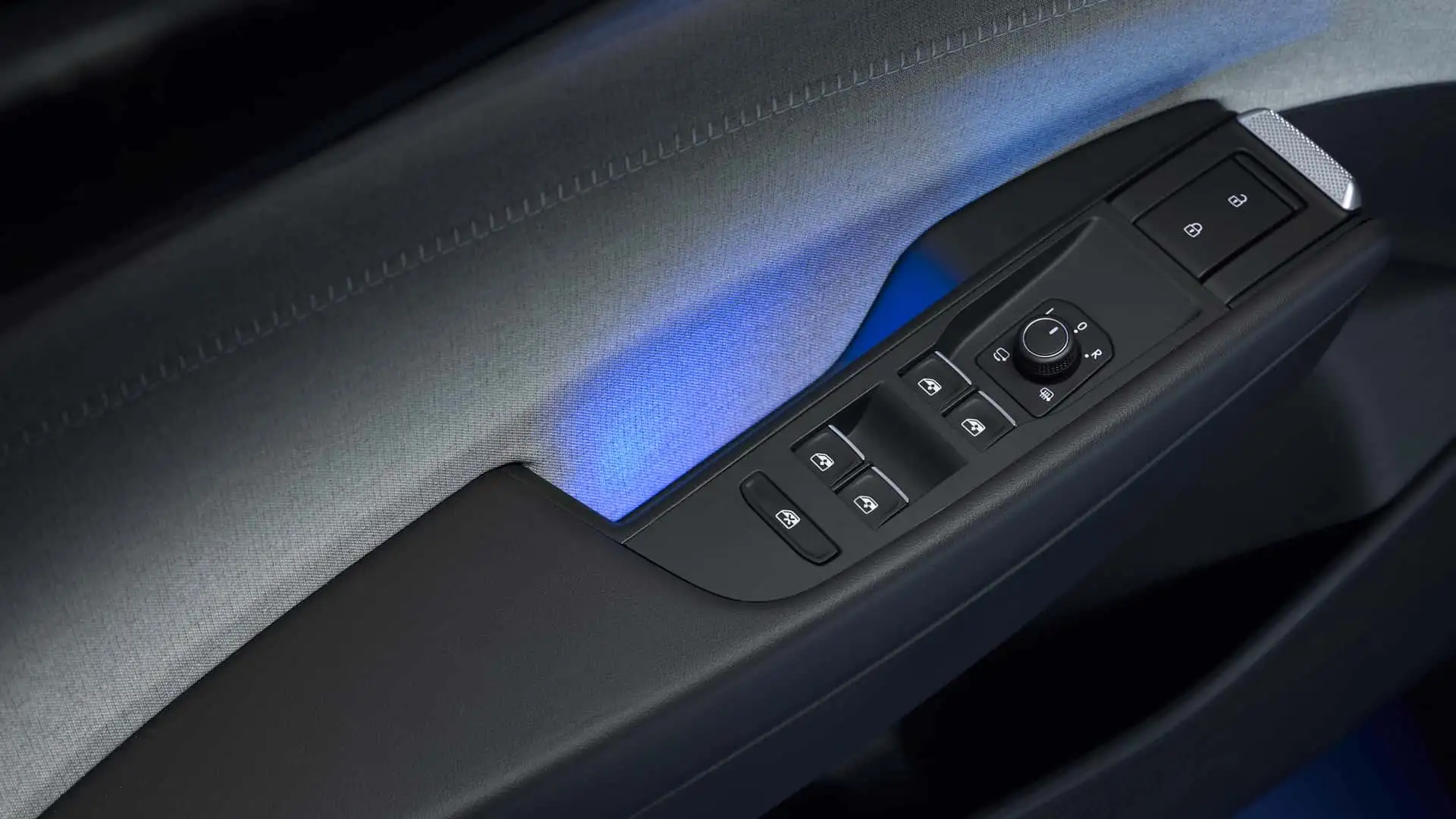
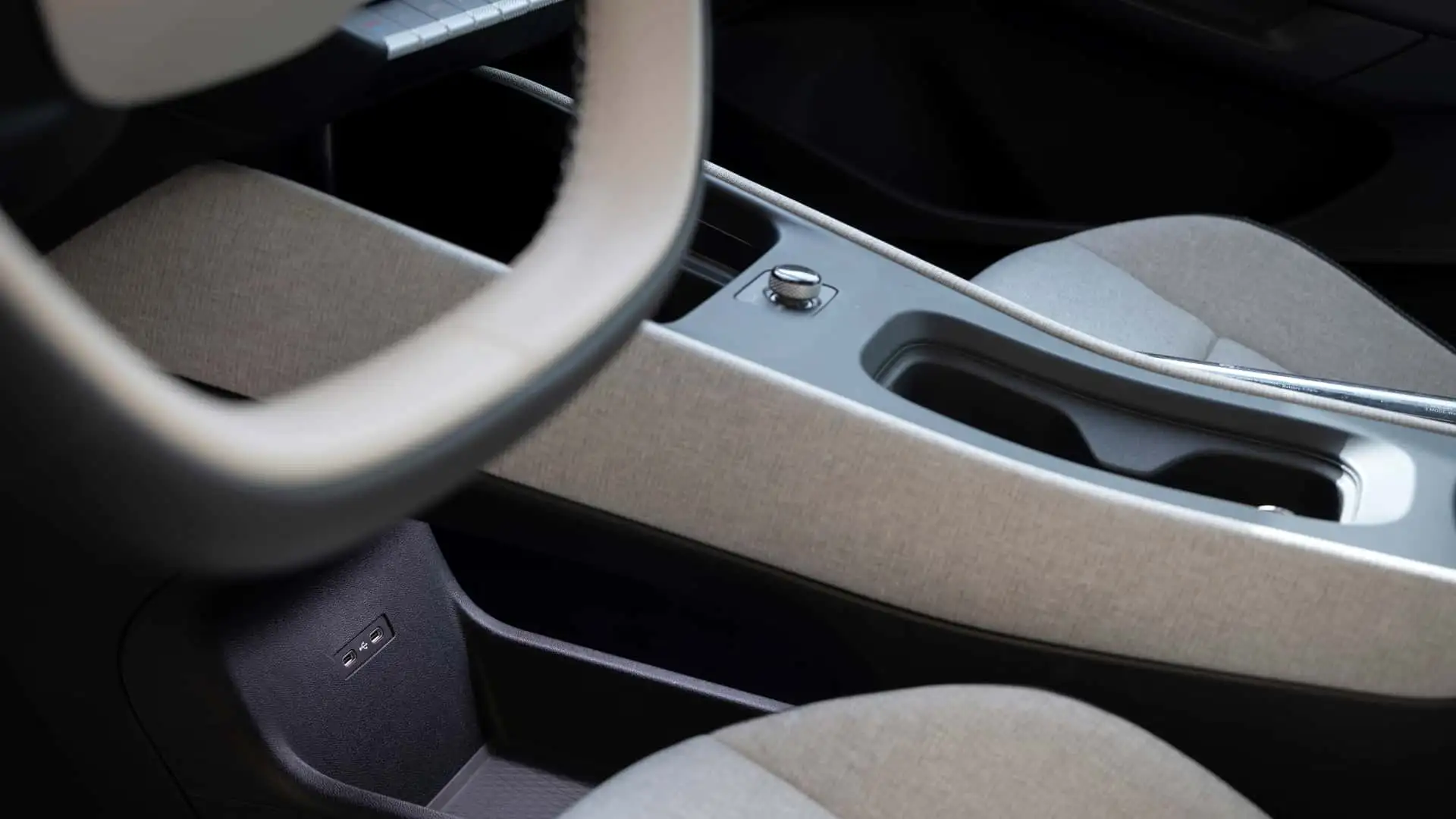
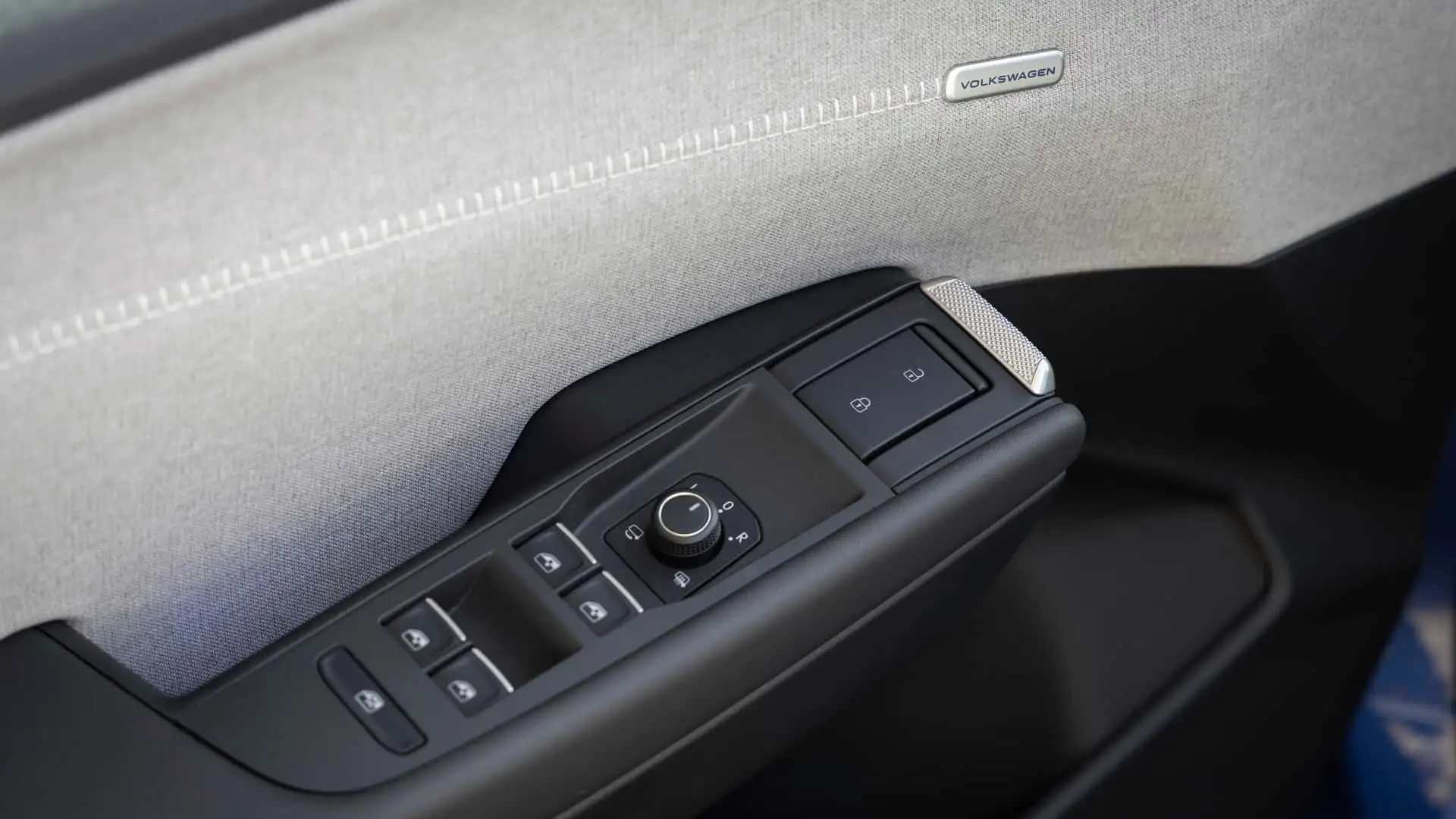
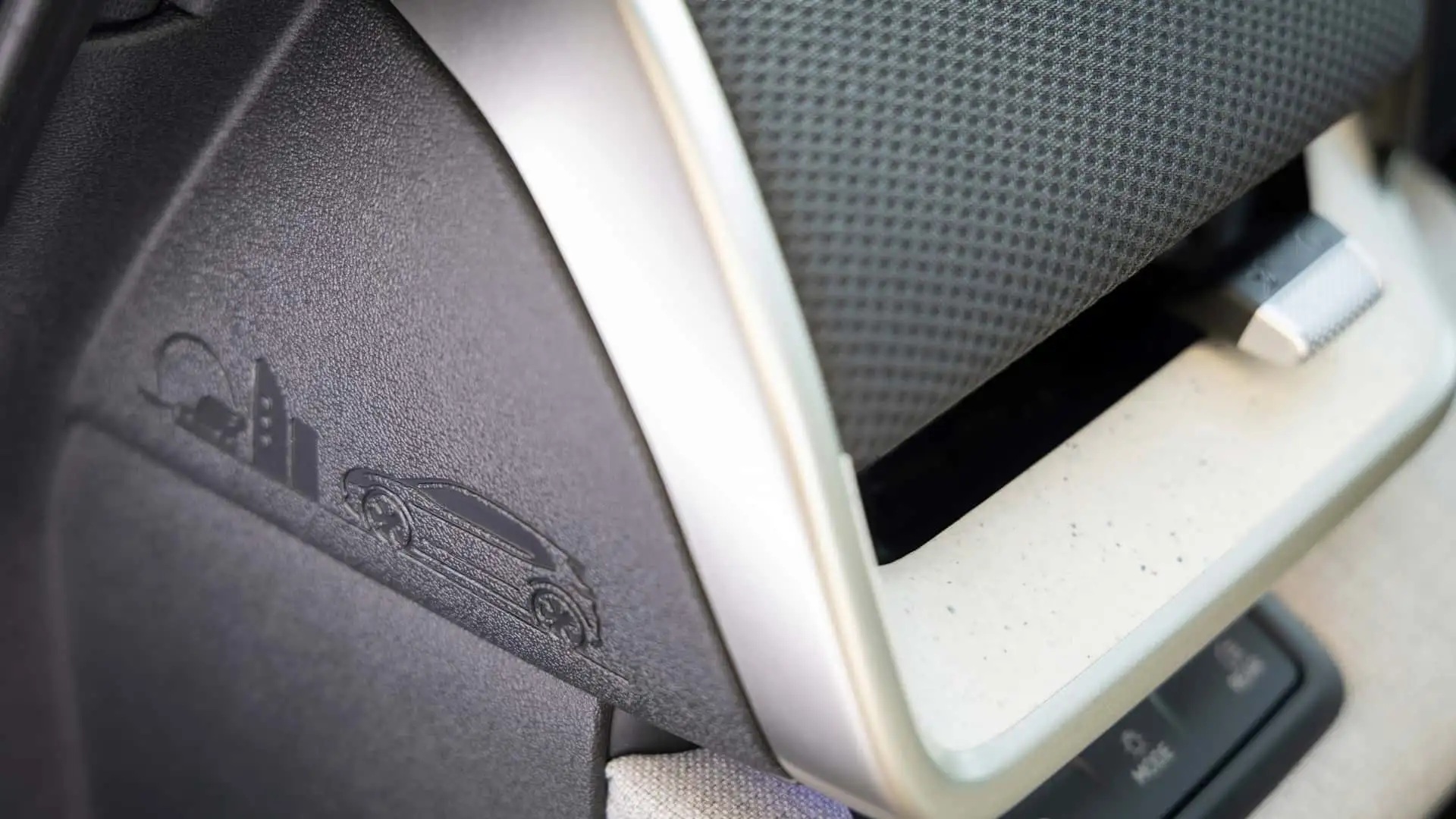
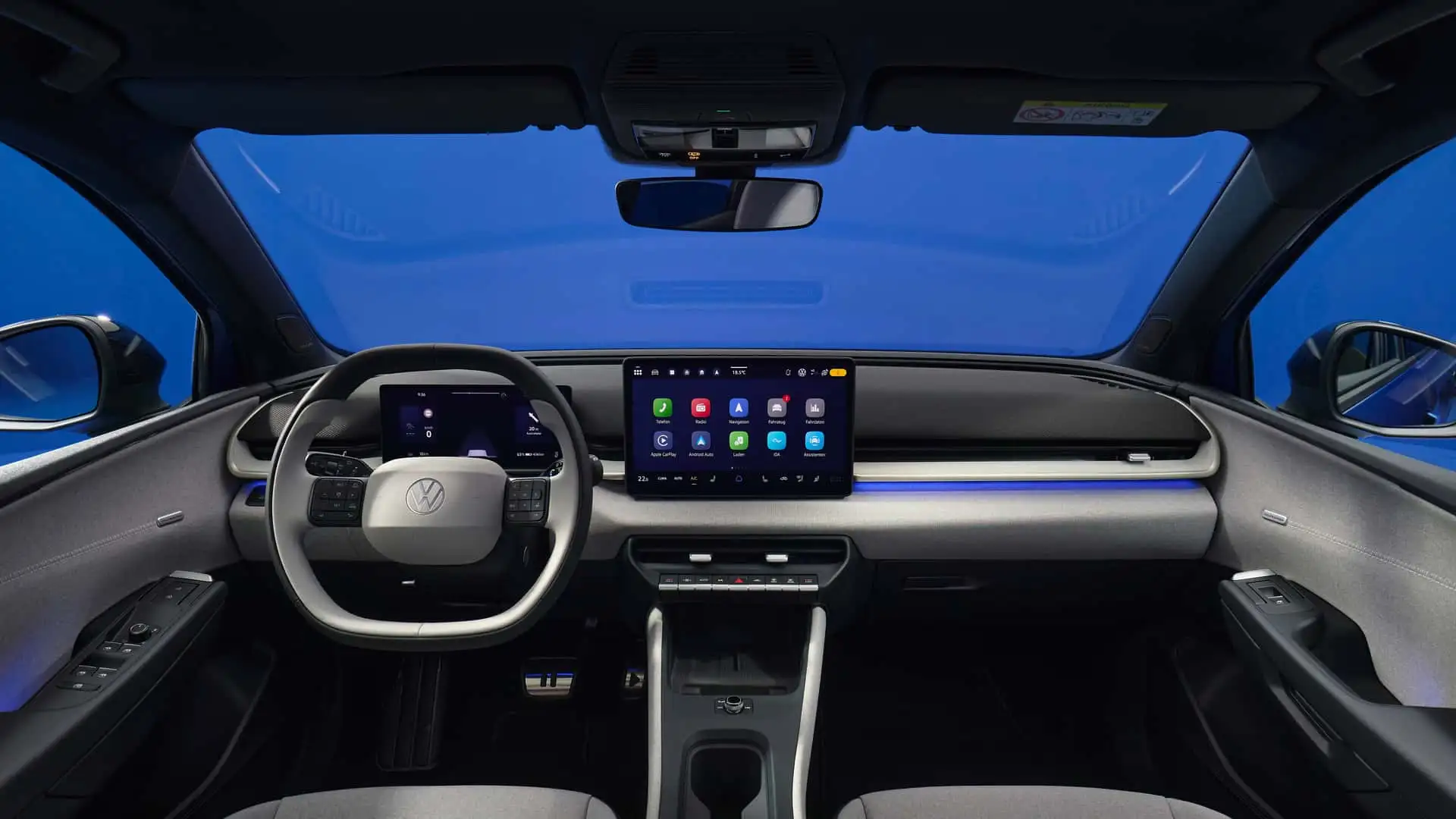
Volkswagen has listened. The ID. Polo marks a decisive retreat from the all-touch-screen philosophy that plagued earlier ID. models. The steering wheel uses physical buttons instead of capacitive sensors. The climate controls are dedicated hard switches mounted below the central air vents. The driver’s door features four individual window switches — exactly as every car should. A rotary volume knob between the front seats also handles radio tuning and track selection.
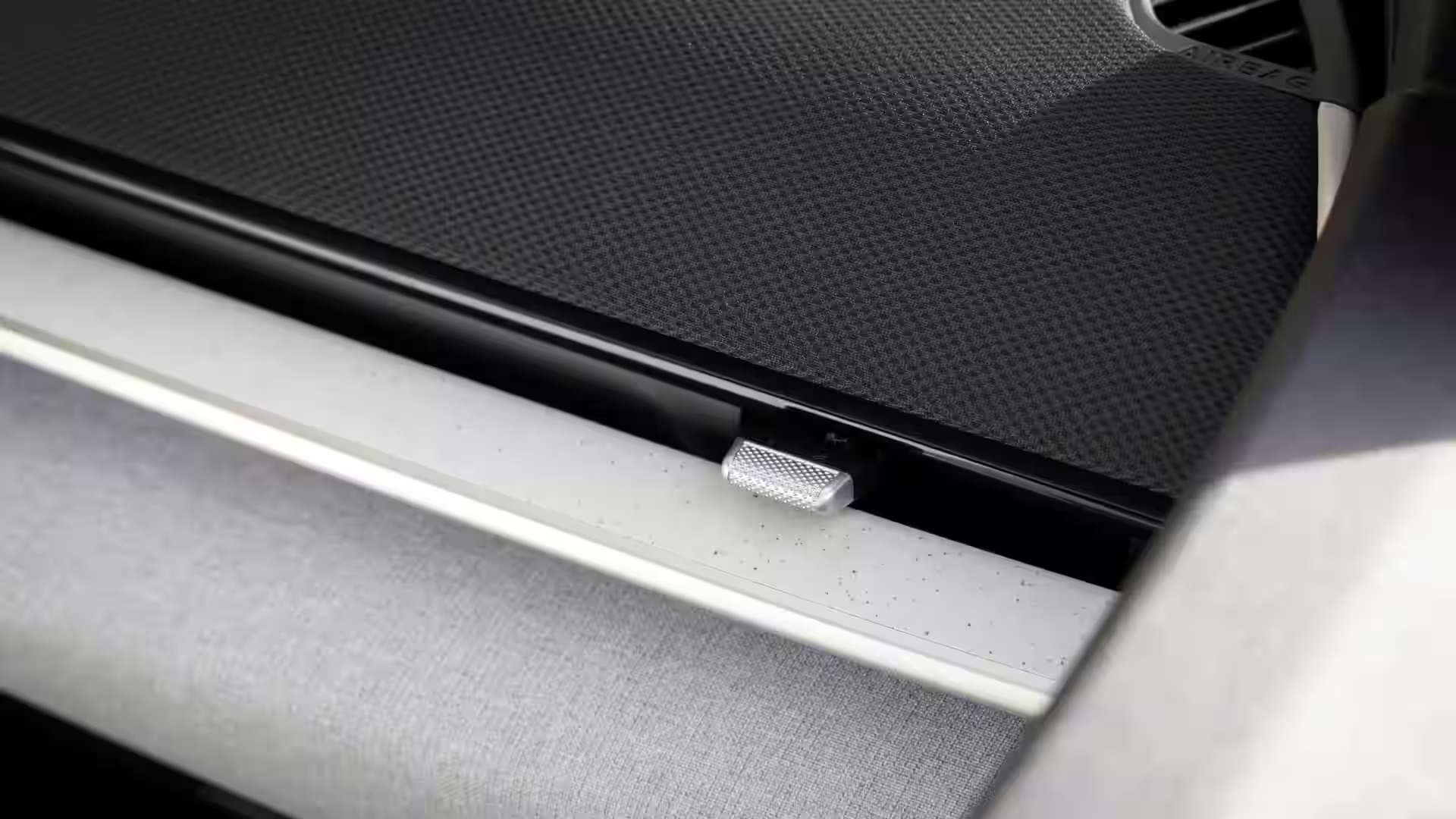
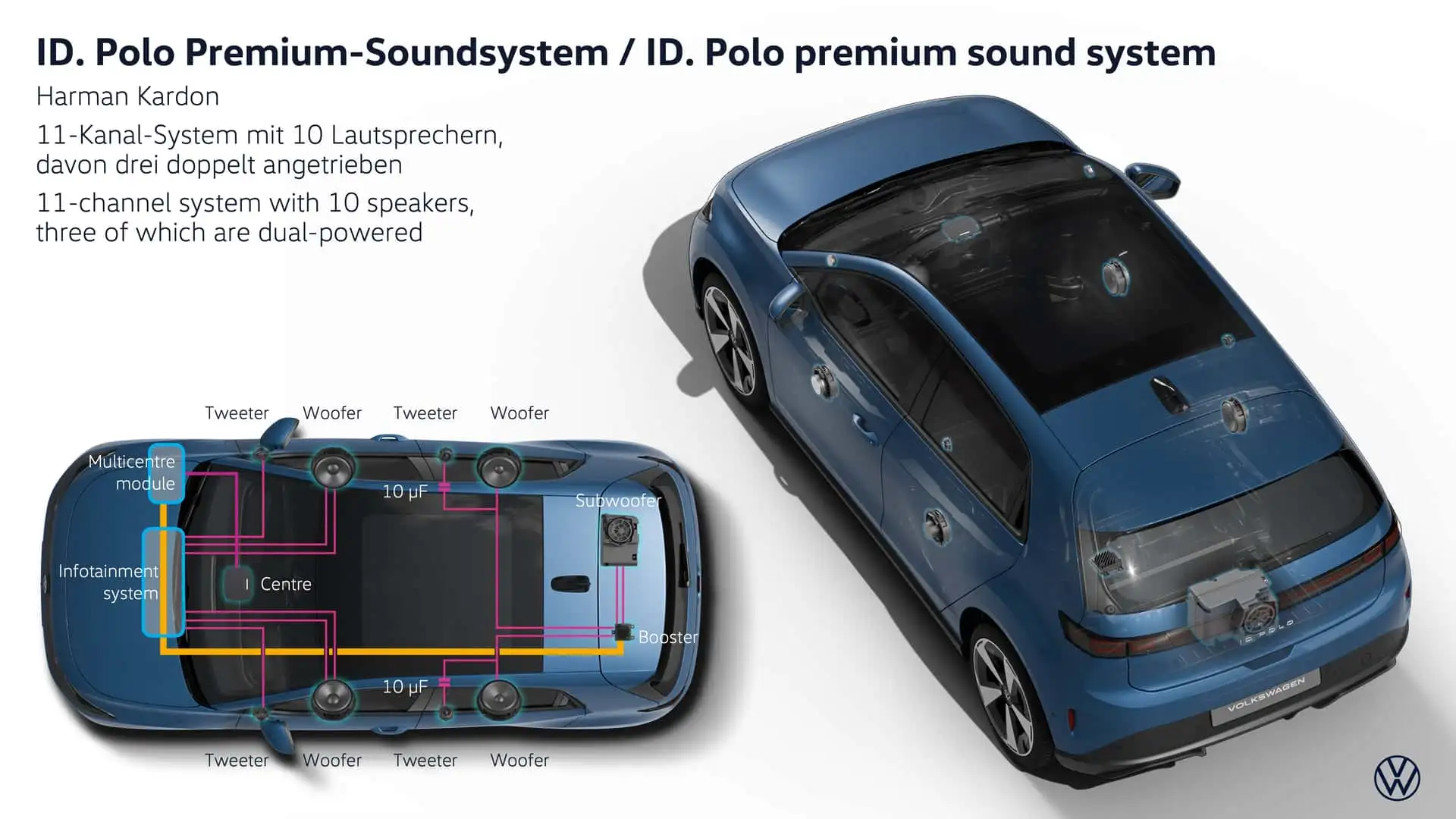
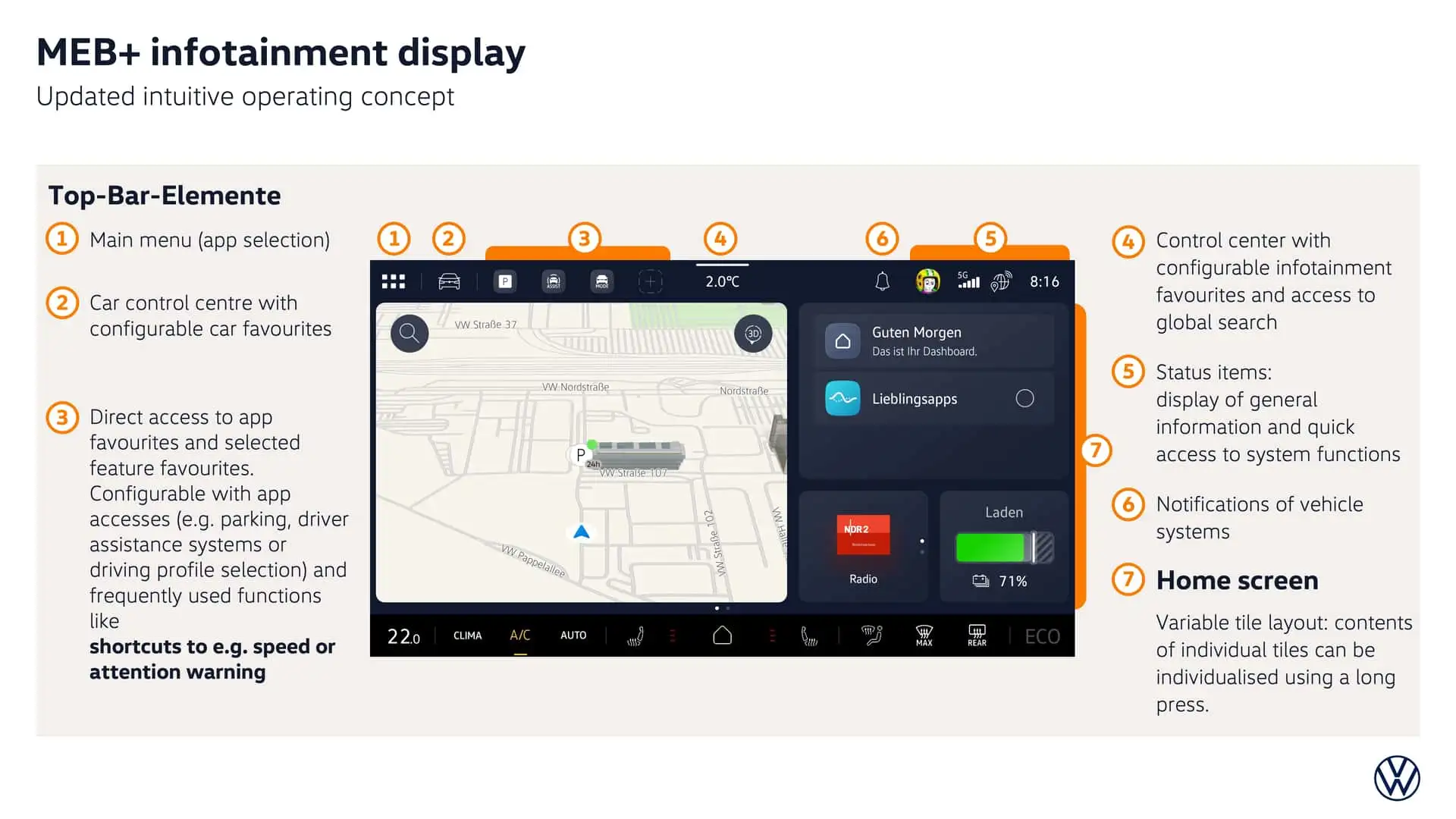
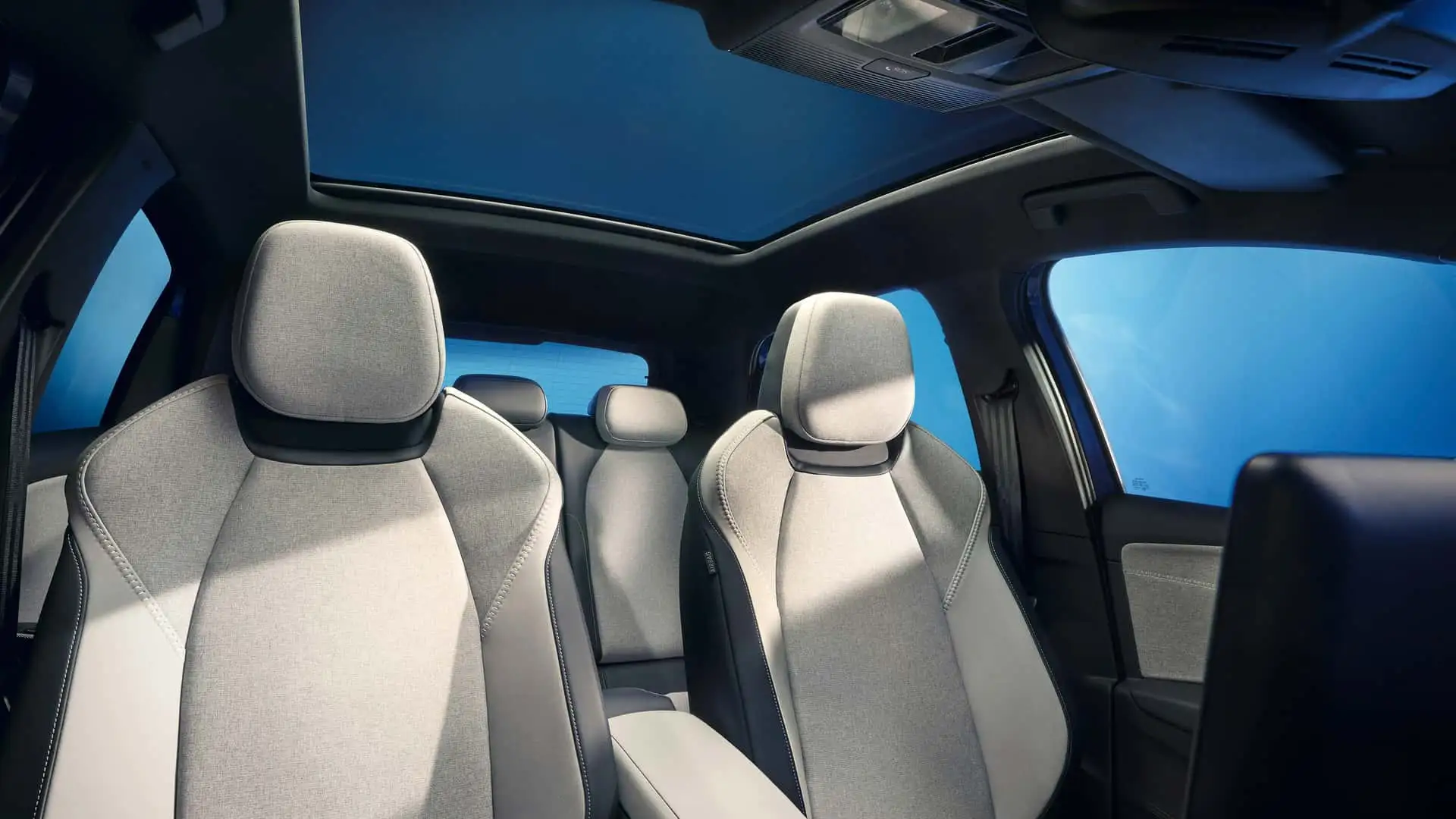
The digital interface consists of a 10-inch instrument cluster and a 13-inch central touchscreen with a tablet-style layout that floats above the dashboard. There is no passenger screen — a welcome restraint in a segment where cost discipline matters. Optionally, buyers can spec a panoramic glass roof, 12-way electrically adjustable front seats with massage function and driver memory, a 425-watt Harman Kardon sound system with 10 speakers and a trunk-mounted subwoofer, plus ambient lighting across the dashboard and door panels.
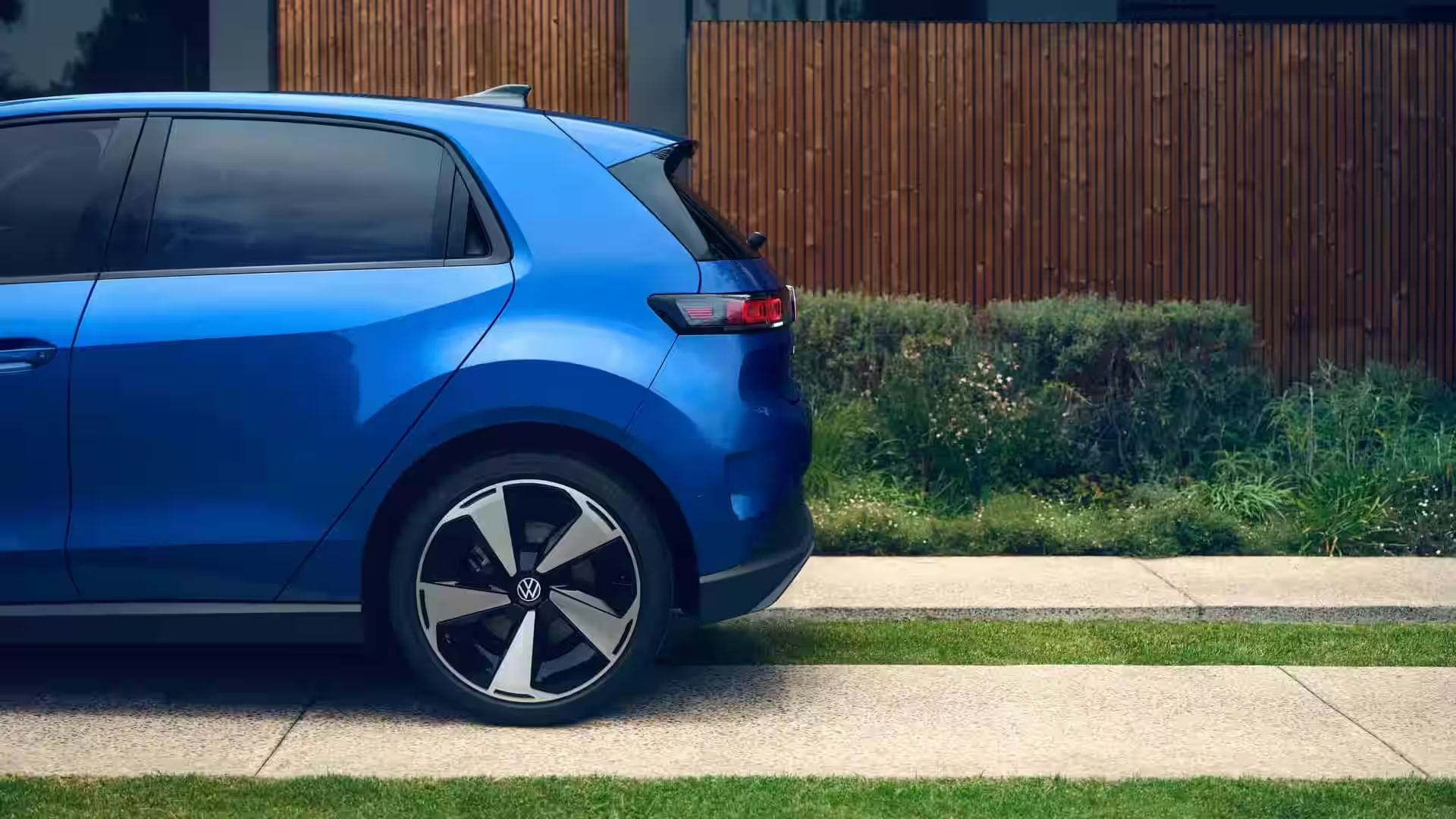
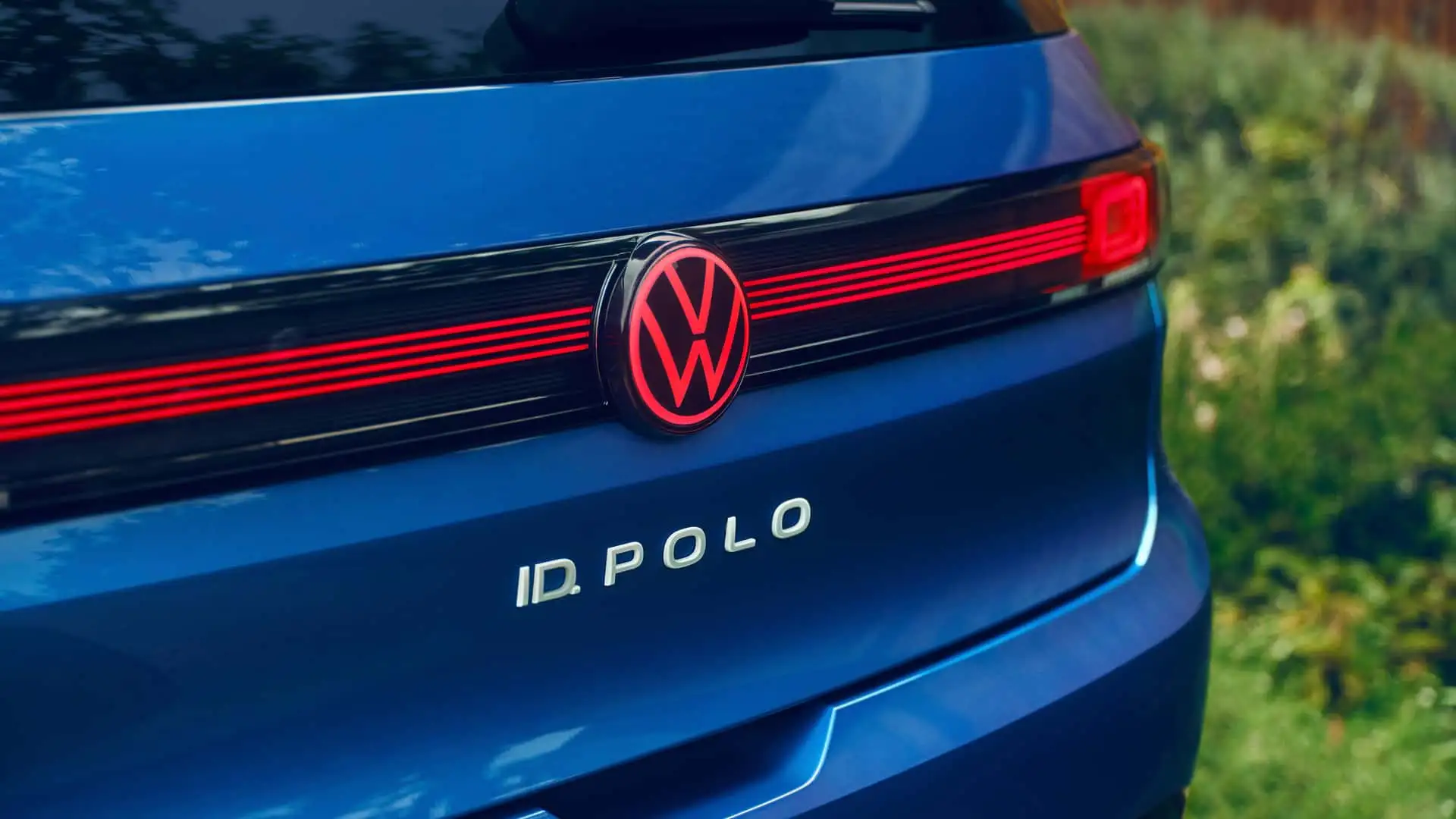
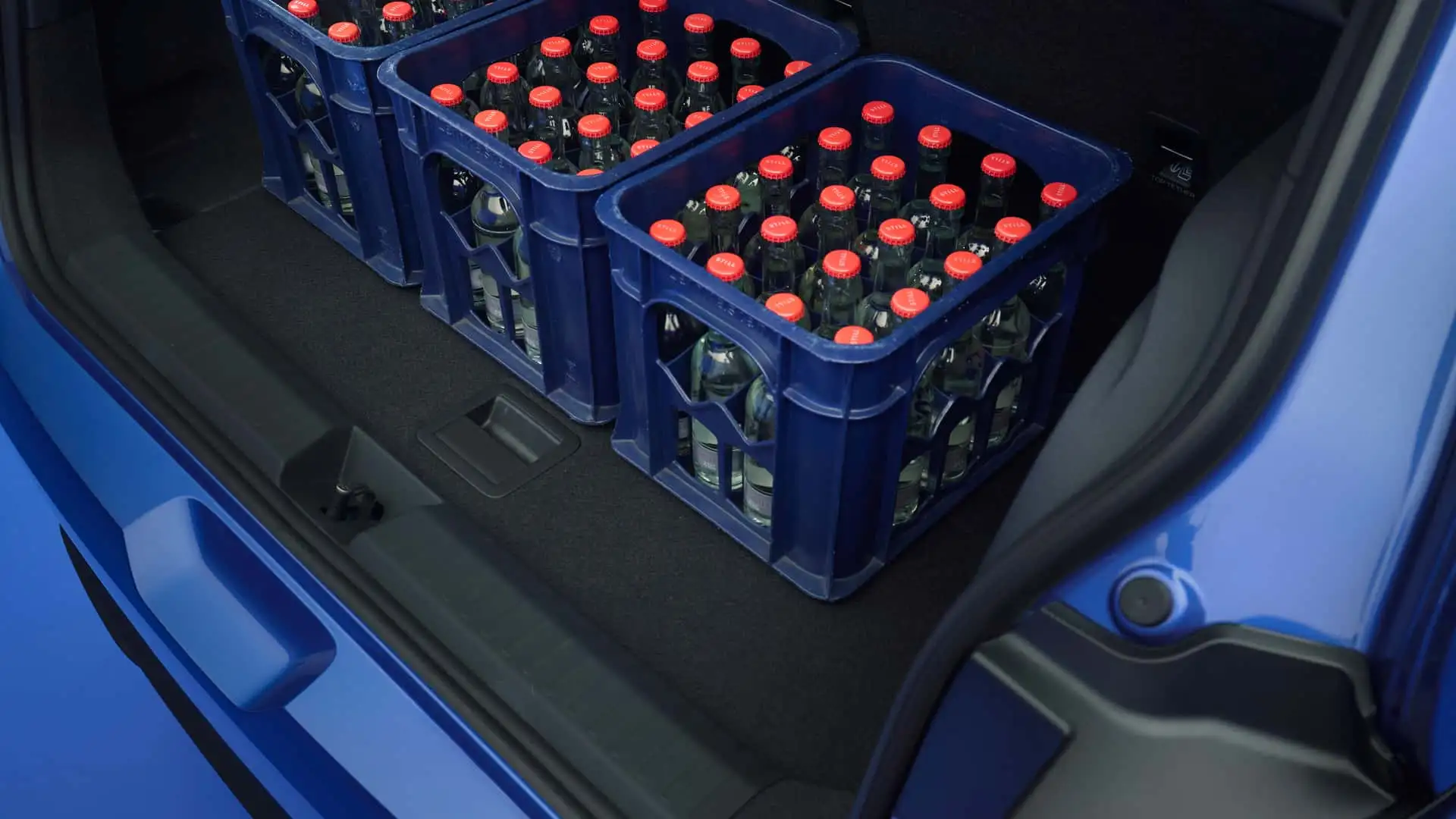
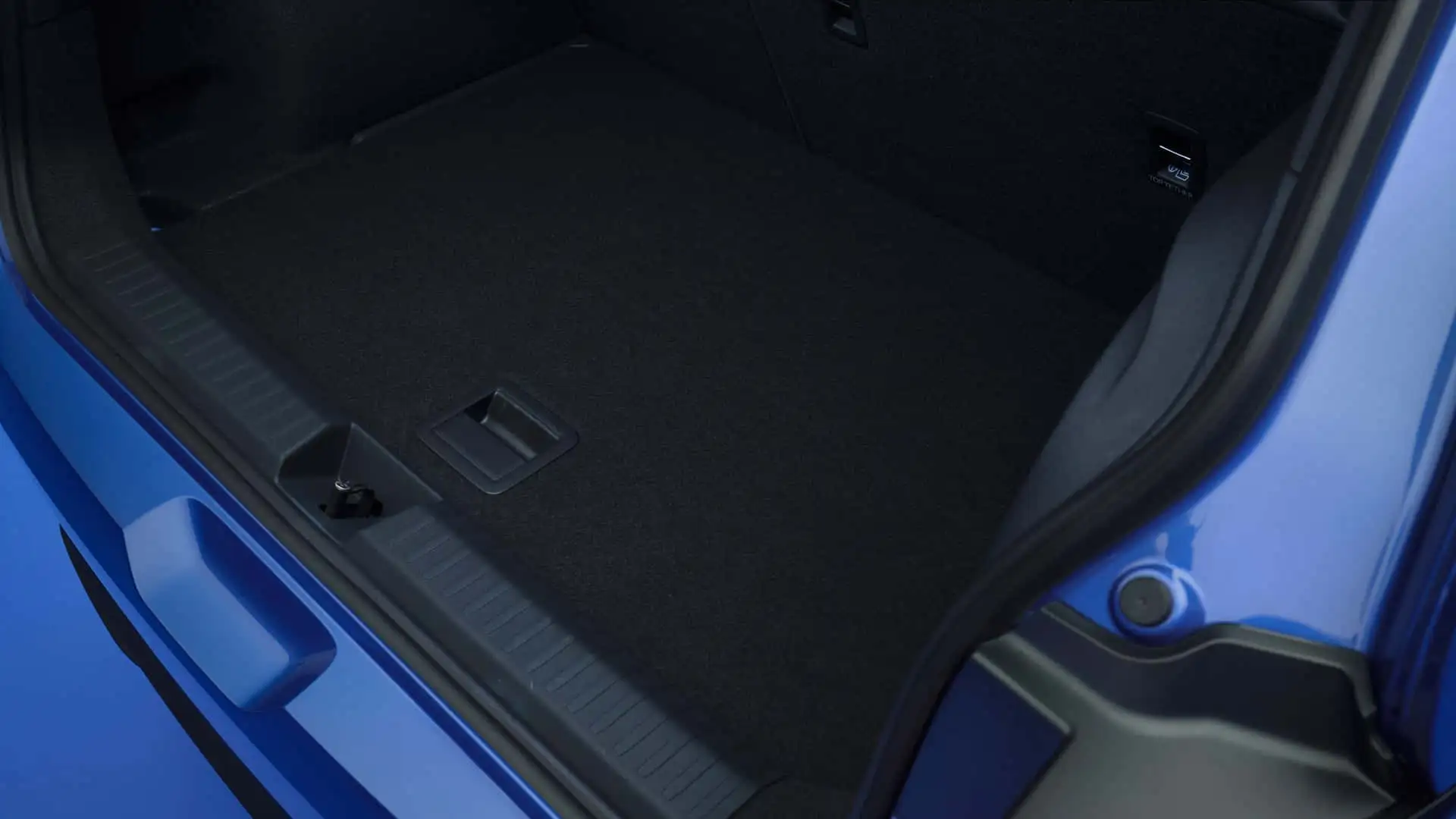
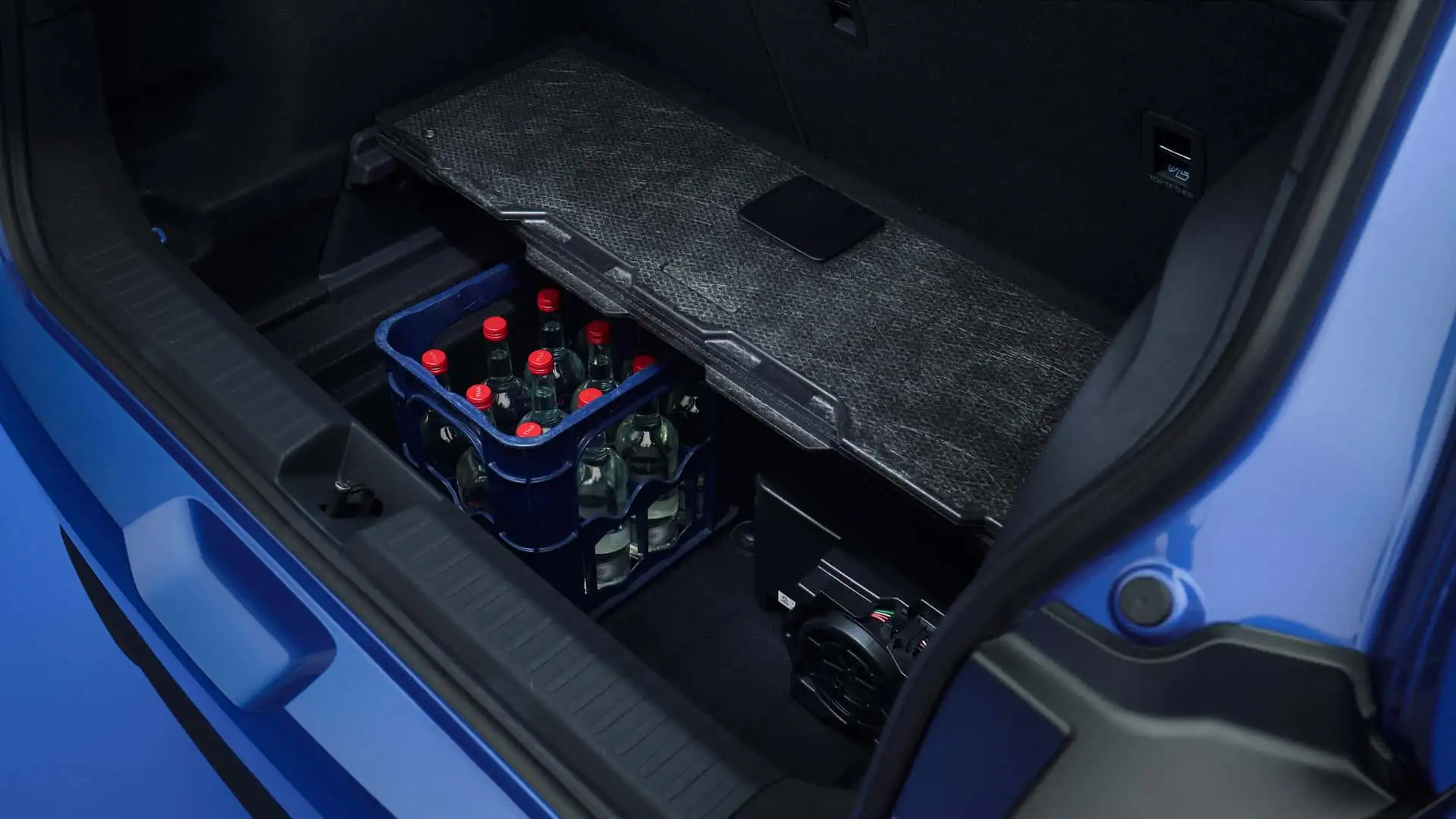
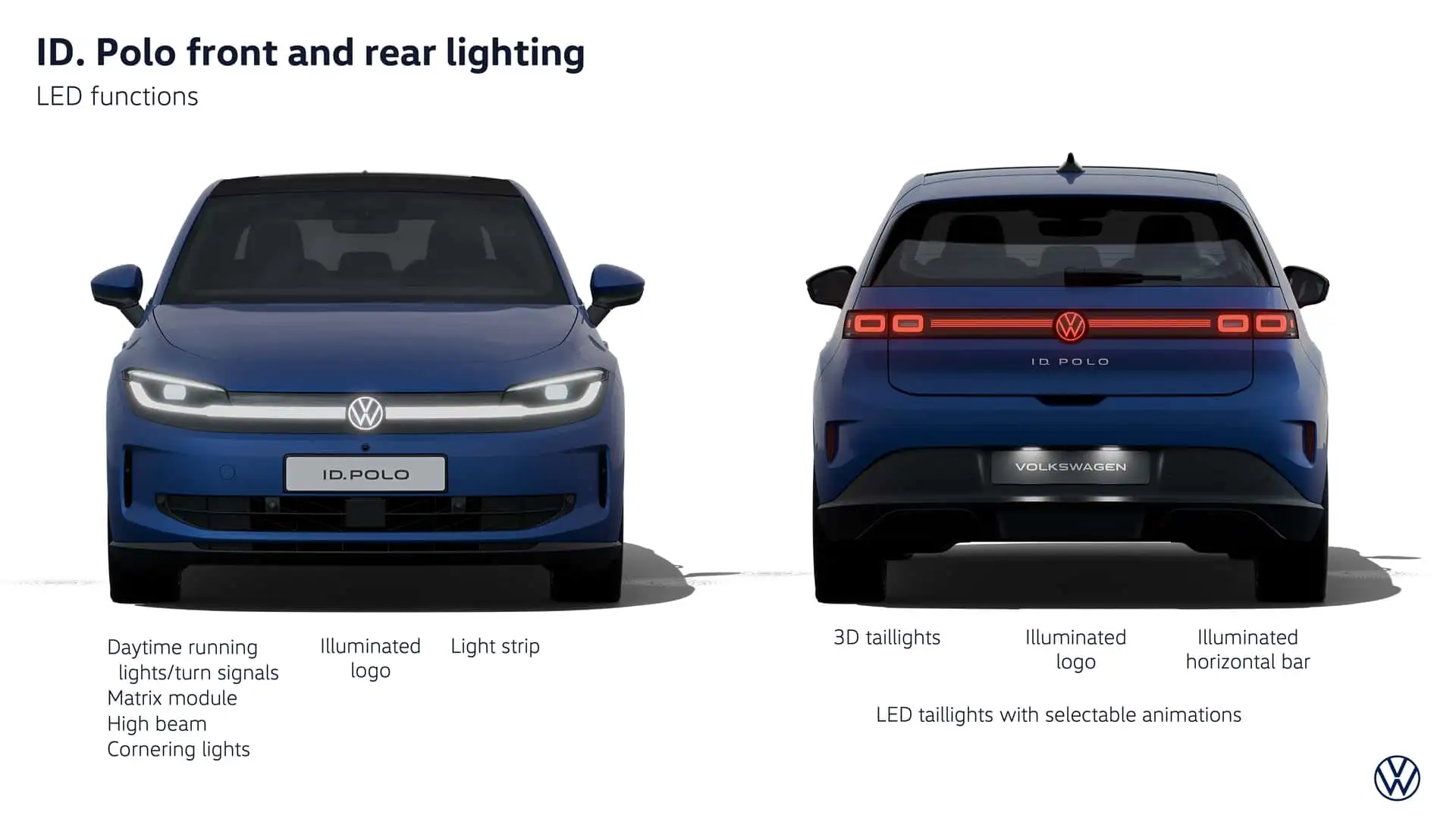
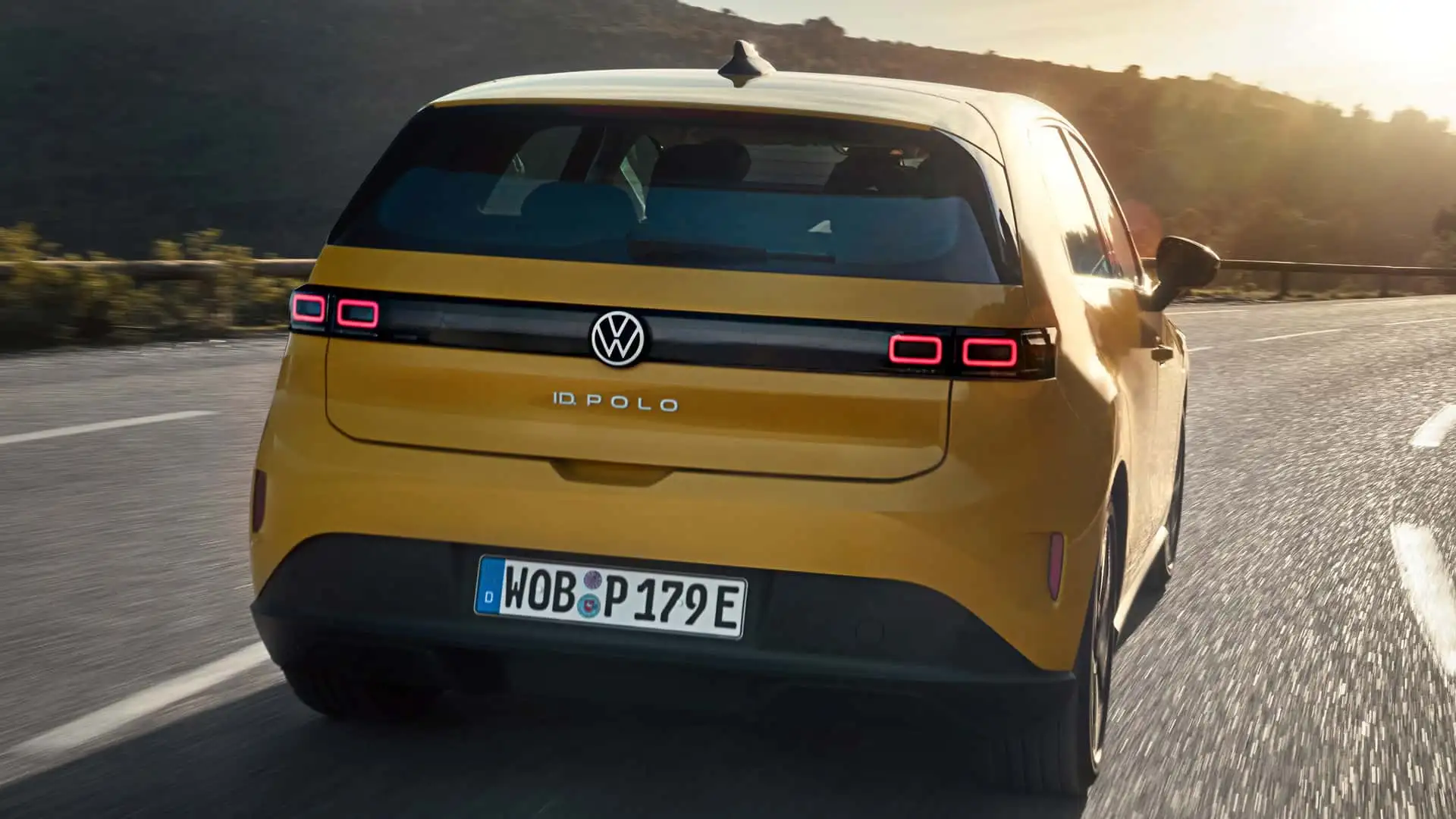
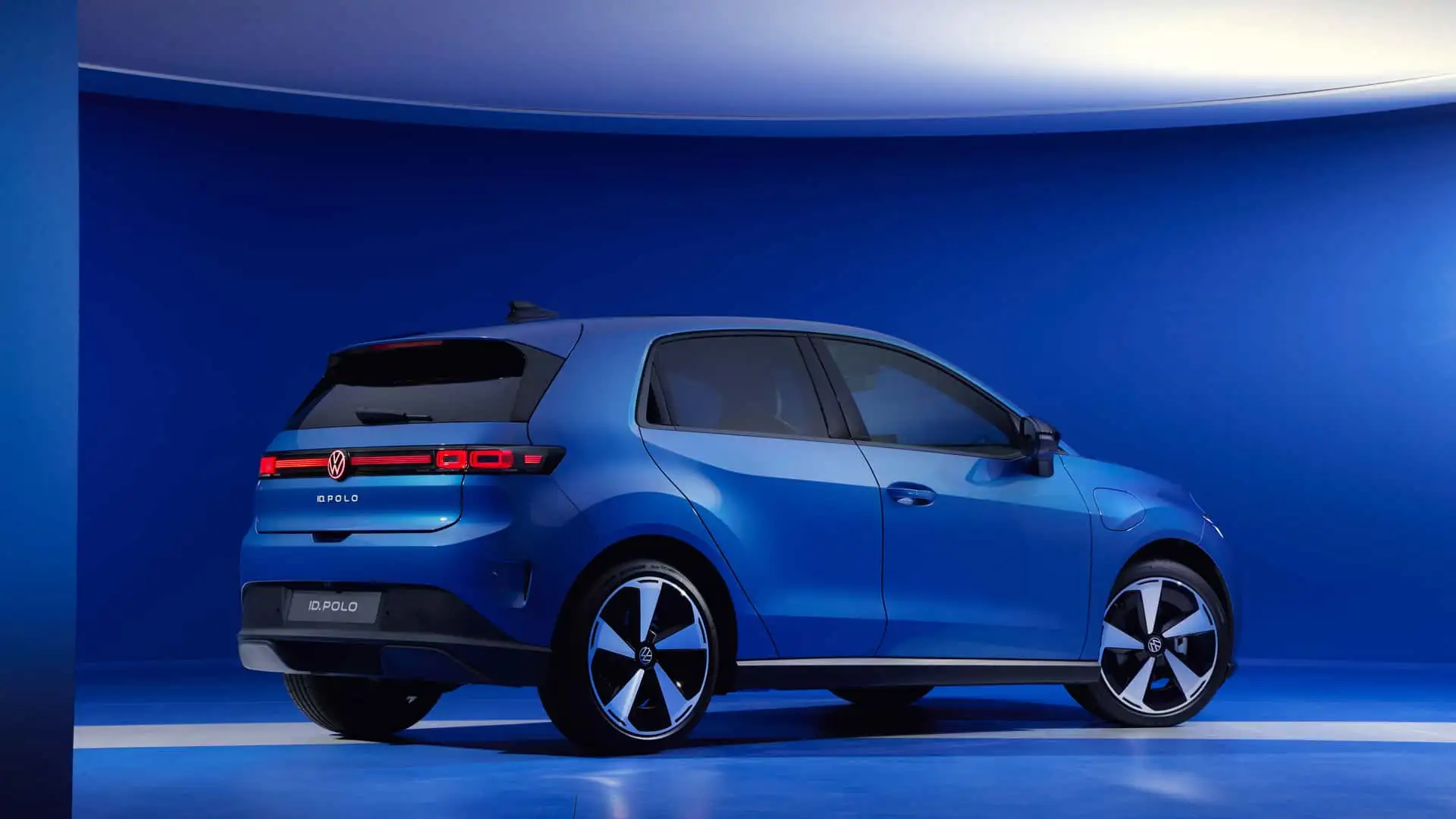
Rear cargo volume stands at 441 liters (15.5 cu ft) with the seats up. Wheel sizes range up to 19 inches on higher trims, and the optional taillights feature a 3D depth effect with an illuminated VW logo at the rear.
Design: Pure Positive Philosophy and Hidden Door Handles
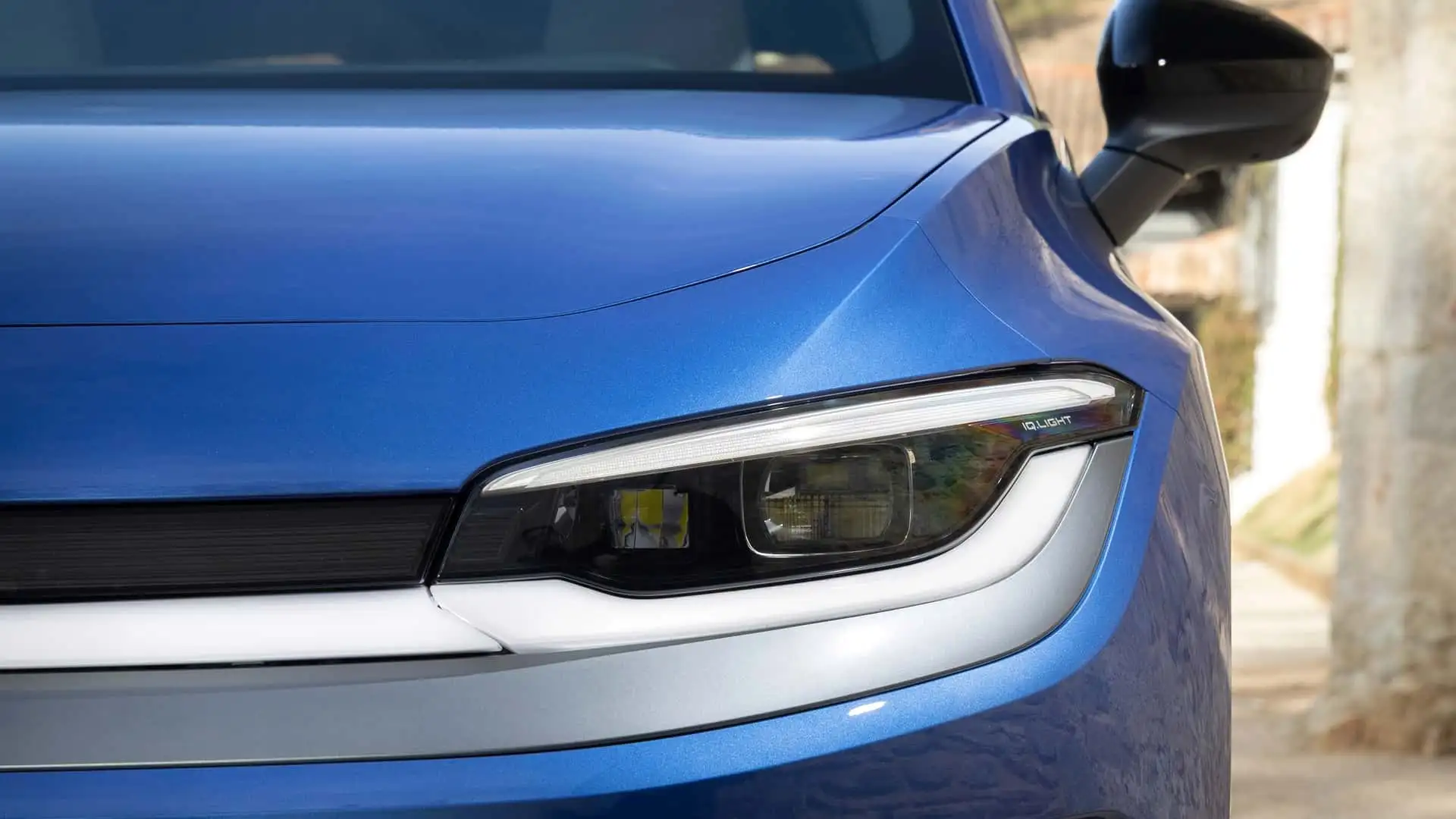
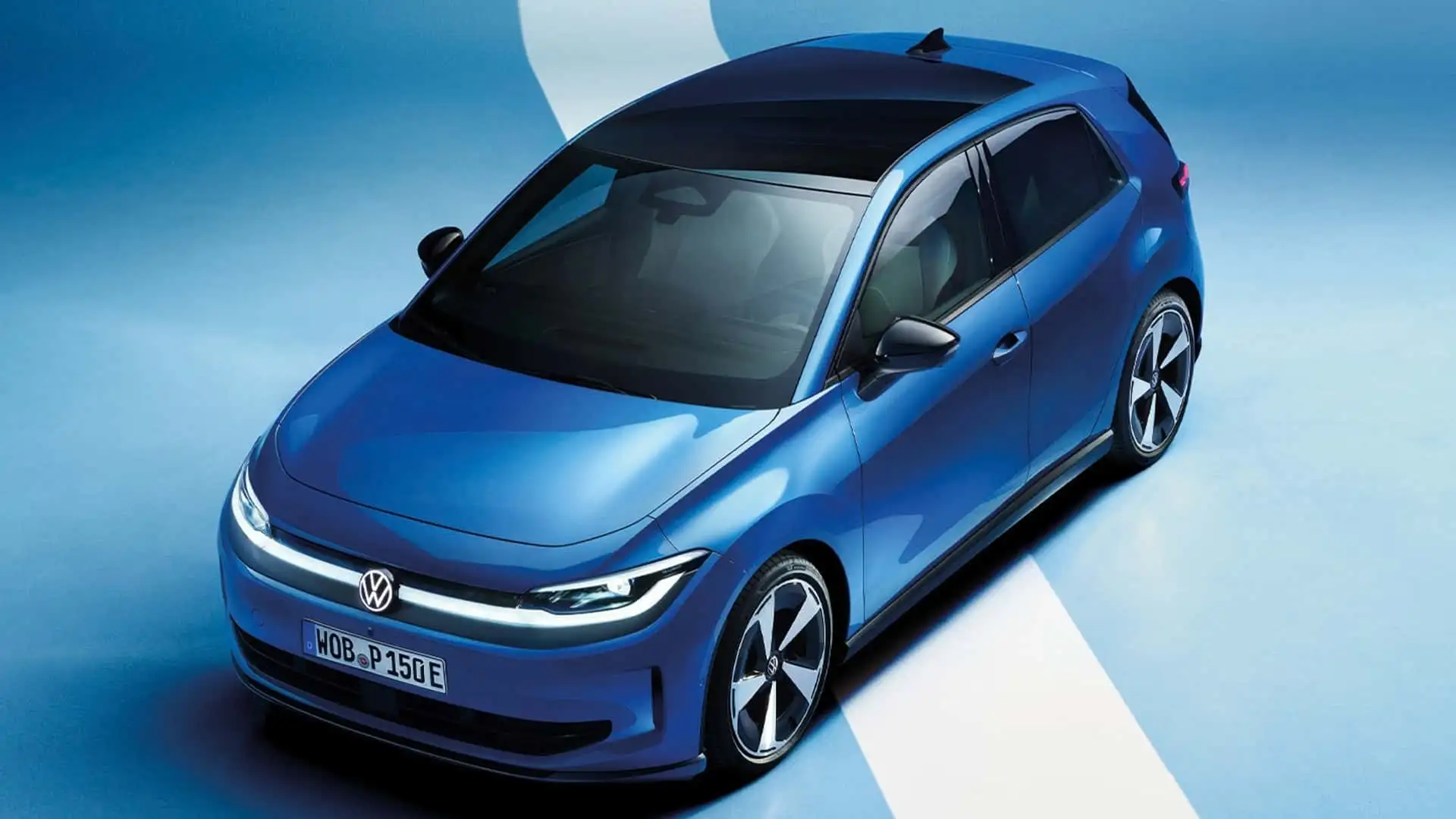
Andreas Mindt’s “Pure Positive” design language prioritises clean surfacing over ornamentation. The profile is defined by flared wheel arches and Alfa Romeo-style hidden rear door handles integrated into the C-pillar. That C-pillar itself draws inspiration from the original Golf, while the rear end features a light bar housed within a glass panel. On higher trim levels, both the front light bar and the rear badge illuminate.
The ID. Polo rides on a front-wheel-drive only configuration, distinguishing it from VW’s larger MEB-based EVs like the ID.4 and ID.5. This packaging decision — combined with the absence of a rear motor — frees up cabin space and keeps costs in check. The 2600 mm wheelbase is marginally longer than the petrol Polo’s, contributing to a more planted stance.
Market Positioning and Competition
At €24,995 in Germany, the ID. Polo undercuts the Volkswagen ID.3 Neo (€33,995) by a substantial margin. This pricing directly targets the Renault 5 and positions the Polo as the volume play in Europe’s B-segment EV war. With 20.6% of new-car sales in the EU/EFTA region already electric in Q1 2026, the timing could not be better. Volkswagen has also confirmed that a cheaper entry model — the production version of the ID. Every1 — will arrive in 2027 at approximately €20,000, likely reviving the Lupo or up! nameplate.
For context on how VW is scaling its EV strategy across segments, the VOLKSWAGEN ID.3 NEO 630KM Range and the New Face demonstrates the brand’s push into the C-segment with longer-range hardware, while the VW Jetta X Concept Signals a Fierce EV Pivot in China reveals how the brand is adapting its sedan portfolio for the world’s largest EV market. Meanwhile, the AUDI Q4 E-TRON 2026 FACELIFT: V2L, Sic Motors, and 185kw Charging Unveiled shows how the Group’s premium arm is deploying the same V2L and SiC motor technology that trickles down to the Polo.