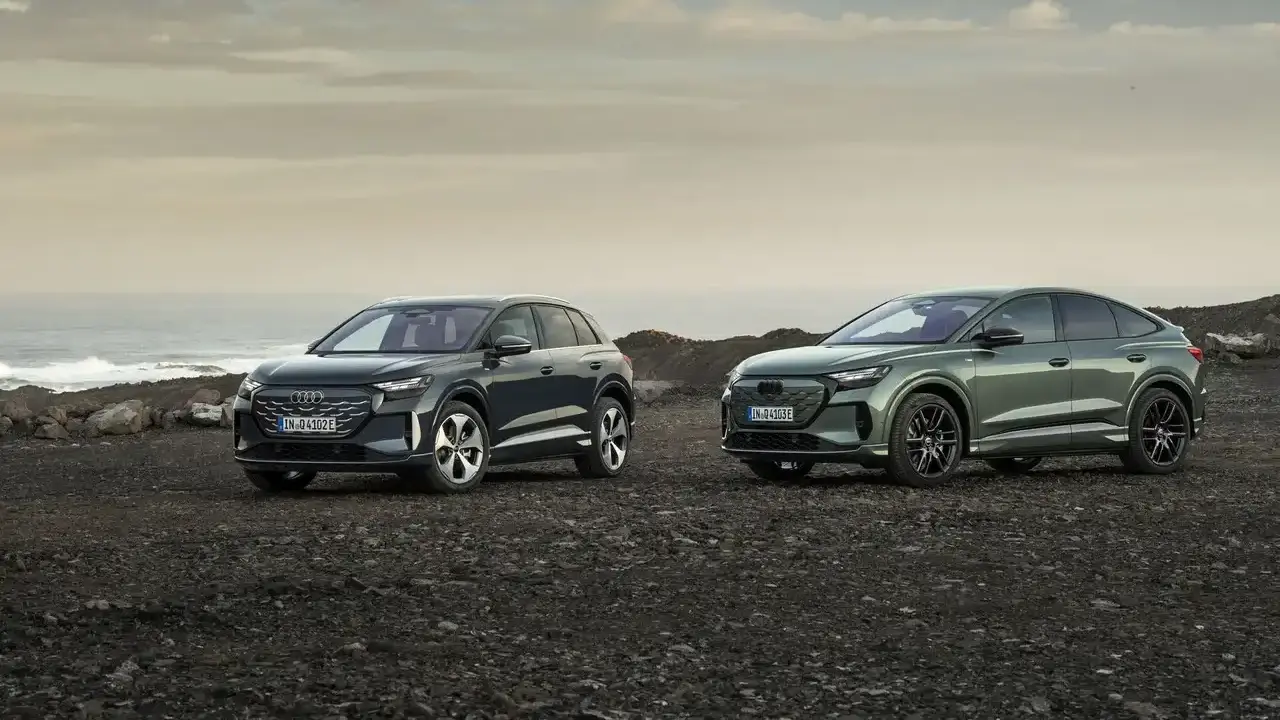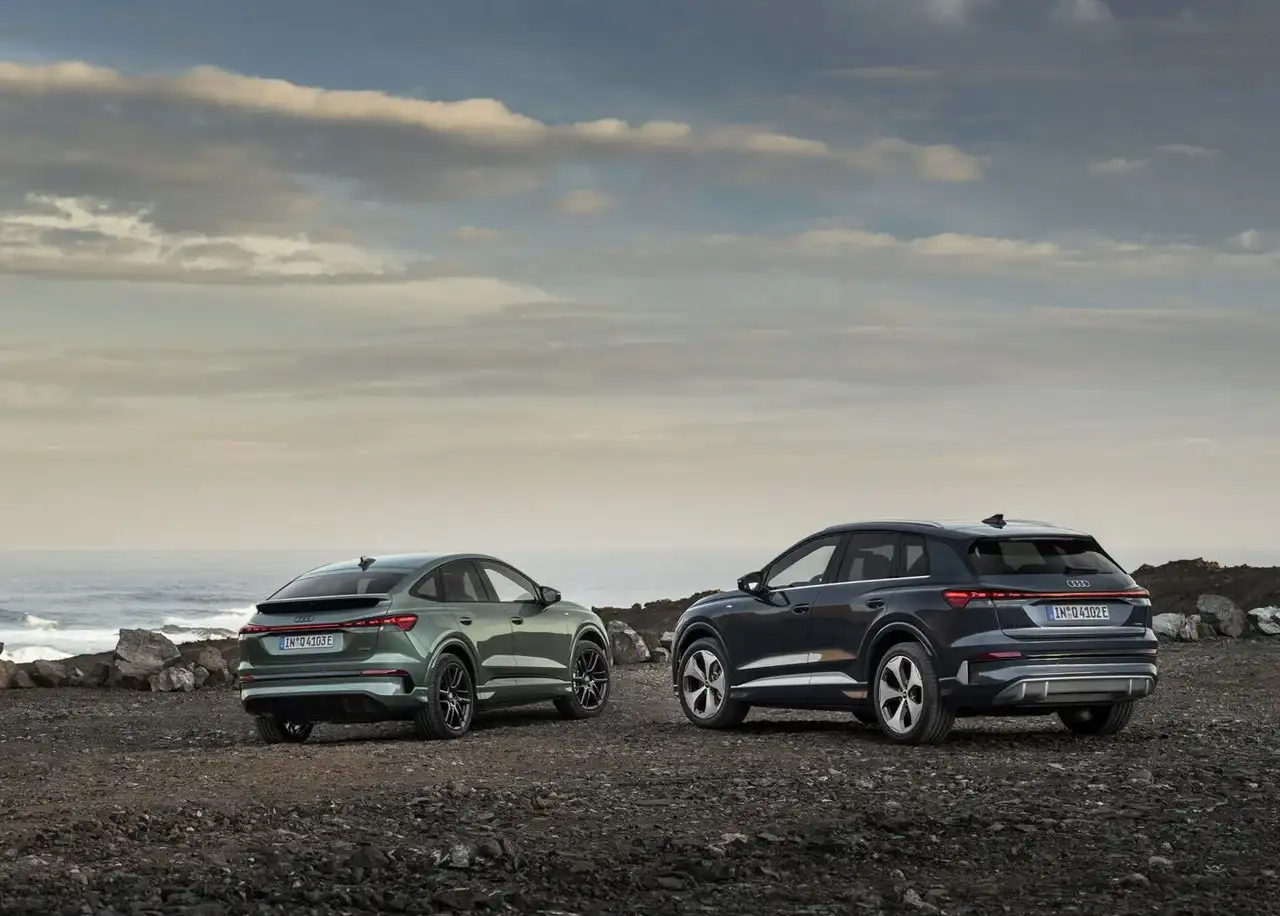
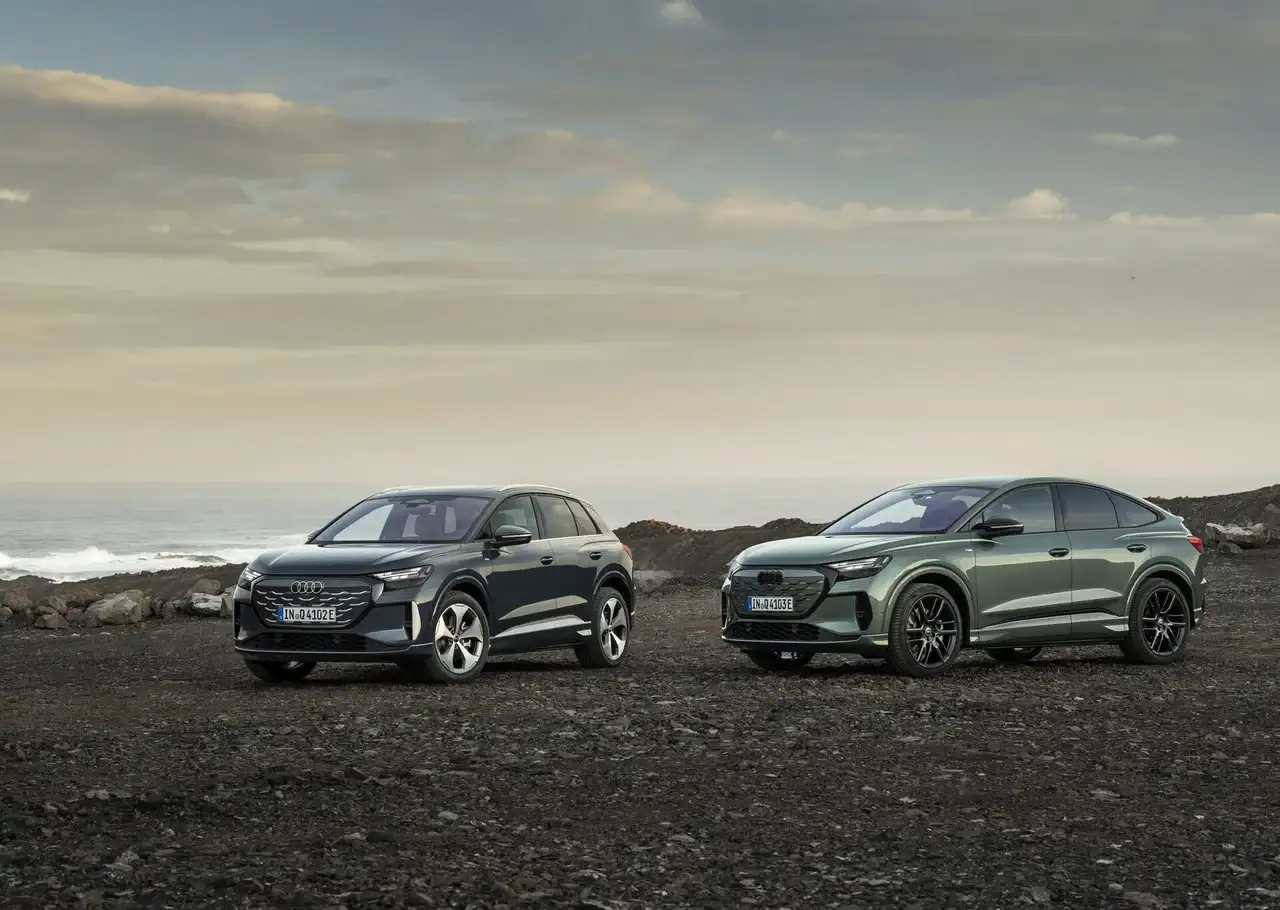
Audi has taken the wraps off the heavily revised Q4 e-tron, and this is no mere nip-and-tuck. The 2026 facelift delivers the brand’s first bidirectional charging capability, a thoroughly reworked powertrain with silicon-carbide inverters, and meaningful range gains that push the compact electric SUV further into premium territory. Orders open in Europe this May, with first deliveries scheduled for summer.
Bidirectional Charging Debuts: V2L and V2H Explained
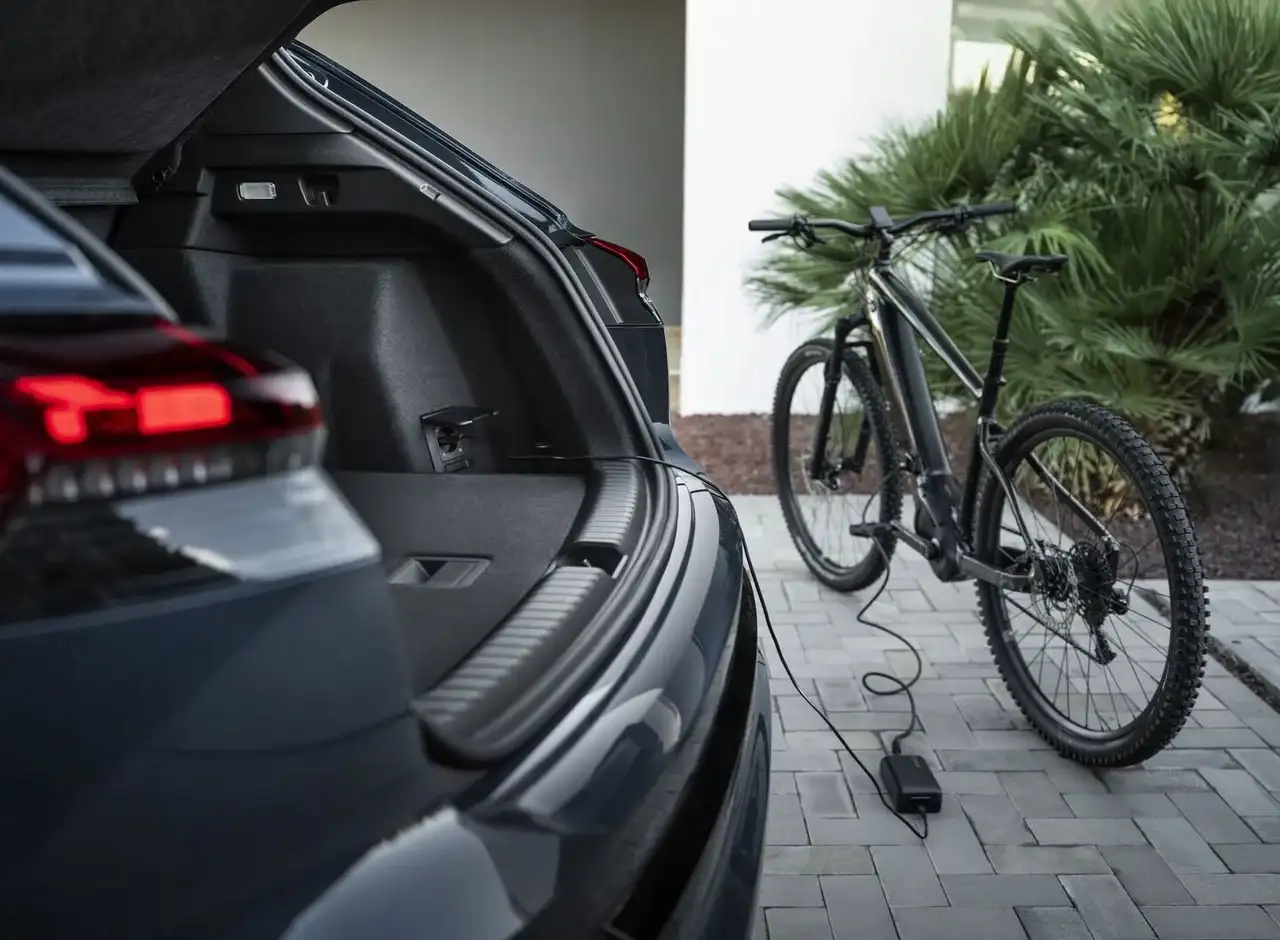
For the first time in an Audi production model, the Q4 e-tron supports Vehicle-to-Load (V2L). A 230V socket in the trunk provides 2.3 kW of output, while a charge-port adapter unlocks up to 3.6 kW – enough to run power tools, camping gear, or emergency appliances. In Germany and other selected European markets, Vehicle-to-Home (V2H) functionality allows the 82 kWh battery to serve as a home energy buffer, operating between 20% and 80% state of charge. The discharge energy is displayed on the instrument cluster. This move positions the Q4 e-tron as a genuinely versatile energy platform, not just a means of transport.
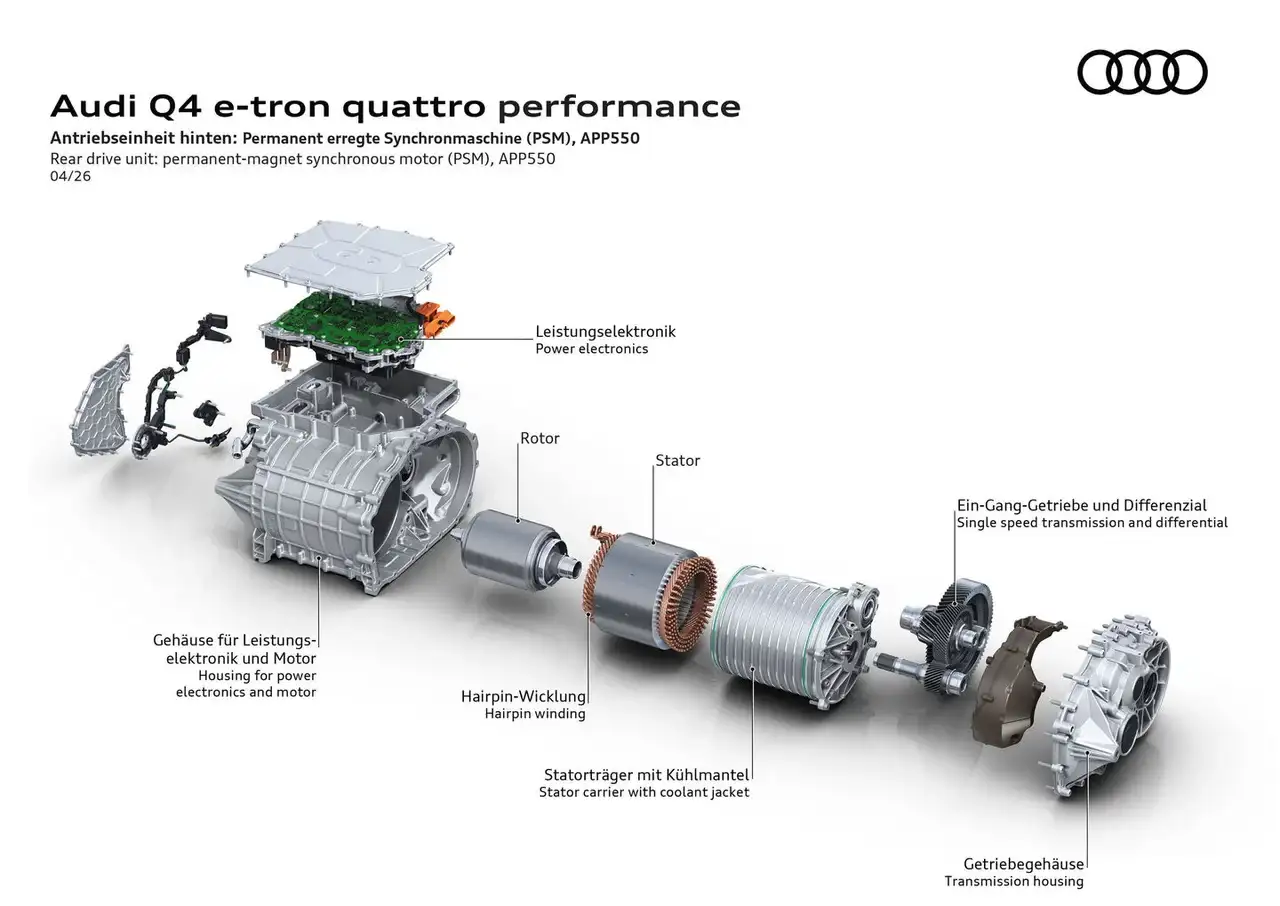
New APP350 Motor and 185 kW Charging
The headline mechanical upgrade is the APP350 electric motor, which uses a silicon carbide (SiC) pulse inverter to cut switching losses and boost efficiency by 10%. Low-viscosity transmission oil further reduces friction, adding up to 12 km of range in cold conditions. Total range improvement over the pre-facelift model is 30 km for rear-wheel-drive versions and 32 km for quattro models. The 82 kWh battery (usable capacity) now supports peak DC fast-charging at 185 kW. A 10-80% top-up takes just 27 minutes, and a 10-minute stop yields up to 185 km of driving range. This puts the Q4 e-tron on par with rivals like the BYD Denza D9 in terms of charging speed – a critical metric for long-distance usability.
| Specification | Value |
|---|---|
| Battery capacity (usable) | 82 kWh |
| Peak DC fast-charge | 185 kW |
| 10-80% charge time | 27 min |
| Range gain (quattro) | +32 km |
| V2L output (charge port) | 3.6 kW |
| Base price (Germany, 82 kWh) | €53,500 (~$58,000) |
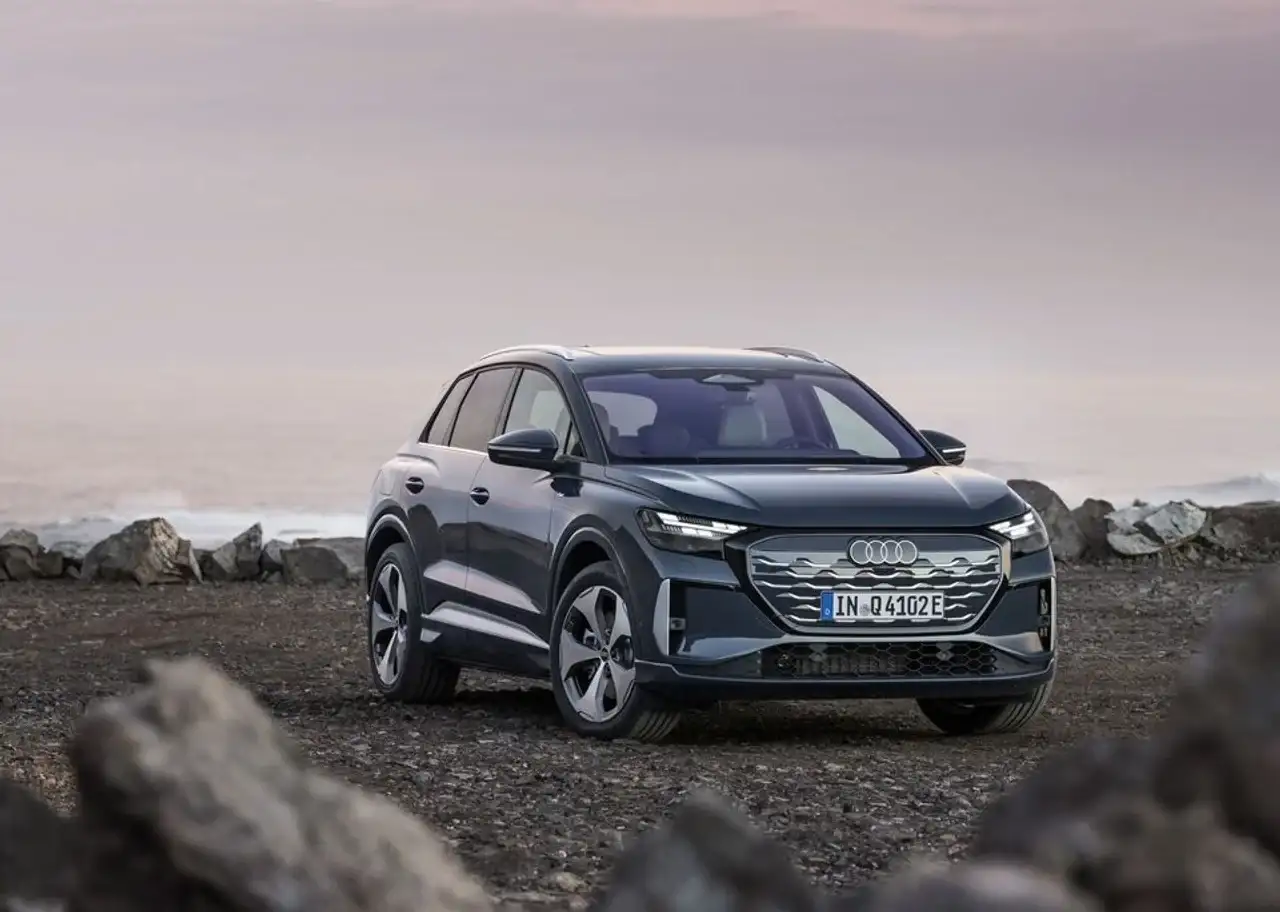
Exterior, Lighting, and Interior Upgrades
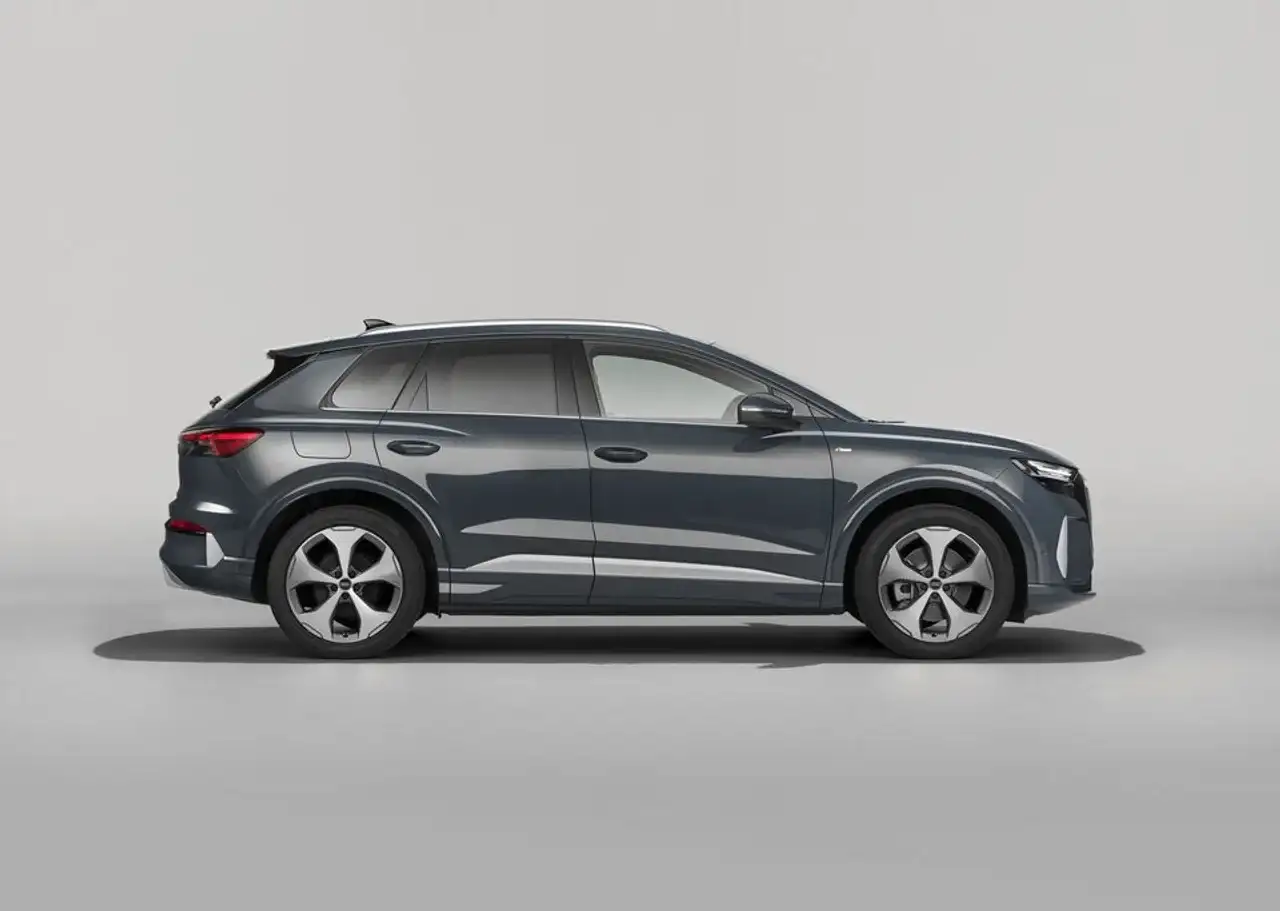
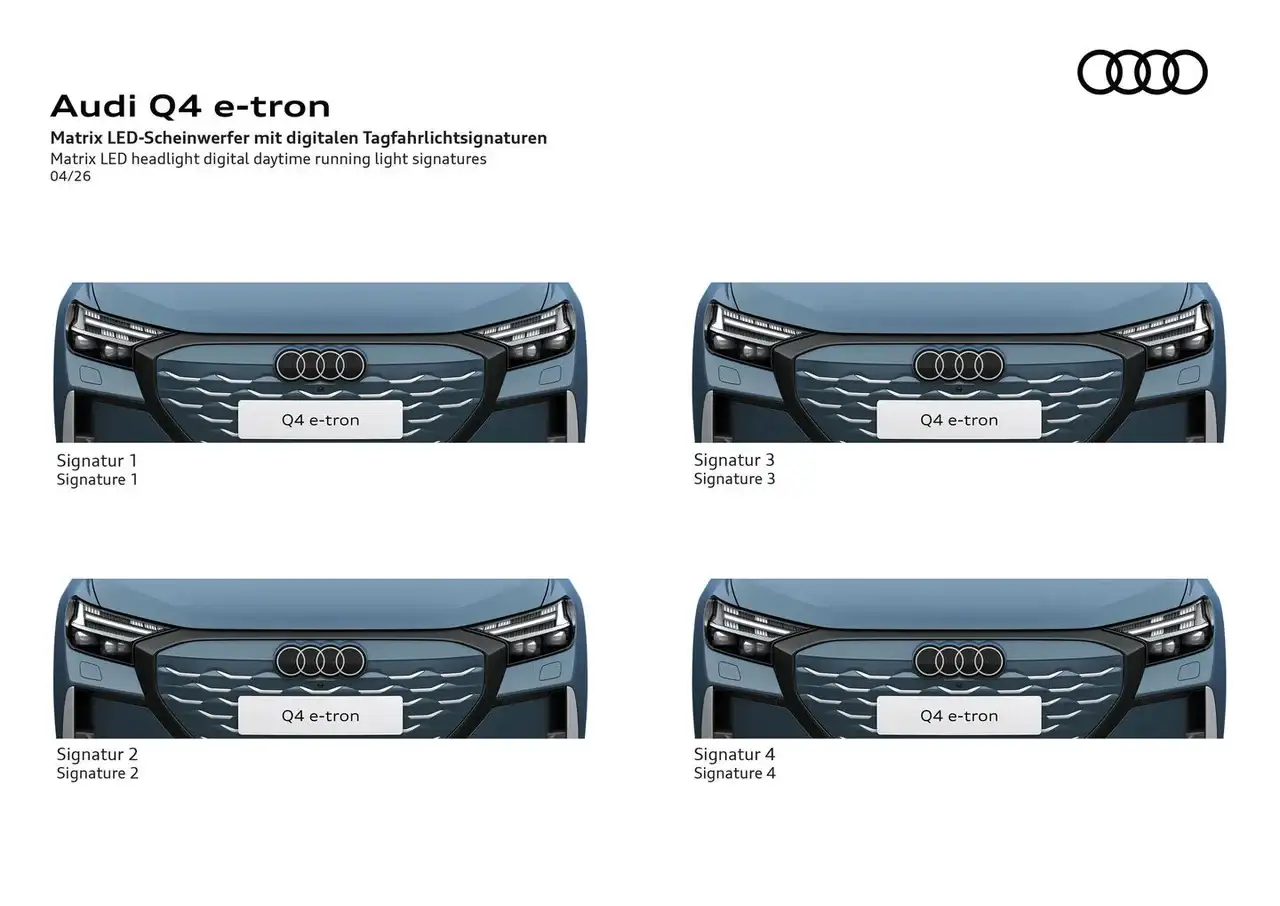
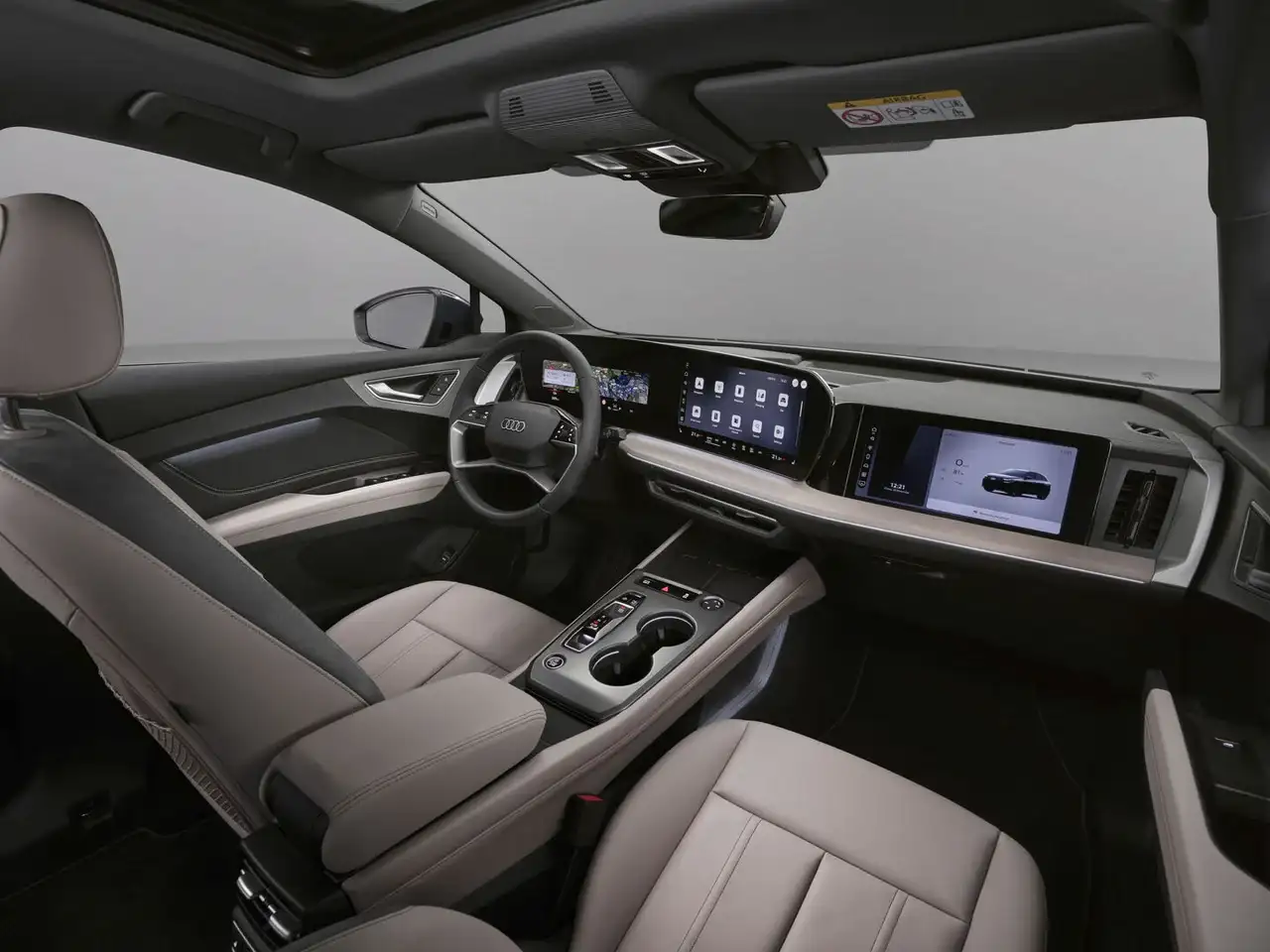
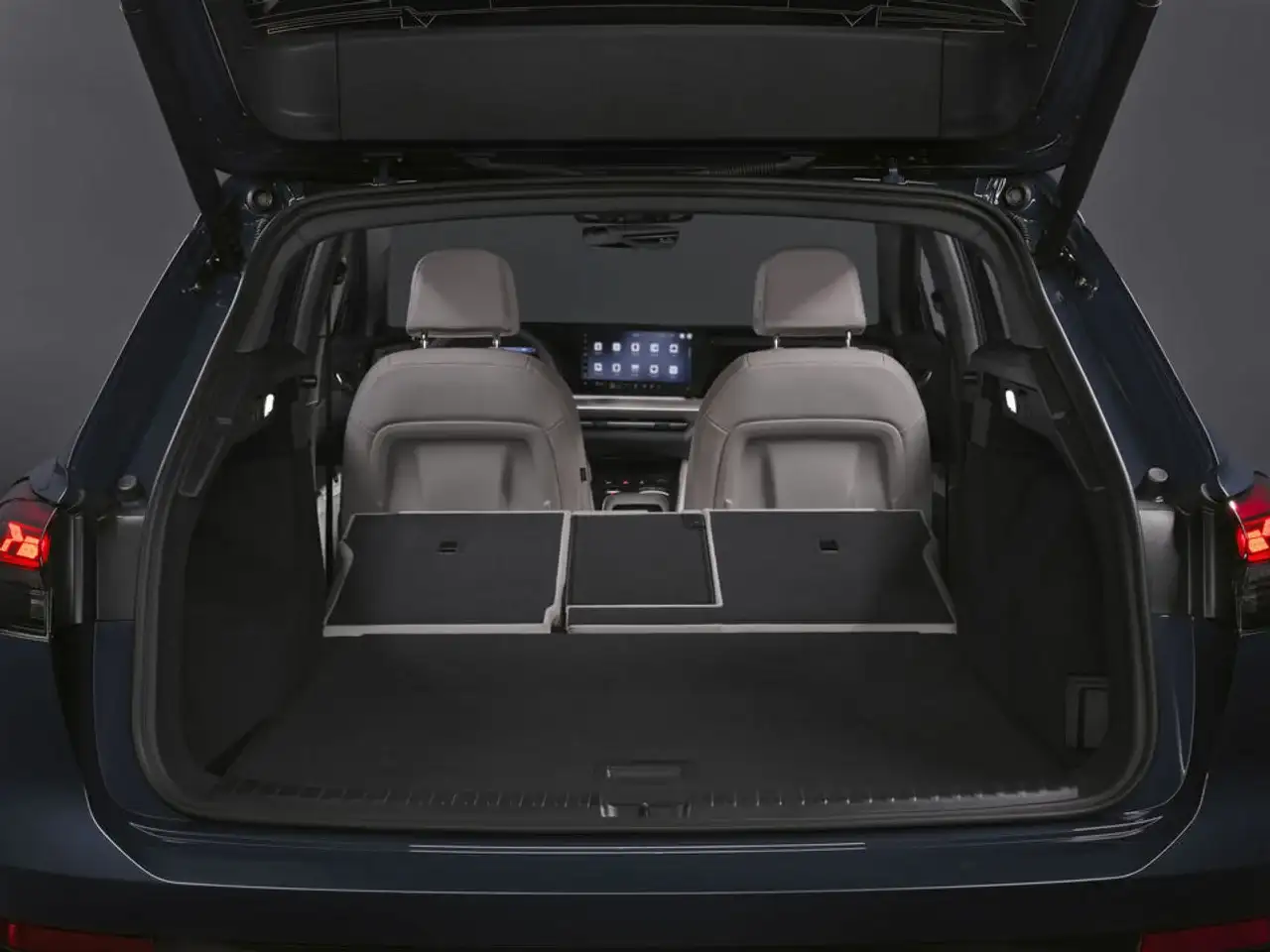
Externally, the Q4 e-tron retains its short overhangs and wide stance. The S line gets selenite silver matte blades for a sportier look. Lighting is a highlight: second-generation digital OLED taillights with 284 segments can display four distinct light signatures, and a proximity warning system illuminates the lights when a following vehicle approaches too close. Inside, a panoramic display integrates an 11.9-inch instrument cluster and a 12.8-inch MMI touch screen in a driver-oriented layout. The optional augmented-reality head-up display projects navigation and ADAS prompts into a virtual 70-inch field of view. Cargo volume is 515 liters (1,487 with seats folded), and towing capacity stands at 1,800 kg.
ADAS and Infotainment
The facelift introduces Adaptive Driving Assist Plus, which enables automated lane changes on highways above 90 km/h and uses cloud data to maintain lane position even on poorly marked roads. The infotainment system runs Android Automotive OS with Audi’s own app store for third-party services. For a deeper look at how Audi’s facelift strategy compares to other premium players, check out our analysis of the Q4 e-tron 2026 facelift – the hidden changes.