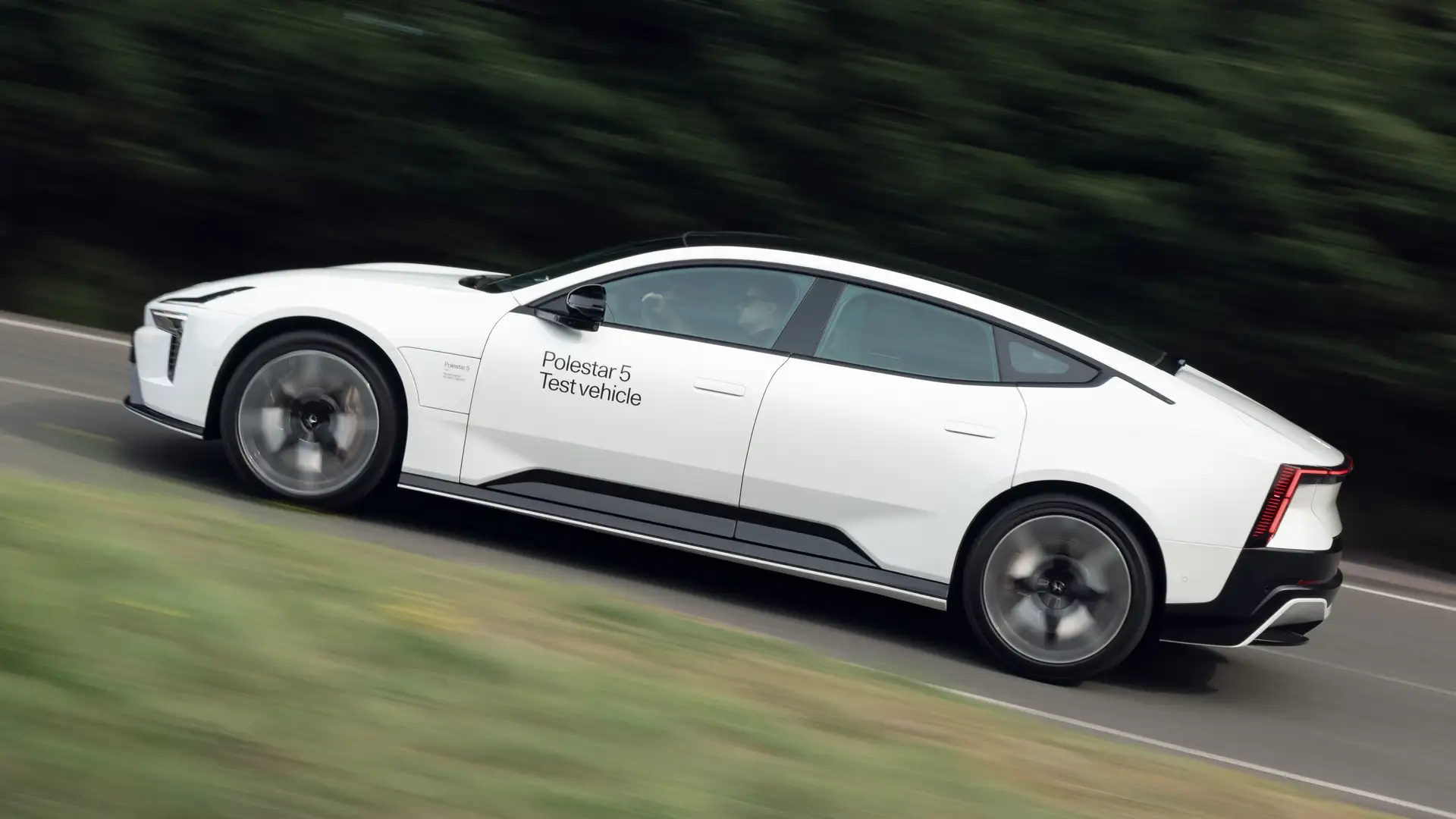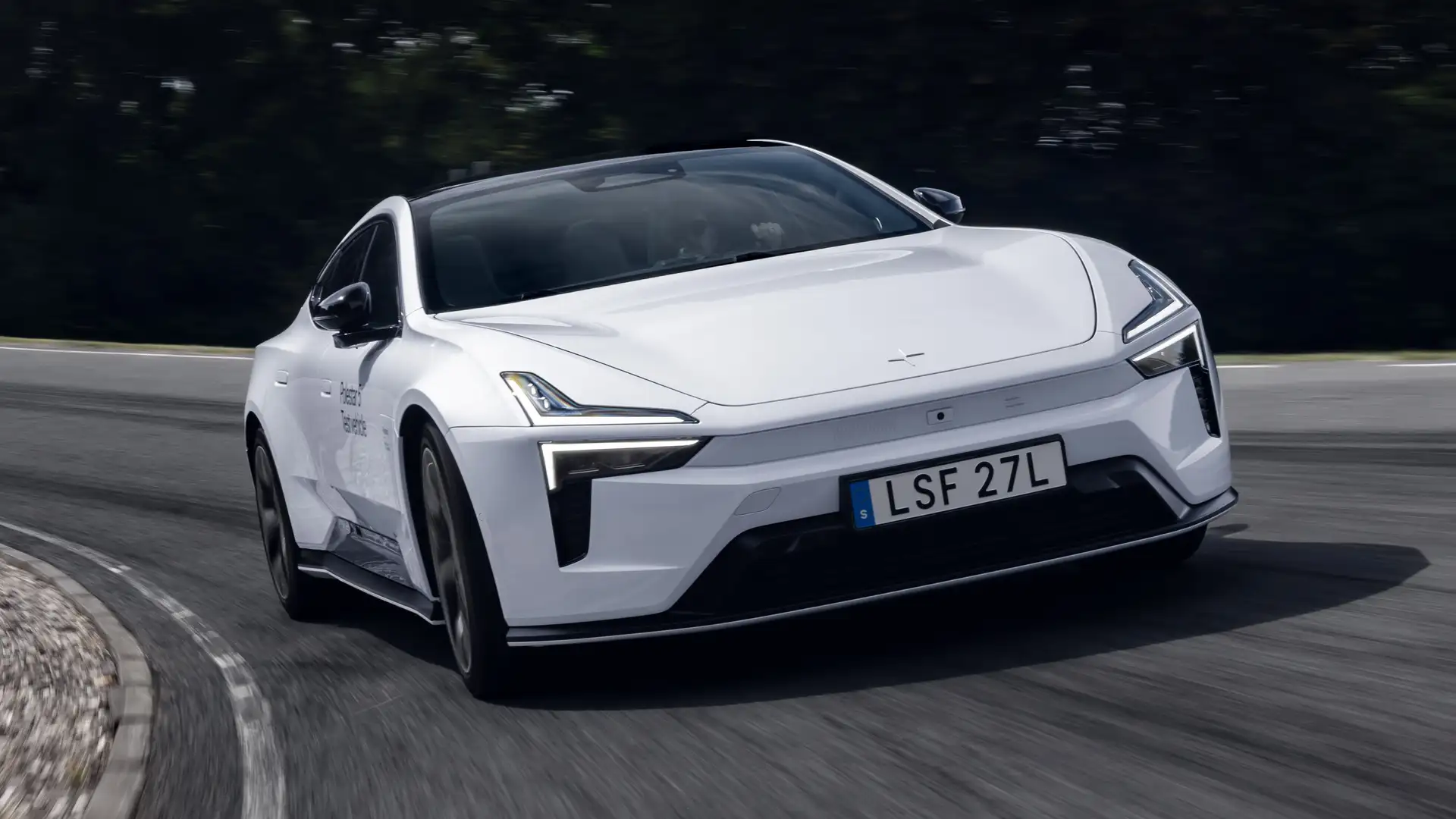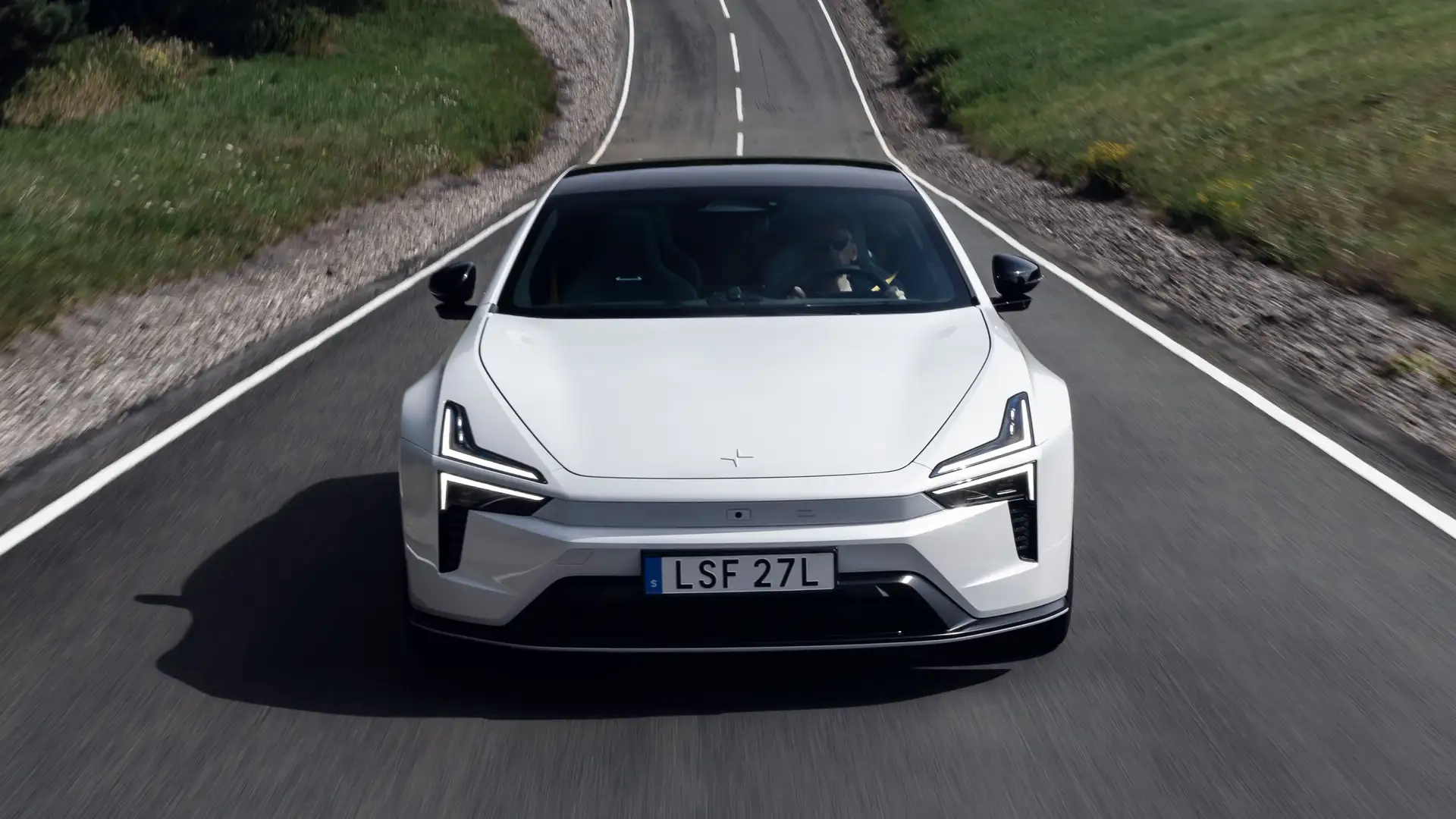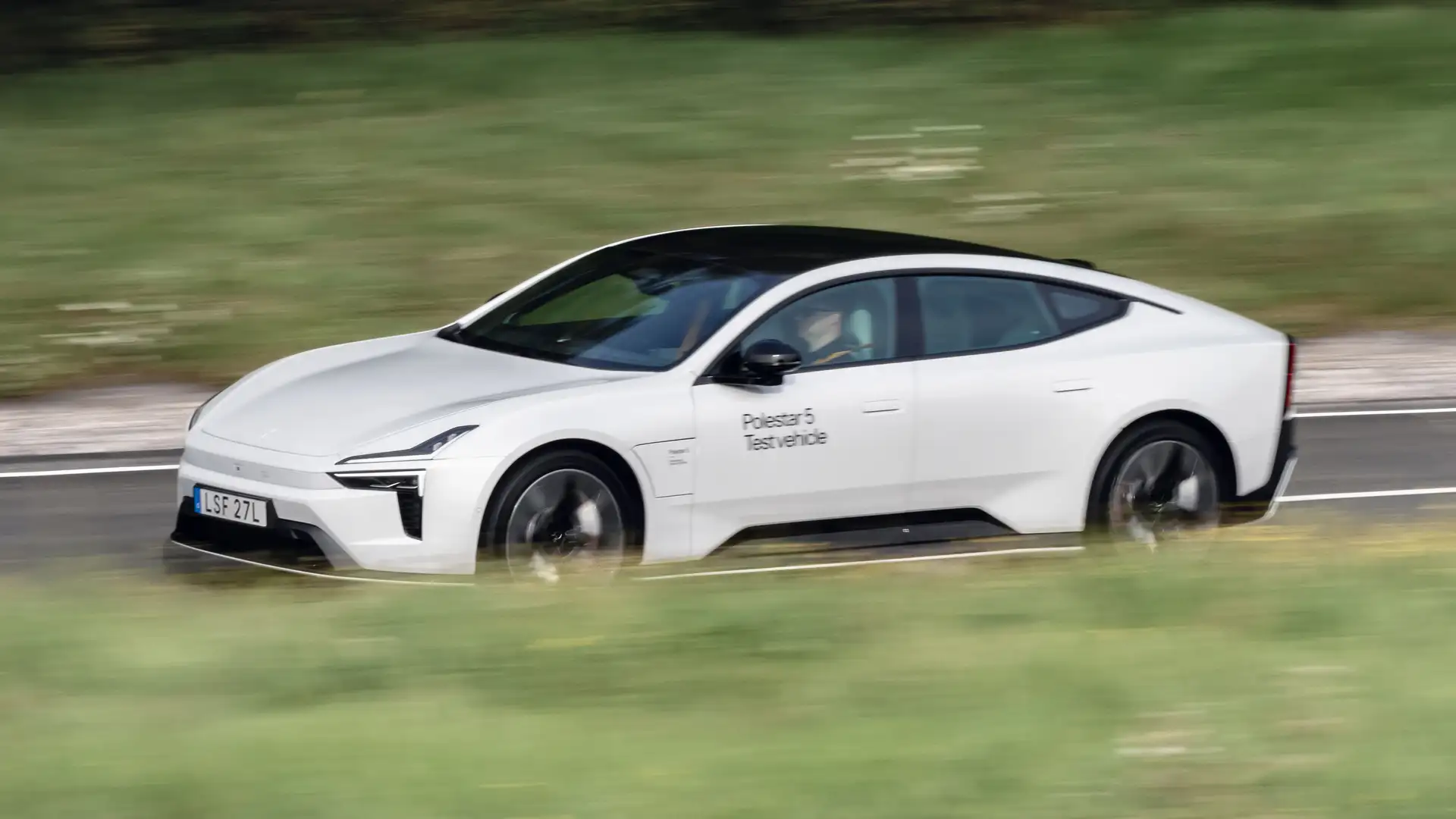
The Polestar 5 Is Not A Sedan Pretending To Be A GT
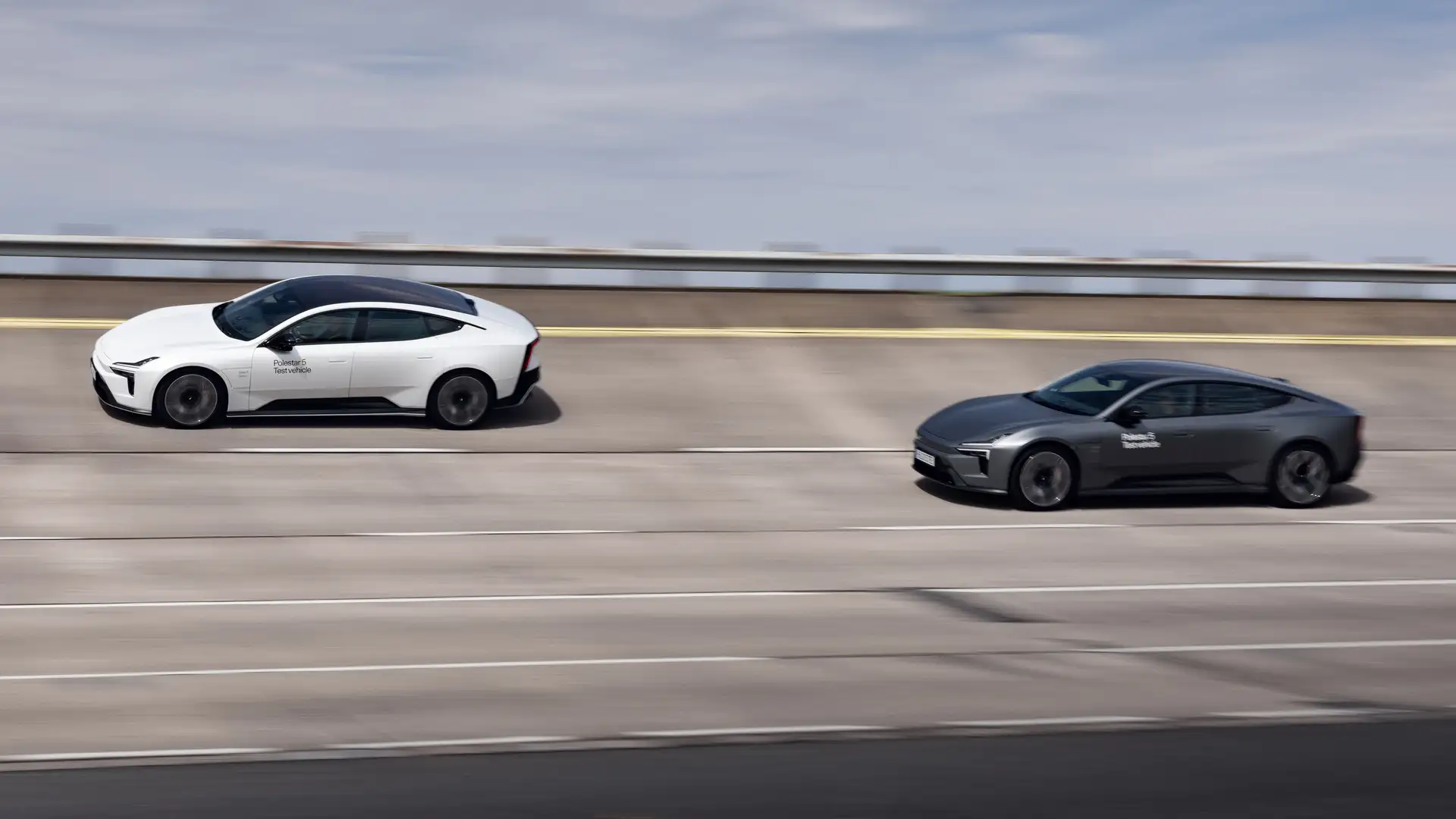
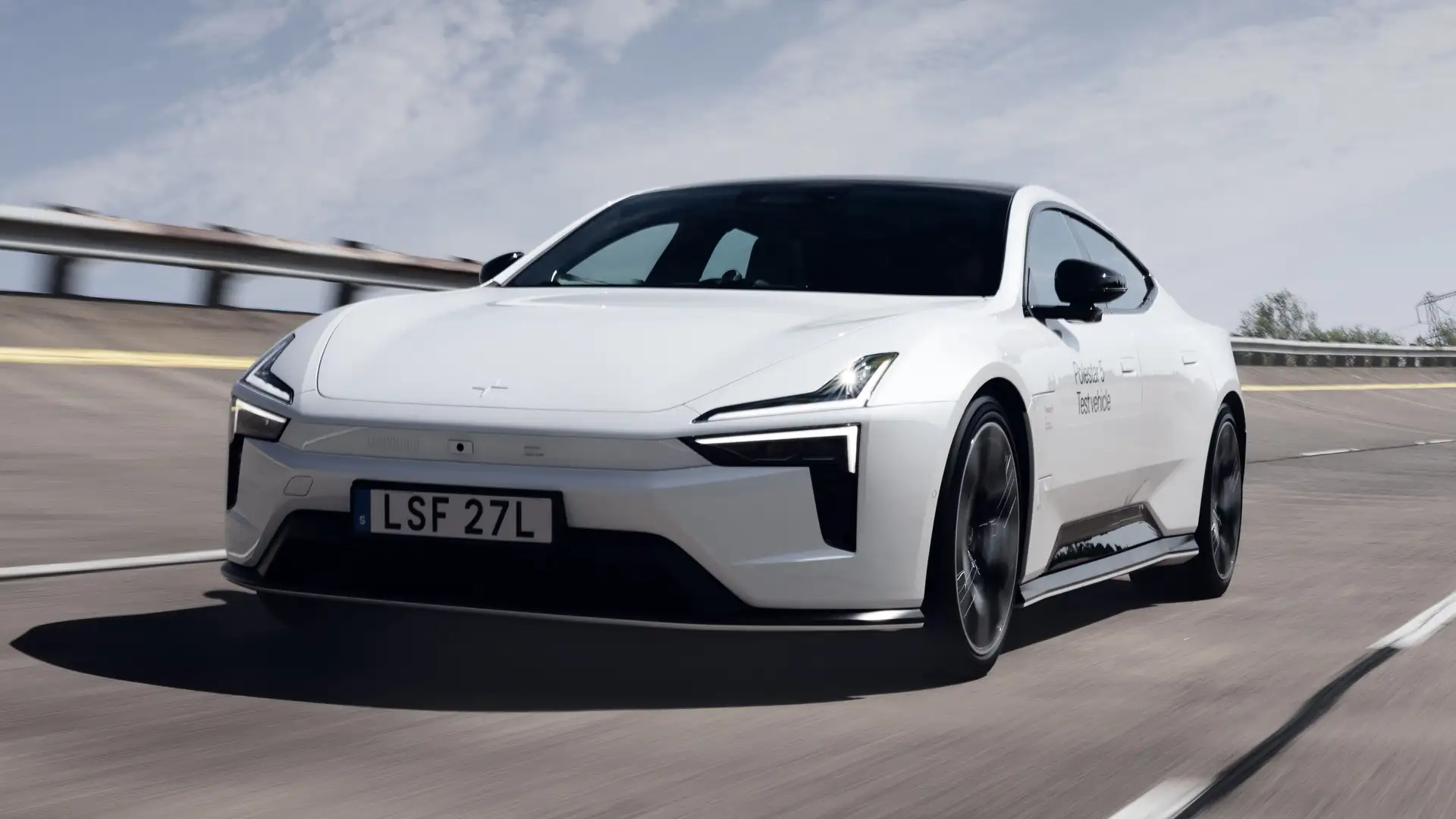
Polestar has built a career out of making premium EVs look clean and feel intentional, but the Polestar 5 is the first one that genuinely reads like a full-scale engineering statement. On paper it is a four-door fastback, 5,512 lb in Performance form, 200.3 inches long, and powered by an 800-volt-class battery system with an 112 kWh pack. On the road, it behaves less like a conventional executive EV and more like a long-range aerospace object that happens to wear Michelin Pilot Sport S5 rubber. The route from Sitges to Valencia, part of a 3,836-mile convoy from Sweden to Morocco, exposed exactly why Polestar chose Spain’s narrow mountain roads instead of a polished proving-ground loop.
This was not a short first drive built around applause lines. It was a two-day segment of a five-week, seven-leg journey that involved 109 people, 23 support cars, a mobile workshop truck, and a rotating cast of engineers, product planners and designers. That scale matters because the Polestar 5’s credibility depends on more than a spec sheet. It had to survive distance, weather, hotel charging, camera cars, and the kind of “silent route” roads that can turn a heavy EV into a liability if the chassis is only good in presentation mode.
| Specification | Polestar 5 Dual Motor | Polestar 5 Performance |
|---|---|---|
| Body style | 4-door fastback | |
| Power | 748 HP | 884 HP |
| Torque | 599 lb-ft (811 Nm) | 749 lb-ft (1,015 Nm) |
| 0-100 km/h | 3.8 s | 3.1 s |
| Top speed | 155 mph (250 km/h) | 155 mph (250 km/h) |
| Battery capacity | 112 kWh lithium-ion | |
| Fast charging | 350 kW DC, 10-80% in 22 min; 200 kW on 400V in 33 min | |
| Range | Up to 421 miles WLTP | Up to 346 miles WLTP |
| Length | 200.3 in | |
| Wheelbase | 120.2 in | |
| Weight | 5,512 lb | |
| Architecture | Polestar Performance Architecture, bonded aluminum | |
| Rear steering / active anti-roll / air suspension | Not fitted | |

The Platform Is The Whole Point
Polestar could have leaned on an existing Geely architecture and made the 5 merely handsome. Instead, it created Polestar Performance Architecture, a bonded aluminum platform that the company describes as rigid enough to compare with a carbon-tubbed supercar. That is not a casual claim when the car weighs 2,500 kg and carries a long 3,053 mm wheelbase. The front double-wishbone layout sits ahead of the front axle, the steering rack is also pushed forward, and the hood can therefore drop to an unusually low angle. The result is not just visual theater. It improves forward visibility, steering feel and front-end response in a car that should have felt nose-heavy.
The absence of rear-wheel steering, active anti-roll bars and air suspension on this platform is especially revealing. Many EVs use hardware to disguise their mass. The Polestar 5 uses structure and packaging to do the heavy lifting first. That is why the car felt more agile than expected on the tight, no-respite Spanish roads, even though the Performance model’s 22-inch wheels and staggered Michelin fitment are hardly modest. The architecture is the product, and the driving character flows directly from that decision.

Power Delivery Is Brutal, But The Tuning Is Mature
The Performance version delivers 884 HP and 1,015 Nm from dual motors, with 603 HP and 487 lb-ft arriving from the rear unit alone. Those numbers are properly exotic, yet the important detail is how little drama Polestar built into the calibration. In Performance mode the throttle is linear rather than twitchy, and the result is a car that can surge past traffic without feeling like a one-trick acceleration device. The claimed 0-100 km/h time of 3.1 seconds is quick enough, but it is the way that power arrives in normal driving that gives the 5 legitimacy as a grand tourer.
The Dual Motor version, at 748 HP and 811 Nm, is no soft option. It still reaches 100 km/h in 3.8 seconds and shares the same 250 km/h top speed. What changes is suspension hardware: passive dampers replace the Performance model’s MagneRide setup. On rain-soaked roads the Dual Motor felt more playful and carried a touch more body roll, but it was never vague or unsorted. The chassis is so inherently strong that even the lesser trim retains the same long-distance composure. That is a useful lesson in how far architecture can carry a car before adaptive hardware even enters the discussion.
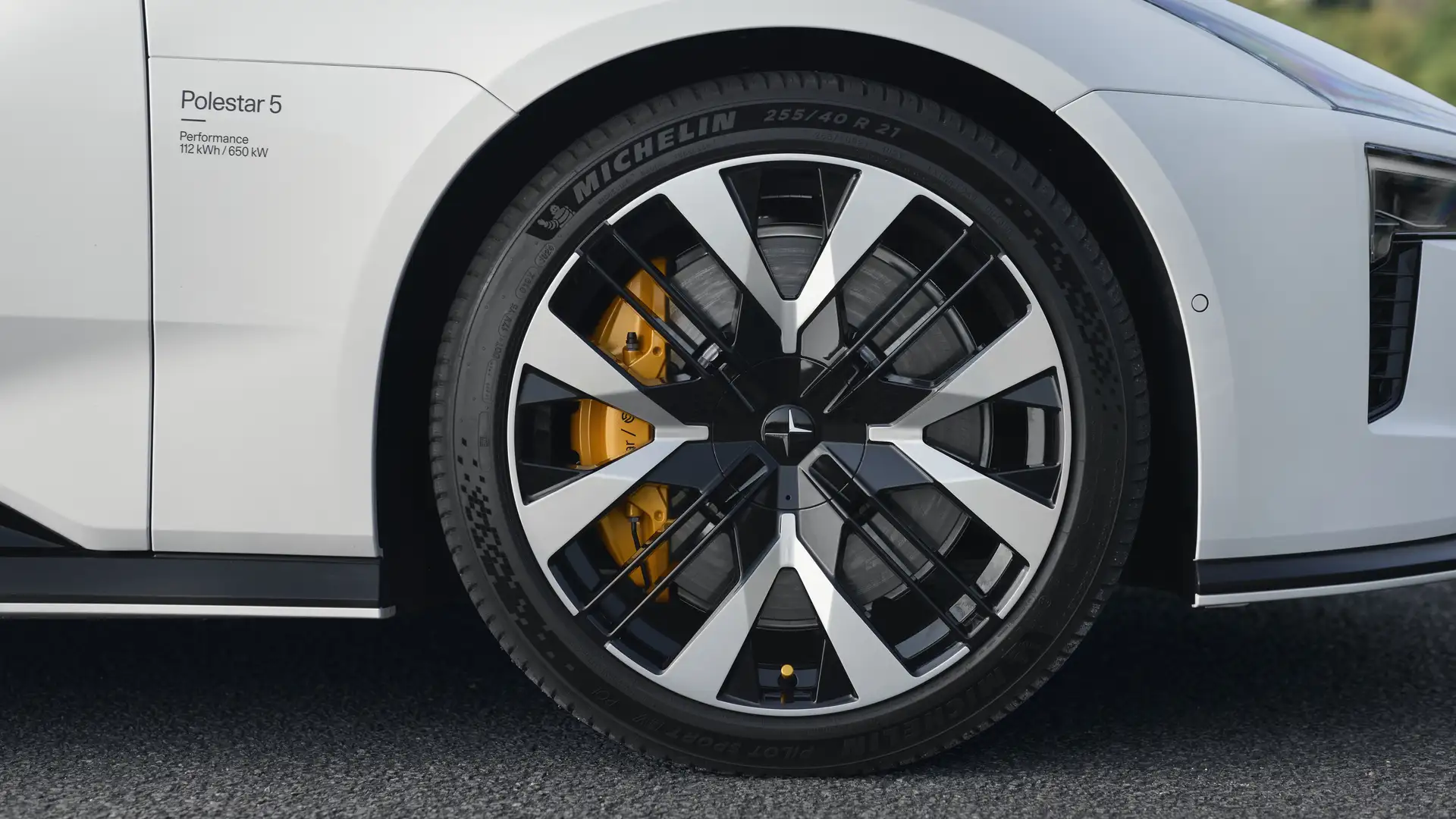
Suspension, Tires And Braking Are Tuned For Real Roads
The Performance model uses coil springs and semi-active MagneRide dampers that read the road up to 1,000 times per second. That figure sounds like brochure optimism until you spend hours on broken, cambershifted, high-speed mountain roads and realize the body stays flat without feeling brittle. Polestar gives the driver only three steering settings—Light, Standard and Firm—and I agree with the test drive verdict that Firm is the most convincing. Light is too vague, Standard is a compromise, and Firm gives the front end the kind of directness a GT car needs when the road stops being scenic and starts being technical.
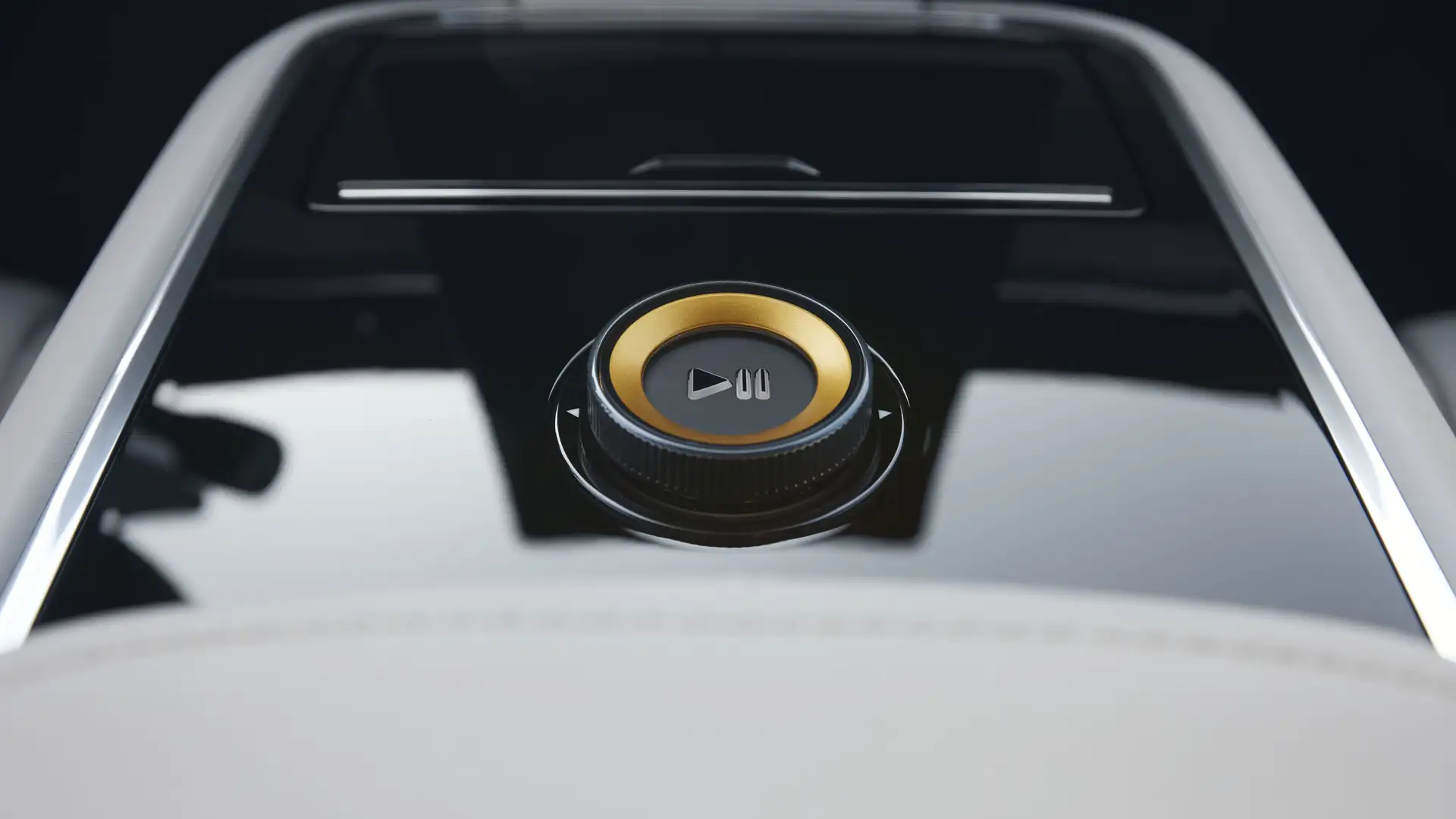
Brake hardware is equally serious. Both versions use Brembo four-piston front calipers and 398 mm ventilated front discs, with the Performance car distinguished by Swedish Gold calipers. Regenerative braking is adjustable in three stages, and the strongest setting is one of the most polished one-pedal calibrations currently available in a performance EV. In cities, on mountain descents and during stop-start traffic approaching Valencia, the system felt intuitive rather than synthetic. That kind of calibration often separates a genuinely usable GT EV from a fast car that happens to have long range.
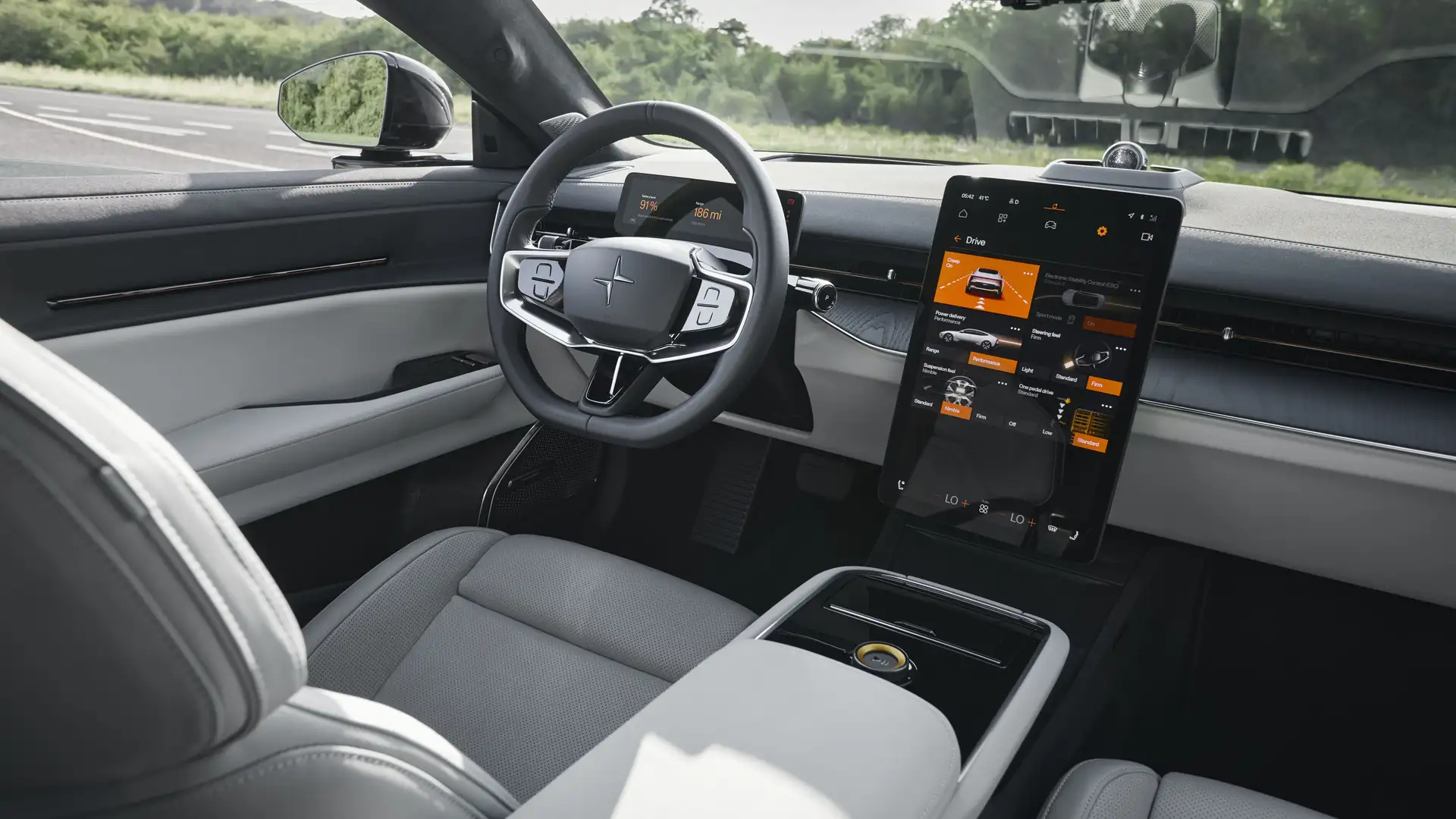
The Cabin Is Minimalist, But Not Spartan
Polestar’s interior design language has been maturing since the 3 and 4, but the 5 is the first cabin that feels genuinely expensive rather than merely well considered. The Recaro-developed front seats are outstanding, and the optional Bridge of Weir leather adds ventilation and massage functions for both rows. The driving position is lower than in most electric fastbacks because the platform permits a lower hip point, and that immediately changes the sense of occasion. You sit in the car rather than on top of its battery.
Material choice is where the 5 stands apart from its rivals. The flax-based natural fiber weave on the seatbacks is more interesting than generic carbon trim and carries a real sustainability argument. The upper doors use woven fabric, major controls have metal trim, and the cabin avoids the overfurnished look of some luxury EVs. Yes, there is too much piano black on the center console and door armrests, but that complaint lands because the rest of the interior is so disciplined. The 9-inch digital cluster and 14.5-inch portrait screen integrate well, with Google Maps navigation and customizable shortcuts that actually make the UI easier to live with on a 375-mile leg.
The steering wheel controls remain the one true ergonomic weak point. Their functions change depending on driving state, which means the same touchpad can alter regen, drive mode, speed warning or cruise functions depending on context. It is clever, but too clever. Luxury buyers comparing this cabin with newer alternatives such as the MERCEDES-BENZ E-CLASS Night Edition Hides a Bigger Shift will notice that Polestar is prioritizing surface simplicity over tactile clarity.

No Rear Window, No Problem On The Move
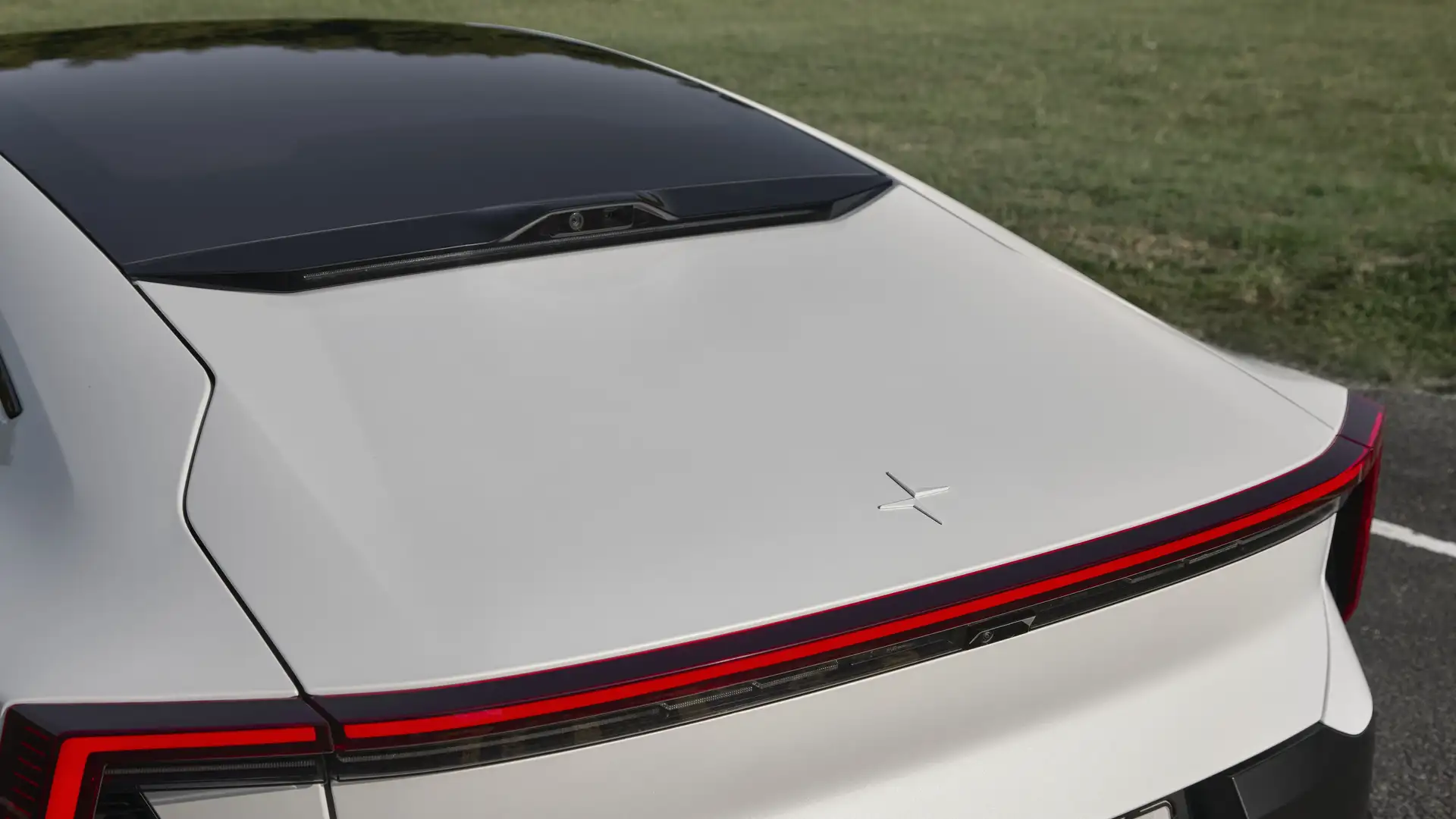
The lack of a rear glass panel is the detail most people fixate on, yet it quickly stops being the car’s story. The digital rear-view mirror is high-resolution and wide enough that it becomes the more useful tool. During lane changes and reversing, the camera system adjusts the display view in a way a conventional mirror cannot. In rain, it remained clean and legible. In a GT car with a steeply raked tail and a long roofline, that is not a gimmick; it is a practical packaging solution.
Removing the rear window allowed Polestar to push the rear header farther back, which is why the back seat is so unusually generous. Rear passengers get a panoramic glass roof more than 6 feet long and 4 feet wide, low-mounted seats, reclinability, adjustable lumbar support and real foot garages in the floor. The result is a 4+1 layout that can accommodate very tall adults without making them feel folded in half. This is the kind of back seat that turns a styling decision into a functional advantage.
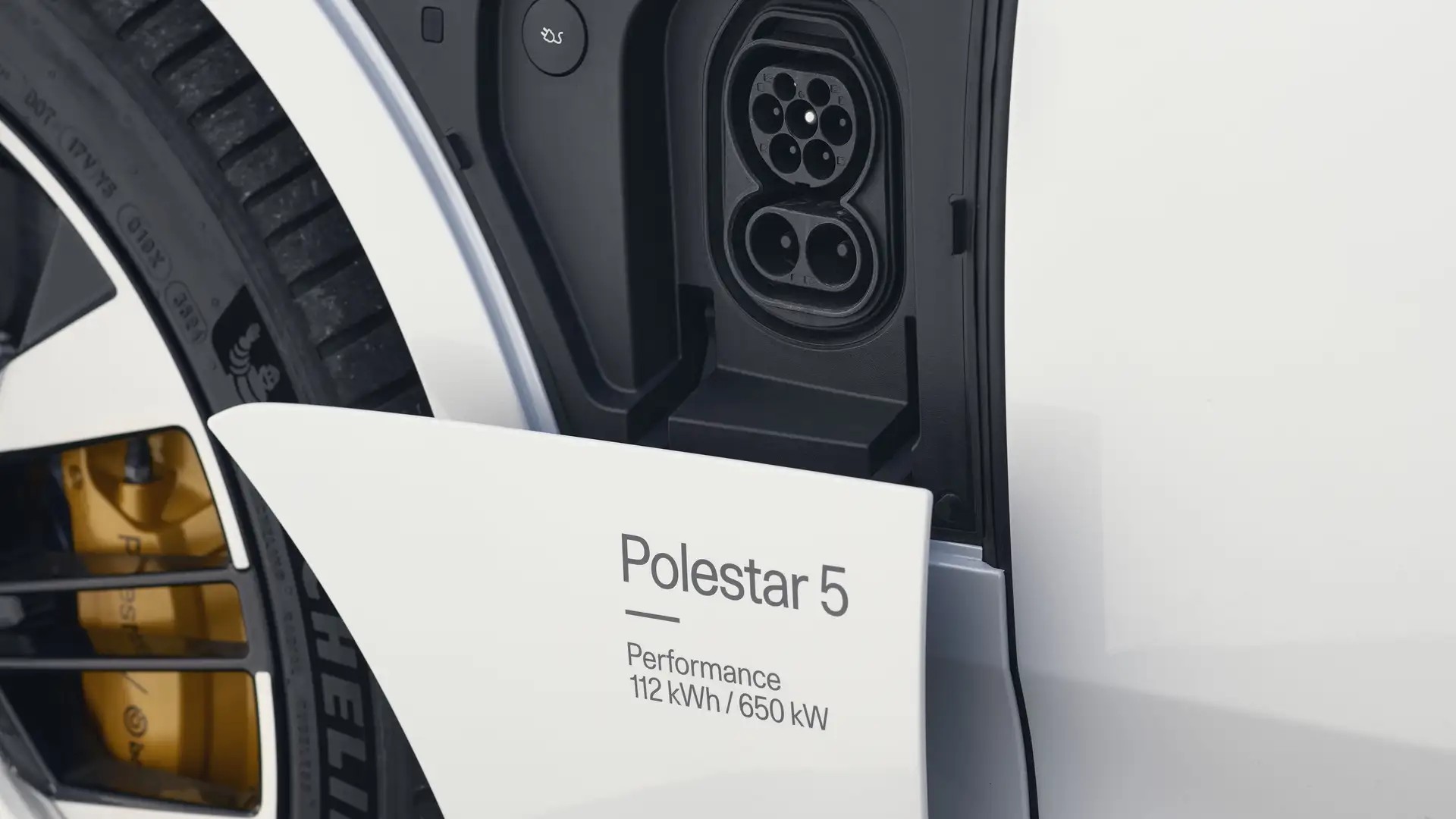
Range, Charging And The Long-Haul Reality
Polestar says the Dual Motor can deliver up to 421 miles WLTP, while the Performance is rated at up to 346 miles. Those numbers are useful, but the real test was the convoy’s logistics. The cars were charged at hotels and local infrastructure, and even with brisk driving the range remained sufficient to cover each stage. The pack accepts up to 350 kW DC charging, enabling a 10 to 80 percent top-up in 22 minutes, or 33 minutes at 200 kW on a 400V station. That is enough to keep the car compatible with real travel, not just idealized launch-day planning.
The route also underlined how much range can be preserved through calibration. Even in rain, with repeated high-speed sections and colder overnight conditions, the Dual Motor car still arrived with 52 percent battery after 112 miles of mixed driving. That sort of efficiency is what separates a credible GT EV from a stat-sheet hero. It is also why the 5 feels relevant in the same market conversation as the KIA EV4 Gt-line Reveals Its Luxury Trick for Less and the BYD SEALION 08 Targets Premium SUV Buyers With Big Battery Bet, even though the Polestar is clearly playing at a higher emotional level.
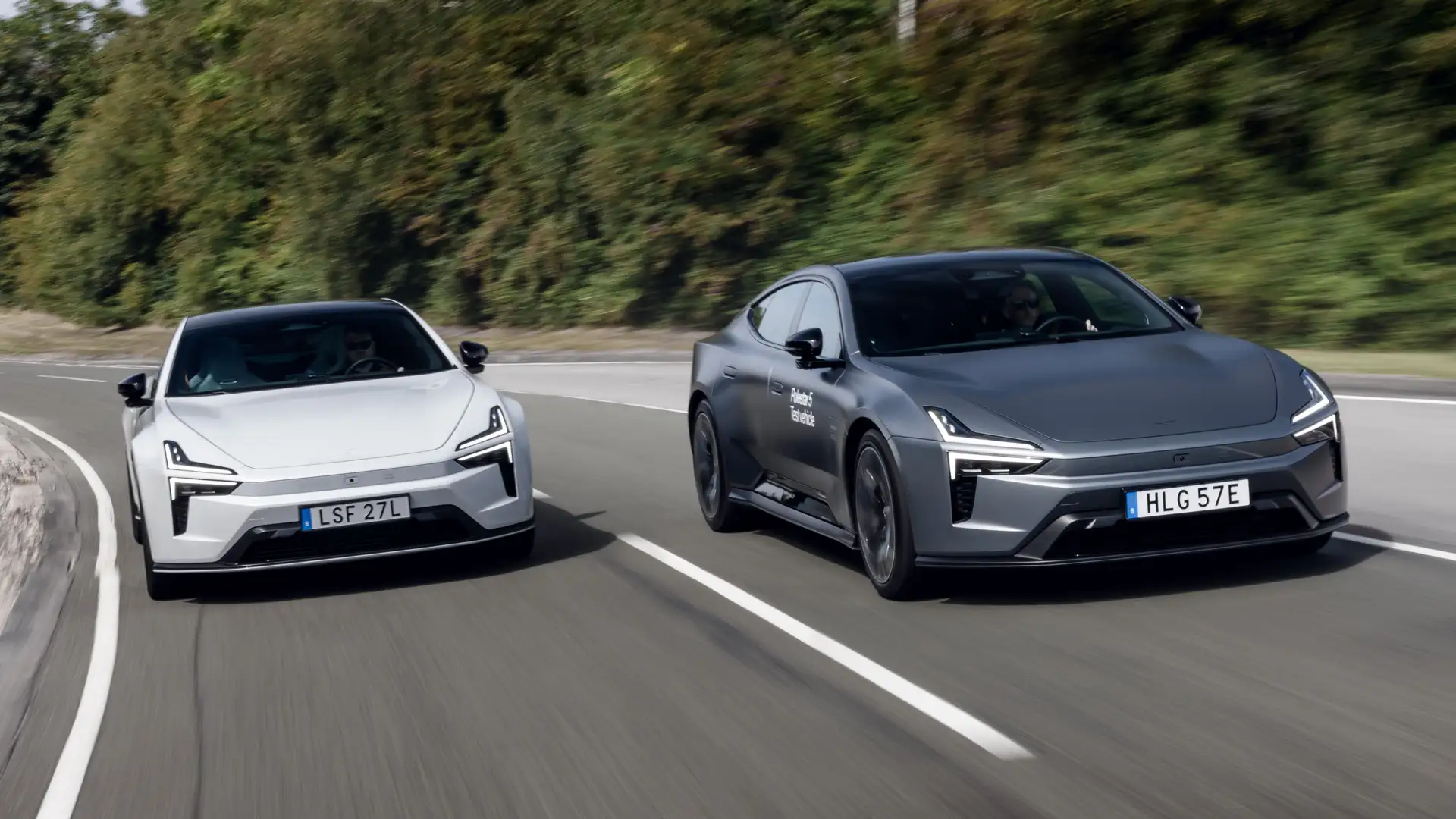
Why The Polestar 5 Feels Like A Future You Can Drive Today
The Polestar 5’s most persuasive trick is not speed, range or design in isolation. It is the way those elements reinforce one another. The car looks like a concept, rides like a serious grand tourer, charges quickly enough for Europe-scale travel, and has the body control to make a 2,500 kg EV feel composed on narrow mountain roads. It is also one of the few new cars in recent memory that feels truly distinct from the inside out.
That distinctiveness matters because the market is full of electric fastbacks that share more DNA than they admit. The 5 has no direct analog in execution, especially when you account for the bonded-aluminum architecture, the 50:50 balance, the 884 HP top trim and the engineering decision to make the missing rear window a feature rather than a compromise. On Spain’s empty roads it felt like a car that had slipped a product cycle ahead of everyone else. In traffic, against ordinary hatchbacks and vans, it looked almost impossible. That is the rarest luxury in the segment: not just speed, but presence.
Polestar has said the 5 will come to the U.S. eventually, though timing remains unclear. When it does arrive, it will not be priced as a bargain. But if it stays close to the European positioning, it will offer something even better than value: identity. The Polestar 5 is not trying to be a better Taycan copy, a Swedish Panamera substitute or an EV dressed up as a GT. It is trying to be the first of its kind, and on the evidence of Spain’s silent roads, it has already succeeded.