
Hyundai’s Biggest SUV Is Now Its Clearest Luxury Statement
The 2026 Hyundai Palisade Calligraphy is not a “good for the money” SUV in the patronizing sense. It is a genuinely expensive-feeling three-row flagship that happens to be priced far below the luxury establishment, and that distinction is the reason it matters. At AU$99,390 in Australia, or $54,560 in U.S. Calligraphy form, it undercuts vehicles that rely on badge equity alone, yet it brings a 2.5-liter turbocharged hybrid system, 245 kW (328 hp) and 460 Nm (339 lb-ft) to a body that measures 5,065 mm long, 1,980 mm wide and 1,805 mm tall.
The result is not a half-step into premium territory. It is Hyundai making the full climb, with enough mechanical polish and cabin detail to make buyers question whether they need to spend twice as much on something like a Range Rover. For a broader picture of Hyundai’s current upper end, the HYUNDAI IONIQ 9 Black Ink Edition Turns EV Luxury Silent shows how aggressively the brand is defining its luxury play from both electric and hybrid directions.

The Hybrid Drivetrain Is Sized for the Vehicle, Not the Badge
Hyundai made the right call by not transplanting the smaller 1.6-liter hybrid from the Santa Fe into the Palisade. In Australia, every variant uses the new 2.5-liter turbocharged four-cylinder hybrid with all-wheel drive, and that extra displacement gives the larger SUV the authority it needs. The system’s combined output of 245 kW and 460 Nm is enough to move the 2,294 kg seven-seater to 100 km/h in 6.9 seconds, which is a strong result for a vehicle of this size and specification.
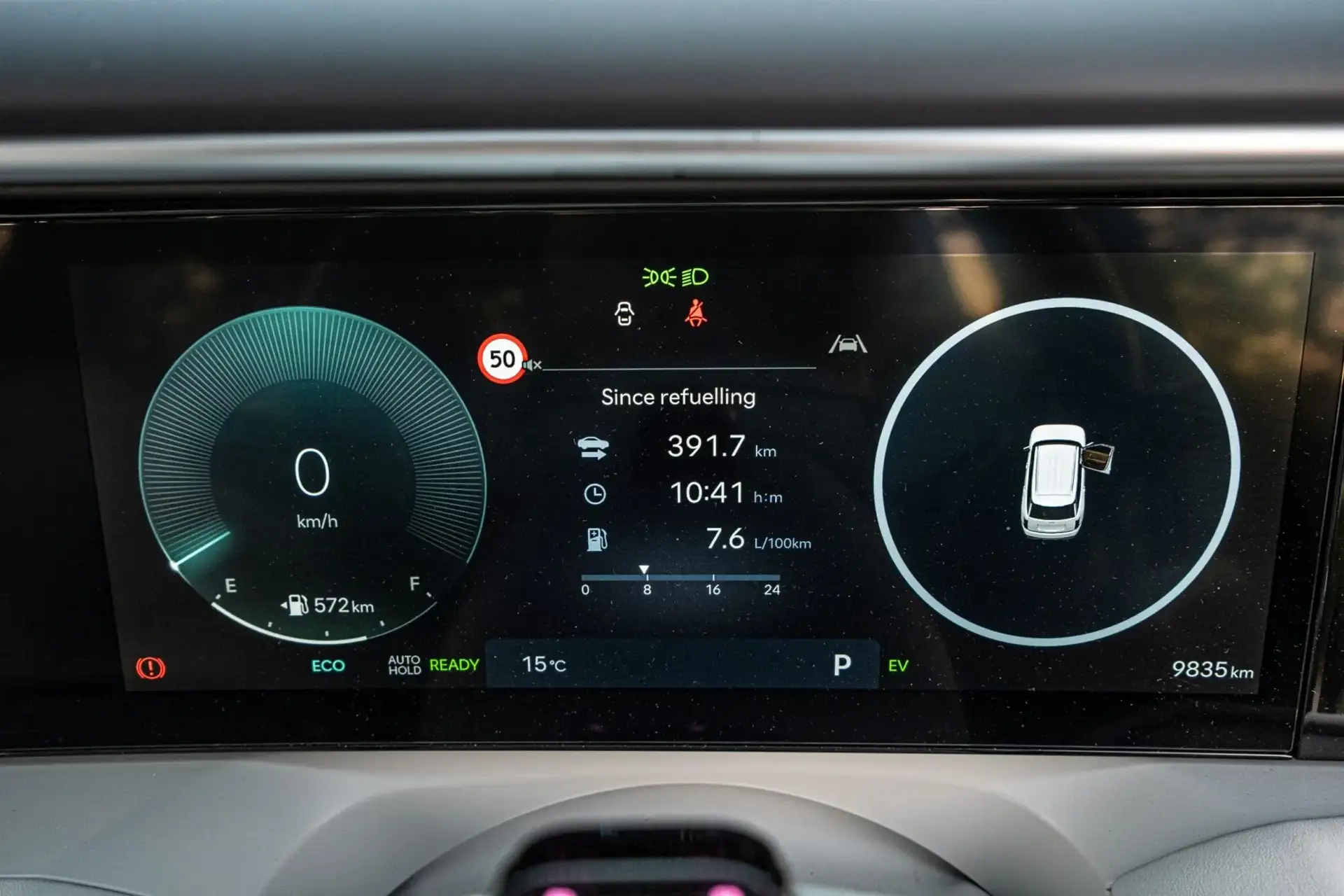
The six-speed automatic is the least exotic piece of hardware here, but it suits the brief better than a more highly geared transmission would have. There is some throttle hang during part-throttle transitions, yet the overall calibration is coherent once the Palisade settles into cruise. Officially quoted economy is 6.8 L/100 km, while the test average landed at 8.0 L/100 km, a realistic figure for a 5,057 lb SUV carrying adult-sized passengers and a genuinely premium standard equipment list.
Hyundai did not build the Palisade as a technical showcase for the spec sheet. It built it as a heavy, high-load luxury hauler that still responds like a modern hybrid should.

The Cabin Is Where Hyundai’s Luxury Leap Becomes Obvious
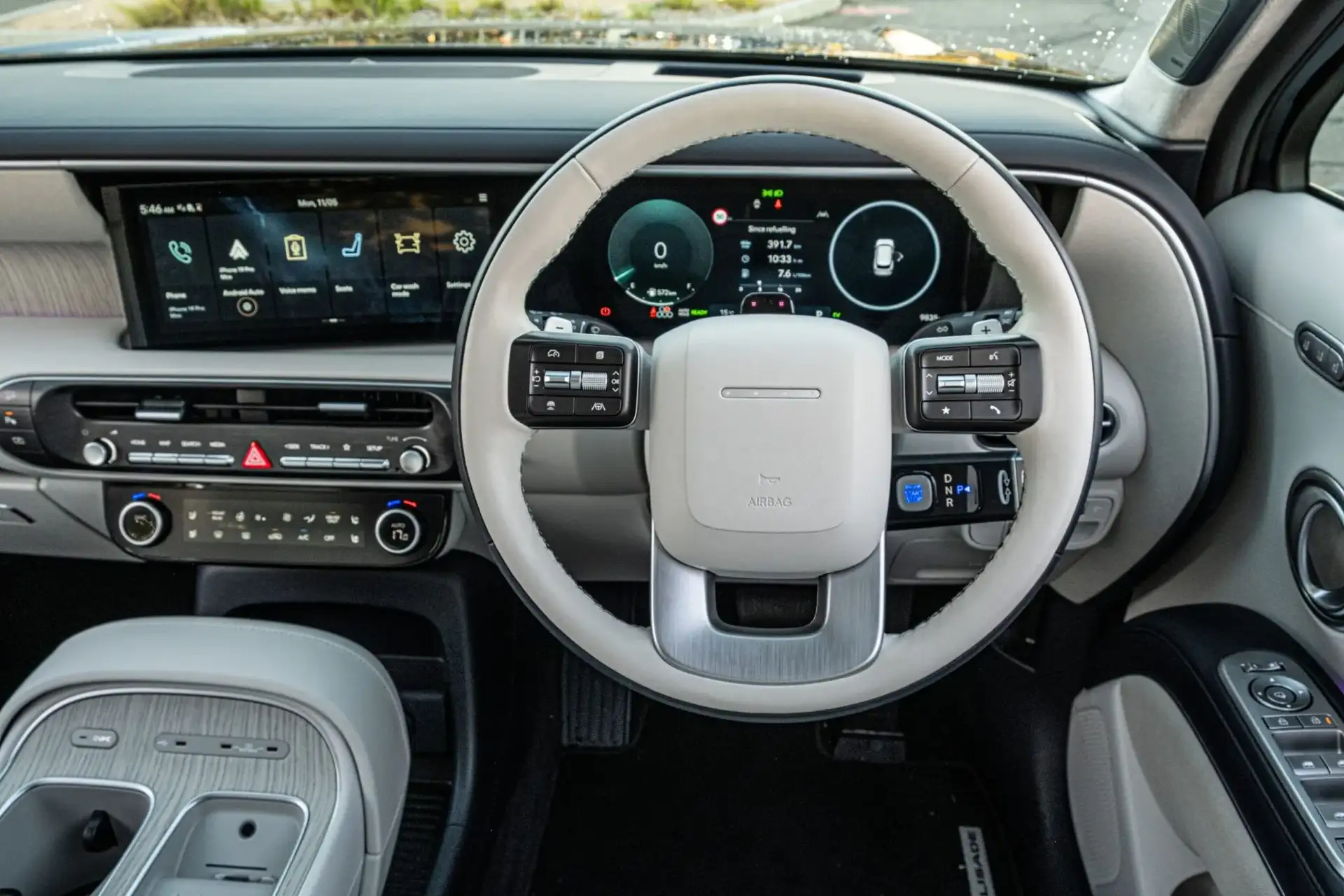
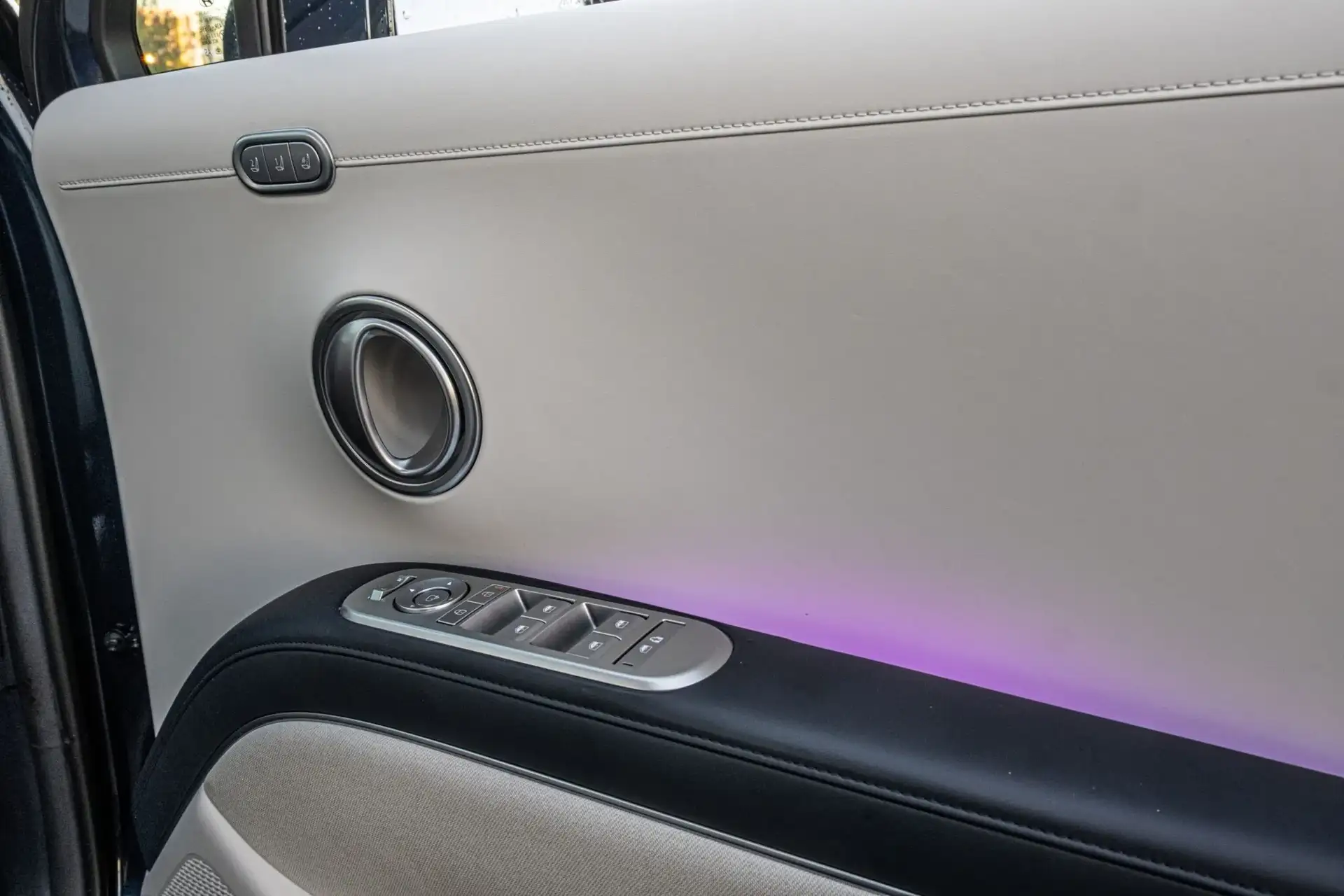
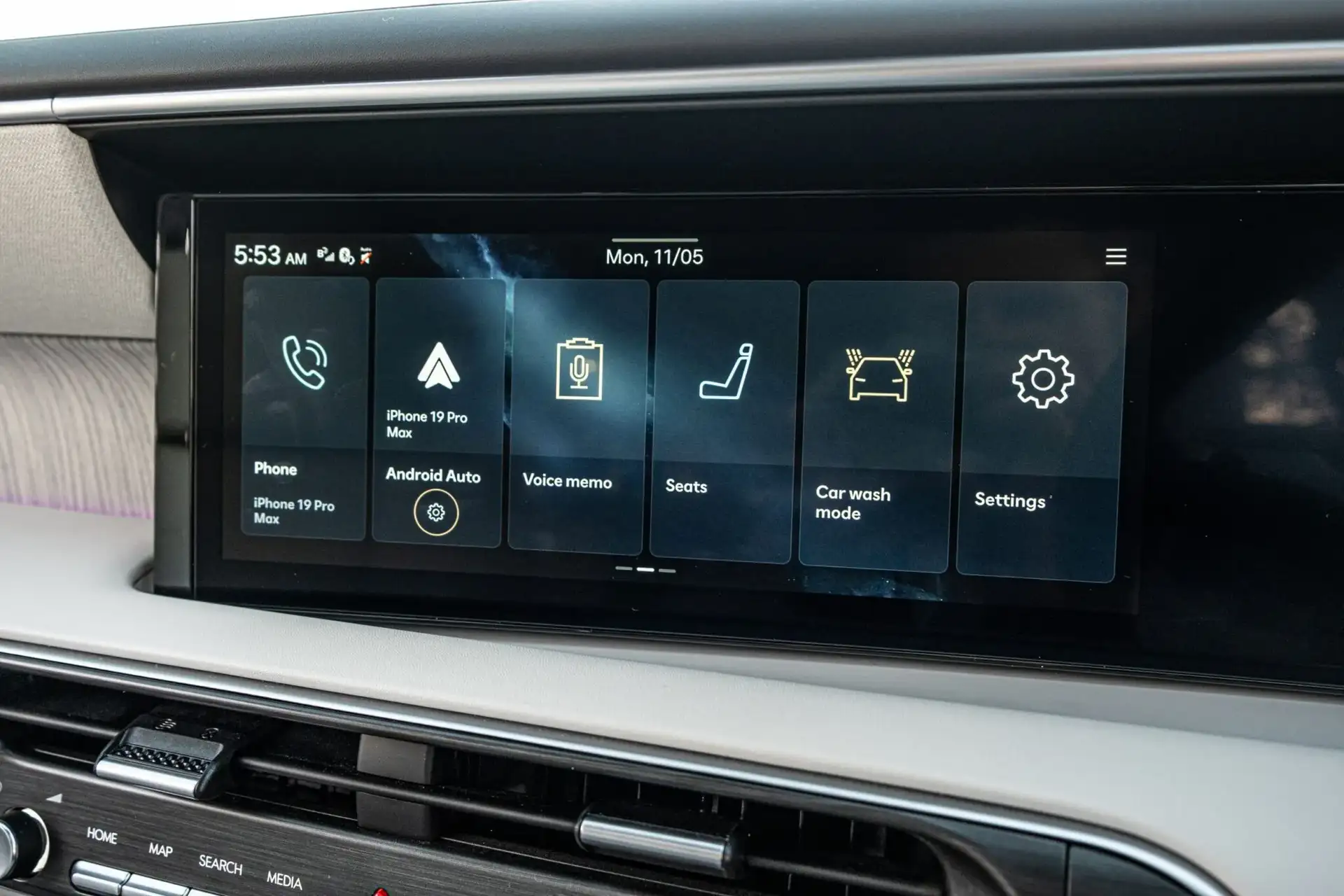
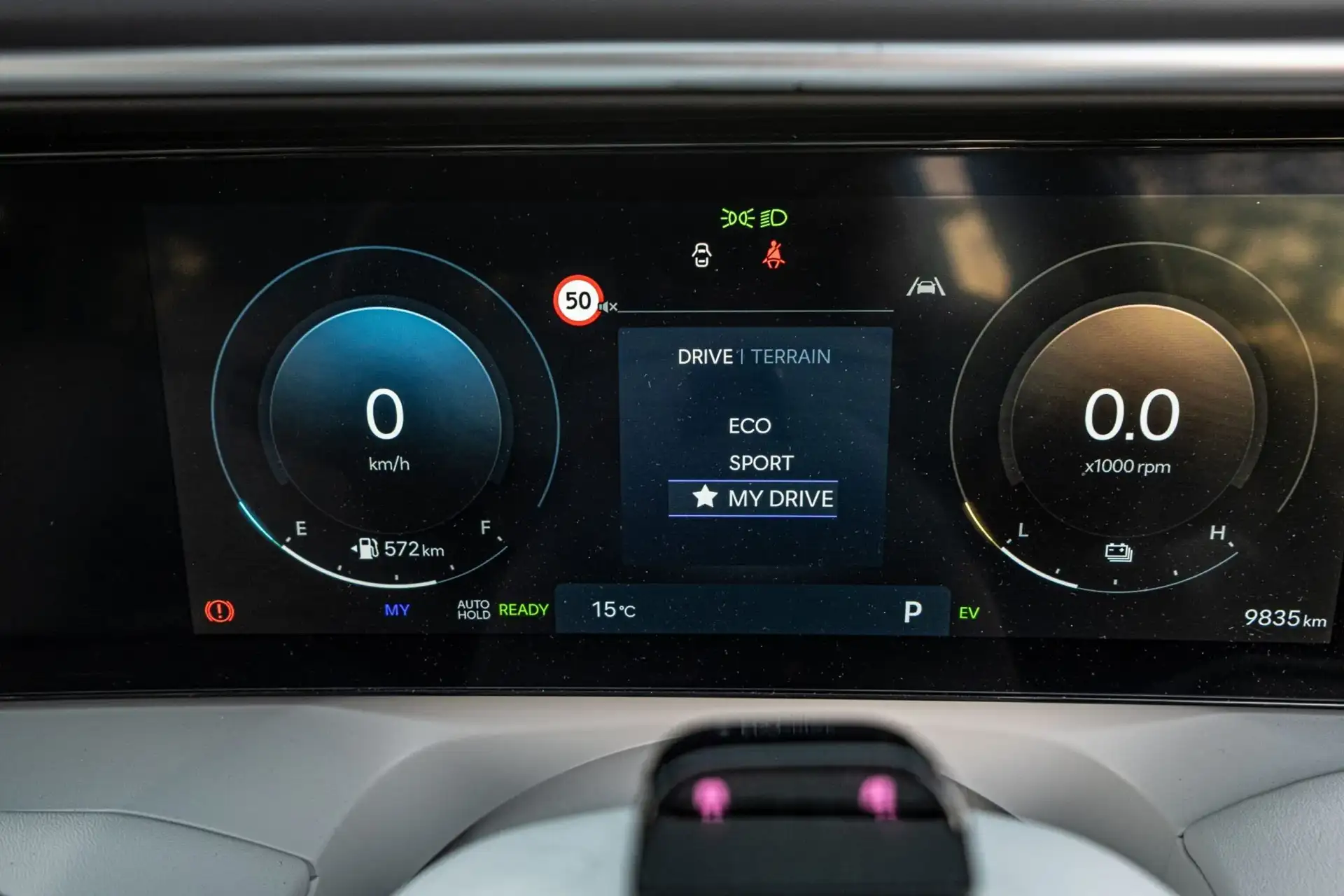
Inside, the Palisade Calligraphy is the strongest argument Hyundai has made for itself in the premium SUV space. The dashboard is thick and high-set, and the twin 12.3-inch displays are integrated into the dash rather than placed on top of it, which immediately lifts the perceived quality. That single design move changes the entire visual hierarchy of the cabin, making the vehicle feel more deliberate and less like a well-equipped mainstream SUV.
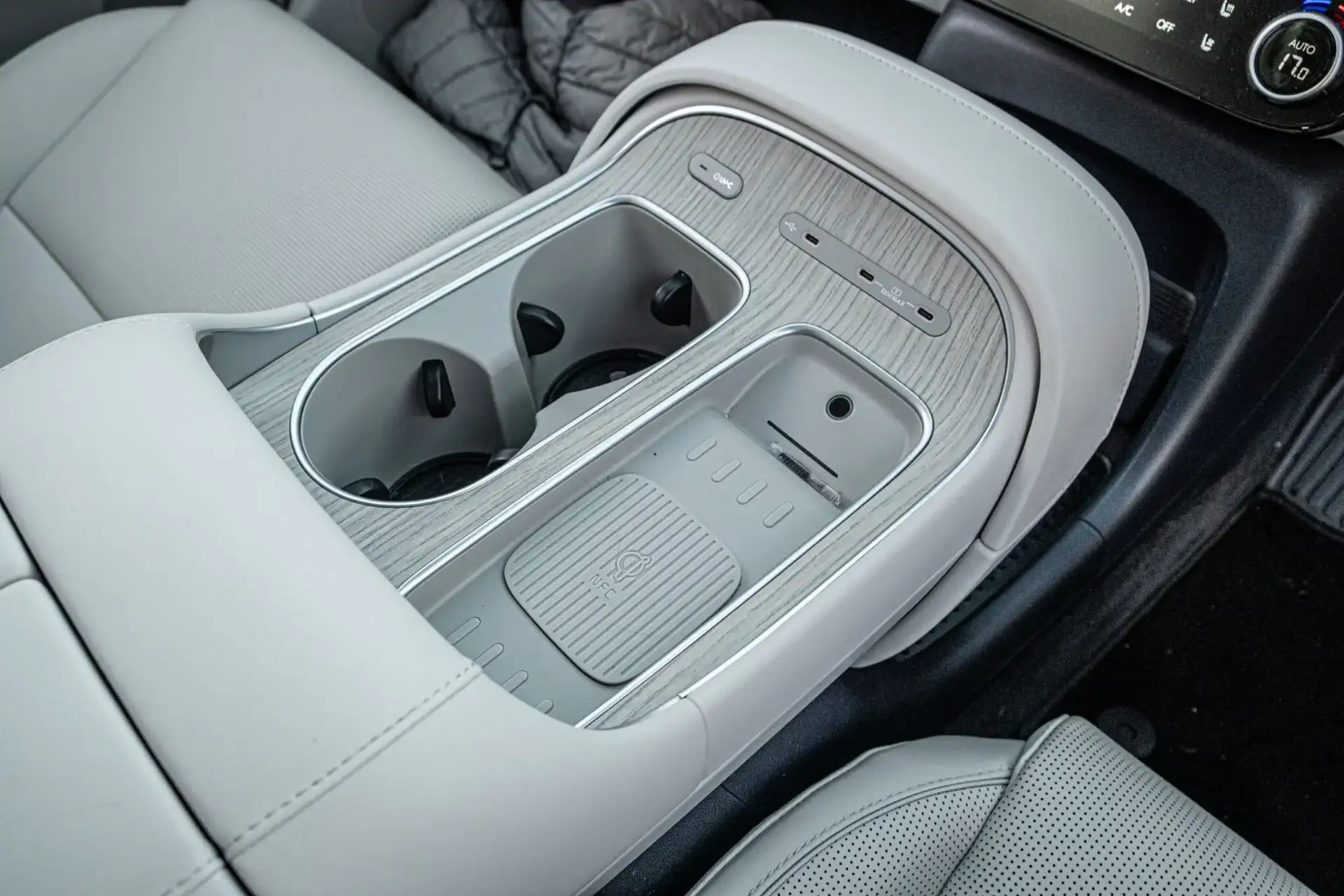
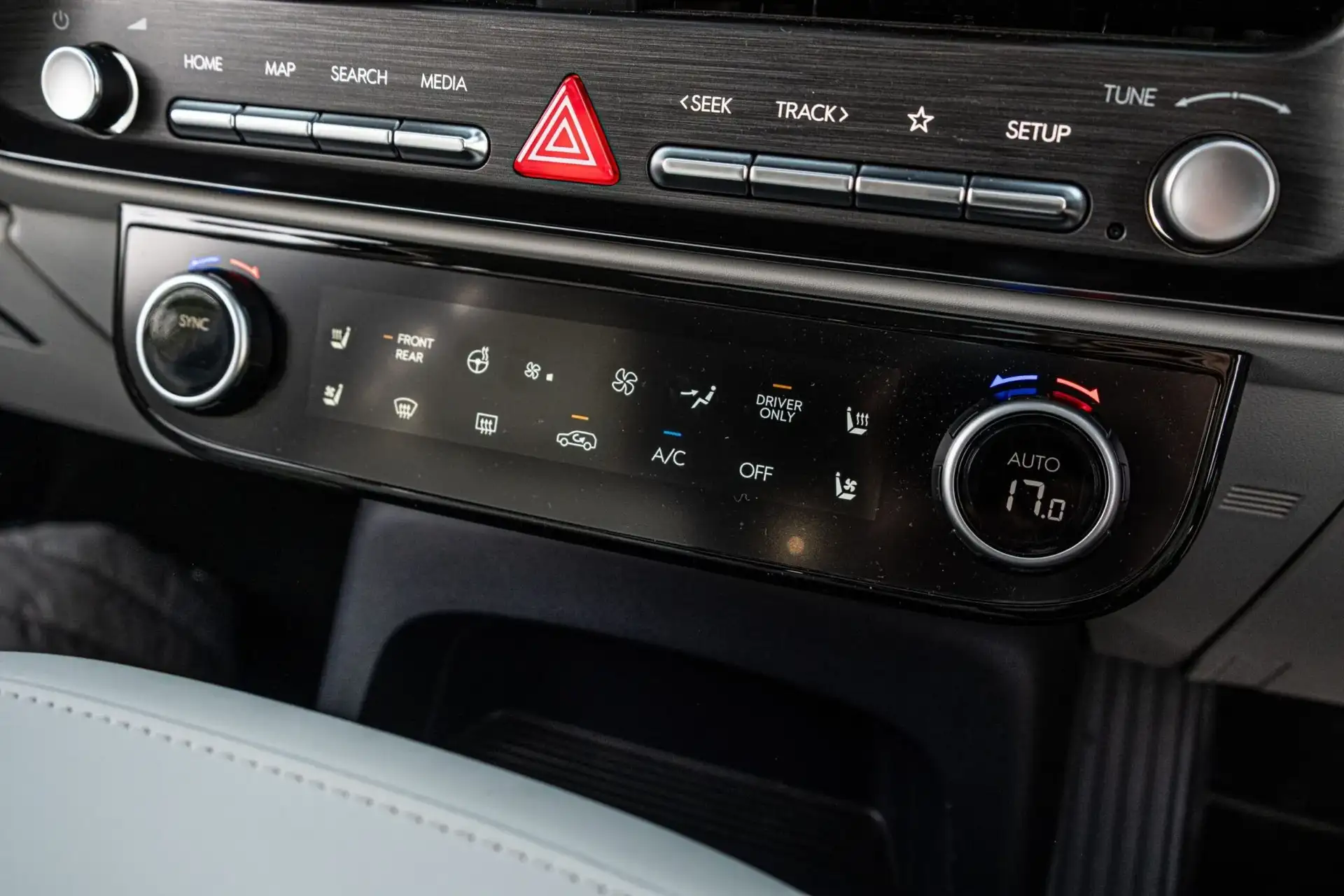
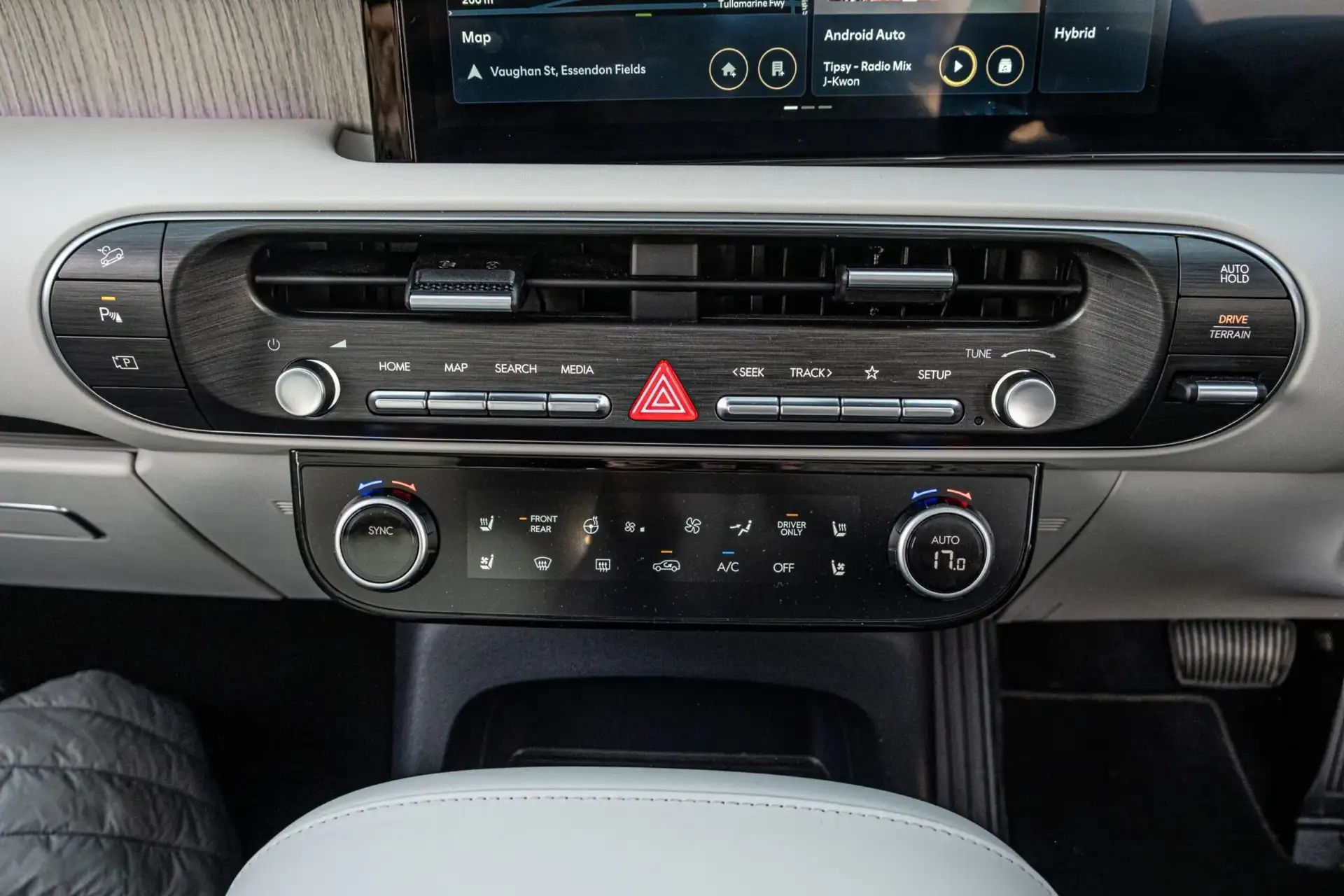
The center stack is refreshingly physical. There are shortcut buttons, drive-mode toggles, camera controls, parking sensor switches and hill descent control, even if some of them sit a little awkwardly for use on the move. Between the front seats sits a huge console with a wireless charging pad, cup holders and three 100-watt USB-C ports. Hyundai also adds a UV-C sterilization compartment, a clever carryover from the Santa Fe that can sanitize small items in 10 minutes and kill 99.9 percent of germs.
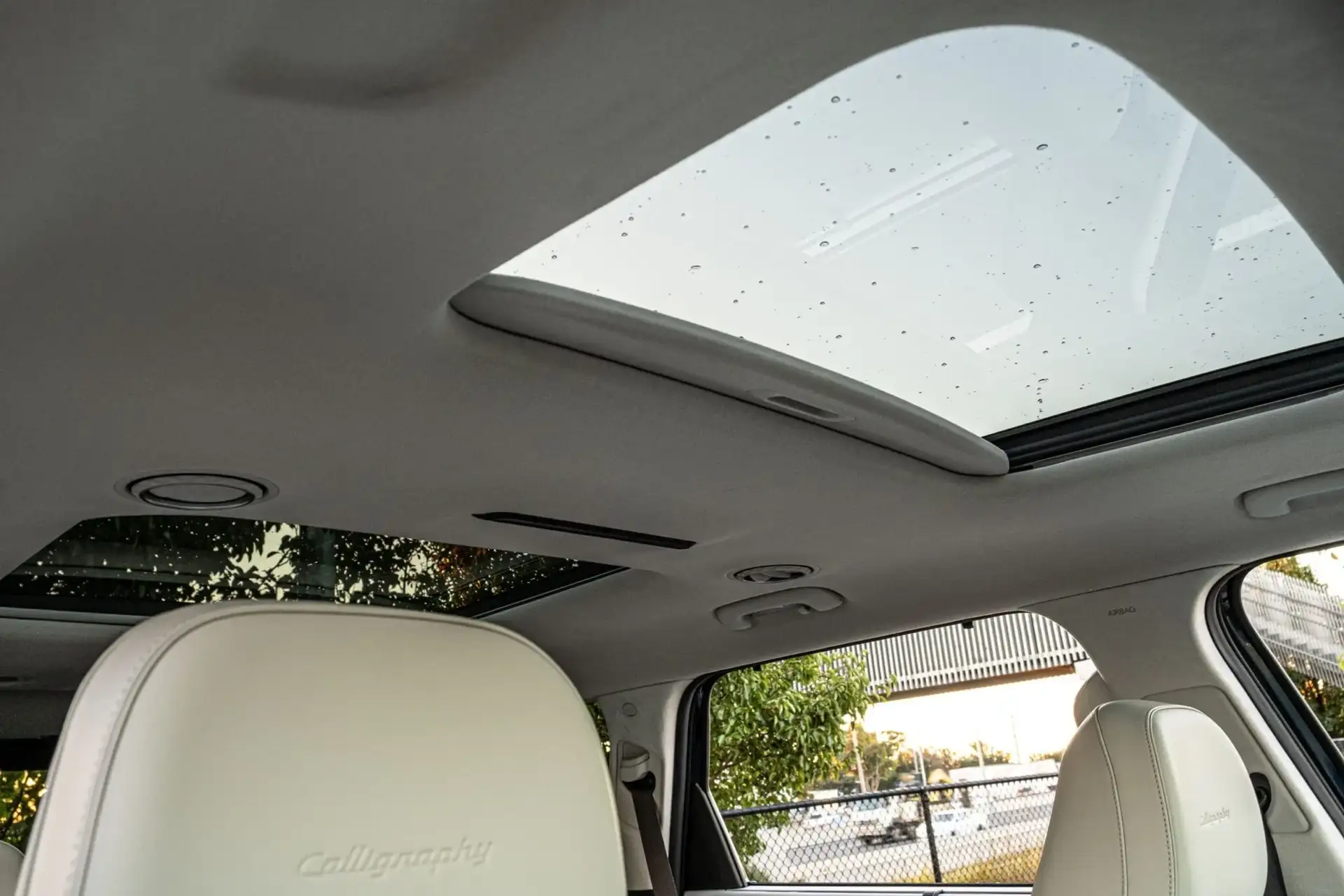
The seats deserve equal attention. Up front, the Calligraphy trim gets heated, ventilated and massaging front chairs, a two-tone Nappa leather steering wheel and a 14-speaker Bose audio system. Twin sunroofs deepen the sense of space, but the bigger win is how the materials, switchgear and screen integration all feel cohesive instead of merely expensive.

Seven Seats Without the Usual Third-Row Excuses
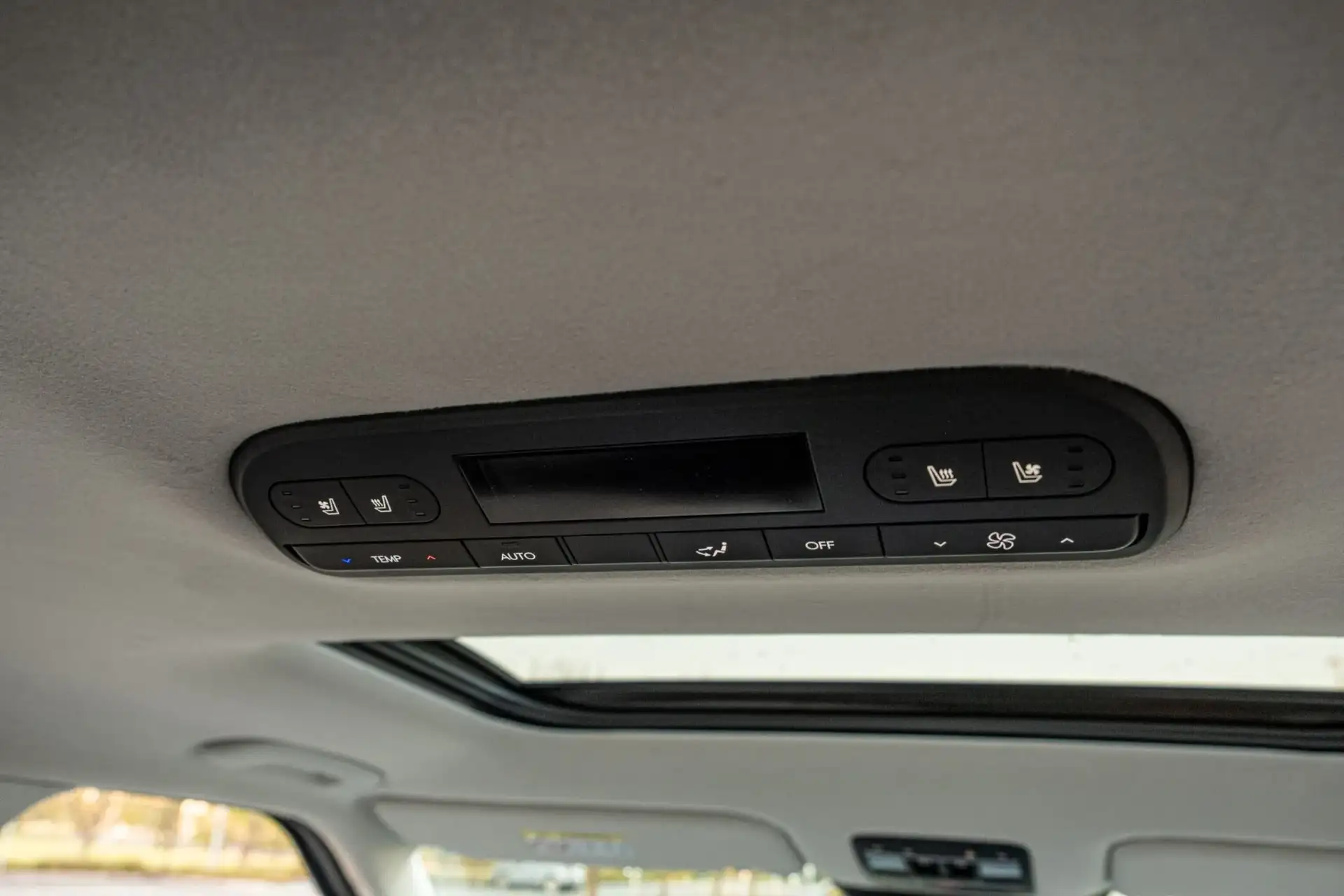
The seven-seat layout tested here replaces the second-row bench with captain’s chairs, and that choice is the one most buyers should want. Those chairs are electrically adjustable, heated, ventilated and fitted with armrests, turning the second row into a proper long-distance lounge rather than a compromise. Manual sunshades and generous glass area help, and the packaging still leaves enough room for tall adults without forcing knees into the seatbacks.
The third row is the real surprise. Access is handled by a button that slides the captain’s chairs forward, and once inside, adults can actually fit without feeling punished for arriving last. The outboard third-row seats are heated, and there are additional 100-watt chargers back there as well. Hyundai also allows second- and third-row folding from the cargo area, which is exactly the kind of practical engineering that matters in a vehicle expected to do school runs on Monday and airport duty on Friday.
Cargo capacity is 300 liters with all seats in place, 712 liters with the third row folded, and 2,081 liters with the second row also out of the way. Those are serious figures, and they reinforce the Palisade’s basic mission: it is a luxury family transporter first, a status symbol second. If you want to compare how Hyundai is thinking about premium cabin packaging across its lineup, the HYUNDAI GRANDEUR Facelift Hides a Cabin Revolution is a useful companion piece.

Ride Quality Is The Palisade’s Most Convincing Dynamic Feature
Hyundai’s Australian tuning work is central to the Palisade’s character. The suspension is passive and offers no adaptive modes, which is unusual at this price point, but the calibration is excellent on imperfect roads. It absorbs sharp urban impacts cleanly, settles quickly after speed bumps and keeps the body from feeling floaty in the way some large SUVs do. That composure is more valuable than outright sportiness in a 2,294 kg vehicle with a 2,970 mm wheelbase.
There is still body roll, and there should be. A seven-seat SUV with this ride comfort and this kind of mass is never going to feel like a sports crossover, nor should buyers expect it to. What Hyundai has achieved instead is a calm, predictable chassis that shrugs off motorway expansion joints and remains quiet at speed thanks to double-laminated windows and well-managed tire noise. Over more than 200 km of highway use, the Palisade proved itself as a genuine long-distance cruiser rather than a short test-drive illusion.

Big-SUV Refinement Comes With A Few Honest Compromises
No honest review of the Palisade Calligraphy should ignore its size. In tight city streets, it feels large, and while the 11.94-meter turning circle is respectable, the vehicle would benefit from rear-wheel steering to improve maneuverability in parking lots and urban gaps. The brakes, visibility and assist systems are competent, but the physical footprint is still the defining constraint.
There is also the question of drivetrain polish. The 2.5-liter hybrid is quieter at cruise than it is at ignition and low-speed load, and the mass of the vehicle means throttle response is never going to feel instant in the way a lighter SUV can manage. Yet the overall experience remains impressively refined, with low wind noise, subdued road roar and a cabin that can genuinely carry adults in all three rows without complaint.
The closest direct rivals are not necessarily the same names Hyundai used to worry about. The Palisade now makes a better real-world case than many premium-badged SUVs because it combines usable space, credible materials and an appropriately sized hybrid powertrain. For a different take on family SUV value with serious development depth, the HONDA PILOT Vs PATHFINDER the Family-suv Winner You’d Miss is a strong comparison point.

Why The Palisade Calligraphy Changes Hyundai’s Market Position
The 2026 Palisade Calligraphy matters because it compresses the distance between mainstream and luxury without turning into a gimmick. It has the hardware, the refinement and the packaging to justify its flagship status, and it does so in a way that feels engineered rather than embellished. That distinction is why it lands so well.
It is also one of the clearest examples of Hyundai learning how to price for content instead of badge. At around AU$99,390, the Calligraphy sits in a region where many rivals ask for more money and deliver less coherence. The Palisade’s combination of 245 kW, 460 Nm, true seven-seat accommodation and a cabin that feels genuinely premium is enough to make it one of the strongest family SUVs in its class. If the buyer’s priority is an electric alternative, the HYUNDAI IONIQ 9 Black Ink Edition Turns EV Luxury Silent shows where the brand’s other flagship energy is going, but the Palisade remains the more universal answer.