The Facelift That Changes The 7 Series More Than The Numbers Suggest
The updated 2027 BMW 7 Series is not a routine mid-cycle cleanup; it is BMW applying Neue Klasse logic to a flagship that still rides on the current G70 architecture. That distinction matters because the hardware under the body remains familiar, yet the front-end graphics, rear lighting, cabin electronics, and i7 drivetrain technology have all been pushed forward in a way that changes how the car presents itself and how it will age in the market. BMW says this is its most extensive model update ever, and on the evidence of the design work alone, that claim is not marketing fluff. The company has revised the headlights, grille, bumpers, lighting signature, dashboard architecture, battery technology, and even the car’s software backbone in one pass.
The timing is just as important. The current 7 Series has already improved BMW’s standing in the full-size luxury segment, helped by the i7, and this facelift arrives while Mercedes-Benz is also updating the S-Class. In that context, BMW is not merely protecting a product cycle; it is trying to preserve the 7 Series’ momentum in a part of the market where brand perception moves almost as fast as lease residuals. For readers tracking that broader luxury push, the new 7 Series is best understood alongside the MERCEDES-MAYBACH Classe SLC and the freshly sharpened MERCEDES-BENZ EQS 2027, because all three are trying to prove that flagship luxury now lives in the software stack as much as in the upholstery.
| Variant | Engine / System | Power | Torque | 0-100 km/h | Battery / Range | Charging | Starting Price |
|---|---|---|---|---|---|---|---|
| BMW 740 | 3.0-litre turbocharged inline-6 | 394 hp | Not specified | Not specified | Not applicable | Not applicable | US$101,350 |
| BMW 740 xDrive | 3.0-litre turbocharged inline-6 | 394 hp | Not specified | Not specified | Not applicable | Not applicable | US$104,350 |
| BMW 740e xDrive | Plug-in hybrid | 483 hp | 516 lb-ft | Not specified | Not specified | Not specified | Coming early 2027 |
| BMW i7 50 xDrive | Dual-motor EV | 449 hp | 487 lb-ft | 5.3 s | 112.5 kWh usable, 350+ miles estimated | 250 kW DC | US$107,550 |
| BMW i7 60 xDrive | Dual-motor EV | 536 hp | 549 lb-ft | 4.6 s | 112.5 kWh usable, 350+ miles estimated | 250 kW DC | US$126,250 |
The Front End Is Still Huge, But It Finally Looks Intentional
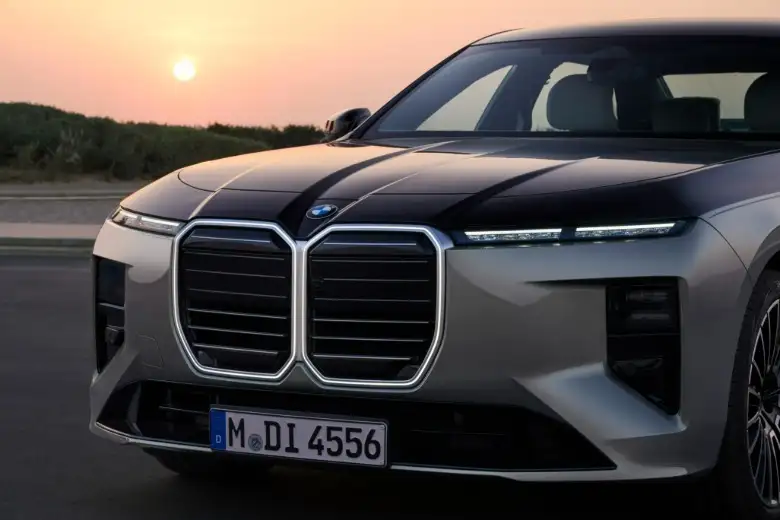
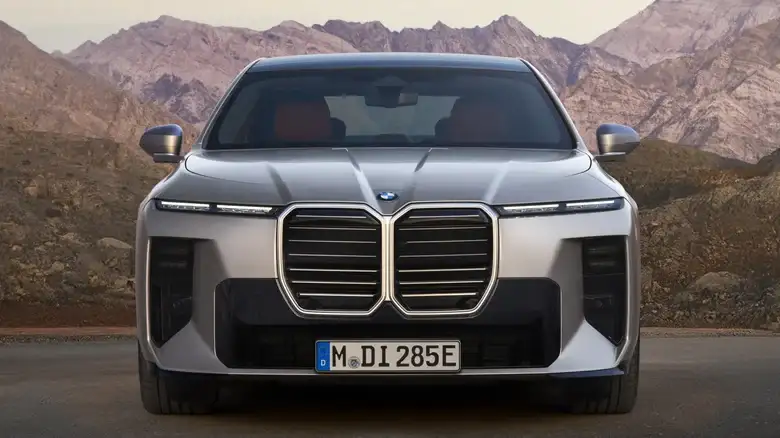
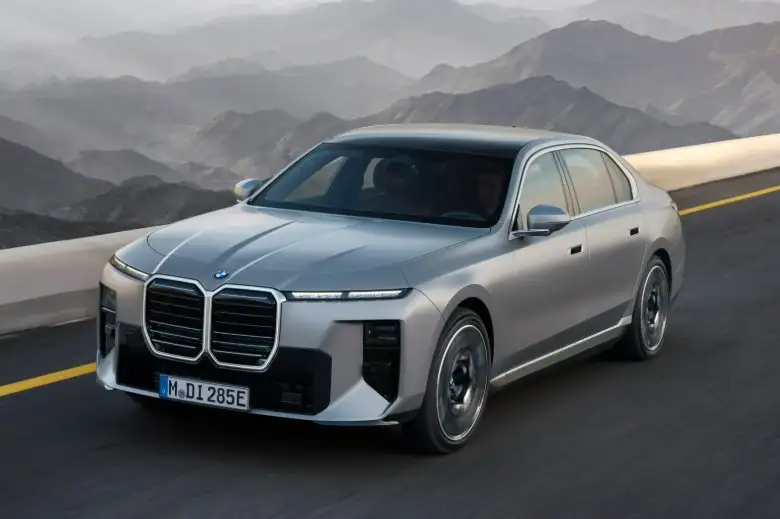
BMW kept the split-headlight theme, the oversized kidneys, and the visual drama that made the G70 divisive from day one, but the facelift tightens everything into a cleaner composition. The kidneys are now taller and narrower, with more horizontal vanes and a more old-school BMW proportion, while the lighting around them is fully separated instead of merging into a blank central block. That single change makes the nose look more engineered and less like a display object. The upper running lights are thinner and now connect to the grille surround, while the main headlamps sit lower and more vertically, reducing their visual weight at a glance. On higher-spec cars, those eyebrow lights can be specified with 12 diamond-cut crystal glass segments per lamp, lit by LEDs and designed to sparkle rather than shout.
BMW has also redrawn the bumper architecture. The standard version is smoother, while the M Sport treatment goes more aggressive with larger intake graphics and blockier surrounds. The hood bulges are more pronounced, which gives the front of the car a stronger centerline and a more muscular relationship with the new grille. It is still undeniably a large sedan with a theatrical face, but now the theater feels edited rather than improvised. Hidden in the kidneys are the cameras, radar sensors, and washer nozzles, which is a useful reminder that BMW is using the grille as both design feature and sensor housing. The available Ceremonial Light Carpet uses 194,000 pixels integrated into the door sills to project animated graphics on the ground, which is exactly the kind of luxury flourish that separates this car from more conservative rivals.
Rear Design And Paint Execution Carry More Prestige Than The Badge
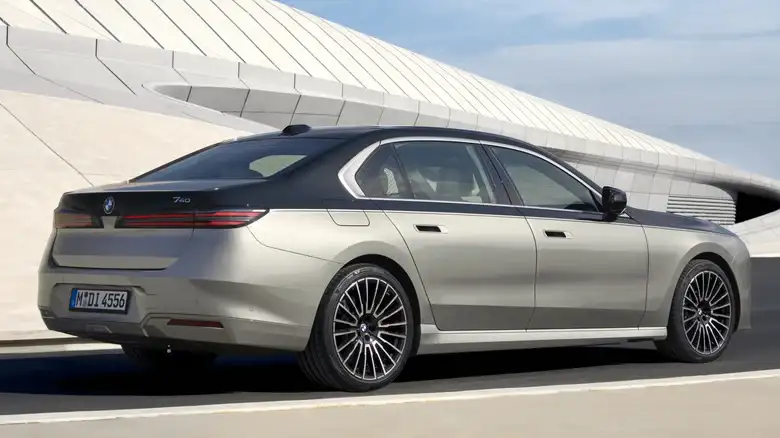
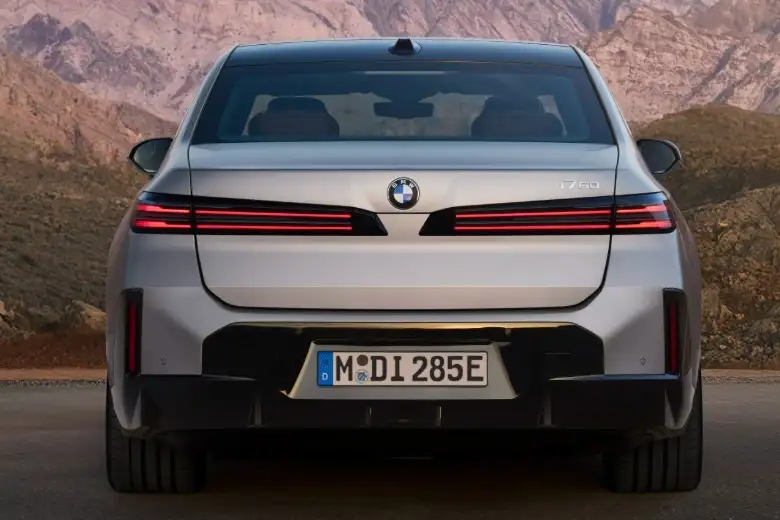
The rear of the facelifted 7 Series is the area where BMW made the strongest visual improvement. The taillights are slimmer, they run farther toward the center of the trunk, and the new twin-line signature gives the car a more precise, almost architectural appearance. Chrome strips and smoked glass are integrated into the lighting design, and BMW has tucked the backup camera, its washer nozzle, and the trunk lock button into the darkened sections of the lamps. That is elegant packaging, not just styling. The bumper designs are also new and better balanced, which matters on a long-bodied sedan where the rear can easily look too heavy if the surfaces are not carefully controlled.
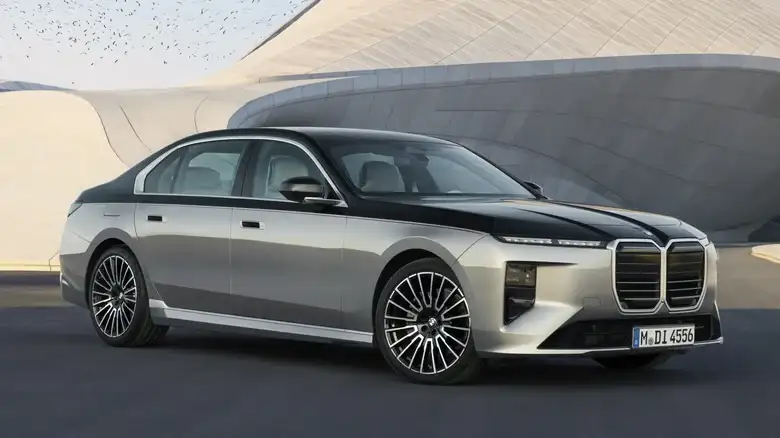
Then there is the paint work. BMW Individual Dual-Finish paint is the sort of process that reveals how seriously the company treats expensive commissions. The finish combines matte and metallic sections with no visible transition point, then adds a hand-drawn coach line between the two. BMW says the paint process takes more than 75 hours per car, uses 20 specially trained employees, and includes 12 manual steps at Plant Dingolfing. That is not mass-market customization; it is boutique-level labor on a production sedan. It also helps the 7 Series stand apart from rivals that offer two-tone paint as a simple design choice rather than a manufacturing event. If you want another example of how premium brands are trying to turn exterior treatment into a talking point, look at the BMW 760i da Larte Design, where visual customization is used to sharpen the personality of the same underlying platform.
Panoramic iDrive Is The Real Story Inside
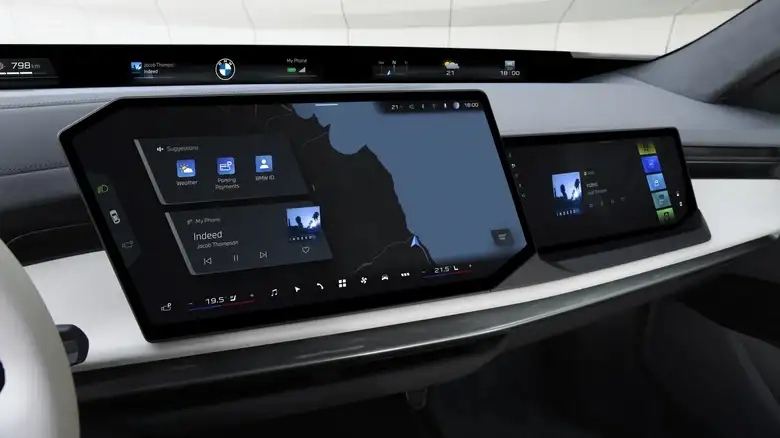
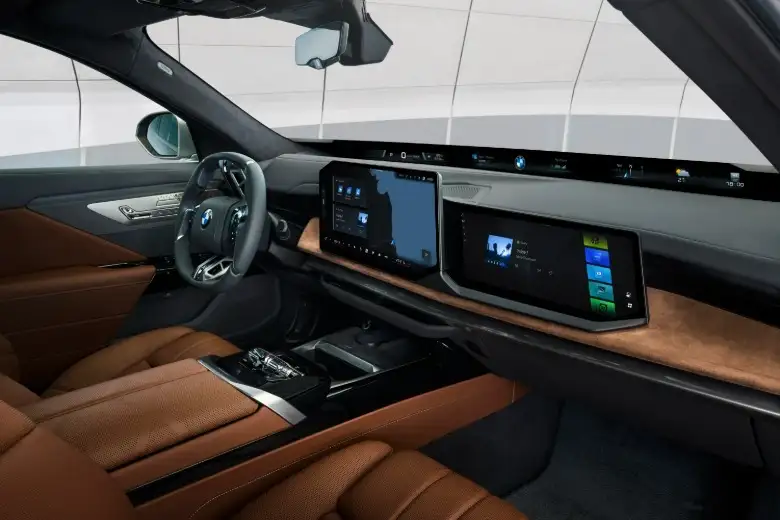
The biggest cabin change is BMW’s new Panoramic iDrive setup, which the 7 Series now inherits from the Neue Klasse family. Instead of a conventional instrument cluster, the system uses Panoramic Vision, a projected display spanning the lower base of the windshield. The central touchscreen is 17.9 inches and uses the distinctive rhombus-shaped free-cut form, while the passenger side gets a 14.6-inch screen in the same family of shapes. That combination changes how the front of the cabin is organized because it reduces the need for a separate gauge binnacle and shifts the visual emphasis toward a broad, horizontal information band.
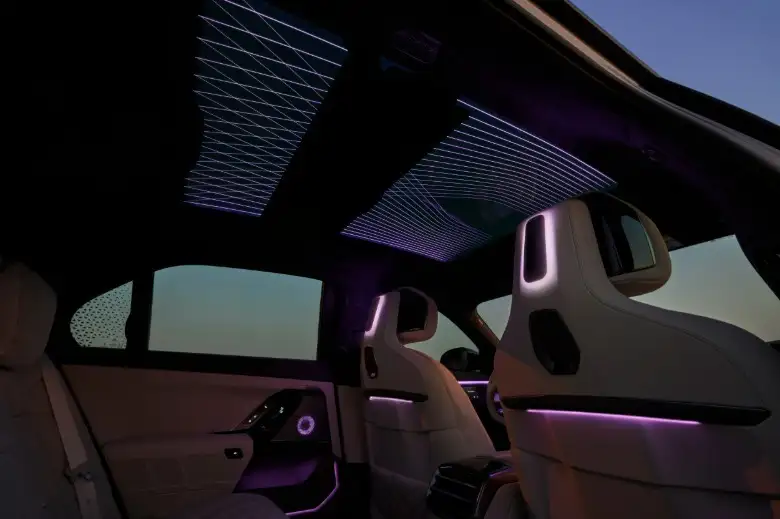
BMW has also reworked the steering wheel, and there are five different designs depending on trim and specification. The center console now houses a crystal shifter, while the seat adjustment controls and other functions are presented through crystal-finished modules on the door panels. The door cards themselves are cleaner and less cluttered, which is the right move in a luxury sedan where tactile hierarchy matters. Vegan upholstery is standard, but leather and cashmere remain available, and the wood trims have been expanded as well. Ambient lighting has become more layered too: the dashboard strip changes its effect with time of day, the seatbacks gain integrated sconce-like lights, the rear speaker covers glow from within, and the optional Panoramic Skylounge roof contains more than 40 LEDs in the glass.
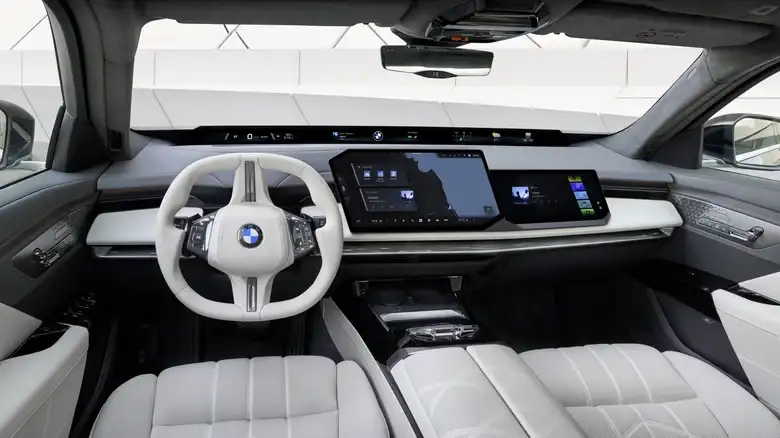
The most important point is not the novelty of each screen or light source. It is BMW’s effort to create a coherent digital environment rather than a pile of gadgets. This is the same design strategy the company is deploying in other products, including the ACURA INTEGRA 2026 in a different segment, where interface clarity and control logic are becoming as important as hard performance numbers.
Rear Seat Luxury Stays Central, But The Hardware Is Smarter
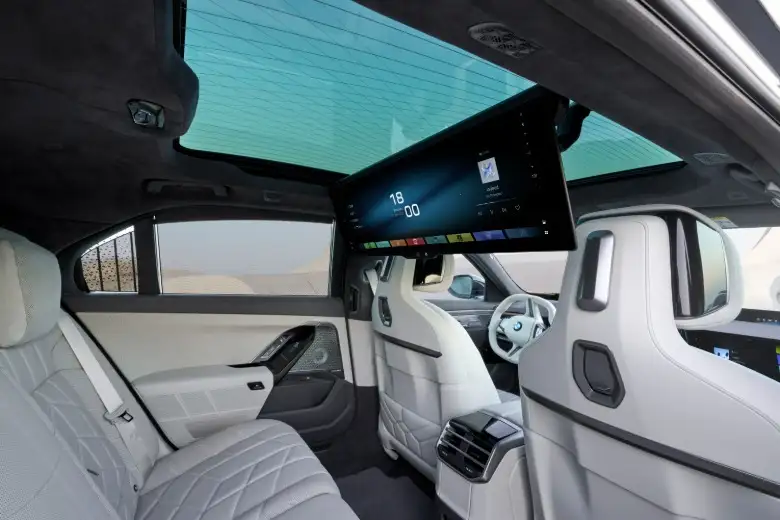
BMW did not need to redesign the rear compartment from scratch, because the outgoing 7 Series already had the layout and hardware expected of a flagship. The optional 31.3-inch 8K Theater Screen remains the headline feature, but now it includes a camera for video calls and an HDMI input for laptops or game consoles. That is a practical upgrade, not just a luxury flourish, because it turns the rear compartment into an actual mobile workstation or entertainment lounge. The available 36-speaker Bowers & Wilkins Diamond surround system gains Dolby Atmos integration and headrest-mounted surround speakers, while the rear door touch displays are updated too.
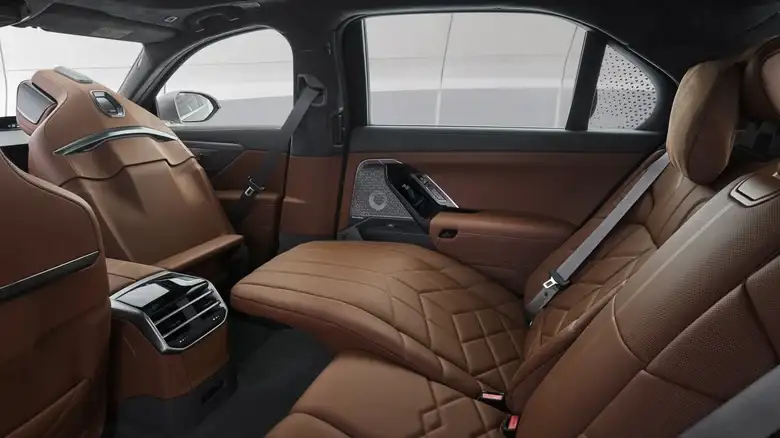
Seat equipment is strong even in standard form. The front seats now come with ventilation and nine massage programs, and those same functions can be specified for the rear. The Executive Lounge package still makes the biggest difference because it adds an integrated leg rest for the right-rear passenger, a heated armrest, and additional comfort tailoring. In a market where chauffeurs and owner-drivers both shop the same car, that package is effectively a segmentation tool inside the model range. The 7 Series remains one of the few modern luxury sedans where the rear seat can still feel like the primary event, and BMW knows that buyers cross-shop this experience against ultra-luxury alternatives such as the BYD Yangwang U8L, which uses four-seat exclusivity as its own prestige strategy.
i7 Hardware Gains The Most Useful Upgrades Of The Whole Facelift
The electric i7 is where the facelift delivers its most meaningful engineering progress. BMW’s sixth-generation eDrive hardware brings the Neue Klasse cylindrical cell format into the 7 Series, increasing volumetric energy density by 20 percent. The usable battery capacity rises by more than 10 percent to 112.5 kWh, yet the external battery dimensions remain unchanged. BMW estimates more than 350 miles of range, roughly 40 miles more than the current i7, which is the kind of improvement that changes ownership behavior in the real world. A standard NACS port is now fitted, which is essential for the North American market, and DC fast-charging capability climbs from 195 kW to 250 kW. BMW says the battery can go from 10 to 80 percent in 28 minutes under ideal conditions.
The drivetrain itself has been improved too. The base i7 50 xDrive now produces 449 hp and 487 lb-ft, with a 0-100 km/h time of 5.3 seconds. The i7 60 xDrive steps up to 536 hp and 549 lb-ft and cuts that sprint to 4.6 seconds. BMW says the motors are quieter, smoother, and more efficient, helped by silicon carbide semiconductor components, friction-optimized wheel bearings, and highly integrated drive units. Those drive units package the motor, power electronics, and transmission in one housing, and BMW says the motors use electrically excited synchronous architecture, avoiding rare earth metals in the rotor. Efficiency is up by as much as 7 percent overall.
There is also a more intelligent regeneration strategy. The updated system can bring the car to a complete stop through one-pedal driving, and adaptive recuperation now adjusts regen based on traffic, route guidance, surrounding vehicles, and even traffic lights. That is a useful step beyond static drive modes, and it tells you BMW is treating energy management as part of the user interface rather than a hidden calibration detail. For buyers looking at the broader EV shift in premium cars, the i7’s changes are best compared with the CADILLAC OPTIQ 2027 and the MERCEDES-BENZ CLA-Class EV, because range gains now need to be paired with smarter charging and more efficient electronics to remain competitive.
Neue Klasse Electronics Make The 7 Series A Software Story
Under the skin, BMW has migrated the 7 Series to the Neue Klasse electronic architecture, which the company says is the basis for a software-defined vehicle. The headline figure is 20 times more computing power than the current model generation, but the more interesting number is the 30 percent reduction in wiring-harness weight, which BMW says saves around 2,000 feet of wiring. That is a substantial simplification for a car of this size, and it helps explain why BMW can add more functions without turning the electrical system into a mass penalty. The new zonal setup also uses digital smart eFuses, allowing more intelligent power distribution and faster software integration.
This is the area where the facelift becomes less visible and more strategically important. A stronger electronics backbone allows for more seamless over-the-air updates, interactive AI features, improved digital key functionality, and more capable entertainment and assistance systems. BMW says the architecture is built to keep future models up to date via software, which is the correct long-term answer in a segment where a three-year-old luxury sedan can feel outdated simply because the interface has fallen behind. That is why the 7 Series matters beyond the immediate styling update: it is one of the first major BMW products to show how the brand wants to translate Neue Klasse thinking into a more traditional flagship format. If you want a useful contrast, the VW JETTA X Concept and the NISSAN SKYLINE coverage show how other brands are also trying to reposition familiar names around software, even if their execution targets different audiences.
Driver Assistance And Chassis Control Reflect A More Mature Approach
BMW has also adjusted its automated-driving strategy. The company has discontinued its Level 3 system in favor of stronger Level 2 functionality, and the new BMW Symbiotic Drive setup is designed to remain active even when the driver accelerates, brakes, or steers. That is a more relaxed and less brittle approach than systems that disengage too easily. Eye tracking and driver input monitoring determine whether the driver is attentive, and the system intervenes only if it senses distraction. For a large executive sedan, that is a sensible balance between assistance and responsibility.
The chassis side has not been ignored either. The available Adaptive Chassis Control with 48-volt active anti-roll bars has been improved, and BMW has added more sound-deadening measures throughout the car. Automatic doors now have new sensors and smoother operation, there is a new digital rear-view mirror, and buyers can specify a 3D head-up display. These upgrades are exactly the sort that can change the day-to-day character of a flagship without showing up in a headline spec sheet. They also fit the broader theme of the facelift: BMW is making the car feel more modern by reducing friction, not by chasing novelty for its own sake. That approach will be watched closely by customers who cross-shop the 7 Series with vehicles like the RANGE ROVER SPORT Twenty Edition, where comfort, presence, and technical sophistication have to coexist without compromise.
Pricing, Market Position, And Why This Facelift Matters Now
BMW will begin production in July, with U.S. deliveries following soon after. The 740 starts at US$101,350 including destination, only US$500 more than before, and all-wheel drive adds US$3,000. The i7 50 xDrive starts at US$107,550, also only US$500 more than the outgoing rear-drive version, while the i7 60 xDrive is priced at US$126,250. Those are restrained price increases considering the scale of the update, especially when you factor in the new interior, battery hardware, electronics architecture, and exterior redesign. BMW is clearly trying to keep the 7 Series competitive without pushing it into a different tax bracket.
That restraint tells you where BMW sees the fight. The 7 Series does not need to win on raw horsepower, because the market already includes cars with more aggressive performance headlines. It needs to win on perceived freshness, real charging capability, rear-seat credibility, and the sense that the technology is current rather than opportunistic. This facelift addresses all four. The styling is cleaner, the i7 is more capable, the cabin is more advanced, and the whole car feels like it was engineered to bridge the current 7 Series and the future BMW wants buyers to see in Neue Klasse. In that sense, the facelift is less about fixing controversy and more about making sure the flagship remains relevant against an increasingly serious field of premium sedans and electrified luxury models.
The result is a facelift that feels meaningful because it fixes multiple layers of the car at once. BMW improved the face, sharpened the tail, upgraded the cabin, modernized the i7, and reworked the digital backbone without abandoning the character that has made the G70 so commercially successful. For a flagship sedan, that is the right kind of evolution: visible enough to attract attention, technical enough to justify the spend, and forward-looking enough to survive the next round of competitive updates. The 2027 BMW 7 Series does not merely chase luxury trends; it tries to define what an expensive sedan should feel like when software, charging speed, and interior intelligence matter as much as leather and chrome.