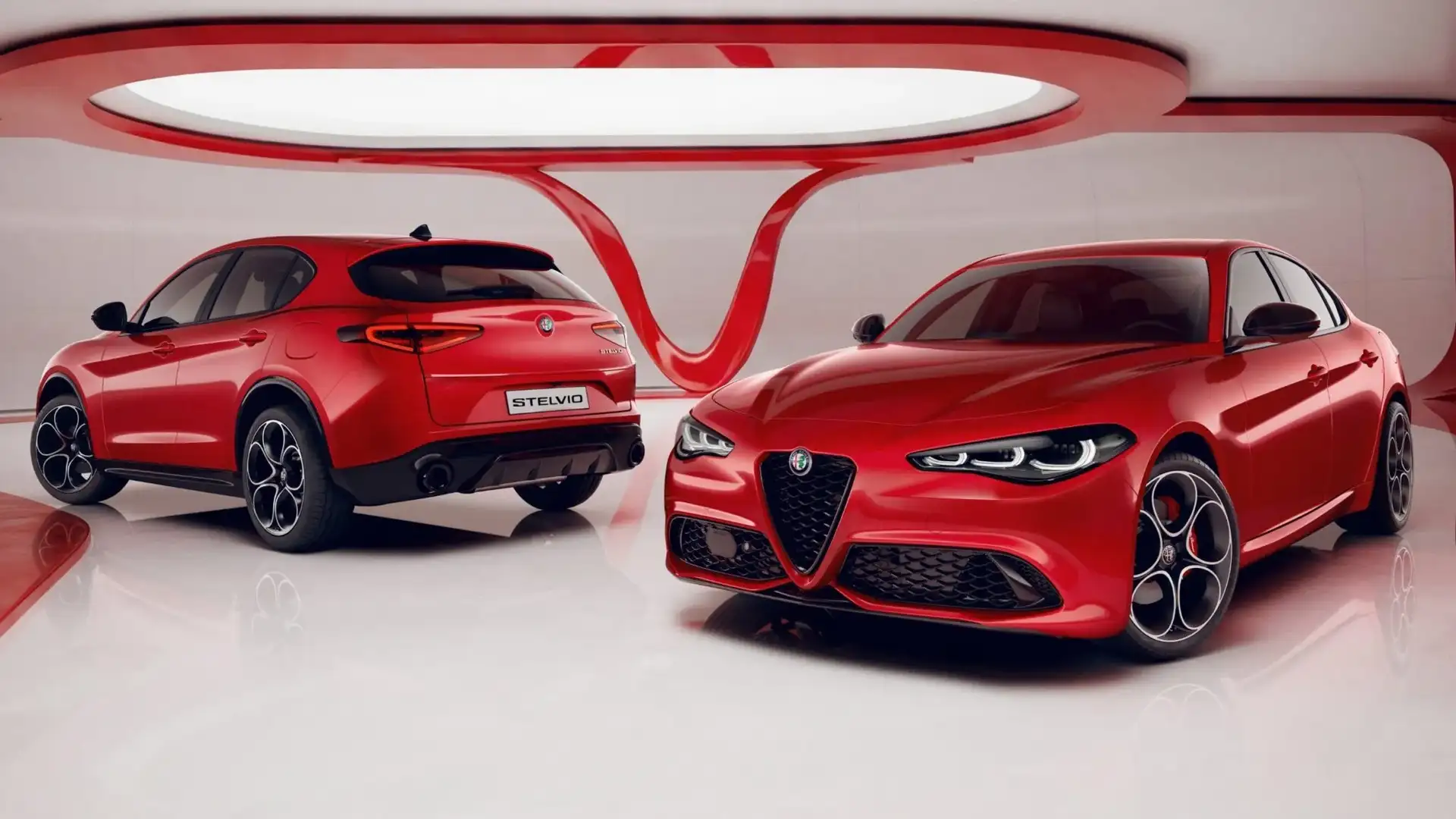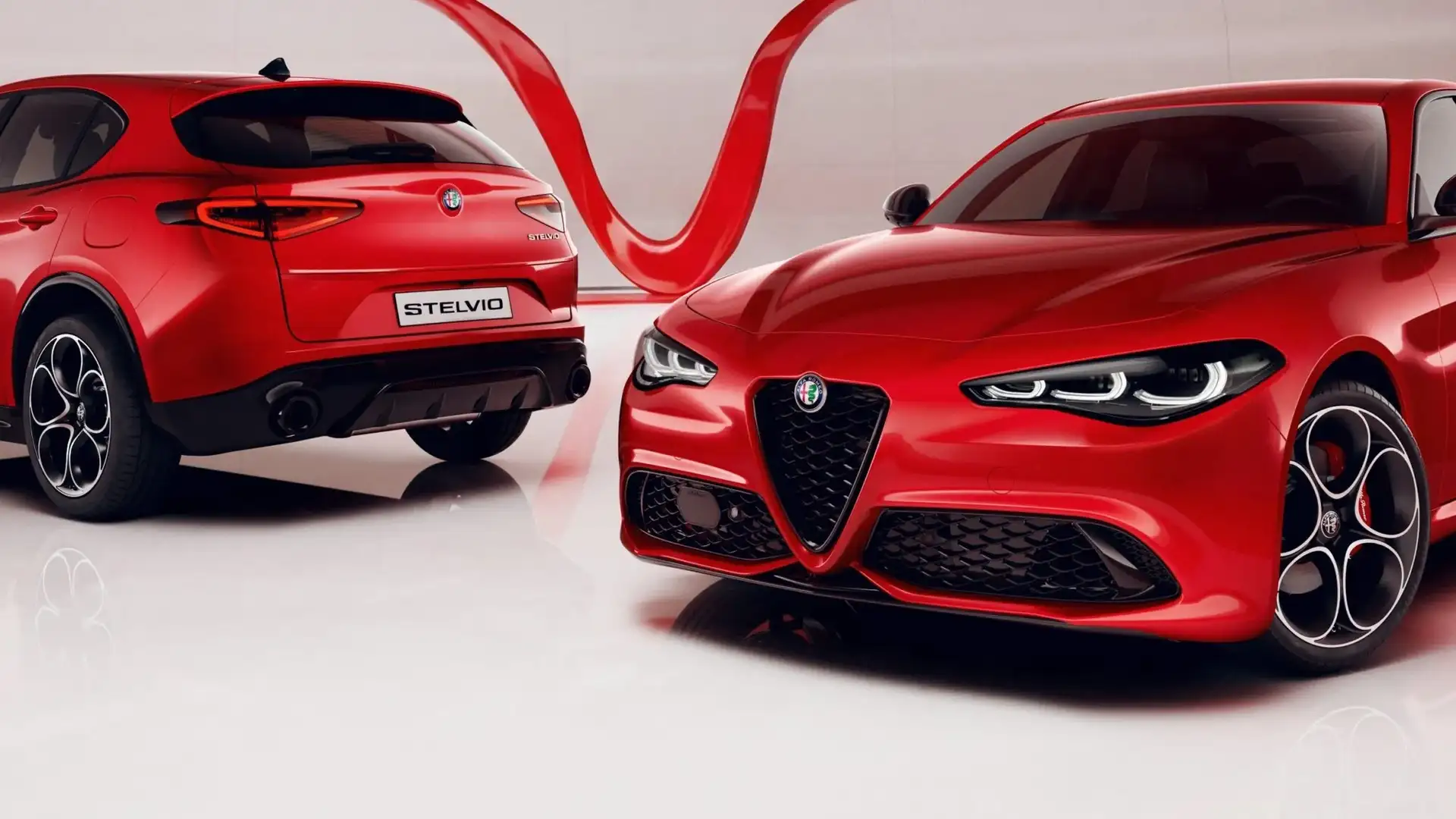
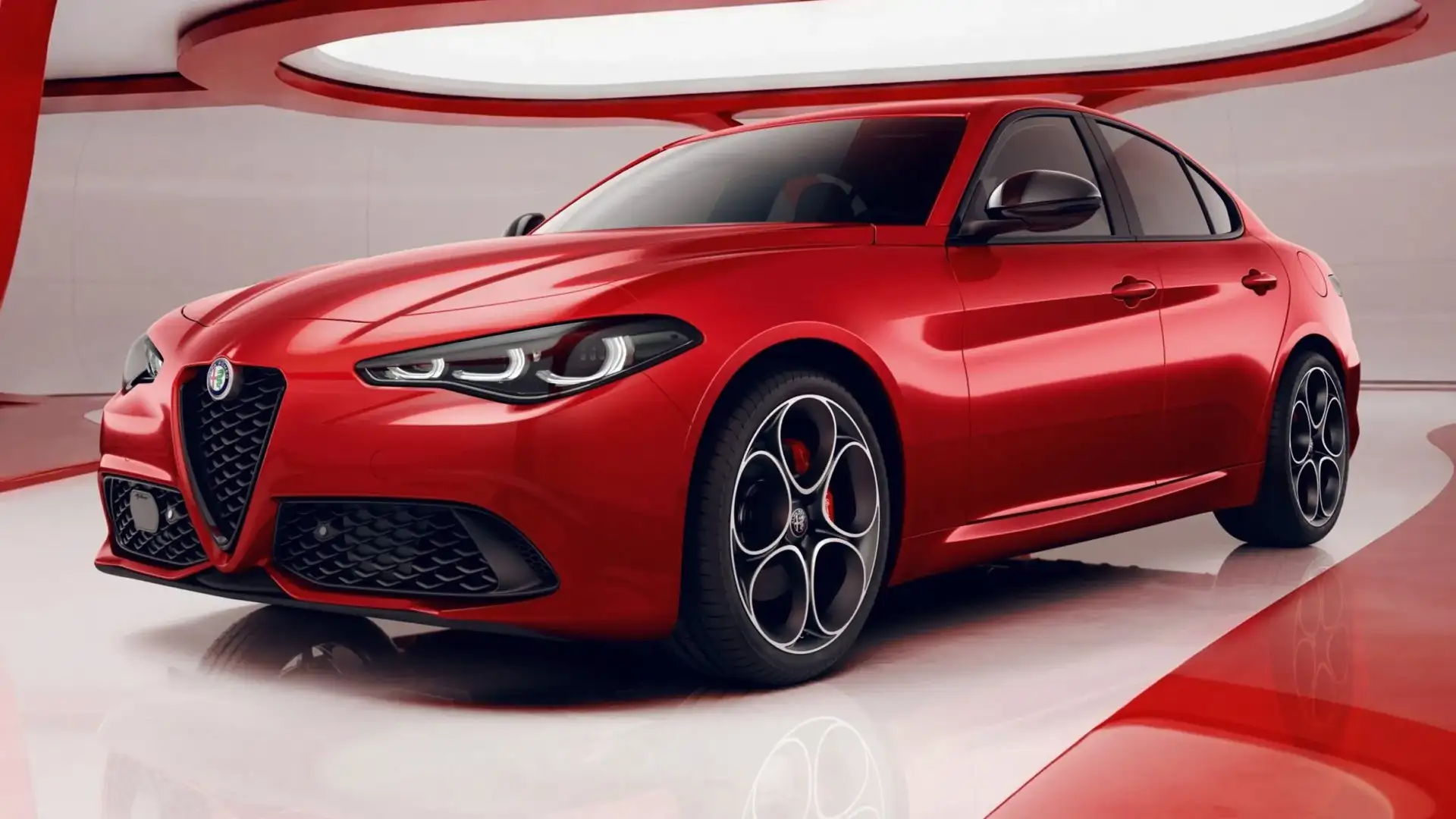
Alfa Romeo’s Old Guard Gets a Hardware Injection, Not a Farewell
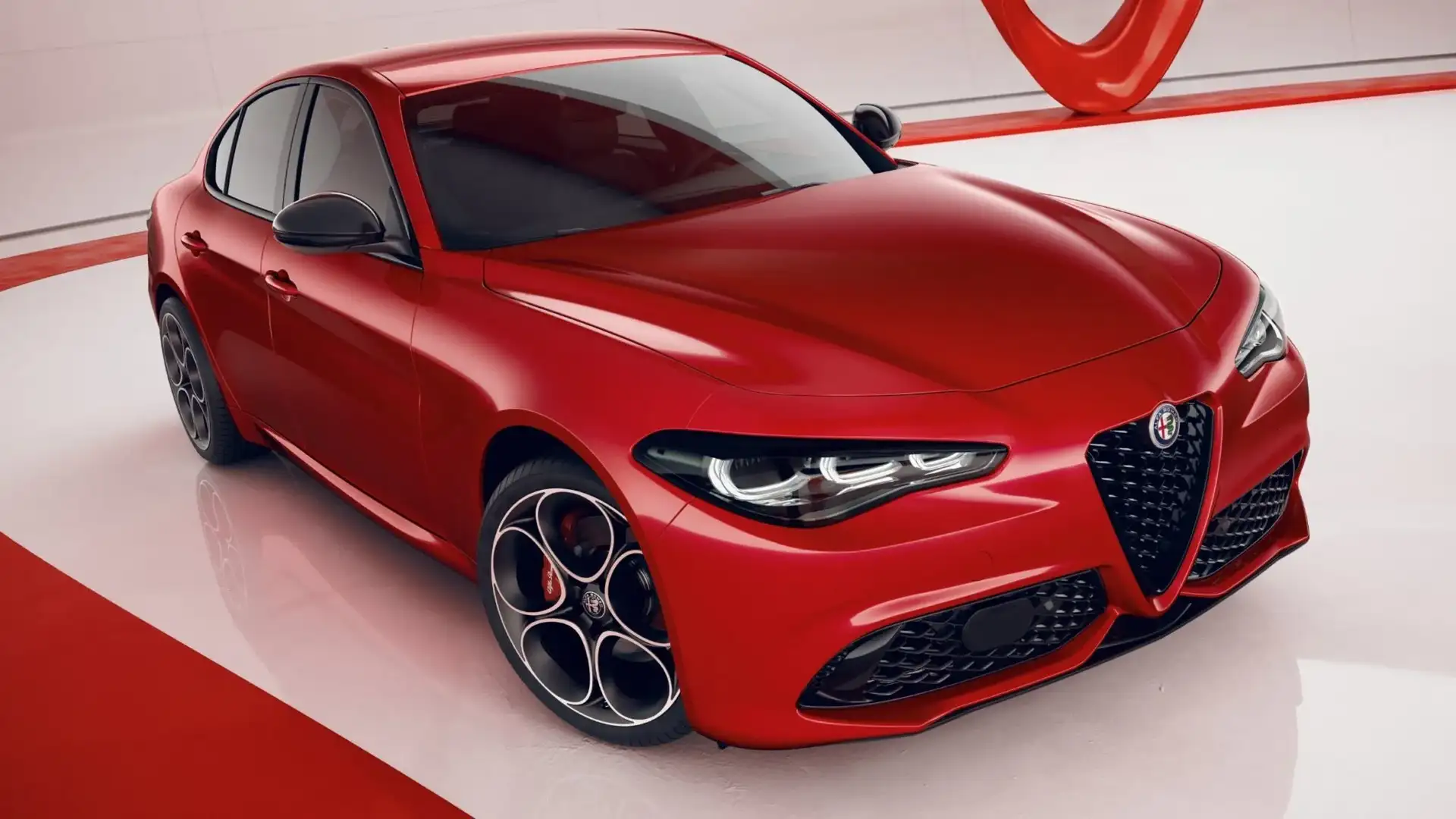
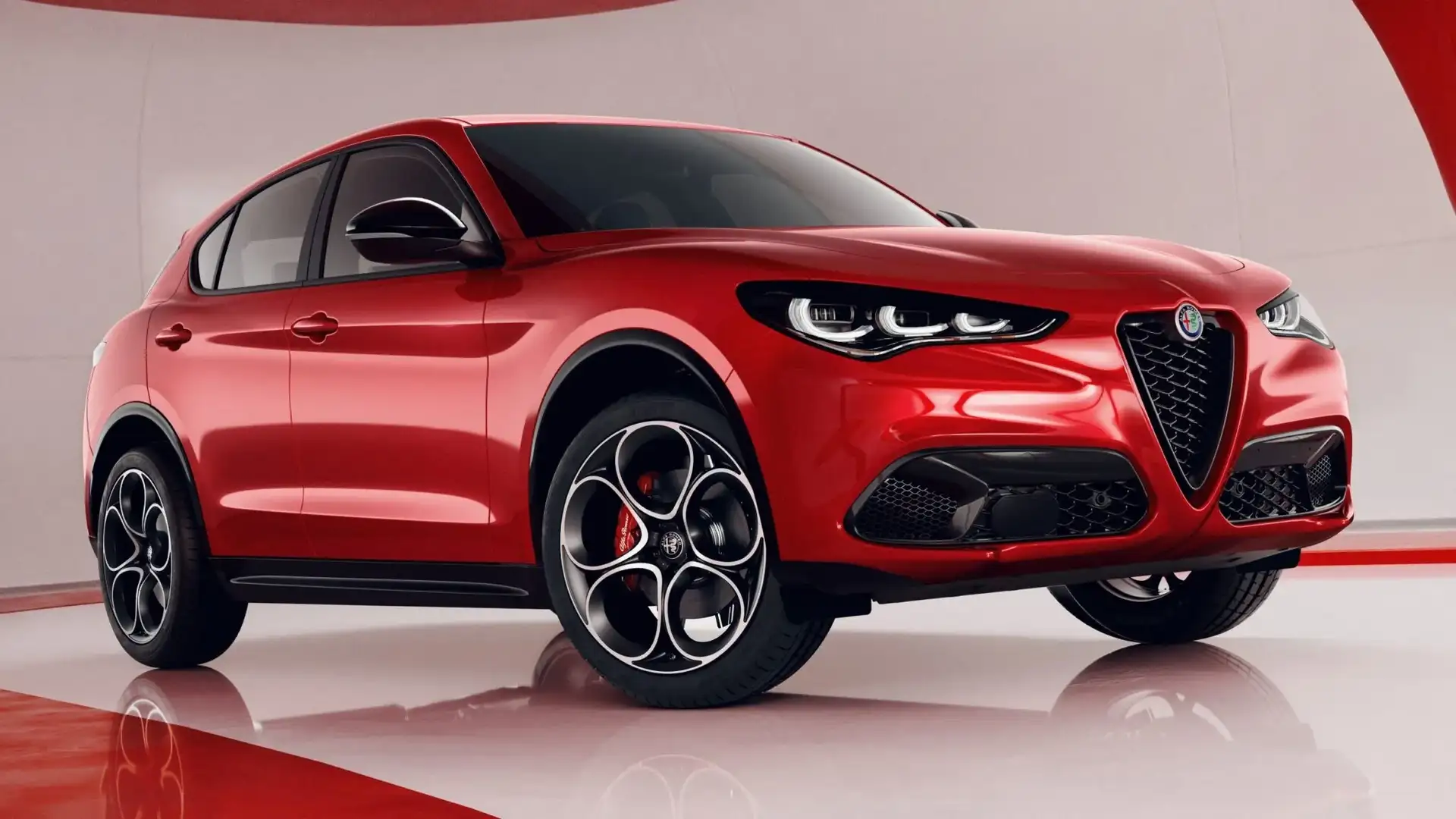
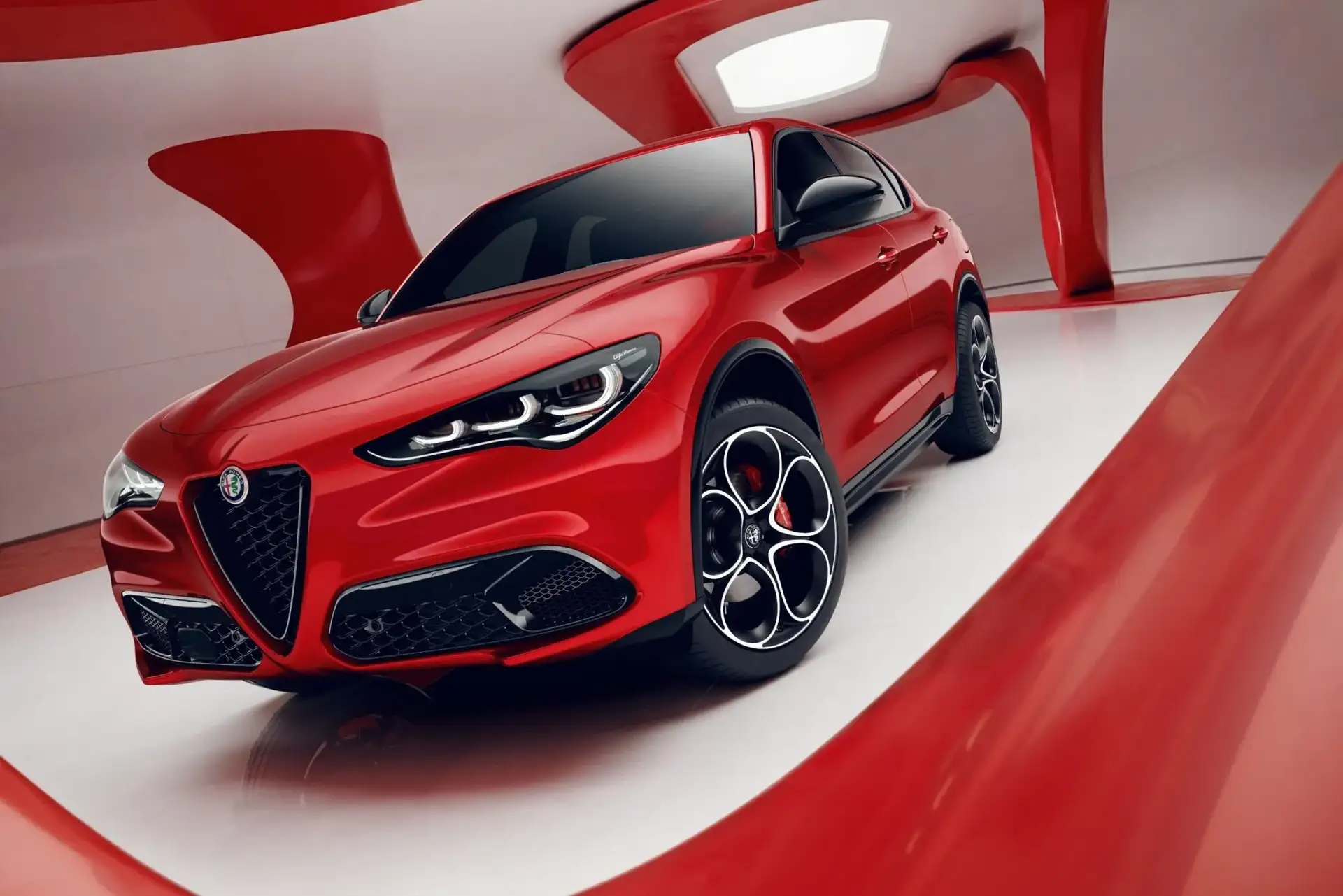
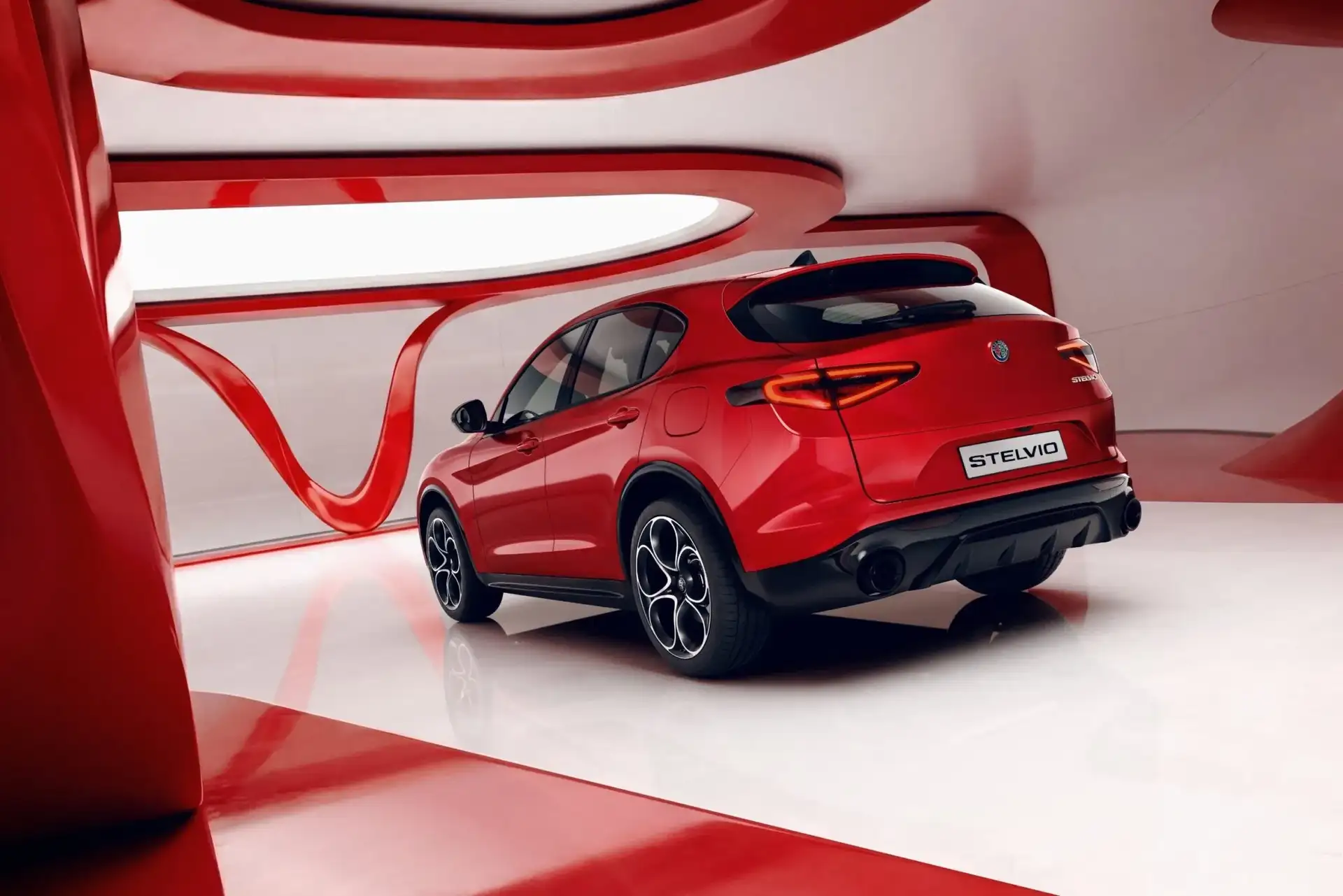
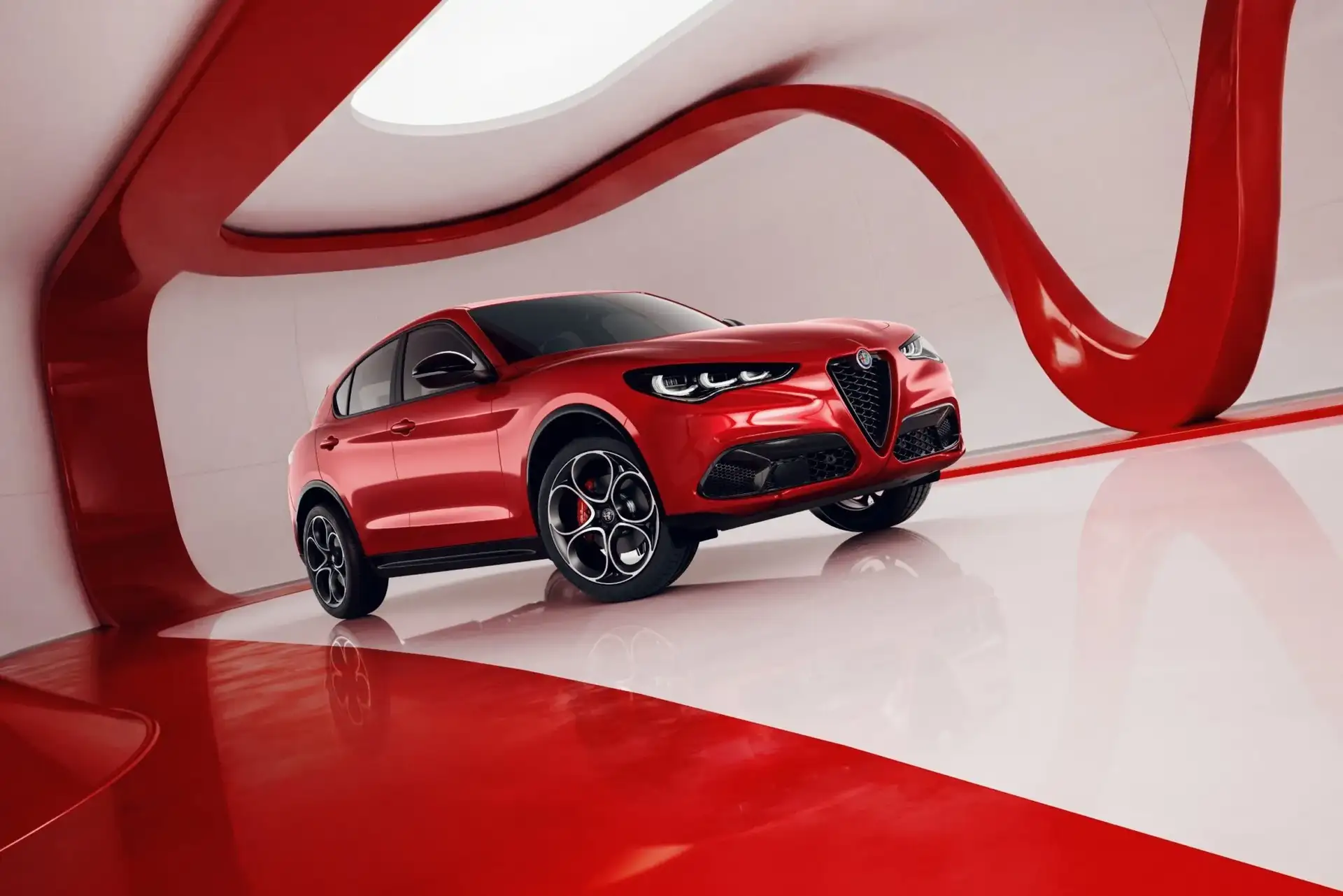
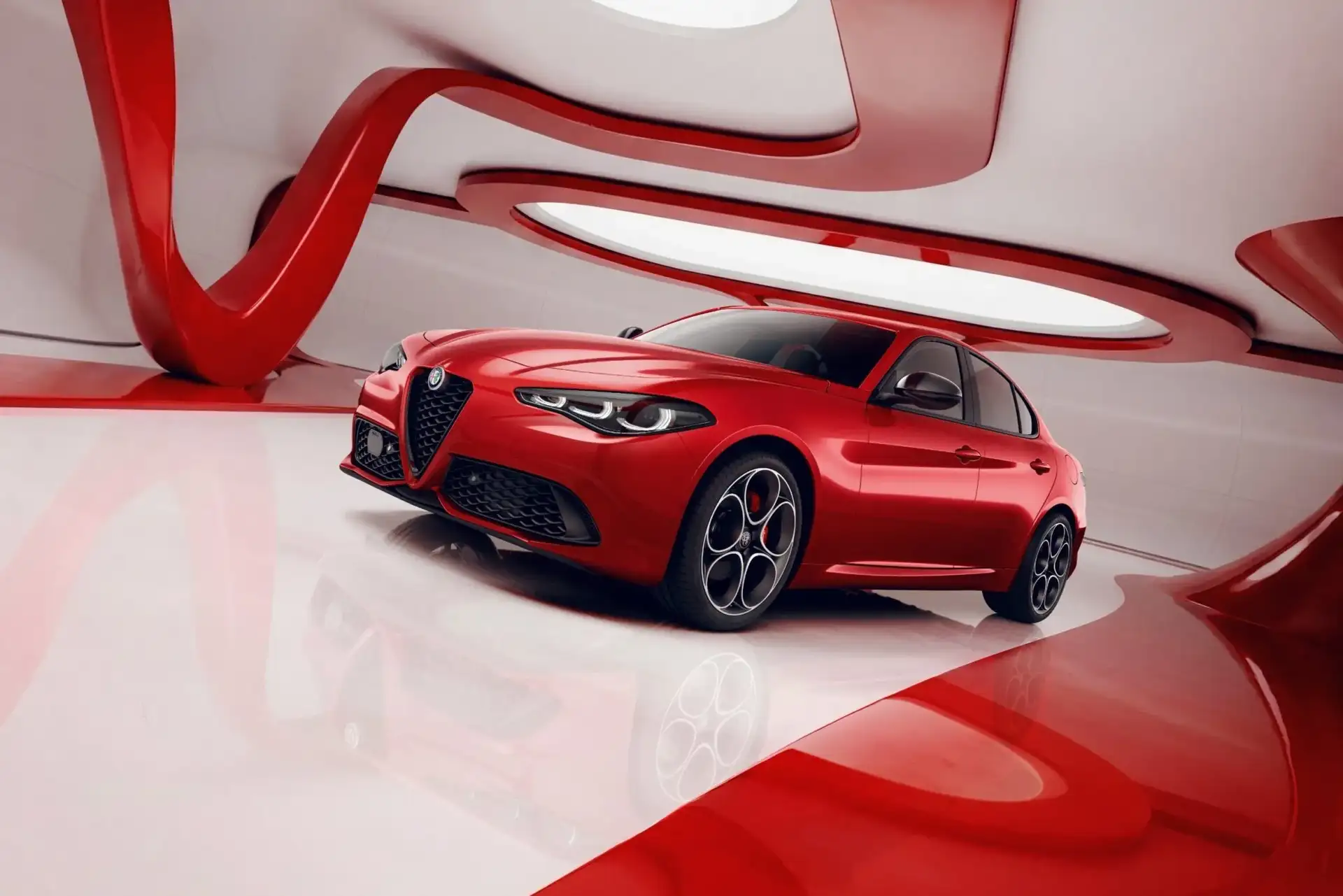
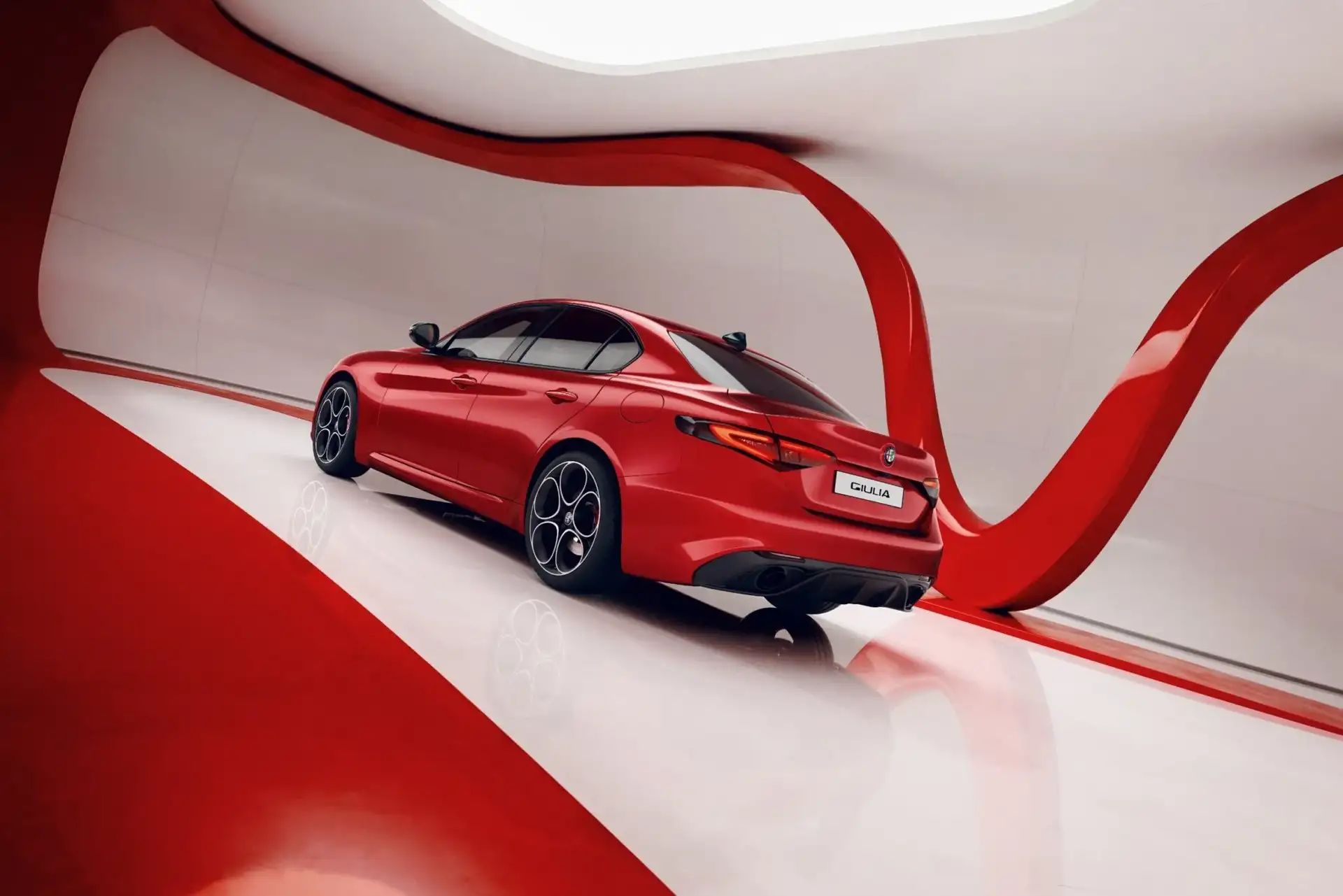
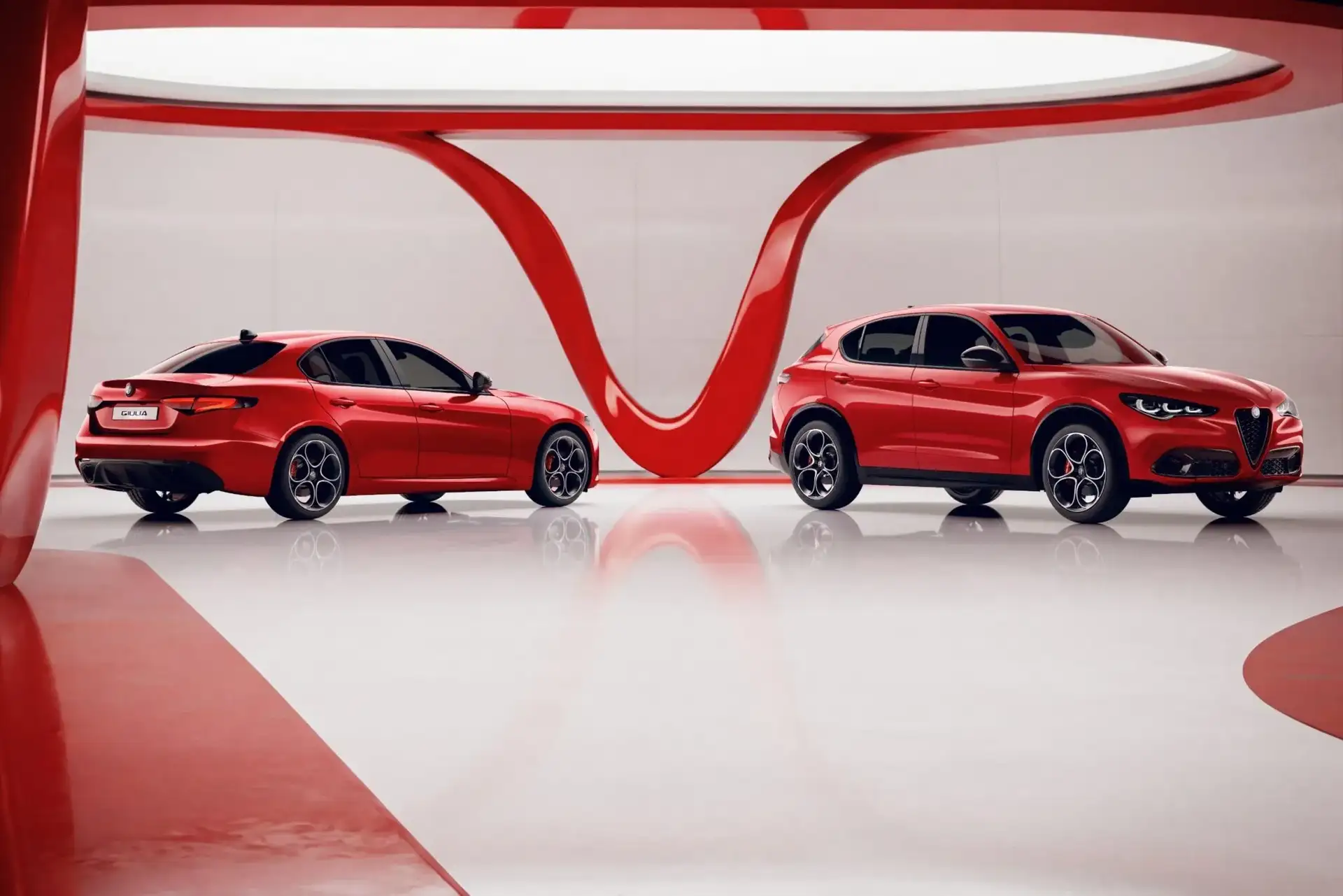
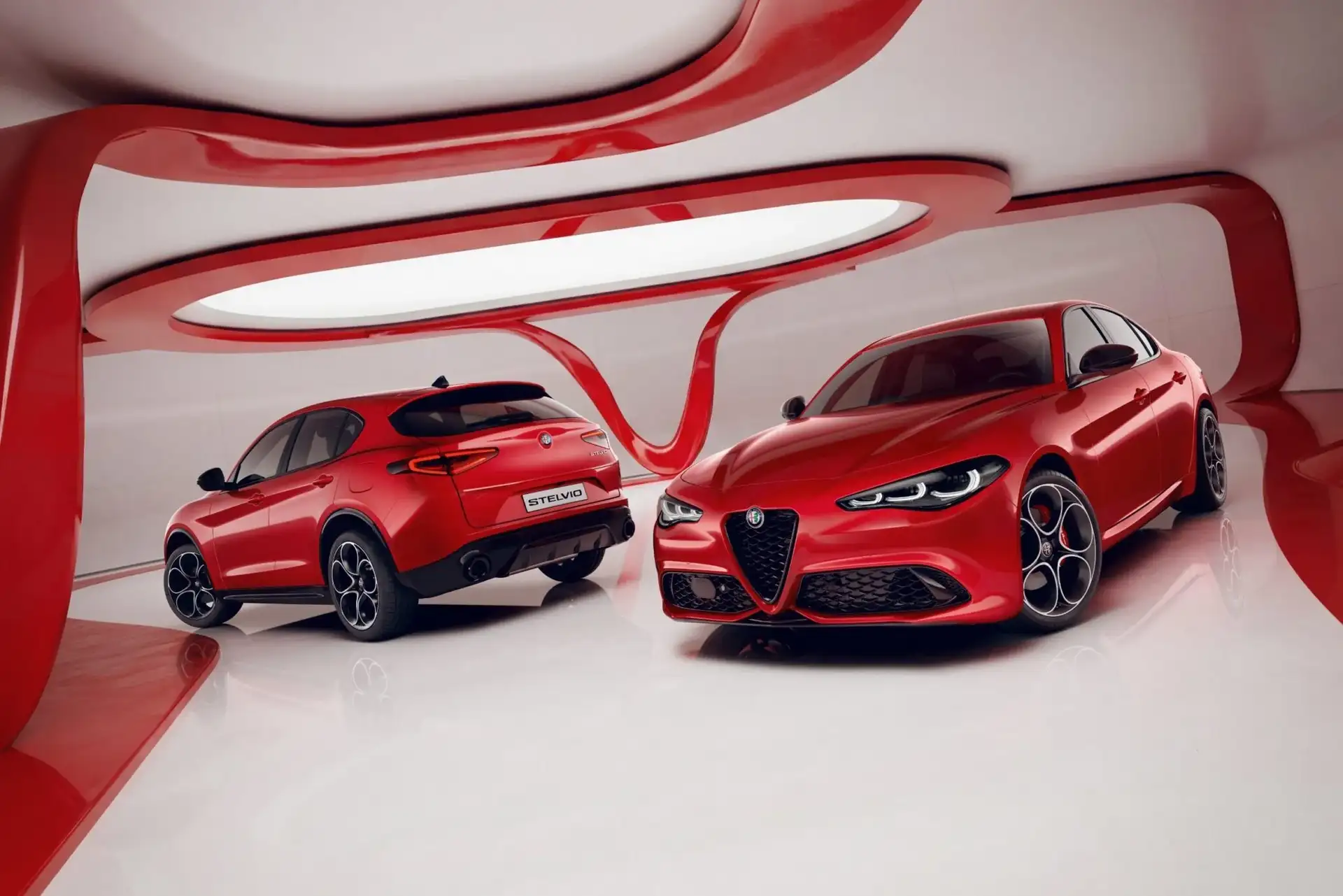
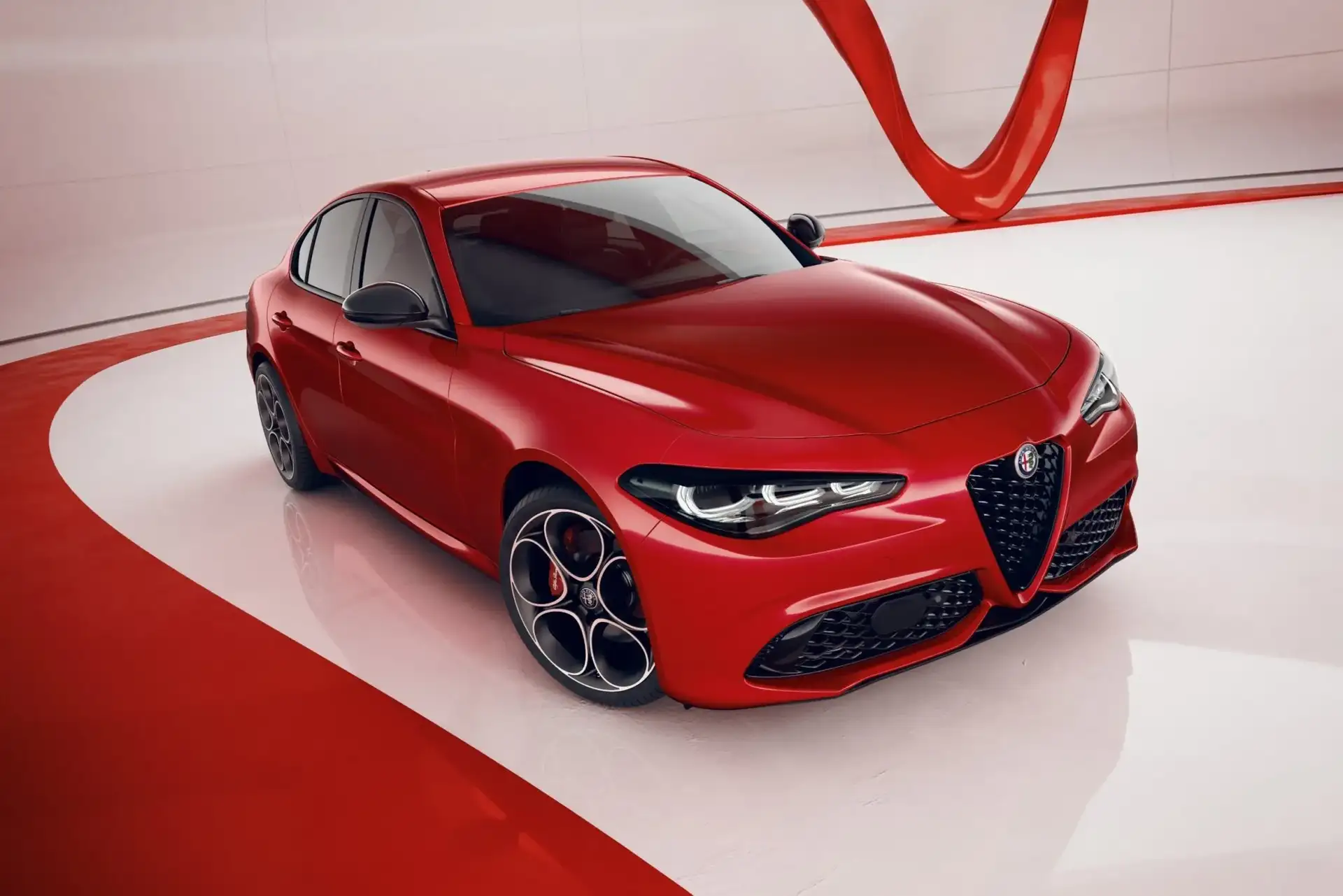
Alfa Romeo is not pretending the Giulia and Stelvio are new cars. The sedan dates back to 2015 and the SUV to 2016, yet both are still being sharpened rather than quietly retired. The latest move for Europe is the Pack Performance, a single option bundle that adds Quadrifoglio-derived chassis hardware, richer cabin materials, and a far stronger 900-watt audio system to the Sprint and Veloce grades. Production has now been extended through 2027, a crucial bridge while the next-generation replacements remain delayed until 2028.
This is more than a trim reshuffle. Alfa is trying to keep two aging but still admired platforms competitive against newer premium rivals by using the parts bin intelligently. The strategy is familiar across Stellantis, but the execution here is unusually focused on enthusiast appeal: the suspension is the story, the cabin is the supporting act, and the audio upgrade is a surprisingly serious headline.
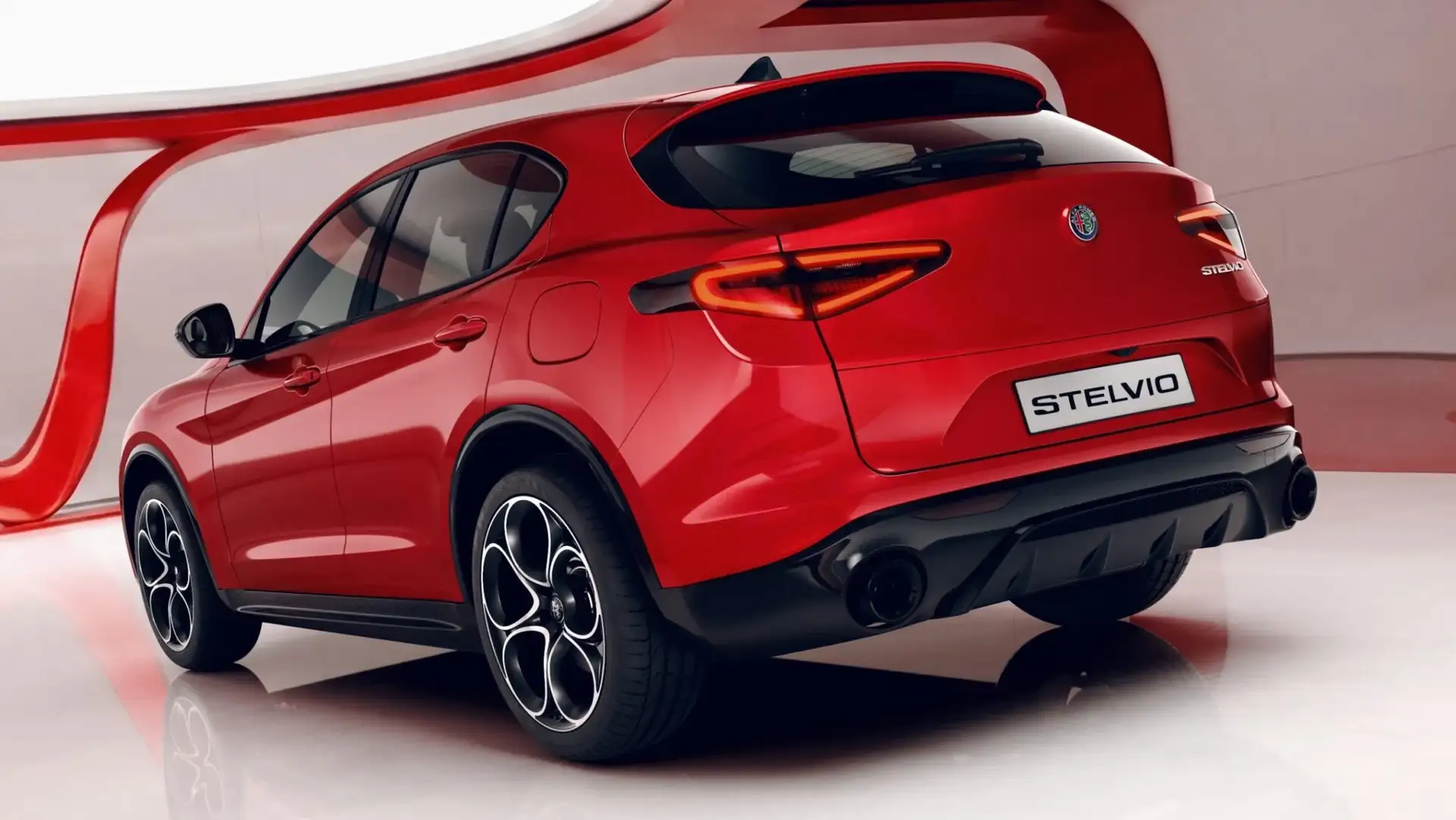
Synaptic Dynamic Control Is the Real Sell, Not the Badging
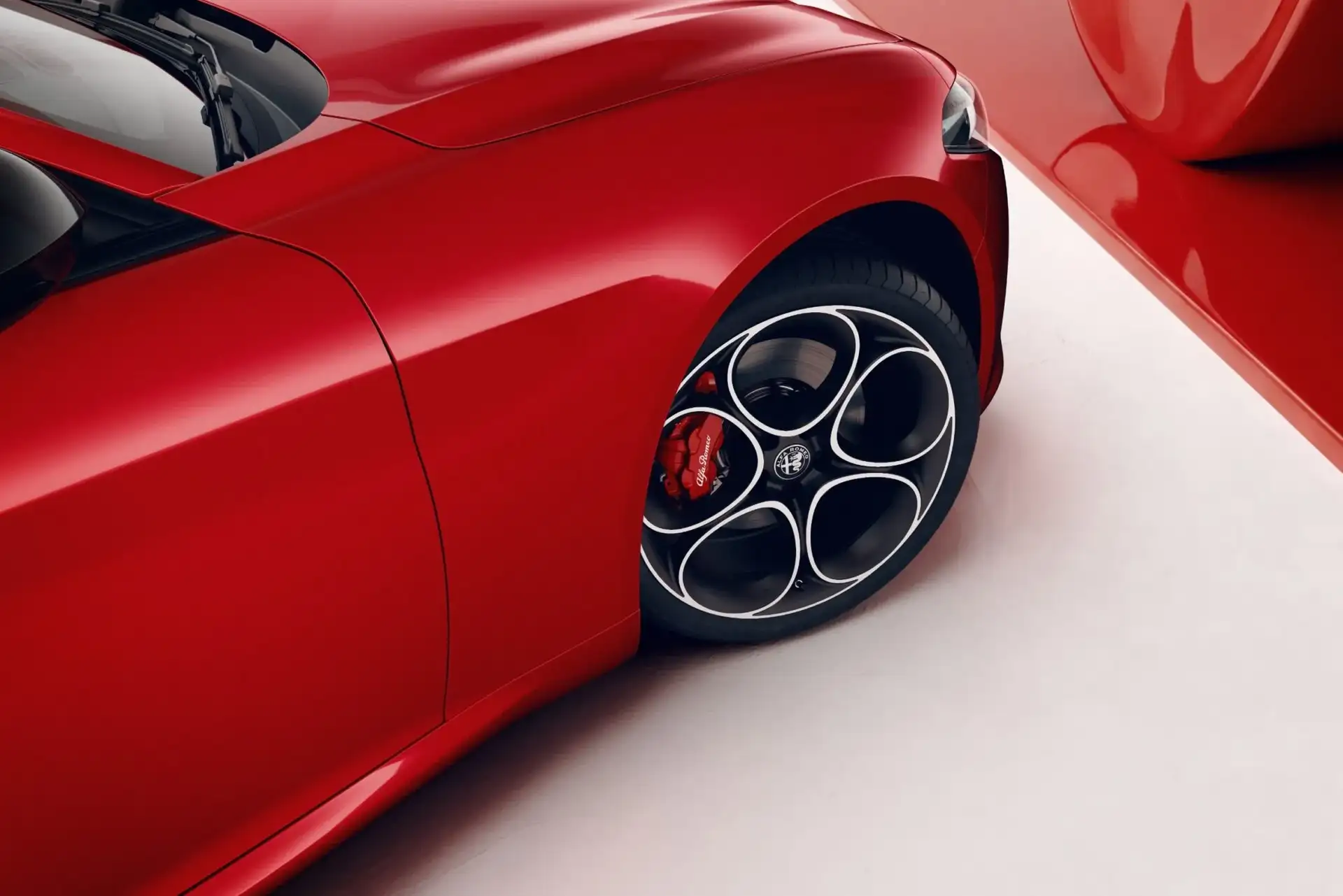
The Pack Performance centers on Synaptic Dynamic Control, Alfa Romeo’s electronically managed suspension system that communicates with the DNA drive-mode selector. Stellantis says the dampers use electro-hydraulic valves to regulate oil flow in real time, allowing the car to adjust response continuously rather than only in fixed steps. On paper, that means a broader spread between comfort, precision, and safety, which is exactly where older premium sports sedans can still win against younger rivals if their body control is sharp enough.
The important detail is not that this is “adaptive suspension,” but that Alfa is now offering a piece of its best chassis hardware on non-Quadrifoglio derivatives more consistently than before. The SDC setup has already appeared in limited editions such as Estrema, Competizione, and Intensa, and it was also optional on pre-facelift Veloce and Ti trims. Bringing it back now gives the Giulia and Stelvio a stronger technical identity at a time when both are being asked to survive against fresher German and Korean competition.
| Specification | Alfa Romeo Giulia Pack Performance | Alfa Romeo Stelvio Pack Performance |
|---|---|---|
| Platform | Giorgio architecture | Giorgio architecture |
| Drive layout | RWD or AWD depending on market/engine | AWD depending on market/engine |
| Suspension upgrade | Synaptic Dynamic Control adaptive dampers | Synaptic Dynamic Control adaptive dampers |
| Infotainment audio | Harman Kardon 900 W, 14 speakers, 12-channel Class-D amplifier | Harman Kardon 900 W, 14 speakers, 12-channel Class-D amplifier |
| Interior trim | Black leather with red stitching, carbon fiber trim, red accents | Black leather with red stitching, carbon fiber trim, red accents |
| Production extension | Through 2027 | Through 2027 |
The Cabin Upgrade Is Smaller Than the Chassis Story, But Smarter
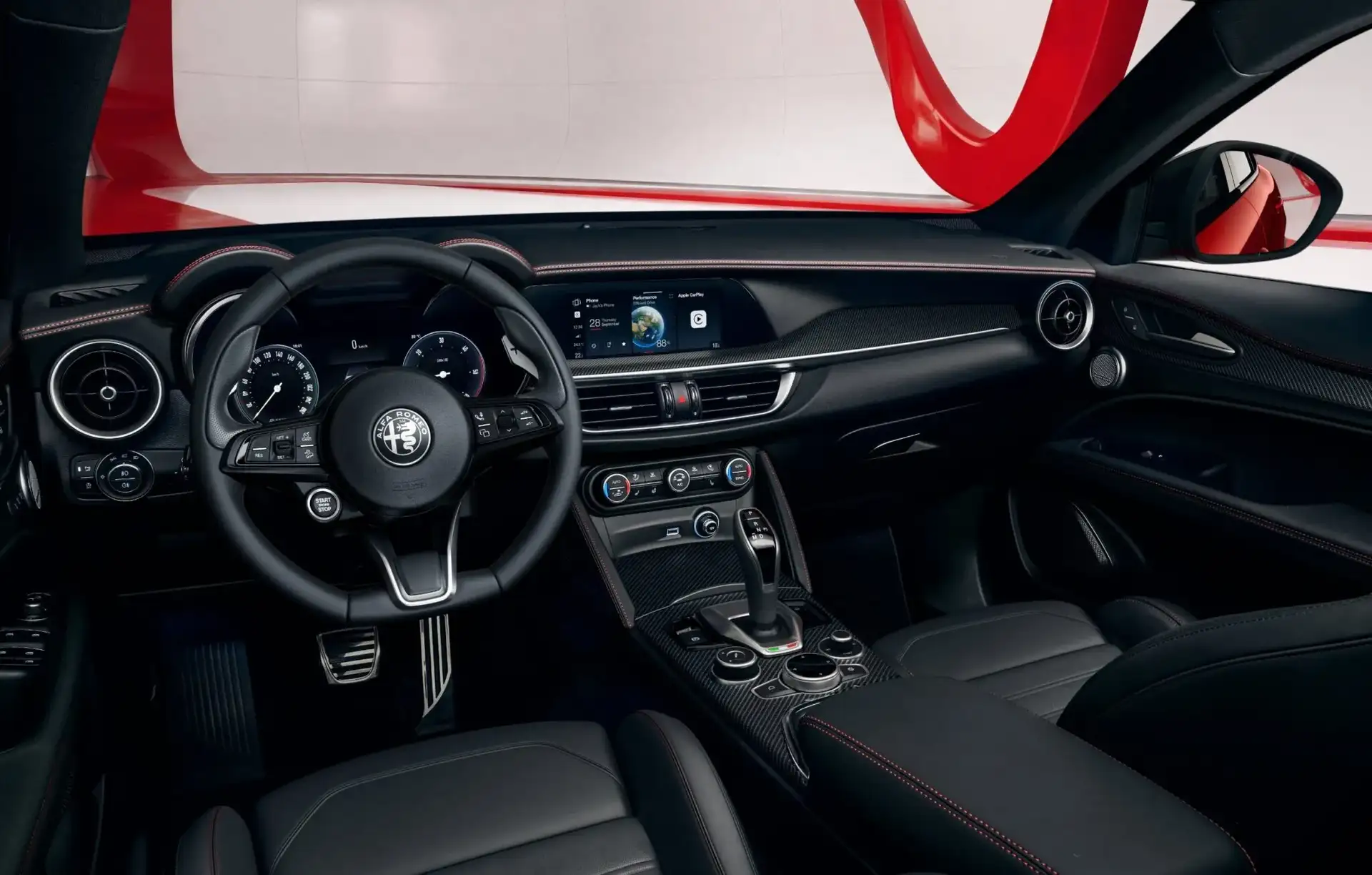
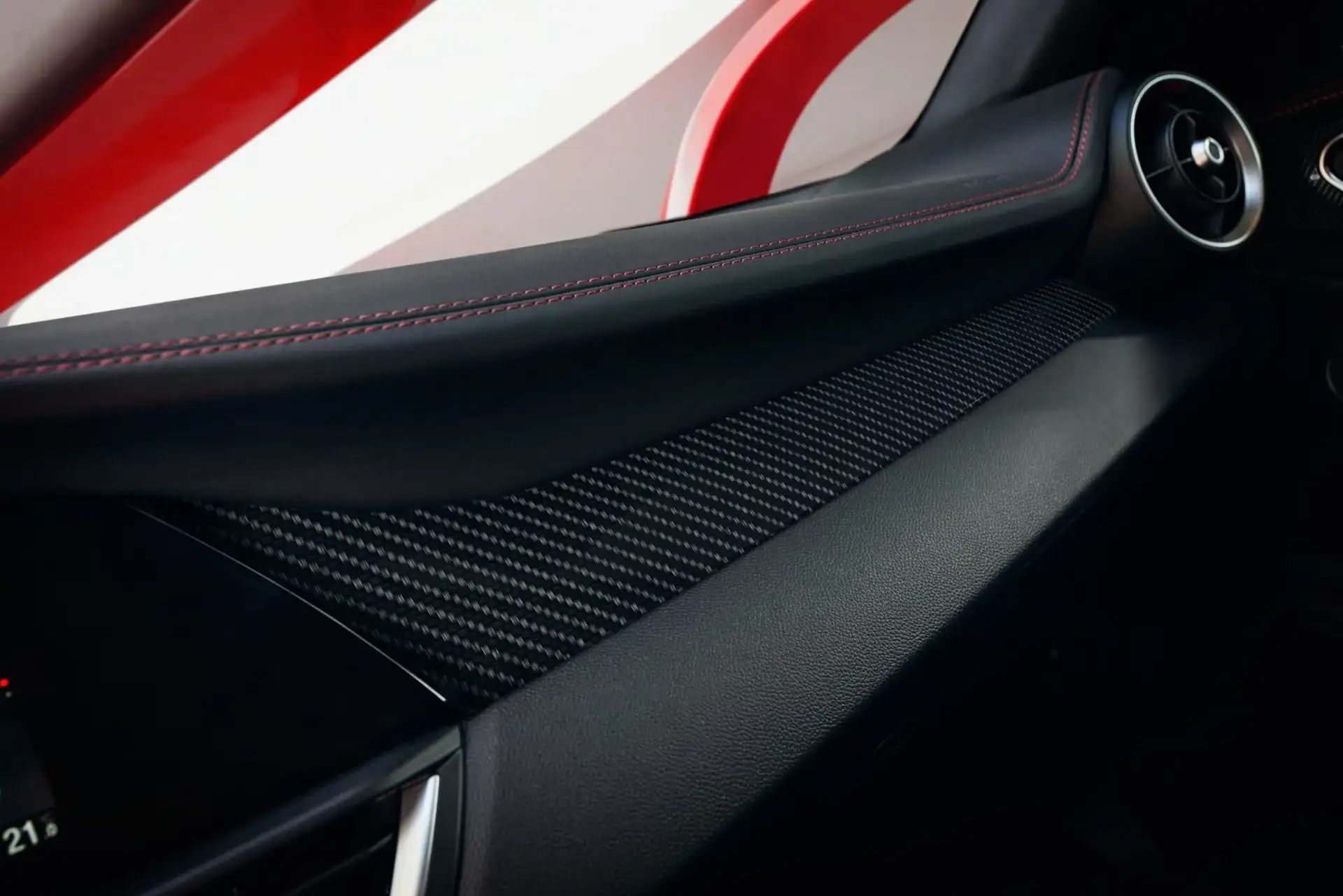
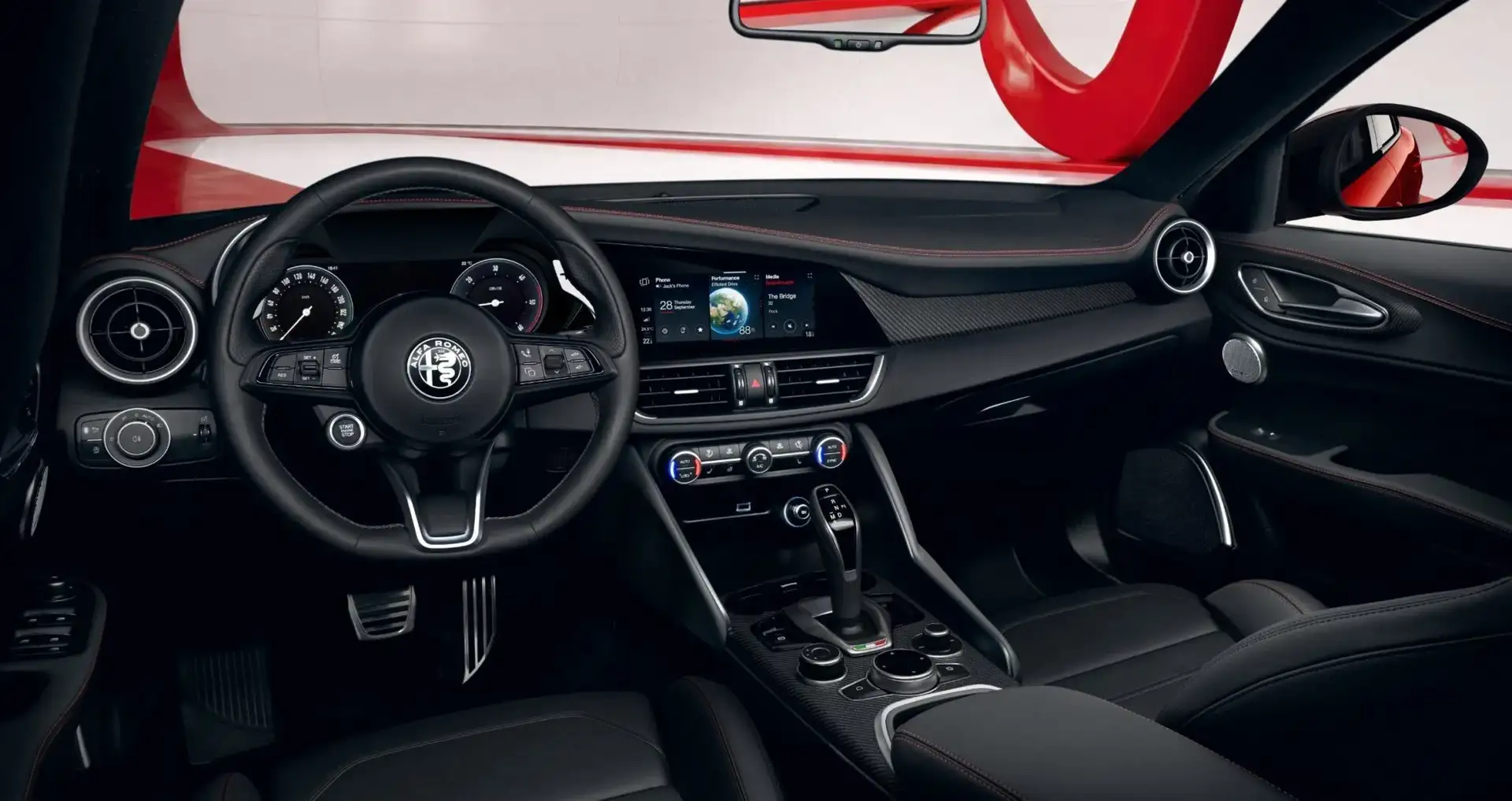
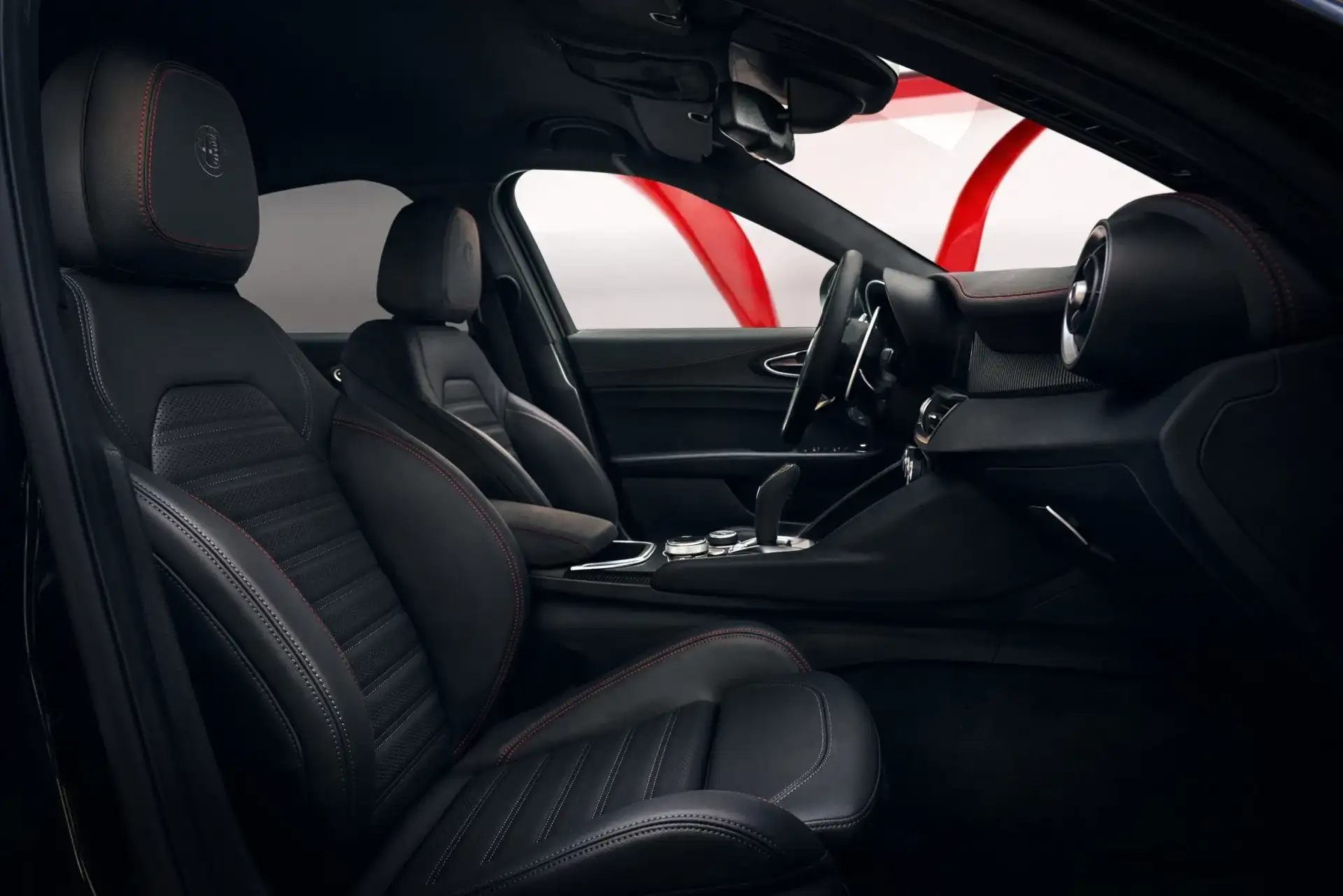
Inside, Alfa Romeo is using materials to support the performance message rather than distract from it. The Pack Performance adds black leather with red stitching, genuine carbon-fiber trim, and red accents across the dashboard, door cards, and center console. None of that is revolutionary, but the combination is important because the regular Giulia and Stelvio have often relied too heavily on charm rather than perceived quality. Carbon fiber and red accents do not fix age, but they do make the age look intentional.
That is especially relevant in Europe, where buyers of the Sprint and Veloce often compare Alfa against similarly priced sport-luxury variants from BMW and Mercedes-Benz. Alfa is narrowing the visual and tactile gap to the better-specified special editions, while also giving the interior a stronger link to the Quadrifoglio brand identity without overusing badges.
The 900-Watt Audio System Is a Bigger Deal Than It Sounds
The new Harman Kardon system is a genuine jump. At 900 watts, with 14 speakers and a 12-channel Class-D amplifier, it sits above the 470-watt setup in the Intensa and brings Sprint and Veloce buyers to Quadrifoglio-equivalent audio output. That is not a minor convenience upgrade; it changes cabin ambience in the same way a better exhaust or suspension calibration changes the character of a performance car.
This move also says something about Alfa’s priorities. The brand knows that not every buyer of a Giulia or Stelvio wants the harshest chassis tune or the cost of the V6 flagship, but many do want a car that feels more premium than its age suggests. Audio, seat trim, and dampers are the three levers that can still move the perception needle when a model cycle is already long in the tooth.
Why Alfa Is Stretching the Lifecycle to 2027
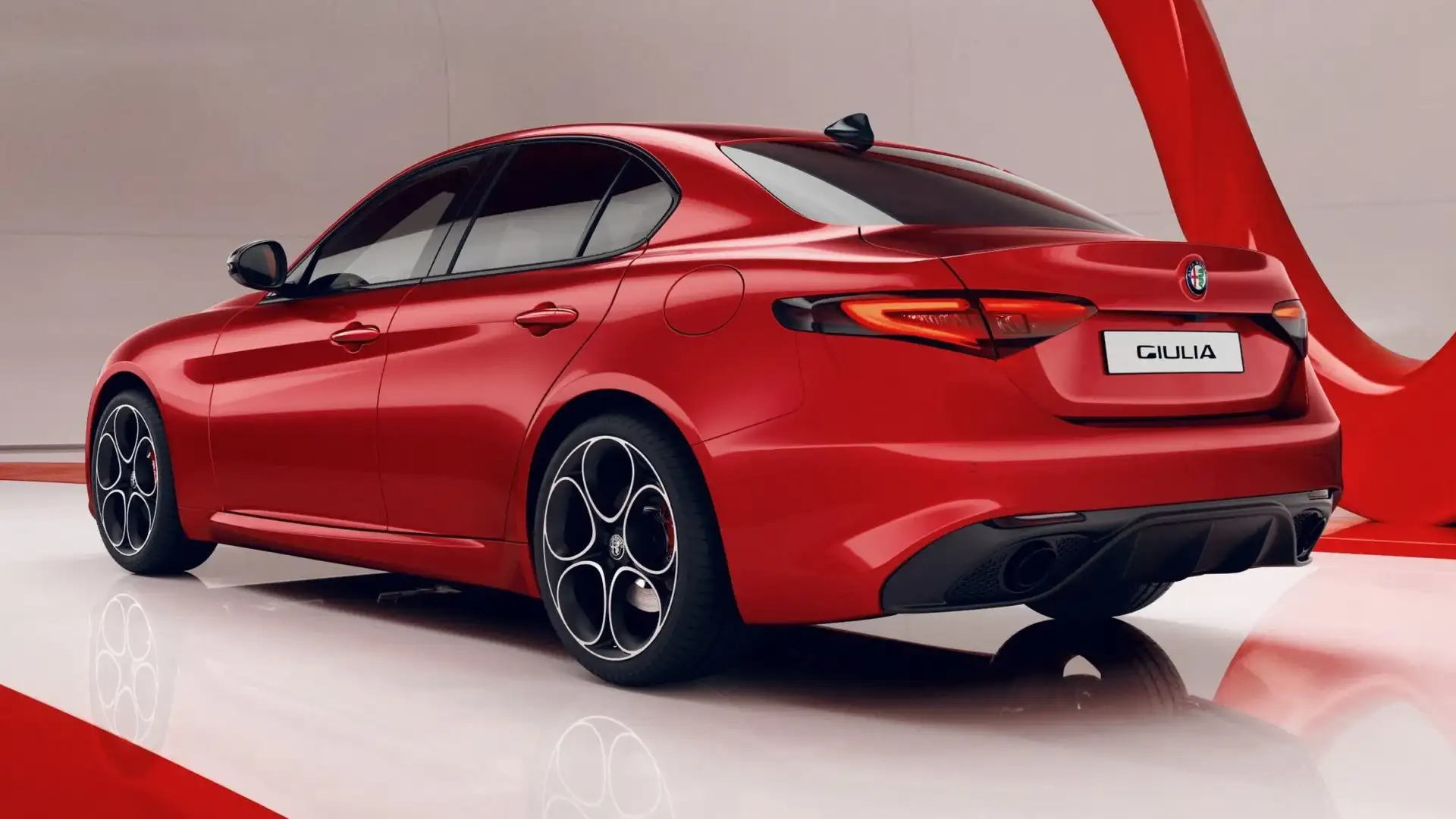
The current Giulia and Stelvio should already have been replaced, but the next-generation cars have been delayed to 2028 after Alfa Romeo shifted away from an EV-only plan. The brand is now committed to a multi-energy strategy on the STLA Large platform, which means combustion and plug-in hybrid powertrains remain on the table. Stellantis has already suggested the architecture can support a range of systems, and the talk around a twin-turbo “Hurricane” inline-six points to a future that is more flexible than the one Alfa originally imagined.
That delay is awkward, but the extension is not meaningless. Alfa has confirmed the Quadrifoglio V6 variants will return, and that gives the line-up a halo car while the non-Quadrifoglio models receive hardware meant to keep them credible. The Pack Performance is therefore not just a European option; it is a stopgap designed to preserve enthusiasm until the replacement platform arrives with a cleaner technical story.
Market Position and the Enthusiast Calculation
Stellantis has not announced pricing, which leaves the Pack Performance’s value equation open for now. If Alfa keeps the option positioned sensibly above Sprint and Veloce hardware but below Intensa and Quadrifoglio exclusivity, the company can create a more convincing step-up ladder in Europe. That matters because the Giulia and Stelvio still have strong bones: the Giorgio platform remains praised for steering feel and balance, and those fundamentals are precisely why this kind of upgrade can work.
The longer view is equally important. By 2027, the Giulia and Stelvio will be old cars by any normal industry metric, but age alone does not end a performance model if the brand keeps feeding it meaningful hardware. Alfa Romeo has chosen not to fight the calendar with a full reinvention yet; instead, it is using the Quadrifoglio’s best tricks to make two veteran nameplates feel sharper, more desirable, and more expensive than they probably have any right to be.
What Enthusiasts Should Watch Next
The next questions are practical: which markets get the Pack Performance beyond Europe, how Alfa prices it against the Intensa, and whether the adaptive suspension calibration changes depending on engine or drive layout. Those answers will determine whether the package is a serious enthusiast buy or just a temporary showroom lure. For now, the important fact is that Alfa Romeo has turned its aging sedan and SUV into vehicles with a stronger technical argument than before, and it did so by borrowing from the Quadrifoglio rather than by inventing a new gimmick.
If Alfa can keep that discipline through the 2027 production extension, the Giulia and Stelvio will leave the market with something more valuable than nostalgia: one last credible case that old-school chassis engineering still deserves attention in a market crowded with software-heavy crossovers.