
MANSORY’s latest Cullinan is less a discreet luxury SUV and more a rolling declaration that restraint has left the building.
Unveiled on May 6, 2026, at Top Marques Monaco, the MANSORY Emperor Signature takes the already extrovert Rolls-Royce Black Badge Cullinan and pushes it into the narrow but lucrative niche where ultra-luxury meets tuner spectacle. The core mechanical package remains Rolls-Royce’s 6.75-liter twin-turbocharged V12, but MANSORY’s visual and performance intervention is extensive enough to create a genuinely different object rather than a mere trim exercise.
| Base vehicle | Rolls-Royce Black Badge Cullinan |
| Engine | 6.75-liter twin-turbo V12 |
| Output | 720 HP, 1050 Nm (774 lb-ft) |
| Standard output | 600 HP, 900 Nm (664 lb-ft) |
| 0-100 km/h | 4.8 seconds |
| Wheels and tires | 24-inch FR.15 forged wheels, 295/30 R24 front and rear |

A full carbon widebody with a specific aerodynamic agenda
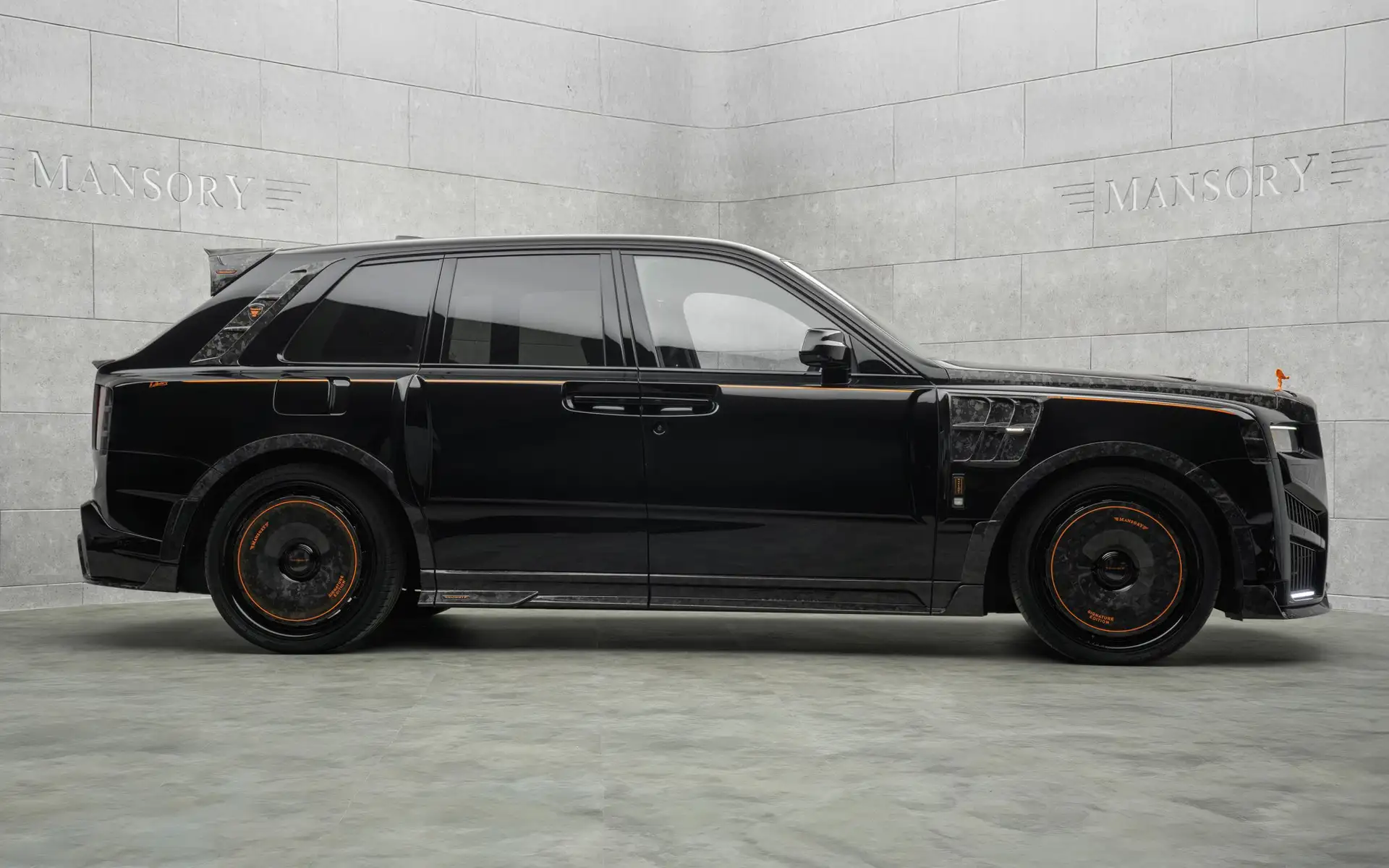
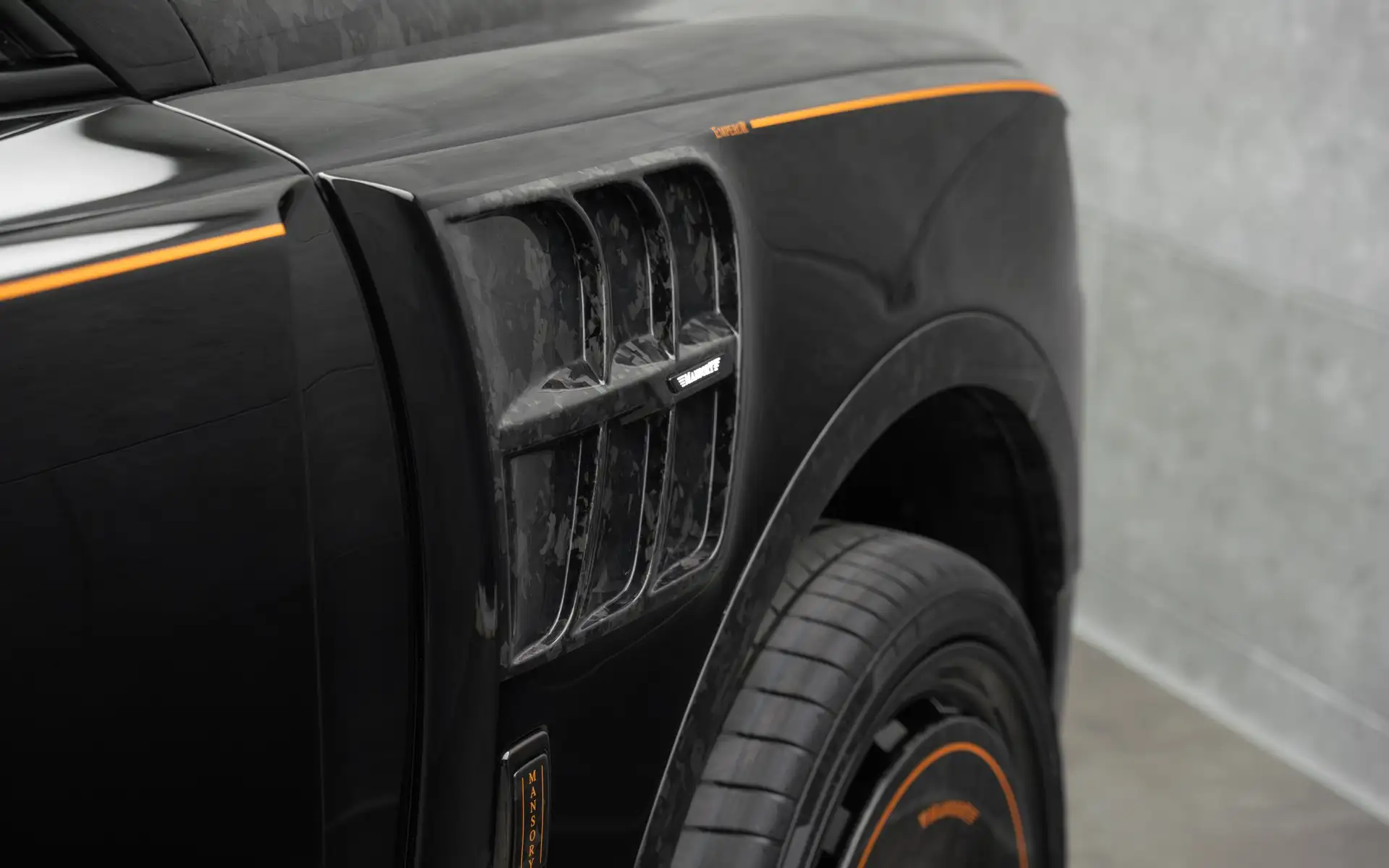
The Emperor Signature is not simply a Cullinan with add-on arches. MANSORY says every widened body component is made from full carbon fiber, and that matters because the Cullinan is already a large, heavy SUV built on Rolls-Royce’s aluminum-intensive Architecture of Luxury platform. Using carbon for the exterior conversion limits the mass penalty that normally comes with aggressive coachwork.
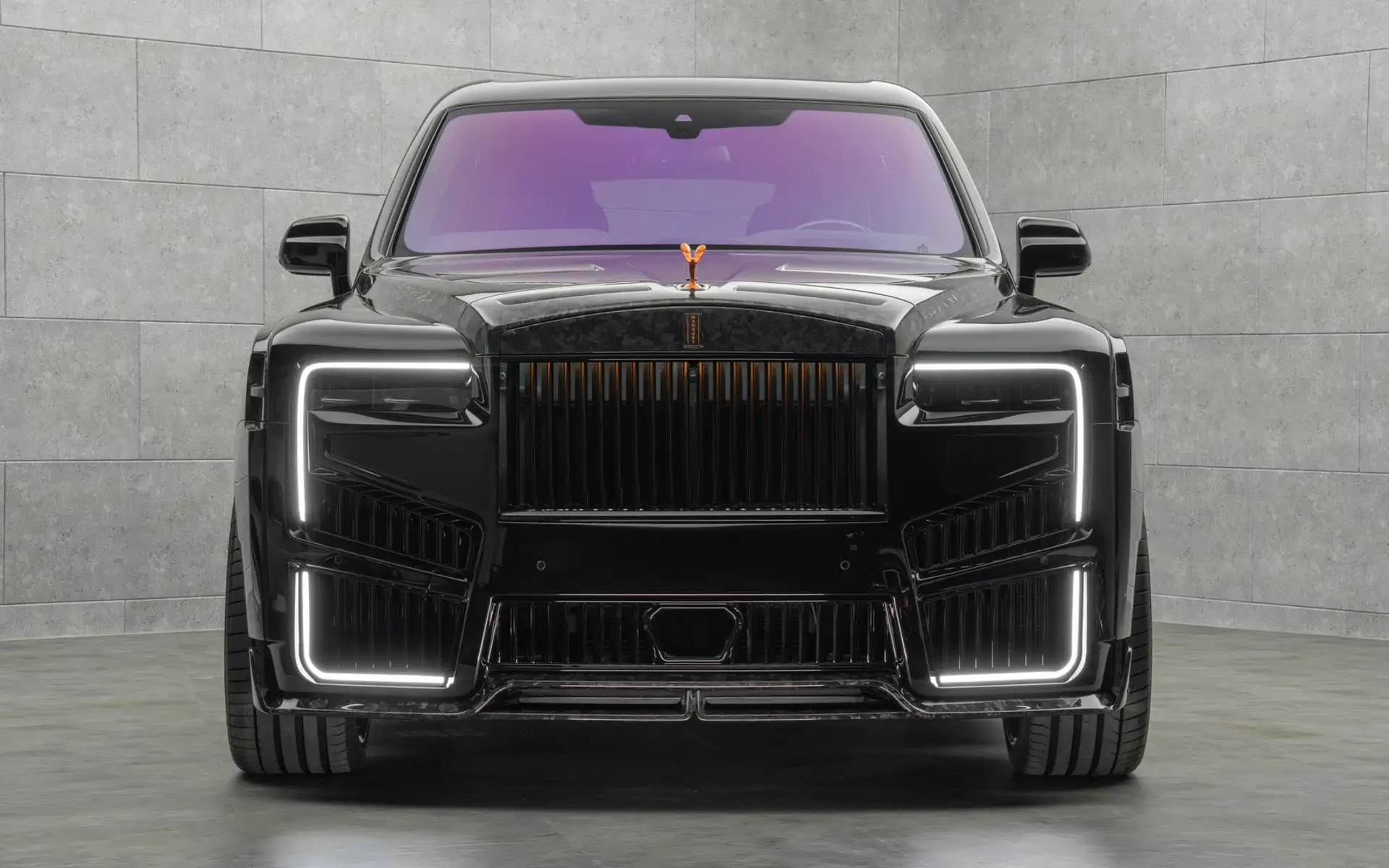
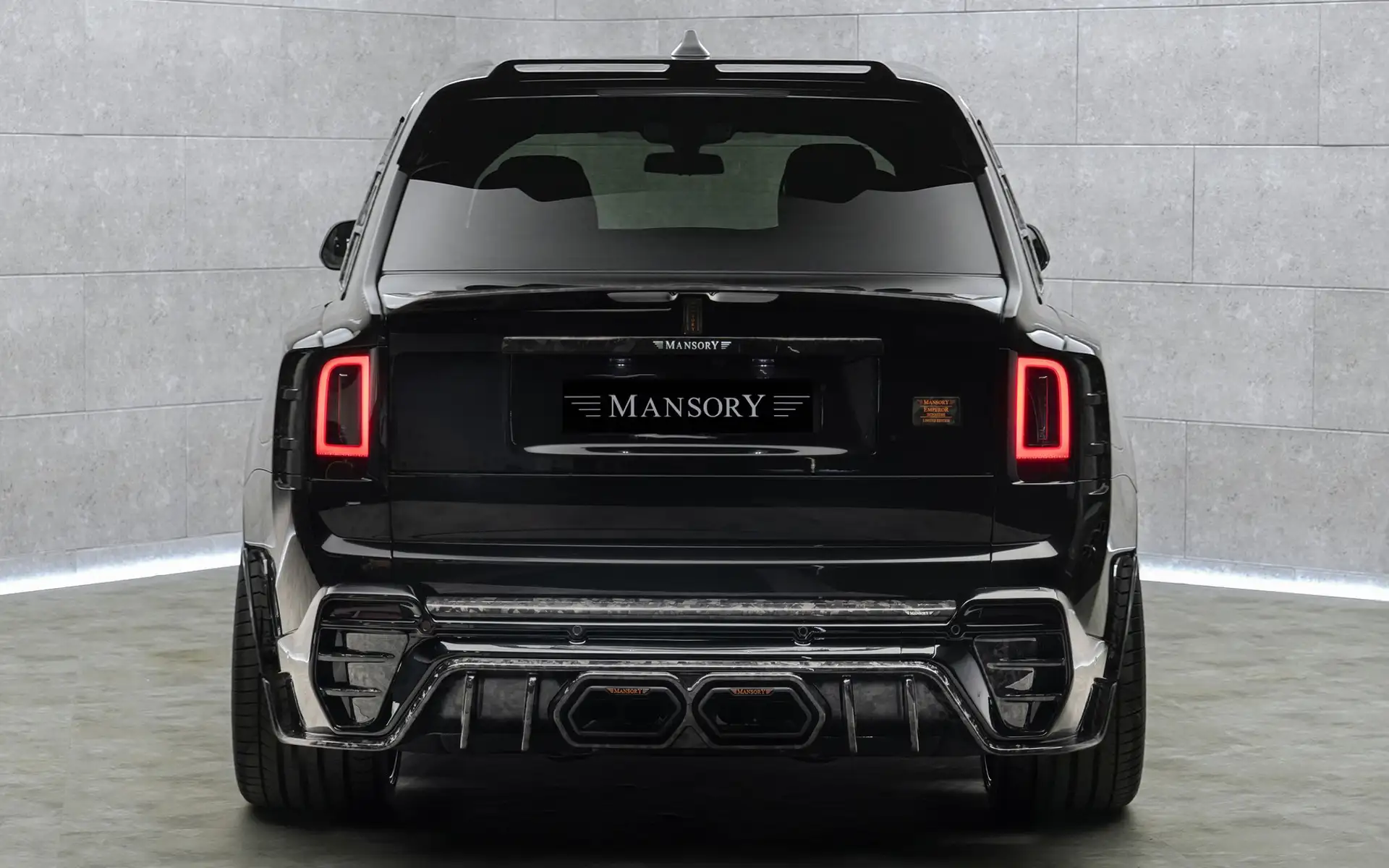
The front end has been substantially reworked with larger air intakes, a lightweight carbon hood, and a distinctive daytime running light signature stretched across the bumper. At night, the illuminated grille amplifies the effect, creating a front graphic designed more for Monaco boulevard presence than understatement. Along the flanks, reshaped side skirts and aero flaps around the wheel arches are intended to smooth airflow while visually lowering the SUV. At the rear, a spoiler lip mounted on the tailgate is claimed to reduce rear-axle lift, a worthwhile change on a tall vehicle that can still reach serious autobahn speeds.
This approach fits a broader tuning trend in the high-end SUV space. Where some brands chase subtlety, MANSORY continues to bet on total transformation, much as seen in the brand’s recent MANSORY AZURA G-Class project, which also treated carbon bodywork as both identity and engineering tool.
24-inch forged wheels and a powertrain upgrade that actually moves the needle
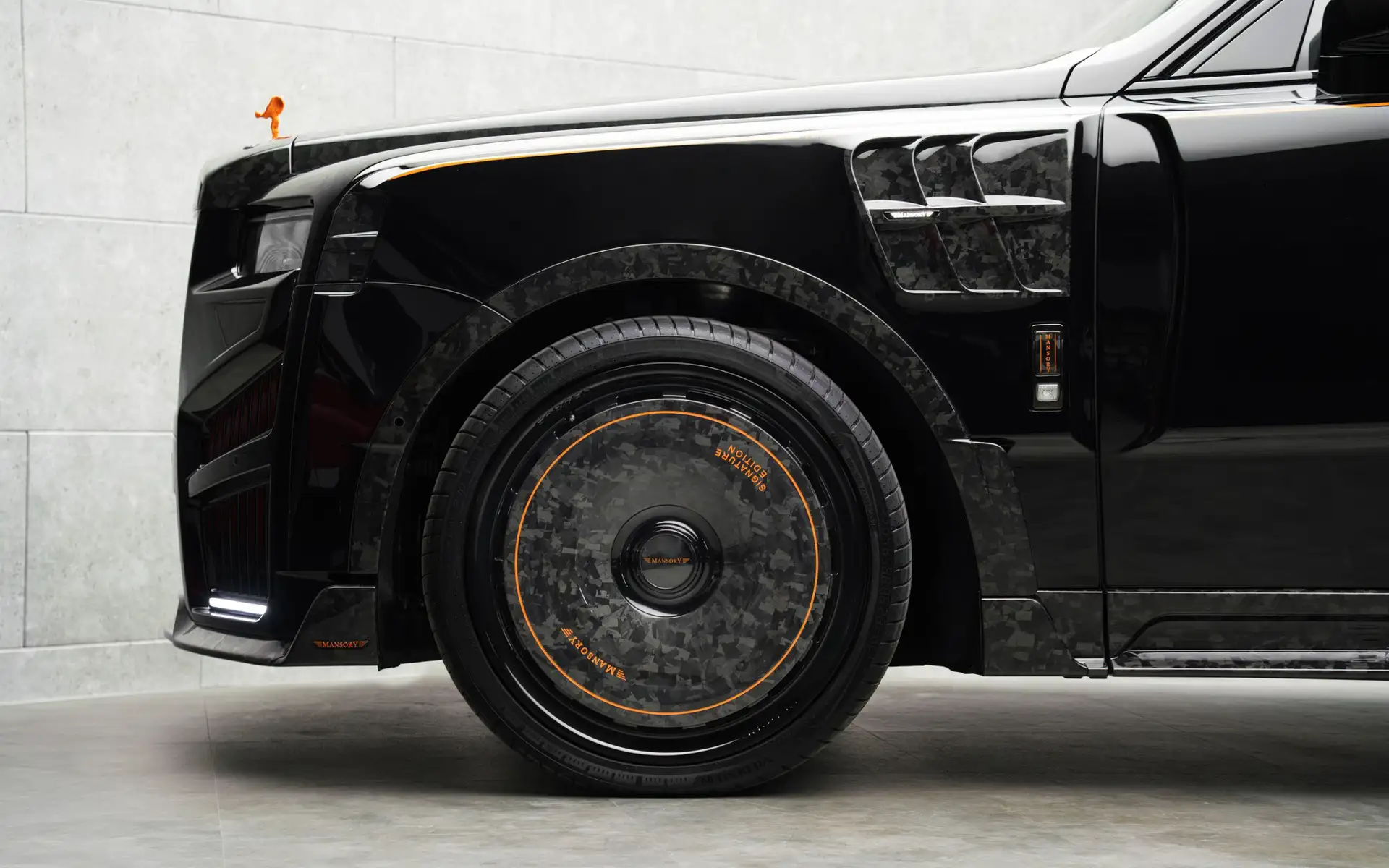
MANSORY has fitted the Emperor Signature with its new FR.15 24-inch forged wheel, built from a special aluminum alloy and accented with carbon-fiber trim. The tire specification is a square setup, 295/30 R24 front and rear, which is unusual enough to be worth noting on a vehicle of this size. A square arrangement can simplify replacement and preserve a balanced visual stance, though ultimate tuning of front-to-rear behavior remains dependent on suspension calibration and factory electronic controls.
Under the hood, the tuner adds its PowerBox engine management system and a valve-controlled sports exhaust. Buyers can choose between a central dual-flow exhaust with hexagonal outlets or a side-positioned quad-flow layout, each matched to a dedicated rear bumper design. The gain to 720 HP and 1050 Nm from the stock Black Badge’s 600 HP and 900 Nm is significant in percentage and in real-world thrust, especially in the mid-range where this V12 already excels. MANSORY quotes 0-100 km/h in 4.8 seconds and an electronically limited 250 km/h (155 mph) top speed.
Those numbers do not make it a handling SUV in the Ferrari Purosangue sense, but they do make the Emperor Signature decisively quicker than many buyers will expect from something with this much frontal area. For perspective on how different brands interpret high-performance luxury utility vehicles, the Ferrari Purosangue Handling Speciale attacks the same wealthy audience from the opposite direction, prioritizing dynamic precision over visual provocation.

An interior re-trim aimed at total personalization, not factory purity
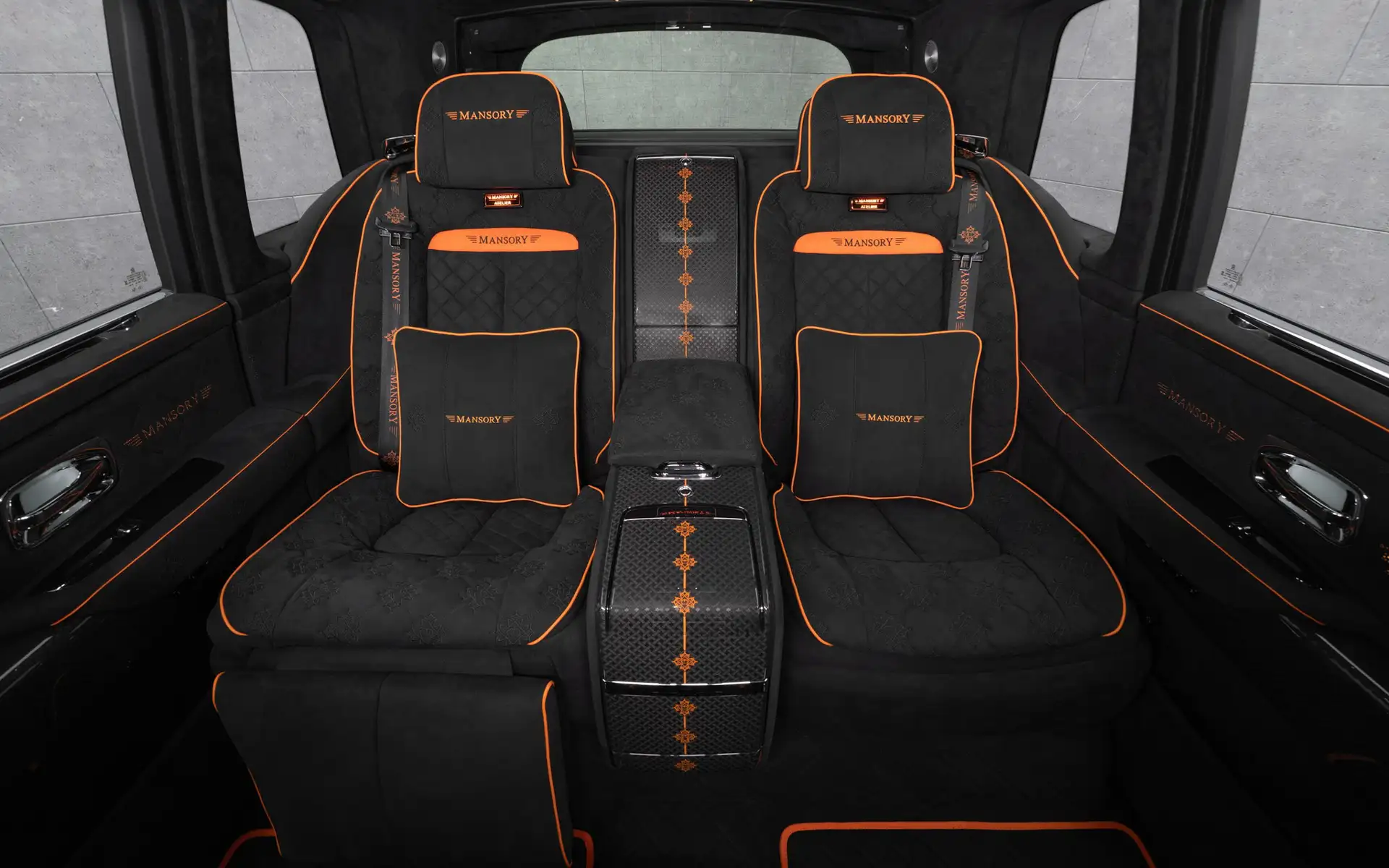
Inside, MANSORY stays faithful to the formula that made it famous among ultra-high-net-worth clients: complete cabin reupholstery in high-grade leather, gloss carbon trim, custom stitching, embroidered logos, and illuminated details integrated into the headliner and door panels. The basic architecture remains unmistakably Rolls-Royce, which is important because the Cullinan’s appeal depends heavily on its command seating position, exceptional noise isolation, and lounge-like rear accommodation.
What changes is the message. A factory Cullinan, even in Black Badge form, still carries a degree of old-world reserve. The Emperor Signature abandons that reserve entirely. It is designed for owners who want their SUV to announce itself before the coach doors open.
Why the Emperor Signature matters beyond the shock value
There is an easy temptation to dismiss this car as excess for excess’s sake, but that misses the market logic. In the ultra-luxury segment, rarity is no longer enough; visual distinction must now be immediate, Instagram-legible, and globally recognizable. MANSORY understands that demand better than almost any tuner. The Emperor Signature is therefore not a random styling exercise but a very calculated answer to how elite buyers now consume luxury objects.
It will not please traditional Rolls-Royce purists, and it is not supposed to. Its purpose is to turn the Cullinan from a symbol of wealth into a performance-styled status artifact with unmistakable tuner authorship.



FAQ
What is the MANSORY Emperor Signature based on?
It is based on the Rolls-Royce Black Badge Cullinan, the more performance-oriented version of the standard Cullinan.
How much power does the Emperor Signature make?
MANSORY quotes 720 HP and 1050 Nm (774 lb-ft), up from the Black Badge Cullinan’s 600 HP and 900 Nm.
What are the main visual changes over a standard Cullinan?
The car receives a full carbon-fiber widebody, redesigned front bumper, carbon hood, new side skirts, wheel-arch aero elements, a rear spoiler lip, and unique rear bumper options depending on exhaust layout.
What wheels and tires does it use?
The Emperor Signature debuts MANSORY’s 24-inch FR.15 forged wheels with 295/30 R24 high-performance tires at both axles.
Is this upgrade mainly cosmetic or does it improve performance too?
It does both. The body conversion is the most visible change, but the engine management upgrade and sports exhaust increase output and cut the 0-100 km/h time to 4.8 seconds.