Portugal’s New Hypercar Arrives With a Ford GT Heart
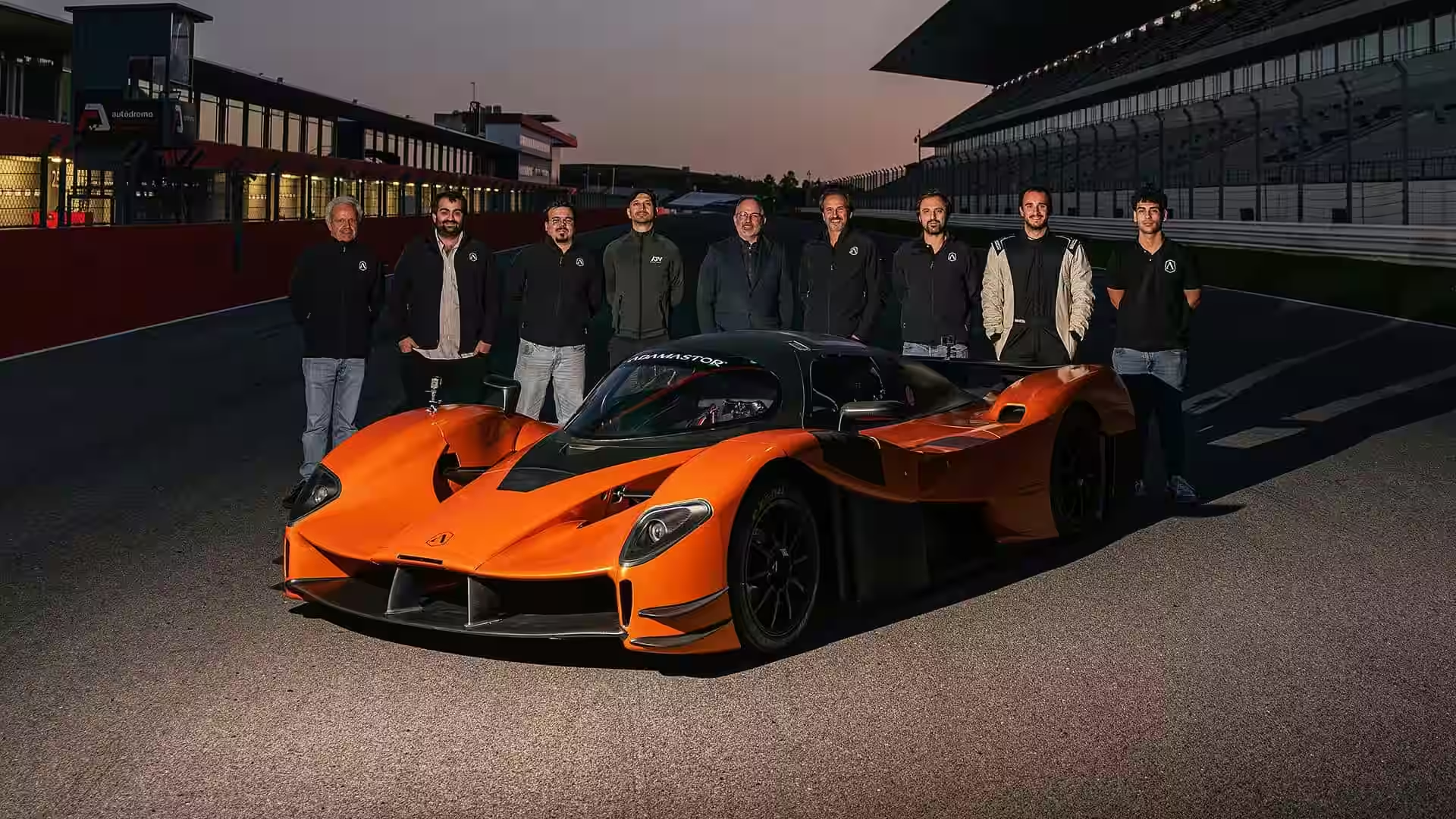
The Adamastor Furia is not another limited-run showpiece chasing attention with exaggerated vents and recycled drama. It is a clean-sheet Portuguese hypercar built by Adamastor in Porto, priced from €1.6 million before VAT and aimed at a very small group of buyers who want race-car architecture, not badge theater. The headline figure is the engine: a 3.5-liter twin-turbo V6 sourced from the Ford GT program, rated at 650 hp and 570 Nm (421 lb-ft).
That choice immediately separates the Furia from the usual boutique-supercar formula. Instead of commissioning an exotic bespoke power unit, Adamastor is pairing an established Ford Performance engine with a carbon structure, a longitudinal mid-engine layout, and an explicit motorsport roadmap that includes a future run toward 24 Hours of Le Mans. Production is limited to about 60 units, each hand-built in Portugal by a dedicated team.
Carbon Structure, Venturi Tunnels, and Why the Shape Is Doing Real Work
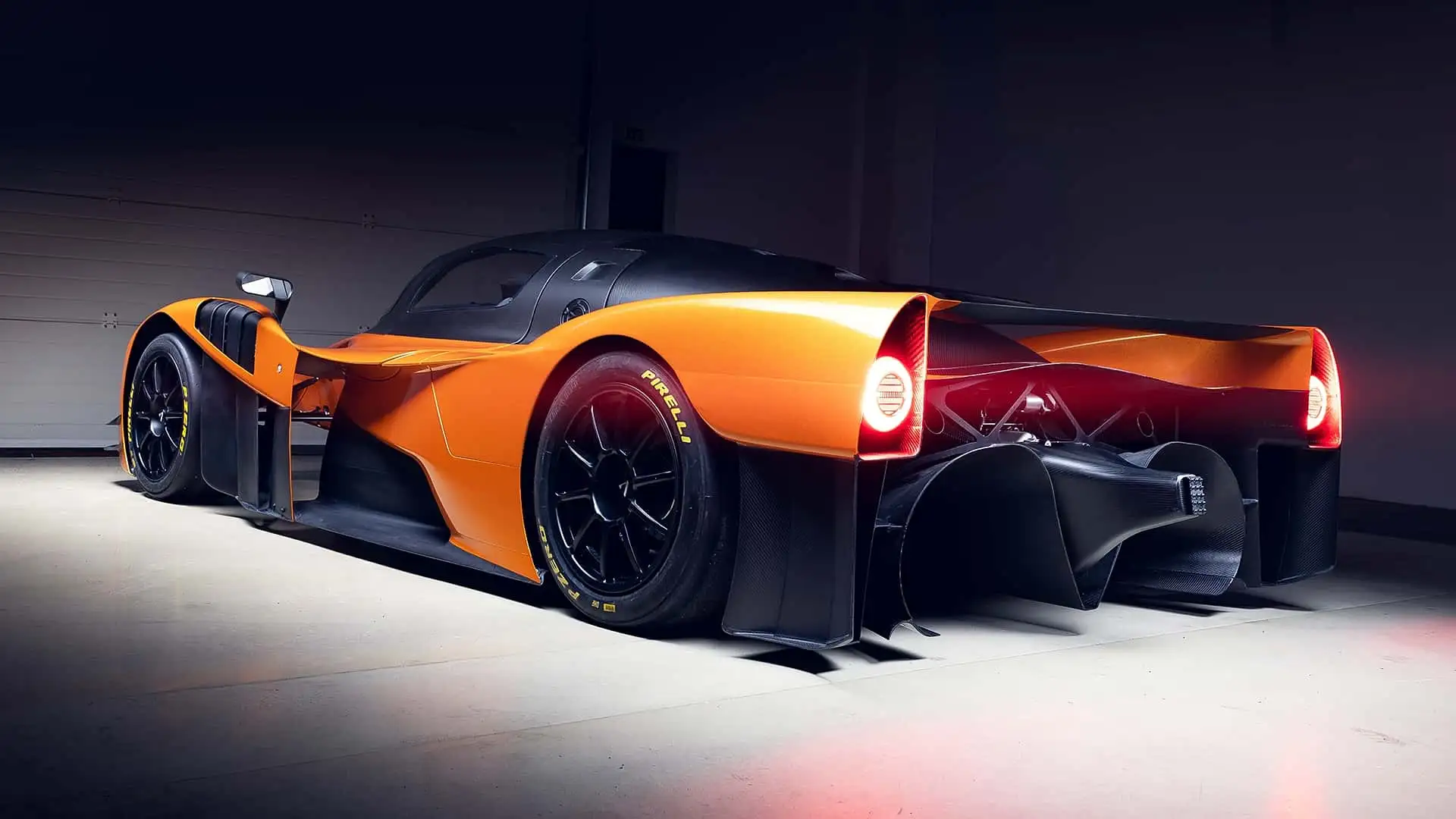
The Furia’s body is made entirely from carbon fiber, but the material choice only tells part of the story. The underbody uses two Venturi channels to generate much of the downforce, reducing dependence on large wings and oversized splitters. Adamastor says the car was developed from the start with aerodynamics as a core engineering brief, and the final proportions reflect that thinking: roughly 15.0 feet long, more than 7.2 feet wide, and just over 3.3 feet tall.
Those dimensions are not vanity numbers. A body this low and wide supports the car’s stated top-speed stability and gives the underfloor enough planform area to make the Venturi solution effective. The result is a visually clean hypercar that still claims substantial downforce, with the track configuration reported to reach as much as 3,968 lb at 155 mph (about 1,800 kg at 250 km/h).
Just Over One Ton, but Built Like a Prototype
At approximately 2,315 lb dry (about 1,050 kg), the Furia is light for a road-legal car carrying a twin-turbo V6, a carbon monocoque, and a real transmission rather than a simple fixed reduction drive. The platform is clearly aimed at stiffness and response rather than convenience. Adamastor specifies a monocoque with integrated roll bar, a construction approach borrowed directly from motorsport.
The suspension is a fully adjustable double-wishbone setup, which is exactly what you want when the car is supposed to move between road use and circuit calibration. Braking is handled by AP Racing hardware with six-piston aluminum calipers up front and four-piston units at the rear. Those components align with the Furia’s weight target and its stated performance ceiling rather than with luxury-car comfort priorities.
| Adamastor Furia Technical Data | Specification |
|---|---|
| Engine | 3.5-liter twin-turbocharged V6 |
| Engine source | Ford GT / Ford Performance |
| Power | 650 hp |
| Torque | 570 Nm (421 lb-ft) |
| Layout | Longitudinal mid-engine, rear-wheel drive |
| Dry weight | Approximately 1,050 kg (2,315 lb) |
| Body material | Carbon fiber |
| Structure | Carbon monocoque with integrated roll bar |
| Suspension | Fully adjustable double-wishbone |
| Brakes | AP Racing, six-piston front / four-piston rear |
| Transmission | Hewland sequential gearbox with steering-wheel paddles |
| Production | About 60 units |
| Street performance | 0-62 mph in about 3.5 seconds |
| Top speed | More than 300 km/h (186 mph) |
The Ford GT V6 Gives the Furia Instant Credibility
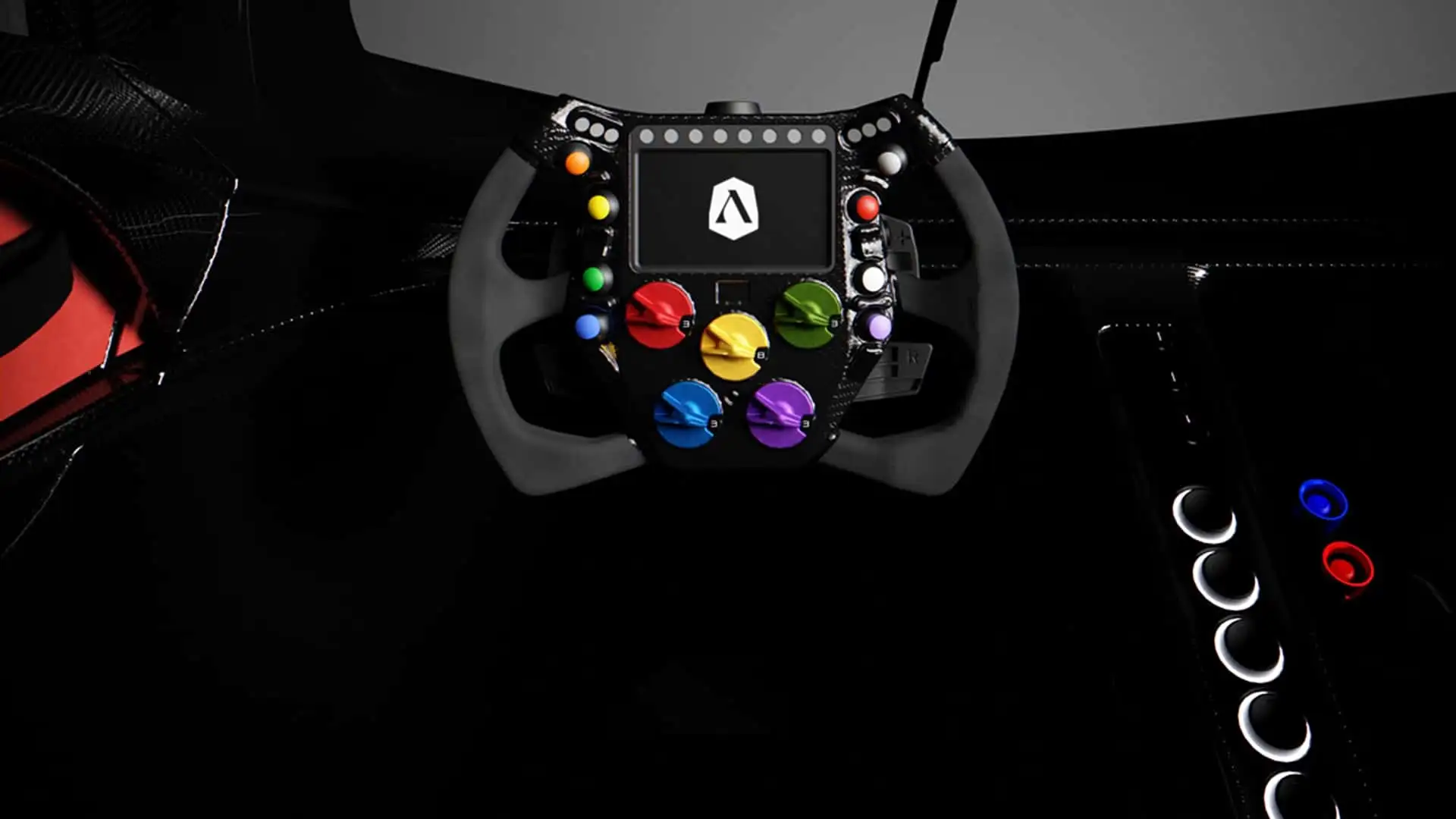
Powering the Furia is the most important decision Adamastor made. Ford’s 3.5-liter twin-turbo V6 from the GT is not just powerful at 650 hp; it is also a known quantity with serious performance development behind it. In the Furia, that engine is paired with a Hewland sequential gearbox operated by steering-wheel paddles, a race-derived transmission choice that reinforces the car’s track-first intent.
The claimed road-car figures are appropriately aggressive: 0-62 mph in about 3.5 seconds and a top speed of more than 300 km/h (186 mph). Those are not headline numbers designed to win a brochure contest; they are the kind of outputs that make sense when the car’s mass is held near the 1.05-ton mark and the aero package is doing meaningful work at speed.
Road Car Now, Le Mans Program Later
Adamastor is presenting the Furia as more than a one-off street machine. The company frames it as the starting point for a broader motorsport program, with endurance racing and eventually Le Mans in view. That matters because the engineering choices already lean toward competition fundamentals: low mass, carbon construction, functional aero, a longitudinal mid-engine layout, and a race-style cockpit integrated into the monocoque.
The brand’s decision to build each car by hand in Portugal gives it control over quality and personalization, but the real significance is strategic. A run of 60 units is small enough to keep the program focused, yet large enough to fund development, establish brand identity, and gather lessons for racing. For a young manufacturer, that is a more credible route than attempting to launch simultaneously into mass production and top-tier endurance competition.
How It Fits the Modern Hypercar Market
The Furia enters a segment where buyers already have options from established names, which is why Adamastor’s execution has to be more than attractive. A lot of low-volume hypercars rely on design language and price to create desire. The Furia instead leans on a recognizable Ford Performance engine, a genuine Hewland sequential, AP Racing brakes, and an aero package that claims nearly 4,000 lb of downforce at speed. That is a different kind of pitch.
It also gives Adamastor a technical identity that feels coherent. The car is light, low, and mechanically direct; it uses carbon fiber in the body and chassis logic; and it treats motorsport not as a marketing slogan but as the development path. That combination makes the Furia one of the more serious new hypercar debuts of the year, especially from a brand without a long legacy to lean on.
Why the Adamastor Furia Deserves Attention
There is no shortage of expensive supercars. What is rare is a new company from Portugal arriving with a clear engineering thesis and the discipline to keep the message focused on hardware rather than hype. The Adamastor Furia does that with a 650 hp Ford GT V6, a 1,050 kg dry-weight target, and a chassis that already looks engineered for future racing duty.
It will not be the most powerful hypercar on the market, and it does not need to be. The Furia’s value is in coherence: aero that works, mass that stays down, and a powertrain with proven pedigree. In a field crowded with louder claims, that is often the more convincing kind of ambition.