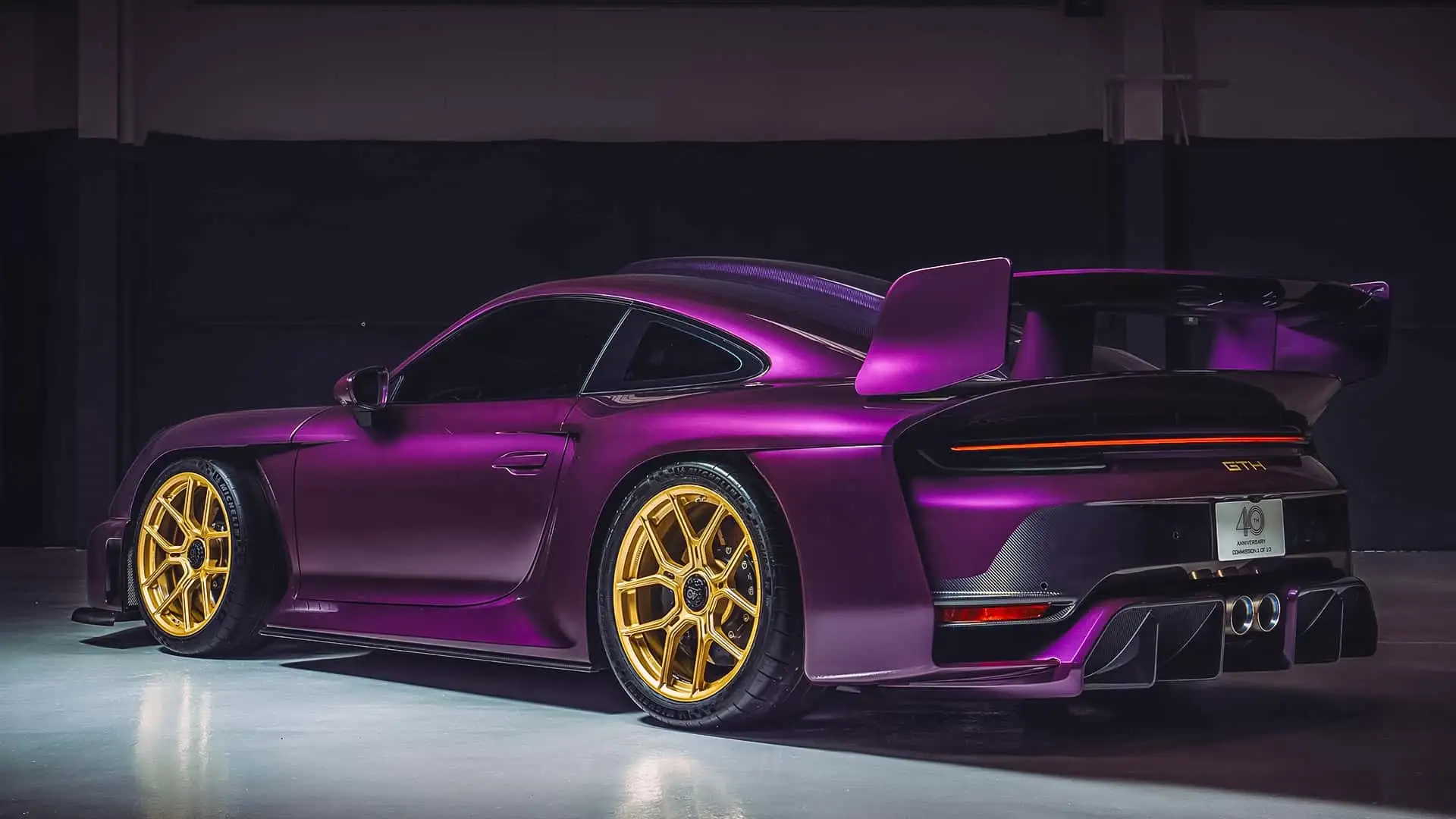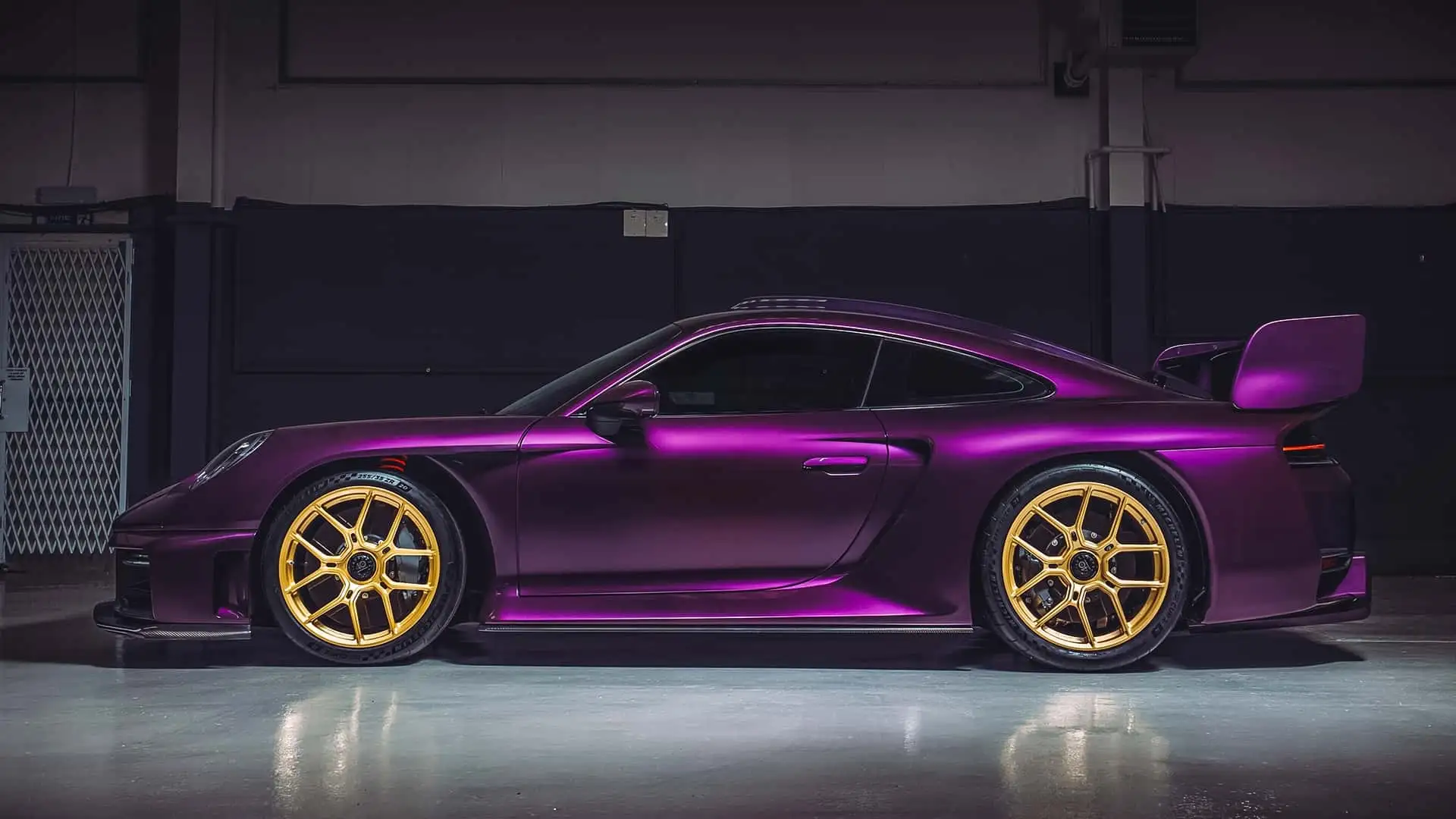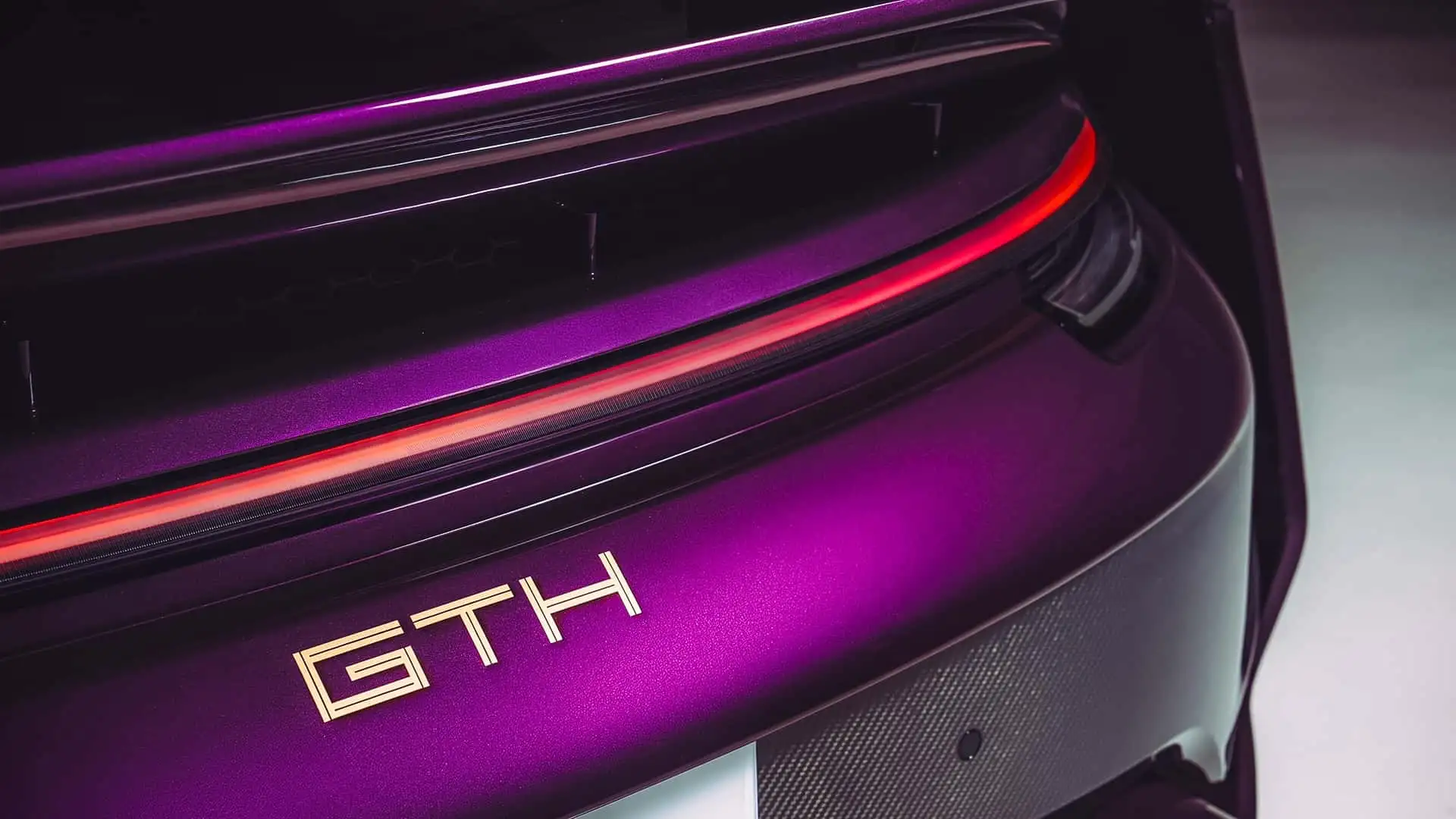
The 992 Turbo S is only the starting point
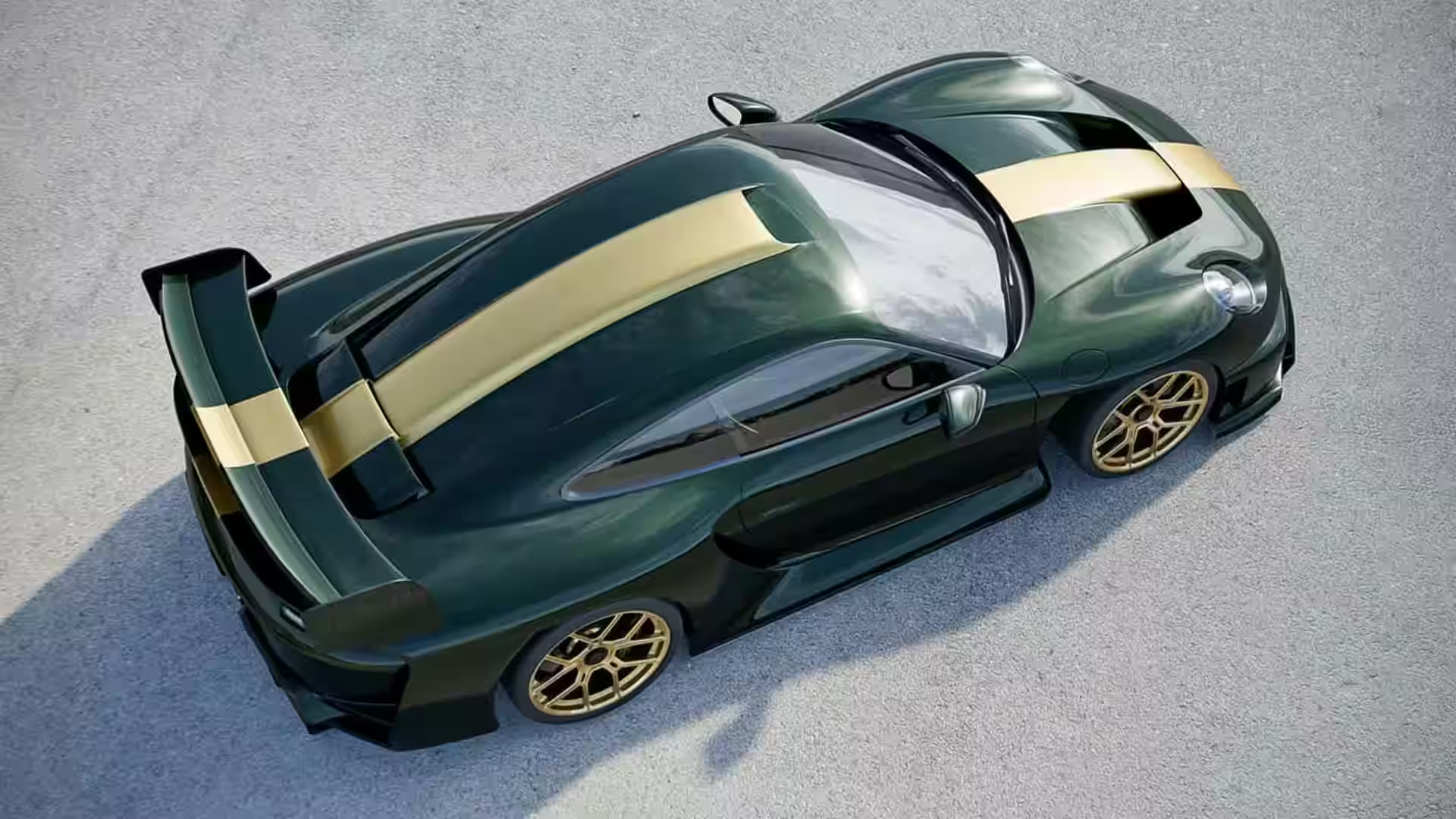
The new RML GT Hypercar, internally known as P39, is one of those rare builds that justifies the word “comprehensive.” Underneath the carbon-fiber body sits the Porsche 911 Turbo S platform from the 992 generation, but RML Group has treated it as raw architecture rather than finished product. The result is a 4.70-meter machine designed to blend road legality with genuine high-speed hardware, and that brief alone tells you this is not a styling package with a loud press release attached.
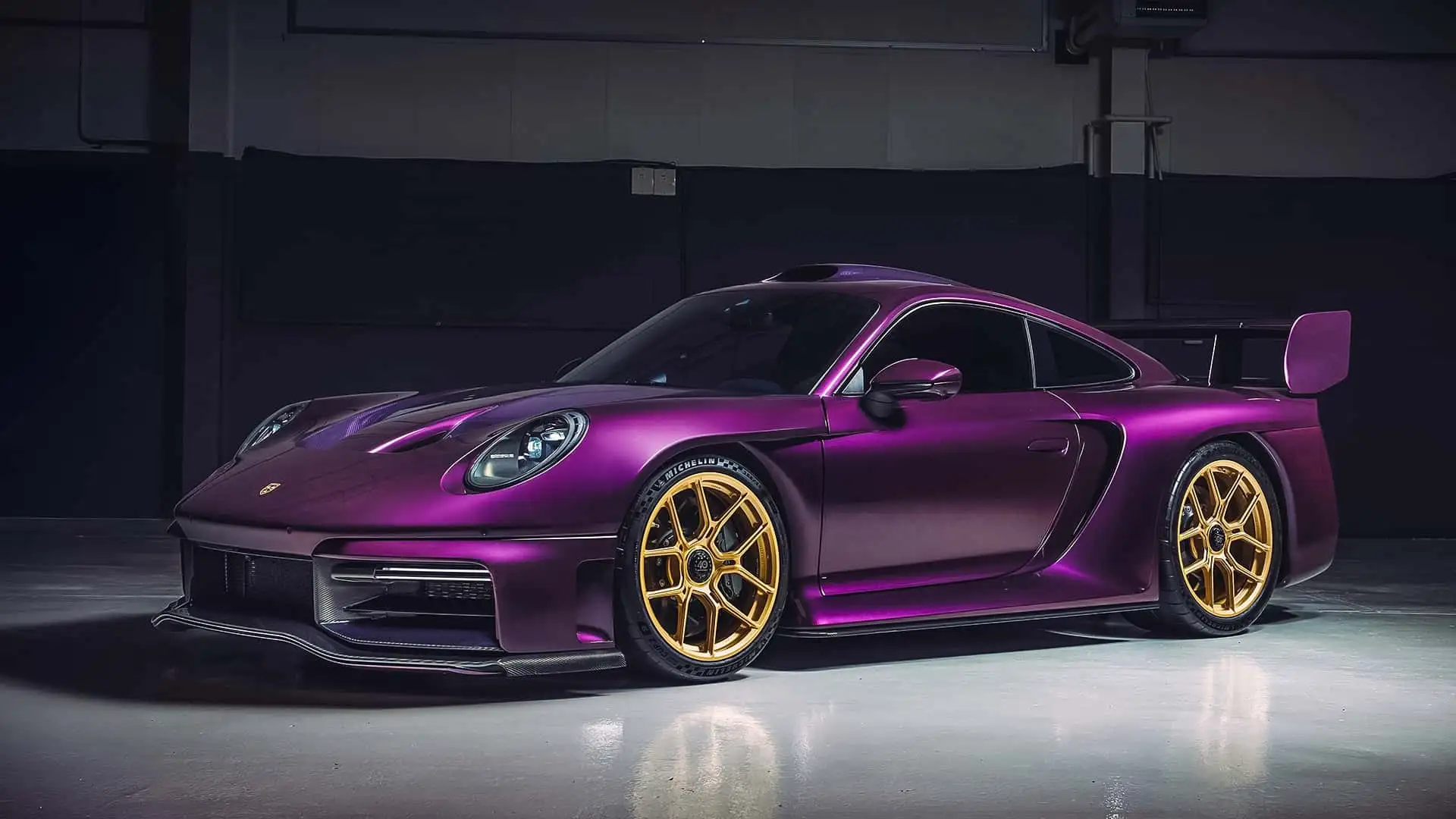
RML’s public reveal at Air / Water in Costa Mesa, California, on 25 April was more than a static debut. It introduced another bespoke configuration of the P39 concept, this time connected to US racer Graham Rahal as an inspiration point. That is important because it signals how the car is being positioned: not as a one-off showpiece, but as a personalized development platform with customer-specific execution. The company says 39 cars are planned in total, which gives the project enough exclusivity to remain hand-built and enough scale to justify real engineering investment.
| RML GT Hypercar P39 Key Data | Specification |
|---|---|
| Base platform | Porsche 911 Turbo S, 992 generation |
| Engine | 3.8-liter twin-turbo flat-six |
| Power output | 600 PS Wet, 750 PS Normal, 912 PS Sport/Track |
| Torque | Up to 1,000 Nm at 4,500 rpm |
| Transmission | 8-speed dual-clutch automatic |
| Drivetrain | All-wheel drive, adapted from the series base |
| Body | Full carbon-fiber exterior |
| Length | 4.70 meters |
| Planned production | 39 units |
Why GT1 nostalgia is more than a design theme
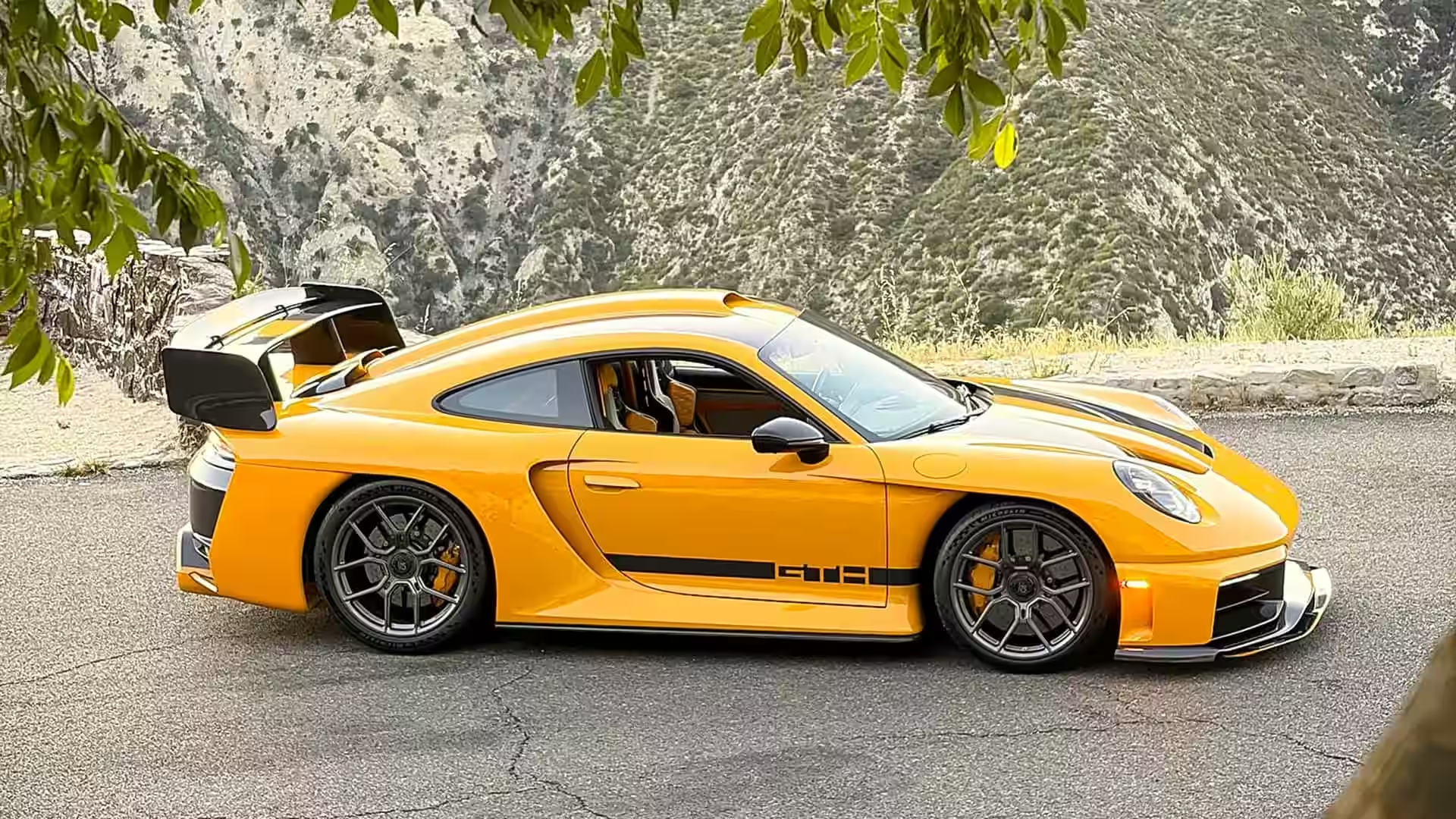
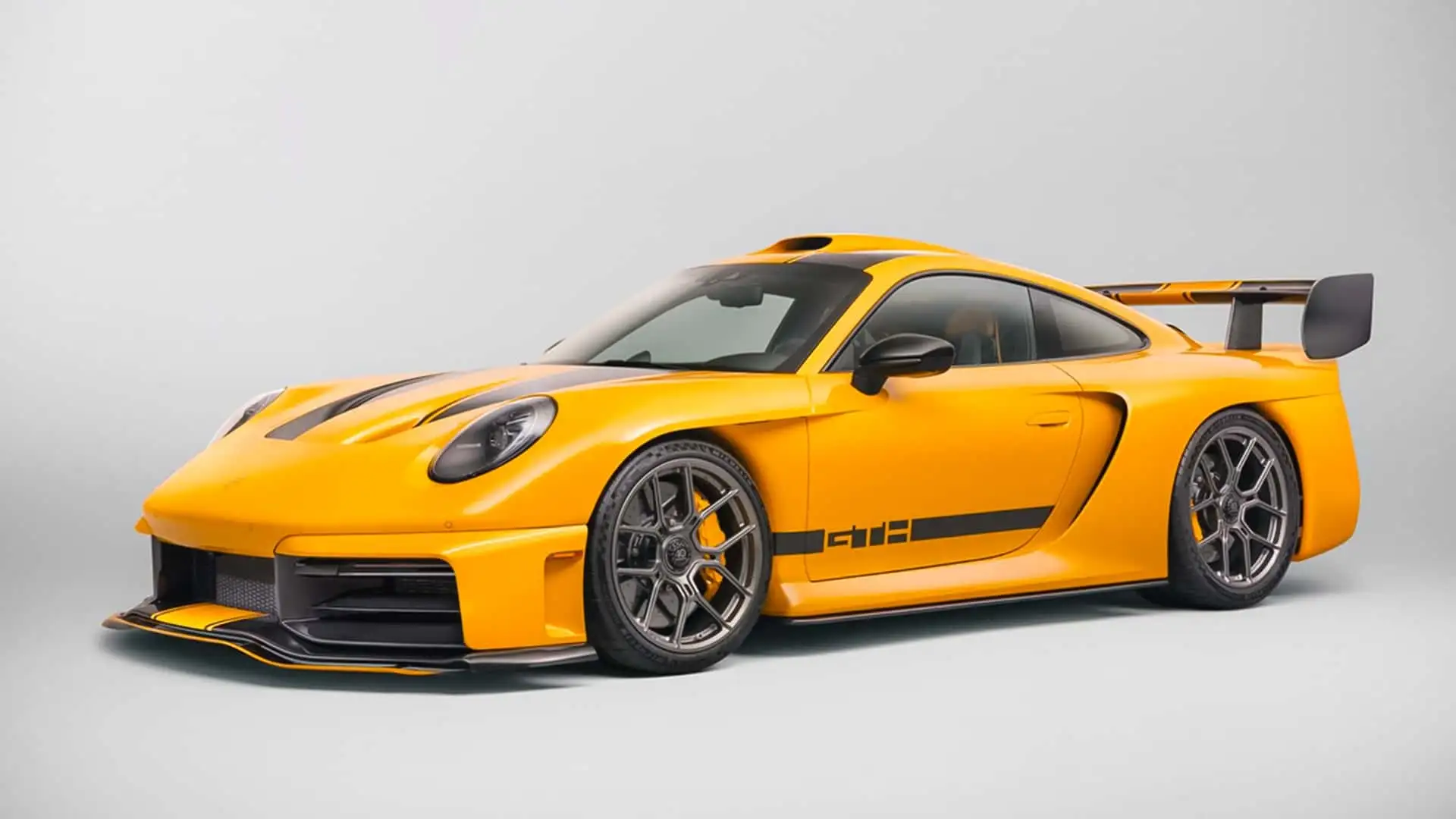
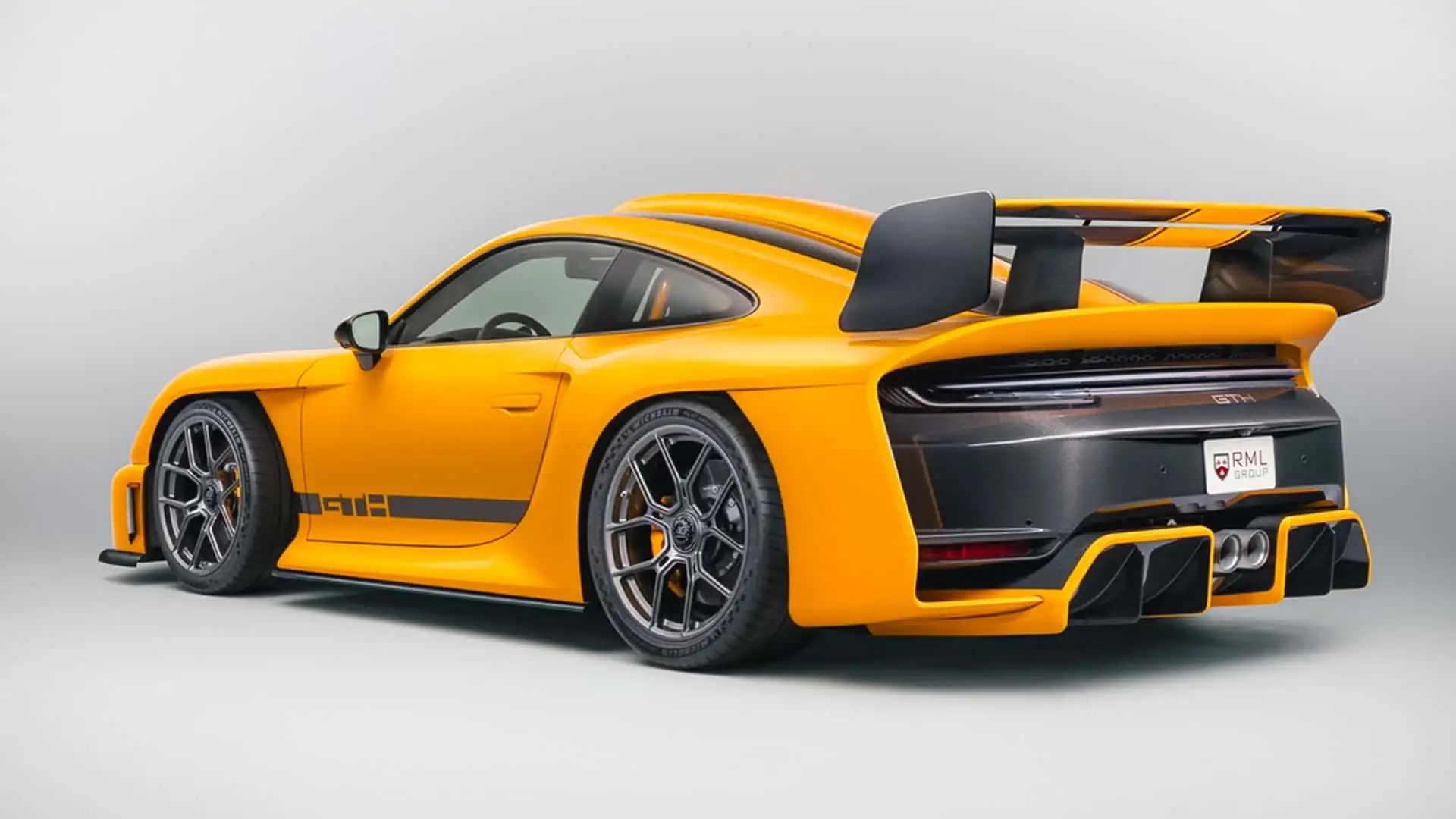
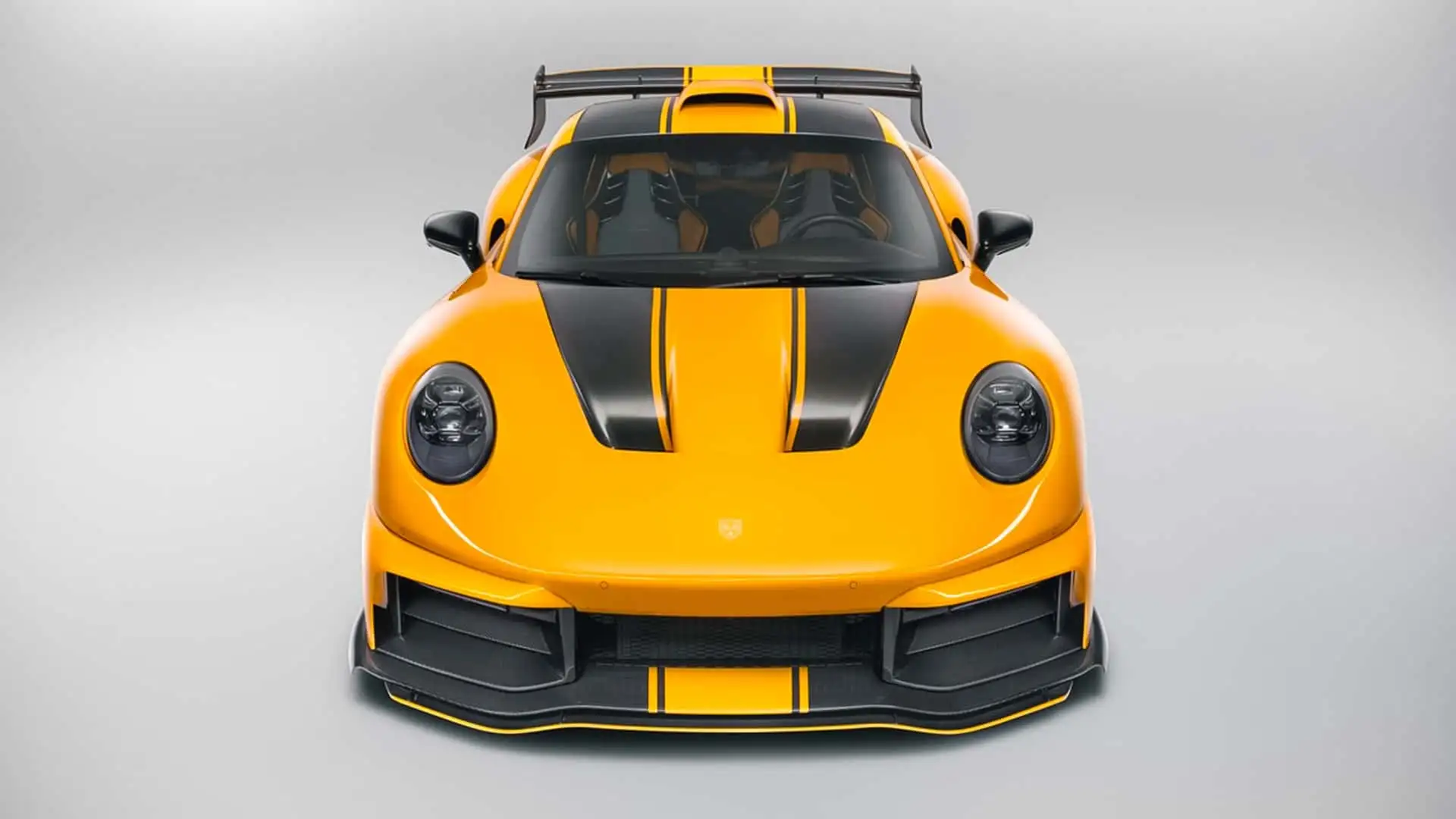
The GT1 reference is not decorative nostalgia. The proportions, aerodynamic philosophy, and functional surfacing all point back to the homologation monsters of the 1990s, especially the Porsche 911 GT1 Straßenversion. That link is visible in the way the RML uses a low, long-tail stance, exposed carbon at the front intakes and rear wing, and a package that appears intended to generate downforce first and visual drama second. In a segment where many “hypercars” are little more than extreme styling statements, that hierarchy matters.
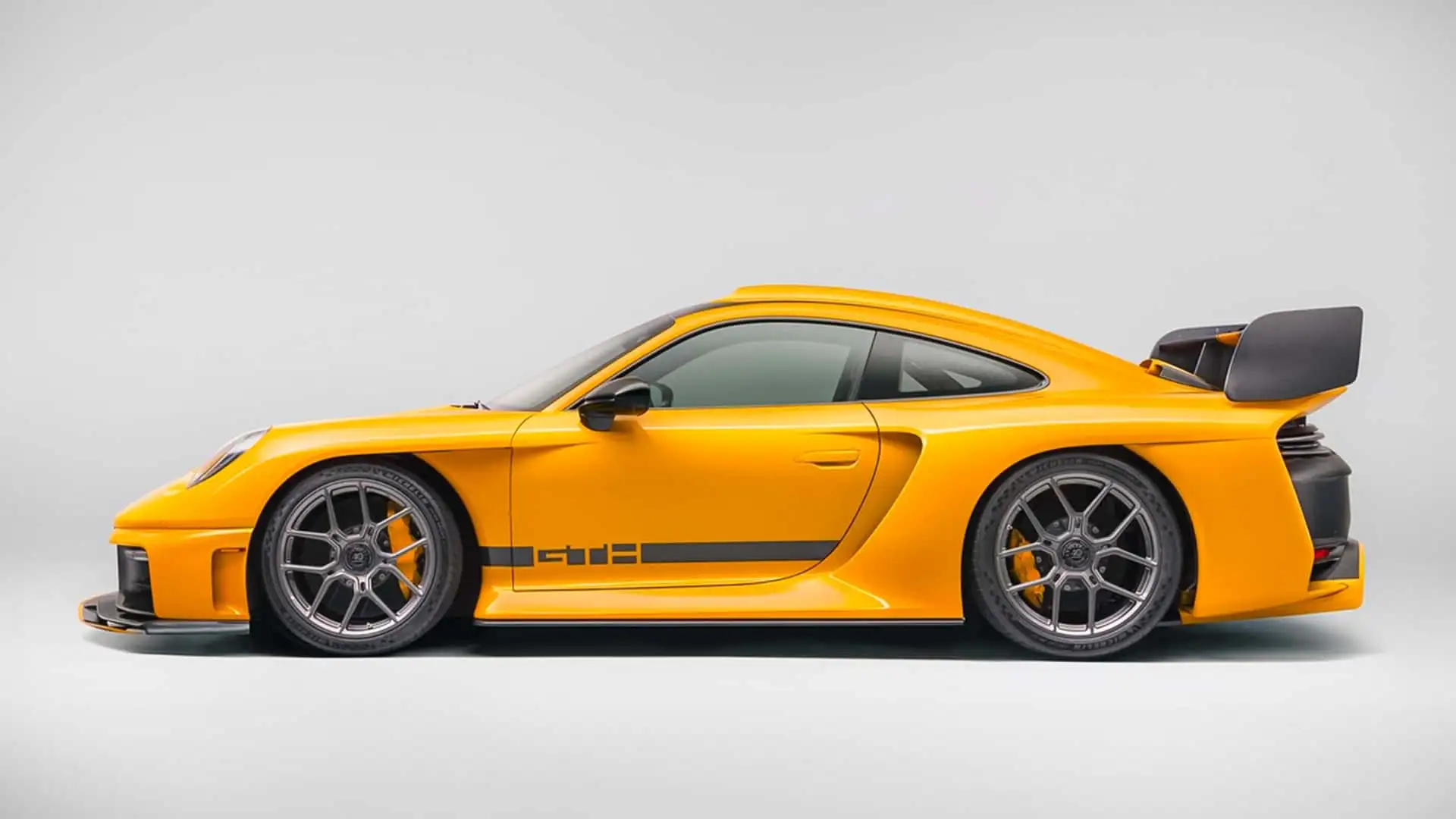
The bodywork is almost entirely reworked, with a full carbon-fiber outer shell replacing the standard 911 panels. RML also re-engineered the aerodynamic surfaces, the suspension, and the powertrain integration. The orange presentation car with dark wheels and matching brake calipers is visually aggressive, but the real story is the surface detailing: visible carbon in the air intakes, front bumper elements, and rear wing suggests RML is not hiding the functional hardware under decorative trim. For readers tracking other high-commitment performance builds, the GUNTHER WERKS PROJECT ENDGAME offers a useful foil because it similarly turns a familiar Porsche foundation into something far more radical.
The 3.8-liter flat-six is the centerpiece, not the headline
RML’s heavily modified 3.8-liter twin-turbo flat-six is the mechanical heart of the P39, and the output spread is unusually thoughtful. Rather than one peak figure, the car uses three modes: 600 PS in Wet mode, 750 PS in Normal, and 912 PS in Sport or Track. That approach is more useful than a single summit number because it suggests calibration intended for real-world grip conditions, not just dyno-sheet bragging rights. Peak torque is listed at up to 1,000 Nm at 4,500 rpm, with more than 800 Nm available by 3,000 rpm, which should make the car brutally responsive even before the rev range climbs.
The transmission is the familiar Porsche 8-speed dual-clutch, but RML has adapted the all-wheel-drive system around its higher-performance brief. That choice is sensible. With this much torque arriving across such a broad band, a rear-drive conversion would be a statement; keeping AWD preserves traction and gives the chassis a wider operating window, especially with the track aero engaged. The use of an Inconel exhaust system is also telling, because it points to thermal durability and sustained-load capability rather than just acoustic theater. This is the kind of engineering choice that separates serious low-volume builds from show-only specials, and it aligns with the more technically ambitious direction seen in cars like the MERCEDES-BENZ E-CLASS NIGHT EDITION, where the real story sits beneath the visual treatment.
Active aero and chassis control define the track brief
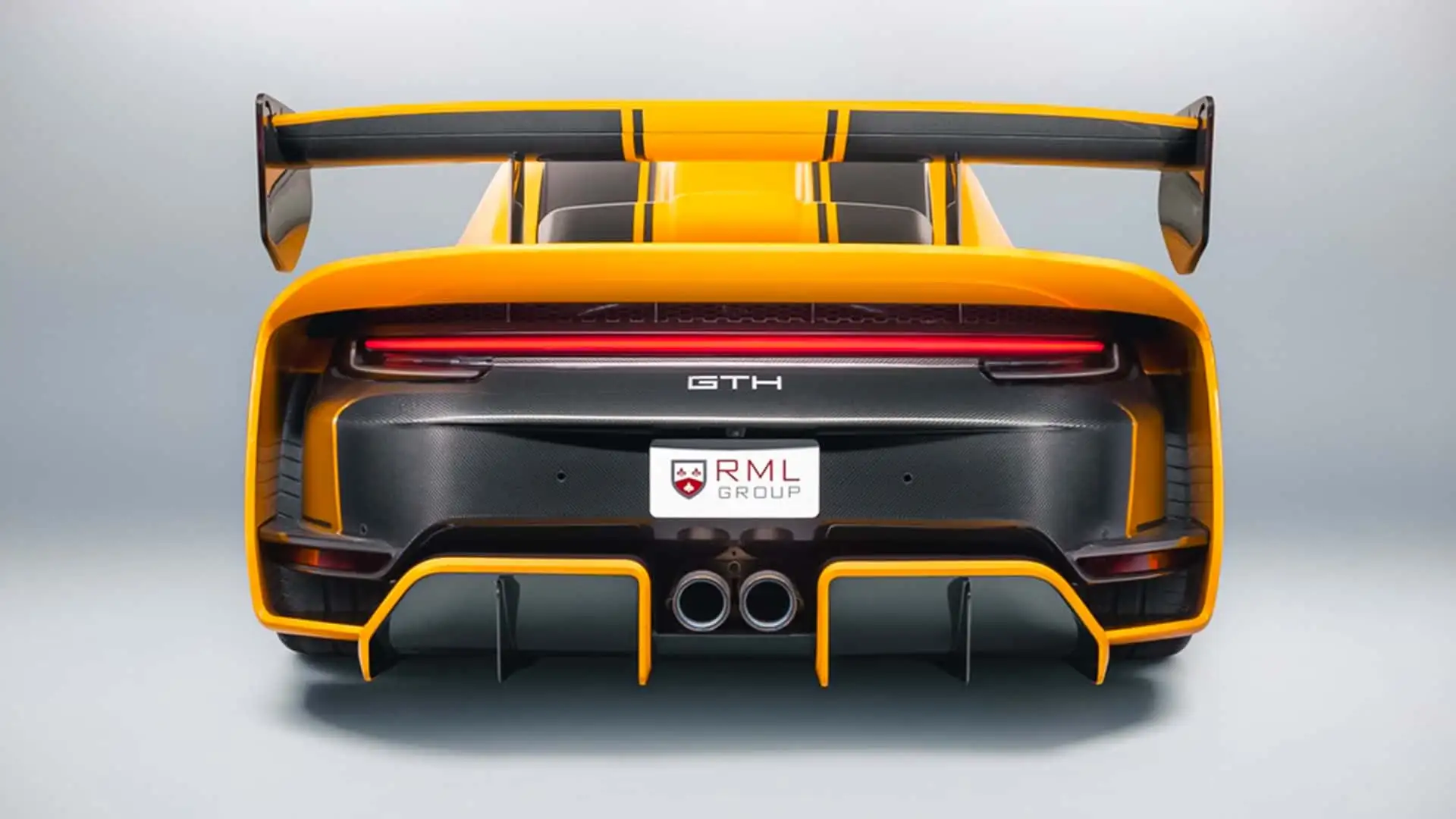
The chassis hardware is where the P39 begins to look like a true bespoke performance car rather than a heavily modified 911. RML specifies hydraulic ride-height control, adaptive dampers, an active front splitter, a variable rear wing, and a driver-activated Drag Reduction System. That combination gives the car the tools to alter both pitch and aerodynamic balance dynamically, which is critical when a car is expected to function in Wet mode on the road and Track mode on circuit.
According to RML, the track configuration produces a significantly higher downforce load than the standard 911 Turbo S, and the company has floated a Nürburgring Nordschleife lap time of 6:45. That number should be treated as an ambition rather than a certified result unless independently verified, but it still provides context. A car with 912 PS, active aero, and a fully reworked carbon body is not being built merely to look quick in a showroom. It is being framed as a time-attack-capable road car with real cooling, real stability, and real multi-mode adjustability. For another performance car where the hardware details tell the whole story, the BMW M3 2027 is worth watching because it shows how even mainstream performance sedans are being forced toward more complex chassis and drivetrain strategies.
The cabin follows function, not theater
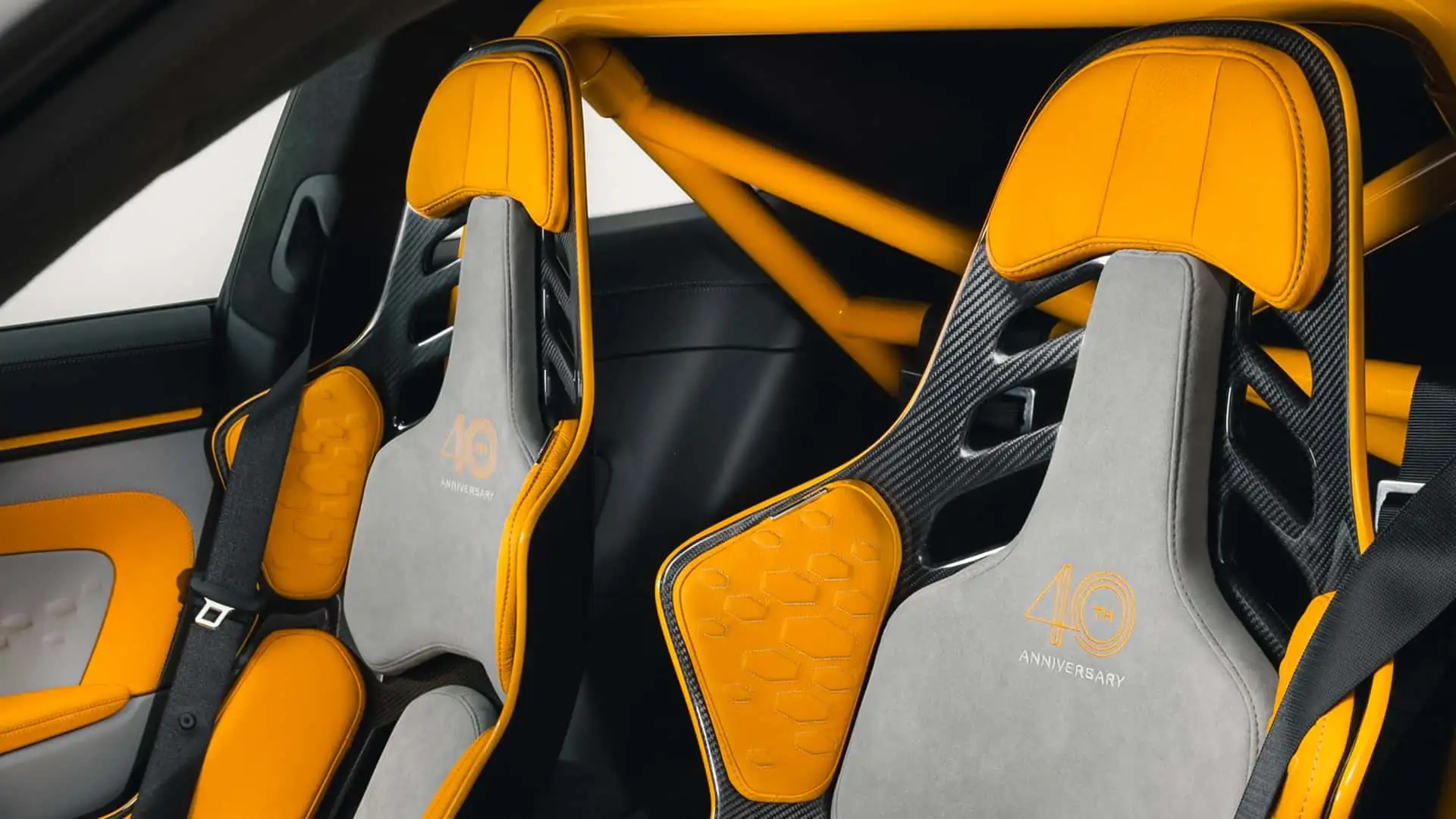
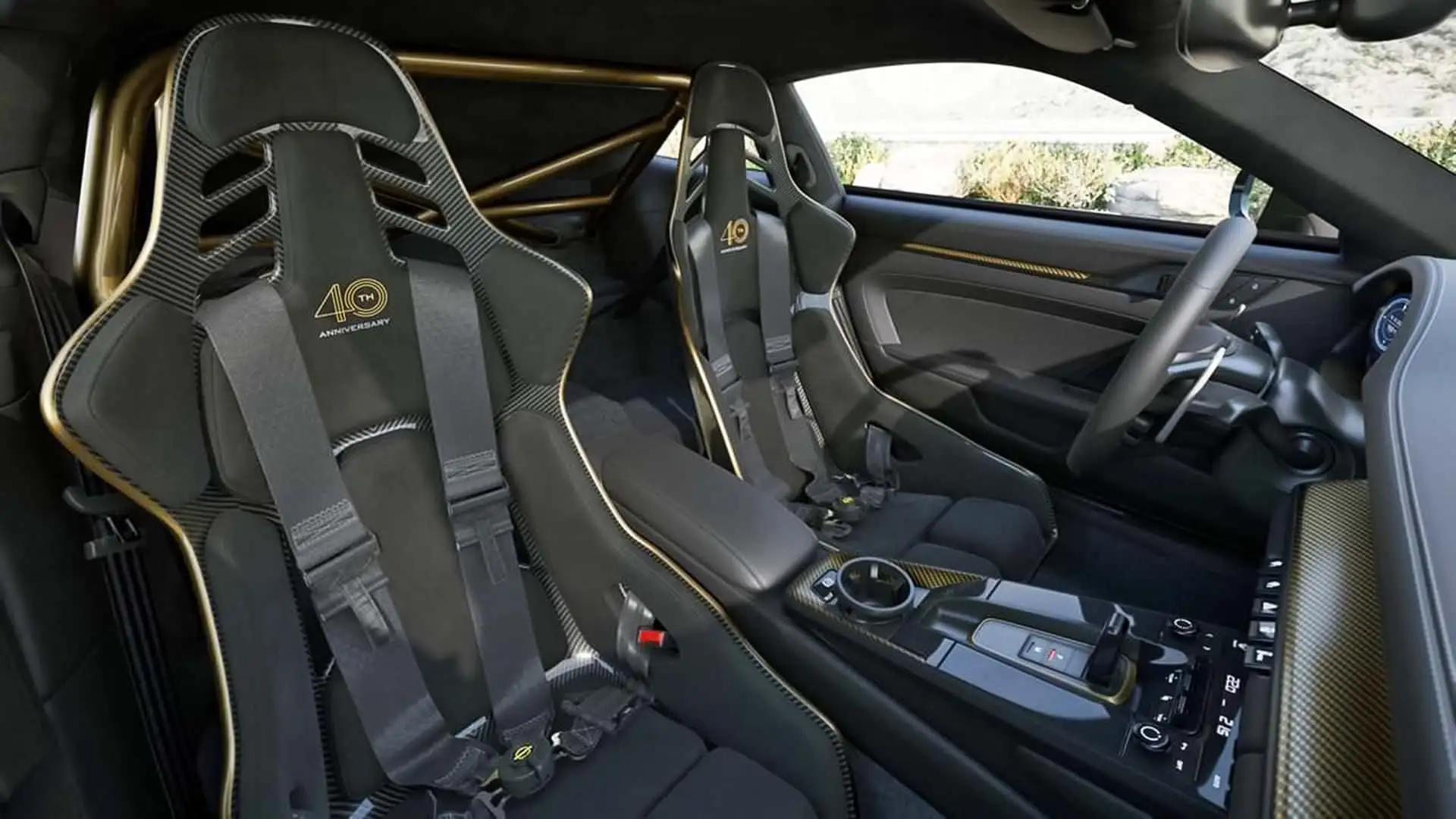
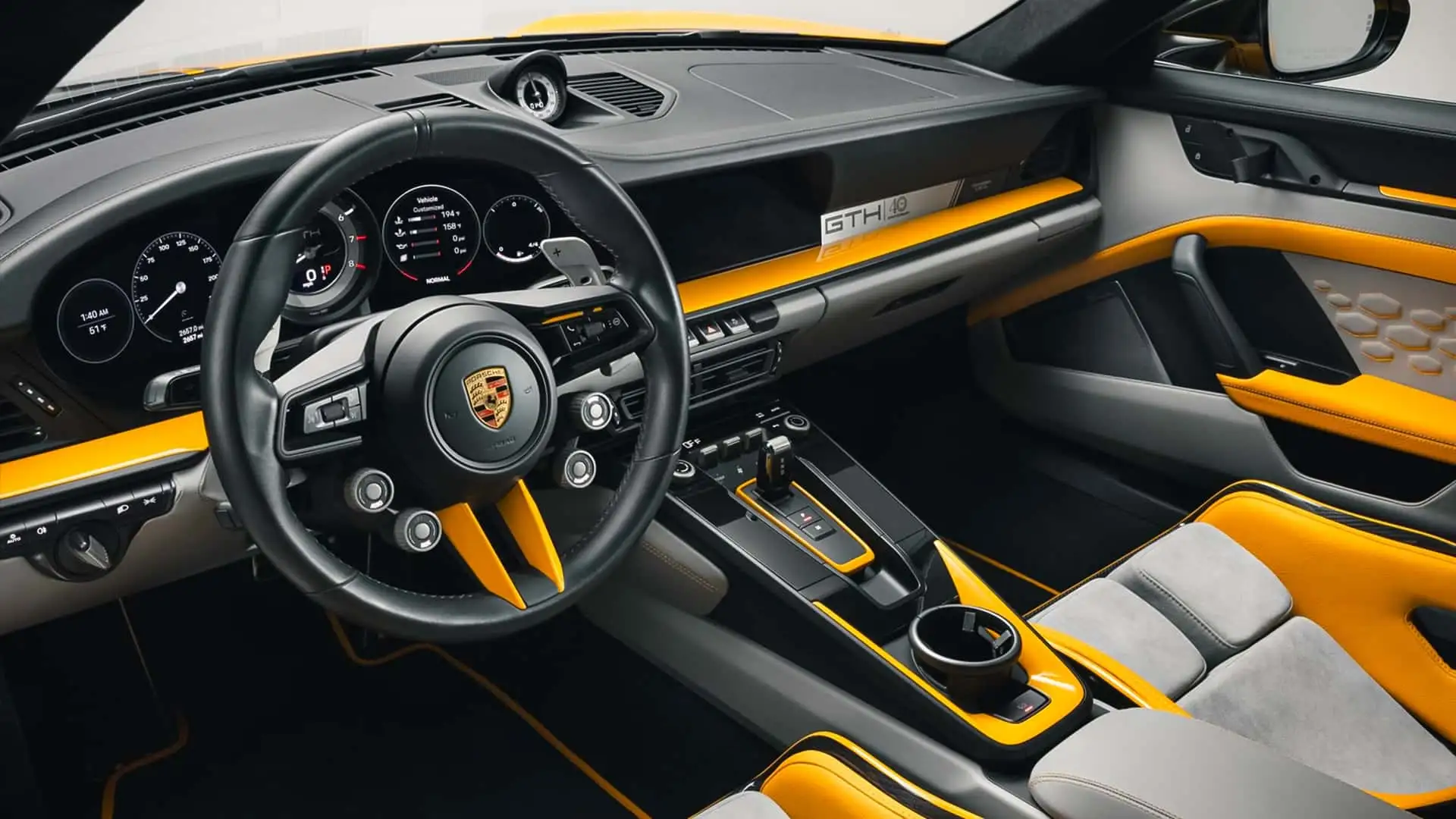
Inside, the RML GT Hypercar carries the same no-nonsense logic as its exterior. The cabin uses leather and Alcantara in gray, orange, and black, and it includes a half roll cage in steel. That layout confirms the car’s dual intent: road use is still part of the mission, but the structure and materials reflect track duty first. Reduced switchgear and a more direct driver environment reinforce the idea that RML is stripping away noise, not adding it.
This kind of interior execution is notable because many low-volume hypercars overplay luxury at the expense of ergonomics. Here, the emphasis is on immediate access, structural integrity, and a cockpit feel that still makes sense when the car is loaded up in fast direction changes. The orange exterior also matches the visual identity of the launched example, creating continuity rather than conflict between the outside and the inside. That kind of cohesion is exactly what enthusiast buyers expect when a project is sold as a serious interpretation rather than a design exercise.
Why 39 cars is the right number for this concept
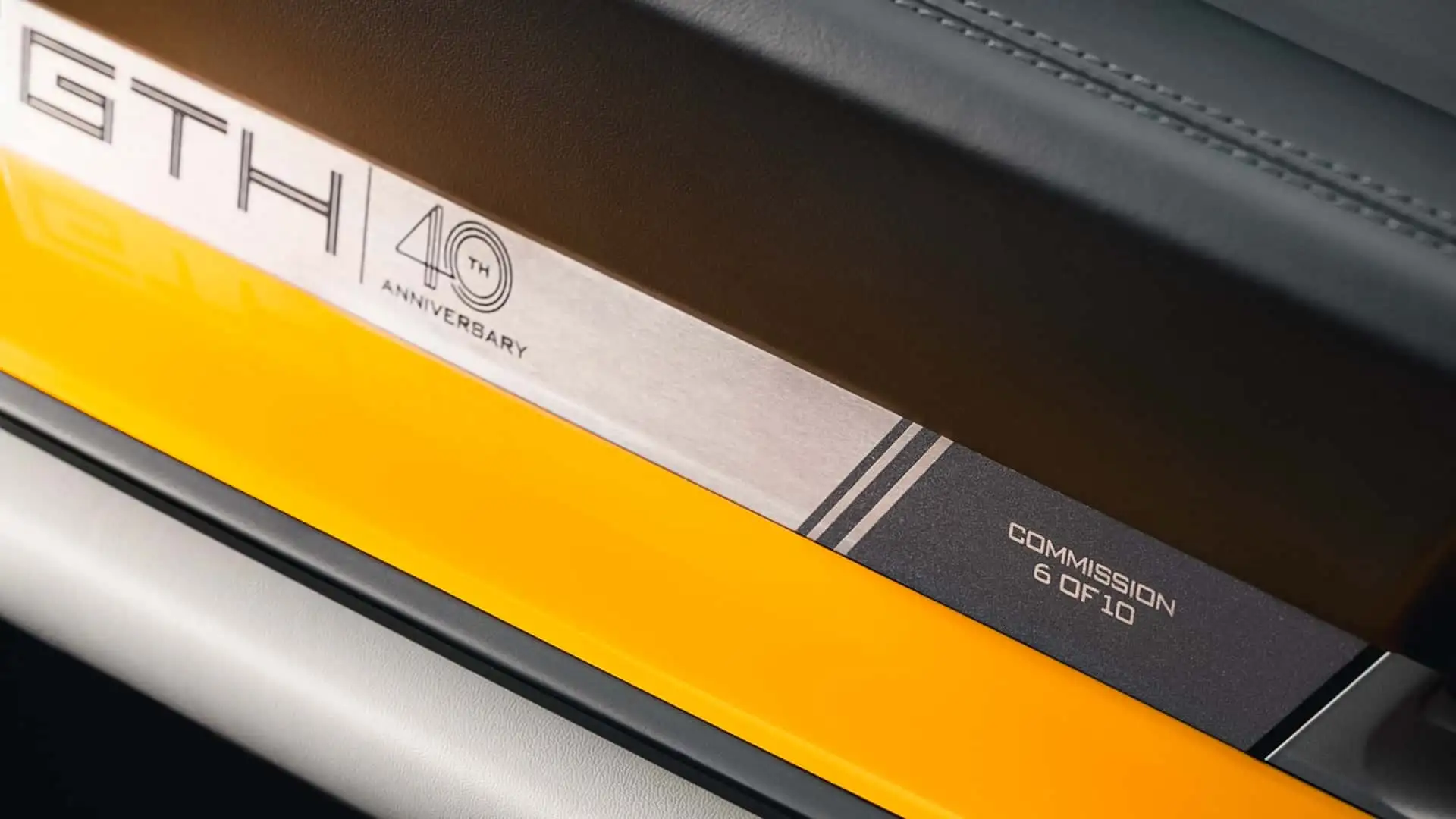
RML’s decision to limit the GT Hypercar to 39 units is strategically smart. That volume is high enough to support a proper development program and low enough to keep the hand-built, individualized identity intact. It also lets RML offer different configurations, like the Graham Rahal-inspired example shown in Costa Mesa, without turning the project into a one-spec production line. The P39 therefore sits in a rare space between coachbuilt special and serious low-volume manufacturer program.
For enthusiasts, the significance is broader than the final power figure or the carbon body. The P39 demonstrates that the 992 911 Turbo S still has latent engineering potential when a specialist team approaches it with motorsport thinking, aero discipline, and a willingness to redesign major surfaces. In that sense, the RML GT Hypercar is less a modified Porsche than a proof of concept for what a modern GT1-style road car can still be in 2026. It is also a reminder that the most interesting Porsche derivatives often come from outside Weissach, a point that connects neatly with the FERRARI HYPERSAIL in the sense that high-performance design increasingly depends on cross-disciplinary engineering ambition.
The verdict on the RML P39
The RML GT Hypercar works because every major system points in the same direction. A 3.8-liter twin-turbo flat-six, 8-speed DCT, AWD, 912 PS, 1,000 Nm, active aero, hydraulic ride height, and full carbon construction all support a coherent mission. It is a GT1-inspired 911 that respects the original car’s packaging while refusing to remain constrained by it. If RML can deliver the chassis balance implied by the hardware, the P39 could become one of the most convincing restomods-derived hypercars of the decade.
The real challenge will be execution over 39 cars, because the difference between a fascinating prototype and a great customer car often comes down to calibration, repeatability, and thermal management. Based on the specification alone, though, the RML GT Hypercar already earns its place among the most technically serious Porsche-based specials of recent years.