
| Category | Specification |
|---|---|
| Vehicle type | Light commercial van and wagon |
| Engine option | 1.3L 1NR-FE inline four-cylinder |
| Engine technology | Dual VVT-i |
| Engine option | 1.5L 1NZ-FE inline four-cylinder |
| Hybrid powertrain | 1.5L engine paired with electric motor |
| Transmission | Continuously Variable Transmission (CVT) |
| Transmission | Manual transmission |
| Drive layout | Front-wheel drive |
| Drive layout | Full-time four-wheel drive |
| Safety systems | ABS, Electronic Brakeforce Distribution, stability control and traction control |
| Driver-assistance systems | Pre-collision warning, lane-departure alert and automatic high beams |
| Cabin equipment | Air conditioning, power steering, front power windows and central locking |
| Cargo-floor configuration | Flat floor with rear seats folded |
Powertrain Analysis
The Toyota Probox 1.3L configuration uses the 1NR-FE inline four-cylinder engine with Dual VVT-i valve timing. This engine specification is configured for urban delivery operation and lower fuel consumption during frequent stop-and-go use.
The 1.5L configuration uses the 1NZ-FE inline four-cylinder engine. The 1.5L displacement provides a larger engine option than the 1.3L 1NR-FE configuration for heavier cargo loads and higher-speed road operation.
Selected Probox versions use a 1.5L hybrid system combining a 1.5L combustion engine with an electric motor. The hybrid configuration is paired with Toyota hybrid-system operation for reduced fuel use in low-speed and stop-start traffic conditions.
Transmission availability includes a continuously variable transmission and a manual transmission. Drivetrain configurations include front-wheel drive and full-time four-wheel drive, with the 4WD layout intended for routes with lower-traction surfaces and varied weather conditions.
Dimensions & Practicality
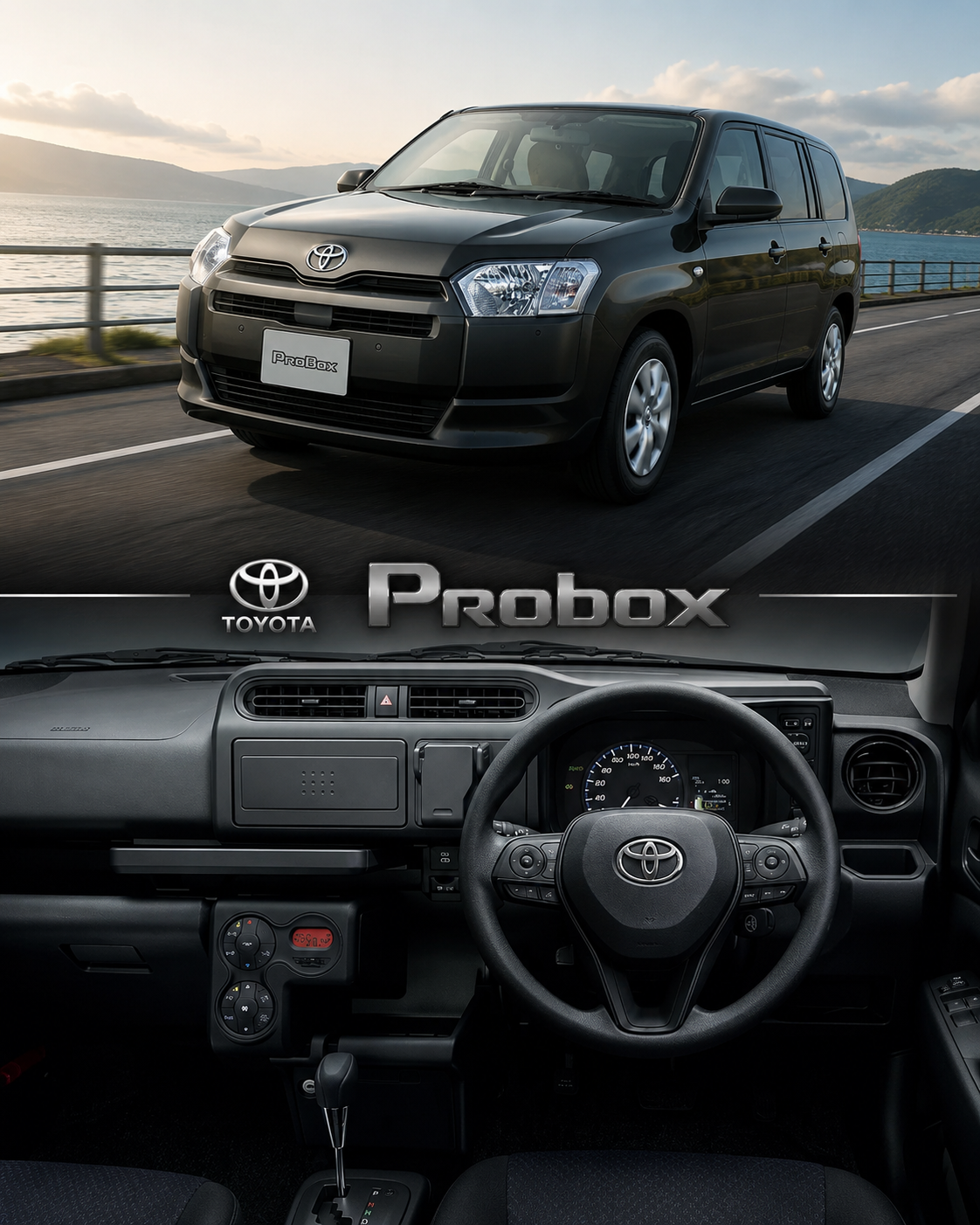
The Probox uses a rectangular commercial-vehicle body profile designed to maximize rear-compartment volume. The van and wagon body configurations prioritize cargo packaging within a compact utility-oriented exterior shape.
Rear doors use a wide-opening configuration for cargo access. The rear loading height is positioned low to reduce the vertical lift required when loading heavy equipment, deliveries and commercial supplies.
The rear-seat structure folds to create a flat cargo deck. This configuration increases usable rear load space by converting the passenger-seat area into a continuous level floor for larger cargo items.
The cabin includes physical dashboard controls, deep storage cubbies and an integrated device holder. High-wear cabin surfaces use easy-clean plastic trim and durable upholstery, while air conditioning, power steering, front power windows and central locking support daily commercial use.
Safety & Operational Equipment
Updated Toyota Probox models include Toyota Safety Sense equipment with pre-collision warning, lane-departure alert and automatic high-beam functions. These systems supplement the commercial vehicle’s driver-assistance specification.
Brake and stability equipment includes anti-lock braking system control, Electronic Brakeforce Distribution, traction control and stability control. These systems are specified alongside front-wheel-drive and full-time four-wheel-drive configurations.