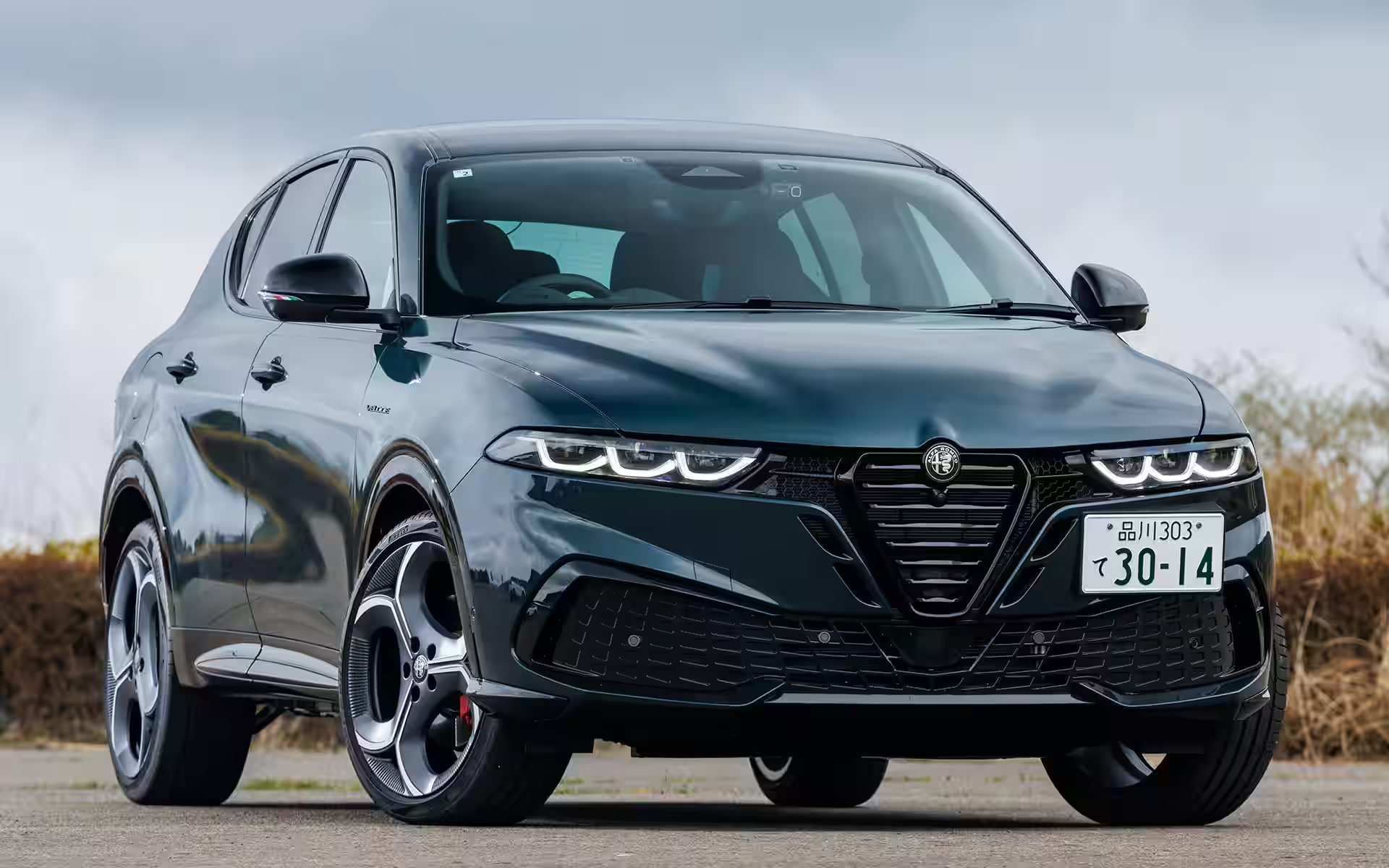
ALFA ROMEO TONALE refresh lands as a precision update, not a reinvention
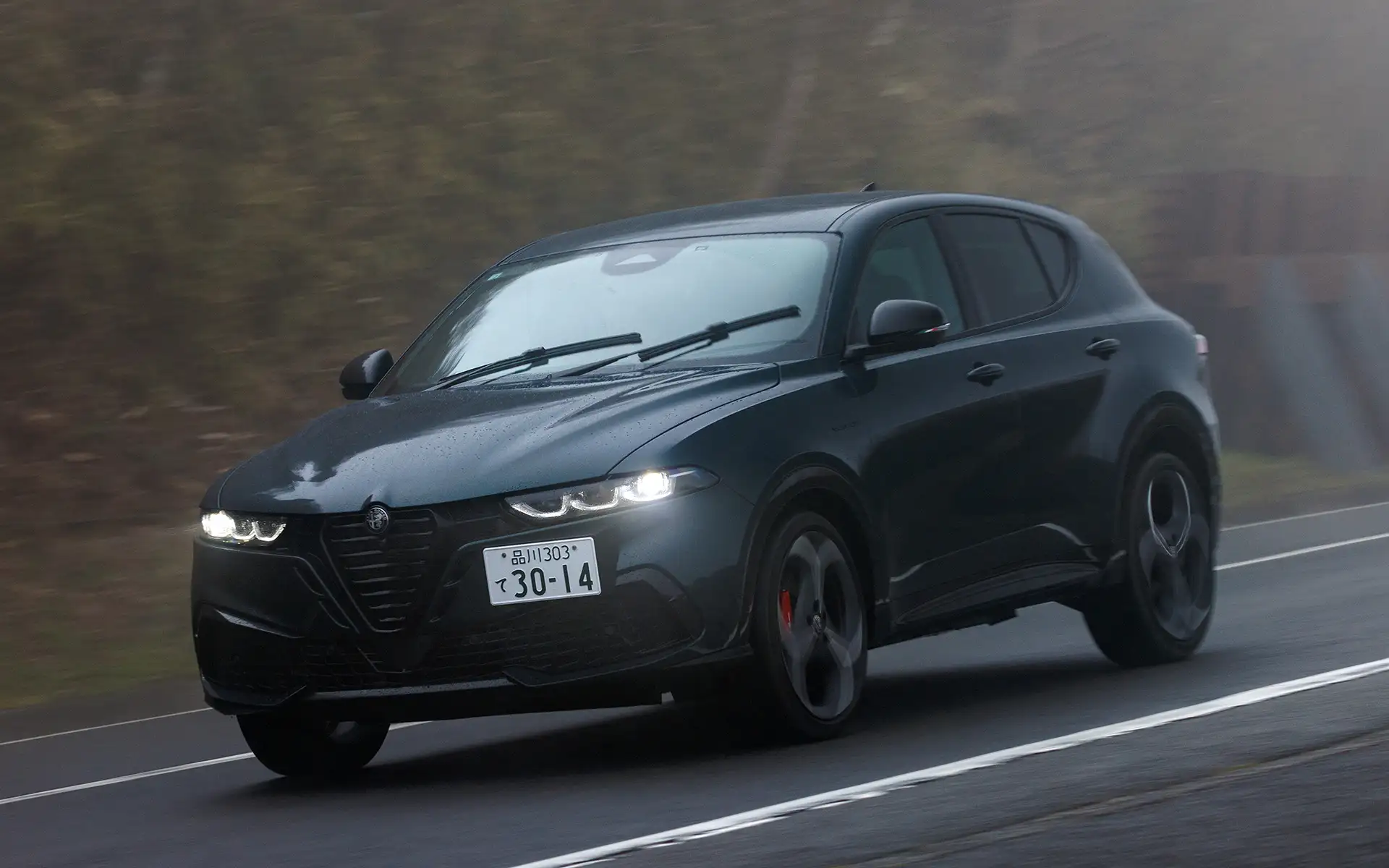
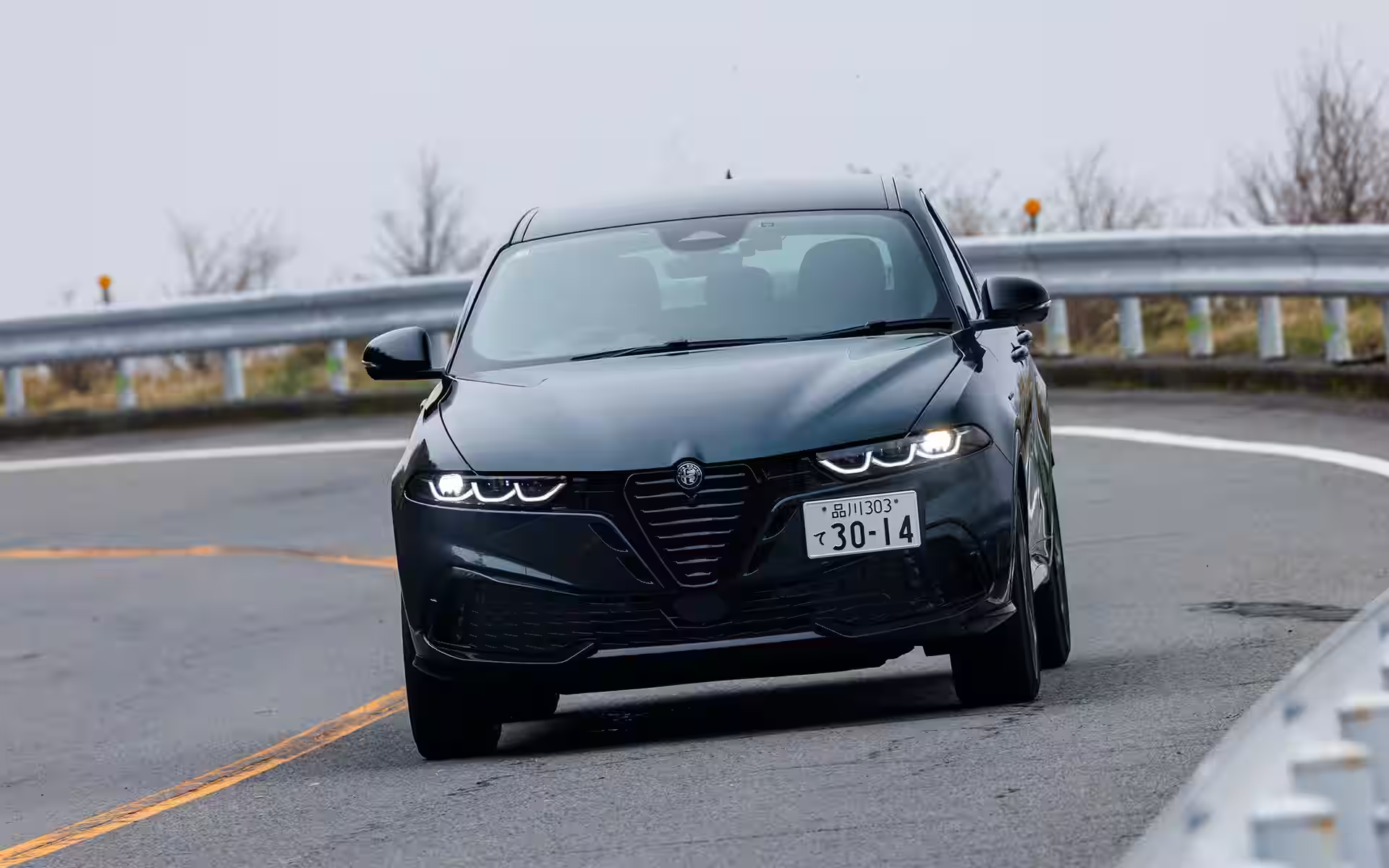
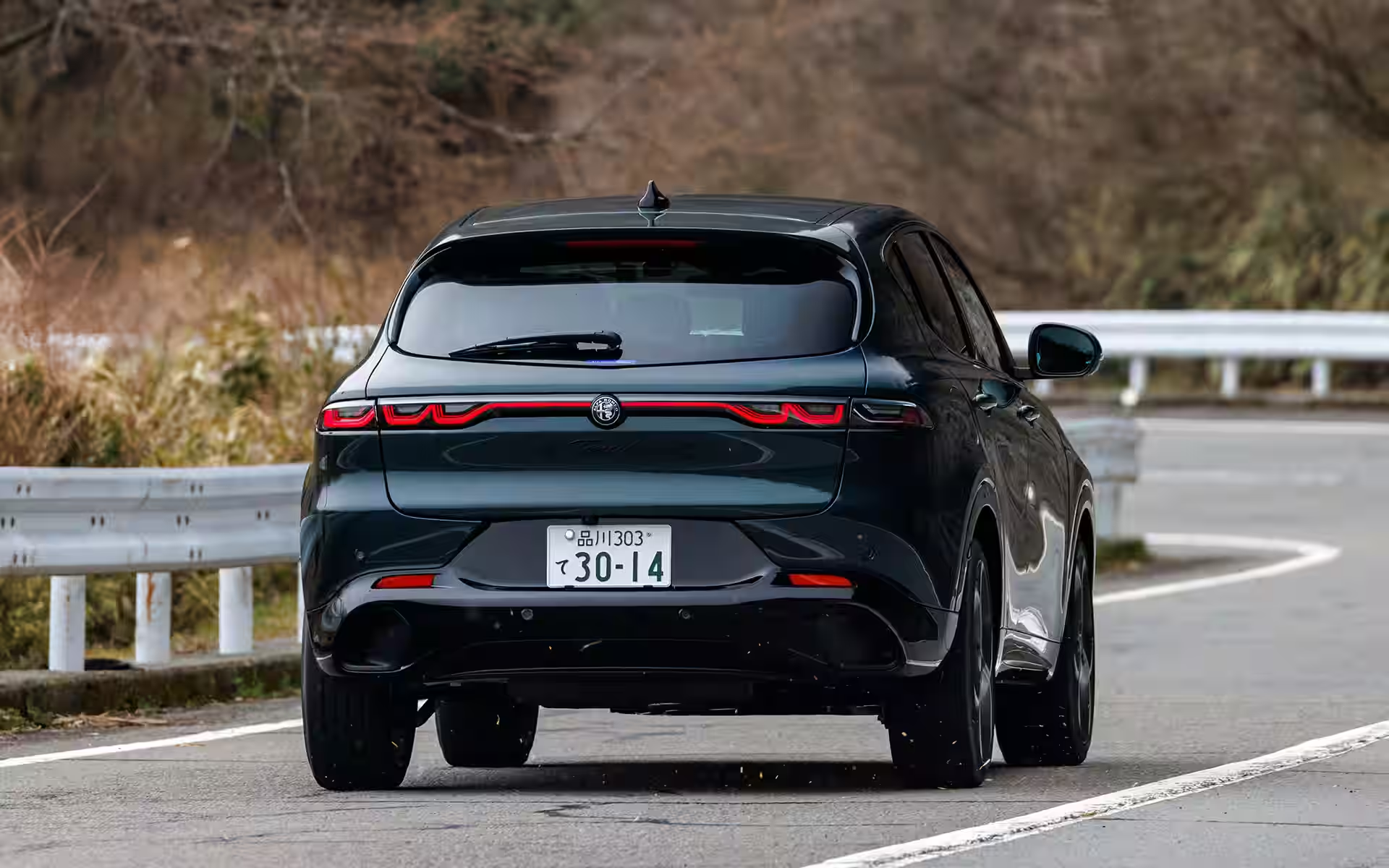
The updated Alfa Romeo Tonale arrives as the kind of facelift that respects what already worked. On paper, the changes are modest: the front end is revised, overall length is trimmed by 10 mm, and the Veloce test car gains an 8 mm wider stance through revised wheel offset. Yet the real story is how carefully Alfa Romeo has used those numbers to sharpen an SUV that already sat close to the brand’s sweet spot between style, usability, and chassis feel. In Japan, the test car was the Tonale Ibrida Veloce, priced at 653万円, finished in the new Monza Green paint, and sized at 4520 x 1835 x 1600 mm with a 2635 mm wheelbase and 1600 kg kerb mass. Those are not dramatic changes, but they are the kind that can make a road test feel cleaner at speed and more composed in transitions.
| Item | Updated Tonale Ibrida Veloce |
|---|---|
| Engine | 1.5-liter turbocharged inline-4 |
| System output | 160 PS (118 kW) / 240 Nm (177 lb-ft) |
| Electric motor | 15 kW (20 PS) / 55 Nm (41 lb-ft) |
| Transmission | 7-speed DCT |
| 0-100 km/h | 8.5 seconds |
| Length | 4520 mm |
| Width | 1835 mm |
| Height | 1600 mm |
| Wheelbase | 2635 mm |
| Kerb mass | 1600 kg |
| Fuel efficiency | Not officially stated in the source content |
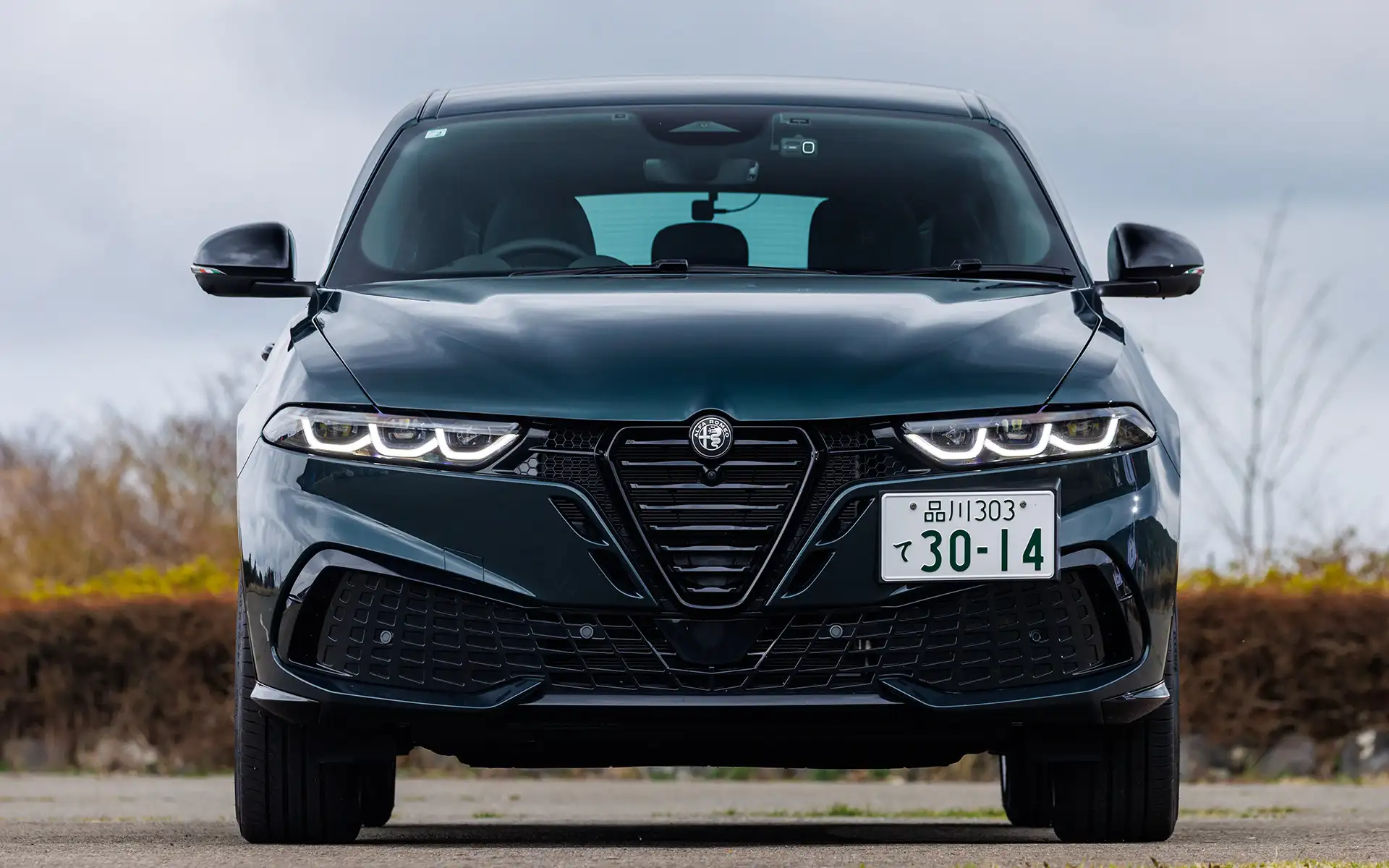
The front-end redesign is really about aero, cooling, and brand hierarchy
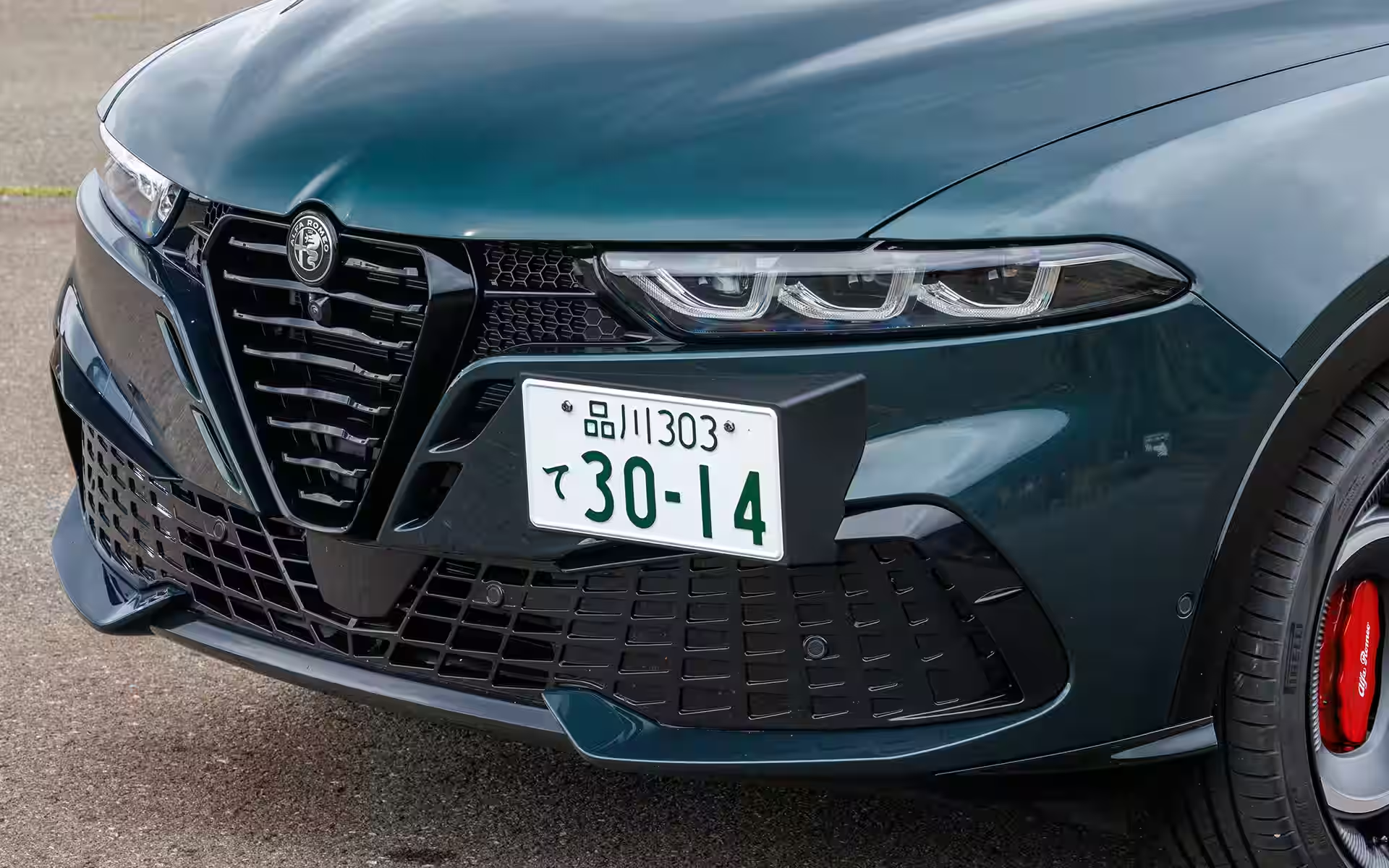
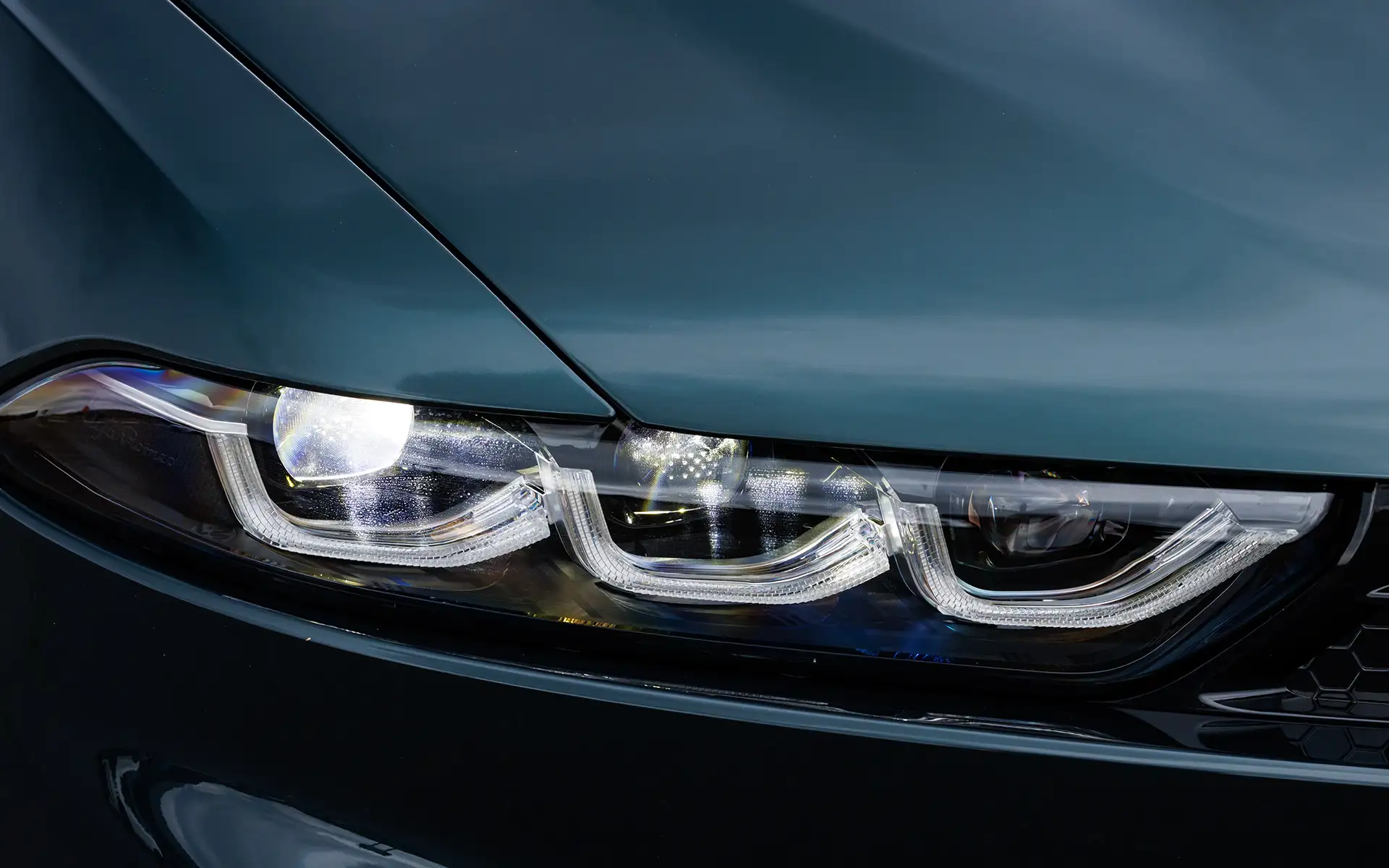
The most visible change is the new grille treatment, but the smartest part is what it does underneath the surface. The former honeycomb mesh gives way to a horizontal, more traditional Alfa Romeo motif that echoes the Tipo 33 Stradale, while four small openings beside the shield, called Asole, are designed to aid cooling and airflow management. Alfa has also enlarged the lower bumper intake to improve radiator efficiency and re-route trapped under-bonnet air toward the wheel housings and body sides. That should help reduce lift and wind noise, and the revised bumper profile reportedly improves pedestrian protection as well. The result is a front end that looks tidier, but more importantly works harder at speed, where a 4520 mm SUV with a 1600 kg mass can benefit from every reduction in turbulence.
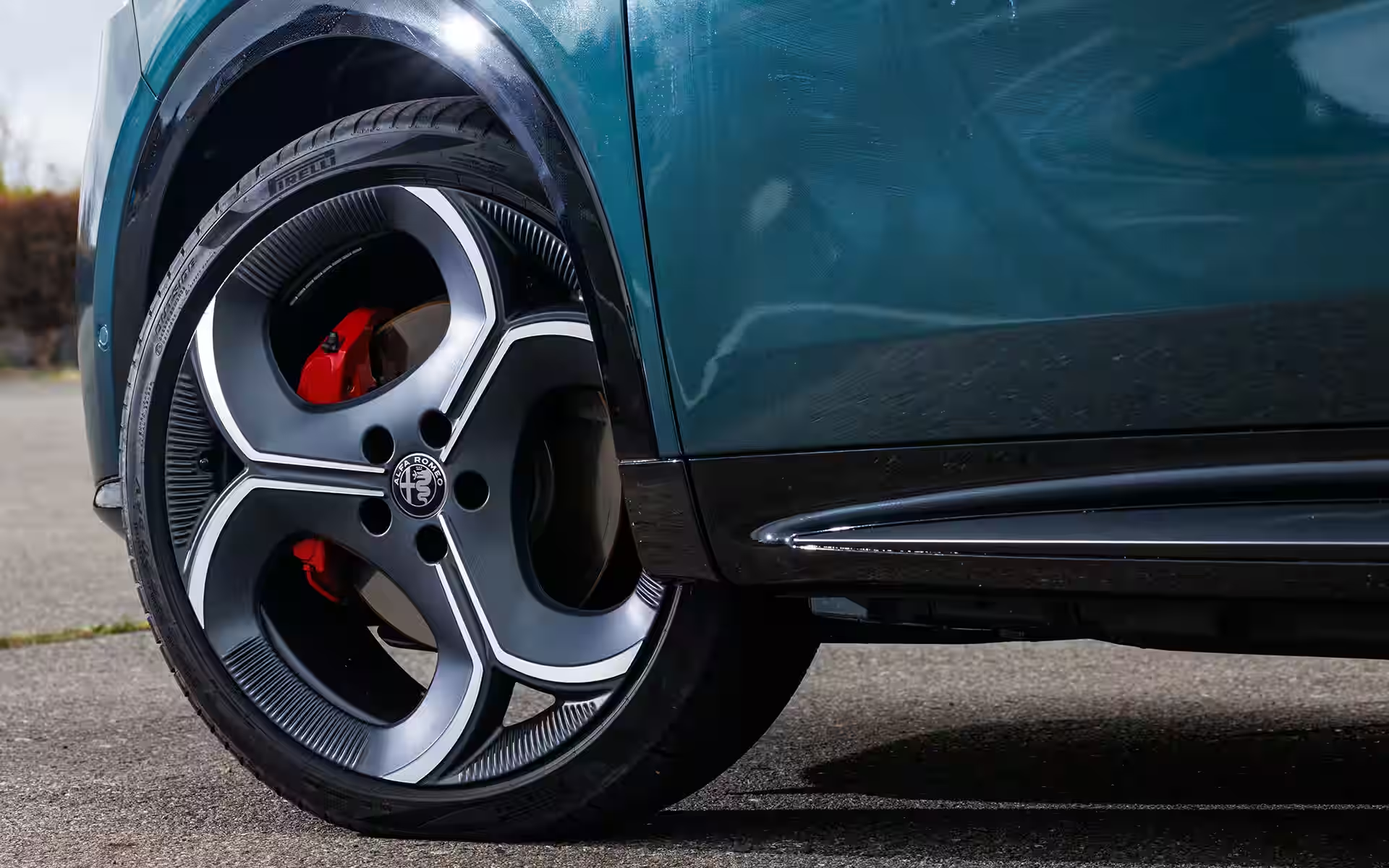
The styling language remains deliberately restrained. The new 20-inch “Foli” wheels use a clover-inspired motif, while the “Tri-lobe” grille reflects Alfa’s visual shorthand for the Quadrifoglio family. The logic is subtle: the Tonale is not trying to impersonate a flagship, but it borrows enough from the brand’s performance iconography to keep the emotional link intact. That is a more sophisticated move than simply adding black trim or oversized vents, and it fits a premium compact SUV that is aimed at enthusiasts rather than fashion buyers.
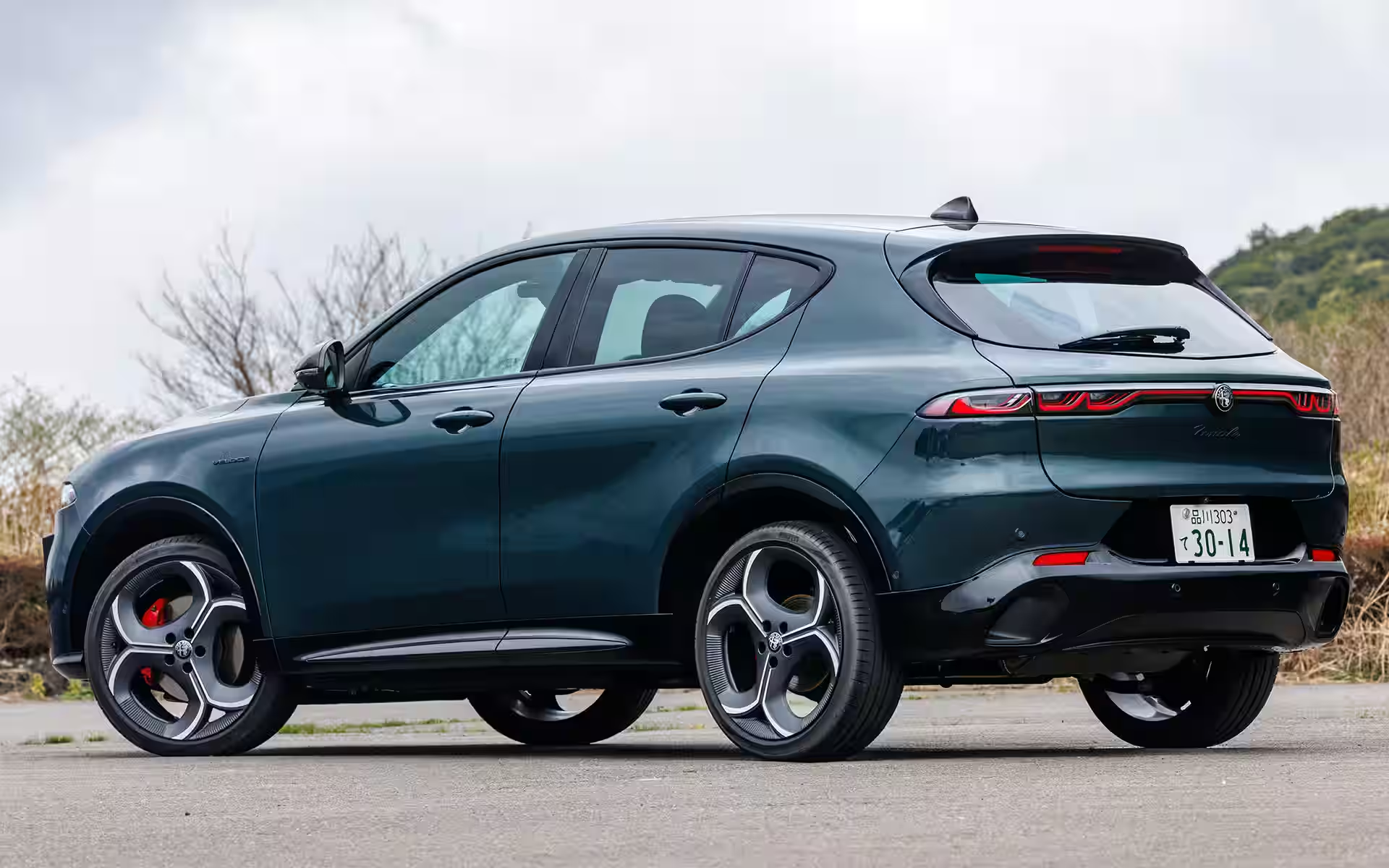
The 1.5 turbo mild hybrid is unchanged in hardware, smarter in behavior
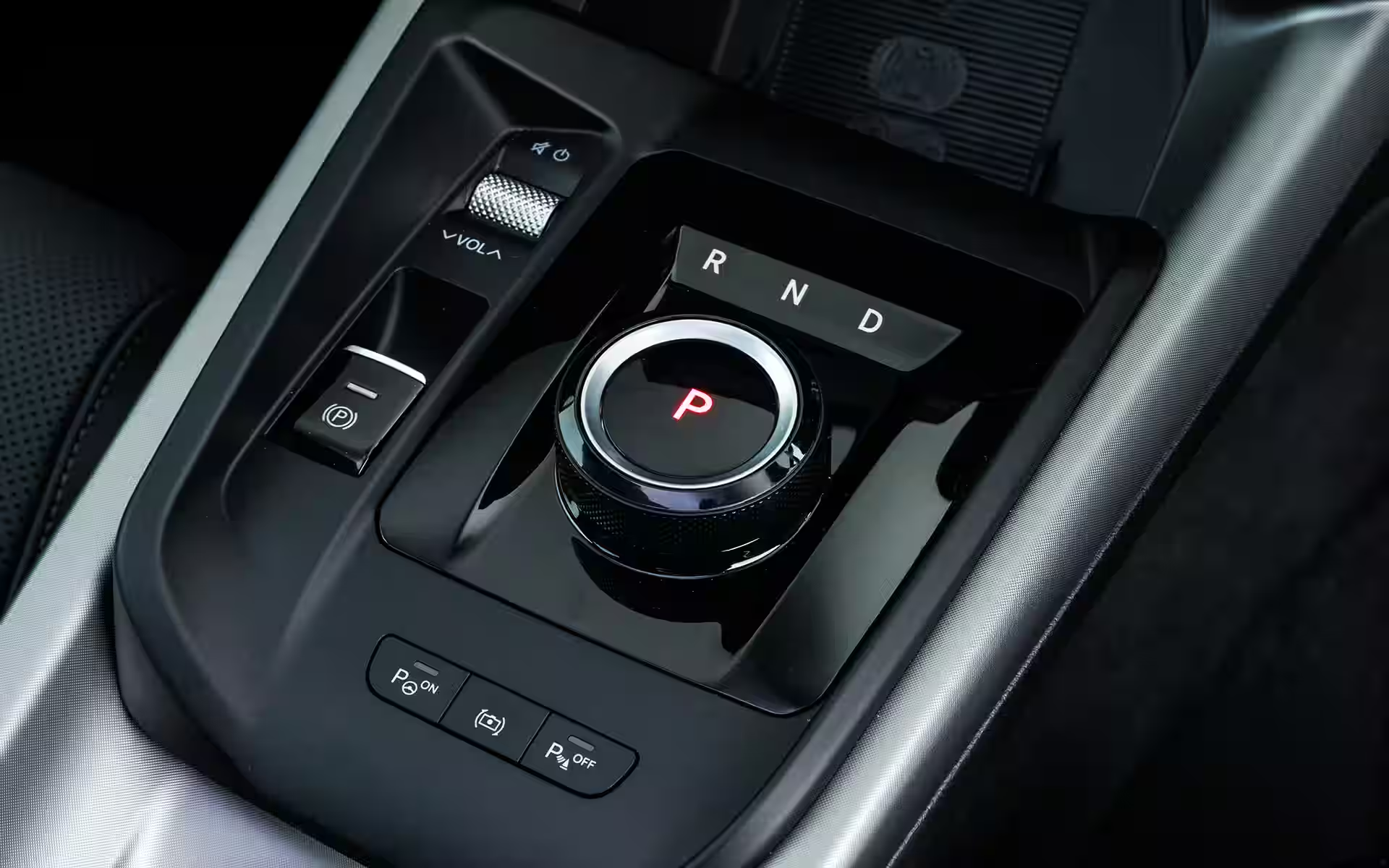
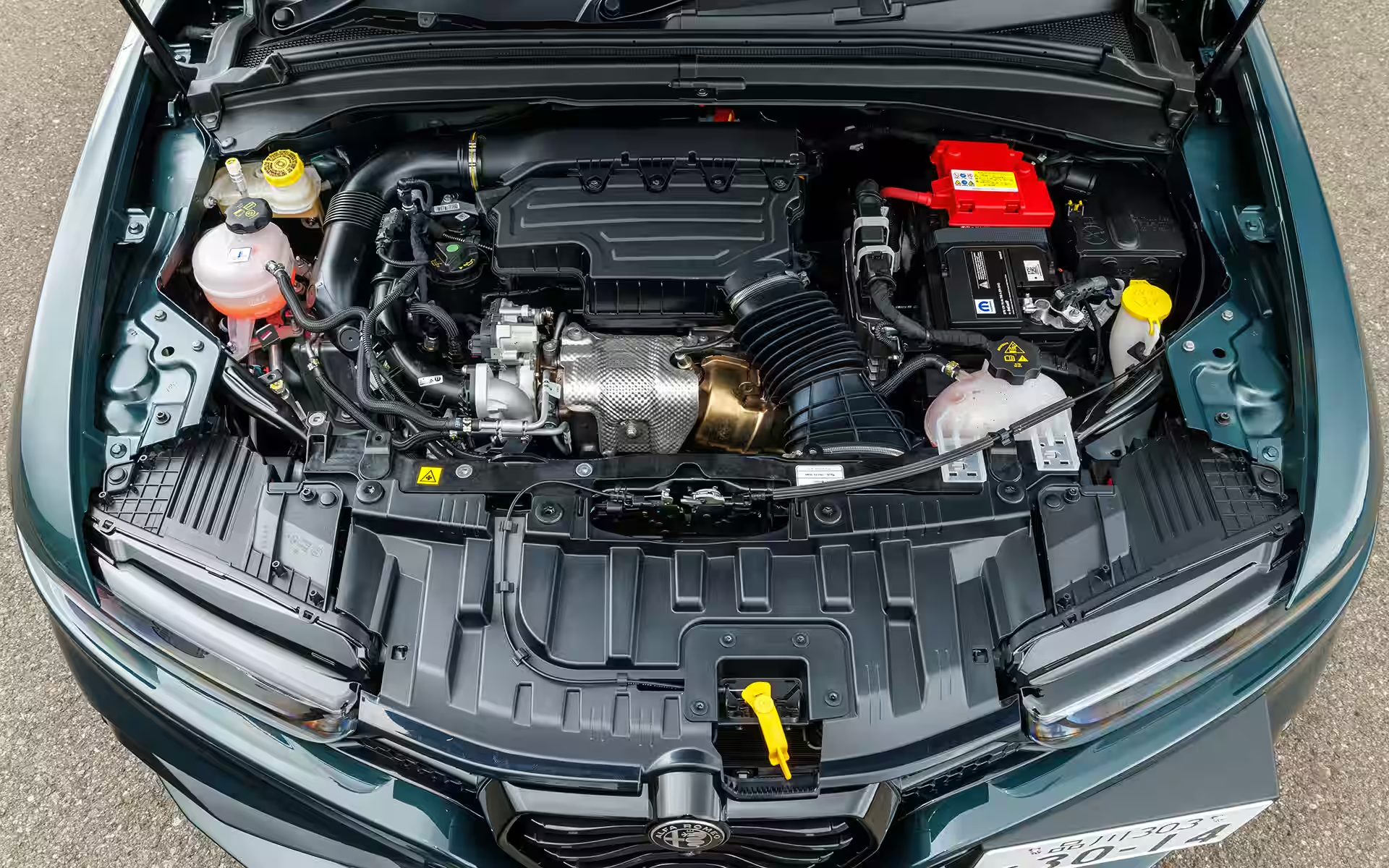
Under the hood, Alfa Romeo keeps the same 1.5-liter turbocharged inline-4 paired with a 7-speed DCT and an integrated 48V motor. Output remains 160 PS and 240 Nm, with the electric assist rated at 15 kW, 20 PS, and 55 Nm. The update is in the calibration, and that is where the Tonale becomes more convincing. Alfa claims the revised control logic trims the 0-100 km/h time to 8.5 seconds, down by 0.3 seconds. In daily use, the better news is not the launch number but the way the transmission and motor blend off the line. The article’s road test notes a smoother clutch take-up, less mechanical noise at low speed, and a more premium feel in the way the drivetrain settles once rolling.
That refinement matters because the Tonale is now a more focused counterpoint to cars like the TOYOTA CAMRY Nightshade Edition Hides Real Value Behind Dark Trim, which plays the stealth-value game from a very different angle. Alfa’s approach is emotional rather than merely rational: the 1.5-liter engine is there not just to save fuel, but to preserve the character expected from an Alfa Romeo badge in a segment where many rivals default to muted competence.
Steering and chassis tuning still define the Tonale more than the drivetrain
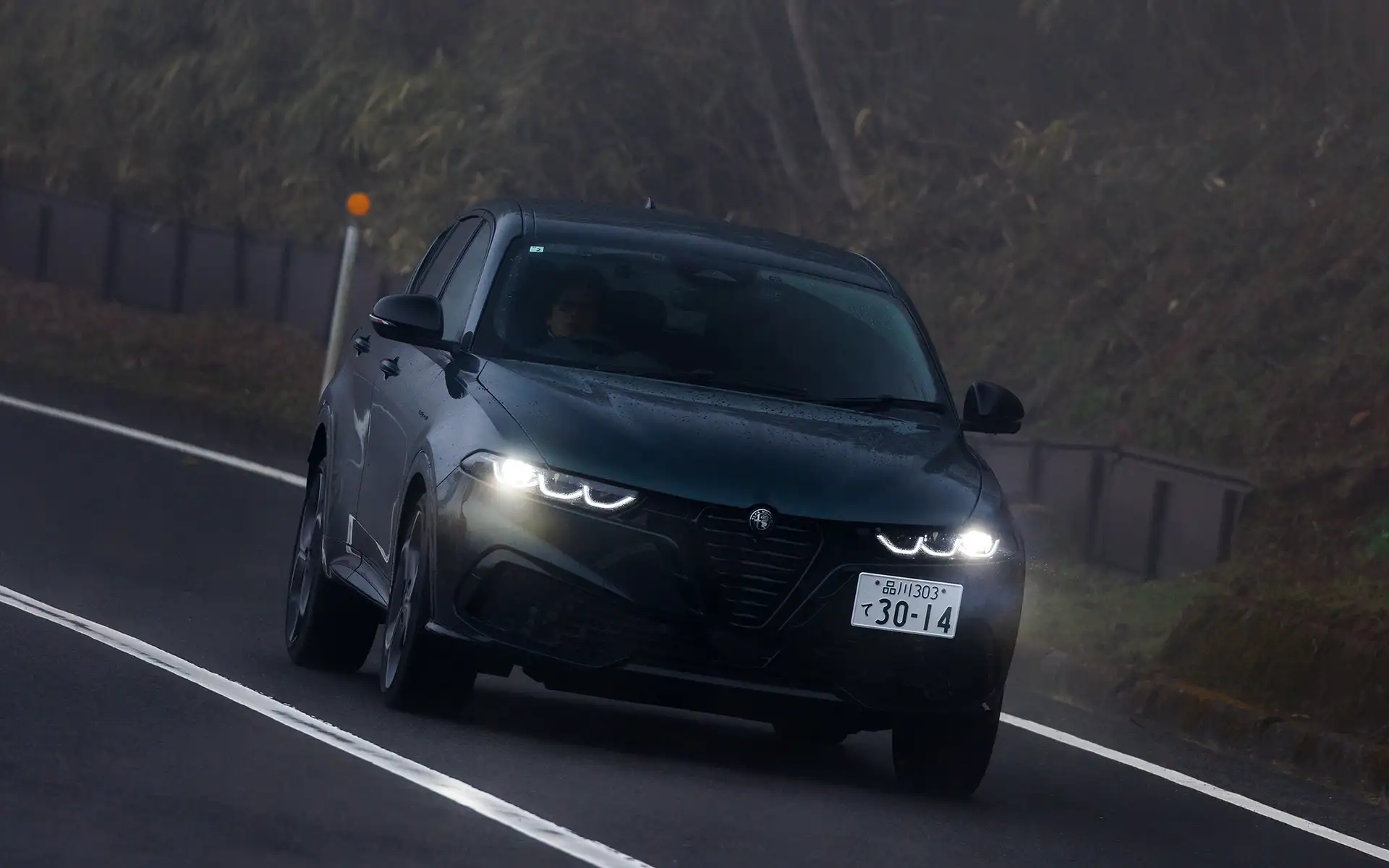
If the powertrain is the rational side of the Tonale, the chassis remains the emotional one. The steering ratio is a sharp 13.6:1, while the electric assistance is set light enough that the wheel can feel overly eager at first. Alfa has widened the wheel offset on the Veloce, which should theoretically soften scrub radius and calm the steering. In practice, the response is still keen and sometimes almost too reactive in tighter roads, but that is exactly the kind of detail that makes this SUV feel alive on a winding route like Hakone.
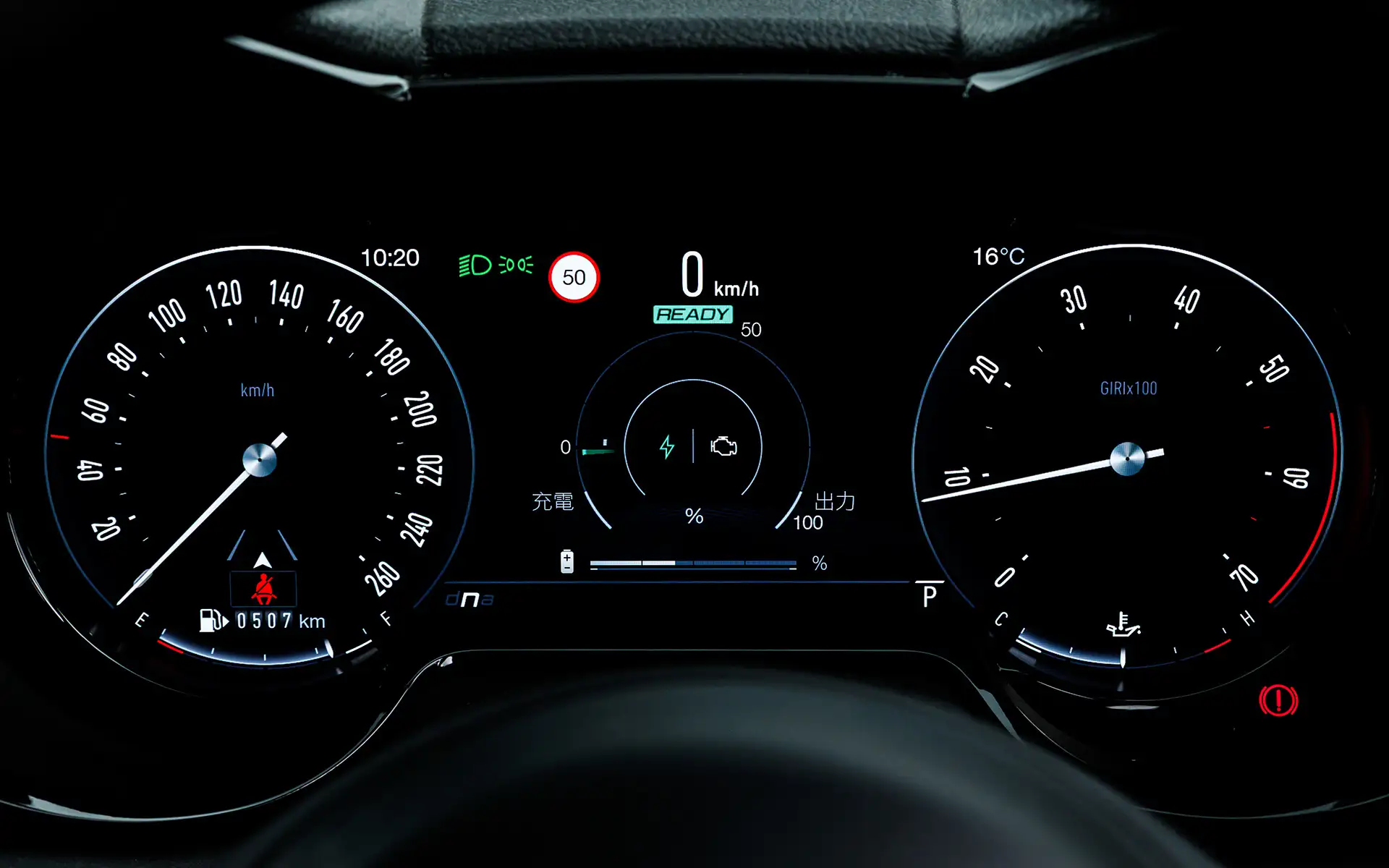
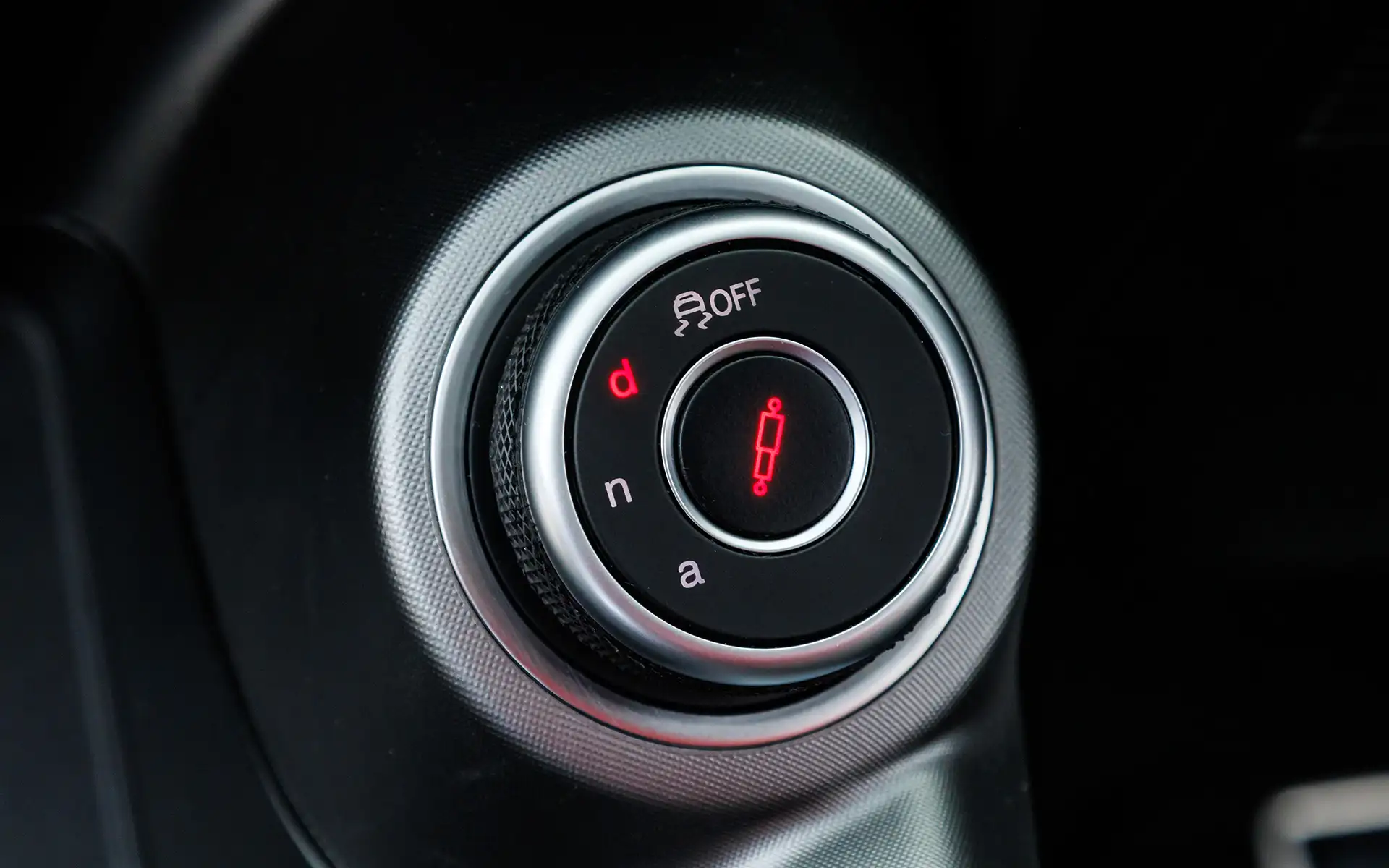
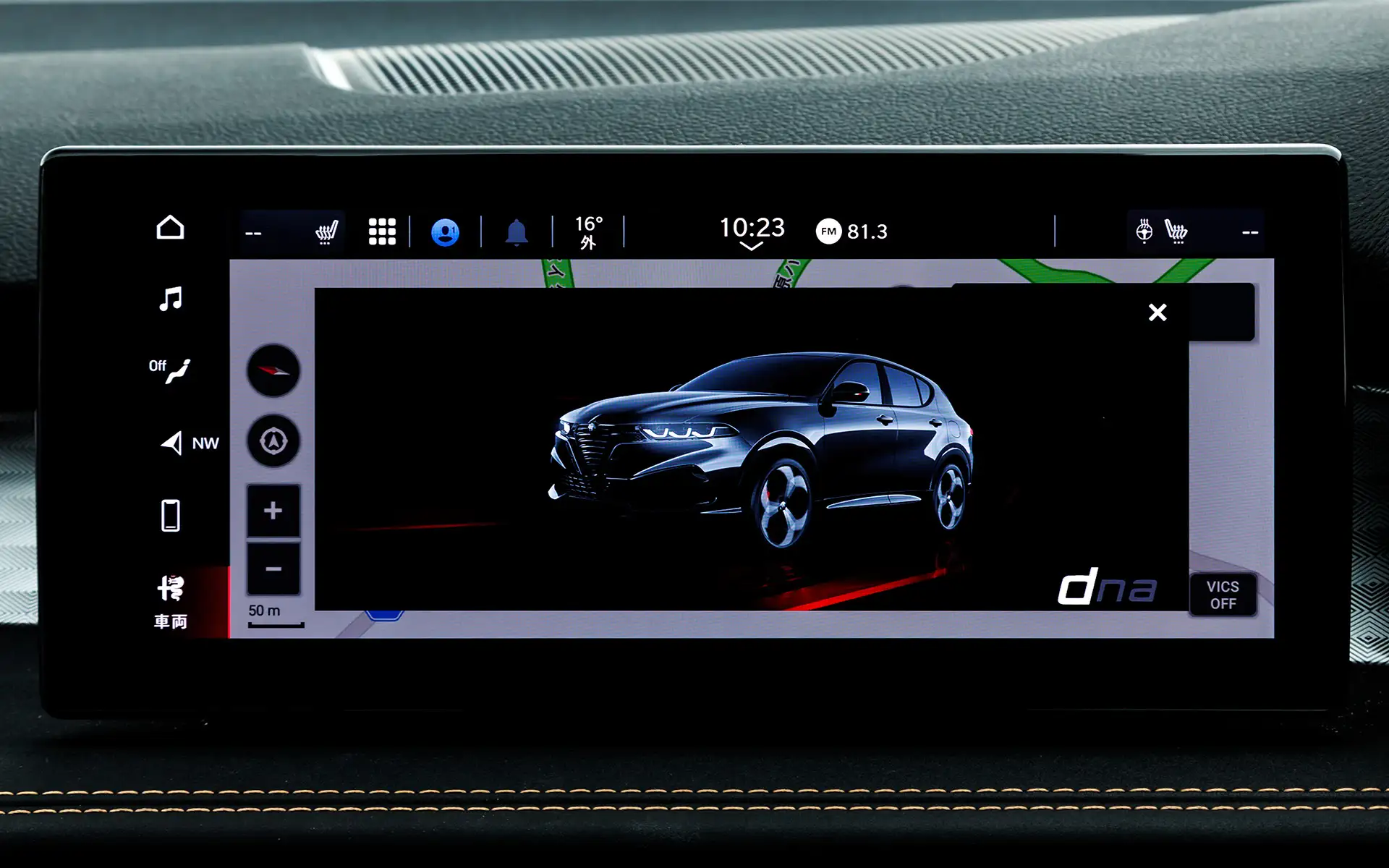
Once speed rises, the behavior settles. The steering gains a more planted center, and the suspension starts to show the benefit of the updated tuning. In Dynamic mode through the Alfa DNA selector, the car adds stability and more aggressive powertrain response without crossing into brittle territory. The adaptive damping appears to hold body motion in check without hammering the ride, which is a difficult balance for a 1600 kg SUV on 20-inch wheels. The important part is that the Tonale still encourages the driver to use the paddles and stay involved. It does not feel like a crossover that merely tolerates enthusiasm; it feels like one built to reward it.
Cabin, packaging, and usability remain part of the premium pitch
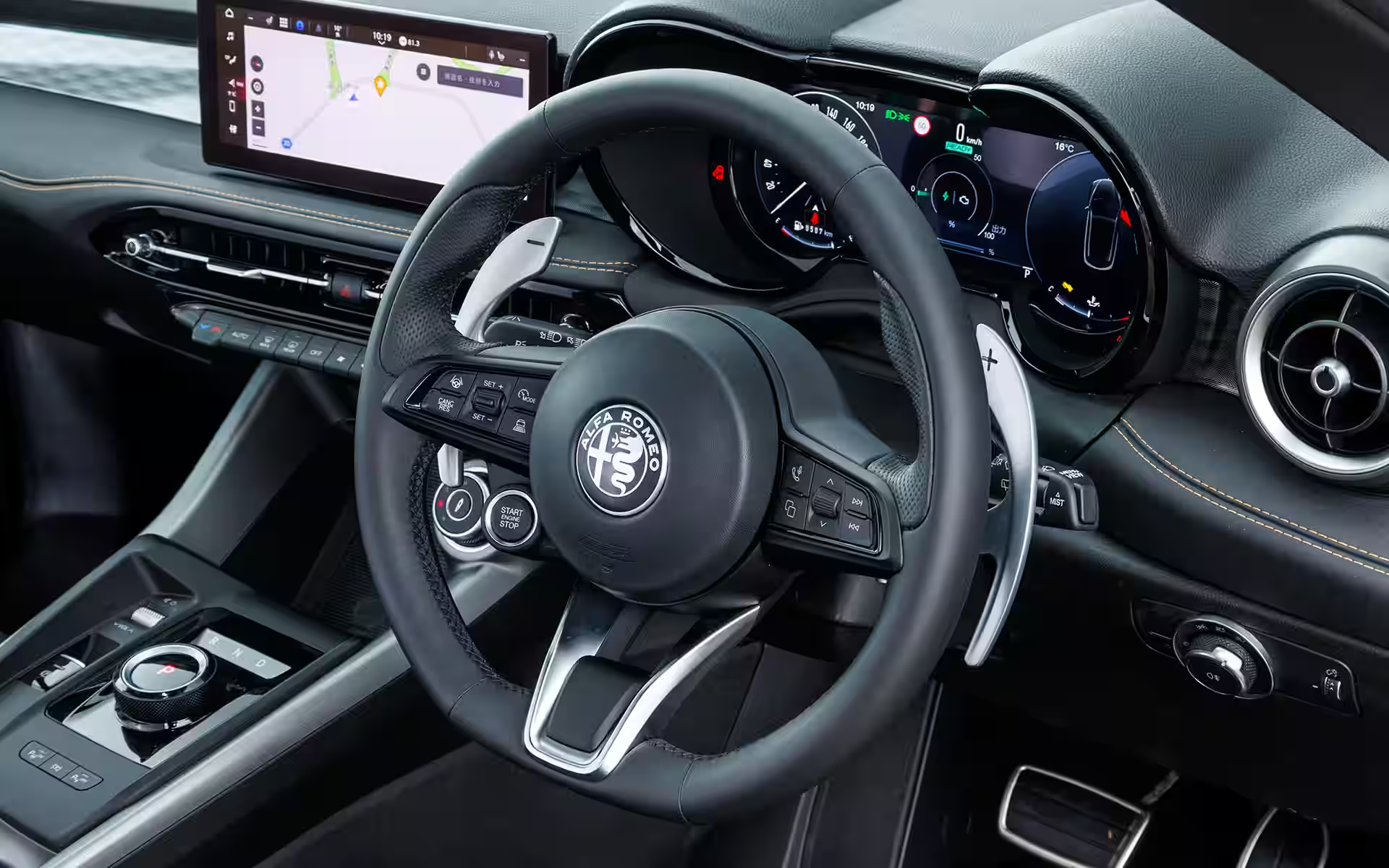
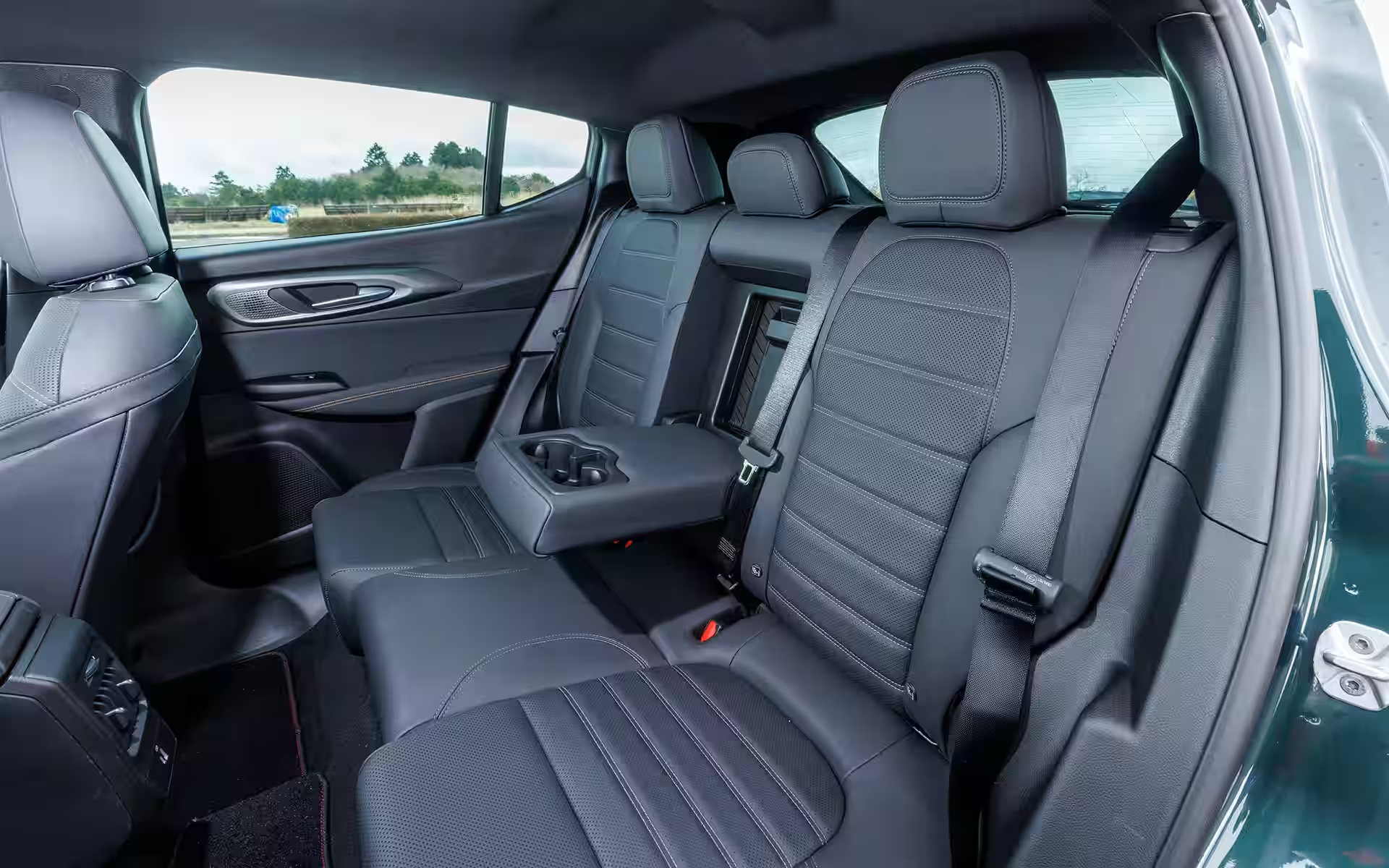
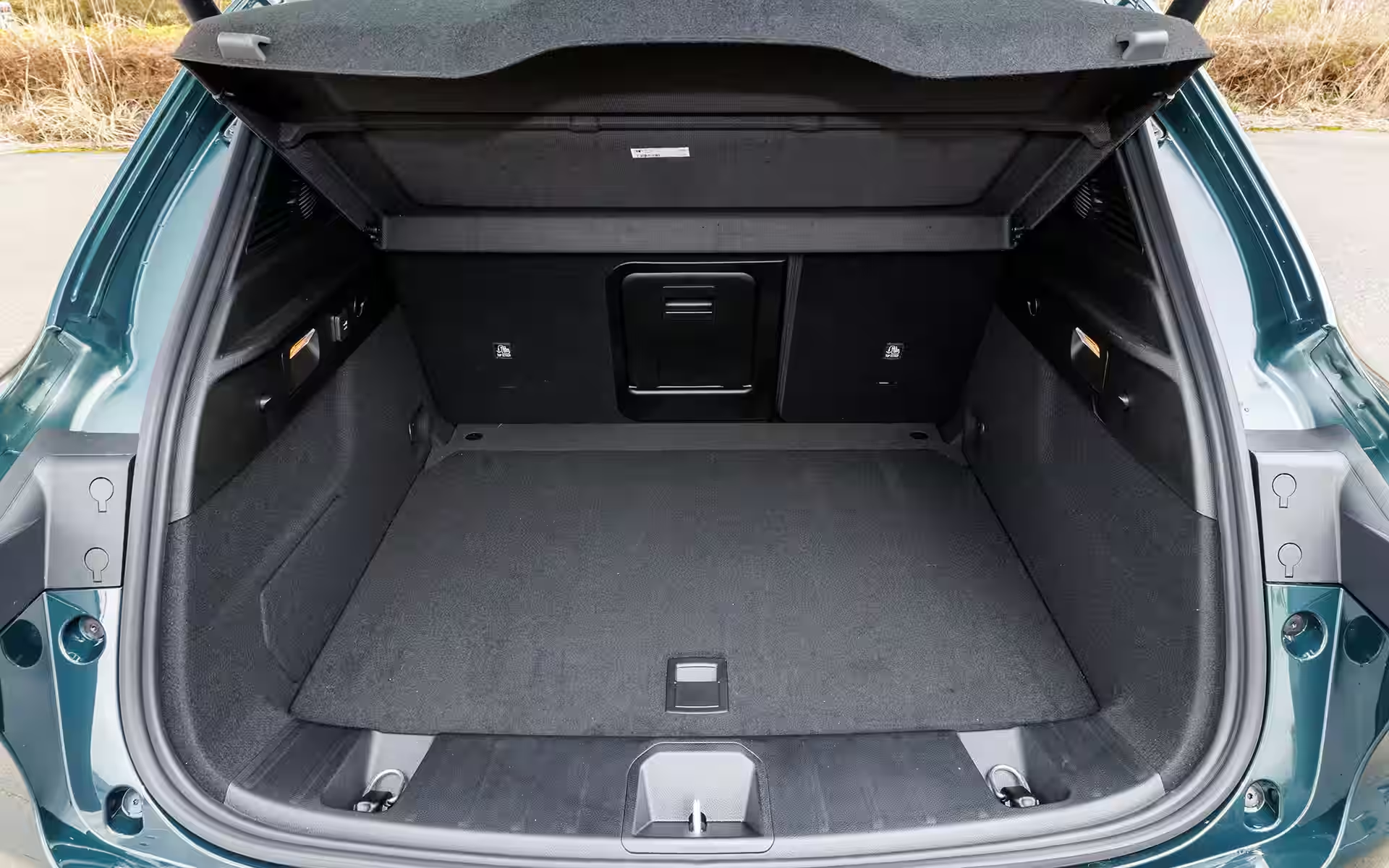
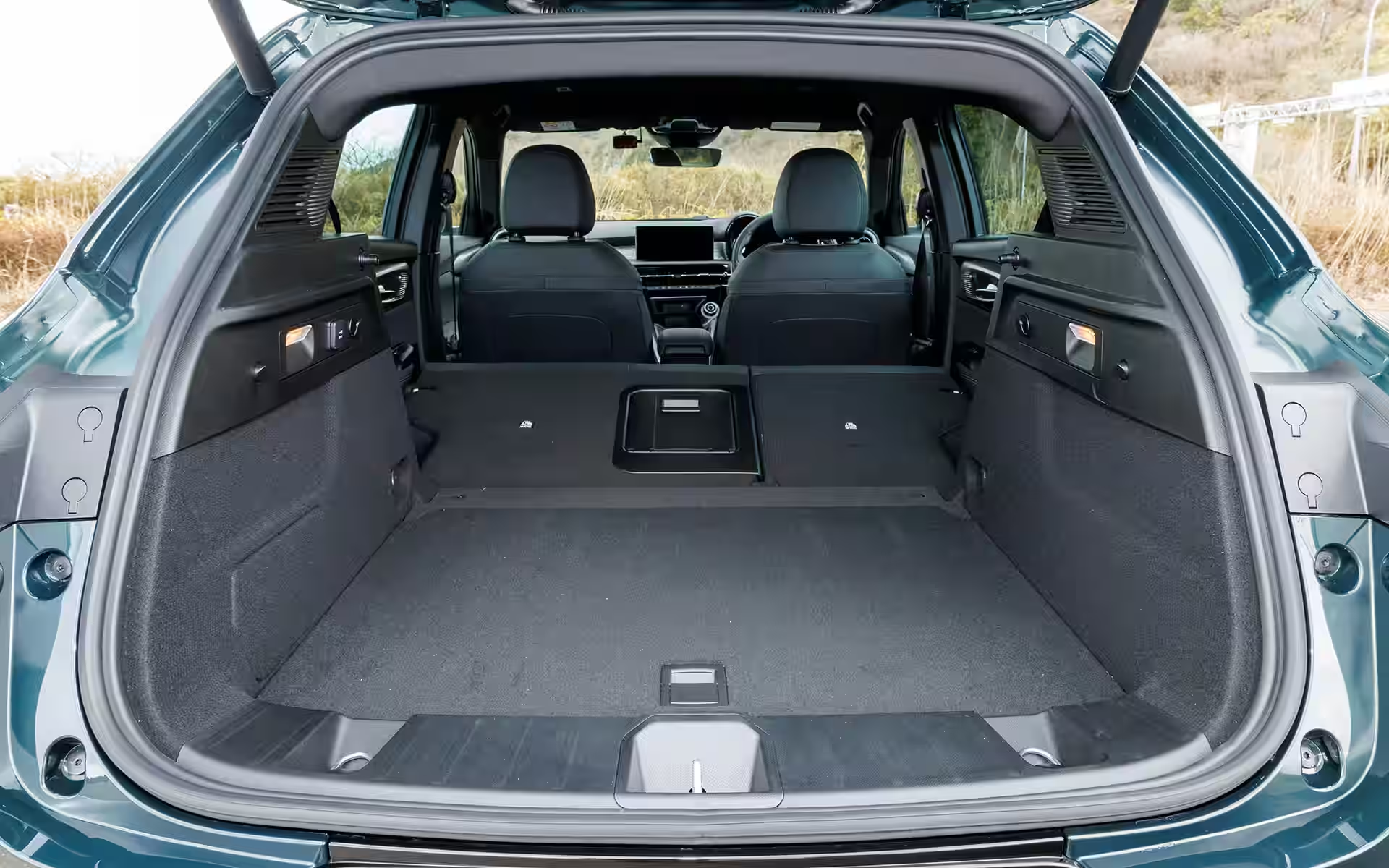
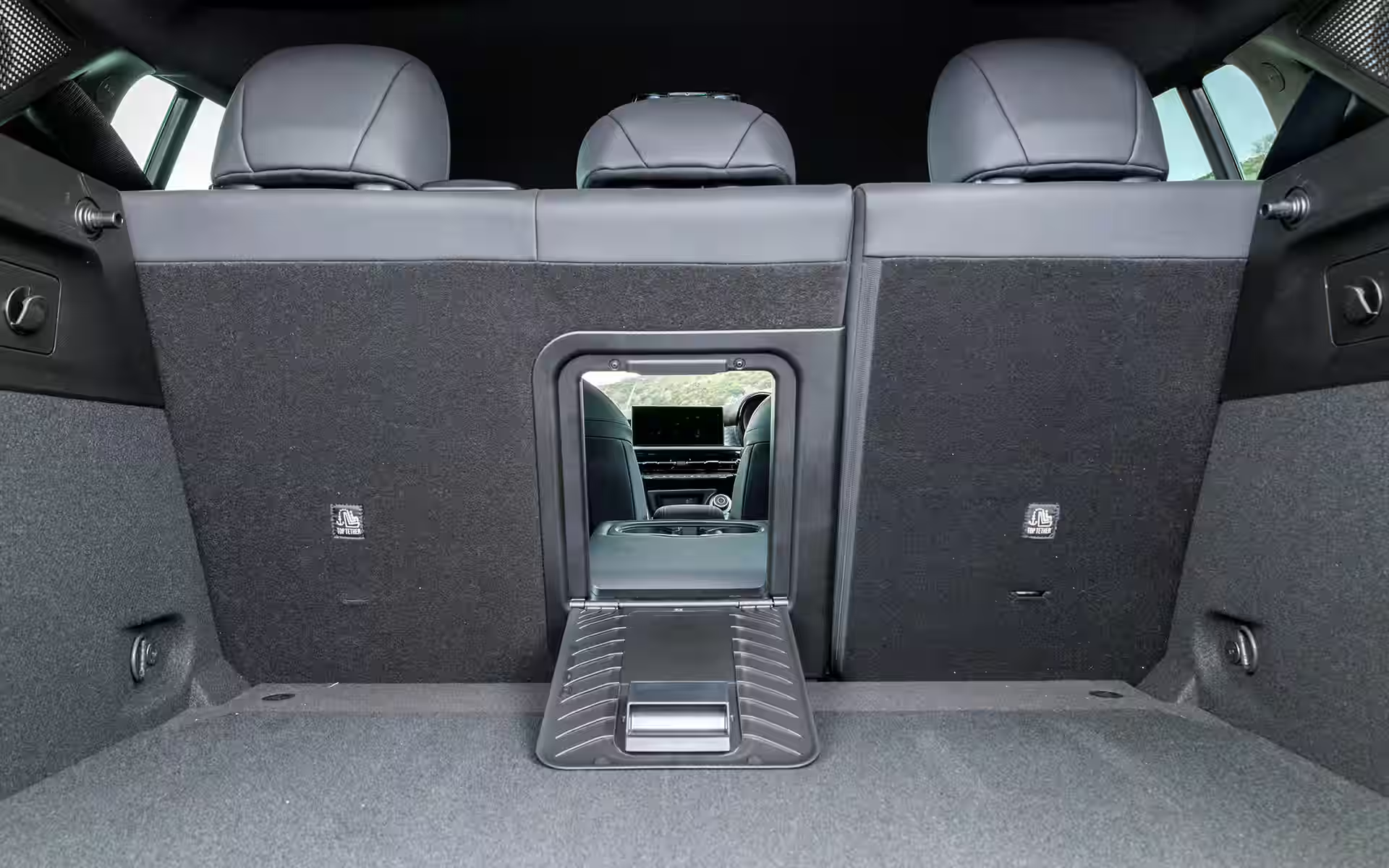
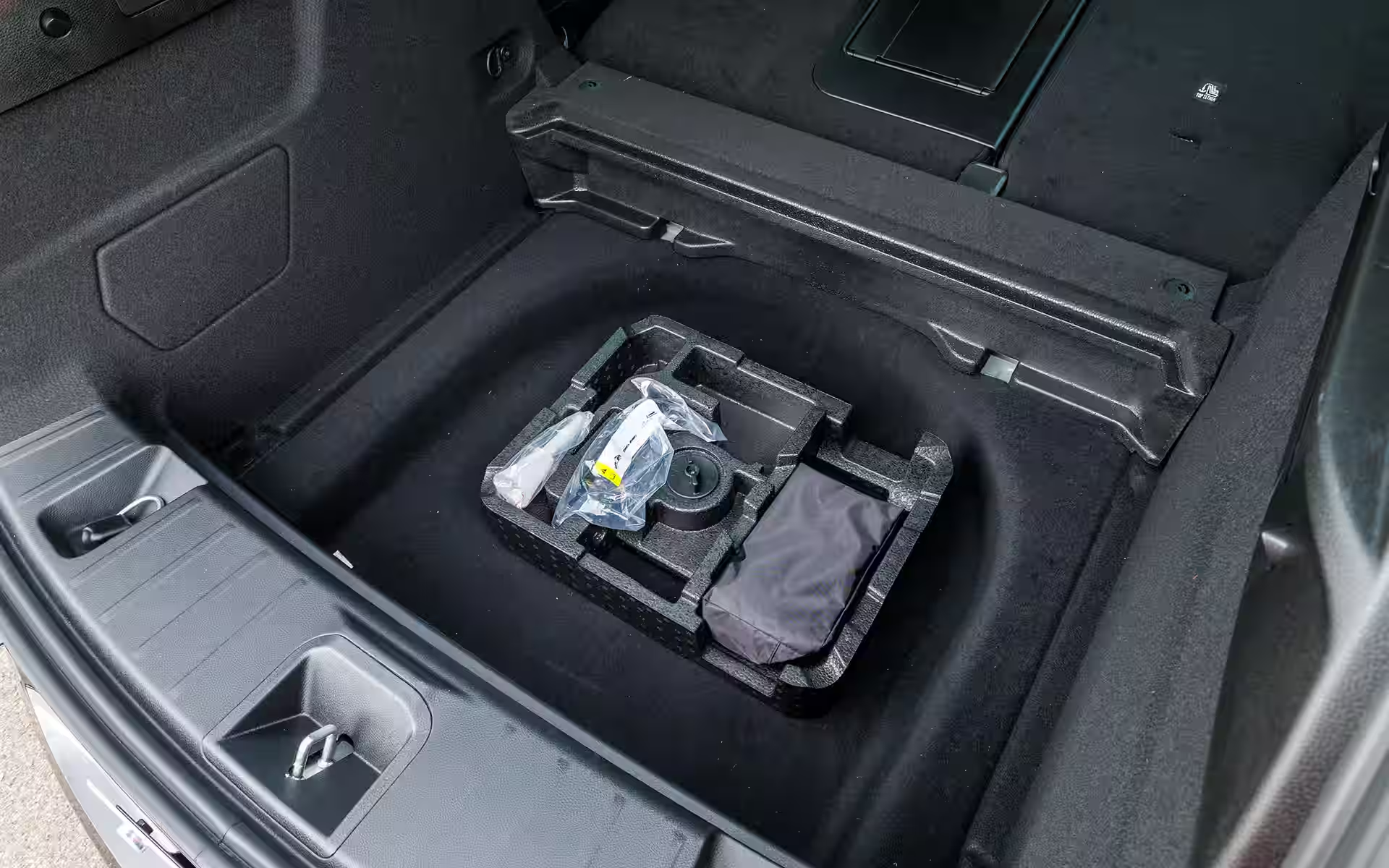
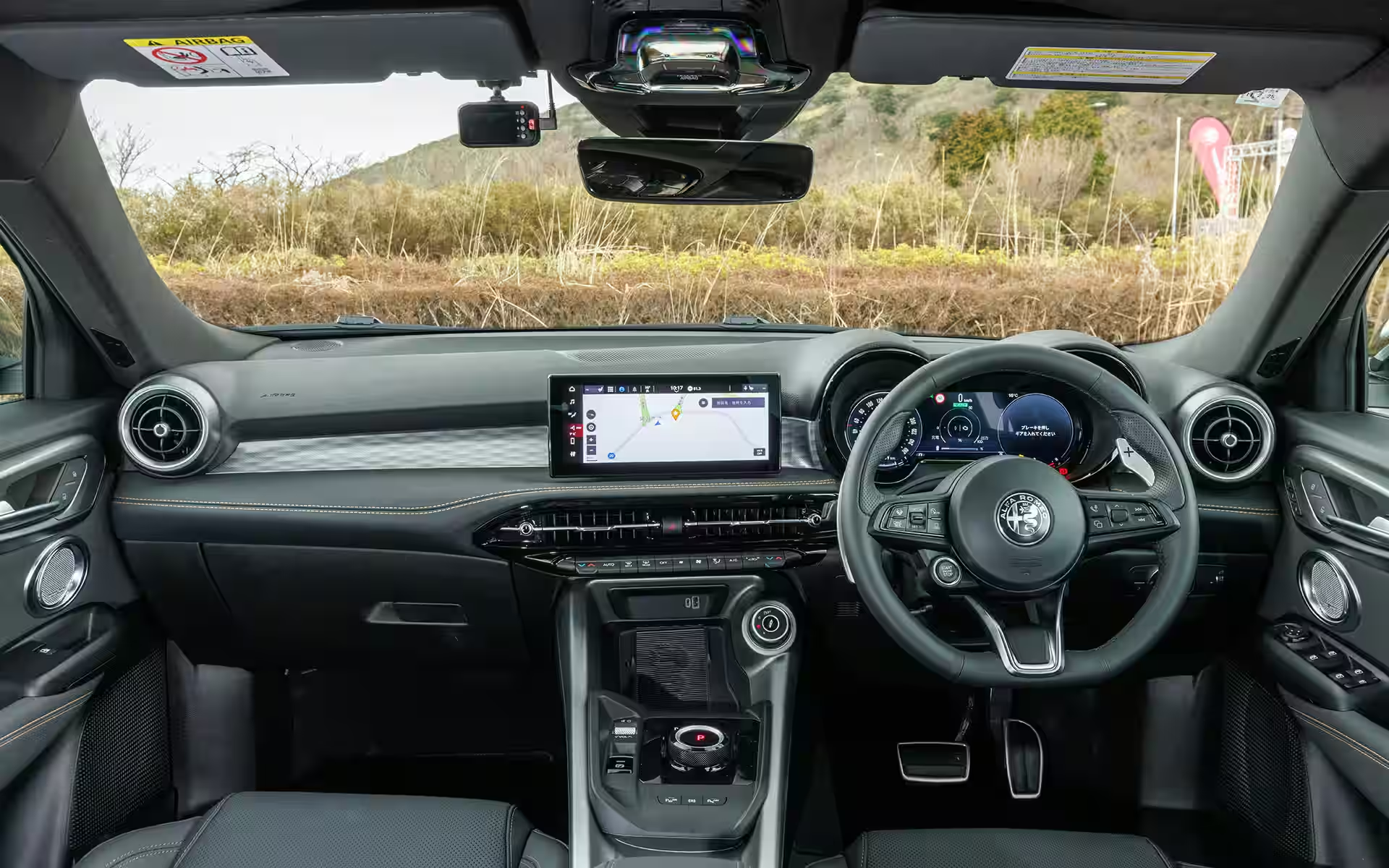
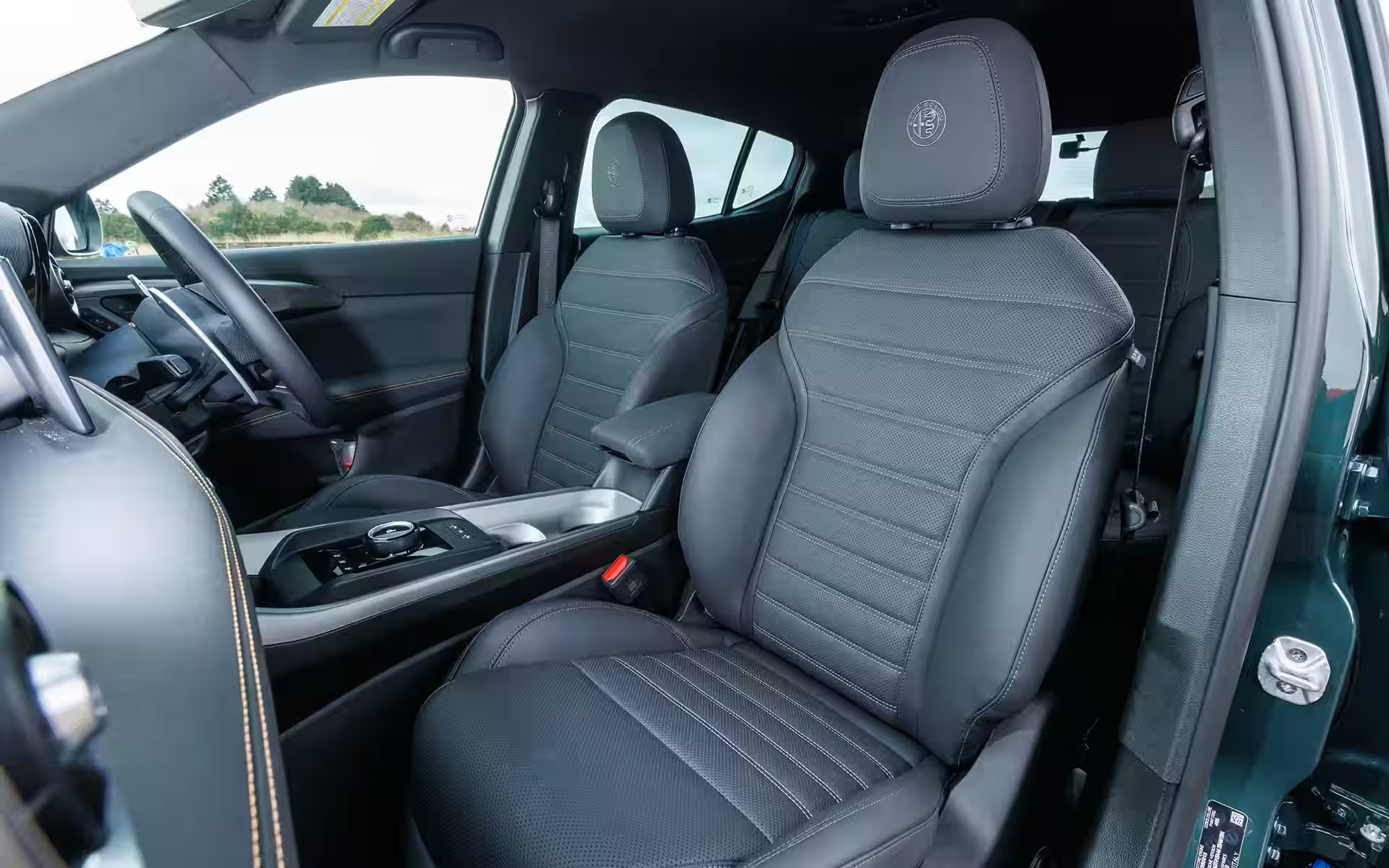
Inside, the Tonale continues to lean on the driver-first layout that has become central to Alfa Romeo’s cabin identity. The source drive car uses black leather trim, while certain body colors now allow a red upholstery option. The rear bench splits 60:40, and the luggage area offers 500 liters, which places it in a useful zone for family duty and weekend luggage without bloating the exterior proportions. The practical details matter because this car is not a niche coupe-SUV; it is a premium compact utility vehicle that has to carry people, bags, and the occasional long-distance road trip.
The market context is just as important. The plug-in hybrid has been dropped in Japan, leaving the mild-hybrid lineup to carry the range, now renamed Ibrida. The base car is the Sprint, riding on 18-inch wheels, while the Veloce steps up to the more aggressive visual and dynamic package. That strategy simplifies the lineup, but it also makes the Tonale easier to understand in a market where Alfa needs clearer product messaging and better conversion from brand interest into actual showroom sales.
Why this facelift is strategically conservative, and why that is smart
The Tonale was already a strong base car, so Alfa Romeo has avoided the trap of over-editing a good package. This is especially sensible given the brand’s broader sales recovery and the fact that the Tonale sits as one of the company’s more important volume models, second only to the smaller Junior in some markets. Rather than chase a headline-grabbing power increase, Alfa refined the bodywork, improved cooling, adjusted the software, and made the driving experience feel more polished. That is a serious engineering choice, not a cosmetic one.
It also hints at a product lifecycle with limited time left on the current platform. The likely move to STLA Medium in the next generation could bring a different architecture and potentially a smaller engine, possibly closer to the 1.2-liter direction already seen elsewhere in Stellantis. Against that backdrop, the current Tonale feels like the last, well-judged version of a platform that was already strong enough to deserve careful tuning rather than radical surgery. For buyers who value the way an Alfa drives more than the number of new badges on the tailgate, this facelift is exactly the kind of update that earns respect, not hype.
Verdict from the road test: subtle on paper, persuasive on the road
The updated Alfa Romeo Tonale Ibrida Veloce is not the kind of facelift that wins a pub quiz on spec changes. It is the kind that wins a long drive because the details add up: a cleaner nose, smarter airflow, smoother low-speed drivability, a 13.6:1 steering ratio that keeps the car alert, and chassis tuning that lets the suspension feel more settled when the road opens up. The numbers remain grounded—160 PS, 240 Nm, 8.5 seconds to 100 km/h, 500 liters of cargo space—but the experience feels more premium than the stats alone suggest. In a segment crowded with competent crossovers, that is exactly how an Alfa Romeo should make its case.