
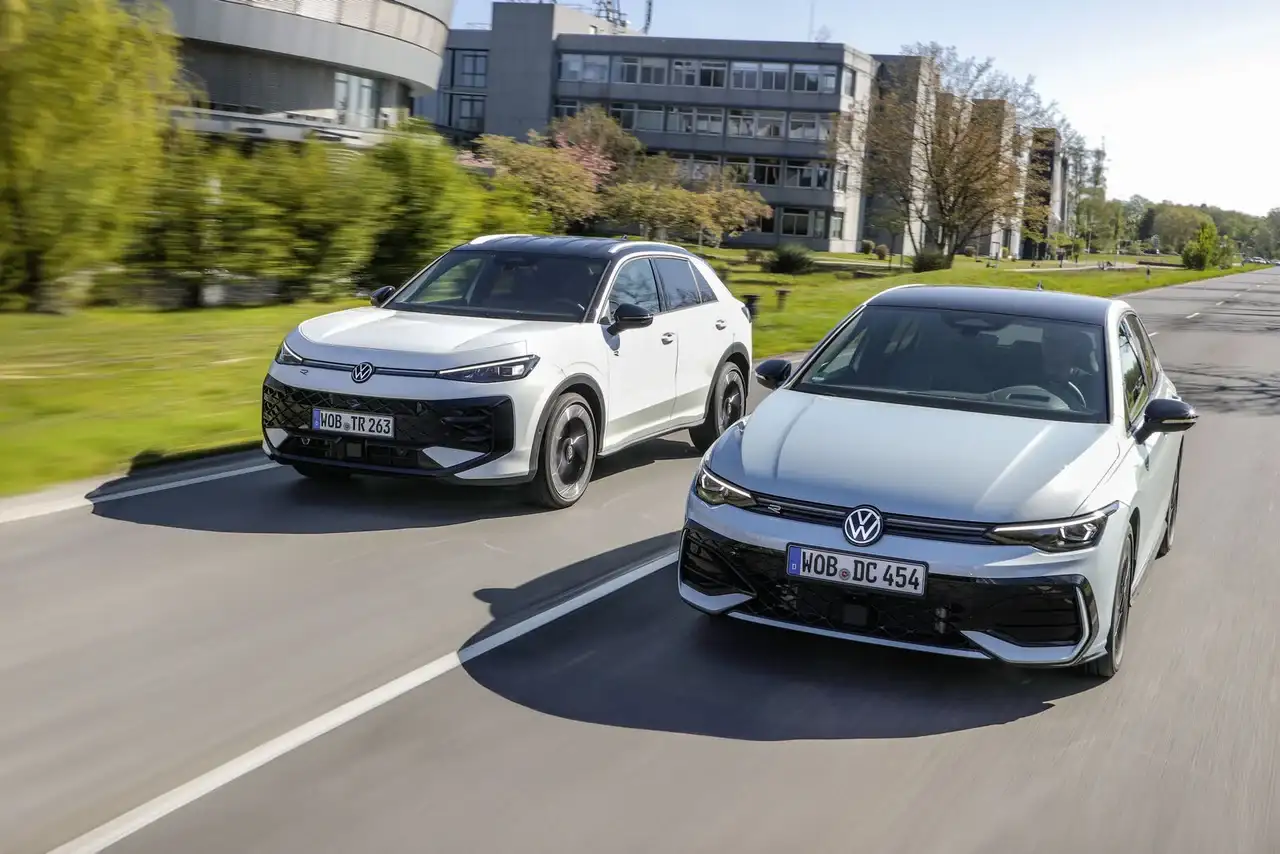
Volkswagen fills the gap the market kept ignoring
Volkswagen’s new Golf and T-Roc full hybrids are scheduled to go on sale in Q4 2026, and the significance goes beyond a simple powertrain update. The brand is positioning these models between its eTSI mild-hybrid lineup and its plug-in hybrid offerings, giving mainstream buyers a cleaner step-up in efficiency without the cost or charging discipline of a PHEV. That matters in Europe, where compact crossovers and hatchbacks still live or die by total ownership cost.
| Key data | Specification |
|---|---|
| Launch window | Q4 2026 |
| Engine | 1.5 TSI evo2 turbocharged gasoline |
| Battery | 1.6 kWh lithium-ion |
| Drive layout | Front-wheel drive |
| Operating modes | Electric drive, series drive, parallel drive |
| Parallel drive activation | From 60 km/h (37 mph) |
The hardware is more sophisticated than the badge suggests
The hybrid module is the real engineering story. Volkswagen says it combines a traction motor, a second electric motor functioning as a generator, a differential, and an electronically controlled multi-plate clutch that can connect or disconnect the engine from the electric system. That architecture gives the car the flexibility to move between electric-only operation, engine-assisted battery charging, and combined propulsion without the driver needing to manage anything manually.
For context, this places the new Golf and T-Roc closer to the technical logic seen in full hybrids than in conventional 48V systems. It also explains why VW is using a dedicated 1.6 kWh battery rather than trying to stretch a mild-hybrid setup into a full hybrid role. The move is strategically similar in spirit to what other brands are doing with efficiency-first powertrains, including the electrified compression playbook seen in our recent coverage of the Nissan Rogue e-Power hybrid, although Volkswagen’s layout remains mechanically distinct.
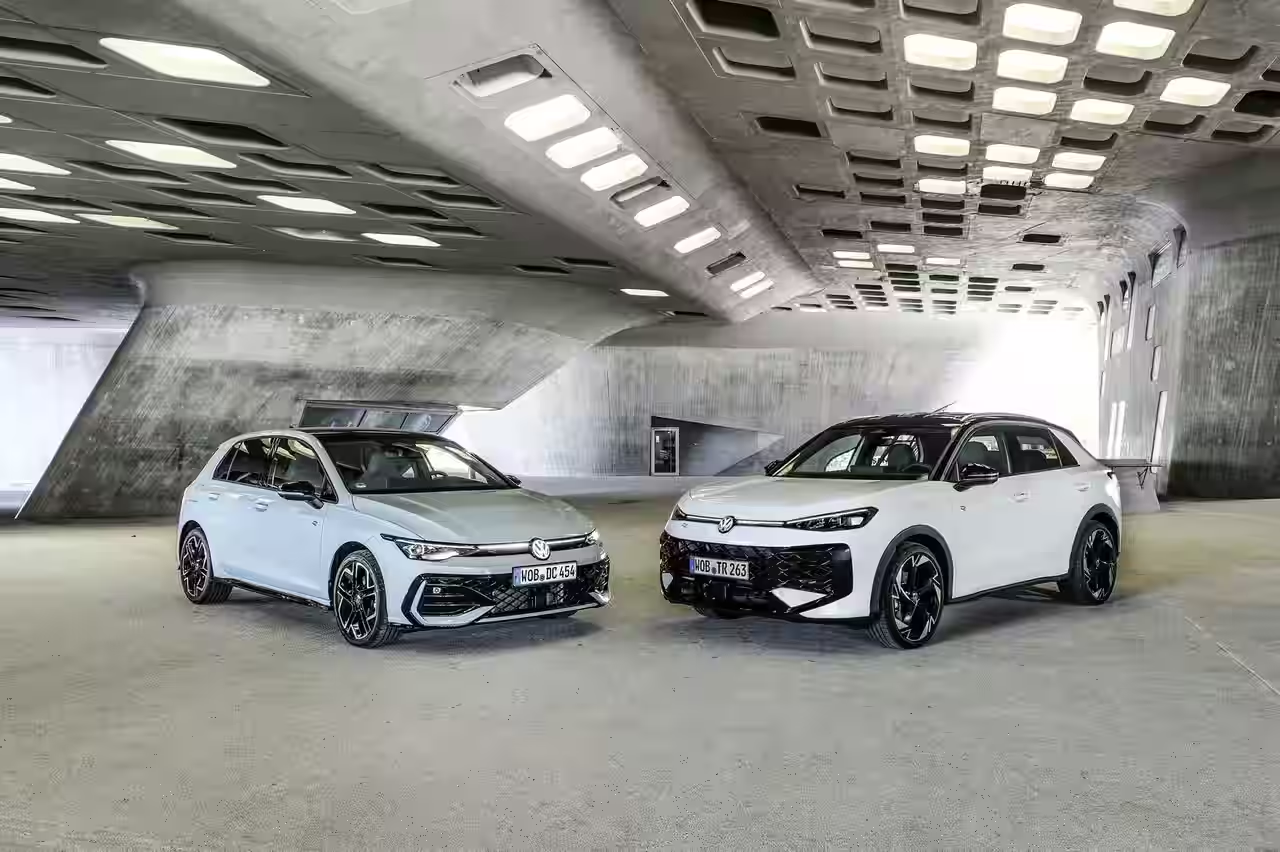
Why the three driving modes matter in the real world
Volkswagen has laid out three operating strategies: electric motor drive with the engine shut off, series drive where the engine charges the battery while the electric motor handles propulsion, and parallel drive where both engine and motor deliver torque to the wheels. The parallel mode activates from 60 km/h (37 mph), which is an important threshold because it implies VW is reserving the most direct combined driving style for faster, steadier conditions where the system can work with better efficiency.
Drive modes are also tuned to the car’s personality. In Eco, system output is capped at 70% and electric boost is softened. Comfort removes the output ceiling, while Sport accelerates mode switching for sharper response. That makes the new hybrid strategy feel less like an emissions compliance exercise and more like a carefully calibrated everyday powertrain.
What this means for Golf and T-Roc buyers
The practical appeal is straightforward. Full hybrids typically deliver more electric-assisted driving than mild hybrids, but they avoid the charging dependency and higher sticker price associated with plug-in hybrids. In a market where buyers still want compact size, predictable fueling, and genuine efficiency, this is the kind of powertrain that can broaden the audience for both nameplates.
It also helps Volkswagen keep the Golf technically relevant against newer rivals and gives the T-Roc a more efficient identity without forcing a full BEV transition too early. For enthusiasts tracking industry momentum, this is the sort of incremental but decisive shift that often proves more commercially important than a flashy concept reveal, even if the latter gets more attention, as with the Toyota Yaris Cross 2026 Hybrid.
FAQ
When will the Volkswagen Golf and T-Roc full hybrids go on sale?
Volkswagen says both models are scheduled for release in Q4 2026.
What engine does the new hybrid system use?
It uses a 1.5-liter TSI evo2 turbocharged gasoline engine paired with a hybrid module and lithium-ion battery.
Is this a plug-in hybrid?
No. This is a full hybrid, designed to provide electric-assisted driving without external charging.
At what speed can the system use combined parallel drive?
Volkswagen says parallel drive becomes active from 60 km/h (37 mph).
What is the battery capacity?
The system uses a 1.6 kWh lithium-ion battery.