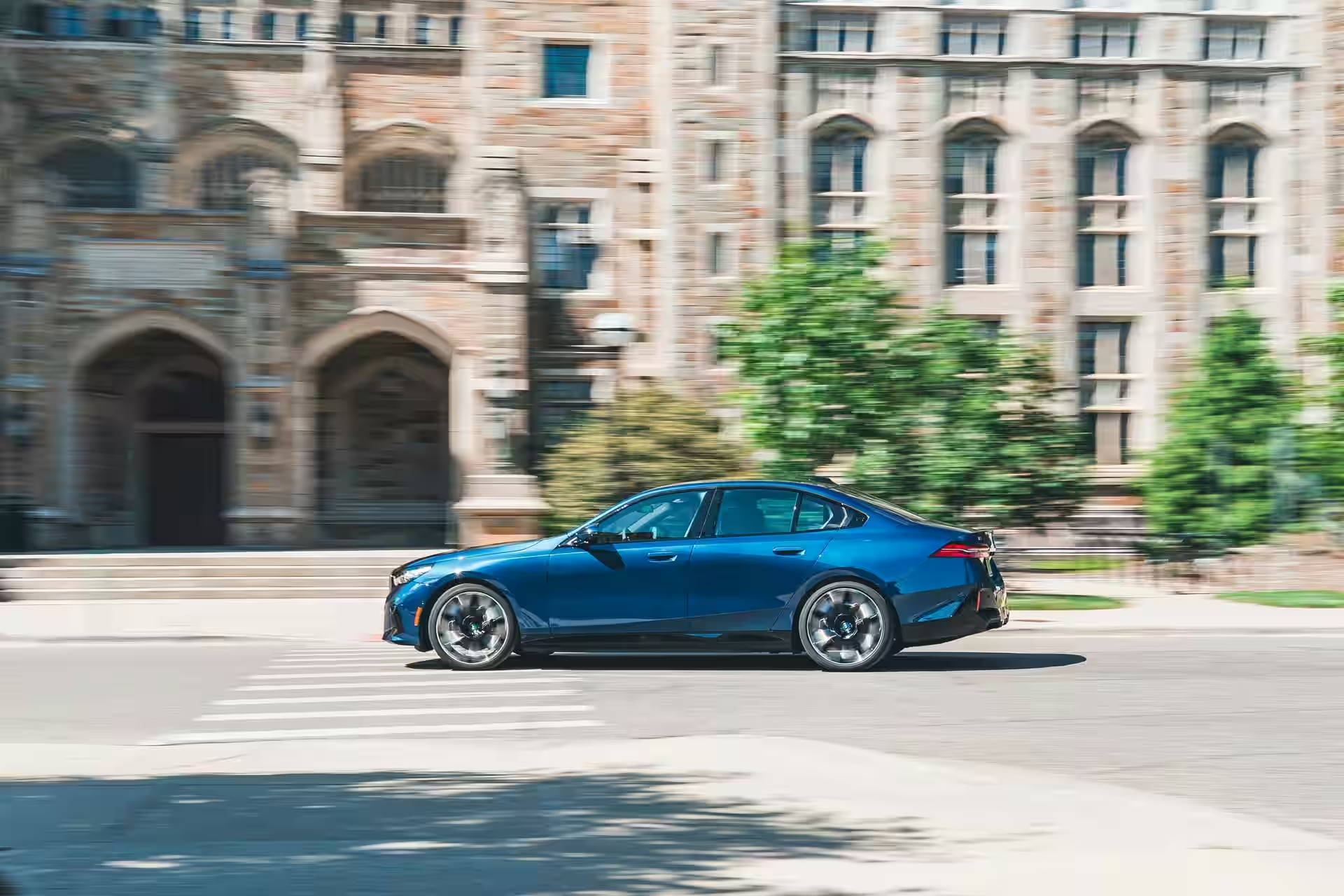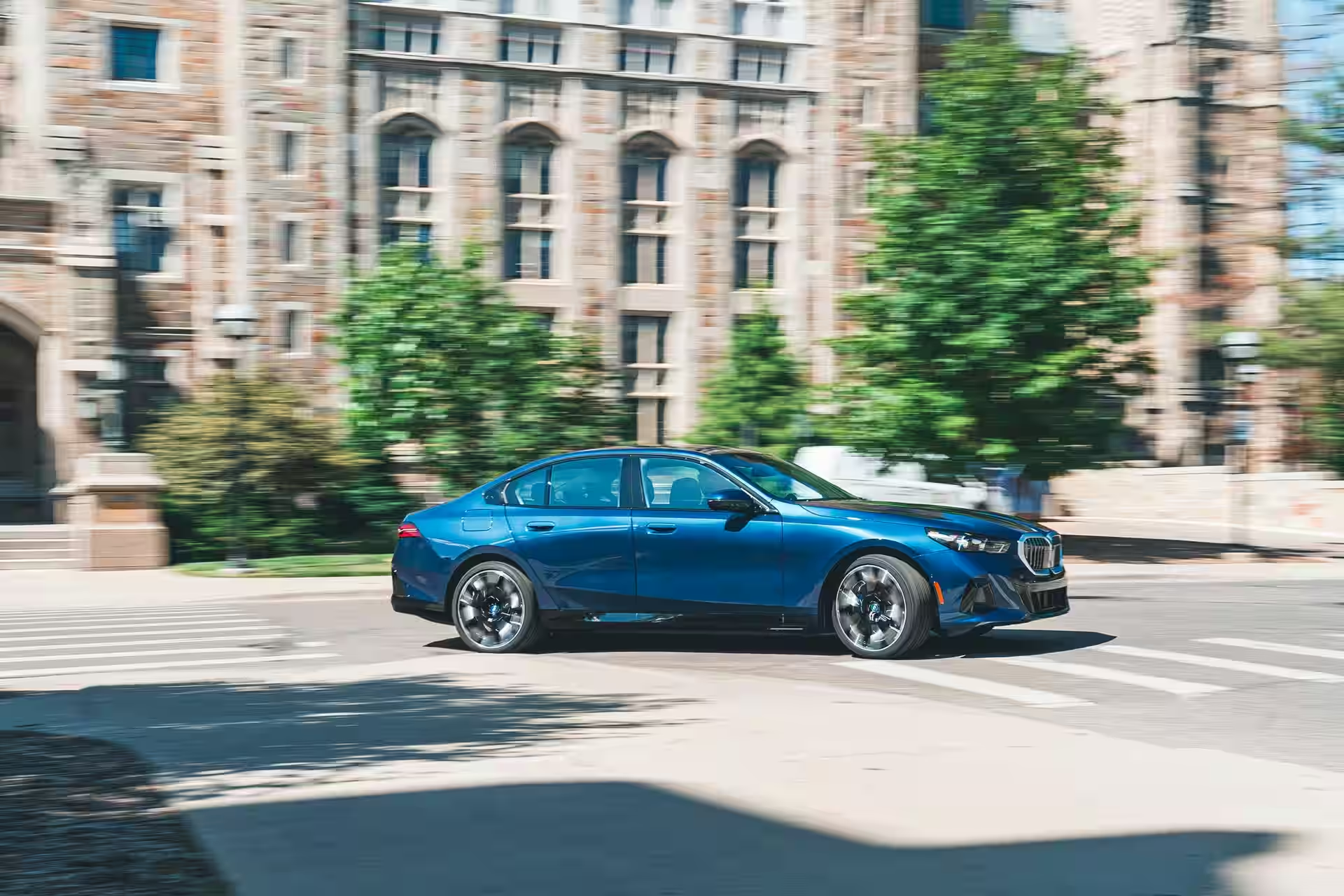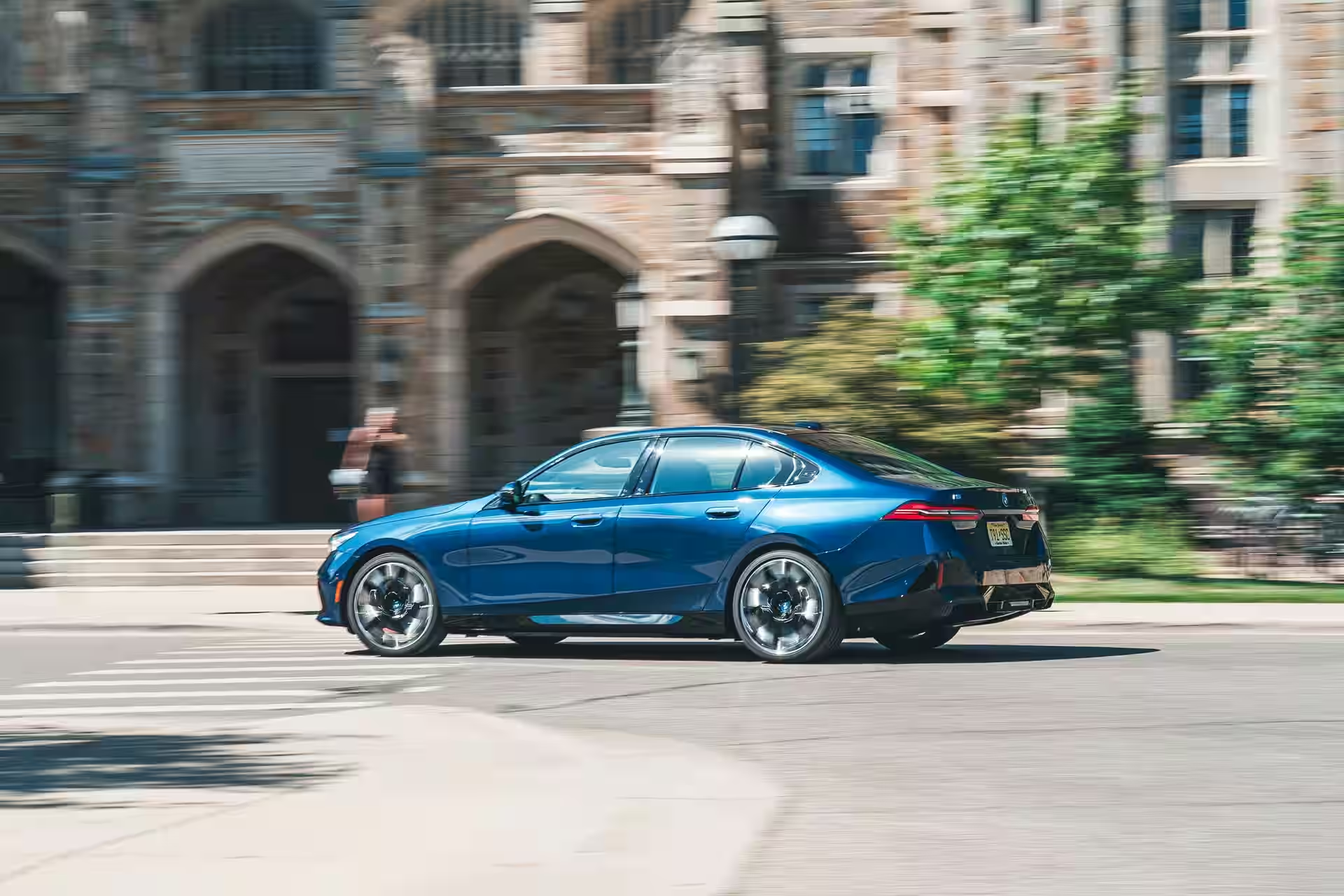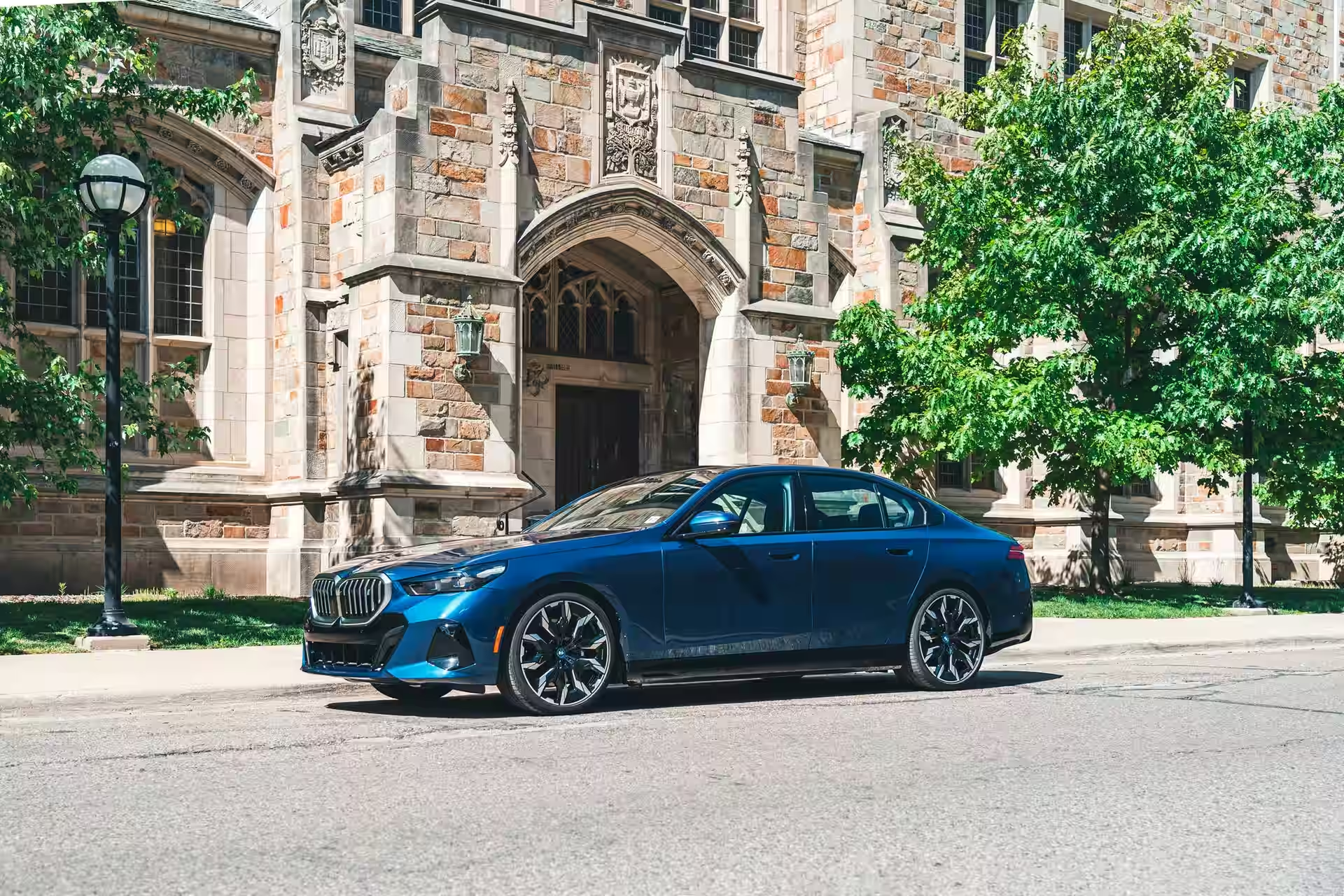
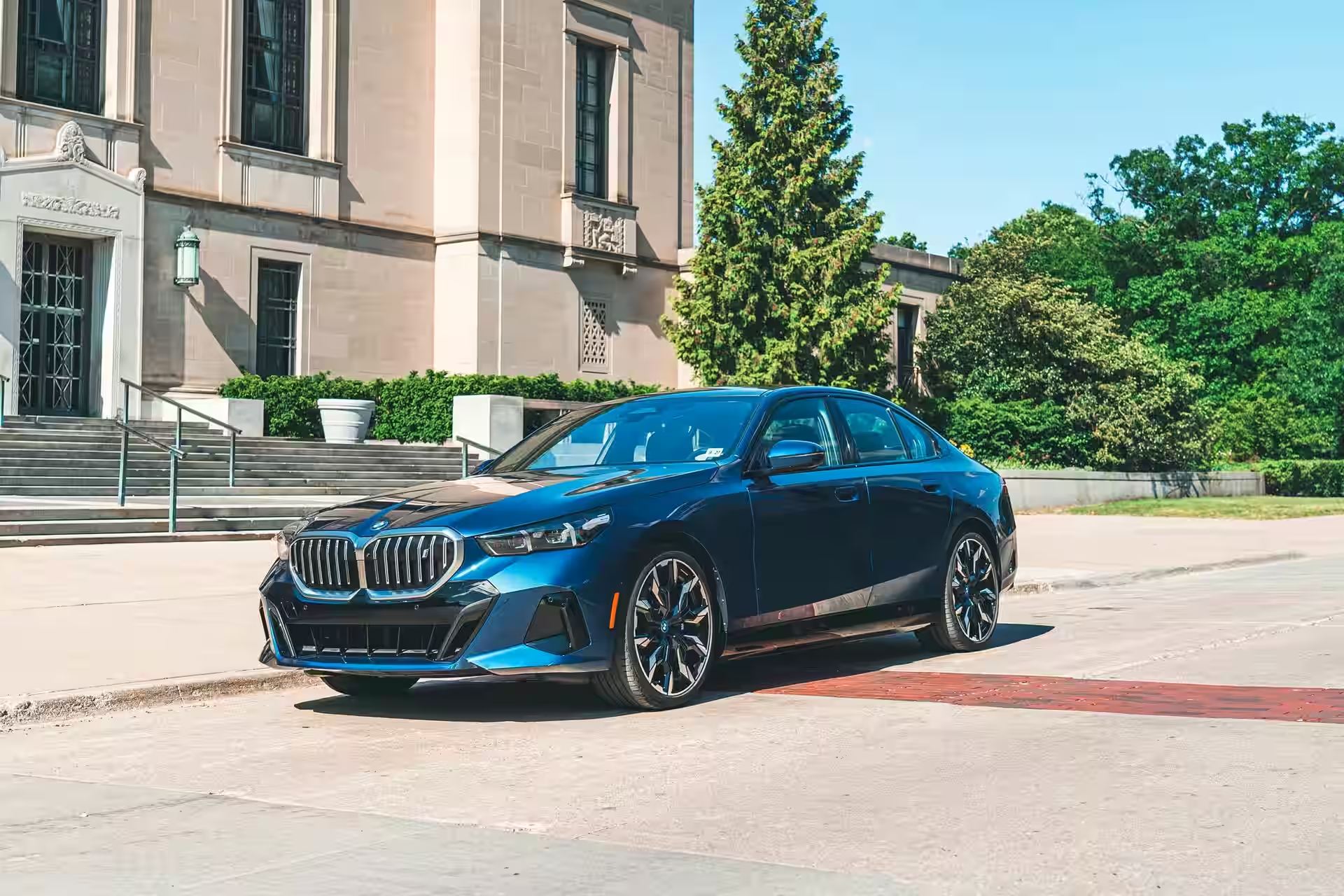
The 2027 BMW i5’s real message is not electrification — it is continuity
The 2027 BMW i5 arrives with a quiet but important update: BMW is moving to an NACS charge port for 2027, while the rest of the sedan remains mechanically familiar. That single detail tells you where BMW thinks the market is heading, because the i5 is still offered as eDrive40, xDrive40, and M60 xDrive, with outputs spanning 335 hp, 389 hp, and 593 hp respectively. The range figures stay competitive rather than class-leading, at 310 miles for the eDrive40, 278 miles for the xDrive40, and 277 miles for the M60 xDrive, but the car’s real advantage is that it behaves like a 5 Series first and an EV second.
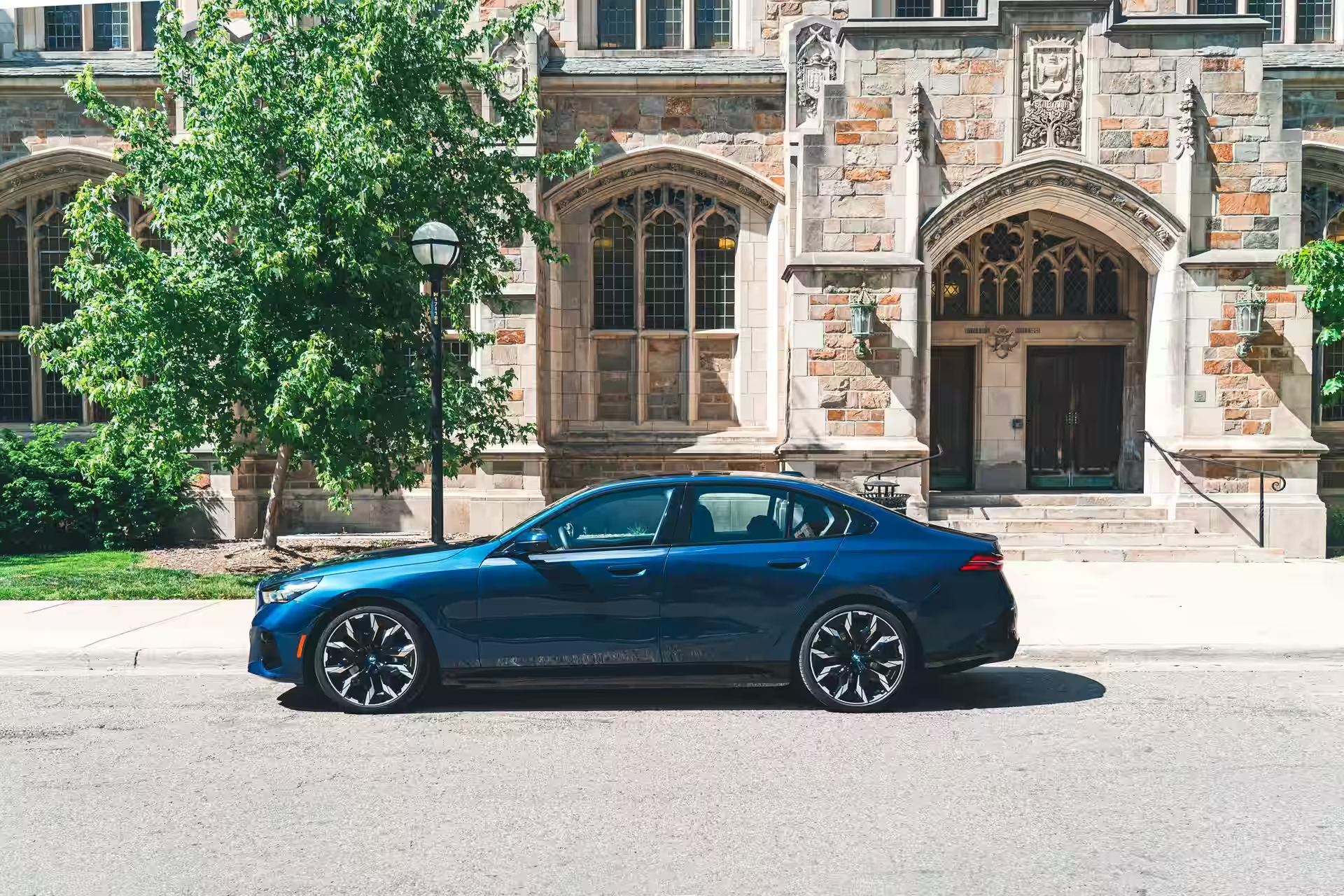
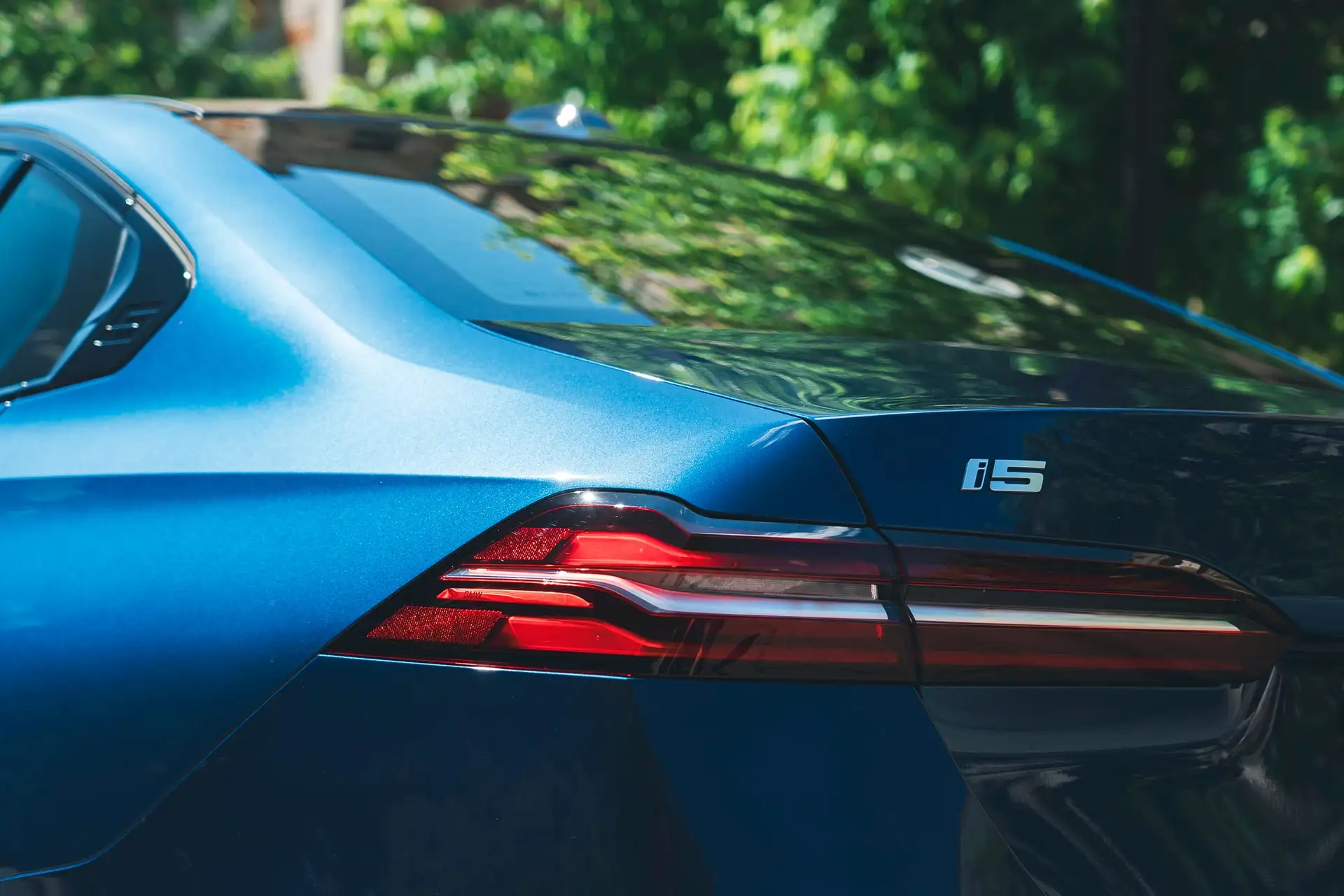
BMW has built the i5 to avoid the awkwardness that sometimes defines first-generation luxury EV sedans. It uses the same 117.9-inch wheelbase as the gasoline 5 Series, carries five seats, and still provides a 17-cubic-foot trunk. That means the packaging compromise is visible, but not fatal, and the sedan’s body dimensions — 199.2 inches long and 74.8 inches wide — keep it properly proportioned in a segment where styling often drifts too far toward gadgetry.
| Specification | BMW i5 eDrive40 | BMW i5 xDrive40 | BMW i5 M60 xDrive |
|---|---|---|---|
| Power | 335 hp (250 kW) | 389 hp (290 kW) | 593 hp (442 kW) |
| Torque | 317 lb-ft (430 Nm) | Not listed in source | 605 lb-ft (820 Nm) |
| Drivetrain | Rear-wheel drive | All-wheel drive | All-wheel drive |
| Battery | 84.3 kWh | 84.3 kWh | 81.2 kWh |
| EPA Range | 310 miles (499 km) | 278 miles (448 km) | 277 miles (446 km) |
| 0–60 mph | 5.1 sec | Not listed in source | 3.3 sec |
| Trunk | 17 cu ft | 17 cu ft | 17 cu ft |
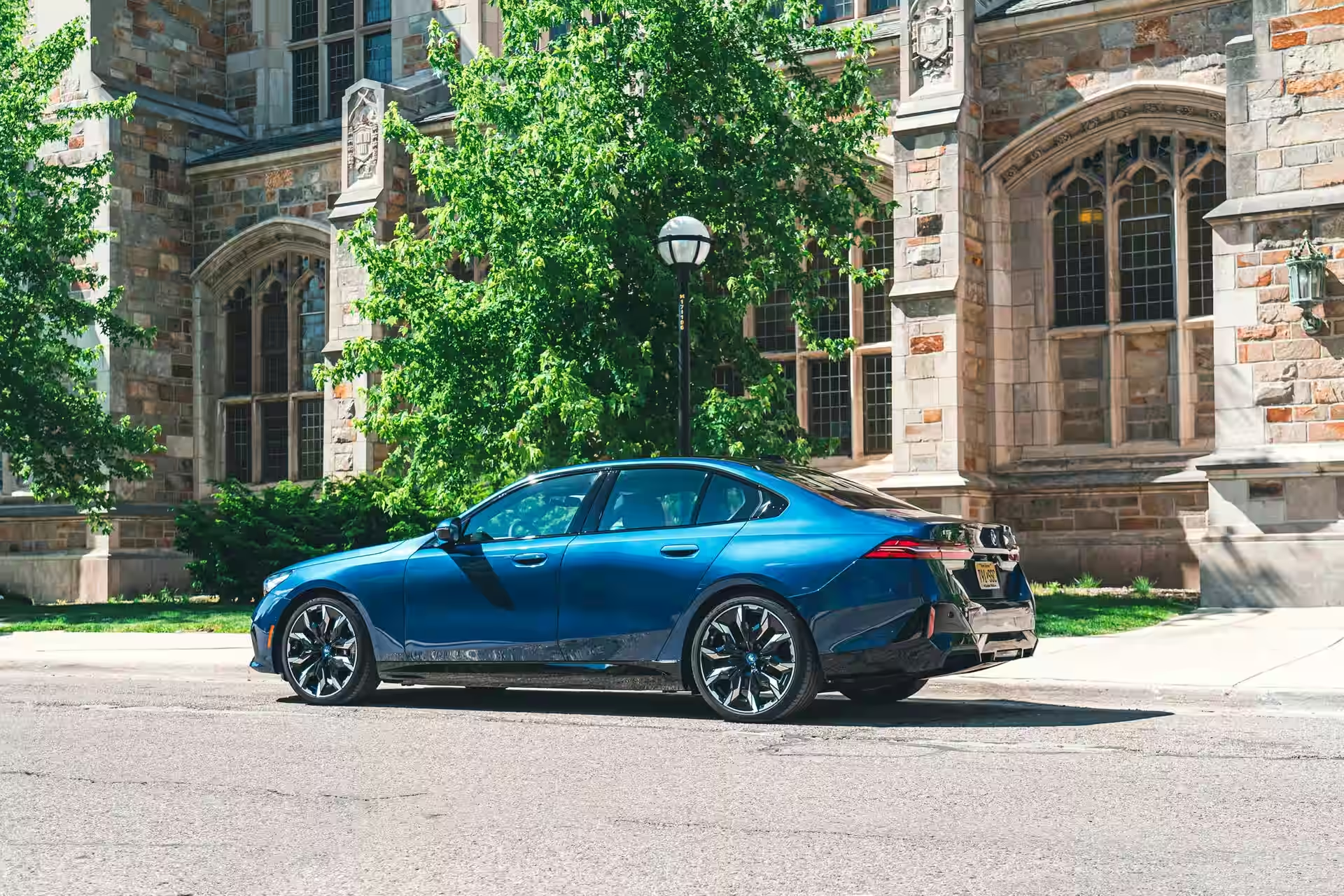
BMW’s NACS switch is the most consequential 2027 update
The move to NACS matters because BMW is aligning the i5 with the North American charging infrastructure that increasingly defines premium EV ownership. BMW says the battery can still accept DC fast charging at up to 205 kW, with a 10 to 80 percent top-up in about 30 minutes, and the onboard AC charger remains 11.0 kW. Those figures are not record-breaking, but they are credible, repeatable, and suitable for a luxury sedan that is meant to be used daily rather than advertised as a charging benchmark.
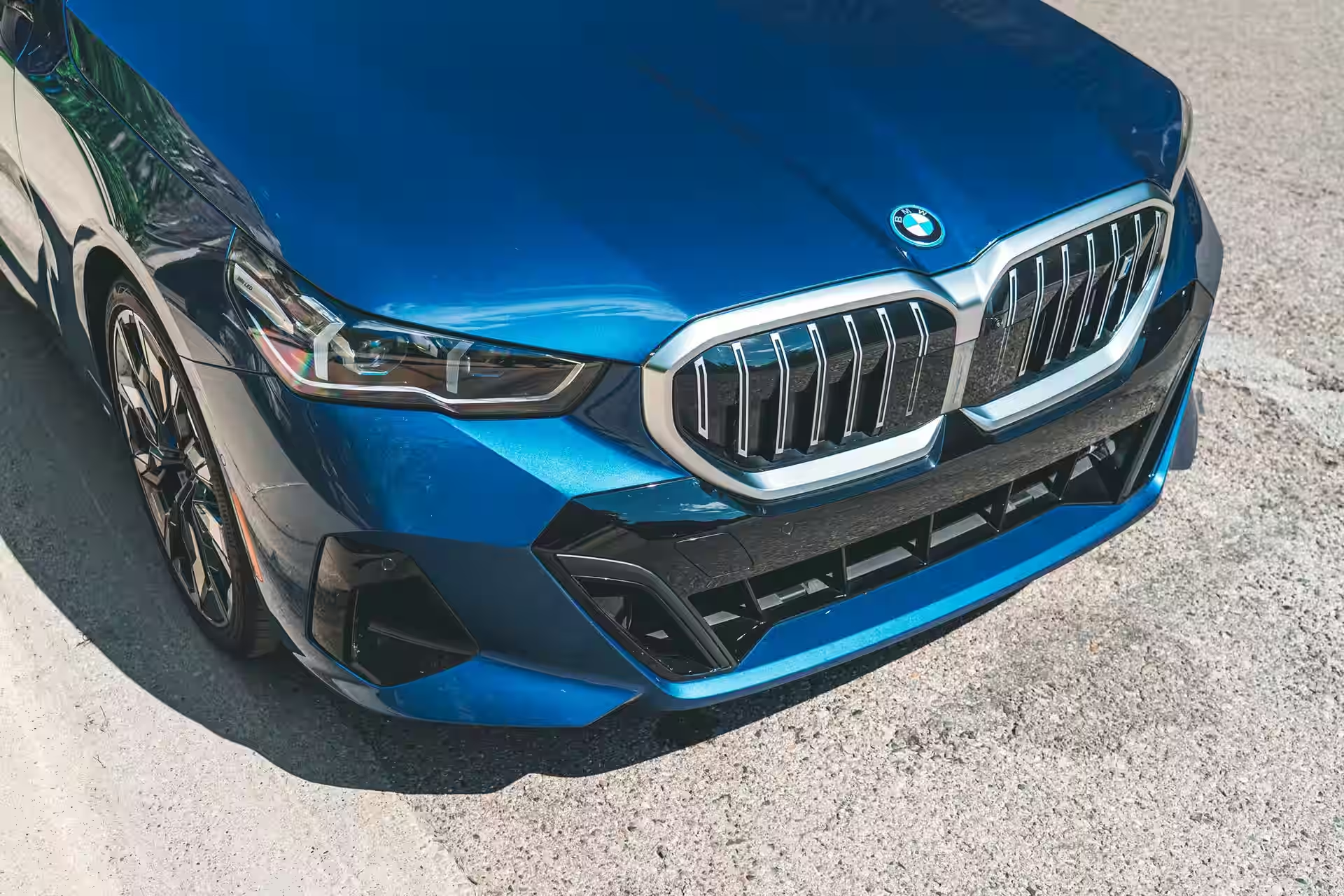
BMW also continues to include two years of charging sessions at Electrify America with new i5 purchases, which is a practical ownership benefit rather than a brochure flourish. The battery placement under the floor keeps the cabin spacious, and BMW’s engineers have avoided the high-riding stance that can make some EV sedans feel visually compromised. The result is a car that can sit next to a 540i without looking like an afterthought, which is still a rarity in this class.
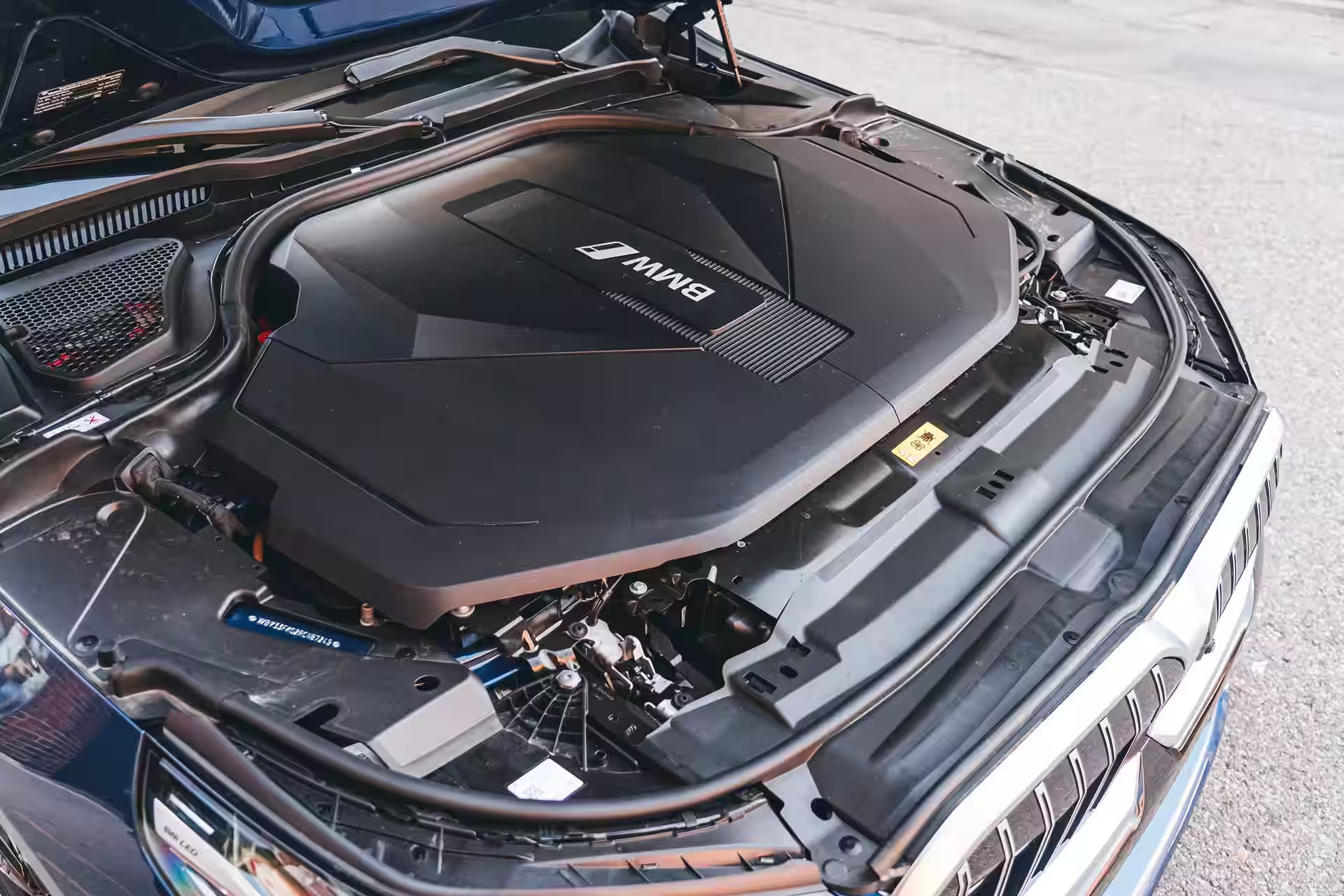
eDrive40 remains the most balanced i5 in the range
The rear-wheel-drive eDrive40 is the version most likely to win over traditional BMW buyers because it preserves the brand’s familiar steering and chassis character. With 335 hp and 317 lb-ft, it reaches 60 mph in 5.1 seconds and returns 96 MPGe combined under EPA testing, while Car and Driver recorded 73 MPGe in observed driving. Those are not headline-grabbing numbers, but they are competitive in a segment where refinement often matters more than outright speed.
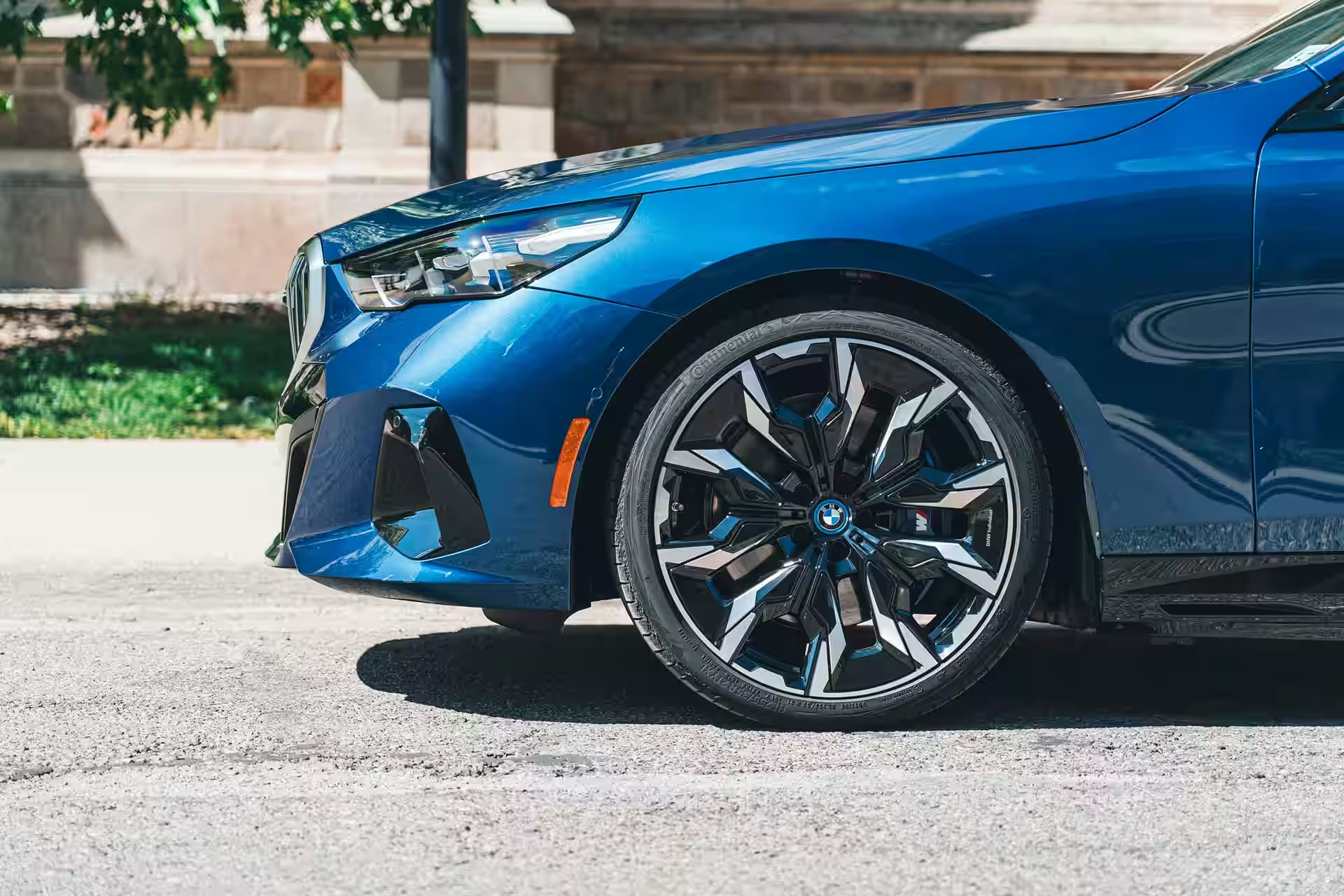
BMW’s own specs put the eDrive40 on 21-inch tires in some configurations, and that choice carries a measurable cost: the larger wheels reduce efficiency and range. Even so, the car’s 310-mile EPA claim remains a useful threshold because it clears the psychological barrier that many premium EV shoppers still use when comparing cars against gasoline expectations. The chassis is not trying to feel synthetic, and the 14.7-inch front and 14.6-inch rear vented discs provide the stopping hardware expected of a sedan with real autobahn credibility.
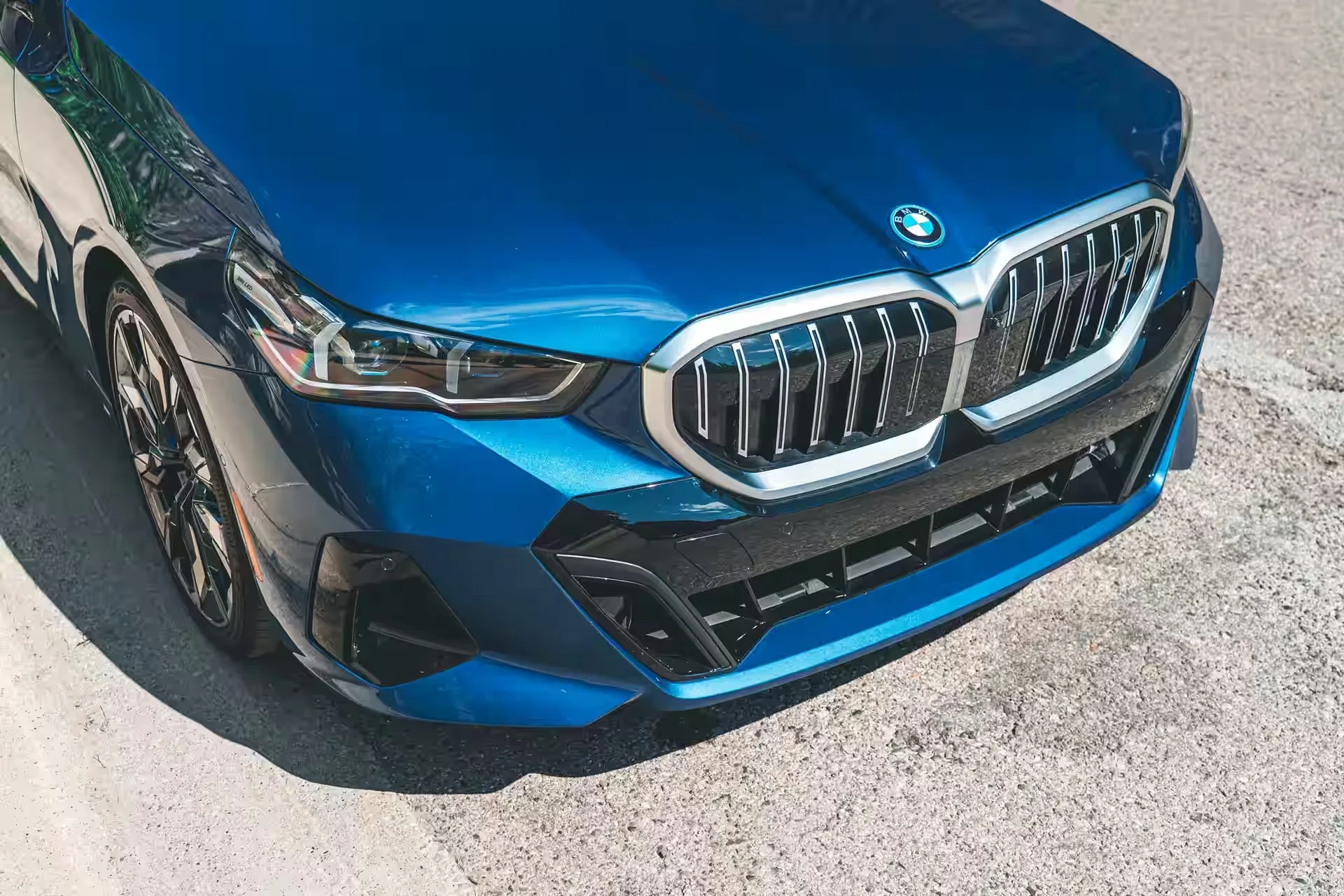
The M60 xDrive is the version that justifies the badge
If the eDrive40 is the rational choice, the M60 xDrive is the emotionally convincing one. BMW gives it 593 hp, 605 lb-ft, active anti-roll bars, rear-wheel steering, wider tires, and an M-tuned suspension. Those ingredients matter because the M60 must disguise 5,225 lb of curb weight, and the numbers suggest it does so with more authority than a typical luxury EV sedan. Car and Driver’s testing recorded 3.3 seconds to 60 mph, 11.5 seconds in the quarter-mile at 124 mph, and a 70–0 mph stopping distance of 158 feet.
The M60 also gets the premium content that makes the price easier to defend: an adaptive suspension, blacked-out exterior accents, a lip spoiler, and a 17-speaker Bowers & Wilkins audio system. In BMW terms, it is the car that restores the old hierarchy where the expensive version is not just quicker, but materially more resolved. The i5 M60 is also the model most likely to convince buyers who would otherwise look at performance-luxury alternatives such as the Cadillac CT5-V Blackwing F1 Collector Series Gains 685 HP, even though the execution philosophies are completely different.
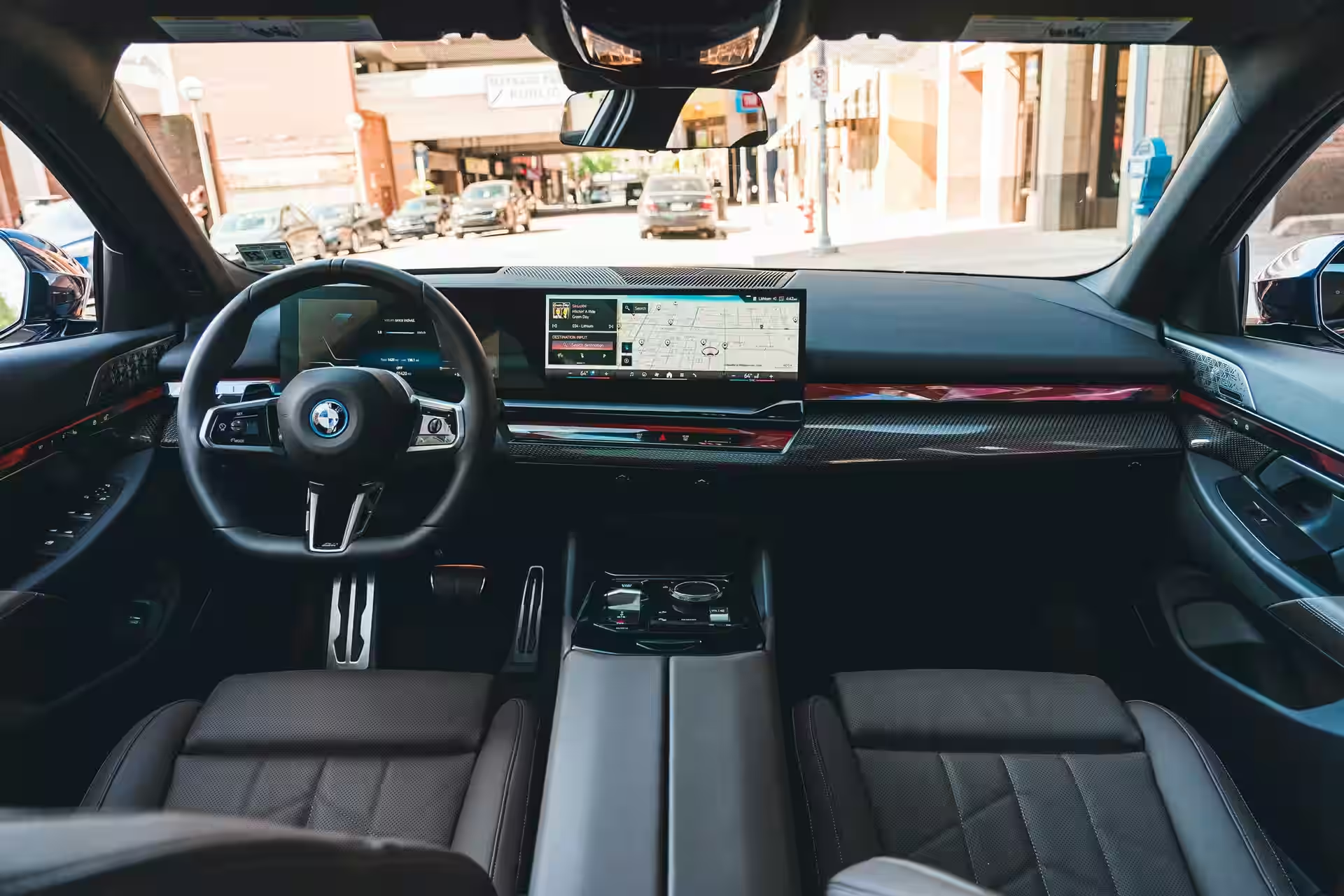
Interior execution keeps the i5 from feeling like a tech appliance
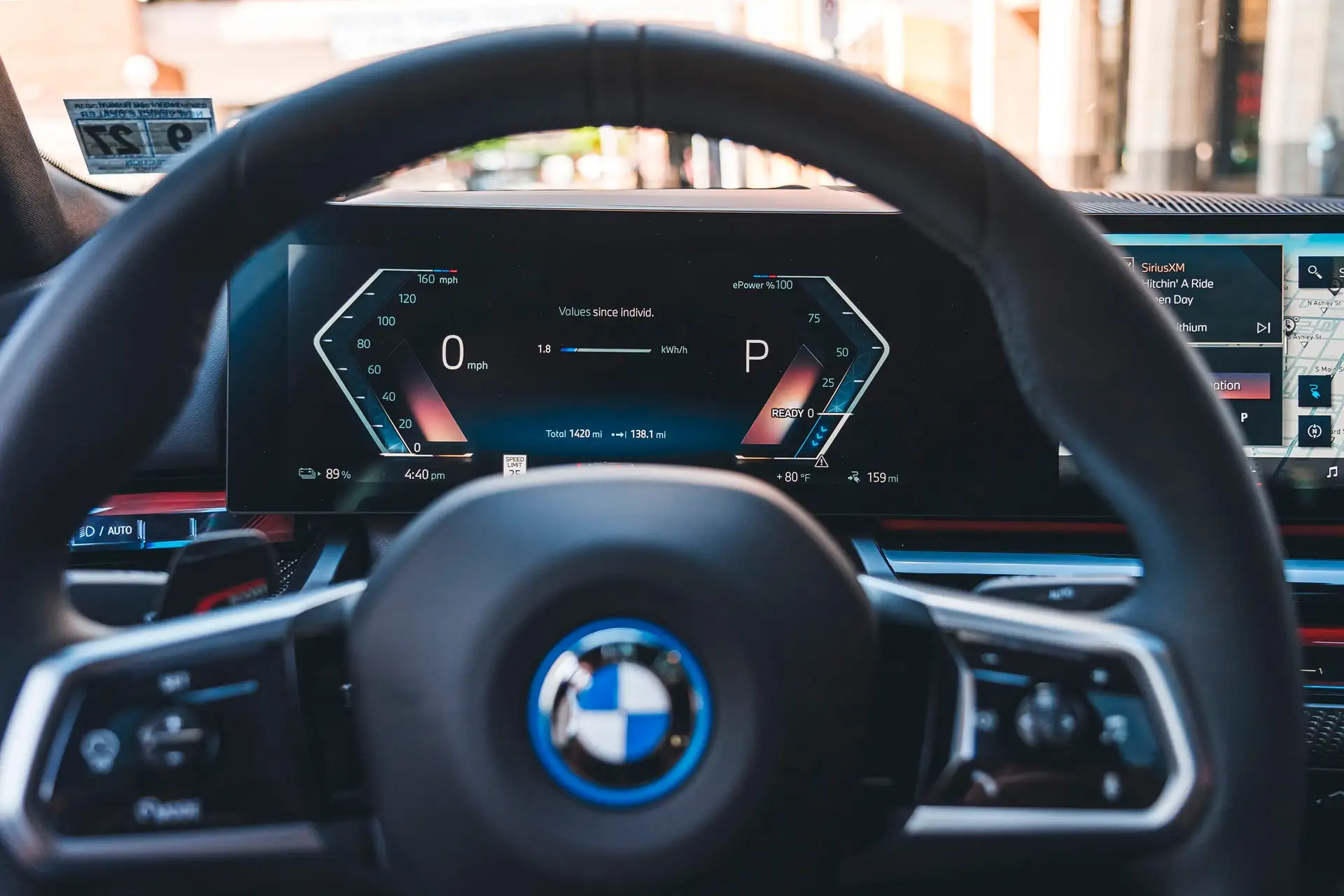
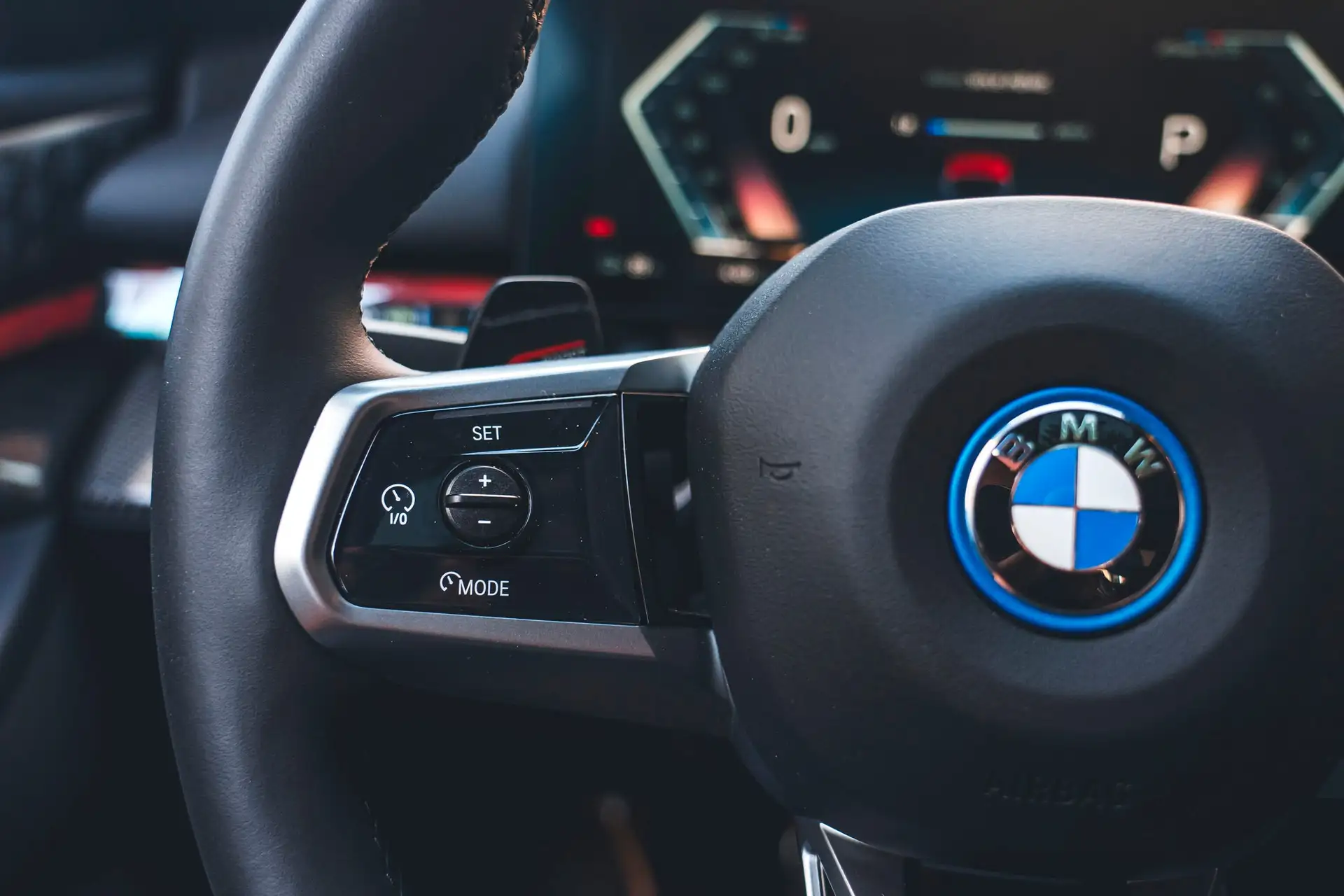
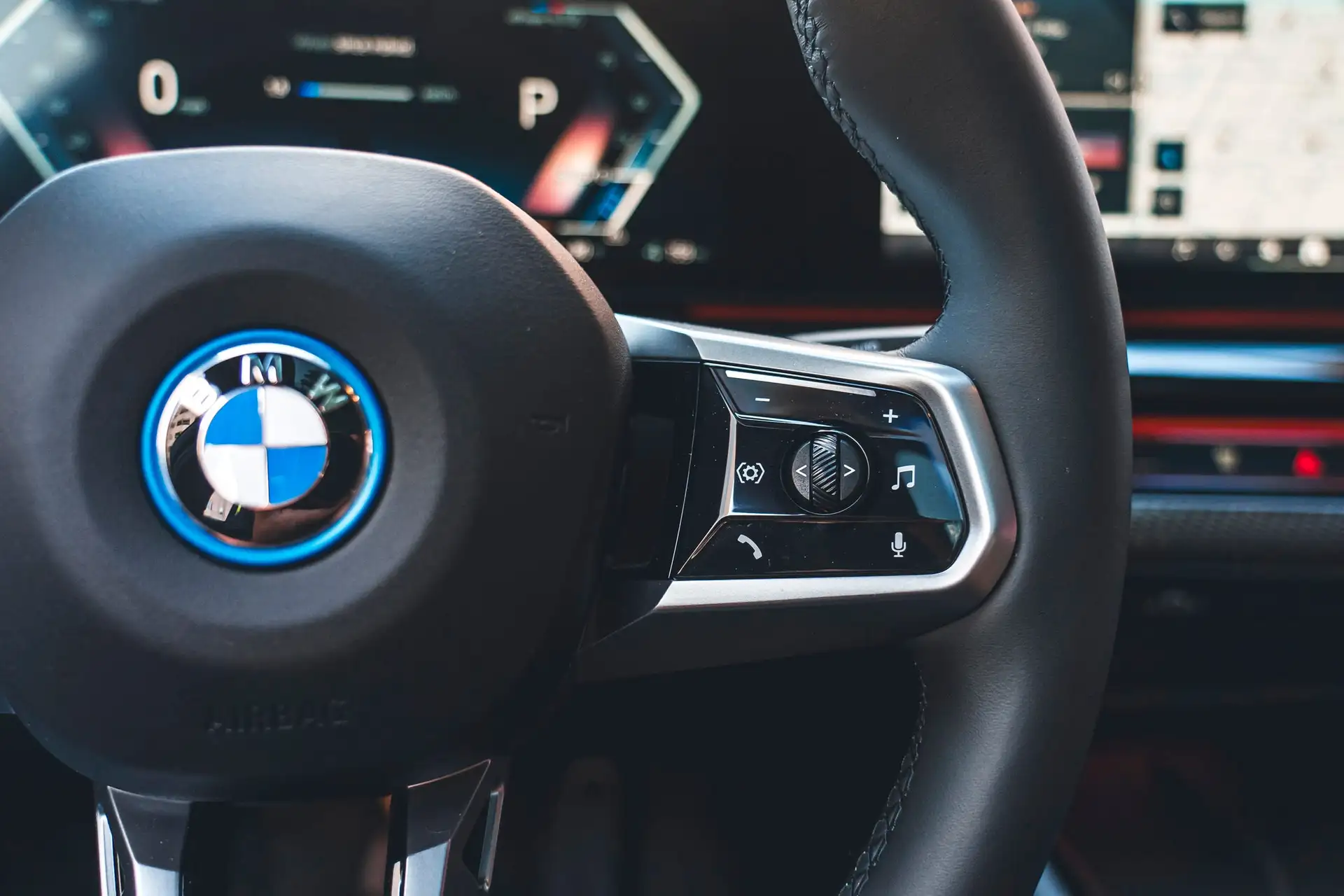
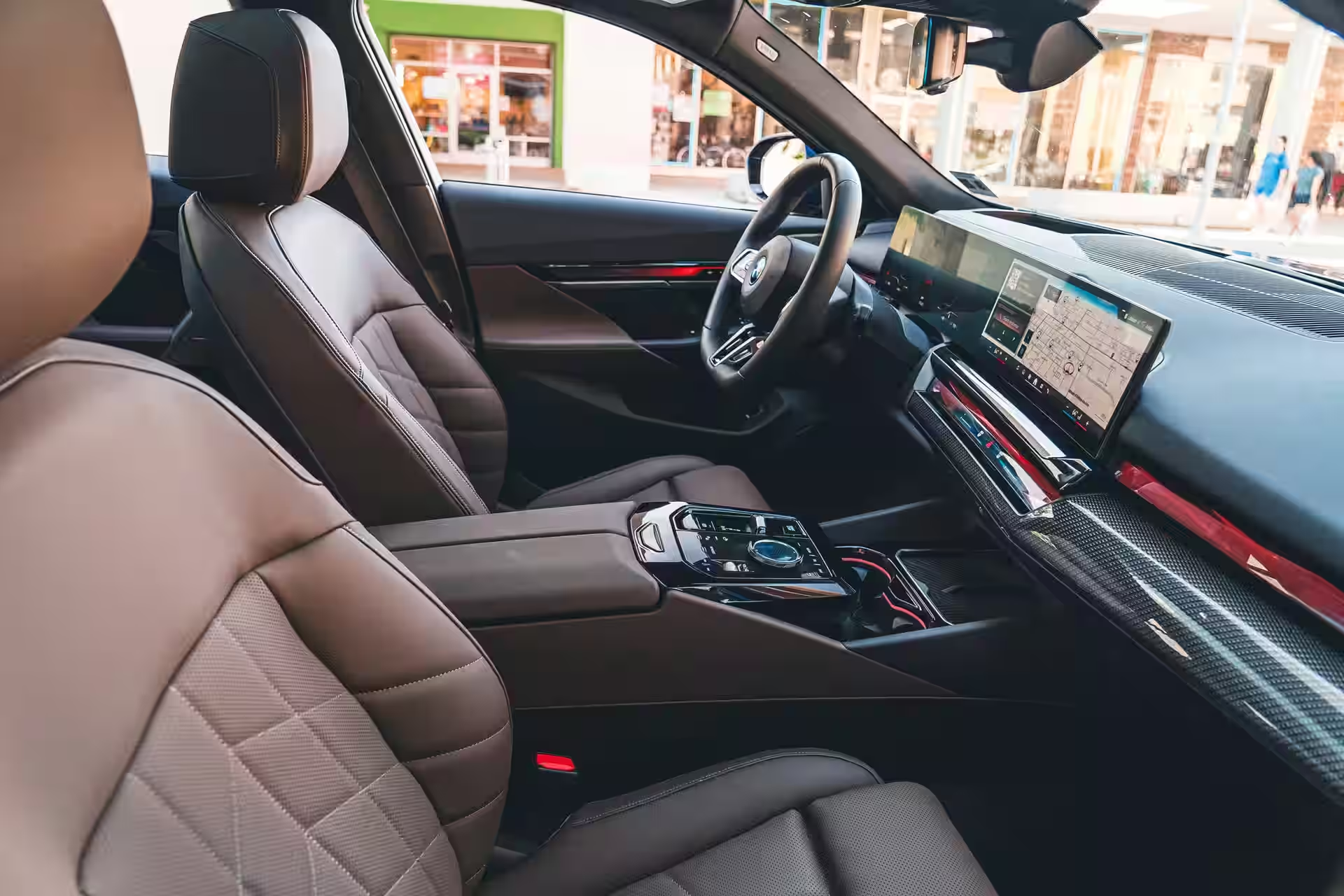
BMW wisely leaves the i5’s cabin very close to the gasoline 5 Series, and that conservatism pays off. The dashboard is dominated by a curved display housing a 12.3-inch digital instrument cluster and a 14.9-inch infotainment touchscreen, running BMW iDrive 8.5. Wireless Apple CarPlay and Android Auto are standard, as is in-dash navigation, a wireless charging pad, and onboard Wi-Fi. The system still has a learning curve, but BMW has at least made the interface updateable over the air, which gives the car a longer software runway than many rivals.
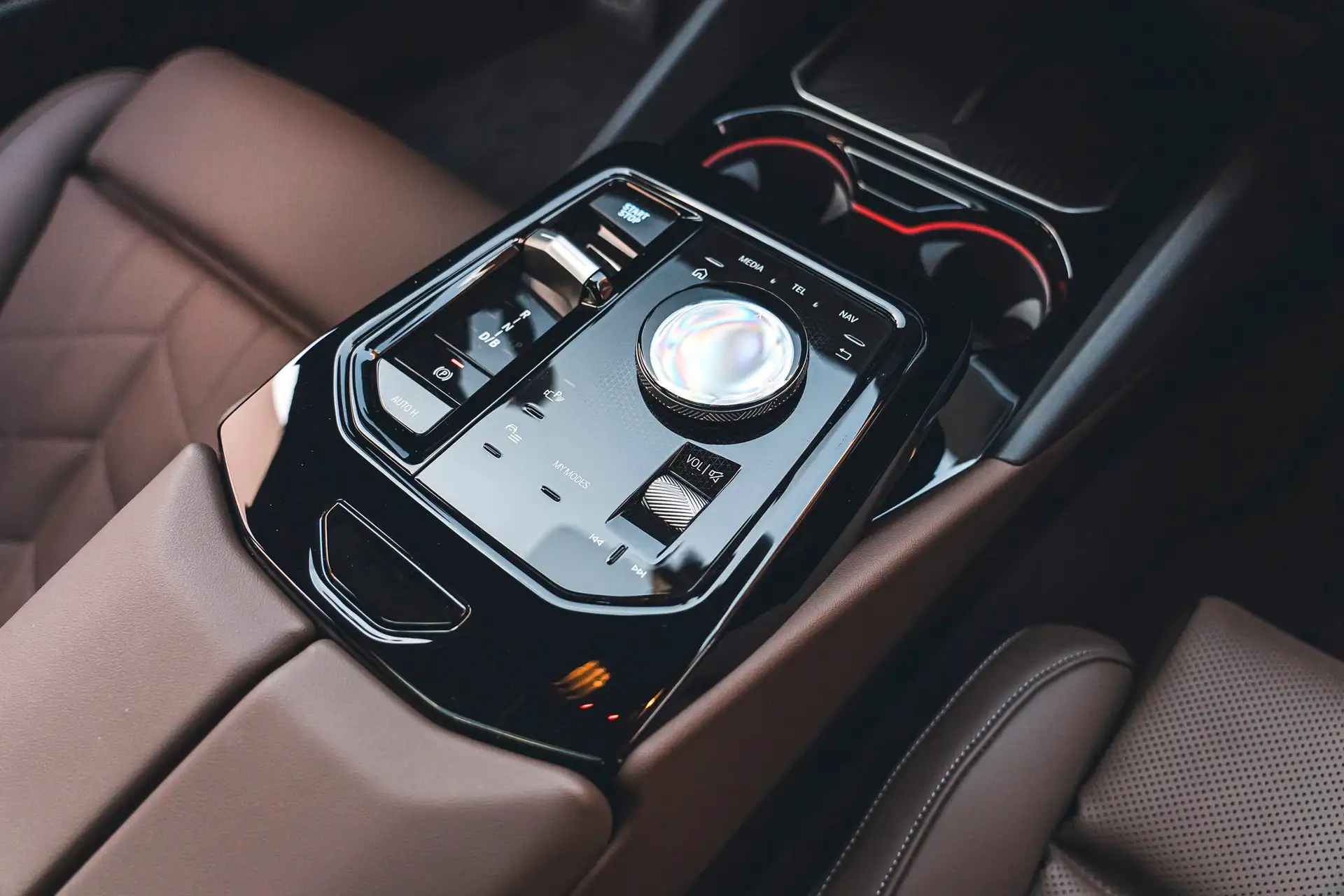
The cabin materials also matter. Leather remains available, but BMW offers Veganza faux leather as an alternative, and the glass iDrive controls remain an elegant touch rather than a gimmick. Heated and ventilated front seats with massage are optional on the eDrive40 and standard on the M60 xDrive, which is exactly how a premium EV sedan should differentiate its trims. Rear passengers get dedicated climate controls, but the center position is compromised by a raised seat and floor tunnel hump, confirming that “five-seat” remains more of a brochure claim than a full-time reality.
Cargo space and real-world utility stay acceptably normal
The i5’s 17-cubic-foot trunk is slightly smaller than the gasoline 5 Series, but BMW has avoided the worst packaging penalties that often accompany EV conversion. Car and Driver fit six carry-on suitcases in the trunk and 20 total with the rear seats folded, which is enough to make the i5 viable as a business sedan and family road-tripper. The split-folding rear seatback uses a 40-20-40 layout, so the car still has useful flexibility for long objects without giving up all rear seating.
This is where BMW’s EV strategy becomes unusually coherent. The i5 does not ask buyers to accept a radically different ownership pattern, and it does not exaggerate its range or charging capabilities. Instead, it uses a familiar body style, a familiar cabin, and performance figures that split the difference between prestige and restraint. For shoppers comparing premium electrified sedans against EV newcomers and conventional luxury cars alike, that is a far more persuasive proposition than novelty for novelty’s sake.
Where the 2027 BMW i5 sits in the market
The i5’s biggest challenge is not competence; it is cross-shopping. BMW itself suggests that buyers might still prefer the 540i’s inline-six for a more classic 5 Series experience, and that is a fair point because the electric i5 is not trying to replicate combustion character. It is trying to preserve BMW steering feel, comfort, and rear-drive balance while removing the exhaust note and fuel stops. For many luxury buyers, that will be the smarter compromise.
The 2027 model year does not alter that basic equation. It simply makes the charging side of ownership more future-proof with NACS, while keeping the sedan’s strengths intact: 5 Series proportions, 593 hp M60 drama, 310-mile eDrive40 range, and an interior that feels expensive without becoming fragile. In a segment crowded with EVs that shout for attention, the i5’s confidence comes from how little it needs to prove.