
Hyundai’s Flagship Sedan Gets a Mid-Cycle Update With Full-Scale Ambition
The refreshed Hyundai Grandeur is not being sold as a cosmetic tweak, and the details support that claim. Hyundai has confirmed the seventh-generation model, launched in 2022, now receives a facelift roughly 3 years and 5 months into its lifecycle, with an exterior that measures 5,050 mm in length and a cabin centered on a 17-inch Pleos Connect display running Android Automotive Operating System. The result is a sedan that looks like an evolution outside, yet behaves like a near-replacement inside.
The timing matters because the Grandeur still occupies a unique space in Hyundai’s global portfolio: it sits above the Sonata, but below the Genesis family in prestige, and it has always been tailored to buyers who want executive-car scale without stepping into a full luxury badge. That positioning is also why this facelift leans so heavily on material quality, interface design, and rear-seat ambience rather than powertrain theater.
The Front End Is More Assertive, But It Still Reads Like Grandeur
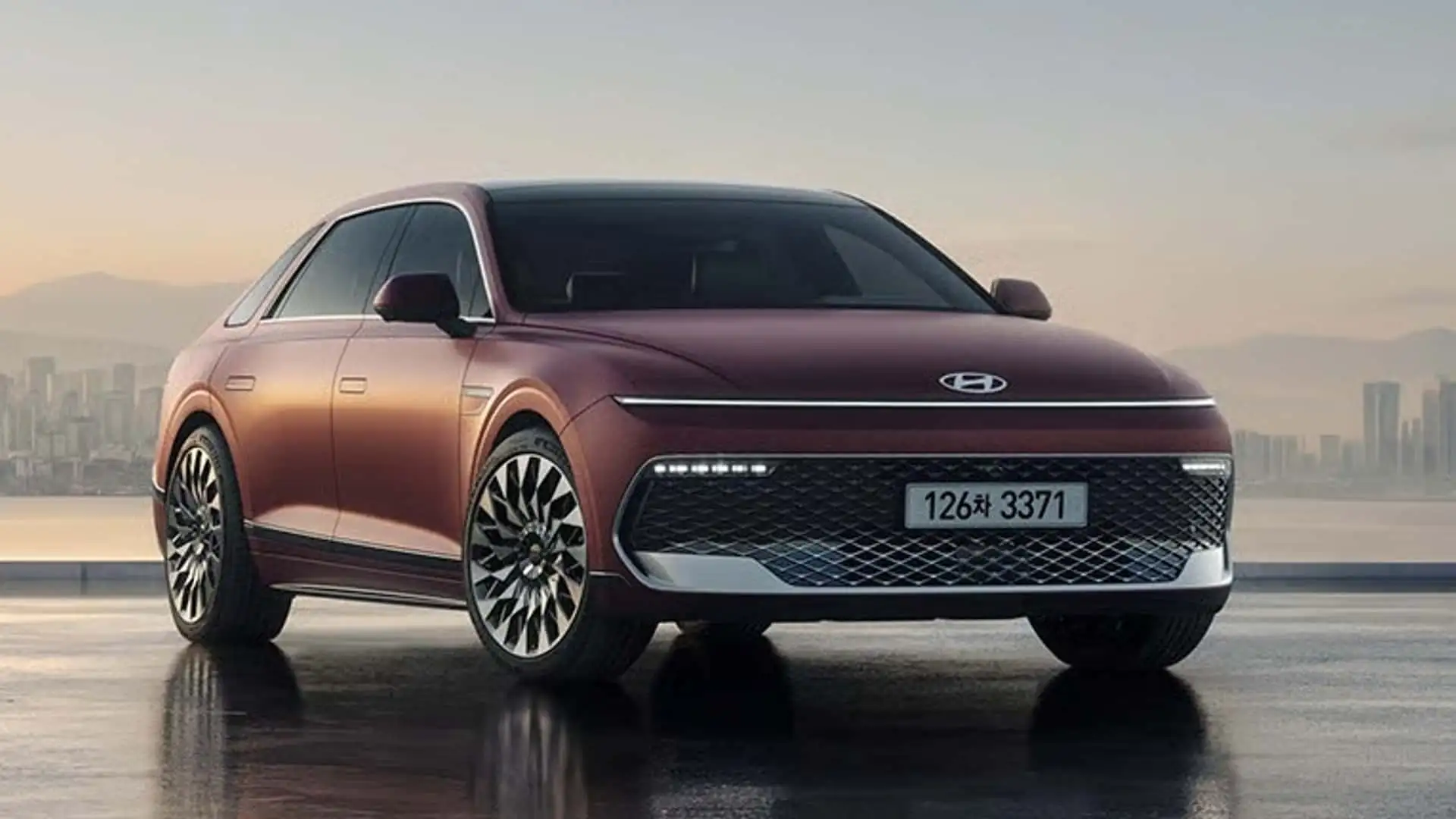
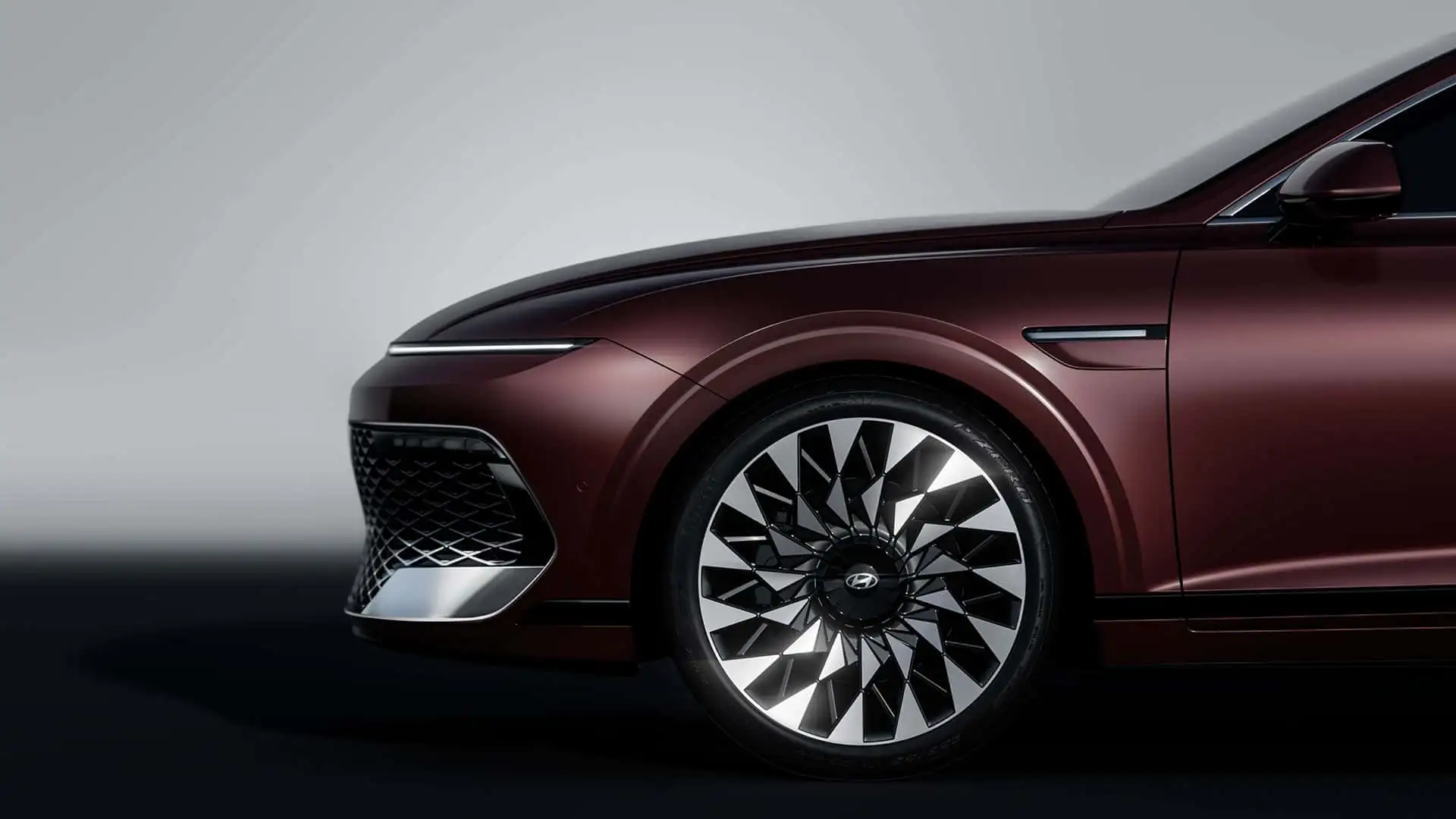
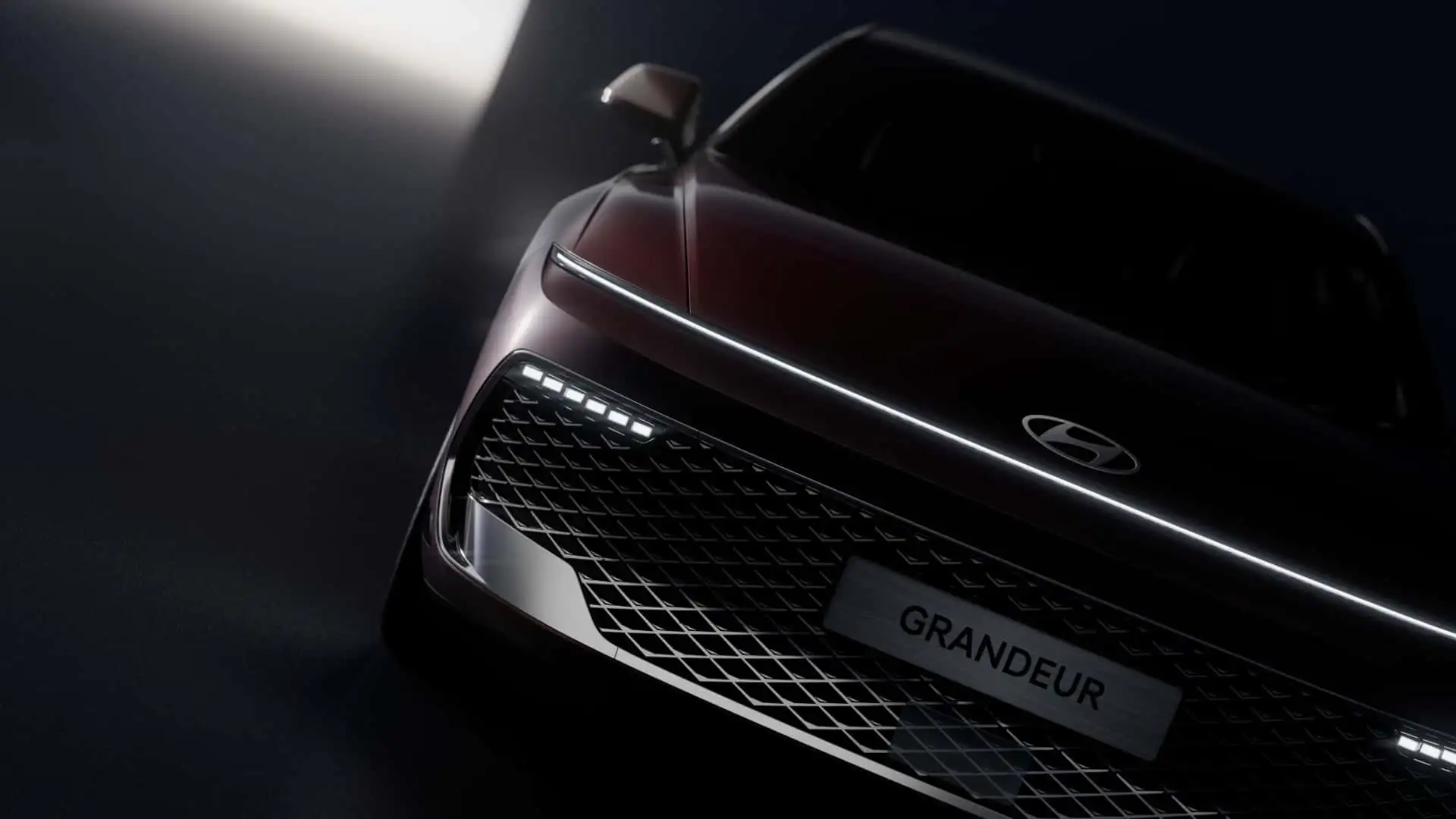
Hyundai says the hood has been extended to emphasize a “shark nose” profile, and the result is a nose that looks longer and more deliberate without abandoning the Grandeur’s formal sedan proportions. The front bumper now uses a mesh-pattern concept grille, while the slim bezel-less main lighting units sit below a horizontal LED daytime running light signature. That split-light arrangement pushes the car into the same visual conversation as the latest large-format sedans from Europe and China.
The side profile benefits from the body being 15 mm longer than before, which may sound minor, but in a sedan with a 5,050 mm overall length that extra stretch helps the surface treatment feel calmer and more expensive. Hyundai also added a new side repeater on the front fender to visually connect the nose with the rear quarters, a small but effective move that improves perceived length.
The Rear Design Plays The Same Seamless Game
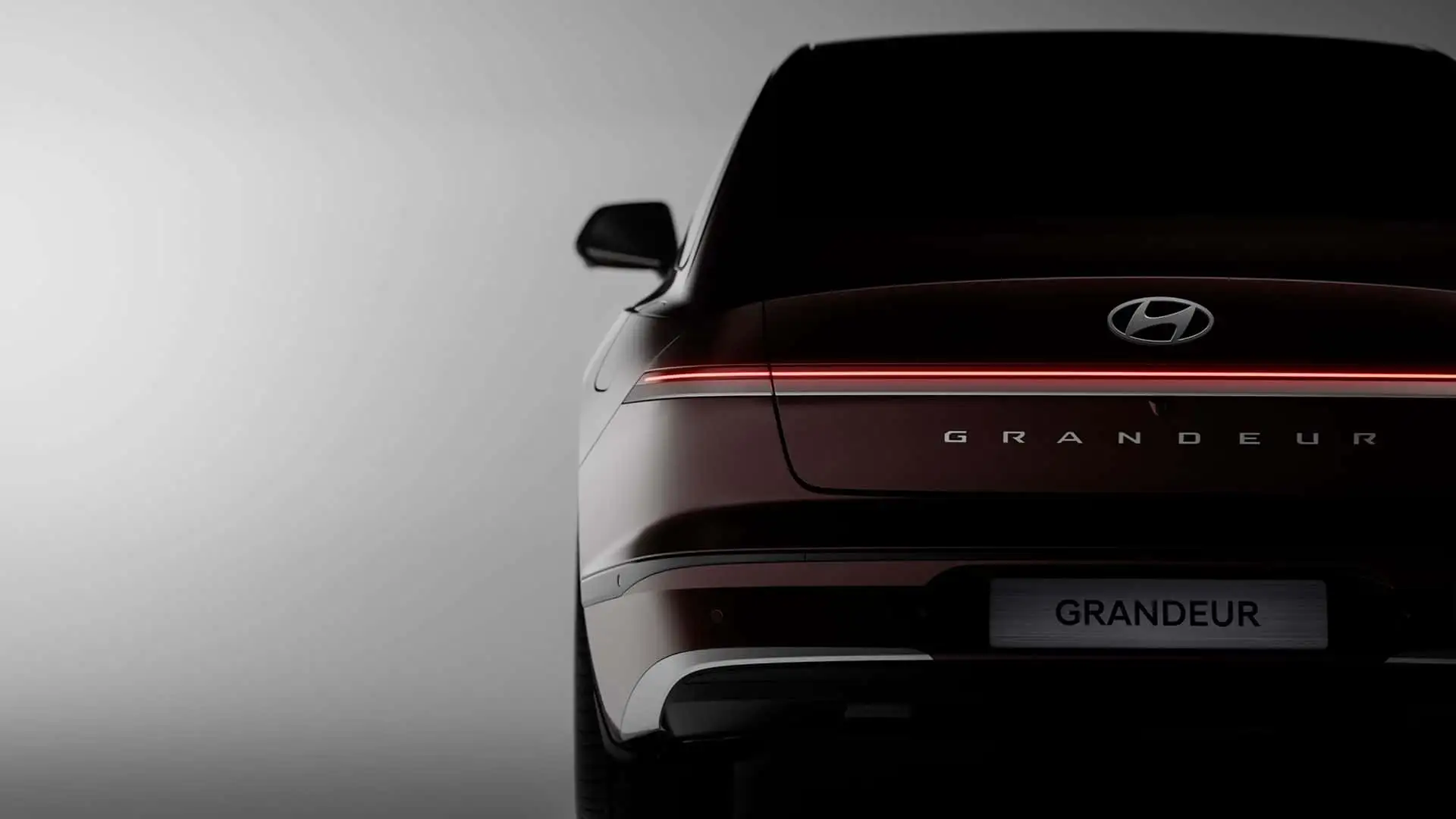
At the back, Hyundai has reduced the apparent thickness of the taillight treatment and moved the turn-signal function into a hidden lamp integrated into the upper garnish. That approach is not just cleaner visually; it reinforces the brand’s current obsession with seamless surfaces and discreet high-tech detailing. The lower bumper is also reshaped with a wing-type garnish and a broader blacked-out lower zone, which adds visual width and a hint of sportiness.
The new Artistic Burgundy body color is the most telling part of the exterior story. Hyundai explicitly says it was inspired by traditional lacquer work, and that is consistent with the way this facelift uses texture and depth rather than only brightwork. For a sedan designed to project status through subtlety, a pearl-and-matte finish does more work than another chrome strip ever could.
The Cabin Moves From Premium Lounge To Digital Lounge
The interior is where the Grandeur facelift makes its strongest case. The centerpiece is the 17-inch central display running Pleos Connect, Hyundai’s new infotainment system built on AAOS. That screen is large enough to dominate the dashboard, but Hyundai has resisted turning the climate controls into a pure software exercise. Important physical buttons remain below the display, which preserves a useful split between touch-heavy media control and tactile driving functions.
The driver still gets a separate instrument cluster, but the source material and official imagery show it has been scaled down and positioned higher in the driver’s sight line. That is a sensible choice in a car with executive-sedan intent, because it reduces the amount of eye movement needed for speed and navigation data. The old lower climate screen is gone, replaced by software integration and the new electric air vents.
Materials And Rear Cabin Theater Define The Luxury Pitch
Hyundai has added a couch-pattern motif to the door trims, a move that sounds cosmetic until you consider how much of luxury-car perceived quality comes from tactile consistency across the cabin. The ambient lighting is softer and more integrated, and the interior trim mix includes quilting patterns, knot piping, natural wood grain garnish, and metal-pattern accents. Those are not random decorative choices; they establish an artisanal theme that supports the exterior color story and the brand’s current premium messaging.
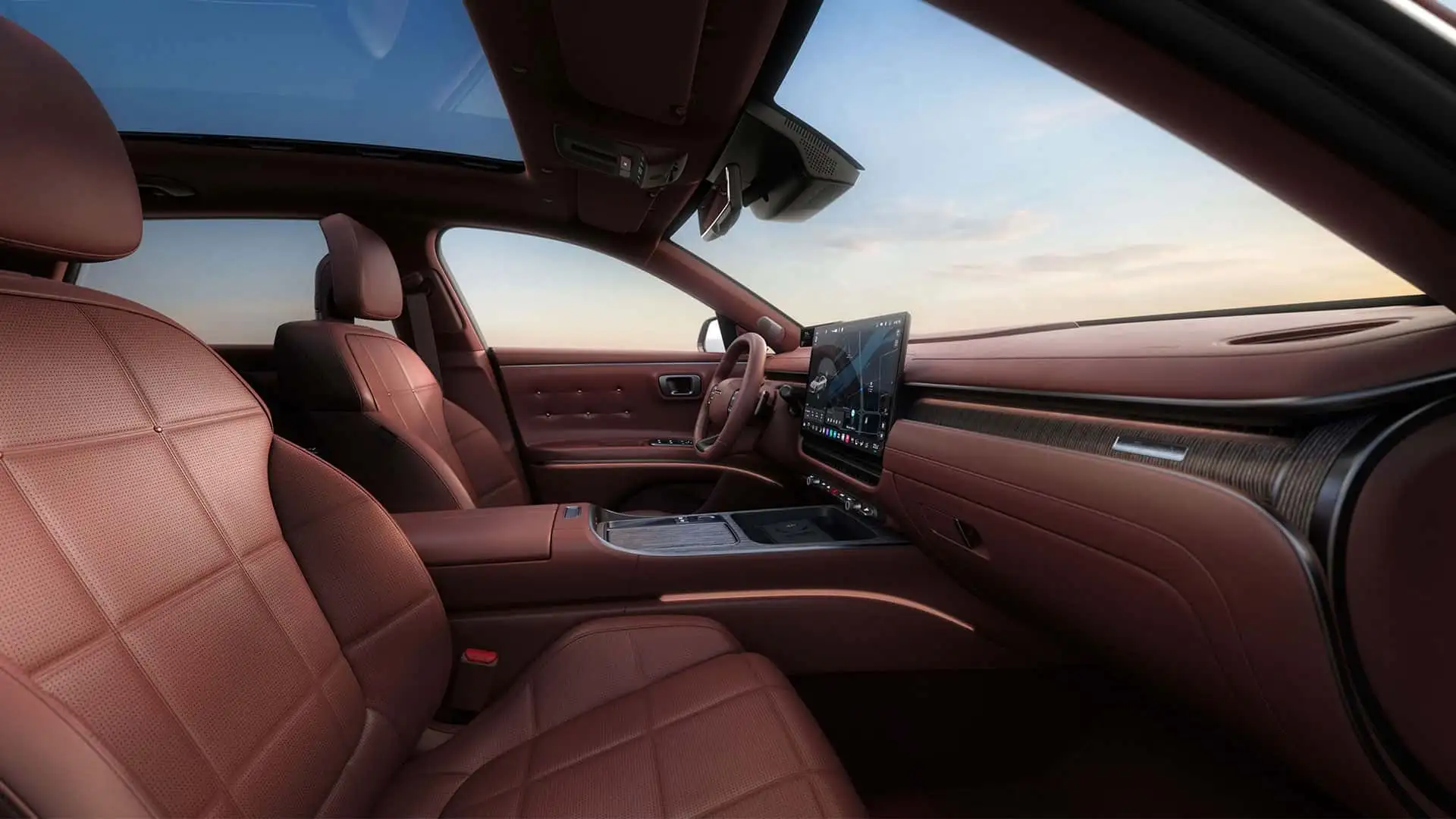
The smart vision roof is the other major headline. Hyundai says it is its first production model to use a film that allows the panoramic roof to switch electronically between transparent and opaque states, with selectable zones. That is a meaningful feature in a sedan that is clearly courting clients who value rear-seat comfort, shade control, and cabin openness more than outright performance figures.
Technical Specification Table
| Item | Hyundai Grandeur Facelift |
|---|---|
| Body style | Full-size sedan |
| Length | 5,050 mm |
| Wheelbase | Omitted |
| Central display | 17-inch Pleos Connect touchscreen |
| Operating system | Android Automotive Operating System |
| Rear lighting | Slimmer taillamps with hidden turn signals |
| Exterior color | Artistic Burgundy pearl/matte finish |
| Roof | Smart vision roof with switchable transparency |
| Air vents | Electric air vents with screen-based control |
| Interior trim highlights | Quilting, knot piping, natural wood grain, metal accents |
Why This Facelift Matters In Hyundai’s Larger Product Strategy
The Grandeur facelift tells us Hyundai is comfortable pushing mainstream-badged cars deeper into premium territory without asking buyers to “upgrade” to Genesis. That has clear implications for market perception, especially in regions where the Grandeur nameplate remains a prestige sedan rather than a global volume model. Hyundai is effectively proving that software-defined interiors, careful lighting signatures, and richer surface engineering can carry a flagship role even when the mechanical package is not the headline.
The best comparison is not a sports sedan, but other large-format premium products that use interface and craftsmanship as differentiators. The Grandeur’s more reserved exterior evolution is balanced by a cabin that now leans heavily on digital UX and physical tactility, a combination that should appeal to buyers who value quiet luxury over overt drama. For a broader industry view, the same premium recalibration is visible in Mercedes-Benz E 200 Exclusive and Volvo XC90 B6 Ultra, where subtlety sells the story more effectively than excess.
Launch Timing And Market Readiness
Hyundai has already opened an Early Pass pre-notification program through its official website, running until May 13, and that tells you the company expects strong interest even before the full launch specification is published. Customers who sign up receive product details, official timing, and display/test-drive information ahead of the public rollout, plus entry into a prize draw for a Bose SoundLink Home speaker or fuel vouchers if they later take delivery.
For enthusiasts, the absence of full powertrain details is the biggest missing piece. Hyundai has not yet published the final technical sheet for the facelift, so the core story remains design, cabin architecture, and interface technology. Still, as a product reveal, this is unusually complete in the areas that shape daily ownership. The Grandeur facelift does not merely freshen the model; it redefines what Hyundai believes a large sedan should feel like in 2026 and beyond.