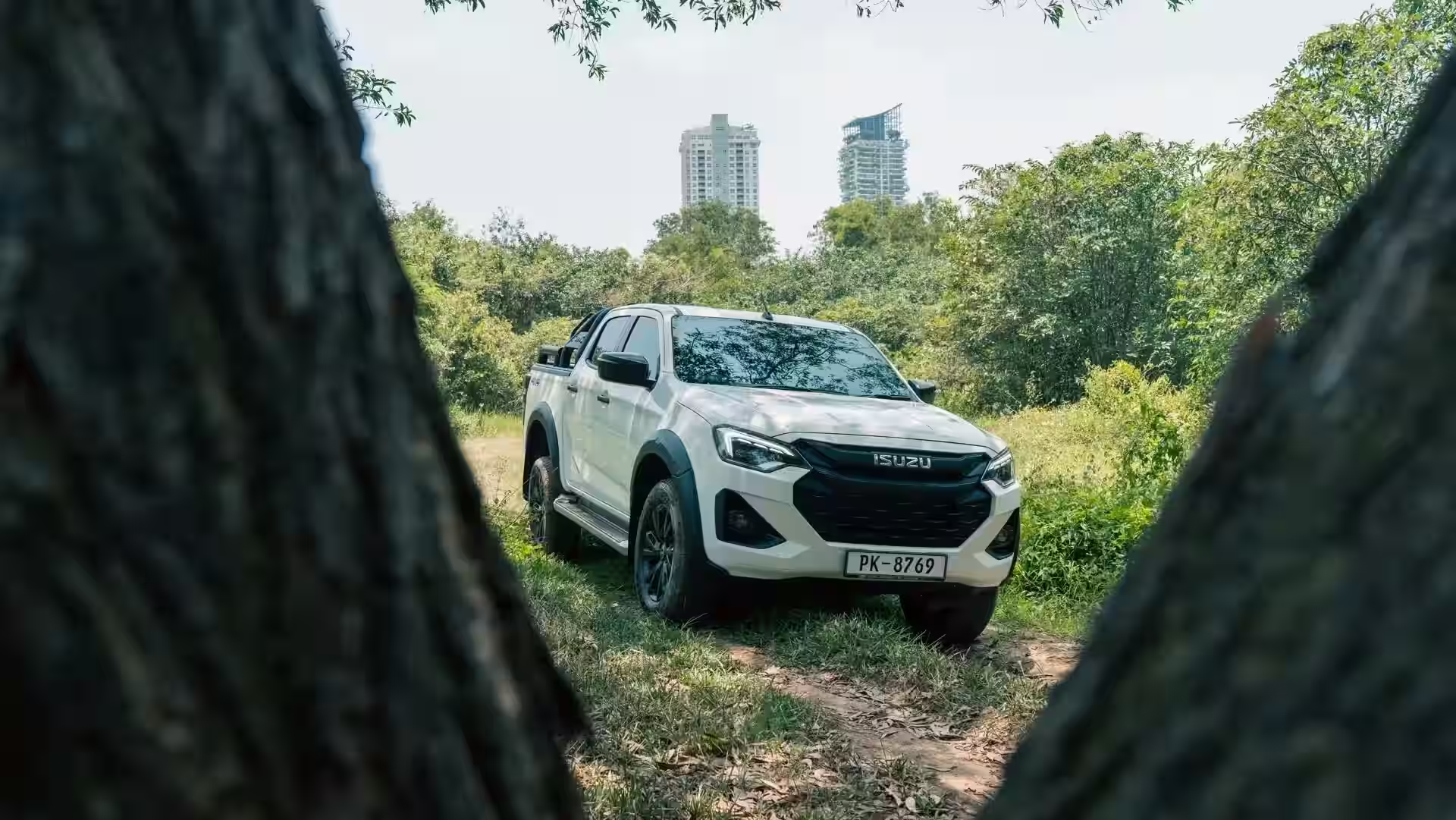
Numbers Do Not Tell the Whole D-Max Story
The 2026 Isuzu D-Max 3.0 Diesel walks into a class dominated by spec-sheet theater and refuses to play along. On paper, its 3.0-liter turbocharged inline-four diesel delivers 188 HP and 450 Nm, or 139 kW and 332 lb-ft, which leaves it behind the Ford Ranger 3.0 V6 diesel at 247 HP and 600 Nm, and also short of the Toyota Hilux 2.8 at 201 HP and 500 Nm. Yet this is exactly why the D-Max remains one of the most commercially sensible utes in Australia, Sri Lanka, and other diesel-heavy markets: it sells a mechanical philosophy, not a brochure contest.
With a starting price of AU$70,990 for the tested specification in the source market and a reported Sri Lankan asking price of LKR 23,000,000 versus roughly LKR 25,000,000 for comparable Hilux and Ranger trims, the D-Max keeps an old-fashioned advantage alive. The platform is ladder-frame, the wheelbase measures 3,125 mm, and the curb weight is 1,965 kg, which frames the truck as a conventional work tool rather than a lifestyle object. For buyers who spend more time loading, towing, and scraping through bad tracks than admiring trim stitching, that priority still lands.
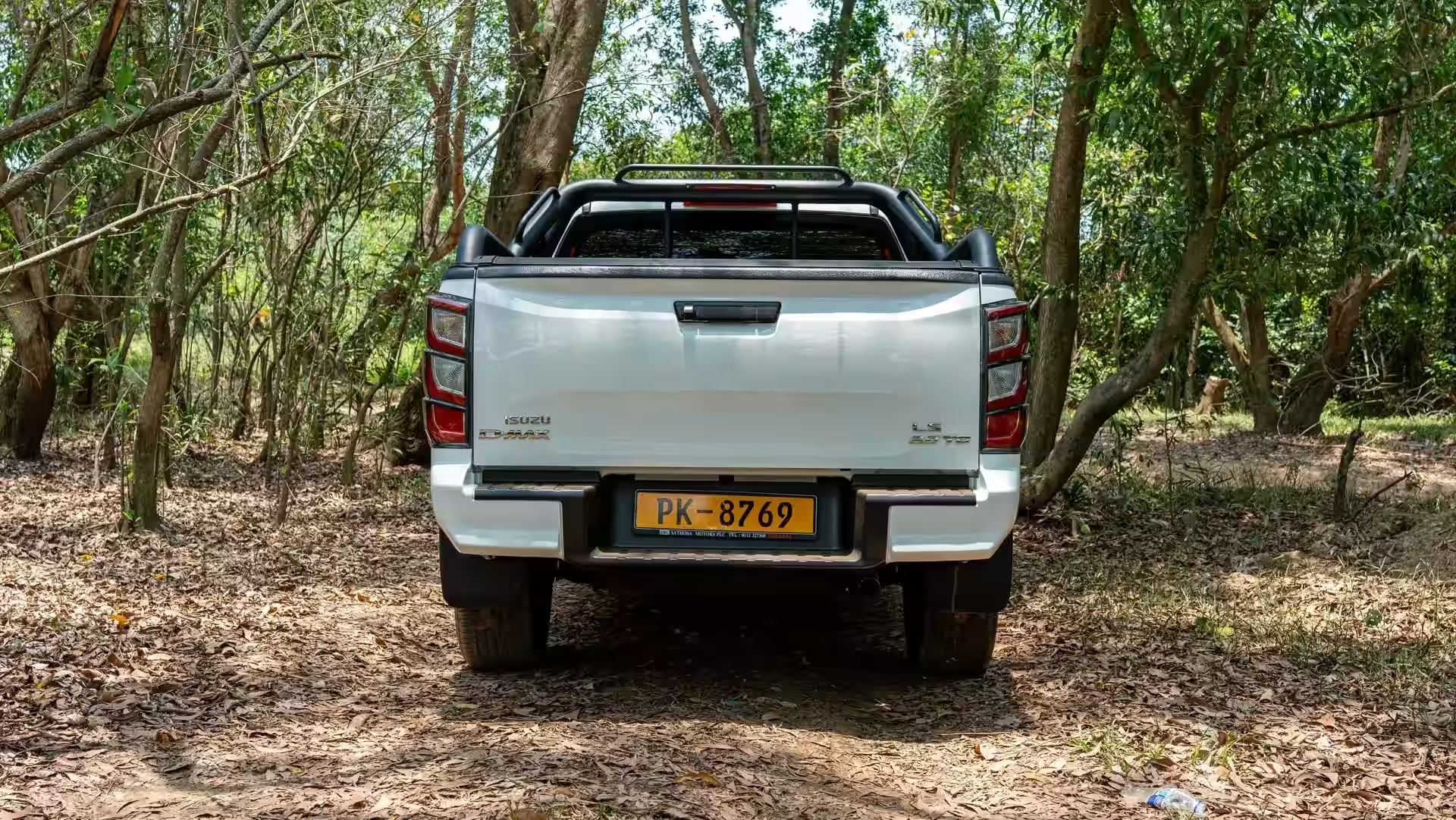
The 4JJ3 Diesel Is Built for Stamina, Not Drama
Isuzu’s 4JJ3 engine is the center of the D-Max argument. It is a 3.0-liter turbo diesel with four cylinders, and its output of 188 HP and 450 Nm is deliberately unhurried compared with the V6 Ranger, yet the character is what owners buy into. Under load, the engine delivers low-rpm torque in a way that feels calmer than the numbers suggest, especially in light off-road work where the throttle is used more as a request than a command.
This is also where Isuzu’s reputation matters most. In markets where diesel longevity, serviceability, and operating cost outrank bragging rights, the D-Max’s powertrain has become part of the brand’s identity. That explains why the truck is often compared with models that may be stronger on paper but carry more complexity, more mass, or a higher entry price. The D-Max is not the most sophisticated diesel pickup in the segment; it is one of the least anxious.
Off-Road Hardware Still Matters More Than Screen Size
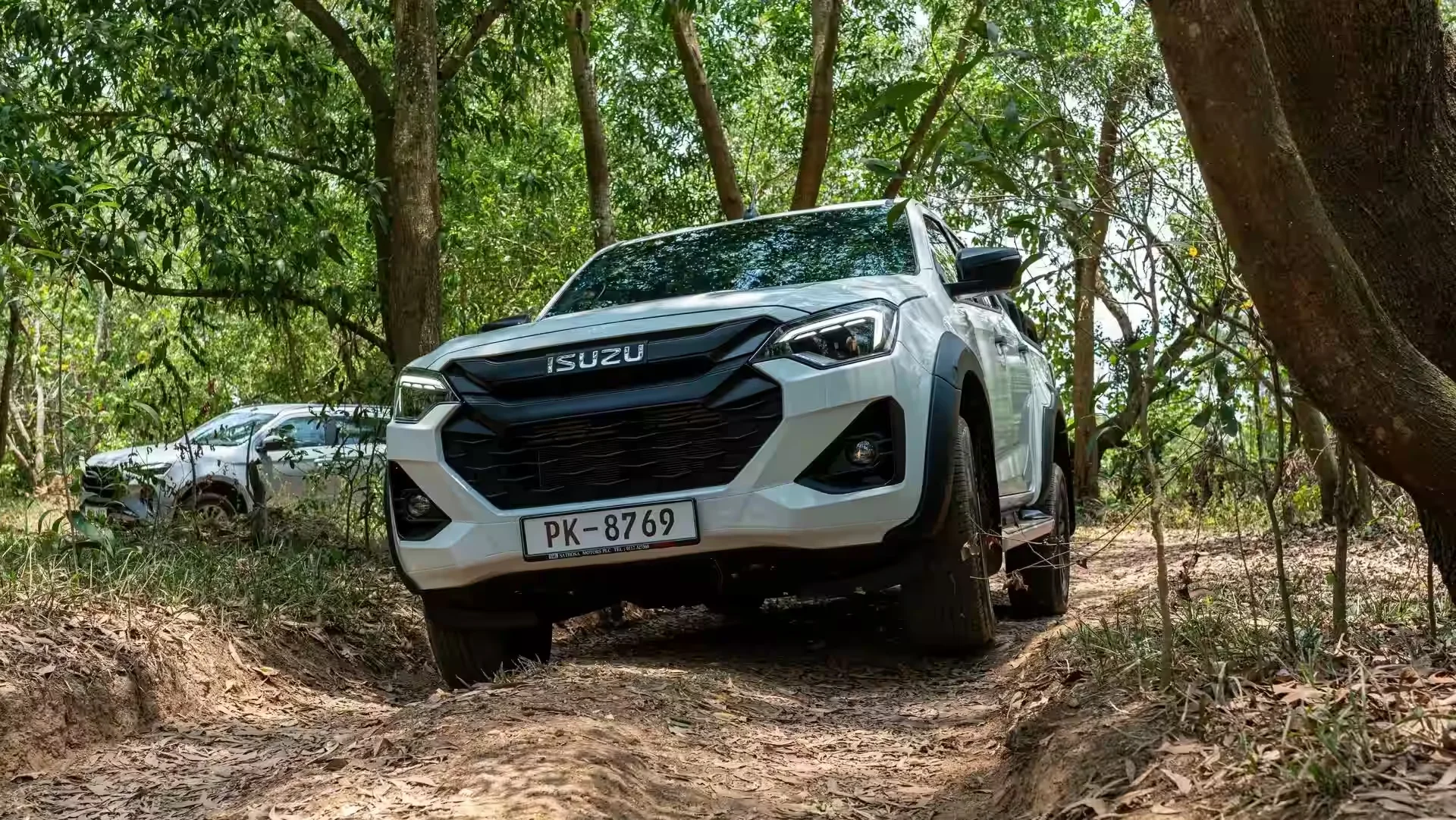
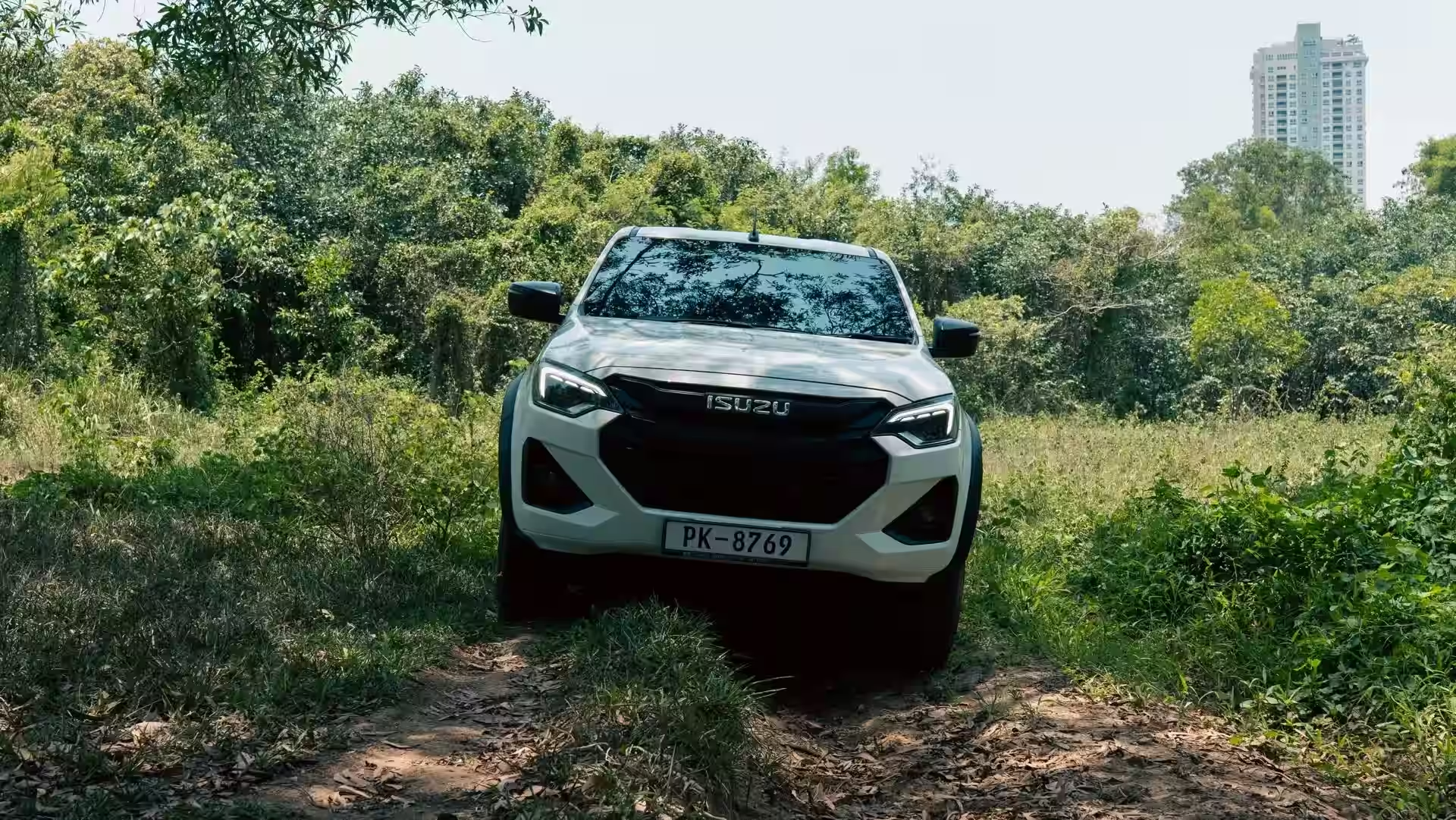
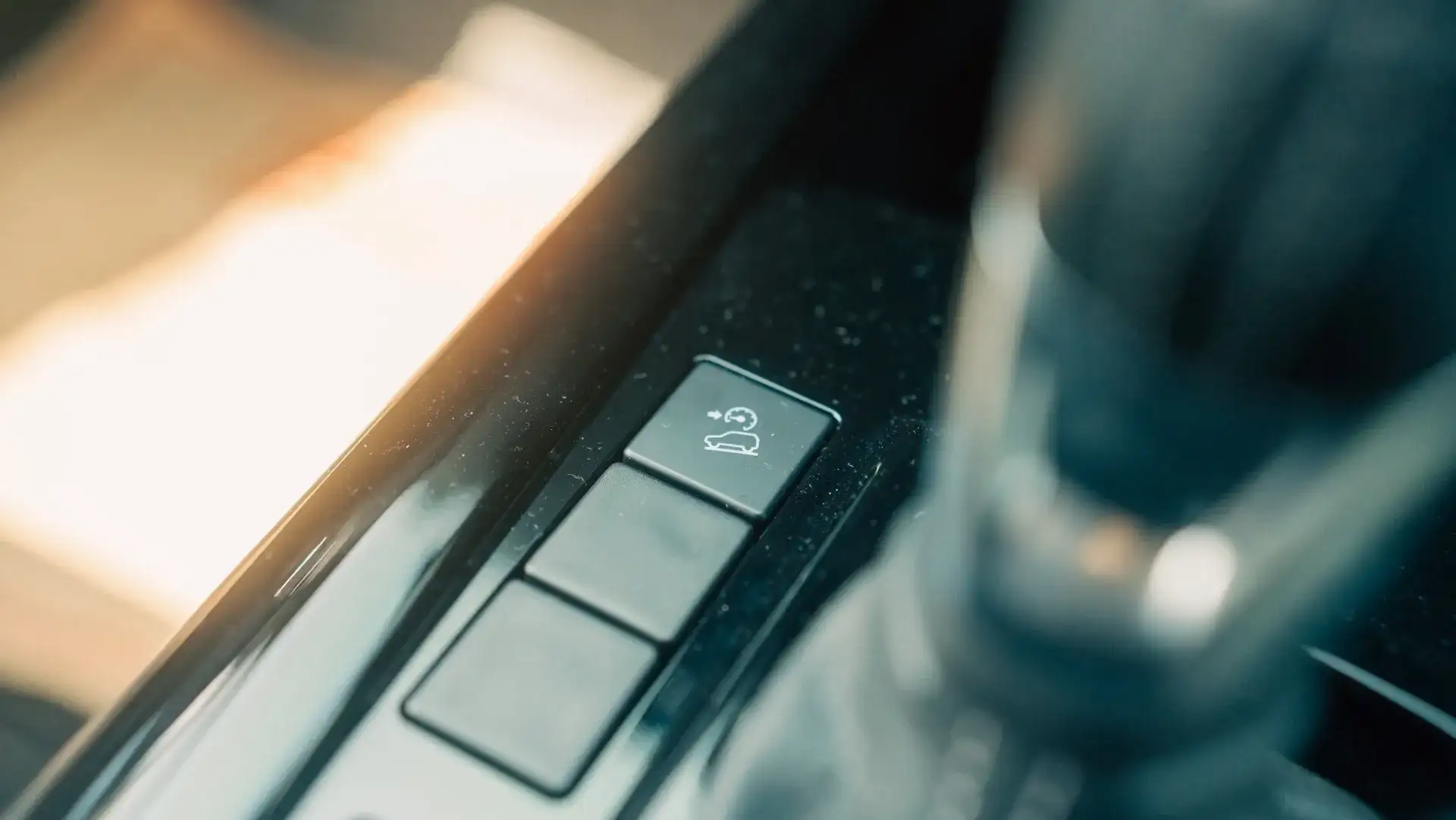
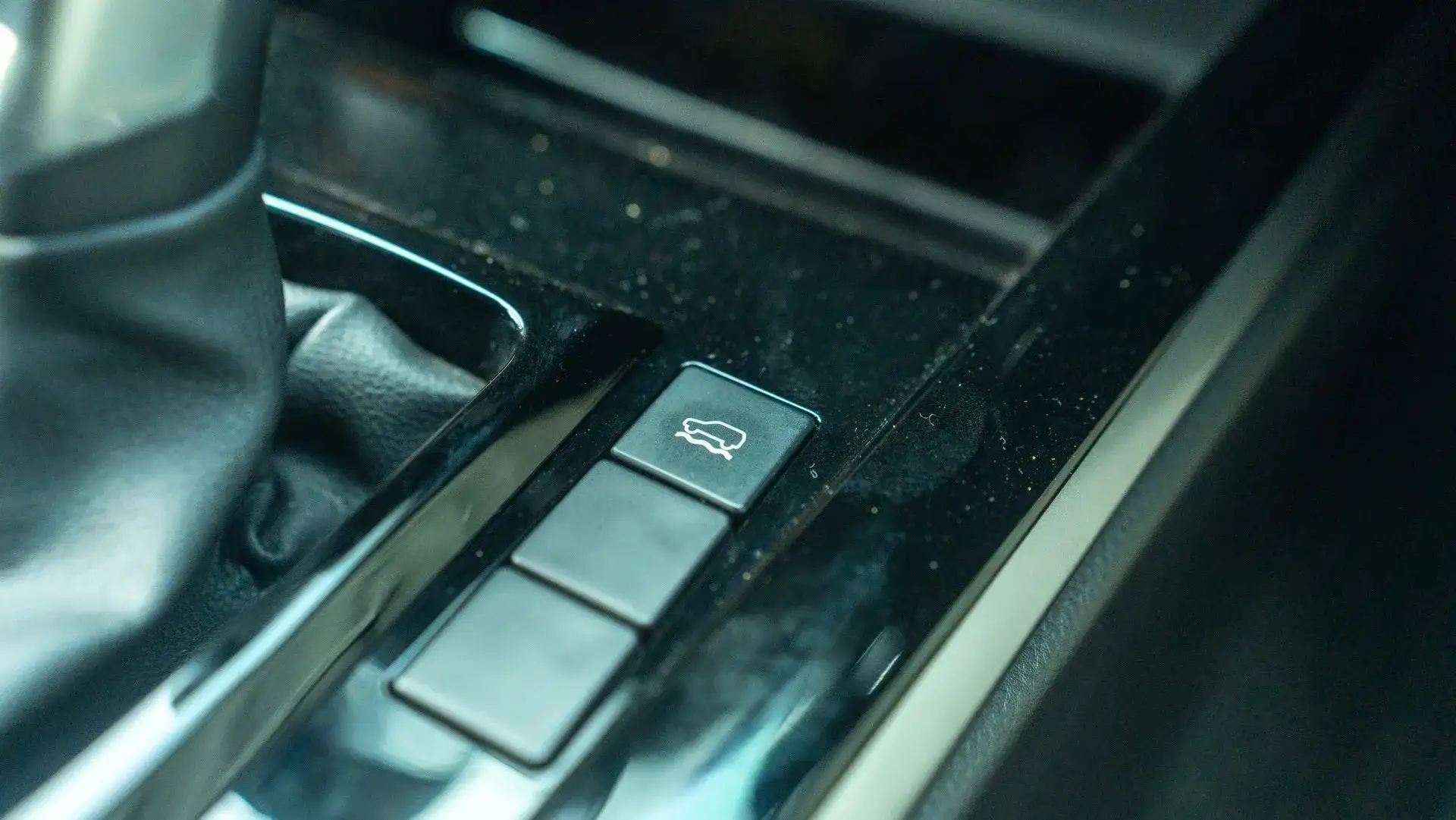
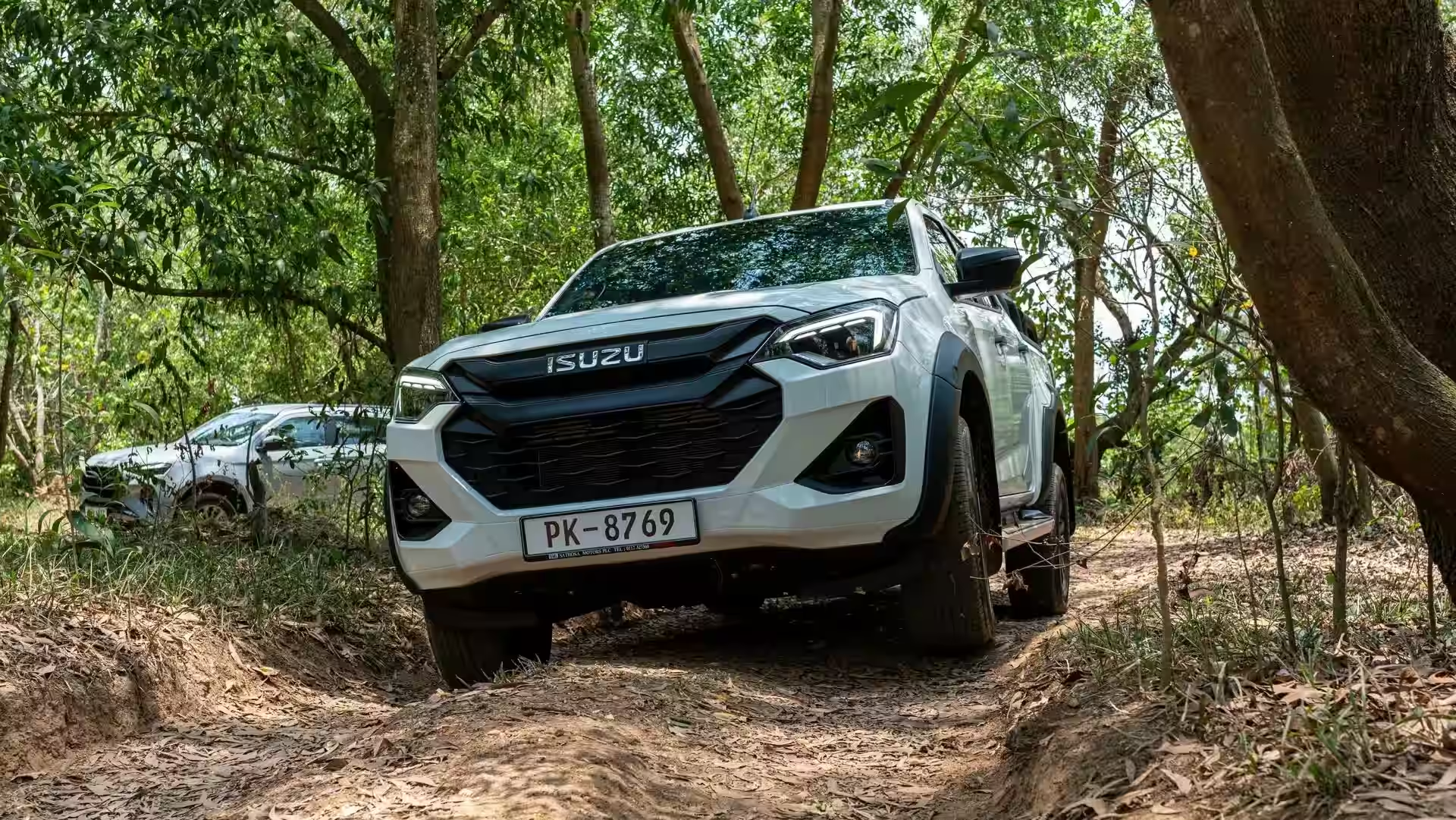
The source tester did not have a locking rear differential, yet the D-Max still cleared uneven ruts with surprising composure thanks to Rough Terrain mode. That system uses brake intervention to control wheelspin and redistribute torque when one wheel starts to unload, which is especially useful when the truck is crossing broken surfaces without the benefit of a locking axle. It is not a substitute for full mechanical locking when conditions become very slippery, but it is more than a marketing flourish.
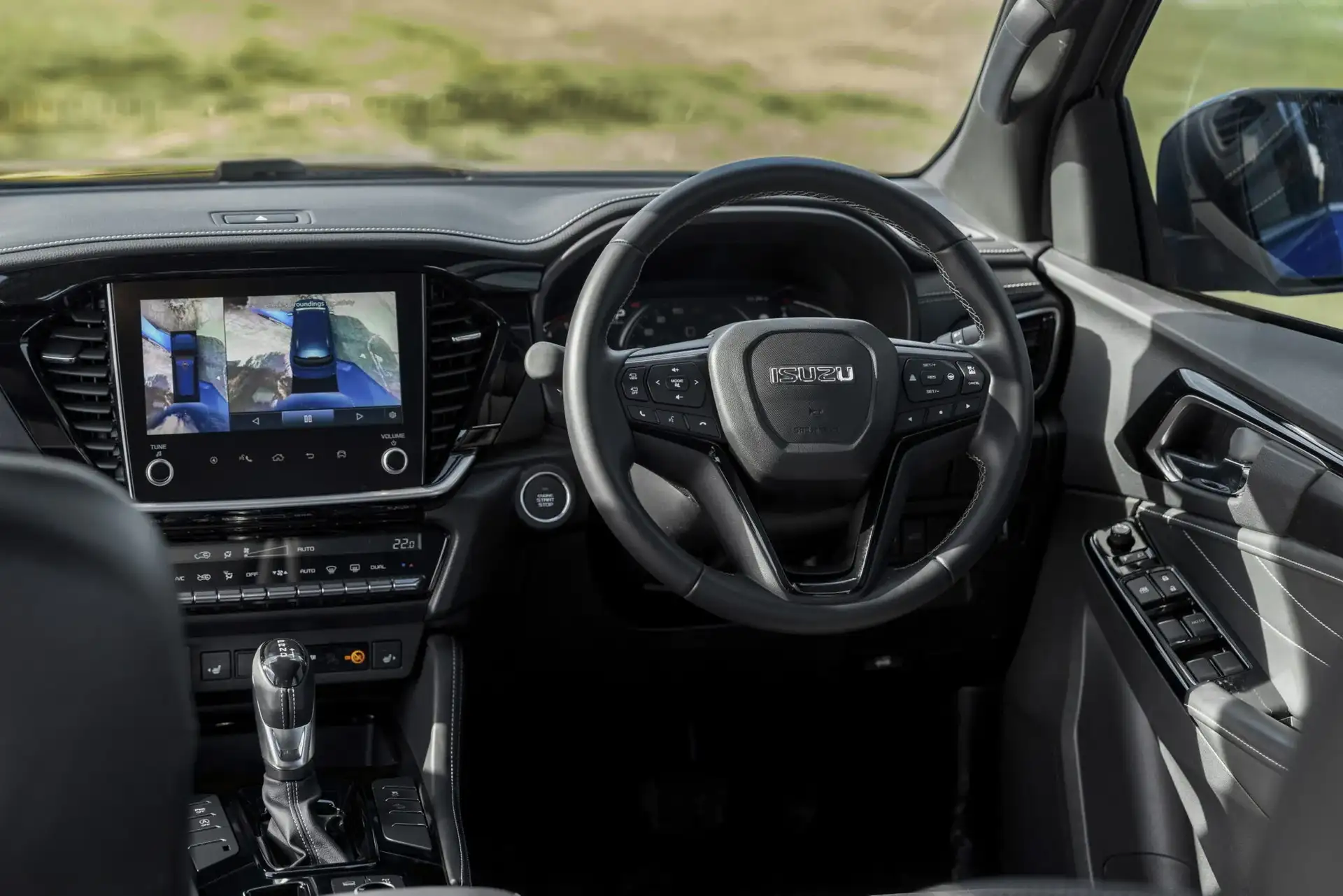
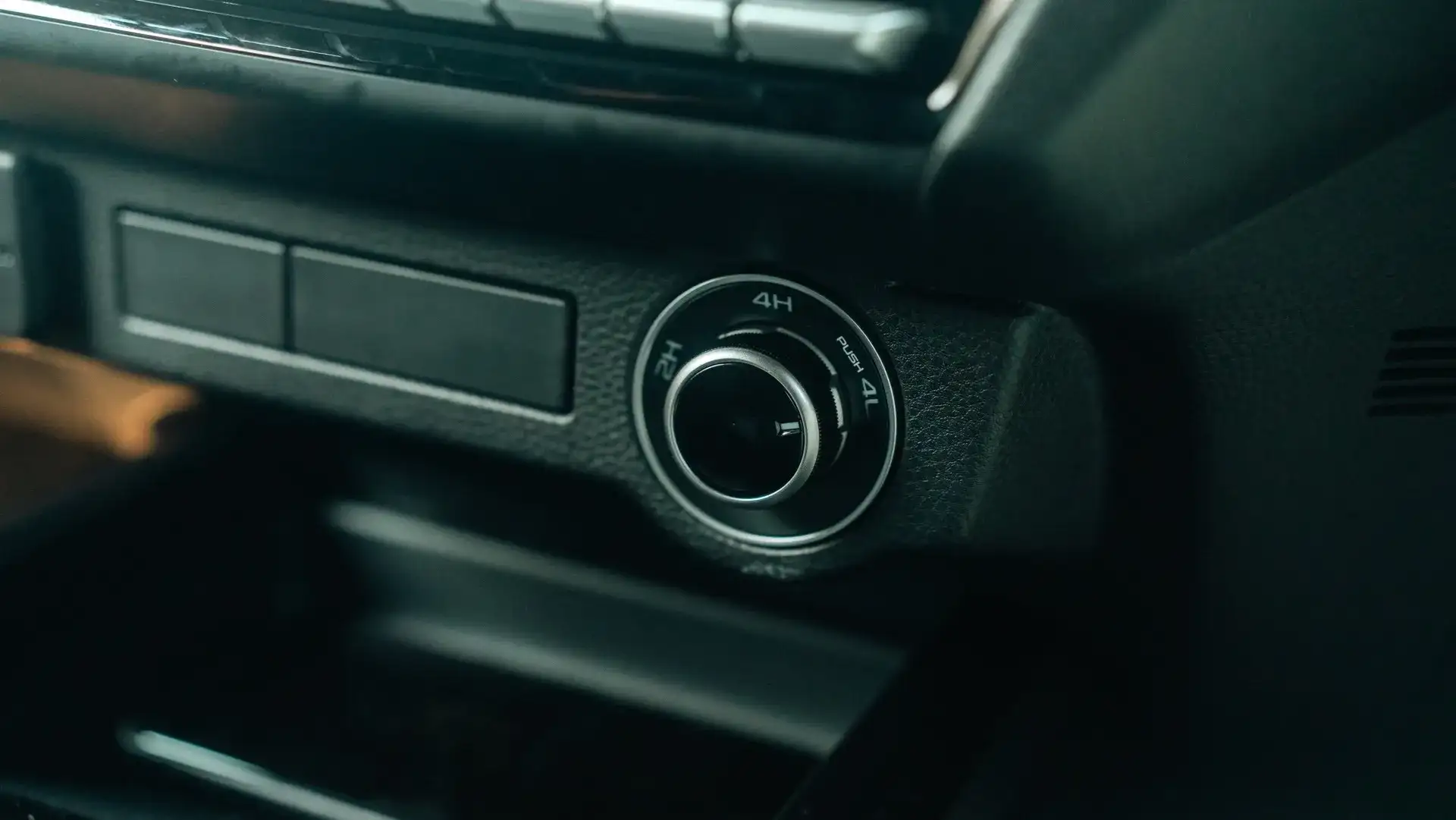
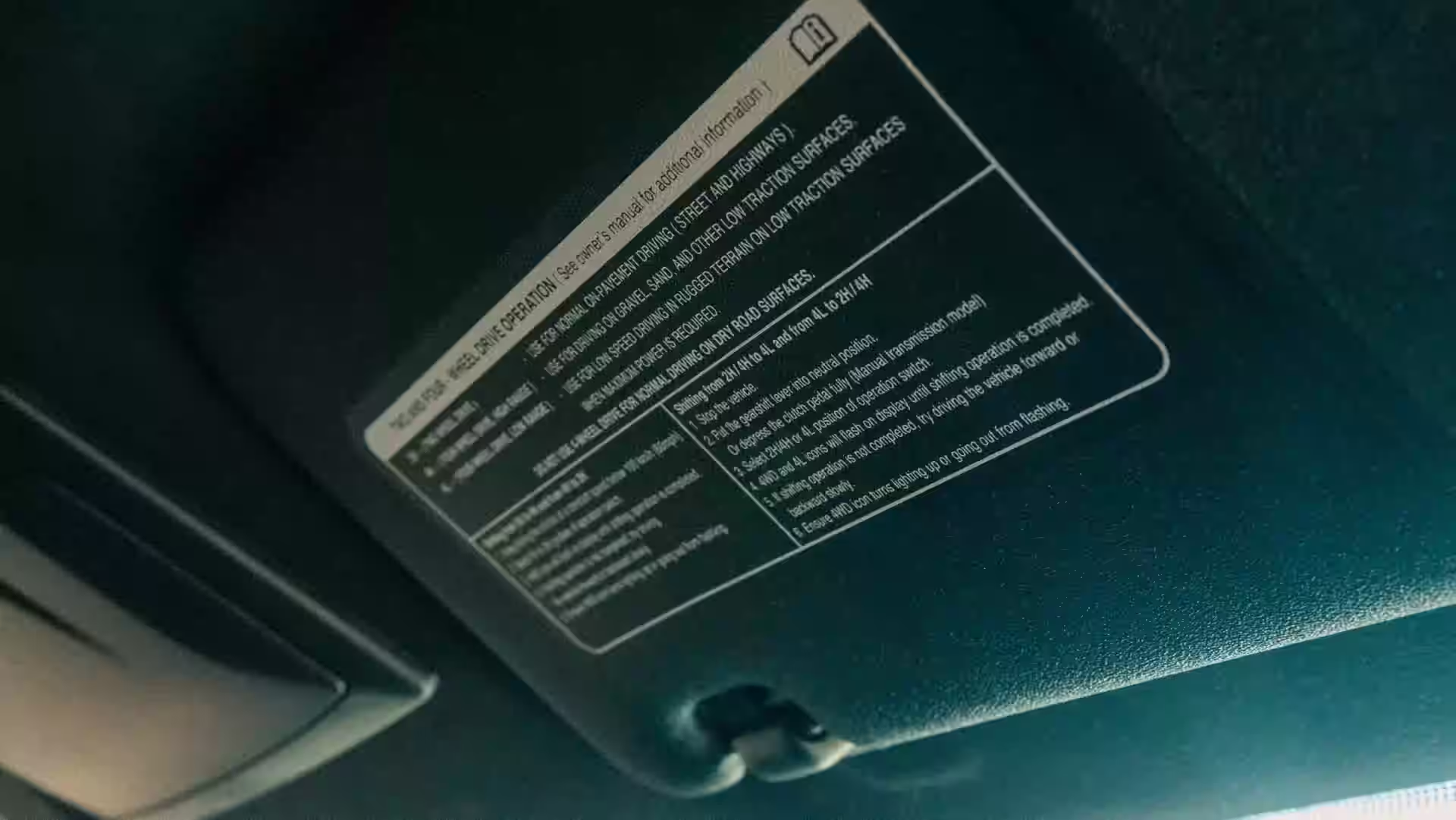
The 4WD system is part-time, which means it is intended for unsealed surfaces rather than constant all-wheel-drive duty on tarmac. There is no center differential, so the D-Max cannot be left in 4WD on sealed roads the way some rival systems can. From the driver’s seat, the hardware is refreshingly direct: a chunky selector knob, one-button activation for Rough Terrain mode, 2H to 4H on the move, and 4L requiring a stop. This is exactly the kind of layout that rewards real-world use over touchscreen choreography.
Cabin Execution Chooses Toughness Over Plushness
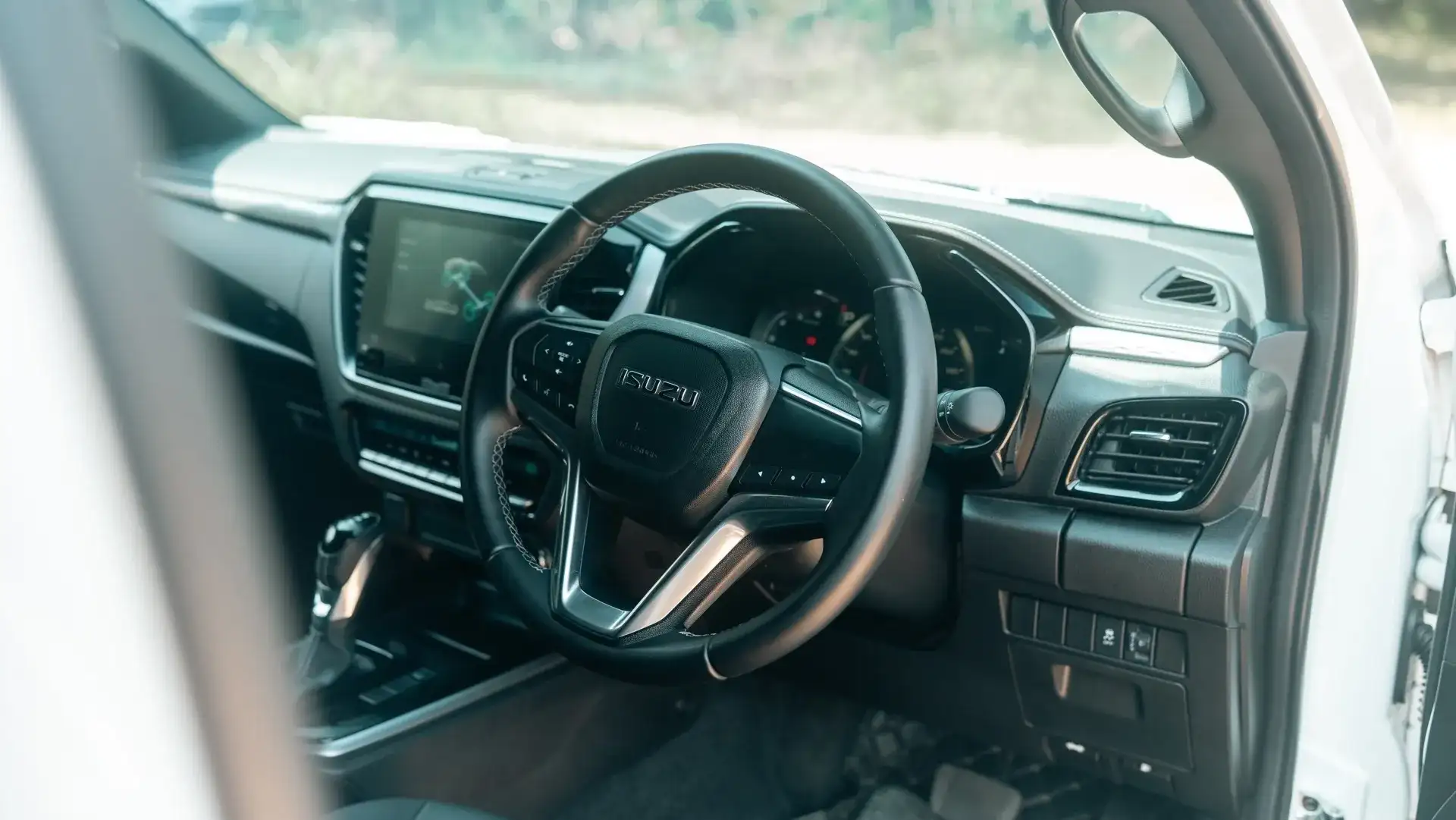
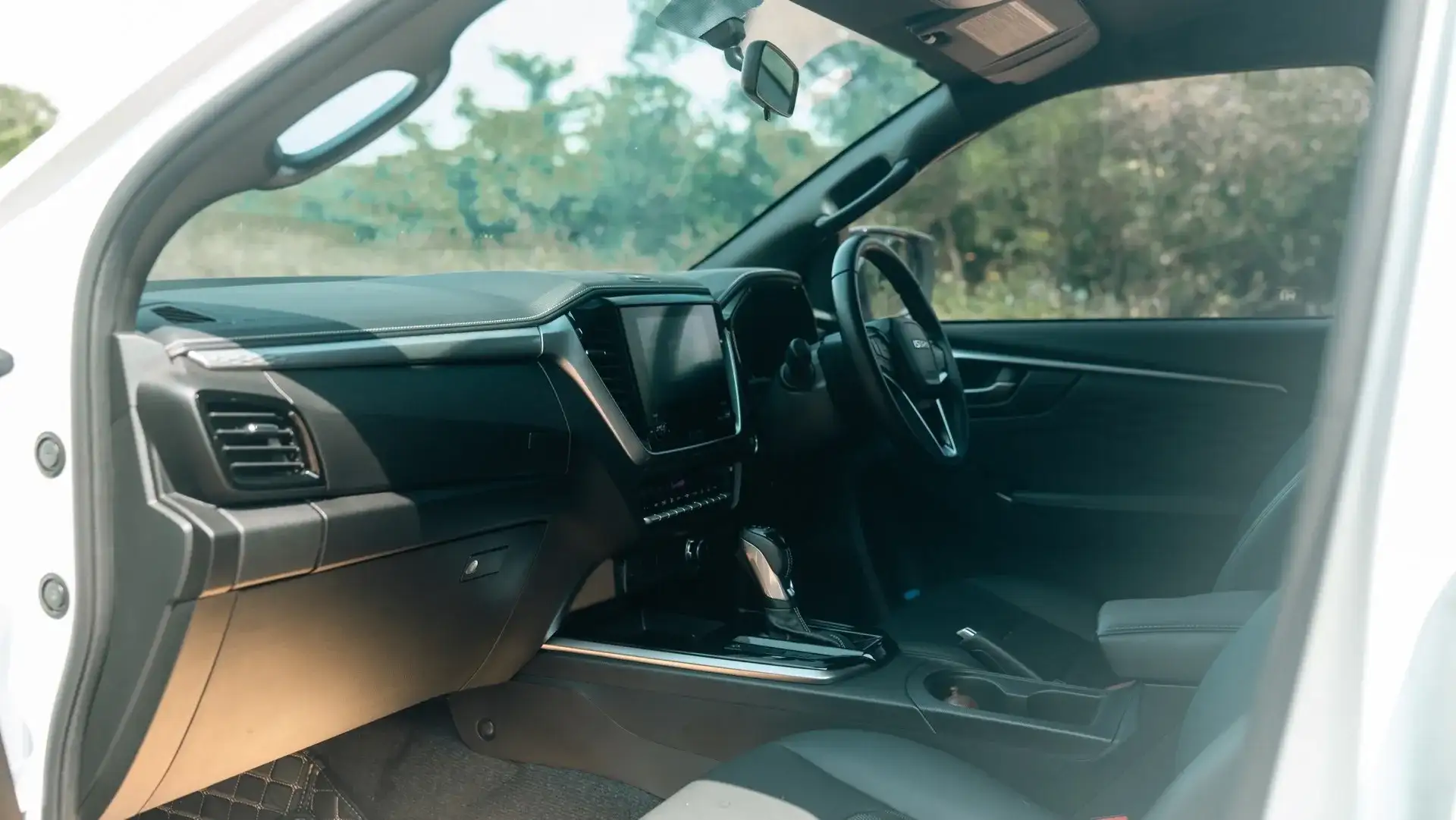
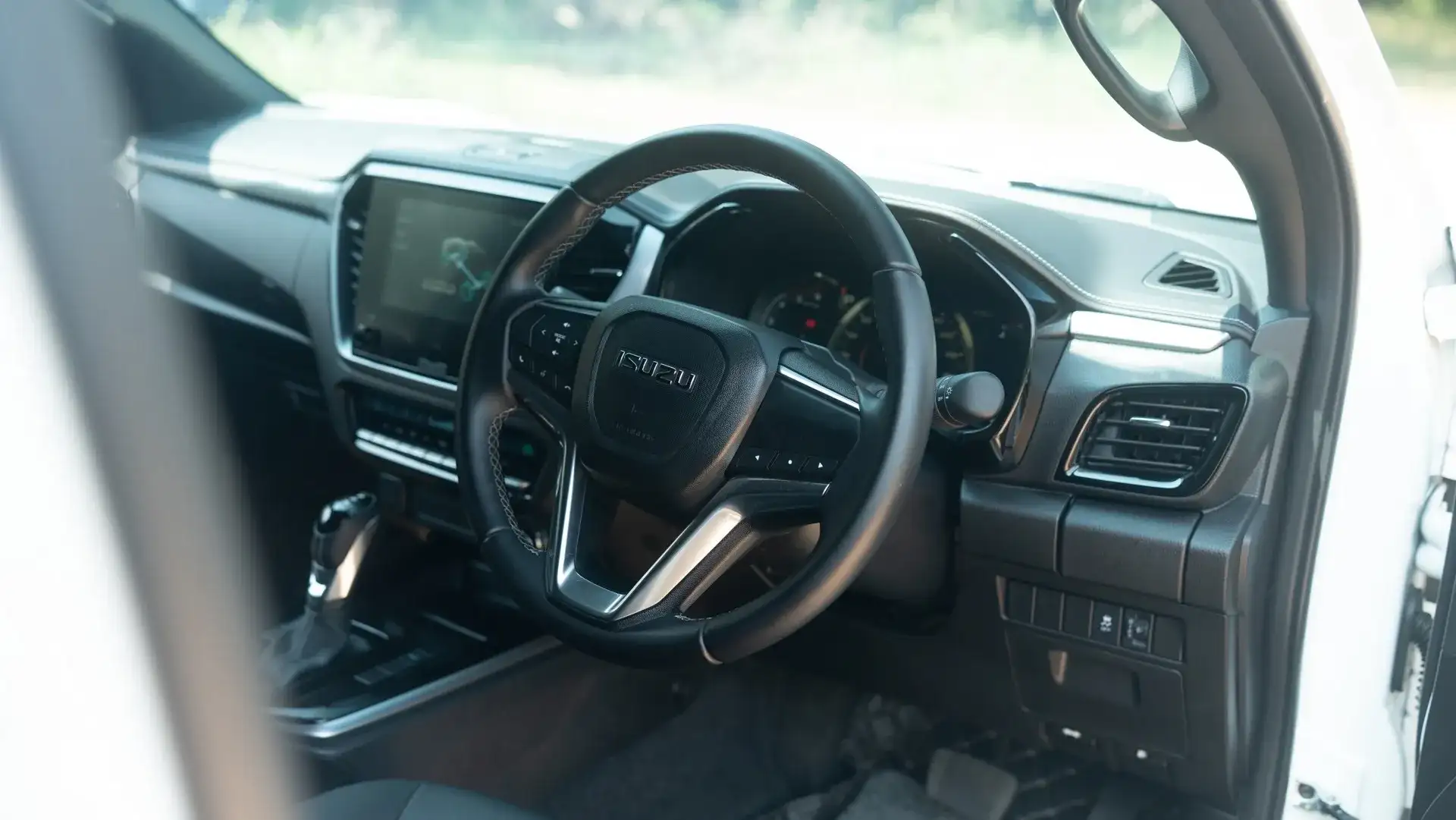
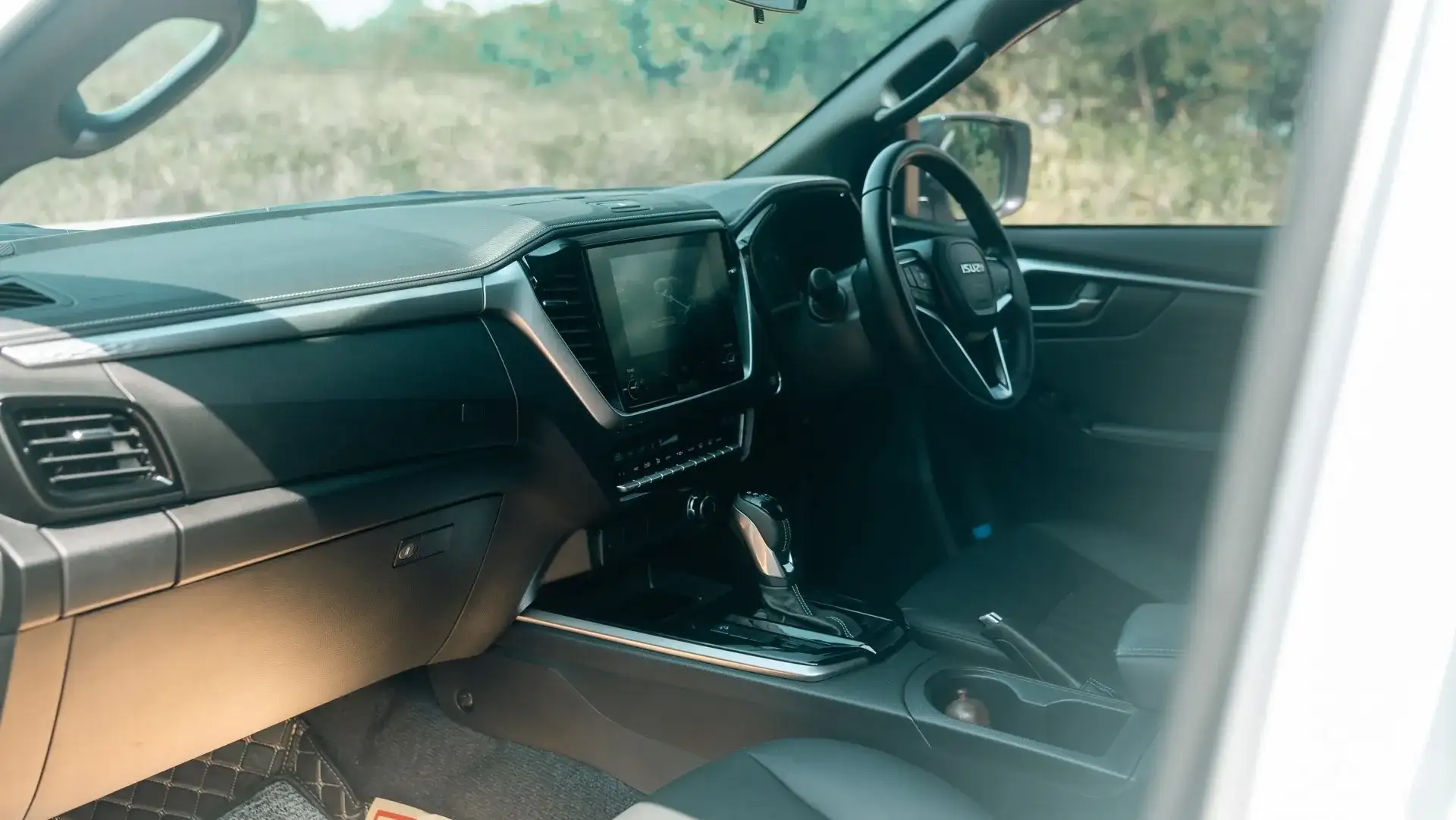
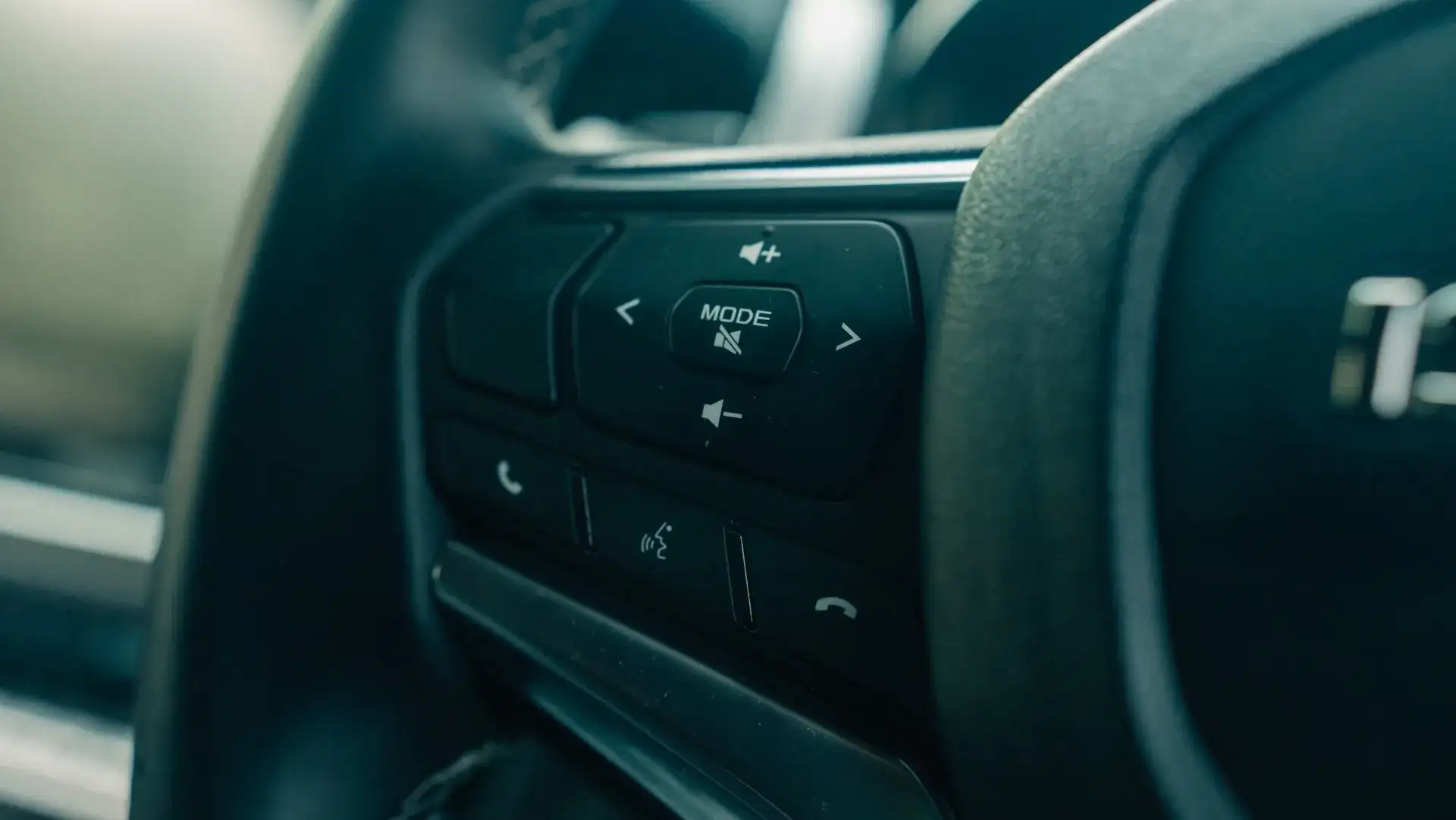
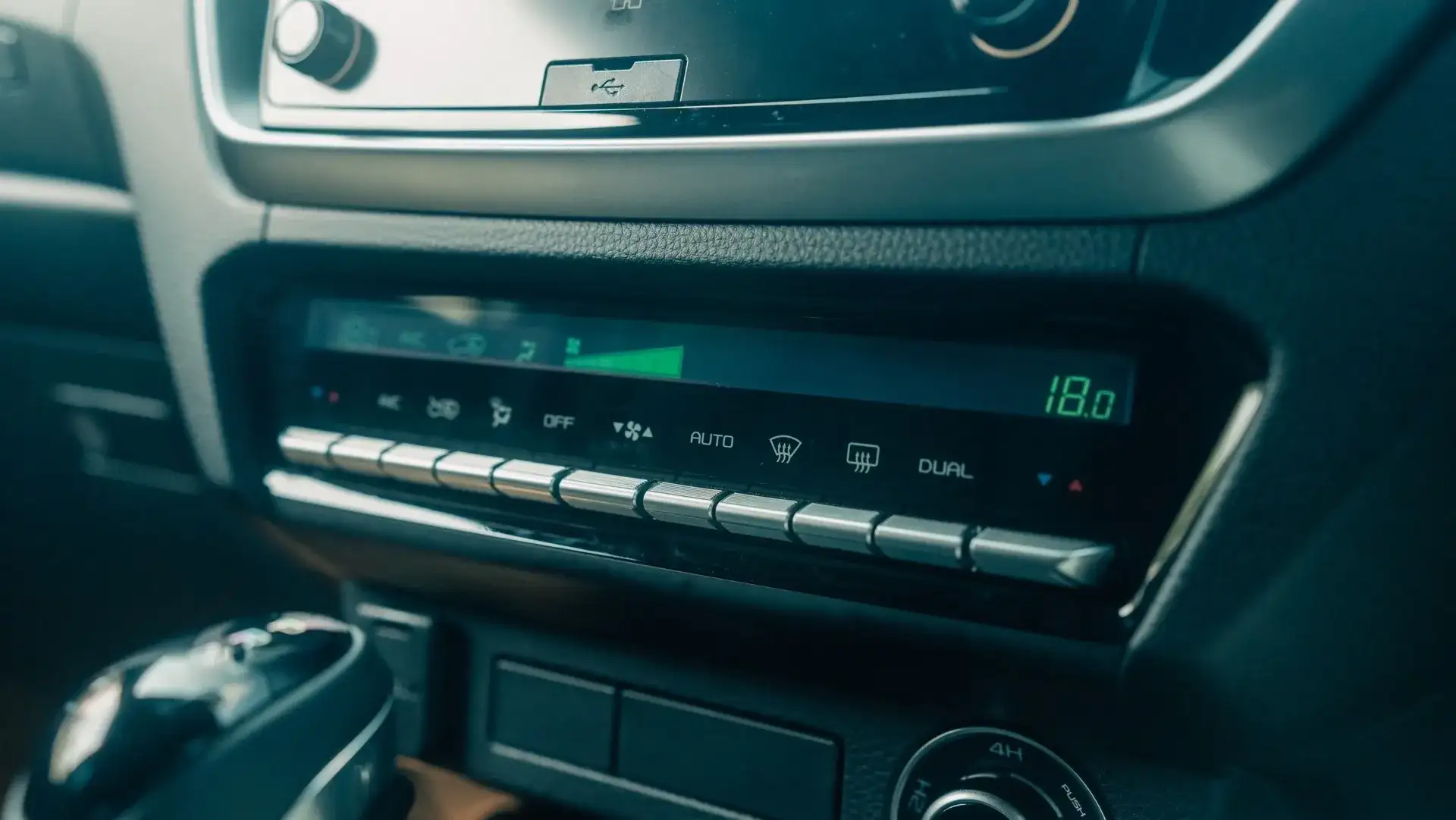
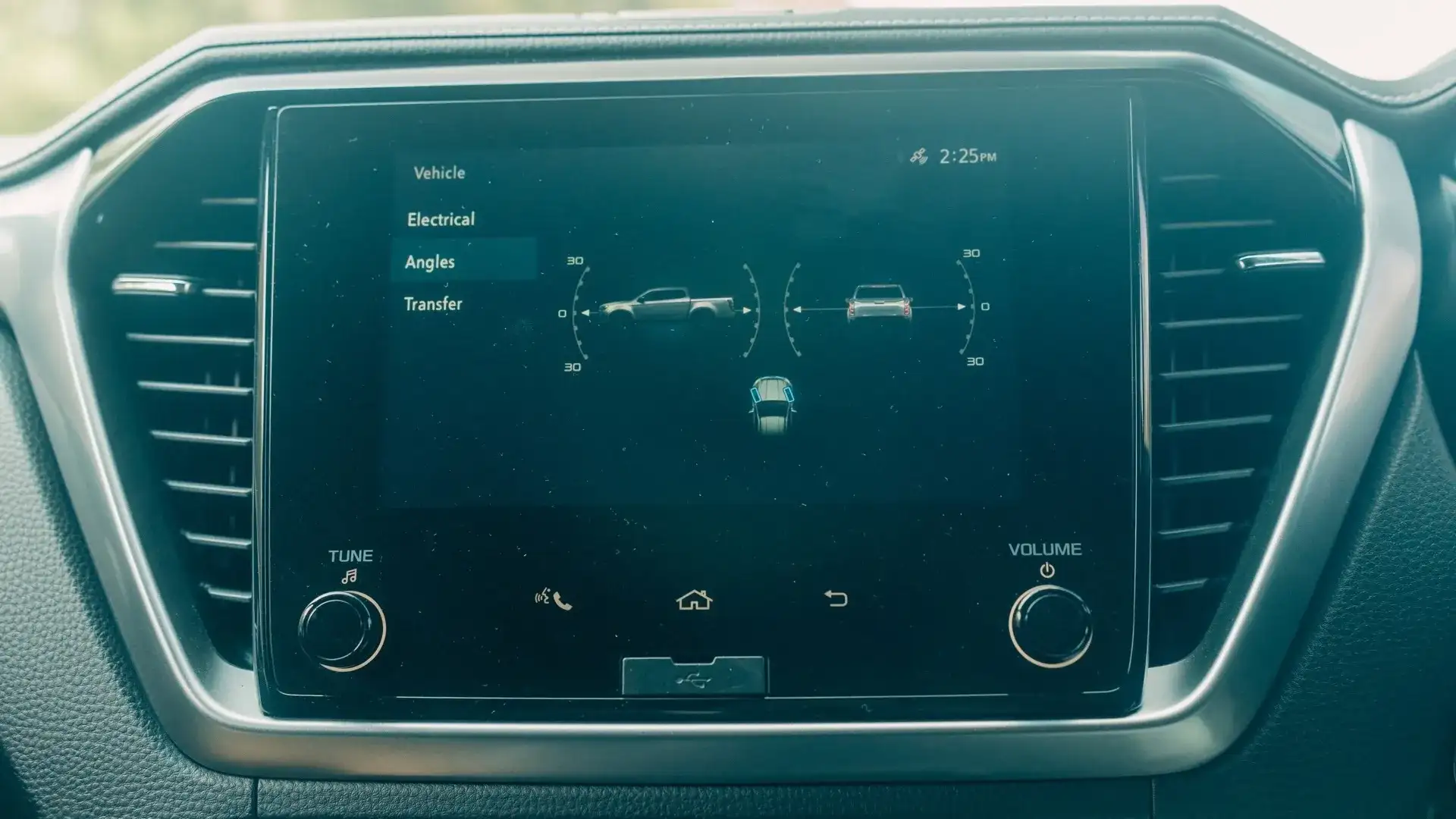
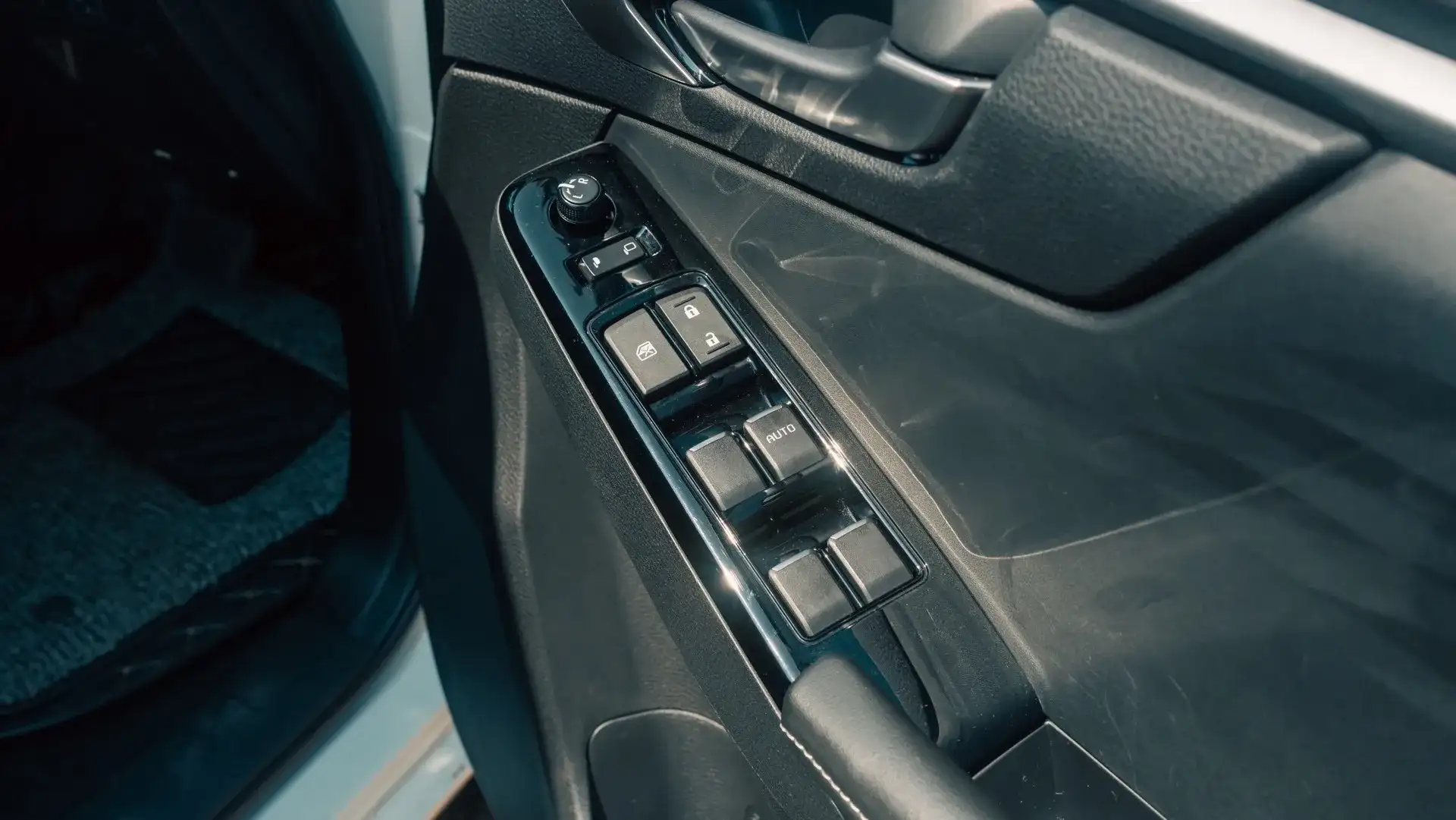
Inside, the D-Max makes its priorities obvious. The cabin uses hard-wearing plastics, large rotary controls, and chunky buttons that favor visibility and tactile certainty over visual elegance. There is an electric driver’s seat, cruise control, and a stereo that gets the job done, but the infotainment system feels dated beside the Ford Ranger and Kia Tasman benchmark. Wired Android Auto and Apple CarPlay are present, yet the slow responses and low-resolution graphics leave the screen looking like a generation behind the field.
That does not automatically make the cabin bad. It makes it honest. The seats, switchgear, and dashboard layout are built for use, not theater, and that aligns with the D-Max’s wider brief. Fleet buyers and long-term owners often prefer a cabin that can be scrubbed clean, used with gloves, and understood instantly after a 12-hour shift. A glossy dashboard can impress at delivery; a rugged one survives years of abuse.
On-Road Refinement Is the D-Max’s Most Visible Compromise
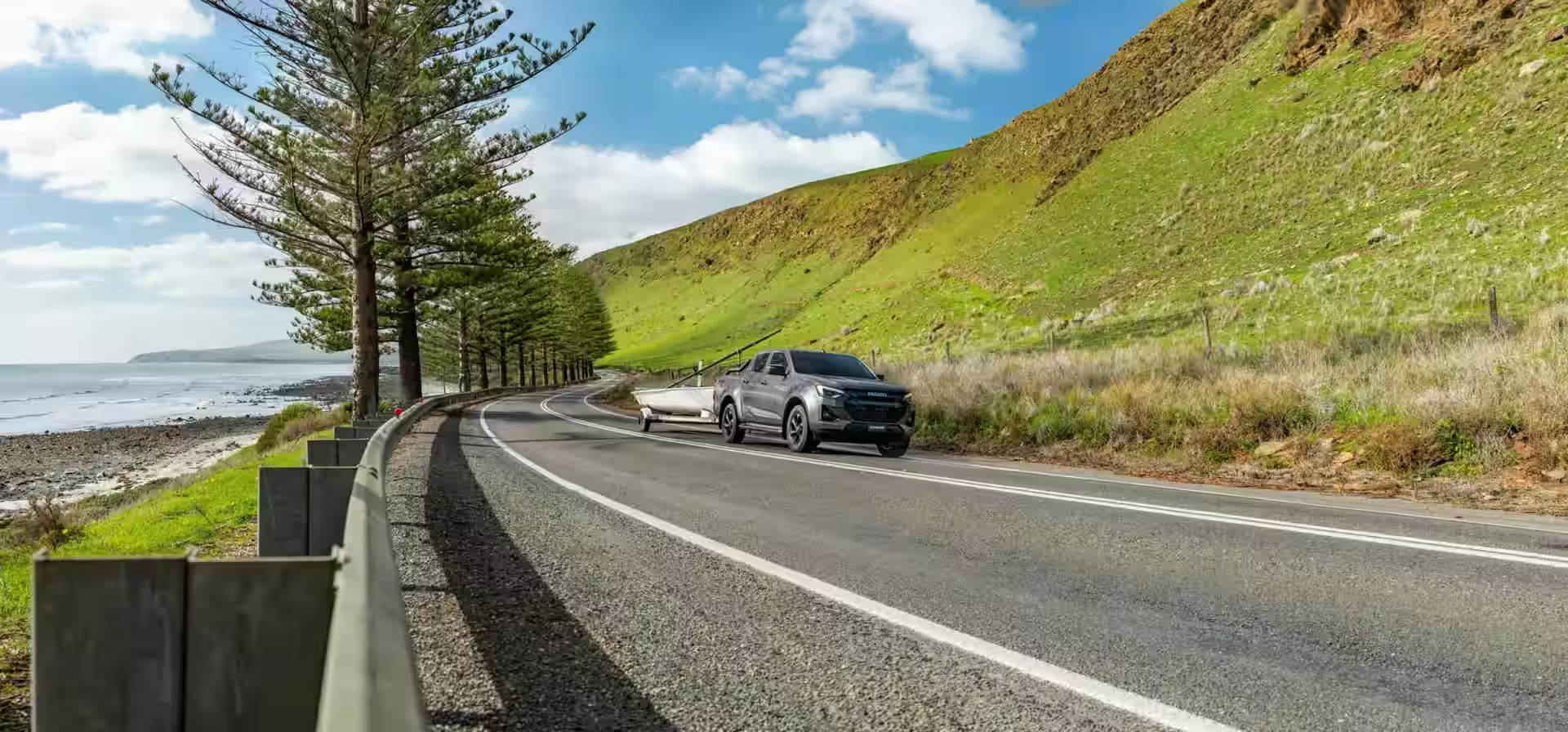
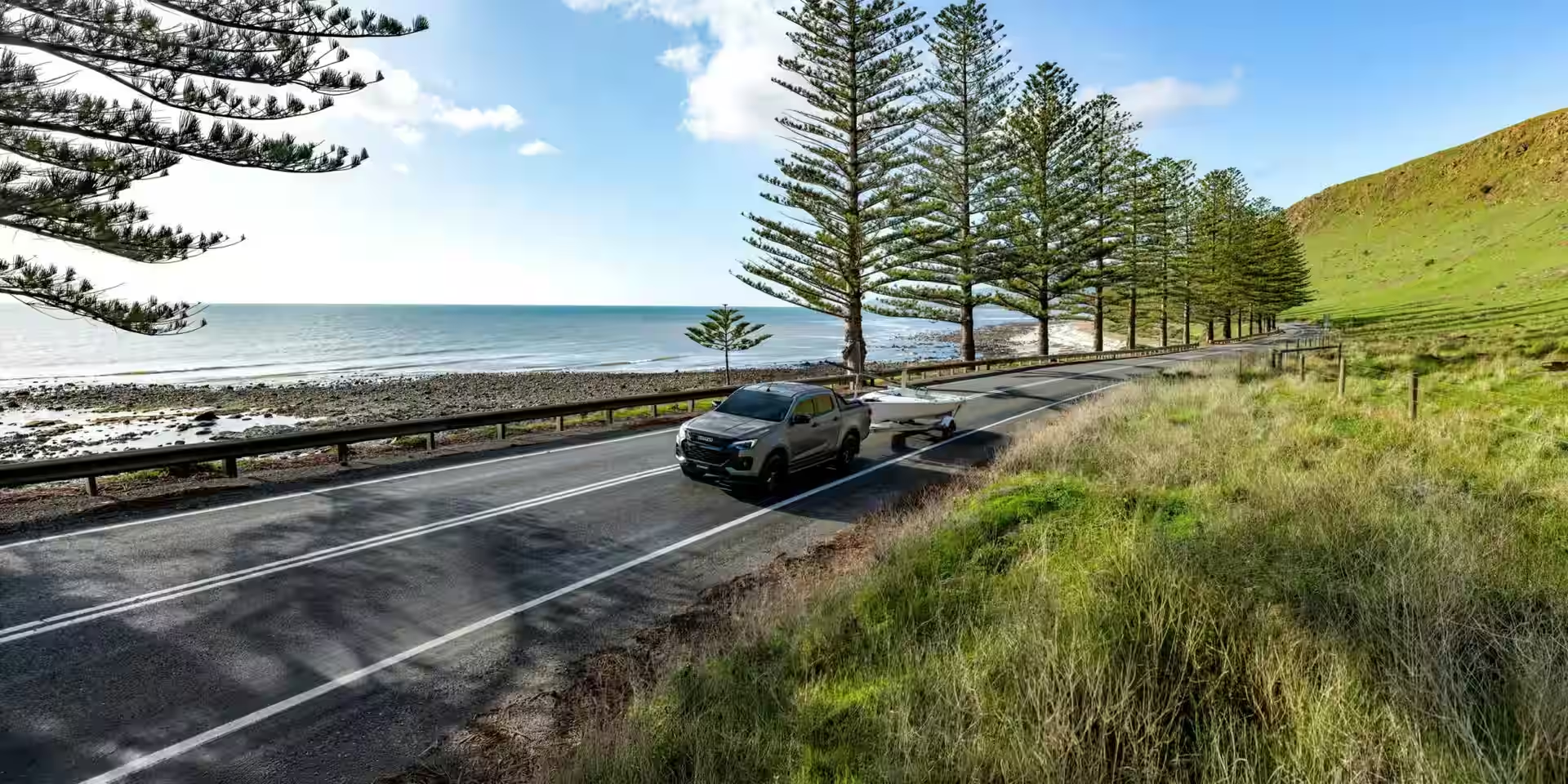
At highway speed, the D-Max is not crude, but it is less polished than its newer, more lifestyle-oriented rivals. Body roll is controlled well enough, and the chassis does not wallow the way softer SUVs sometimes do, including Isuzu’s own MU-X cousin. Steering feel is notably dead, wind noise becomes audible, and the diesel clatter is present once revs climb beyond 2,500 rpm. These are not fatal flaws for a working pickup, but they define the truck’s position in the market with precision.
What matters is that these shortcomings do not undermine the core mission. The D-Max still feels stable, predictable, and easy to place. It does not try to mask its commercial roots, and in a class increasingly preoccupied with car-like manners, that restraint has become a differentiator. Buyers who want a quieter, more isolated experience can spend more on a Ranger, Hilux, or another premium-flavored ute. Buyers who want the basics executed properly still find the D-Max persuasive.
Pricing and Positioning Explain the Loyalty
The strongest case for the D-Max is economic, not emotional. In Sri Lanka, the 3.0-liter truck under review lands around LKR 23,000,000, while similarly equipped Hilux and Ranger versions can rise above LKR 25,000,000. In Australia, the range starts around AU$36,000 before on-road costs for the base 2.2-liter single cab, while the 3.0-liter crew cab variants typically span AU$55,000 to AU$70,500 for the X-Terrain. Those numbers place the D-Max below the most aggressively optioned rivals in the areas buyers actually shop.
That price structure reinforces the model’s fleet logic. Lower acquisition cost, known diesel durability, straightforward packaging, and accessible controls combine into a truck that is easy to defend in a spreadsheet and easy to live with in the field. Isuzu may not dominate the spec race, but it does not need to if the ownership case remains stronger. The D-Max is proof that pickup buyers still reward substance when the substance is consistently engineered.
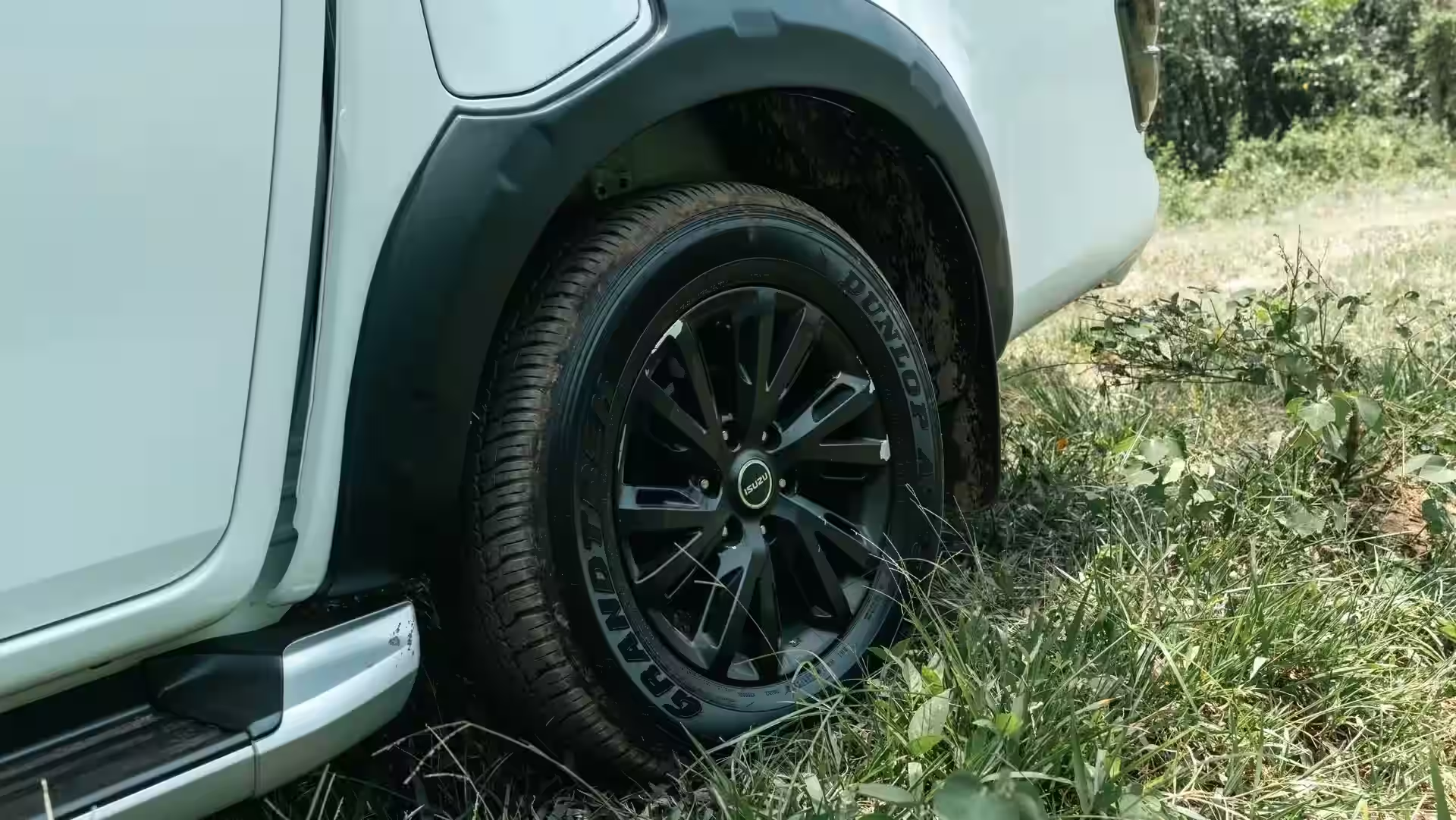
The Market Lesson Hidden Inside the D-Max Formula
The 2026 D-Max is not trying to become a crossover with a tray. It is a workhorse that has been polished just enough to serve as a daily driver, and that distinction explains its staying power. The combination of 188 HP, 450 Nm, a 3,125 mm wheelbase, and a part-time 4WD system gives it a hard-edged identity that never feels accidental. The truck’s appeal lies in how little of its core brief has been diluted.
That makes the D-Max relevant in a market where many rivals chase broader appeal at the expense of clarity. Buyers who want the most powerful diesel, the richest cabin, or the slickest infotainment have other options. Buyers who want a dependable, repair-friendly pickup with a strong reputation in tough markets still have a compelling reason to choose Isuzu. The D-Max does not win every battle, but it keeps winning the one that matters to its owners.
Technical Specification Snapshot
| Item | 2026 Isuzu D-Max 3.0 Diesel |
|---|---|
| Engine | 3.0-liter turbocharged inline-four diesel |
| Power | 188 HP / 139 kW |
| Torque | 450 Nm / 332 lb-ft |
| Drivetrain | Part-time four-wheel drive |
| Front Suspension | Independent double wishbone with coil spring |
| Rear Suspension | Semi-elliptic leaf spring |
| Wheelbase | 3,125 mm |
| Curb Weight | 1,965 kg |
| Length | 5,295 mm |
| Width | 1,870 mm |
| Height | 1,810 mm |