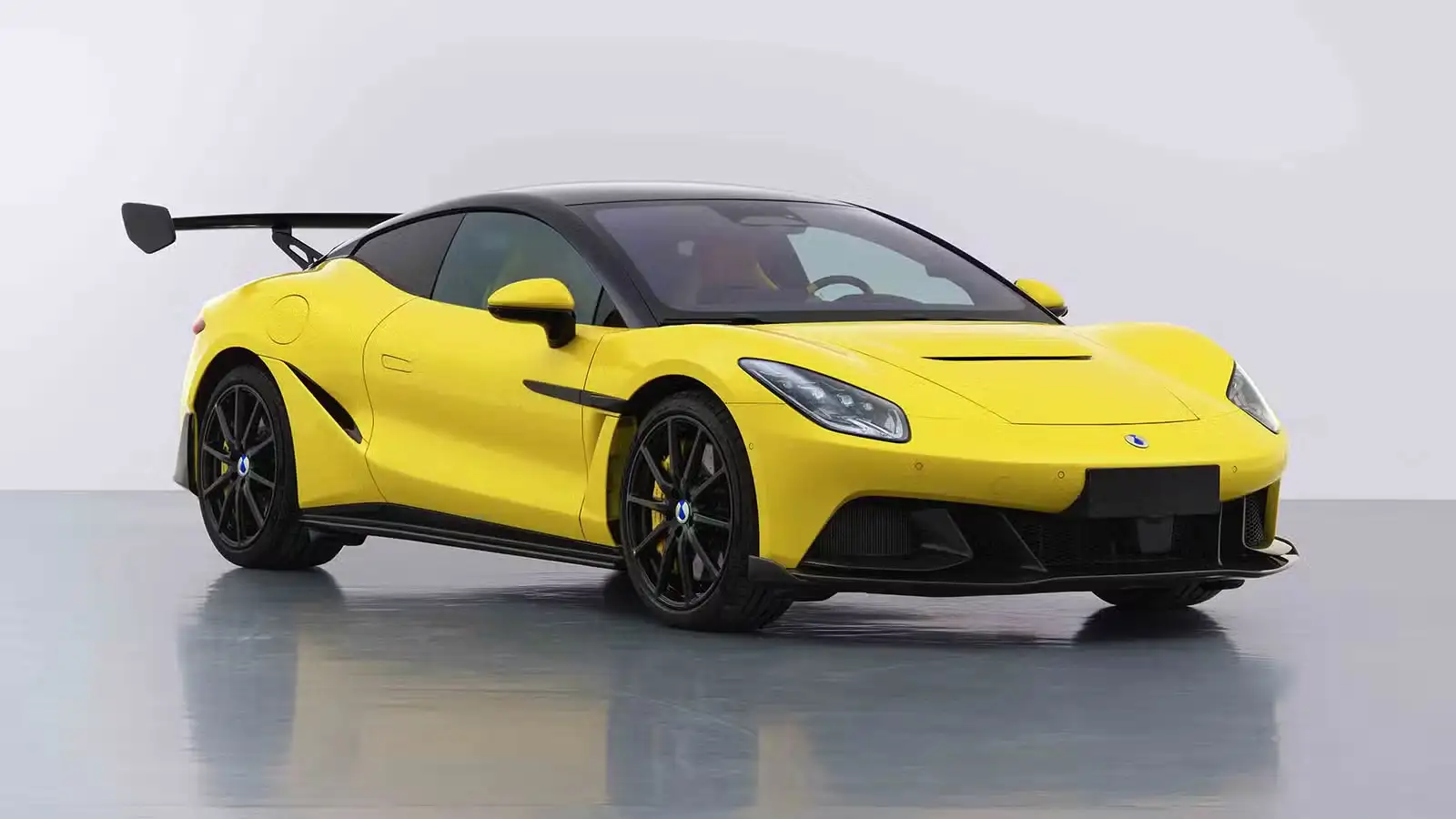
Technical Specs
| Specification | Denza Z |
|---|---|
| Powertrain | Tri-motor electric system |
| Front motor peak output | 500 kW |
| Rear motor peak output | 340 kW + 340 kW |
| Combined peak output | 1,180 kW (1,582 hp) |
| Top speed | 300 km/h; 350 km/h |
| Length | 4,780 mm to 4,870 mm |
| Width | 1,990 mm |
| Height | 1,330 mm or 1,350 mm |
| Wheelbase | 2,780 mm |
| Curb weight | 2,220 kg; 2,240 kg; 2,290 kg |
| Seating capacity | 4 |
| Battery | Blade Battery, LFP chemistry |
| Roof | Carbon fiber roof |
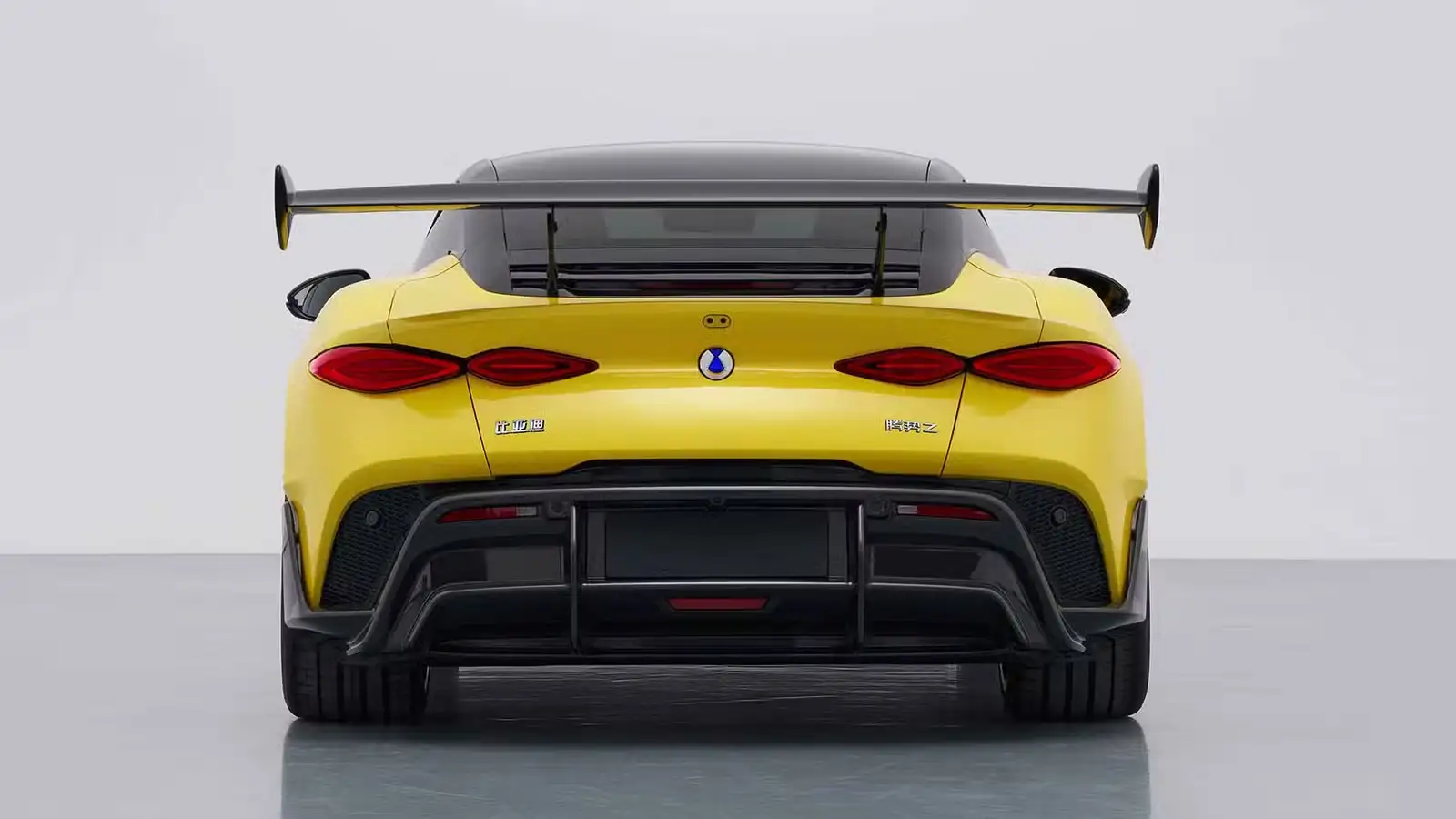
Powertrain Analysis
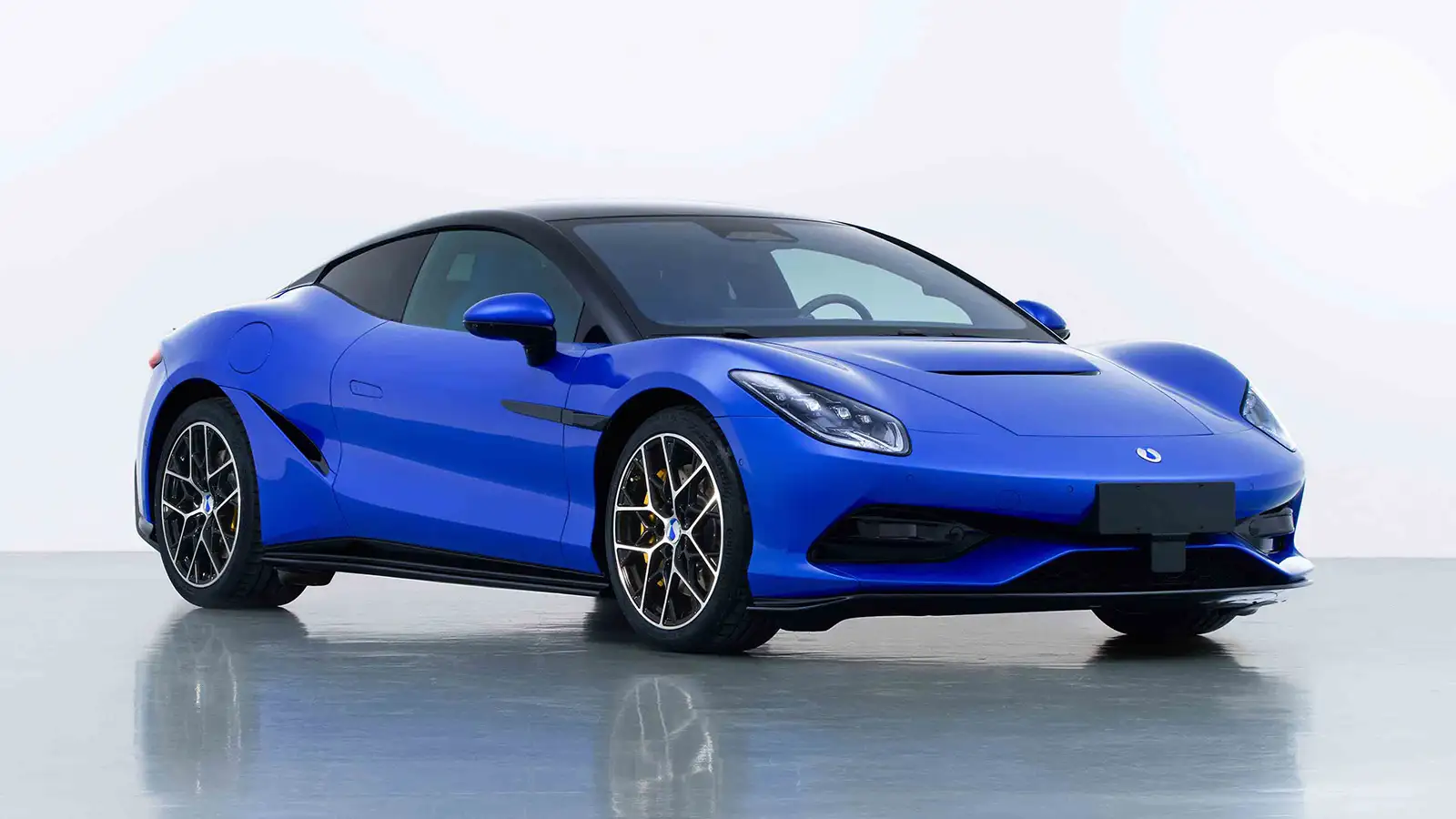
The Denza Z uses a tri-motor electric layout with one front motor and two rear motors. Peak outputs are 500 kW at the front axle and 340 kW on each rear motor, for a combined peak output of 1,180 kW, equivalent to 1,582 hp. The layout supports independent drive from three motors.
The battery is BYD’s Blade Battery using lithium iron phosphate chemistry. The model is positioned as a performance-focused electric sports car, and the powertrain package is paired with e3 technology, which enables independent steering of the two rear wheels. Steer-by-wire is also part of the concept specification.
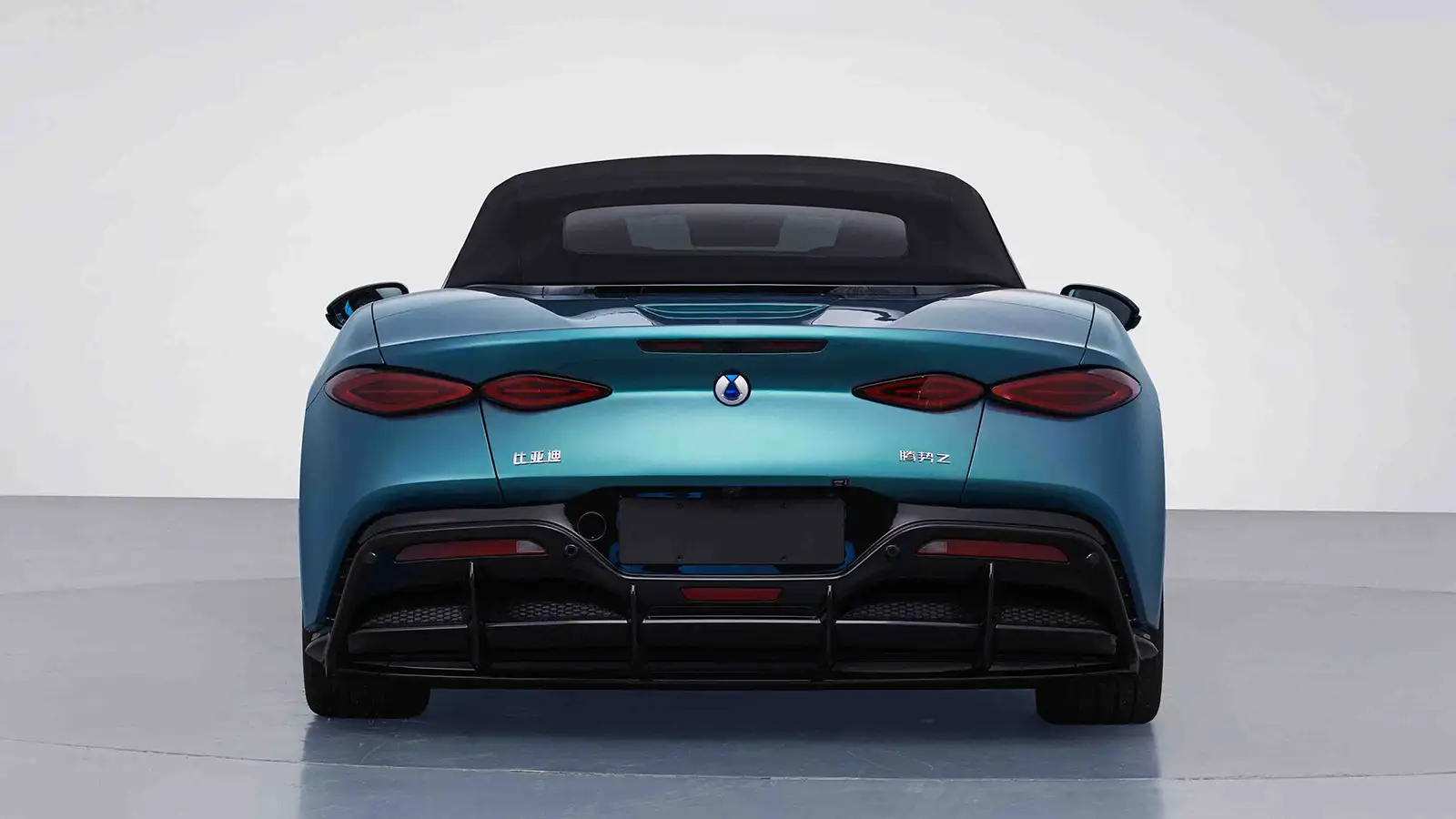
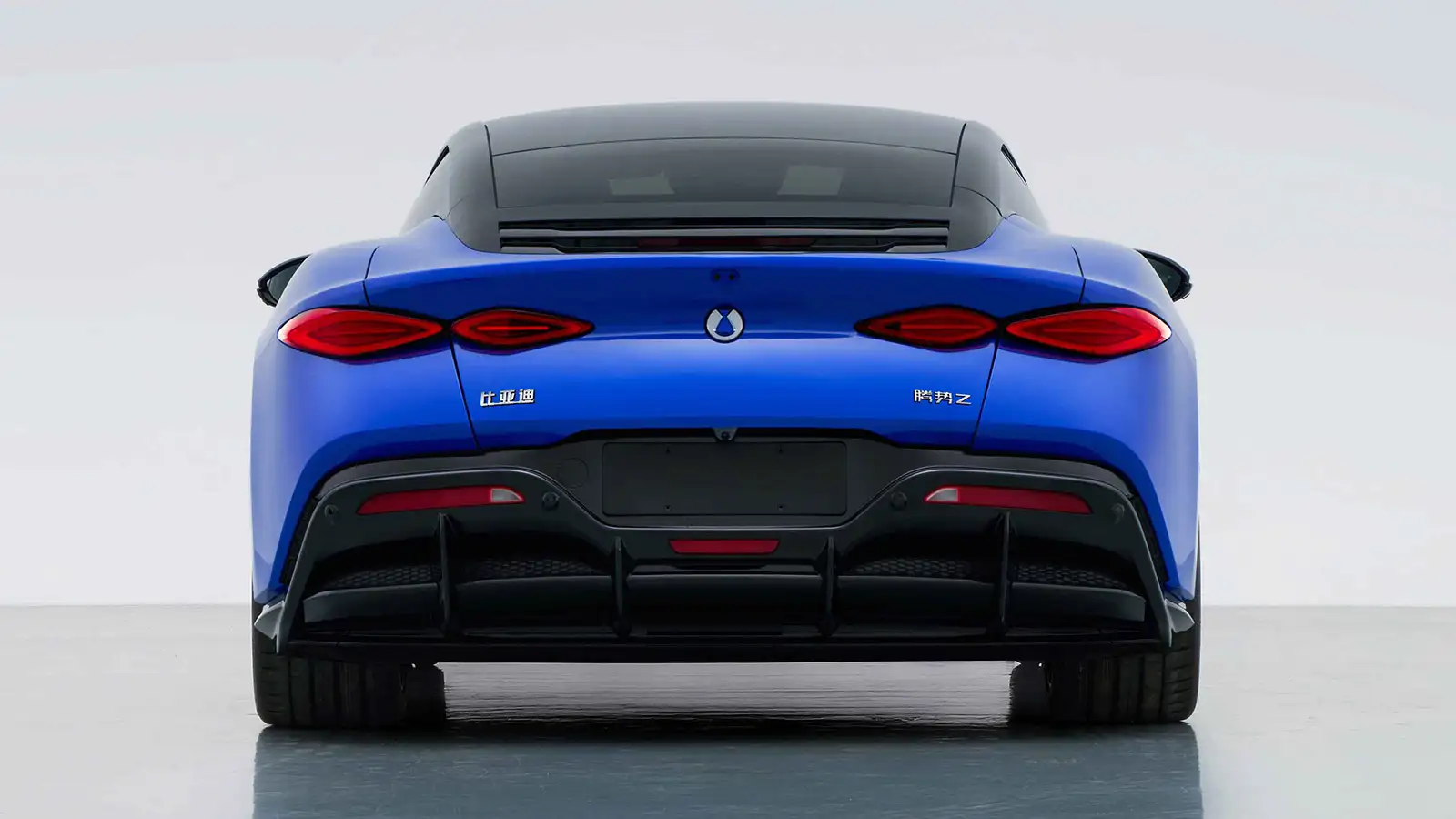
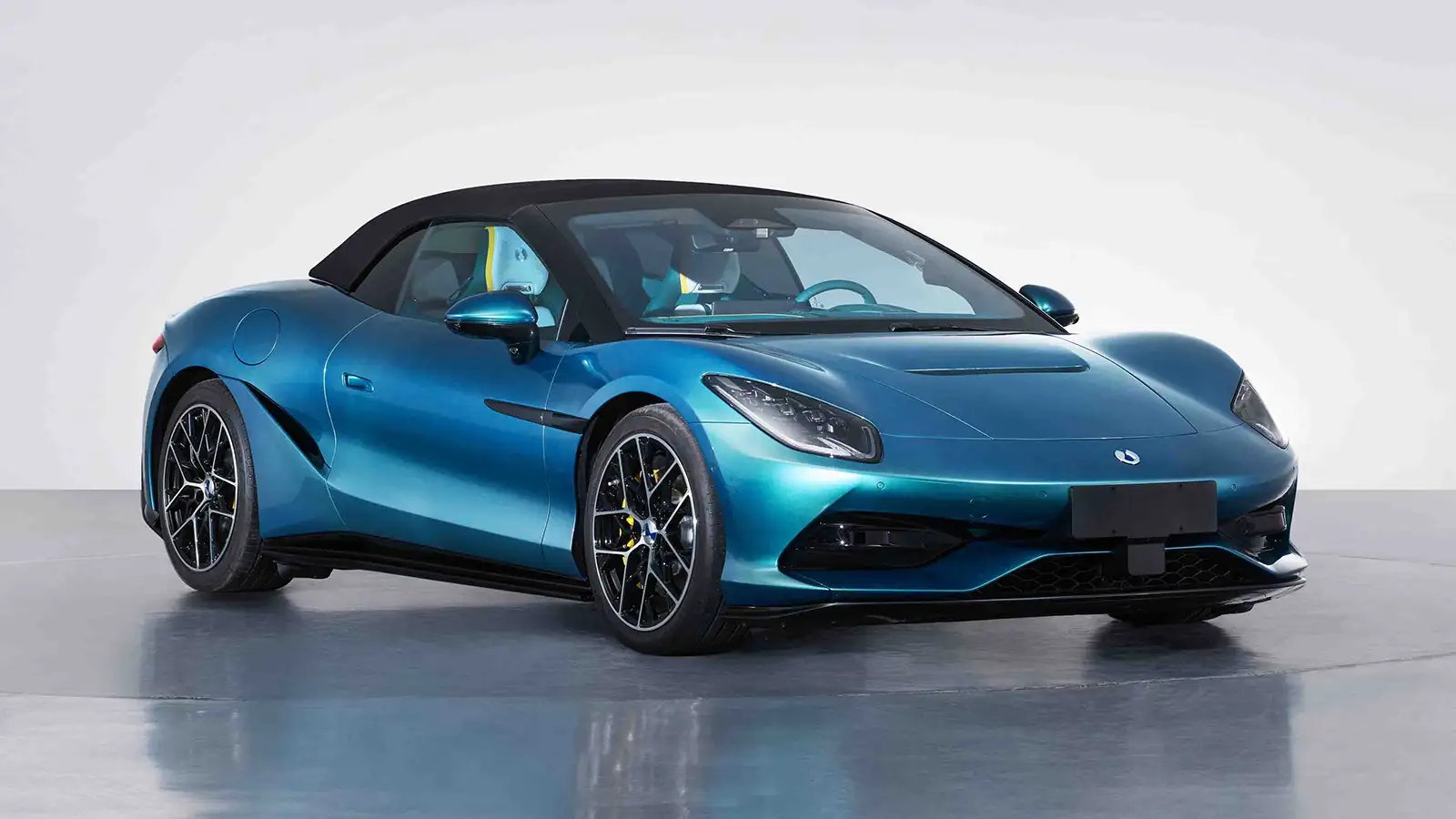
Three body variants are filed: hardtop, soft-top convertible, and performance version. The hardtop and soft-top versions are listed with a 300 km/h top speed, while the performance version is listed with 300 km/h or 350 km/h.
Chassis & Dynamics
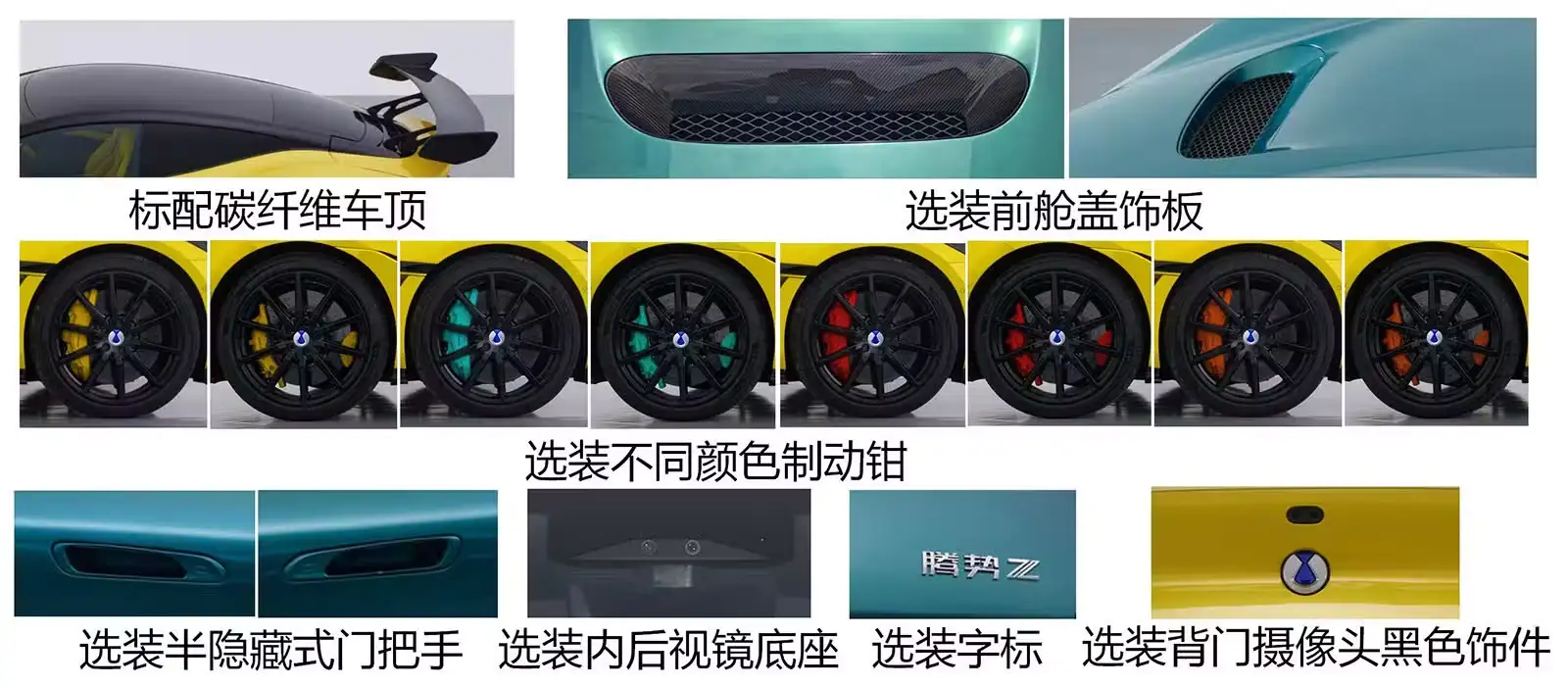
The body range includes a hardtop variant with a carbon fiber roof and a performance variant with the same roof construction. The convertible uses a retractable soft top. Optional equipment includes a rear wing, hood trim panels, different brake caliper colors, and hidden or semi-hidden door handles.
The model is fitted with DiSus-M body control technology based on magnetorheological damping. Damping force builds in less than 10 milliseconds, indicating a fast-response chassis control system aimed at track-oriented use.
The concept also uses a foldable steering wheel and steer-by-wire architecture. No platform name, suspension geometry, brake rotor diameters, or aerodynamic coefficient figures are given in the available specification set.
Dimensions & Practicality
The Denza Z measures 4,780 mm to 4,870 mm in length, 1,990 mm in width, and 1,330 mm or 1,350 mm in height, with a 2,780 mm wheelbase across all variants. Width is fixed, while length and height vary by version and optional rear wing fitment.
All three variants seat four occupants. Curb weight spans 2,220 kg, 2,240 kg, and 2,290 kg, reflecting configuration differences between the hardtop, convertible, and performance versions.
Cargo volume, frunk capacity, interior measurements, and towing capacity are not published in the available data set.
Suggested Articles
- DENZA Z Convertible Takes Aim at Maserati With 1,000 HP
- BYD Sealion 08 Targets Premium SUV Buyers With Big Battery Bet
Comparative Data
| Model | Power | Top speed | Weight |
|---|---|---|---|
| Denza Z | 1,180 kW (1,582 hp) | 300 km/h / 350 km/h | 2,220 kg / 2,240 kg / 2,290 kg |
| Porsche 911 | Not specified in the provided data | Not specified in the provided data | Not specified in the provided data |
| Xiaomi SU7 Ultra | Not specified in the provided data | Not specified in the provided data | Not specified in the provided data |