
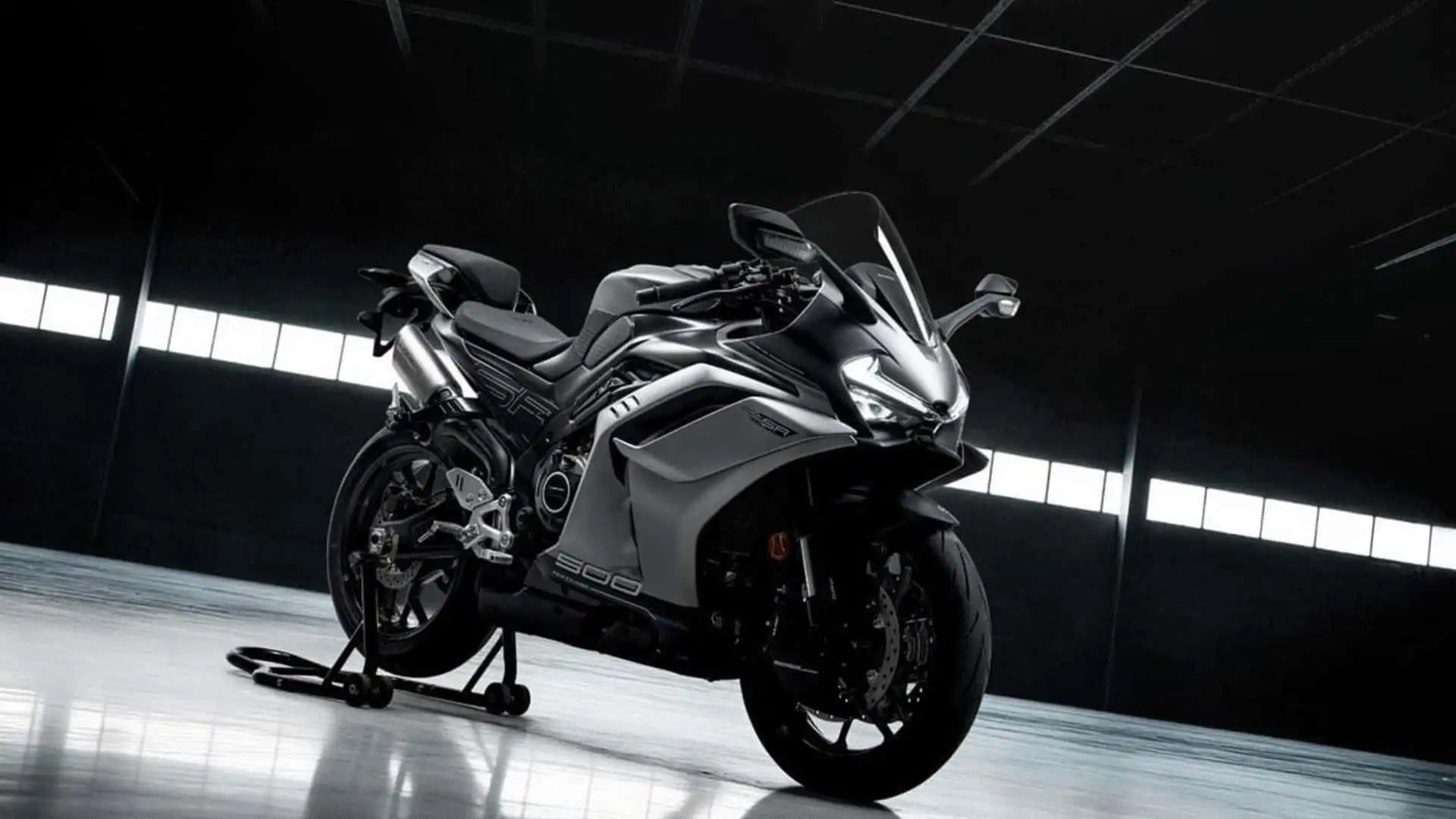
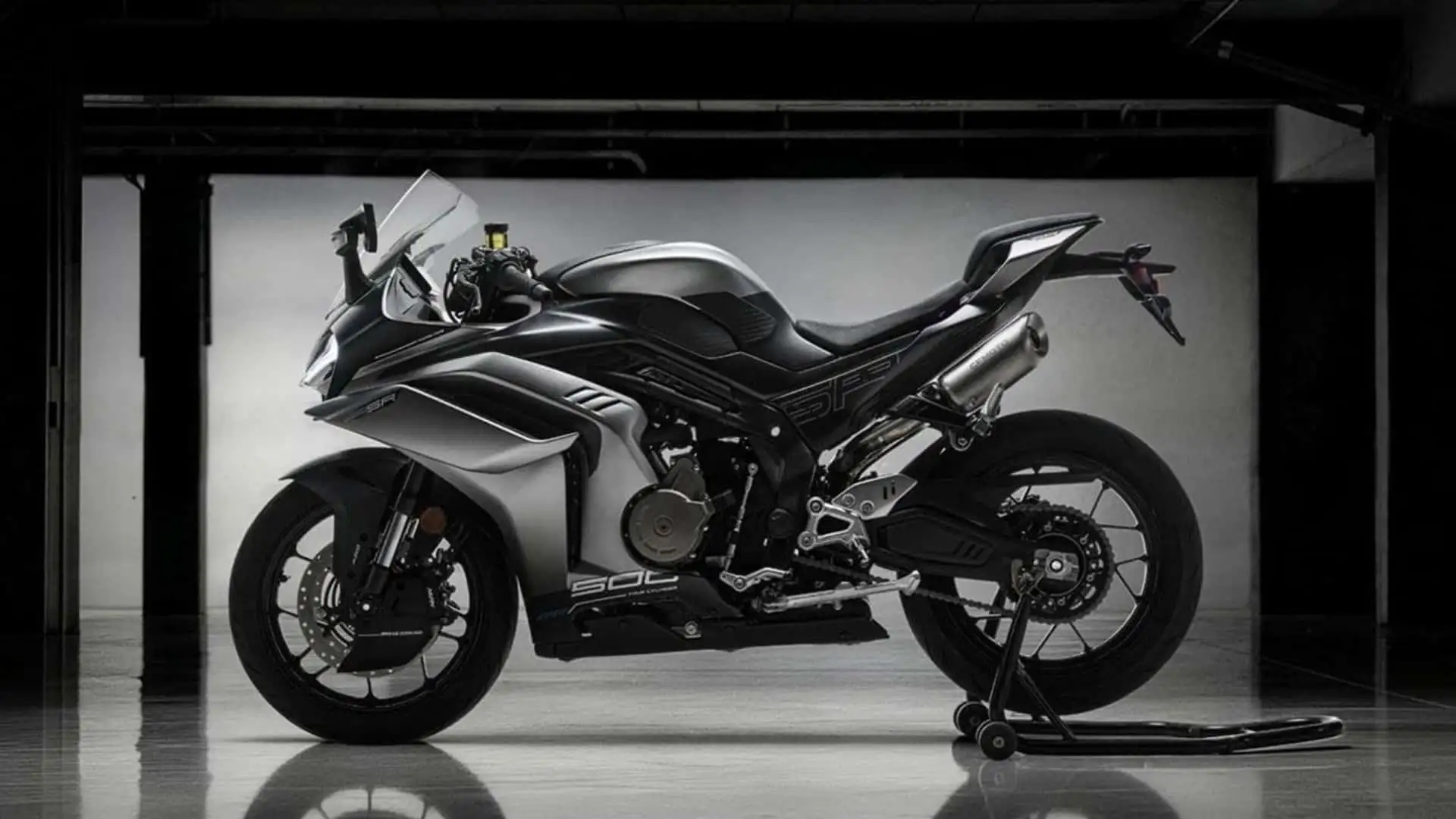
CFMOTO has done more than launch another middleweight sportbike. With the new 500SR, the brand has revived one of motorcycling’s most appealing formulas: a compact inline-four that rewards revs, not just displacement. In a segment increasingly dominated by twins and torque-first tuning, that alone makes the 500SR relevant. It also makes it the clearest challenge yet to the Kawasaki Ninja ZX-4RR, which has effectively stood alone as the only modern mainstream four-cylinder machine in this class.
| Critical Spec | CFMOTO 500SR |
|---|---|
| Engine | 500 cc inline-four |
| Peak Power | 78.9 hp |
| Peak Torque | 36 lb-ft |
| Redline | 12,500 rpm |
| Curb Weight | 412 lb |
| Seat Height | 805 mm |
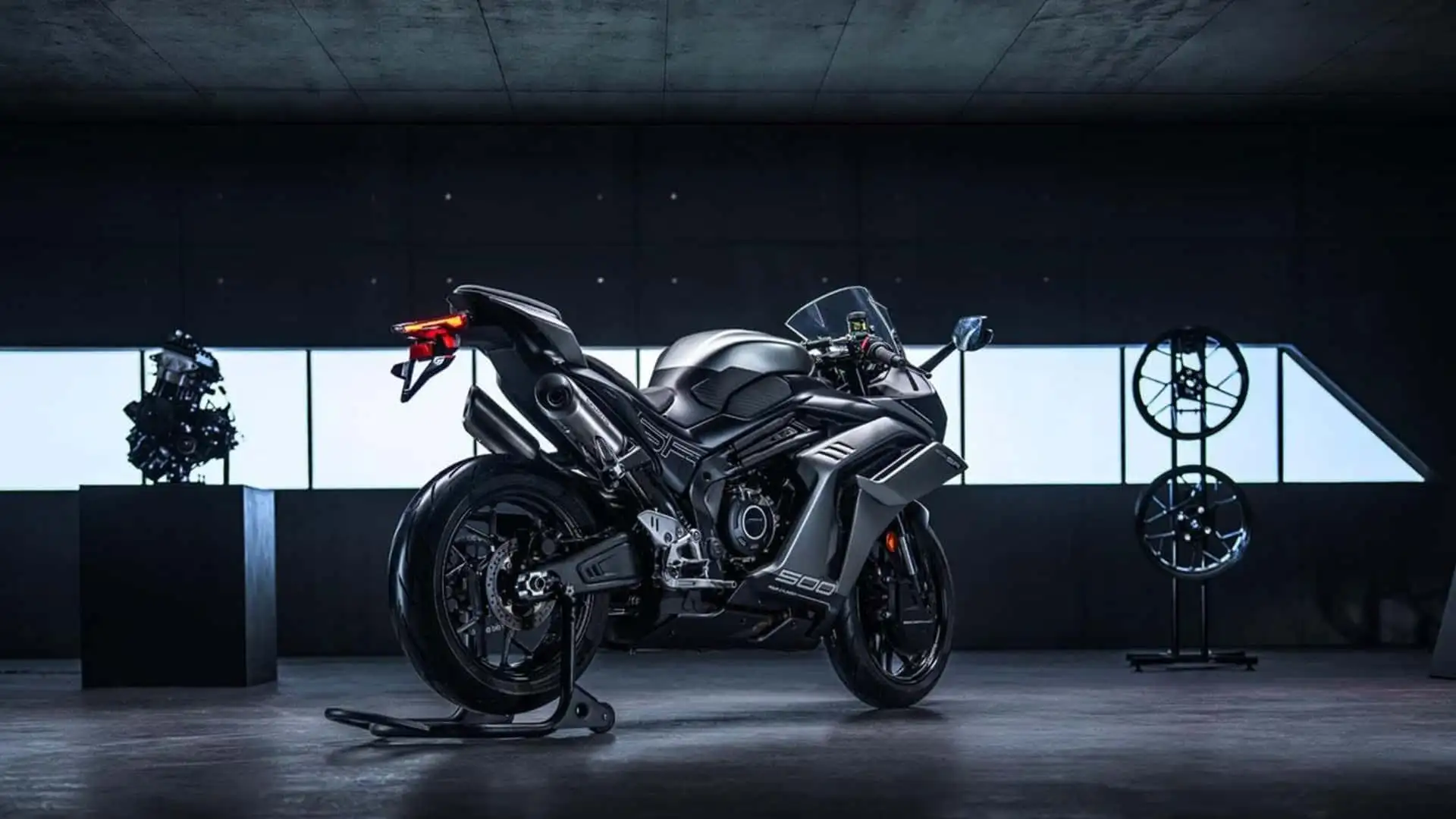
The Inline-Four Is The Point, Not The Afterthought
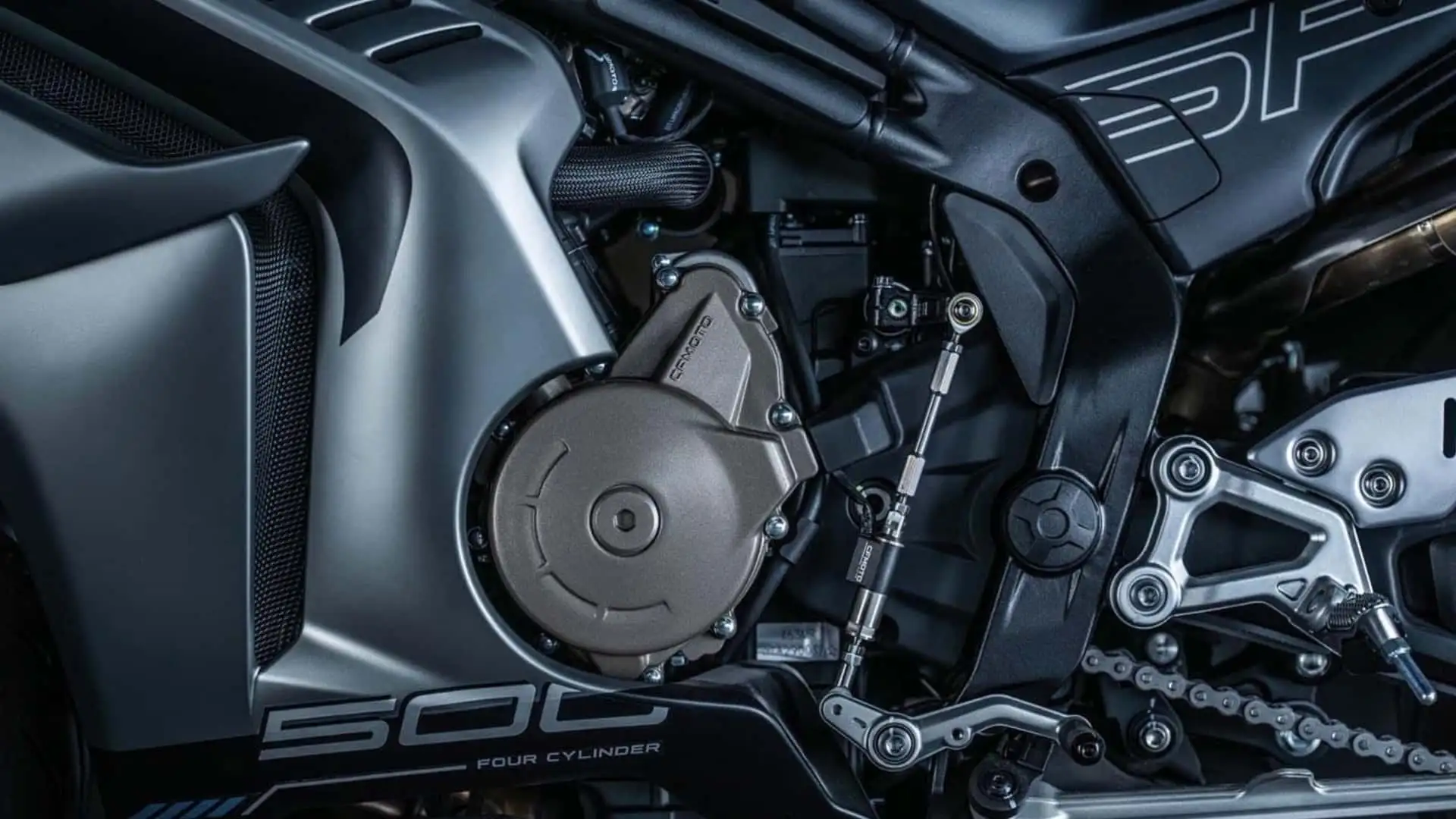
The 500SR’s engine philosophy is what separates it from the usual middleweight chatter. CFMOTO has tuned the 500 cc four-cylinder to deliver the kind of smooth, building top-end power curve riders associate with classic Japanese sportbikes, but with contemporary refinement. Bosch fuel injection handles the fueling, while a revised camshaft and improved vibration damping suggest this is not a parts-bin exercise. The slipper clutch is also specifically tuned for stability during aggressive downshifts, which matters more on a rev-happy engine than many brochures admit.
The result is a bike that should feel useful around town, responsive on back roads, and properly alive once the tachometer swings toward the top end. That’s a very different brief from the broad-torque, low-effort character many riders have grown accustomed to.
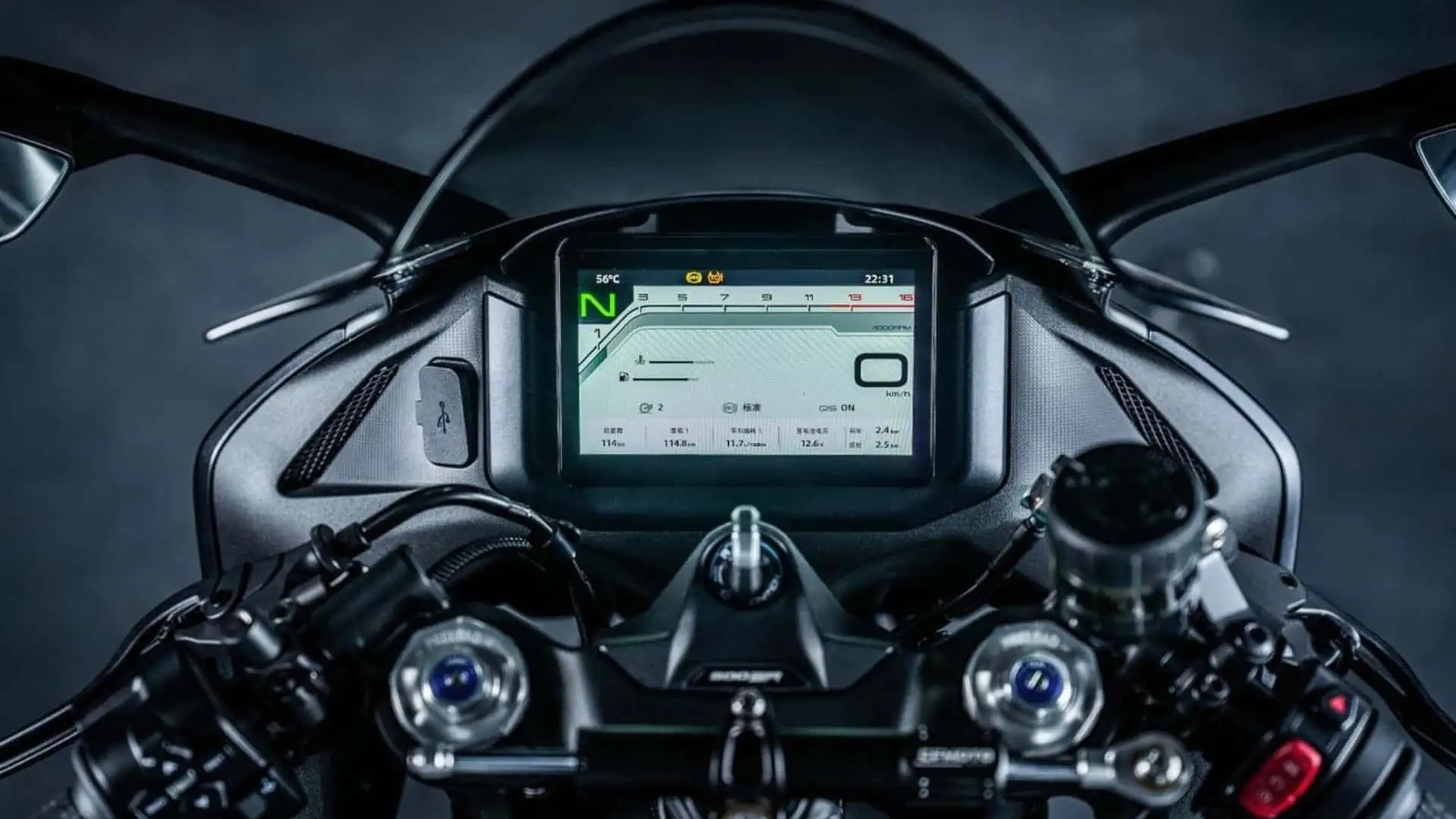
Chassis Hardware Shows Serious Intent
What makes the 500SR more convincing is that CFMOTO did not stop at the engine. The bike uses a steel trellis frame paired with a double aluminum swingarm, a combination chosen for structure, feedback and controlled flex rather than styling alone. Up front is a 41 mm inverted fork with full adjustability, joined by an adjustable rear shock. That is a meaningful specification in this class, because it gives riders a real chance to tailor the bike for road use, track days or a heavier load without relying on aftermarket fixes.
Braking is handled by Nissin radial calipers and Continental ABS, which is a sensible and credible setup. It does not chase headline-grabbing exoticism, but it does emphasize the kind of predictability riders actually notice when pushing hard into a corner or braking repeatedly on a mountain road.
For riders watching the premium end of the market, this mirrors a larger trend: more brands are using honest hardware to create value instead of overpromising with software. That same logic is visible in the CFMOTO IBEX 950 Chega Cedo Com DNA Da KTM coverage, where platform credibility mattered as much as feature count.
Dimensions, Ergonomics And Tech Keep It Accessible
At 412 lb, the 500SR sits in the expected weight window for a middleweight four-cylinder sportbike, and the 805 mm seat height should keep it approachable for a wide spread of riders. The 1,395 mm wheelbase points to a deliberate balance between stability and agility, which is exactly where a bike like this needs to live if it is going to work on real roads instead of only in spec-sheet comparisons.
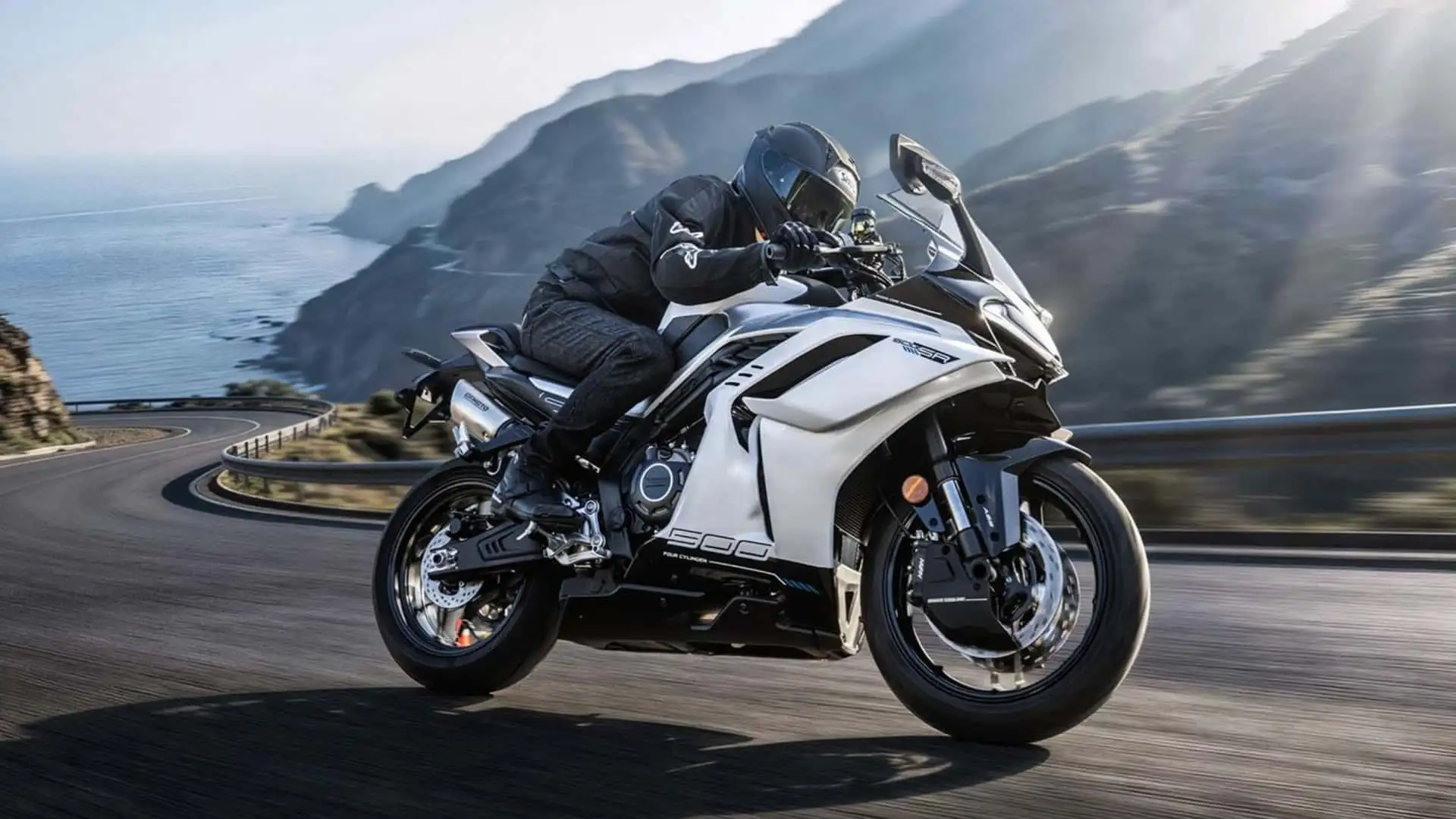
The tech package is deliberately restrained. You get a 6.2-inch TFT display, traction control, full LED lighting, self-canceling turn signals and brake cooling ducts. That is enough to modernize the experience without distracting from the riding itself. Importantly, CFMOTO has avoided piling on gimmicks that would add cost without improving the core product.
Why This Bike Matters Beyond China
In China, the 500SR is reported at the equivalent of around $4,200 USD, which is the sort of figure that forces serious attention even before local taxes and market adjustments enter the conversation. The exact export price is still the crucial unknown, but even a significantly higher international sticker could leave the 500SR dangerously well positioned against established Japanese rivals.
That matters because the sportbike market has not exactly been overflowing with new inline-four middleweights. Riders have repeatedly been told that twins are enough, that emissions and cost have killed the old formula, and that high-revving four-cylinder charm belongs to the past. CFMOTO is challenging that assumption with a machine that looks engineered rather than nostalgic for nostalgia’s sake.
FAQ
Yes. It is one of the few modern mainstream inline-four middleweight sportbikes, which makes it directly relevant to ZX-4RR shoppers.
High-revving four-cylinder character, supported by a trellis frame, adjustable suspension and a slipper clutch tuned for downshift control.
Its hardware suggests both, but the approachable seat height, manageable weight and restrained electronics make it especially credible for road riding.
It revives a formula many riders thought had disappeared: a usable, affordable, high-revving inline-four sportbike with genuine feedback.
If CFMOTO exports it at a competitive price, it could pressure rivals to justify why four-cylinder middleweights should remain expensive or rare.