
Imagine requesting a rideshare car and, instead of a regular vehicle, being surprised by an imposing armored car. This scene, worthy of a movie script, took place in São Paulo and went viral on social media. The protagonist of this unusual story is Vinícius Carvalho, a digital influencer with over 300,000 followers on Instagram, known as @_ocarrochefe. His bold idea to use an armored car as an Uber quickly turned into a saga filled with twists, confrontations with the law, and a lot of buzz.
The adventure began when Vinícius, looking to innovate in his online content and have a “unique” car, purchased an armored car at an auction. At first, the purchase seemed like a joke, a way to shock and generate engagement on social media. However, the influencer took the idea further and registered the armored vehicle on a rideshare app, offering rides in the Uber Black category. The reaction of people encountering an armored car as a transportation option was immediate and went viral, transforming what started as a joke into an internet phenomenon.
Boldness on the Edge of Illegality: Armored Car Uber and Brazilian Legislation
The armored car, designed to transport high-value goods and valuables, began to circulate the streets of São Paulo as a rideshare vehicle, providing a unique and, for some, even fun experience. However, Vinícius’s boldness soon ran into an insurmountable obstacle: Brazilian legislation. The use of armored cars is strictly regulated in Brazil, restricted to security companies authorized by the Federal Police and approved by the Brazilian Army. The law is clear: an armored car cannot be used as a common vehicle, much less for passenger transport through a rideshare app.
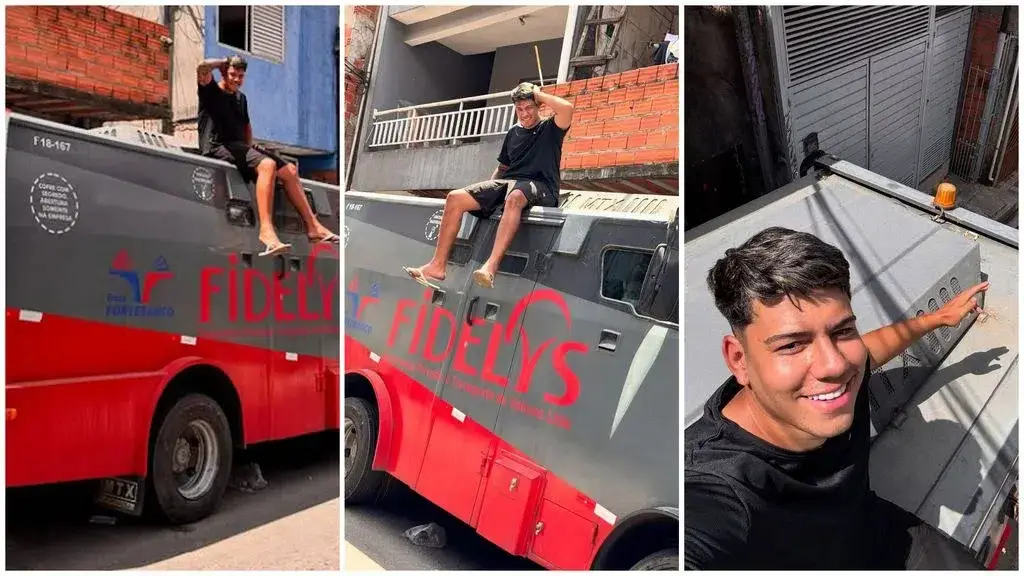
The legislation requires that armored cars have a Registration Certificate (CR) issued by the Army and adhere to a series of specific regulations. These rules aim to ensure safety in the transport of valuables and prevent the misuse of these vehicles. The idea of a civilian using an armored car for private purposes, such as a passenger vehicle or Uber, is considered a serious infraction as it challenges traffic and public safety norms. Vinícius, even after acquiring the armored car legally at auction, faced the complexity of the law when attempting to use it for a purpose completely different from what it was designed for.
From Viral to Canceled Ride: Police Intervention and the End of the Armored Car Uber Adventure
Aware of the legal risks, Vinícius himself anticipated the “headaches” that his venture could cause. The prediction came to fruition when, during one of his “rides” with the Uber armored car, he was approached by a police vehicle in São Paulo. The officers, upon identifying the vehicle and its irregular use, conducted a stop to verify the legality of the situation. The incident quickly gained media attention, turning the story of the Uber armored car into national news.
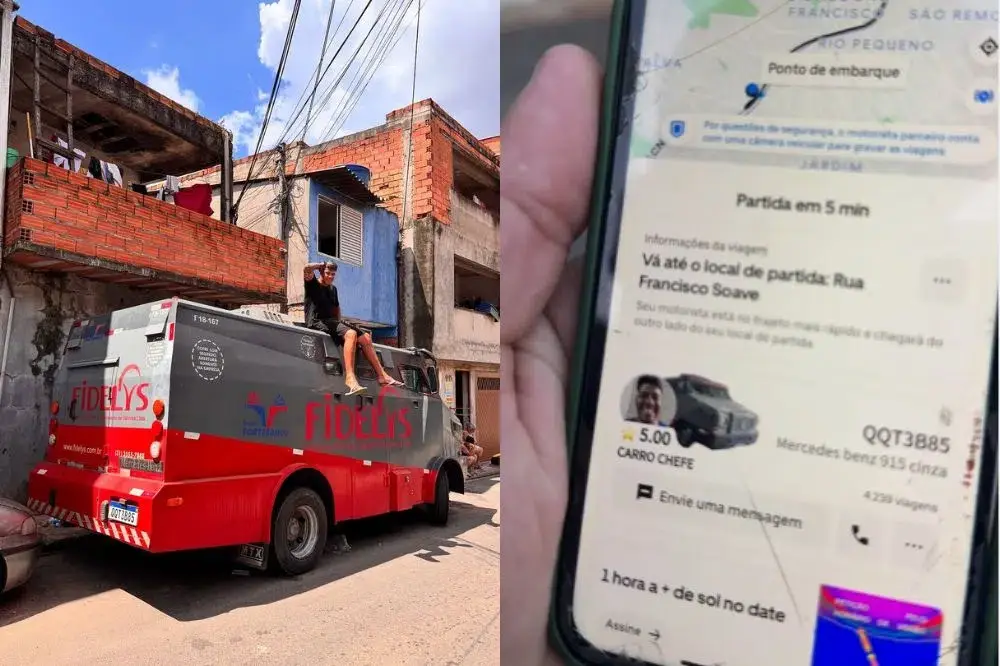
The media coverage highlighted not only the curiosity of the situation but also raised important questions about the control of armored vehicles and the oversight of such auctions. After all, how could an armored car, a vehicle with such specific regulations, be acquired by a civilian and used in such an unusual way? There is still no precise information about the legal consequences for Vinícius, whether the armored car was seized, or if the influencer faced any punishment. However, the episode certainly marked the end of the brief and controversial career of the Uber armored car.
Armored Car Auctions: A Market with Rules and Necessary Oversight
The sale of armored cars, as mentioned, is a restricted and regulated market. These vehicles, equipped with high-tech armor and protection, are intended exclusively for the transport of valuables and high-risk goods. The commercialization occurs through auctions controlled by competent authorities, such as security companies and financial institutions, ensuring a certain level of oversight over who acquires these vehicles.