
The V-8 Is Gone, and Jeep Wants You to Notice the Torque Instead
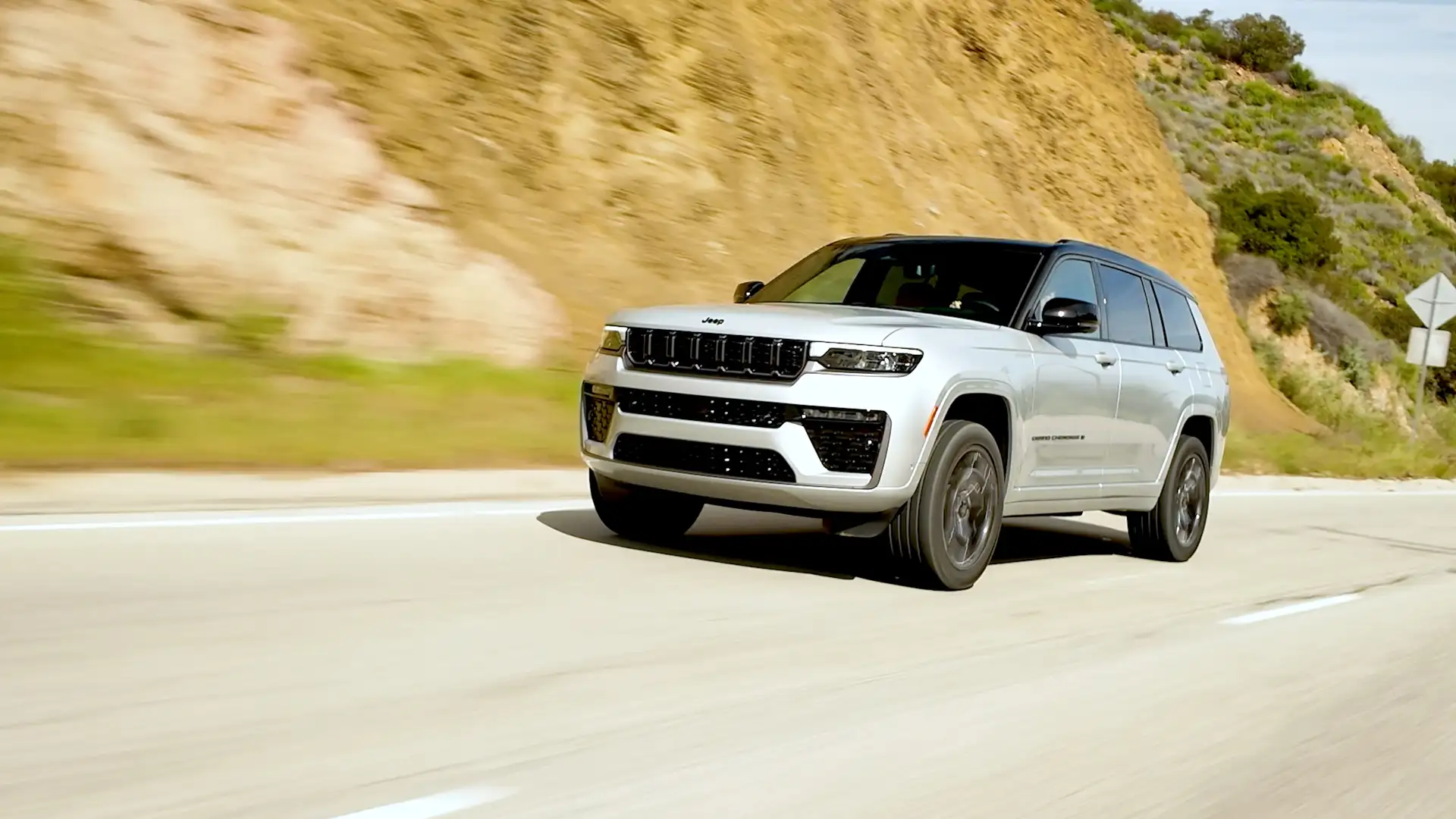
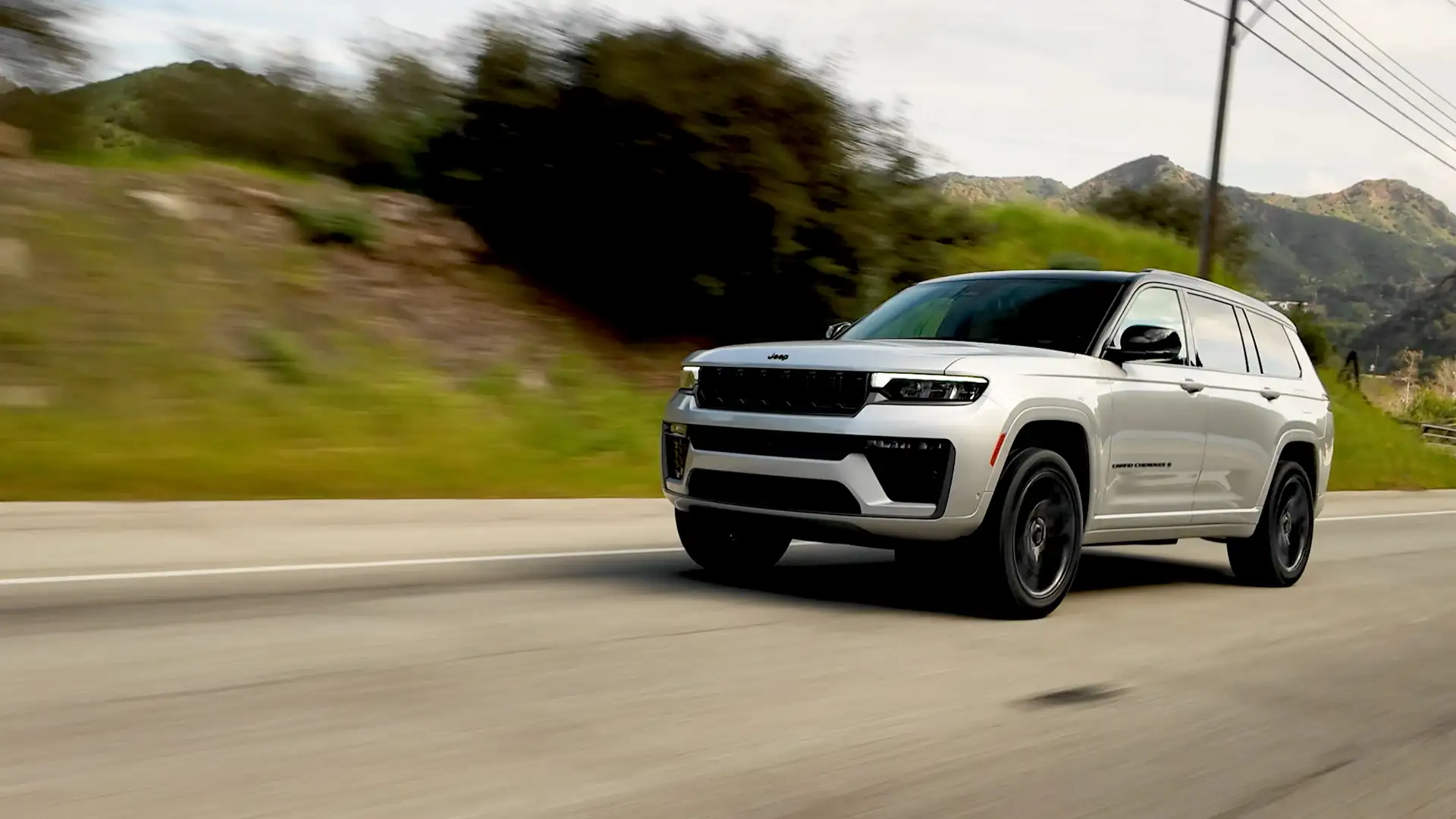
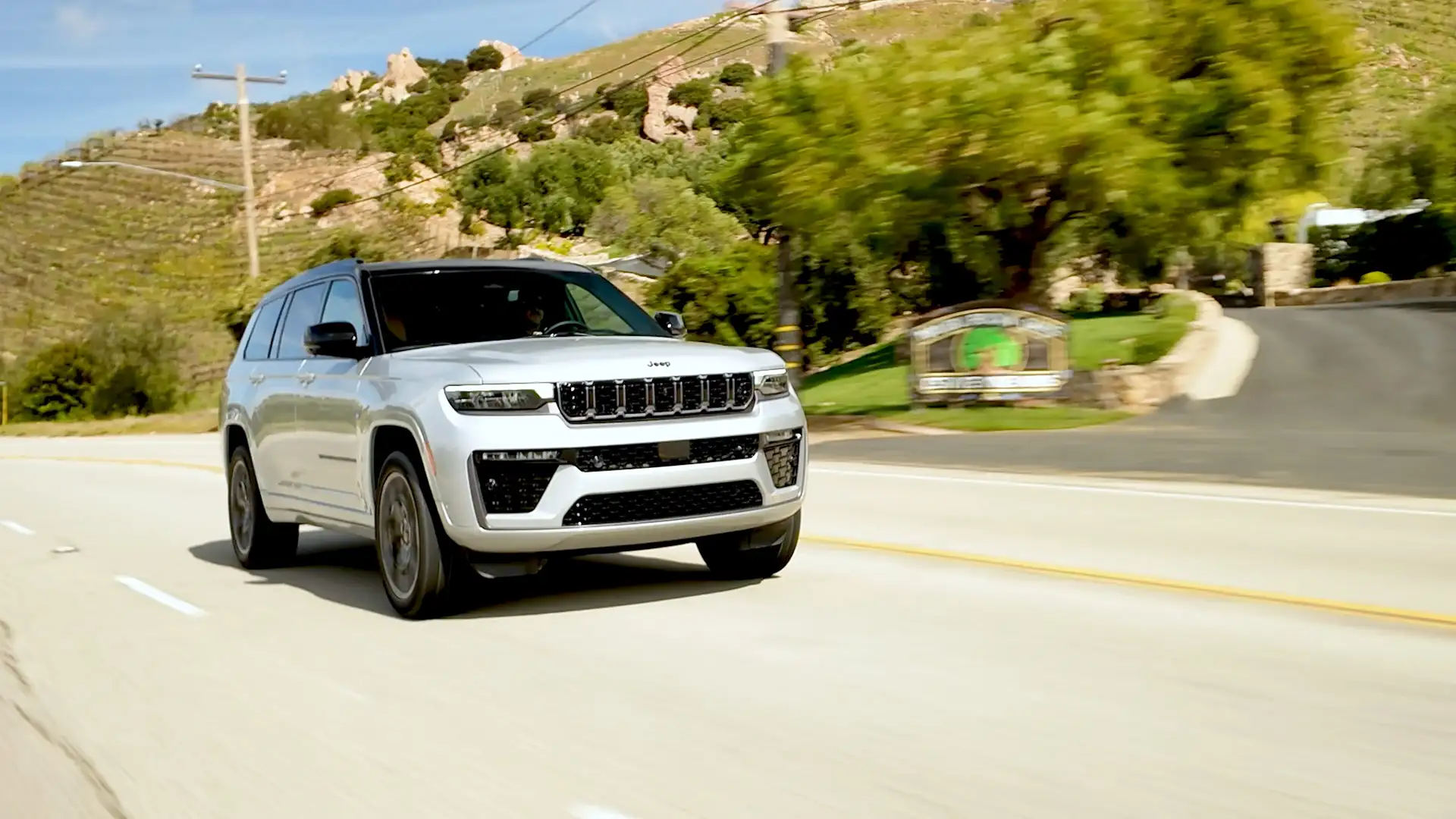
The 2026 Jeep Grand Cherokee L no longer leans on the old 5.7-liter Hemi V-8; its headline engine is now a turbocharged 2.0-liter inline-four with 324 HP and 332 lb-ft, paired with an 8-speed automatic. Jeep’s official play is clear: more power than the 293 HP 3.6-liter Pentastar V-6, less fuel consumption than both the V-6 and the departed V-8. For a three-row SUV that weighs roughly 4,600 to 5,100 lb, that is a meaningful engineering shift rather than a cosmetic one.
On paper, the new Hurricane-badged four-cylinder looks more like a strategic correction than a downsizing apology. Jeep’s EPA figures place the Grand Cherokee L at 22–23 mpg combined, versus 21–23 mpg combined for the V-6 and only 17 mpg combined for the old Hemi. The brand is trying to preserve Grand Cherokee identity while acknowledging that a 121.7-inch wheelbase and 204.9-inch length demand real efficiency in a market where Honda, Toyota, and Chevrolet all sell lighter, cheaper three-row alternatives. See how this positioning mirrors the value-versus-image balancing act in the HONDA PILOT Vs PATHFINDER the Family-suv Winner You’d Miss.

Why the 2.0-Liter Hurricane Works Better Than Its Badge Suggests
The key performance fact is simple: the 2.0-liter turbo has enough torque to move the Grand Cherokee L with authority. Jeep’s longer, heavier seven-seat body adds nearly 300 lb over the two-row Grand Cherokee, yet the vehicle still pulls smartly away from stops and merges onto highways without strain. Car and Driver’s estimate of 0-60 mph in 6.6 to 7.1 seconds places it in genuinely quick territory for a family SUV, not just a “good for the class” one.
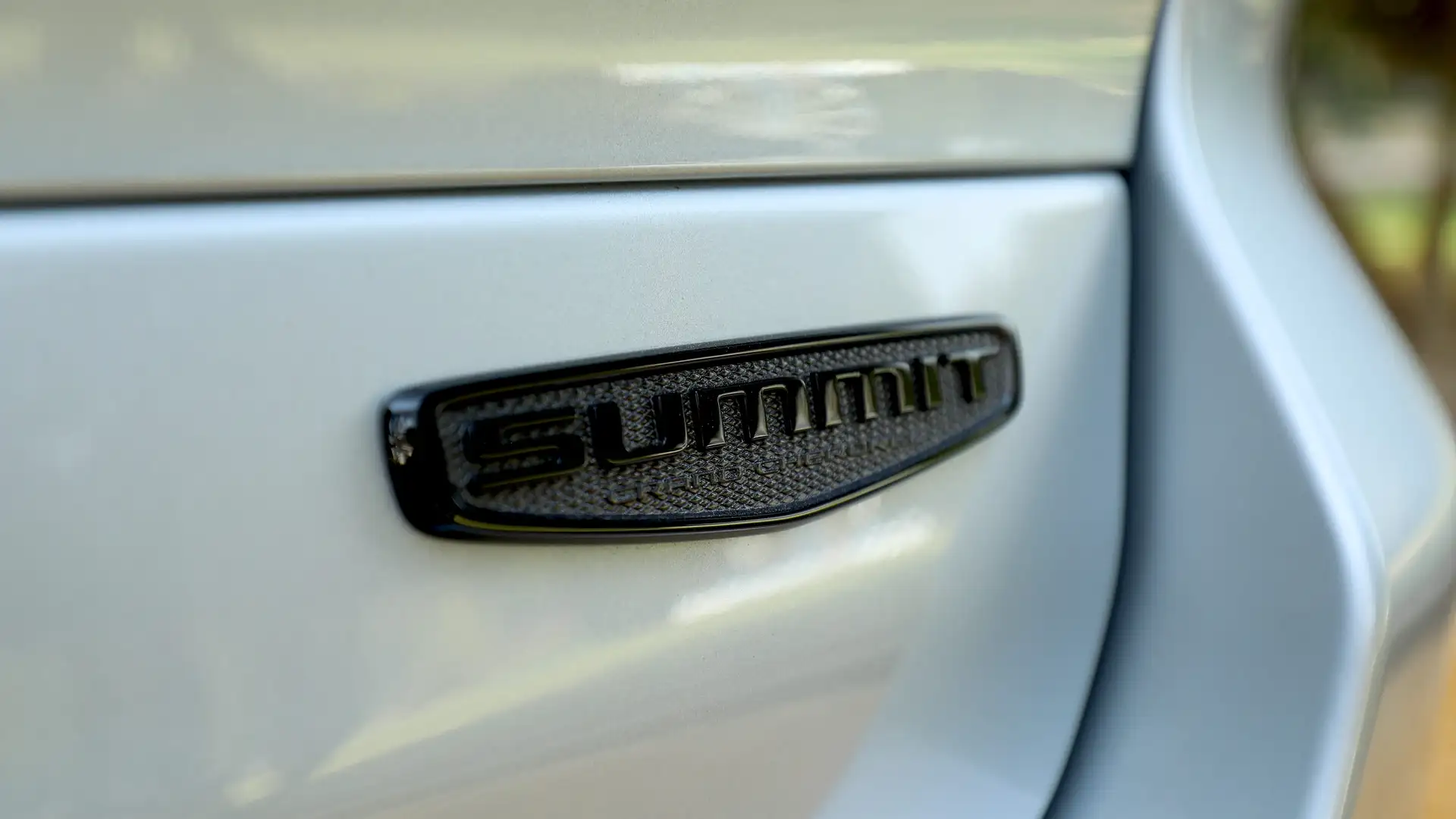
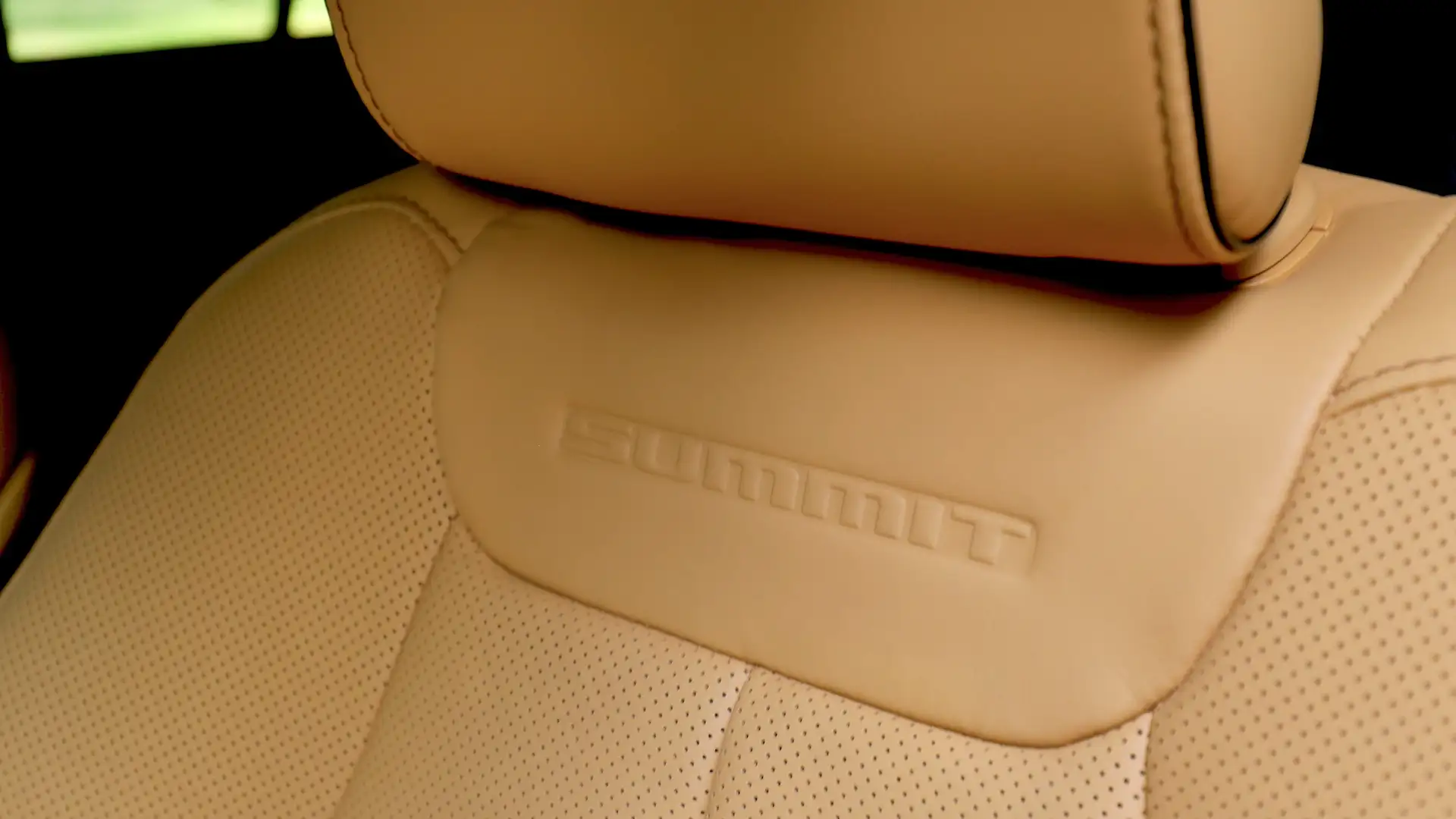
What the numbers do not capture is how that output is delivered. The engine is described as coarse and buzzy, with vibrations making their way into the cabin. That is where the Grand Cherokee L loses some of the premium atmosphere Jeep wants at Summit trim, where the base price starts at $64,595 and a loaded test vehicle reached $73,175. The powertrain may be adequate, but in this price band the ear notices more than the spec sheet. Similar premium-versus-mechanics friction appears in the MERCEDES-BENZ E-CLASS Night Edition Hides a Bigger Shift.

The Eight-Speed Automatic Is the Weak Link in an Otherwise Strong Package
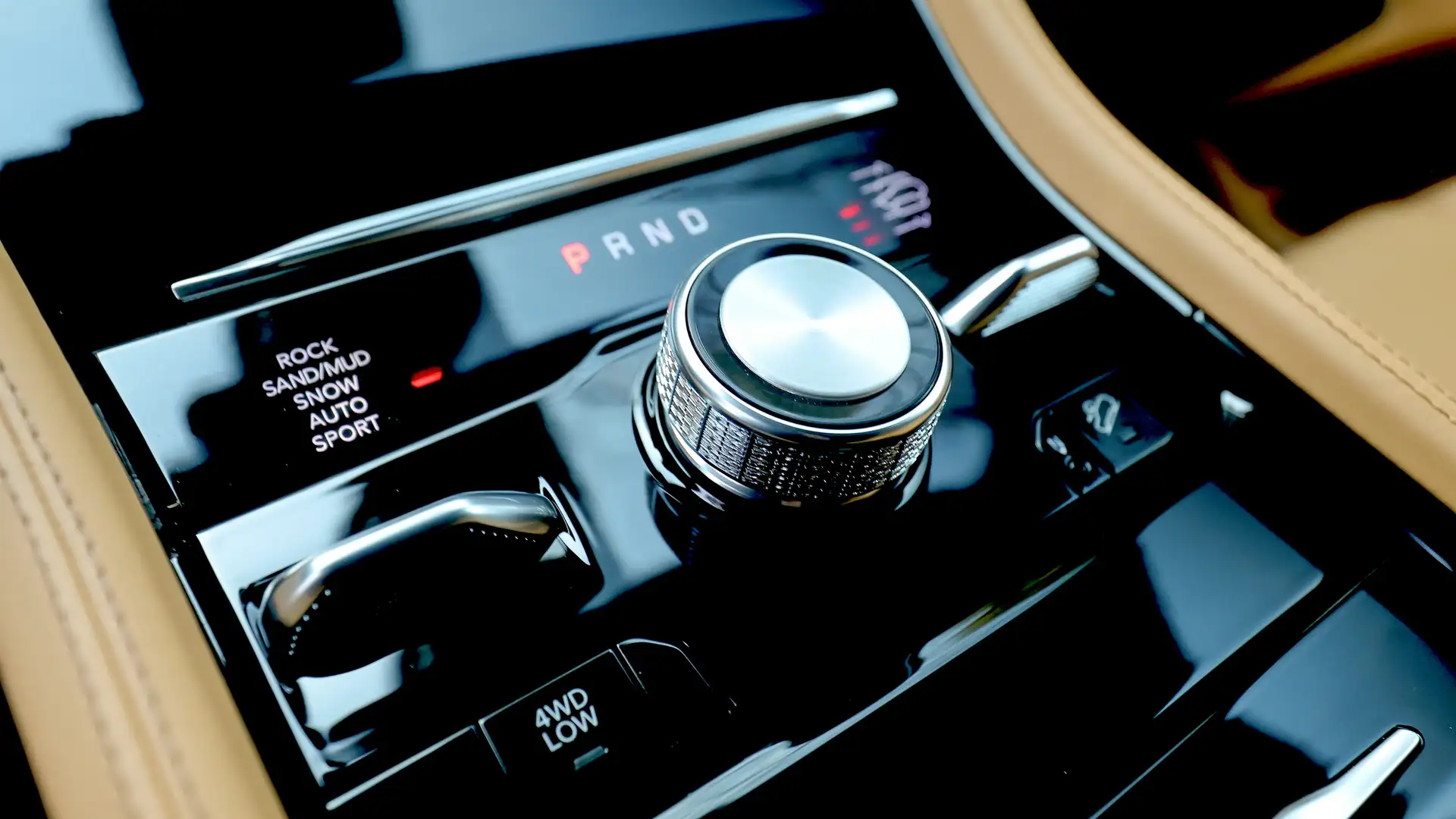
Jeep’s biggest dynamic problem is not lack of power; it is calibration. The 8-speed automatic occasionally delivers jerky upshifts at low speeds and does not downshift with enough urgency, which makes the drivetrain feel flatter than the engine output suggests. In a vehicle that should feel effortless at suburban speeds and secure on two-lane passes, that hesitation is the difference between competent and convincing. It also makes the transmission’s behavior more noticeable than in a lighter, less expensive SUV.
This is especially unfortunate because the Grand Cherokee L still offers legitimate hardware advantages over many rivals. Available air suspension with height adjustment remains unusual in the mainstream three-row class, and Jeep still offers genuine off-road capability instead of the soft-road pose adopted by many competitors. That kind of dual-purpose positioning is exactly why the Grand Cherokee L still sits in a market space few SUVs can match, much like the breadth-versus-focus question raised by the TOYOTA GR YARIS Gets GR Steering, but Morizo RR Goes Further.

Packaging Still Makes the Grand Cherokee L Relevant
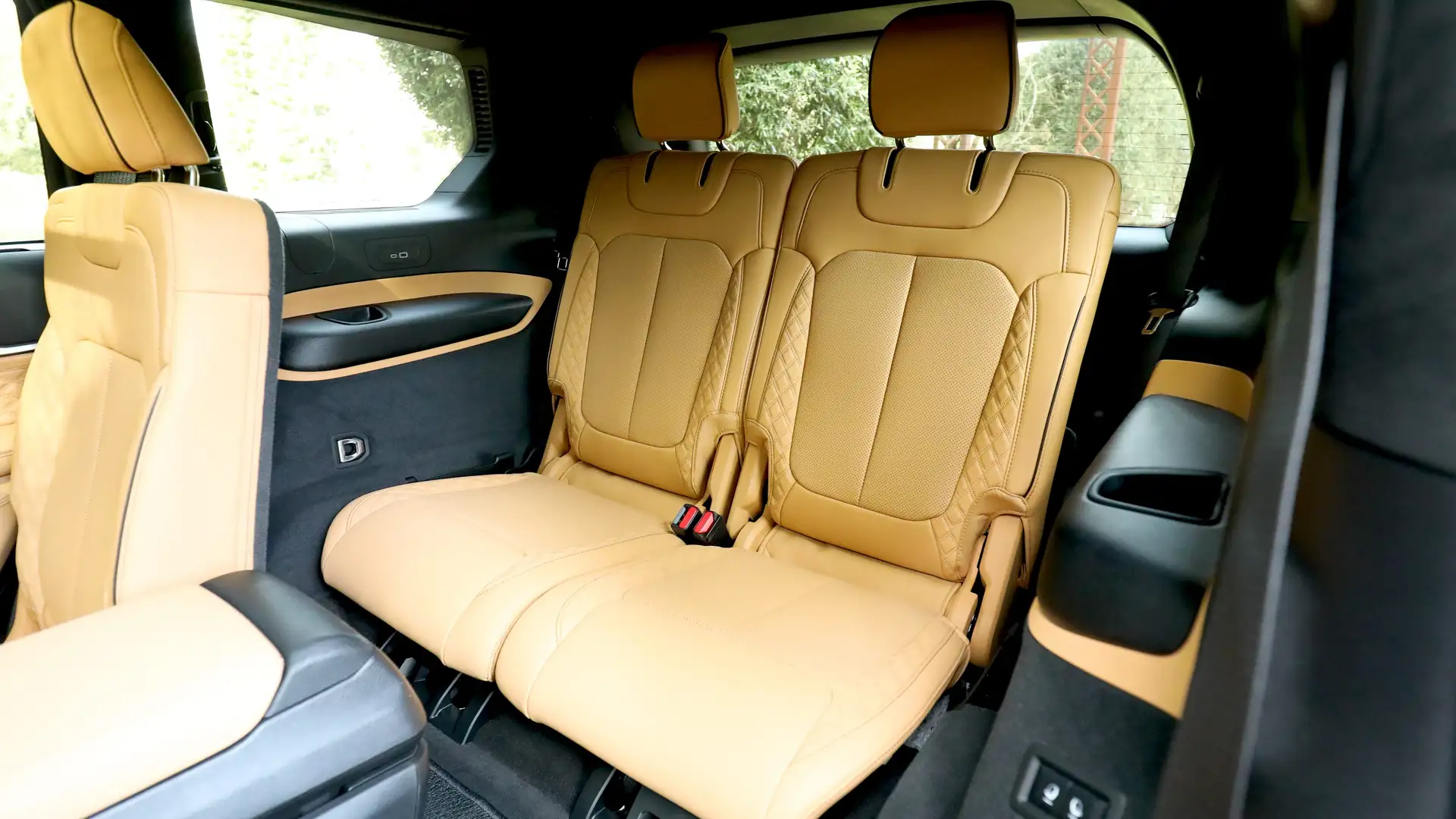
Dimensions matter here because the Grand Cherokee L is not trying to be a compact commuter; it is a 204.9-inch-long, 77.5-inch-wide, 71.5-inch-tall three-row wagon with 56 cubic feet of passenger volume up front and 85 cubic feet of cargo room behind the front seats. Behind the third row, Jeep claims 17 cubic feet of luggage space, which is enough to keep the model credible for families who actually use all three rows. The 121.7-inch wheelbase is part of why the Jeep still feels substantial and stable rather than merely stretched.
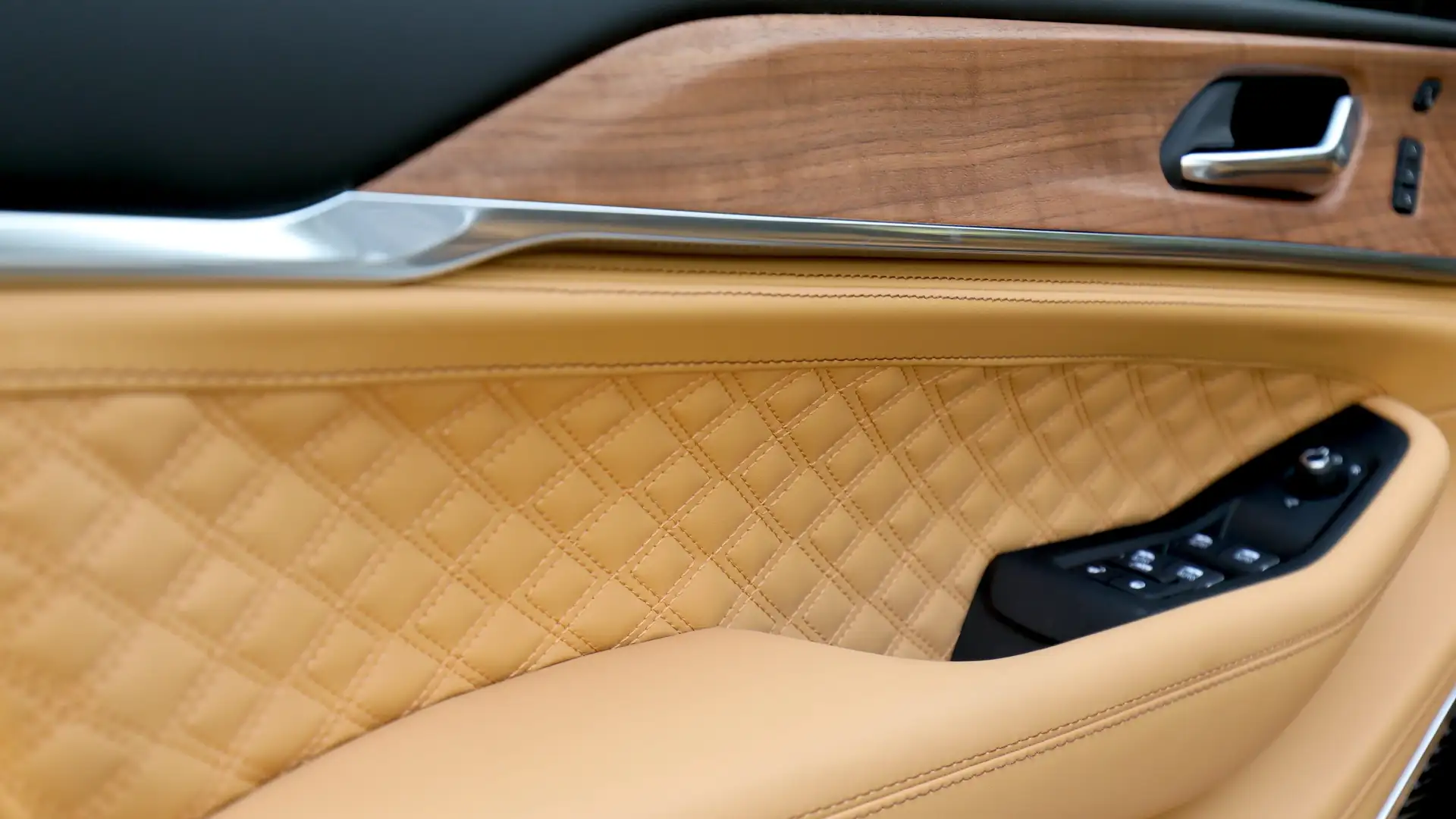
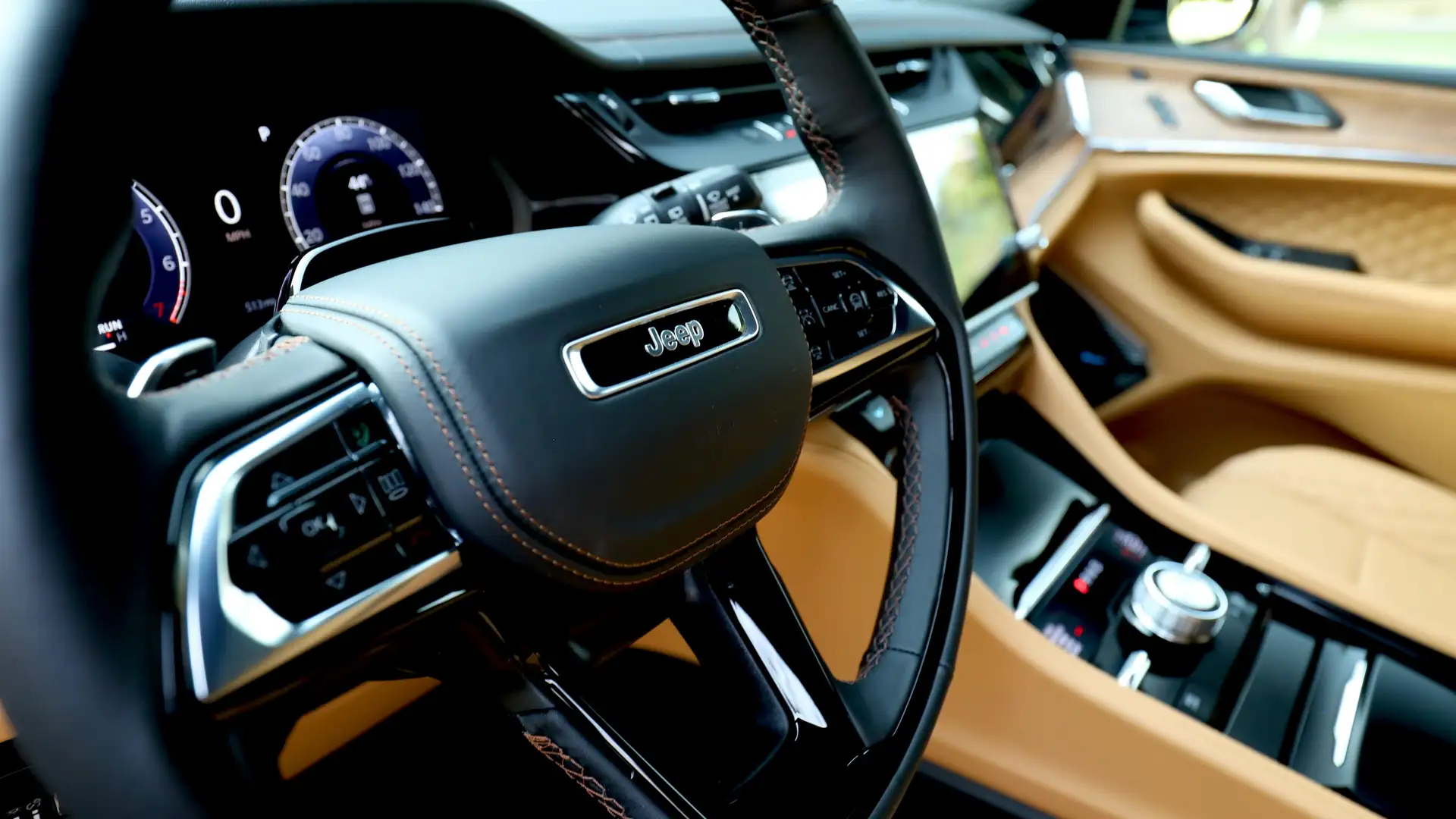
That physical presence also explains the model’s market ambiguity. Lower trims start at $42,915 for the Laredo 4×2 and climb to $64,595 for the Summit 4×4, placing the vehicle in two entirely different battles: mainstream three-row SUV value and near-luxury competition. Jeep can reach BMW and Mercedes price territory on a sticker, but the powertrain polish still feels closer to a Chevrolet Traverse than an X5. That makes the cabin’s leather, tech, and finish carry more of the burden than they should.
| Specification | 2026 Jeep Grand Cherokee L |
|---|---|
| Engine | 2.0-liter turbocharged and intercooled inline-4 |
| Output | 324 HP, 332 lb-ft |
| Transmission | 8-speed automatic |
| Drivetrain | Rear- or all-wheel drive |
| Wheelbase | 121.7 in |
| Length | 204.9 in |
| Width | 77.5 in |
| Height | 71.5 in |
| Passenger volume | 56 / 53 / 33 ft3 |
| Cargo volume | 85 / 47 / 17 ft3 |
| Estimated curb weight | 4,600-5,100 lb |
| 0-60 mph estimate | 6.6-7.1 sec |
| Combined fuel economy | 22-23 mpg |

The Grand Cherokee L Still Has One Thing Rivals Rarely Match
Jeep’s strongest card remains its breadth of capability. Few mainstream three-row SUVs offer an air suspension, authentic off-road tuning, and the kind of road presence that makes the Grand Cherokee L look more expensive than many of its price rivals. That matters because buyers shopping at $48,315 for a Limited 4×2 or $55,910 for a Limited Reserve 4×4 are not just comparing screens and seat heaters; they are buying into a chassis that can still credibly stray off pavement.
That combination keeps the Grand Cherokee L interesting even when the powertrain is not fully convincing at Summit trim. The 2.0-liter turbo may be smaller, but it is not meek, and the fuel economy improvement over the V-6 gives Jeep a technical argument the outgoing Hemi never could. The SUV’s challenge is no longer whether it has enough muscle; it is whether the rest of the powertrain can feel as polished as the rest of the vehicle looks. That is the real threshold between mainstream competence and luxury credibility, the same boundary explored by the BENTLEY CONTINENTAL GT S Finds the Sweet Spot.

Where Jeep’s New Formula Fits in the Segment
In the wider three-row SUV market, the Grand Cherokee L now occupies a sharper but more complicated niche. It has more off-road ability than most competitors, stronger torque than the old V-6, and better fuel numbers than the Hemi ever delivered. Yet the reduction in cylinder count creates a perceptual hurdle, especially in top trims where buyers expect a quiet, seamless drivetrain to match the leather and technology.
That is why the 2026 Grand Cherokee L reads less like a step backward than a more disciplined but less charismatic chapter. Jeep has kept the dimensions, the packaging, the air suspension option, and the premium cabin ambition. What it has changed is the engine character, and that change exposes how much refinement still separates a well-equipped American SUV from the better-resolved luxury contenders. If you want the broader premium-SUV conversation, the hidden contrast with the INFINITI QX65 Drive Unmasked by FX Nostalgia and False Sport is hard to miss.
Final Verdict on the 2026 Jeep Grand Cherokee L
The 2026 Jeep Grand Cherokee L is better than its smaller engine might suggest and less refined than its price demands. The 2.0-liter turbo four brings 324 HP, 332 lb-ft, and a meaningful fuel-economy gain, while the chassis still delivers the packaging, road presence, and off-road hardware that made the Grand Cherokee name matter in the first place. But the 8-speed automatic, cabin vibrations, and coarse engine note prevent the model from fully cashing in on its premium aspirations.
For buyers who want a three-row Jeep with real torque and better efficiency, the formula makes sense. For buyers who want an SUV that feels as expensive as its Summit badge and $73,175 test price, the powertrain still needs another round of tuning. The hardware is there. The polish is not yet equal to it.