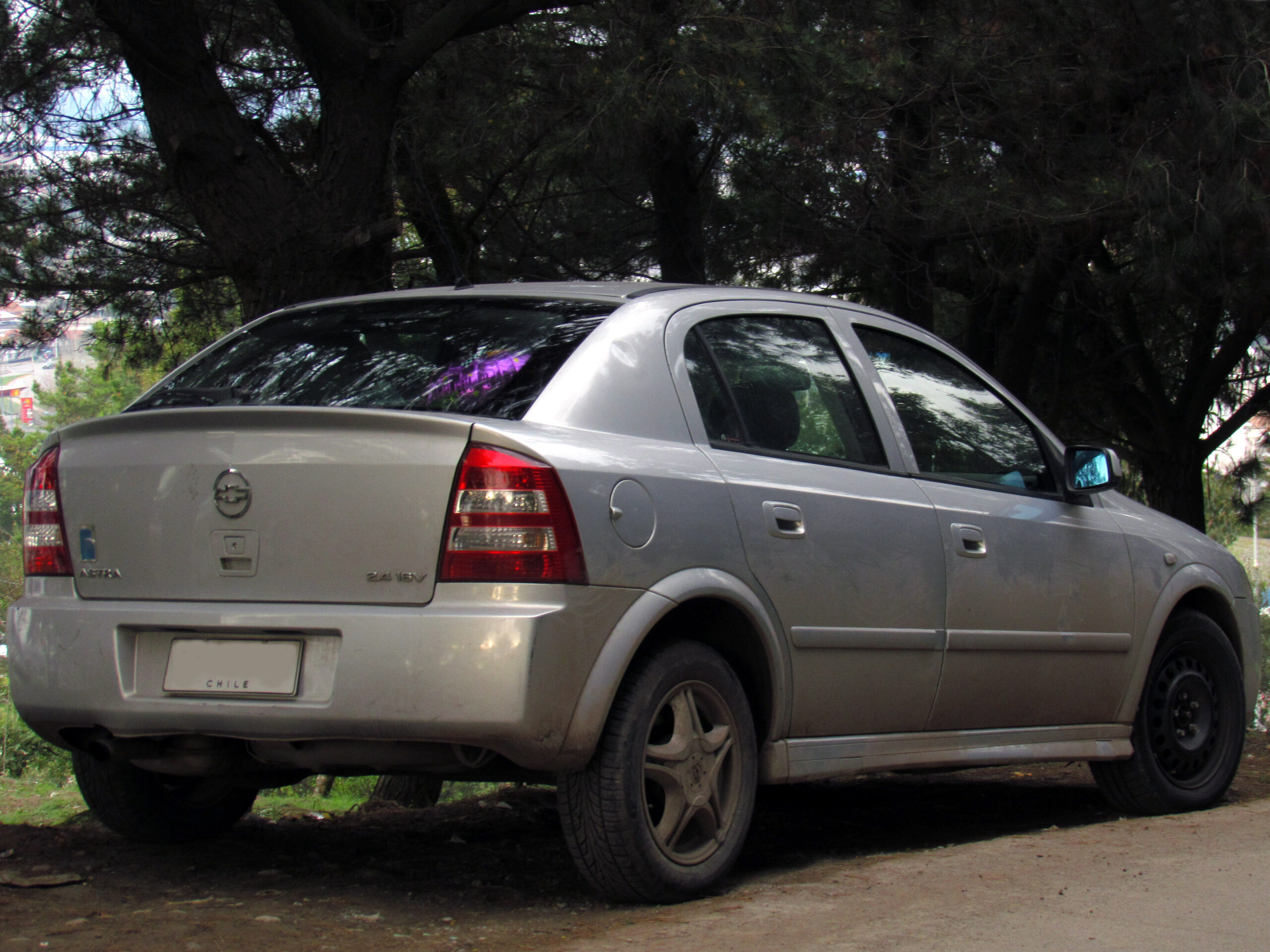
For more than a decade, the Chevrolet Astra was one of the most recognizable compact cars on Brazilian roads. It combined European engineering, a strong Chevrolet dealer network, practical body styles and engines that were easy to service. Although its badge was Chevrolet, the Astra’s story began with Opel in Europe—and its Brazilian chapter became distinct enough to deserve a history of its own.
From the Kadett to the Astra name
The Astra name appeared in Europe in 1991, when Opel replaced the Kadett with the first-generation Astra, commonly known as the Astra F. The change was more than a new badge: Opel used the Astra to modernize its C-segment offering with improved crash protection, cleaner aerodynamics and a broader range of body styles.
In Brazil, the Kadett had already built a loyal following. Chevrolet therefore treated the Astra as a natural successor, but the transition happened in stages. The first Brazilian-market Astras arrived as imports in the mid-1990s, carrying the Opel-based design under the Chevrolet emblem. Import taxes and market conditions soon interrupted that first phase.
The 1998 comeback: Astra G becomes Brazilian
The decisive moment came in 1998, when the second-generation Opel Astra—known internationally as the Astra G—returned to Brazil with local production. This was a particularly important launch: the Brazilian Astra was introduced almost at the same time as its European counterpart, an uncommon level of alignment for the market at that time.
The new car brought a rounded, coupé-like silhouette, a roomier cabin and a stronger emphasis on safety. Its fully galvanized body, improved lighting, redesigned chassis and available airbags reflected the rapid evolution of compact cars at the end of the 1990s. In Brazil, Chevrolet offered hatchback and sedan versions, giving the Astra a wider audience than the imported cars had reached.
The hatchback: style with everyday usefulness
The Astra hatchback became the emotional center of the range. Its three- and five-door proportions looked sporty without sacrificing daily practicality, while the long wheelbase helped provide useful interior space. The model appealed to young buyers, families and enthusiasts alike.
During its Brazilian career, the hatchback received several engines and equipment updates. Depending on the year and trim, buyers could find 1.8- and 2.0-liter engines, manual or automatic transmissions, air conditioning, power accessories and progressively more safety equipment. The Astra GSi added a stronger visual and performance identity, turning the compact Chevrolet into a legitimate enthusiast car.
The sedan: more space, same mechanical personality
The Astra Sedan arrived in 1999 and broadened the model’s appeal. Its separate trunk made it especially attractive to families and fleet buyers, while the cabin, suspension and powertrain philosophy remained closely related to the hatchback.
The sedan also became a showcase for Chevrolet’s attempts to adapt the Astra to local needs. The Multiflex version could run on gasoline, ethanol or compressed natural gas, an unusual combination for a production car and a reflection of Brazil’s flexible-fuel and fleet markets. That technical variety helped keep the Astra relevant even as competitors multiplied.
Facelifts and the long Brazilian life
While Europe moved on to newer Astra generations, Brazil continued to develop and refine the Astra G. Styling revisions gave the car a fresher front end and updated details, while changes to engines, equipment and trim levels kept it competitive. The result was not simply an old imported design: it was a model with its own South American evolution.
This long life also explains why Brazilian Astras can look quite different from one another. Early cars have the original Astra G appearance; later cars use a localized facelift and different combinations of engines and equipment. Enthusiasts often value both phases, seeing them as distinct chapters of the same story.
Performance, motorsport and enthusiast culture
The Astra’s reputation was not built on practicality alone. With strong naturally aspirated engines, predictable handling and a robust aftermarket, it became a popular base for modifications. The GSi name carried special weight, while racing and track-day versions reinforced the idea that a family compact could also be entertaining.
In everyday use, the Astra earned praise for its balance. It was not the smallest or cheapest car in its class, but it offered a mature driving position, stable road manners and enough performance to feel confident on highways. Its mechanical layout was familiar to independent repair shops, another advantage in Brazil.
The end of production
Chevrolet produced the Astra hatchback in Brazil until 2009 and the sedan until 2011. By then, the market had shifted toward newer global platforms, more sophisticated electronics and different model strategies. The Astra was eventually replaced in Chevrolet’s broader lineup by newer nameplates, including the Cruze in the compact segment.
Even after production ended, the Astra remained visible on Brazilian roads because of its durability, parts availability and loyal owners. Many examples continued as dependable daily drivers, project cars and family vehicles long after the final unit left the factory.
Why the Chevrolet Astra still matters
The Chevrolet Astra occupies a special place in Brazilian automotive history because it connected two worlds. It carried Opel’s European engineering, Chevrolet’s local identity and Brazil’s ability to adapt a global product to its own market. The result was a car that lasted far longer in Brazil than its original European cycle suggested.
Its story is also a reminder that a successful car is not defined only by sales figures or technical specifications. The Astra earned a place in enthusiasts’ memories through its shape, sound, practicality and the sense that it could be both sensible and exciting. For many Brazilian drivers, it was the first genuinely desirable compact car they could own.
Today, the Chevrolet Astra is increasingly appreciated as a modern classic. The clean lines of the early cars, the character of the later facelifts and the variety of hatchback, sedan and performance versions give collectors plenty to explore. More than a rebadged Opel, the Brazilian Astra became its own chapter in Chevrolet history.
Image credits: Wikimedia Commons contributors. Images are used under their respective Creative Commons licenses; see the original file pages on Wikimedia Commons for author and license details.