| Category | Specification |
|---|---|
| Vehicle | Audi Nuvolari Concept |
| Engine displacement | 4,961 cc |
| Engine configuration | V10 |
| Fuel delivery | FSI direct injection |
| Forced induction | Twin turbochargers |
| Maximum power | 600 PS / 592 HP / 441 kW at 6,500 rpm |
| Maximum torque | 750 Nm / 553 lb-ft at 2,000 rpm |
| Transmission | 6-speed Tiptronic automatic with shift paddles |
| Drive layout | quattro permanent all-wheel drive |
| Center differential | Torsen |
| 0–100 km/h | Approximately 3.9 seconds |
| Body construction | Audi Space Frame all-aluminum construction |
| Suspension | Adaptive air suspension with electronically controlled damping |
| Brakes | Carbon-ceramic discs with multi-piston calipers |
| Headlights | High-power LED units |
| Rear lighting | Dynamic rear lighting arrays |
| Wheels | Lightweight forged multi-spoke wheels |
Powertrain Analysis
The 4,961 cc V10 uses twin turbochargers and FSI direct injection. Output is rated at 600 PS, equivalent to 592 HP or 441 kW, at 6,500 rpm.
Peak torque is 750 Nm, equivalent to 553 lb-ft, at 2,000 rpm. The 2,000-rpm torque peak places maximum twisting force 4,500 rpm below the 6,500-rpm power peak.
A 6-speed Tiptronic automatic transmission transfers V10 output through paddle-operated manual gear selection capability. Permanent quattro all-wheel drive uses a Torsen center differential for front-to-rear torque distribution.
The 600 PS and permanent all-wheel-drive combination delivers an approximately 3.9-second 0–100 km/h acceleration time. The 441 kW output figure equals 0.441 MW.
Chassis and Dynamics
The body structure uses Audi Space Frame construction formed entirely from aluminum. The all-aluminum architecture combines reduced structural mass with torsional rigidity.
Adaptive air suspension uses electronically controlled damping. The damping control is configured for grand touring compliance and high-speed stability within the same suspension system.
Carbon-ceramic brake discs are paired with multi-piston calipers. The brake package uses carbon-ceramic disc material at the front and rear braking positions described for the concept.
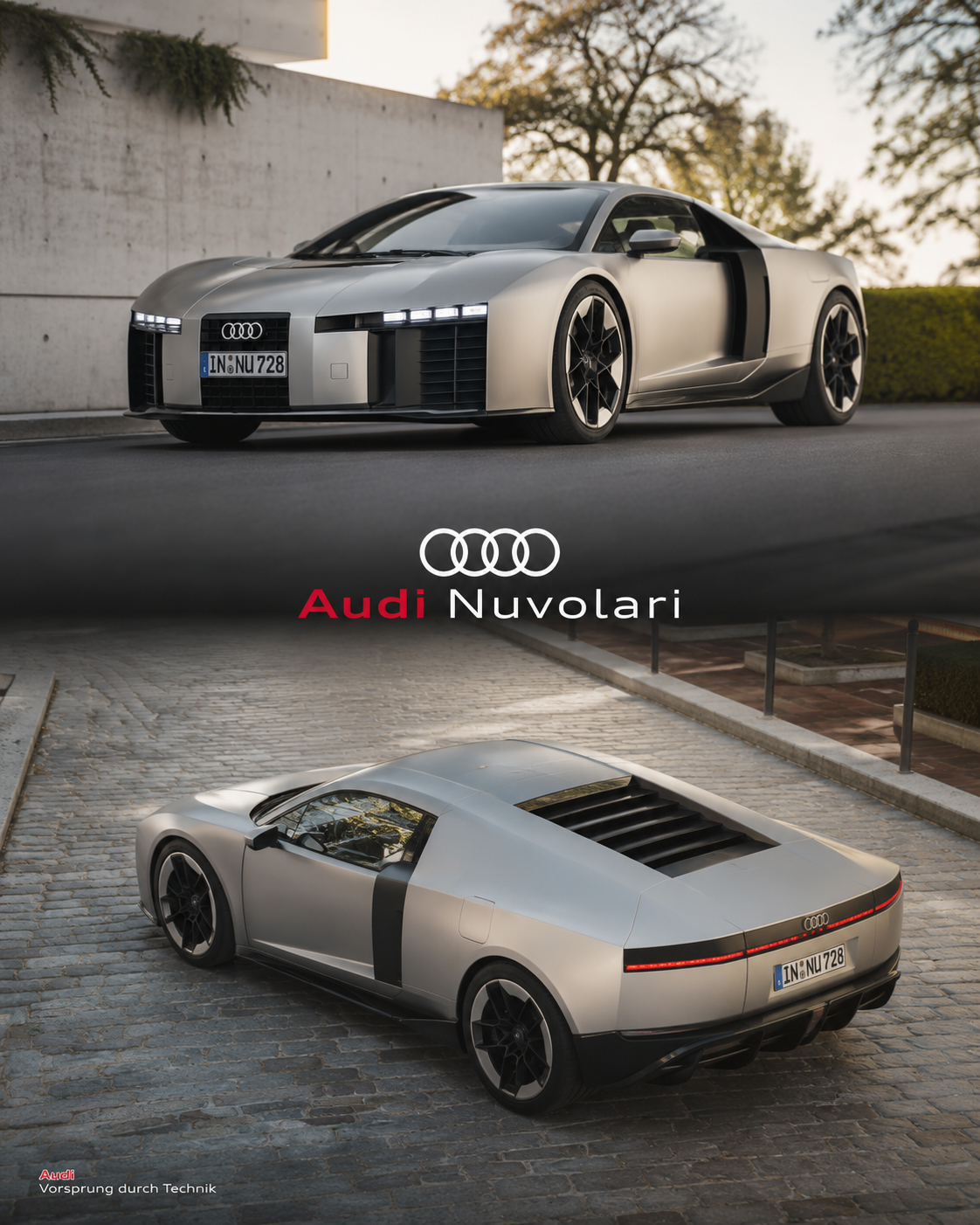
Lightweight forged multi-spoke wheels support a low-slung, wide-track layout. Horizontal rear-deck louvers direct heat away from the rear body section, while the rear deck incorporates active aerodynamic hardware.
Lighting and Aerodynamic Equipment
The front lighting system uses high-power LED headlight arrays integrated into the front intake structure. The rear uses dynamic lighting arrays.
The body incorporates sculpted side blades, sharp beltlines, rear-deck louvers, and active aerodynamic equipment. The rear louvers provide heat-extraction airflow through the rear upper-body section.
The wide-track configuration, forged wheels, active aerodynamic hardware, and low body profile define the concept’s exterior dynamic package.