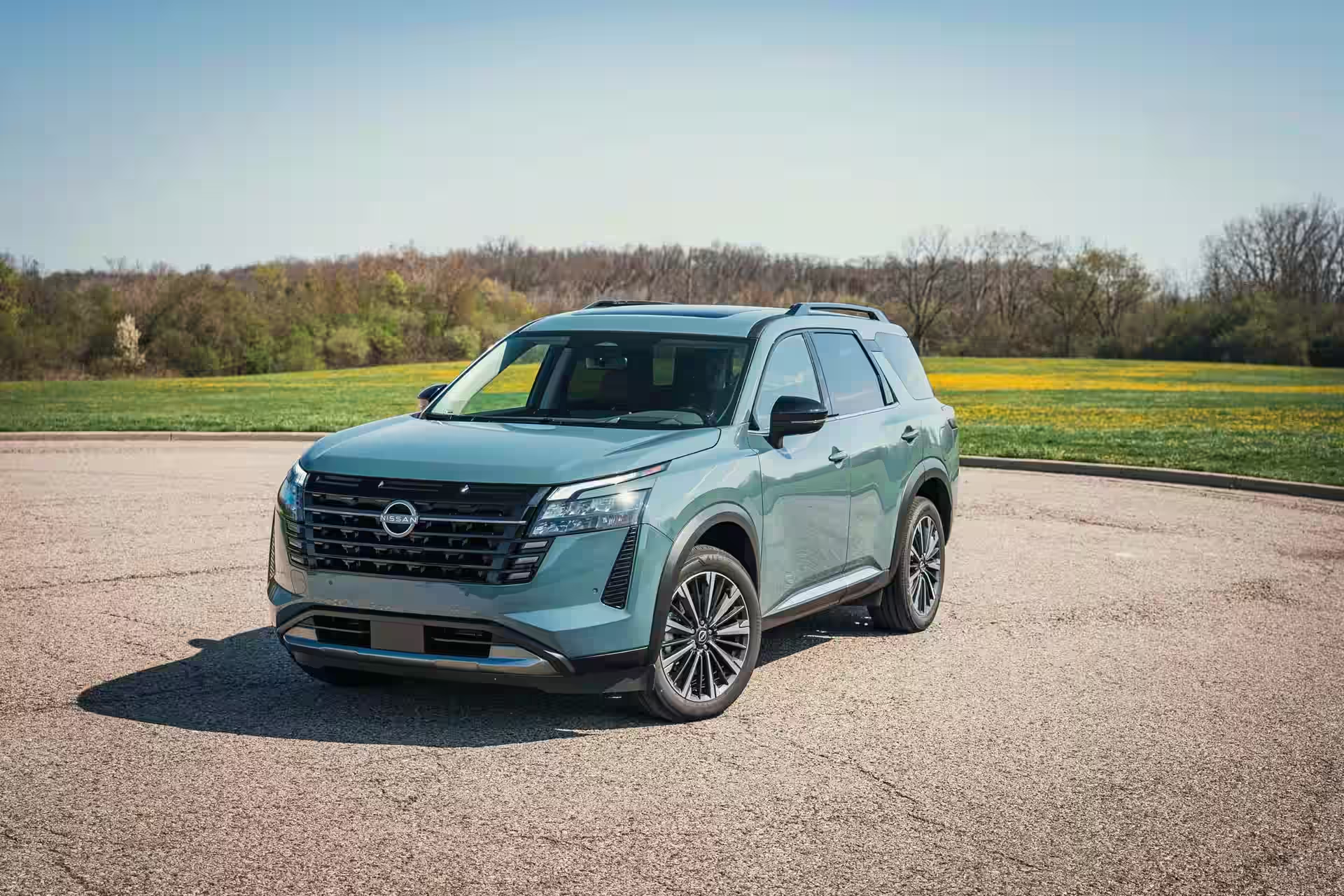
Honda Pilot vs. Nissan Pathfinder The test that exposes what families actually notice
When two refreshed 2026 three-row SUVs arrive with naturally aspirated V6 engines, all-wheel drive, and near-identical sticker prices, the real question is not which one looks louder in a parking lot. It is which one carries eight people, six carry-on bags, and a week’s worth of family friction with less drama. In this comparison, the 2026 Honda Pilot Elite AWD and 2026 Nissan Pathfinder Platinum AWD show how small engineering choices can dominate a shopping decision: Honda’s 3.5-liter V6 makes 285 hp and 262 lb-ft, while Nissan’s 3.5-liter V6 delivers 284 hp and 259 lb-ft, yet the outcomes diverge sharply in packaging, ride tuning, and real-world efficiency.
The pricing gap is also modest enough to keep the argument honest. The Honda tested at $57,689 with accessories, while the Nissan reached $56,285 with captain’s chairs, premium paint, and lighting packages. Those numbers put both vehicles in the same financial neighborhood, which is exactly why the details matter: a 7-seat Pathfinder with a 114.2-inch wheelbase and a 7-seat Pilot with a 113.8-inch wheelbase behave differently once second-row space, cargo depth, and transmission calibration enter the conversation.
| Specification | 2026 Honda Pilot Elite AWD | 2026 Nissan Pathfinder Platinum AWD |
|---|---|---|
| Engine | 3.5L V6, 285 hp (213 kW), 262 lb-ft (355 Nm) | 3.5L V6, 284 hp (212 kW), 259 lb-ft (351 Nm) |
| Transmission | 10-speed automatic | 9-speed automatic |
| Drivetrain | All-wheel drive | All-wheel drive |
| 0-100 km/h | 7.3 sec | 6.8 sec |
| Towing | 5000 lb (2268 kg) | 6000 lb (2722 kg) |
| Combined fuel economy | 21 mpg (11.2 L/100 km) | 22 mpg (10.7 L/100 km) |
| 75-mph highway fuel economy | 27 mpg (8.7 L/100 km) | 25 mpg (9.4 L/100 km) |
| Cargo behind third row | 87 cu ft total max, 19 cu ft behind third row | 81 cu ft total max, 17 cu ft behind third row |
| Passenger volume | 57/57/40 cu ft front/middle/rear | 64/47/34 cu ft front/middle/rear |
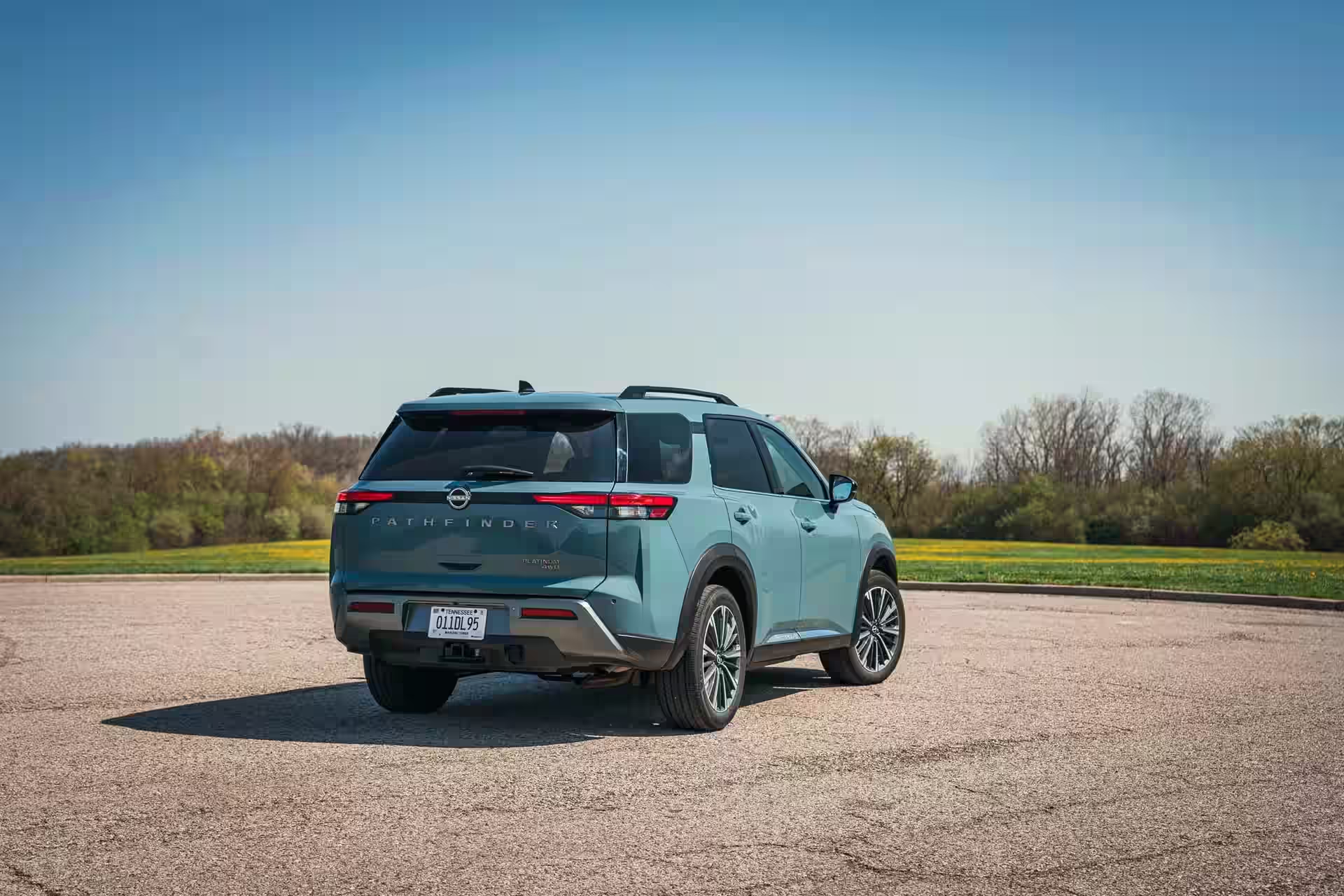
Exterior design is not the deciding factor, but it still tells the story
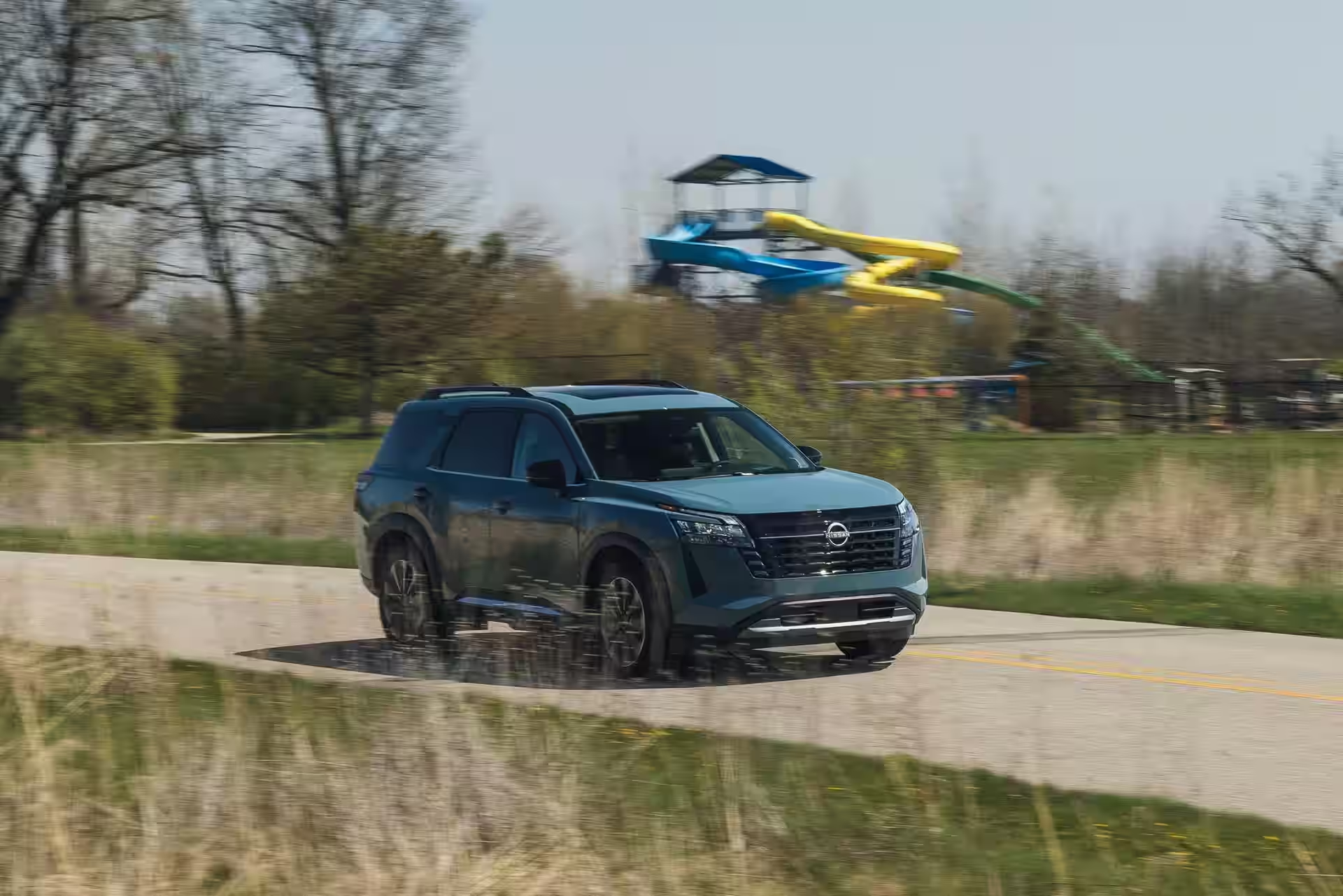
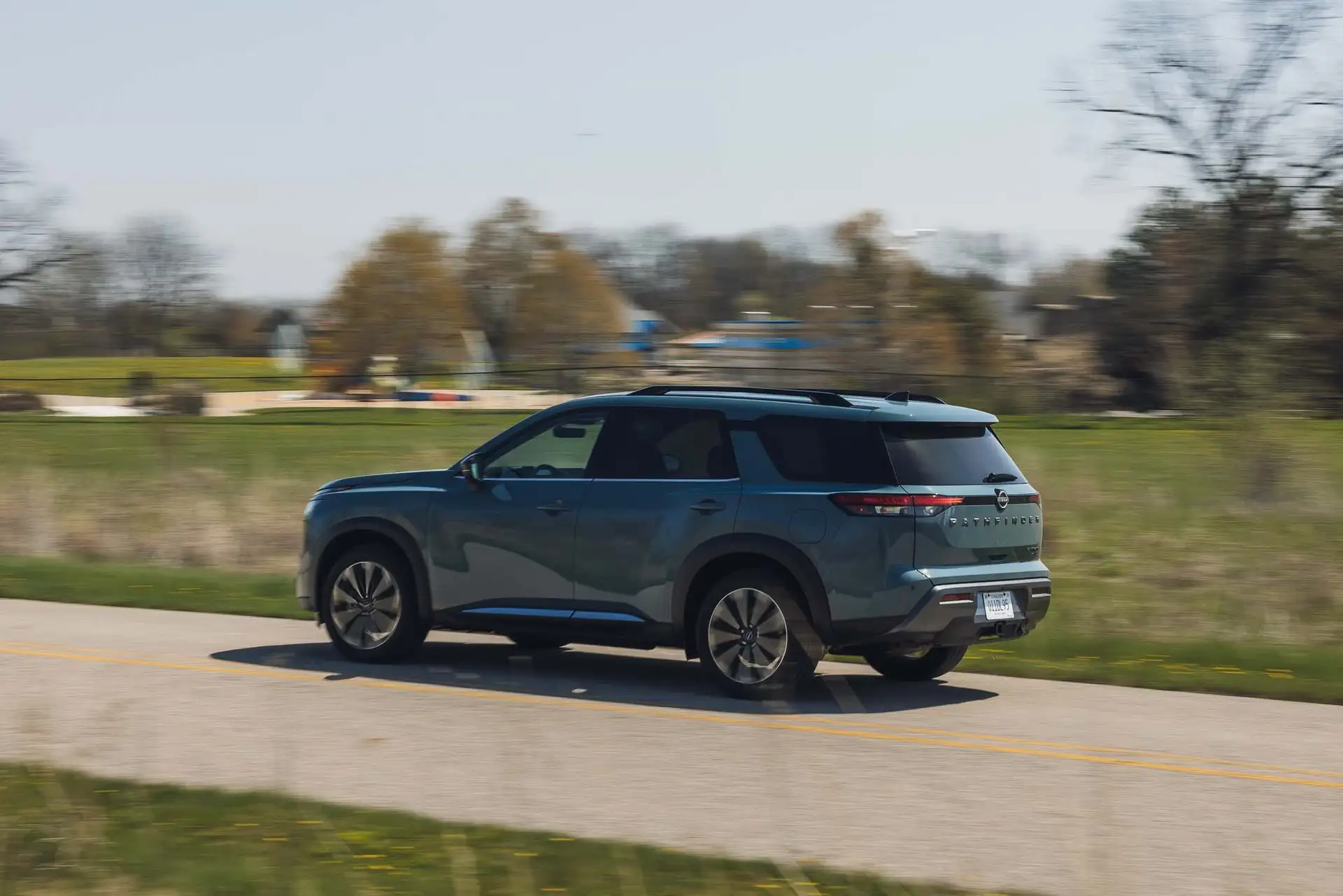
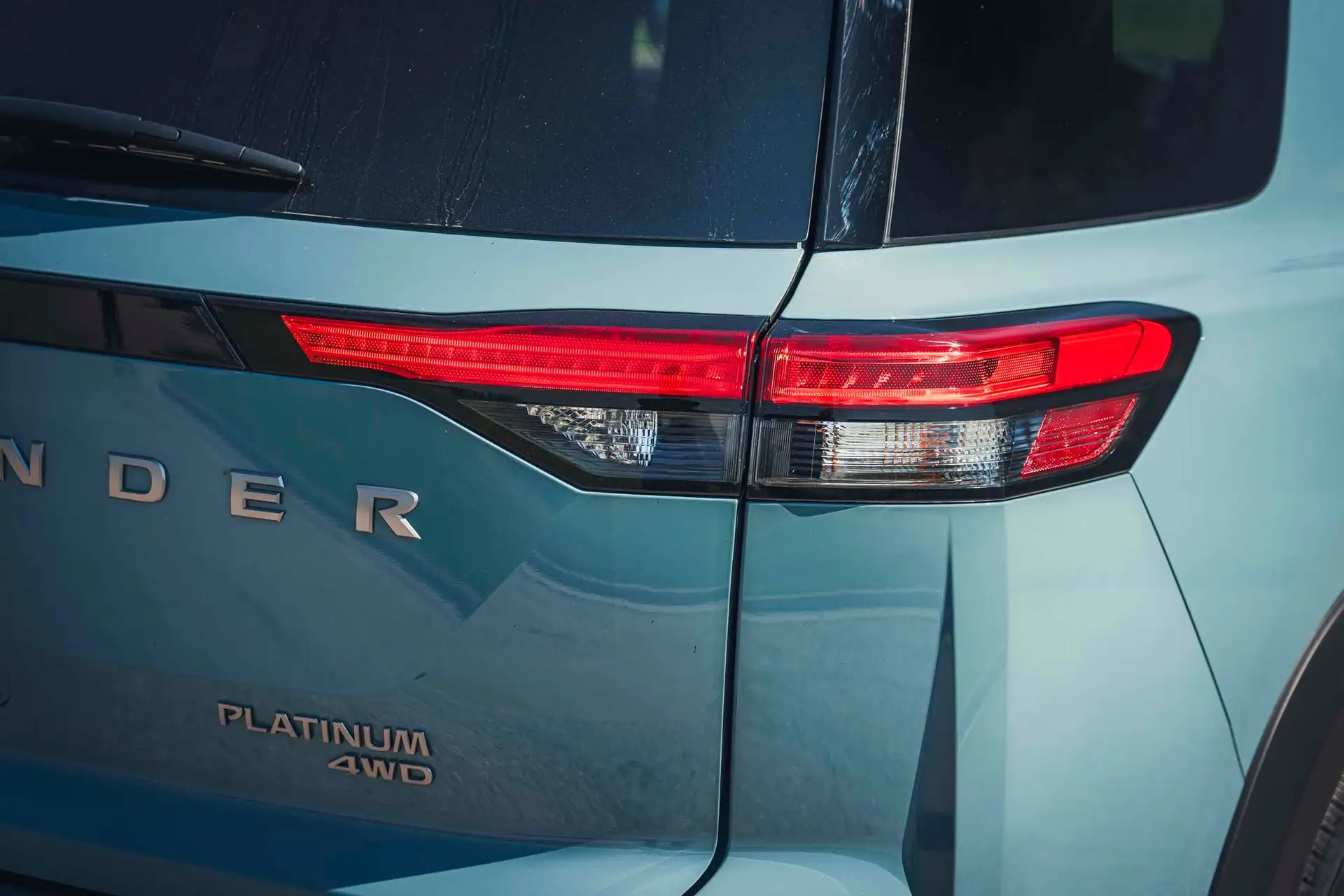
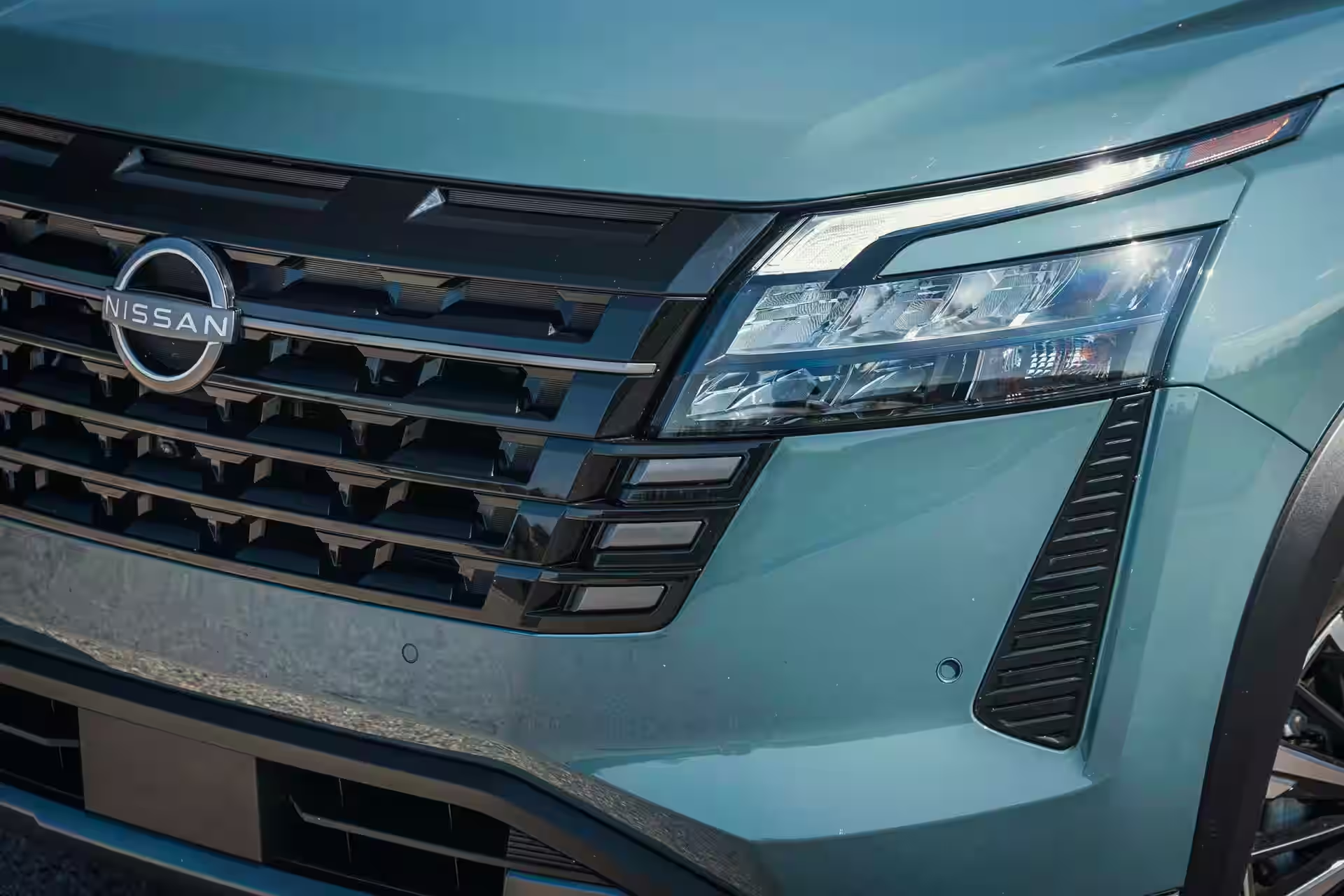
The Pathfinder’s styling is the more disciplined of the two. Its chiseled body sides, bright-metal accents, and Baltic Teal Pearl paint give it a cleaner, more upright stance than the Pilot’s softer profile. Honda’s 2026 update adds a larger grille treatment, but the Pilot still reads as the less expressive vehicle, especially next to the Nissan’s sharper nose and more squared-off proportions. That visual distinction matters because both SUVs are targeting the same buyer who wants an upscale family hauler without moving into luxury-brand territory.
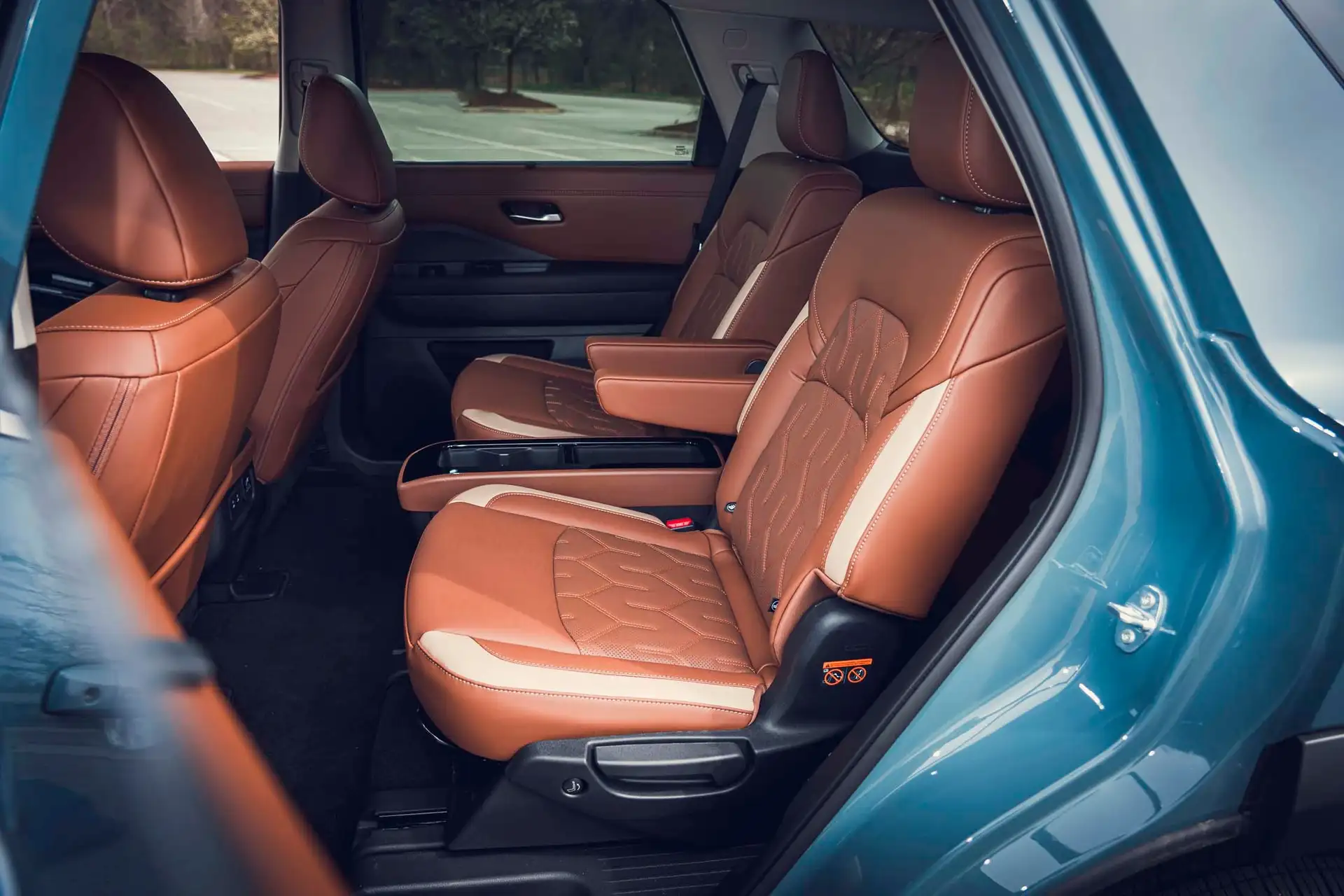
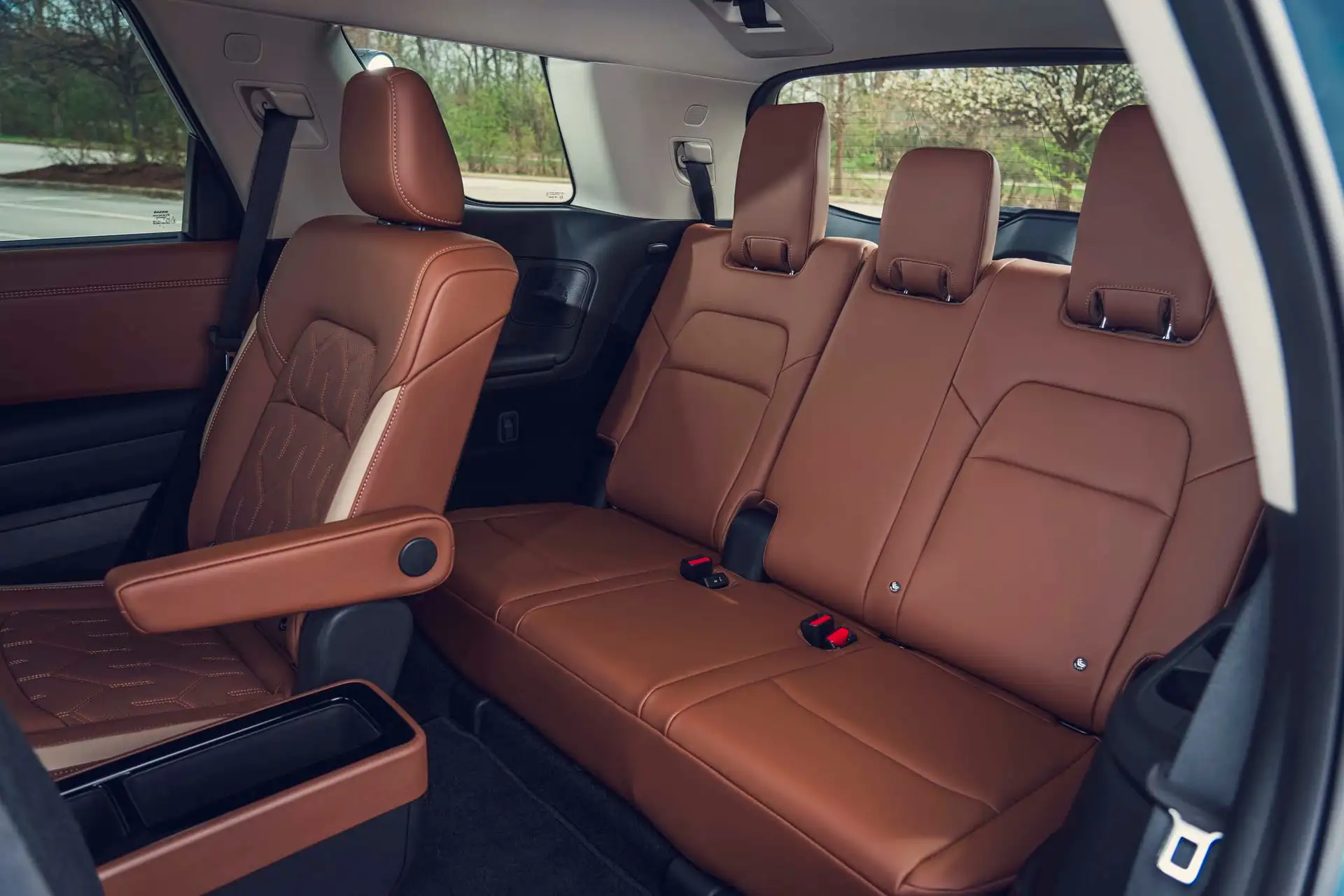
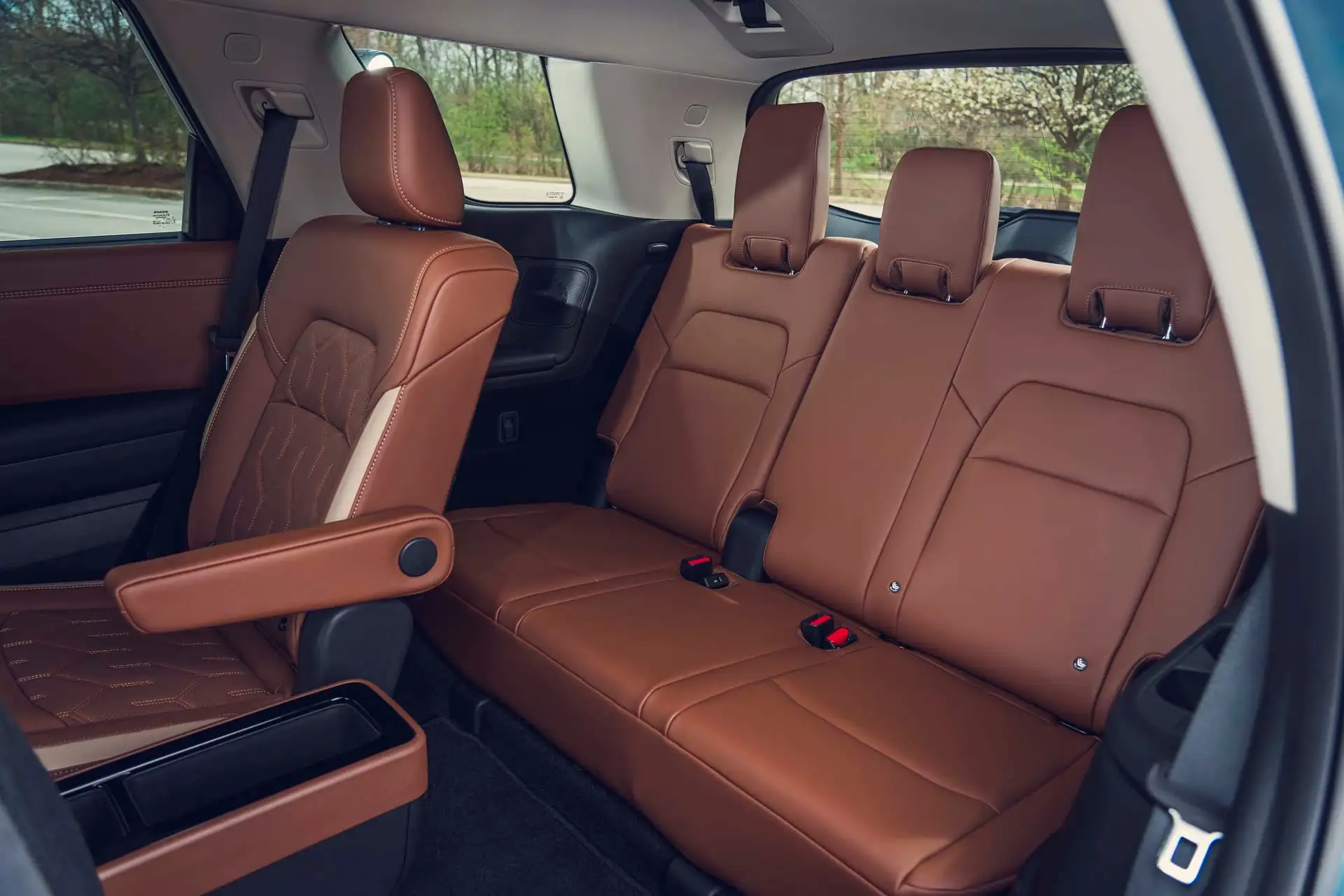
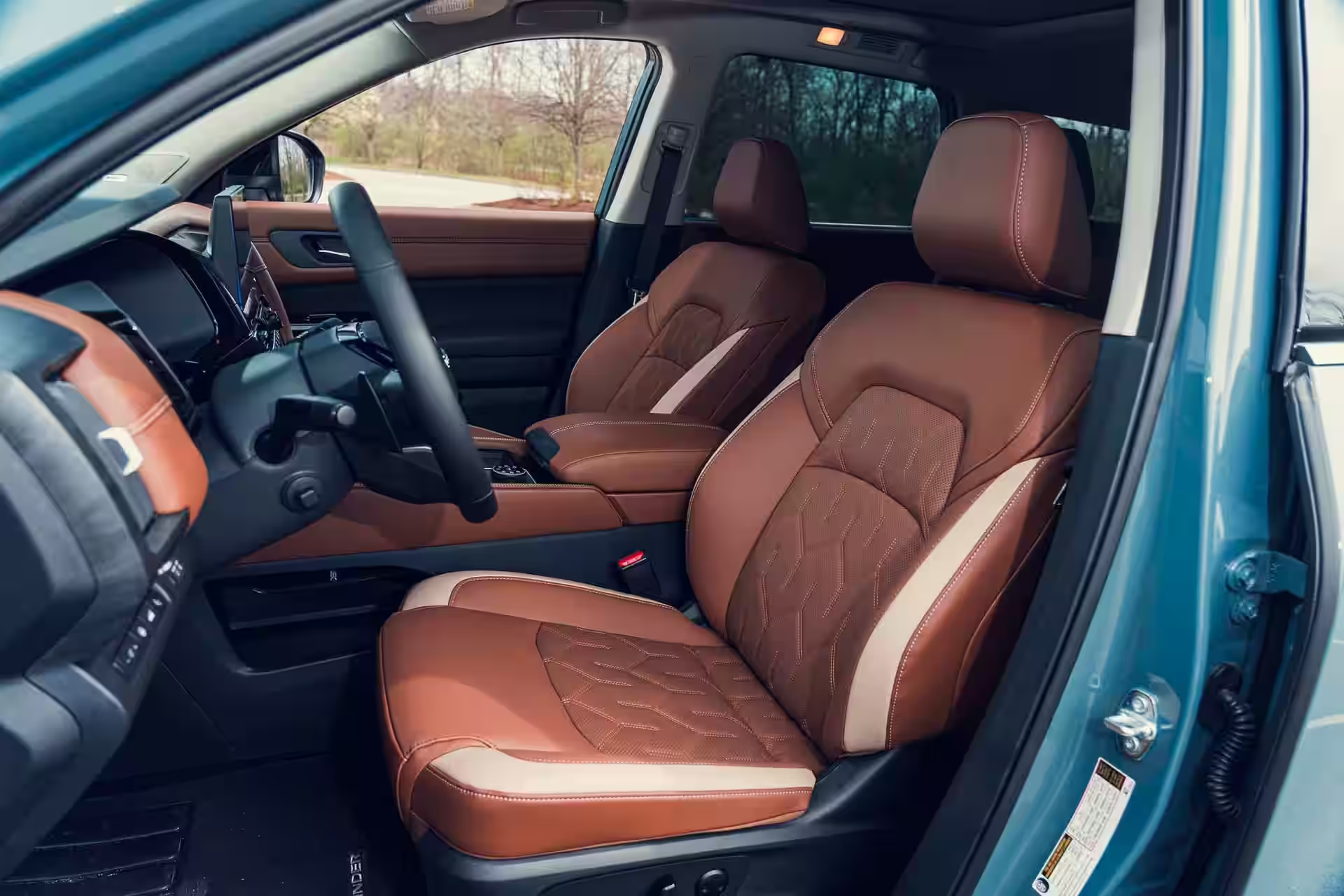
Inside, the Nissan’s Platinum trim looks richer at first glance, helped by soft brown leather and a more decorative dash treatment. Yet the Honda’s cabin layout is the one that survives daily use better. The Pilot offers more center-console storage and more usable door bins, while the Pathfinder’s 12.3-inch infotainment screen is undermined by laggy response and small on-screen controls. The Nissan does at least keep physical climate controls, and that choice keeps it from becoming frustrating, but the Honda’s simpler interface feels more natural when a driver is juggling navigation, phone pairing, and rear-seat climate adjustments in traffic.
Seating layout decides the real-world usability contest
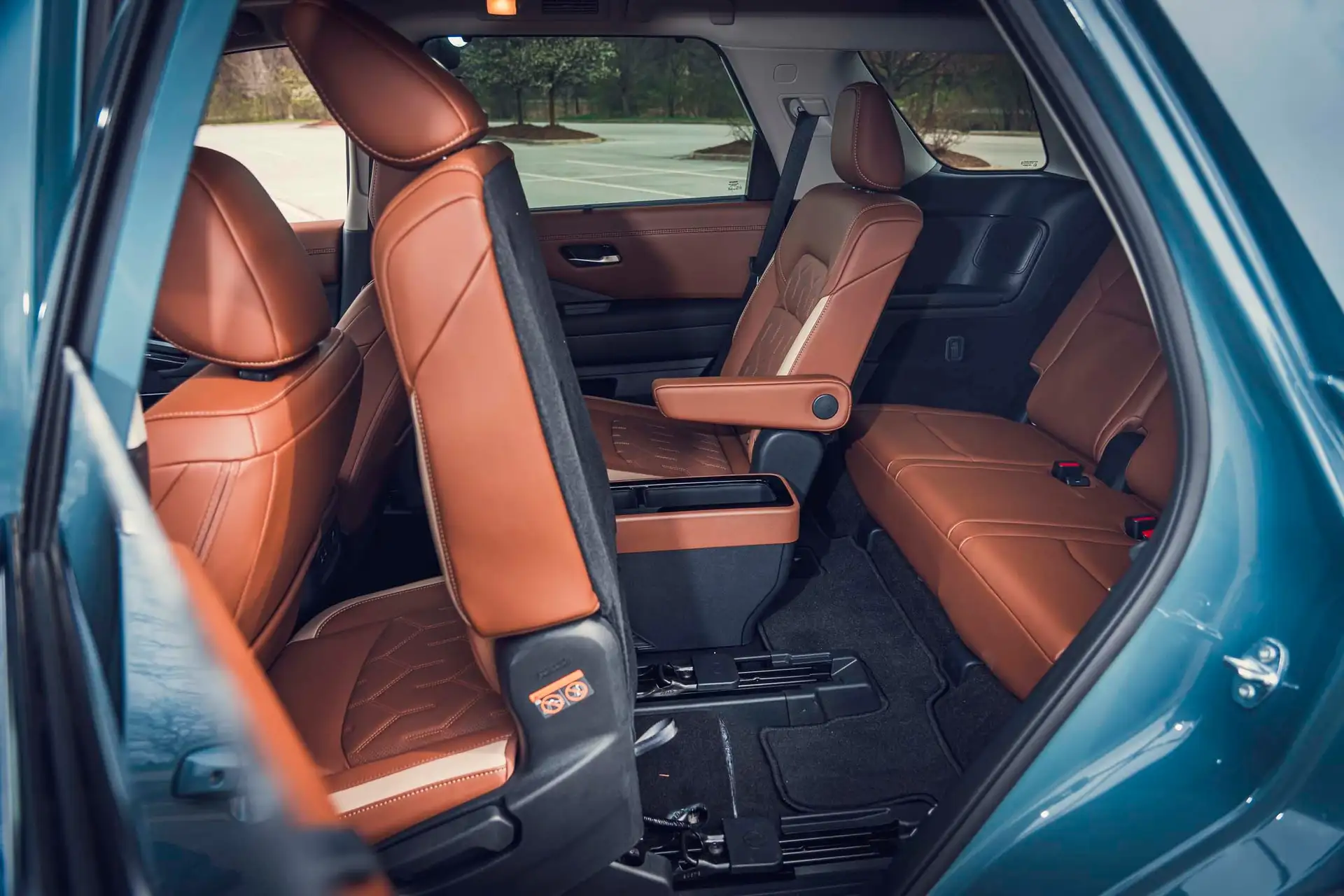
This is where the Honda pulls ahead in a way that matters to parents, carpool duty, and long ownership cycles. The Pilot’s standard second-row bench gives it a better width advantage, and that broader feel makes the middle row easier to use for three across. By contrast, the Pathfinder test vehicle used second-row captain’s chairs, which improve access but reduce practicality for maximum family duty. Nissan does offer a bench seat to raise capacity to eight, but the tested Platinum configuration prioritizes presentation over flexibility.
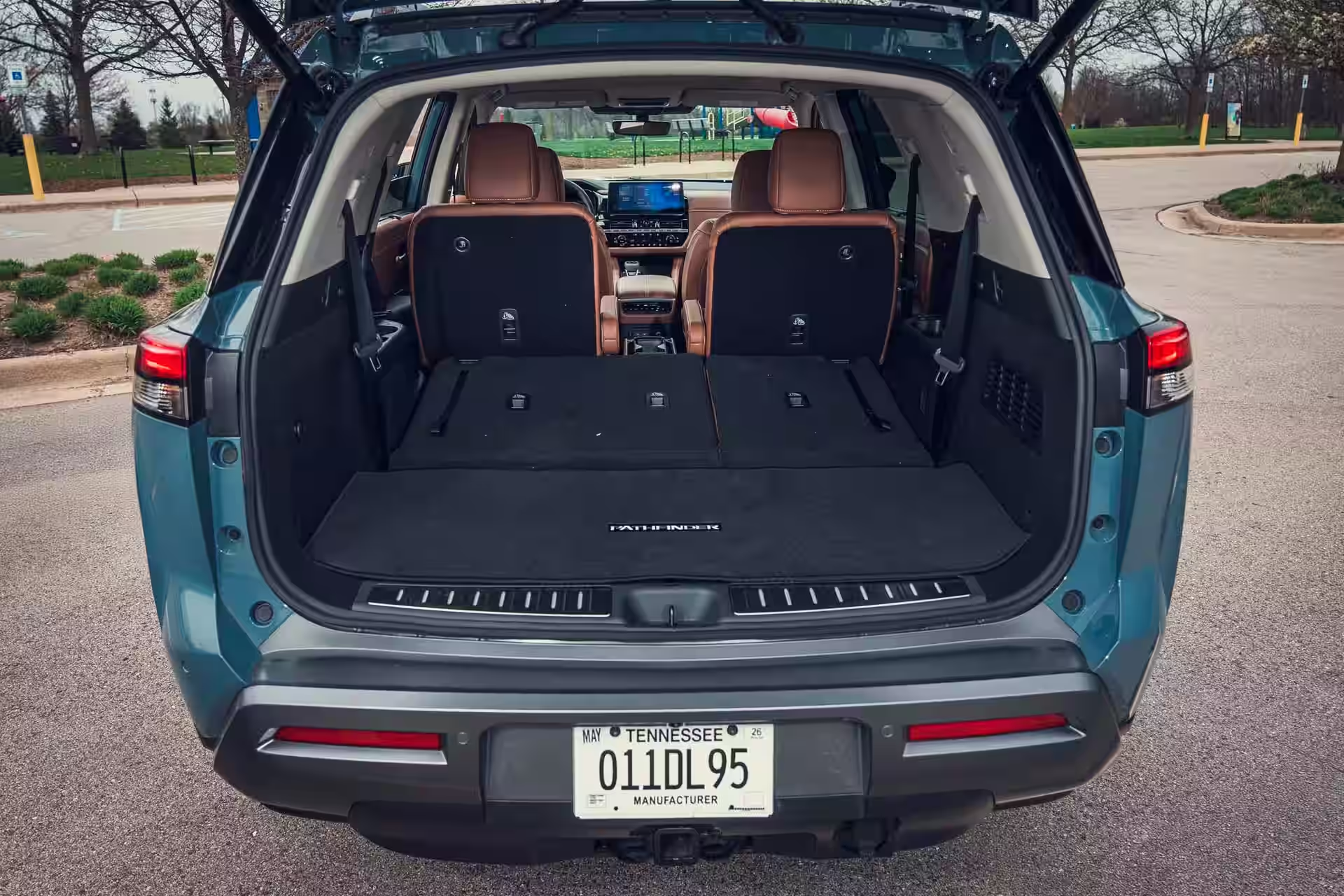
Third-row comfort is no victory for either one. The Pathfinder is slightly better back there, but both SUVs are fundamentally constrained by their architecture; children fit, adults do not belong on long trips. Cargo shape reinforces the same conclusion. Both models swallow six carry-on suitcases behind the third row, yet the Honda can fit one to two more cases behind the second row and with seats folded. For families who routinely alternate between people-moving and hardware-hauling, that extra volume is more valuable than a decorative trim line or illuminated kick plates.
That cabin logic is the reason the Pilot feels like a smarter long-term choice. It is not simply that Honda built more cubbies; it is that the entire interior reads as if it was designed around the realities of child seats, lunch bags, strollers, and weekend luggage rather than showroom drama. The Pathfinder’s stronger material presentation cannot fully offset the Pilot’s superior ergonomics.
V6 powertrains, but with very different tuning philosophies
Both SUVs stay loyal to naturally aspirated V6 power, which makes them increasingly rare in a market moving toward turbocharging and electrification. The Honda’s 3,471-cm3 V6 is rated at 285 hp and 262 lb-ft, while the Nissan’s 3,498-cm3 unit makes 284 hp and 259 lb-ft. On paper, they are nearly identical; on the road, Nissan’s calibration gives it a 6.8-second sprint to 60 mph, versus 7.3 seconds for the Pilot. The Pathfinder’s transmission also feels more assertive under hard throttle, helping it exploit that slightly quicker launch.
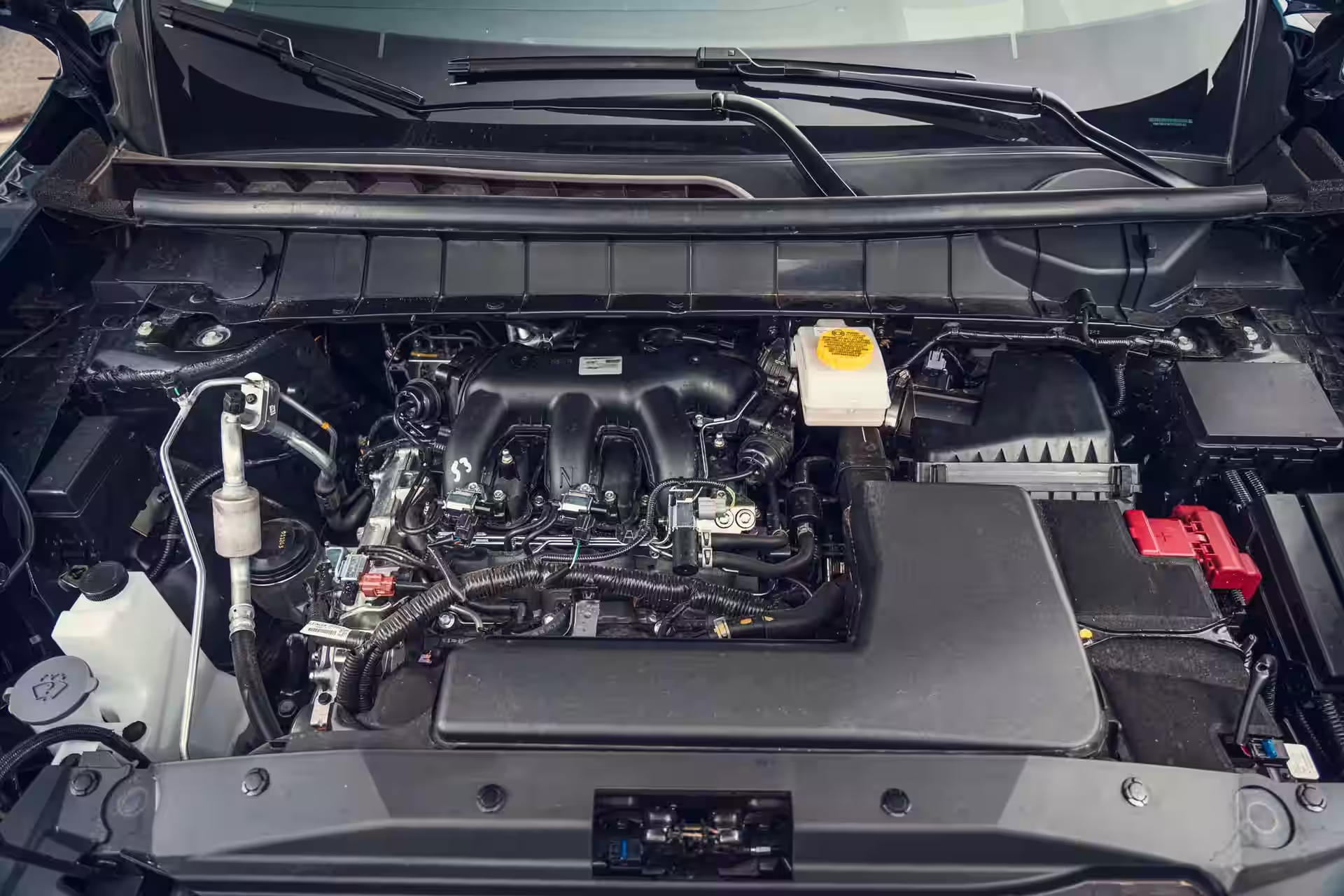
Honda answers with a smoother engine note and a 10-speed automatic that is more responsive in part-throttle driving. That distinction shows up in everyday commuting, where the Pilot feels less hesitant when merging or making small speed adjustments. The Pathfinder’s nine-speed automatic can feel less decisive, and that calibration flaw becomes more noticeable than its modest acceleration advantage. In a family SUV, the best powertrain is not just the quickest one; it is the one that disappears into the background when you are doing school runs and highway miles.
Ride, steering, and highway manners define the better road companion
On twisty roads, the Honda is simply the more composed chassis. The Pilot’s steering is light yet accurate, and the suspension has enough compliance to avoid the busy, unsettled feeling that can plague large SUVs on rough pavement. It does float a bit on the highway, but that softness is still preferable to the Pathfinder’s bouncier, more truck-like ride. Nissan’s vague steering compounds the impression that the Pathfinder was tuned to feel tougher rather than more polished.
The testing numbers support the seat-of-the-pants verdict. The Honda pulled 0.84 g on the skidpad and stopped from 70 mph in 176 ft, while the Nissan managed 0.81 g and needed 167 ft. The Pathfinder is slightly shorter in braking distance, but the Pilot’s broader dynamic balance is what stands out across the full test loop. The Nissan’s 66-dB cabin at 70 mph is marginally quieter than the Honda’s 67 dBA reading, and that advantage will matter on long interstate drives, but noise isolation alone does not outweigh the Pilot’s calmer steering and more settled chassis response.
If you are mapping this comparison onto the wider three-row SUV market, the Honda’s ride quality lands in the same conversation as other family-focused vehicles that value composure over theater. The difference is that here, the Pilot does it without resorting to hybrid complexity or luxury pricing.
Fuel economy and towing show the trade-off in plain numbers
Official EPA figures keep the two close enough to preserve the comparison: the Pathfinder is rated at 22 mpg combined, or 10.7 L/100 km, and the Pilot at 21 mpg combined, or 11.2 L/100 km. Yet the Honda returned 27 mpg on the 75-mph highway loop, equivalent to 8.7 L/100 km, compared with 25 mpg, or 9.4 L/100 km, for the Nissan. Those results suggest the Pilot is the more efficient long-distance companion even though the Pathfinder carries the edge in towing, rated at 6000 pounds versus the Honda’s 5000 pounds.
That split tells you exactly where each SUV’s engineering priorities lie. Nissan leaned into stronger launch performance and maximum towing, while Honda optimized steady-state efficiency and drivability. For buyers who spend more time crossing states than hauling trailers, the Pilot’s real-world fuel economy becomes a decisive advantage. For those who regularly tow boats, campers, or enclosed utility trailers, the Pathfinder’s 2722-kg maximum is the more compelling number.
The verdict is not about flash, it is about fit
The Pathfinder is the more eye-catching SUV, inside and out, and it gives the impression of greater confidence through stronger acceleration and higher towing capacity. But the Pilot wins the comparison because the metrics that affect ownership most often are the ones it executes better: seat packaging, cargo flexibility, highway fuel economy, and steering precision. In a class where every buyer says they need “space,” Honda is the one that actually uses its dimensions better.
That is why the Pilot earns the recommendation. The Pathfinder is the more stylish and slightly more muscular choice, but the Honda is the more complete tool. When the test is reduced to the realities of school drop-offs, road trips, and weekend hauling, the Pilot’s substance beats the Nissan’s surface appeal.
For readers tracking the broader SUV market, this comparison is also a reminder that not every winning family vehicle needs a hybrid badge or a luxury grille. The best three-row SUV is still the one that makes hard use feel easy, and in this test, the 2026 Honda Pilot does that more convincingly than the Nissan Pathfinder.