The Urus SE Tettonero is Lamborghini’s most telling special edition yet
Lamborghini’s new Urus SE Tettonero Capsule is not interesting because it is loud, and it is not noteworthy simply because it is limited to 630 units. It matters because it shows how thoroughly the brand has learned to monetize individuality around the Urus SE’s 789 hp plug-in hybrid platform, while using the Ad Personam Studio’s tenth anniversary as the organizing theme. The launch at Milano Design Week is fitting: this is a car designed to be discussed as much for its color theory as for its 950 Nm of torque, its 25.9 kWh battery, and its 3.4-second 0-100 km/h claim.
| Specification | Lamborghini Urus SE Tettonero Capsule |
|---|---|
| Powertrain | 4.0-liter twin-turbo V8, electric motor, 25.9 kWh battery, 8-speed automatic |
| System output | 789 hp (800 PS / 588 kW) |
| System torque | 950 Nm (701 lb-ft) |
| 0-100 km/h | 3.4 seconds |
| Top speed | 312 km/h (194 mph) |
| Electric range | More than 60 km (37 miles) |
| Production | 630 units |
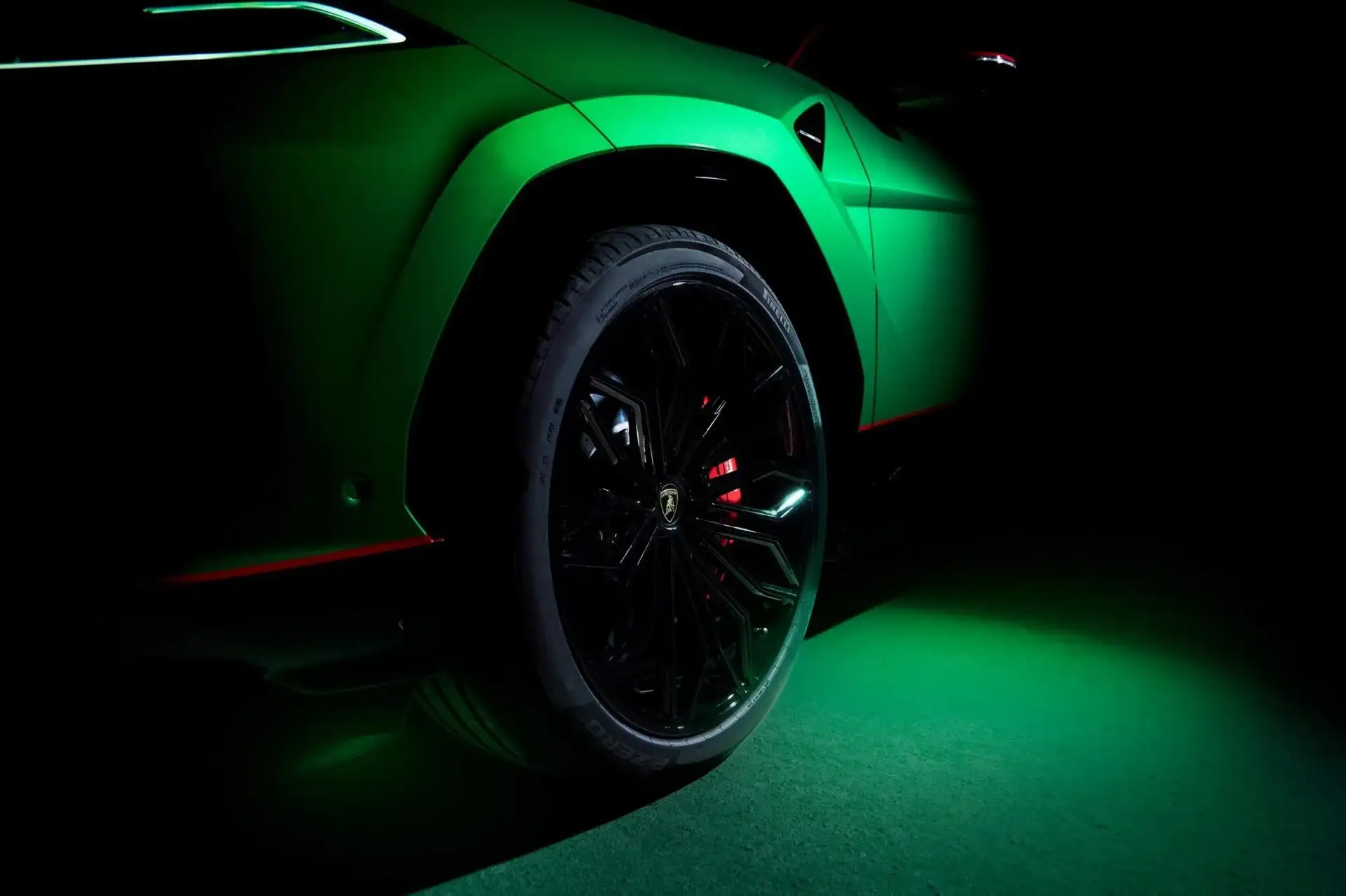
| Exterior wheel sizes | 21, 22 and 23 inches |
What changed, and why the paint list is the real story
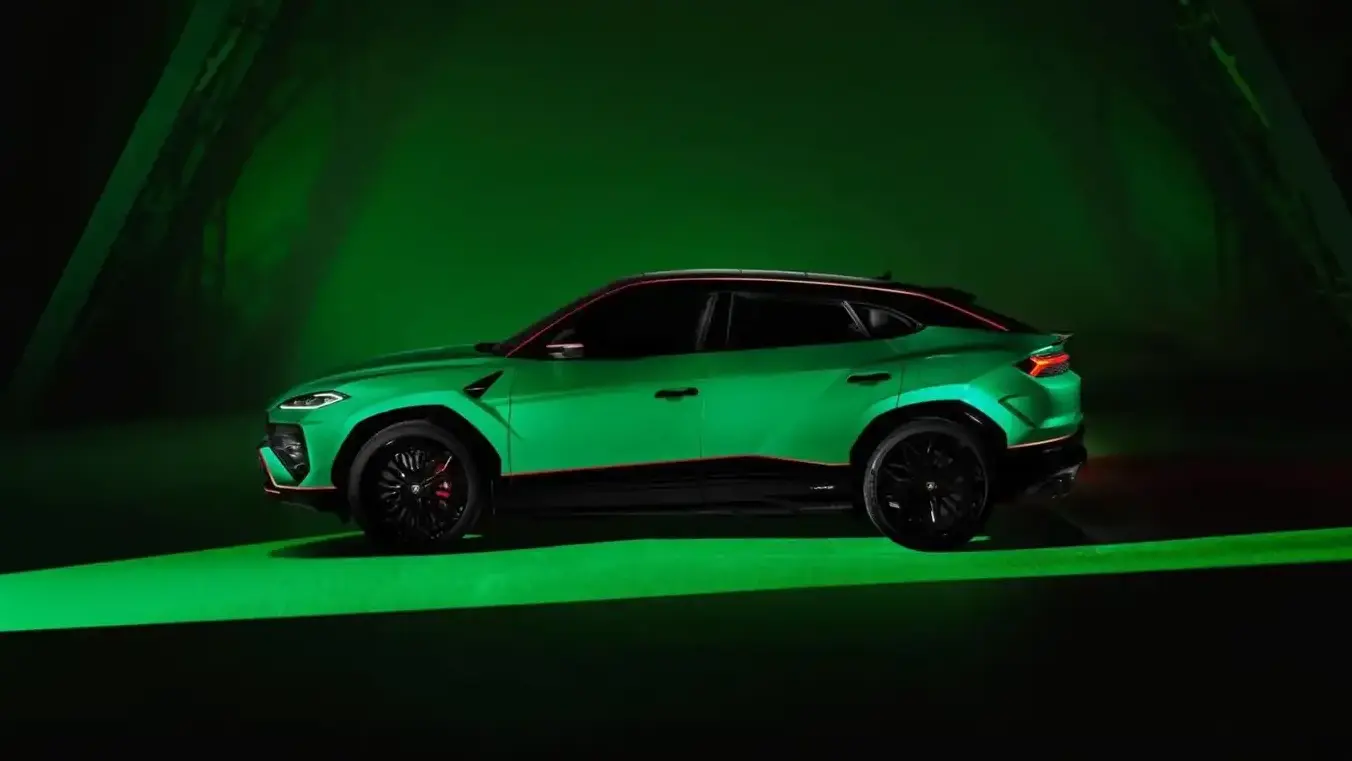
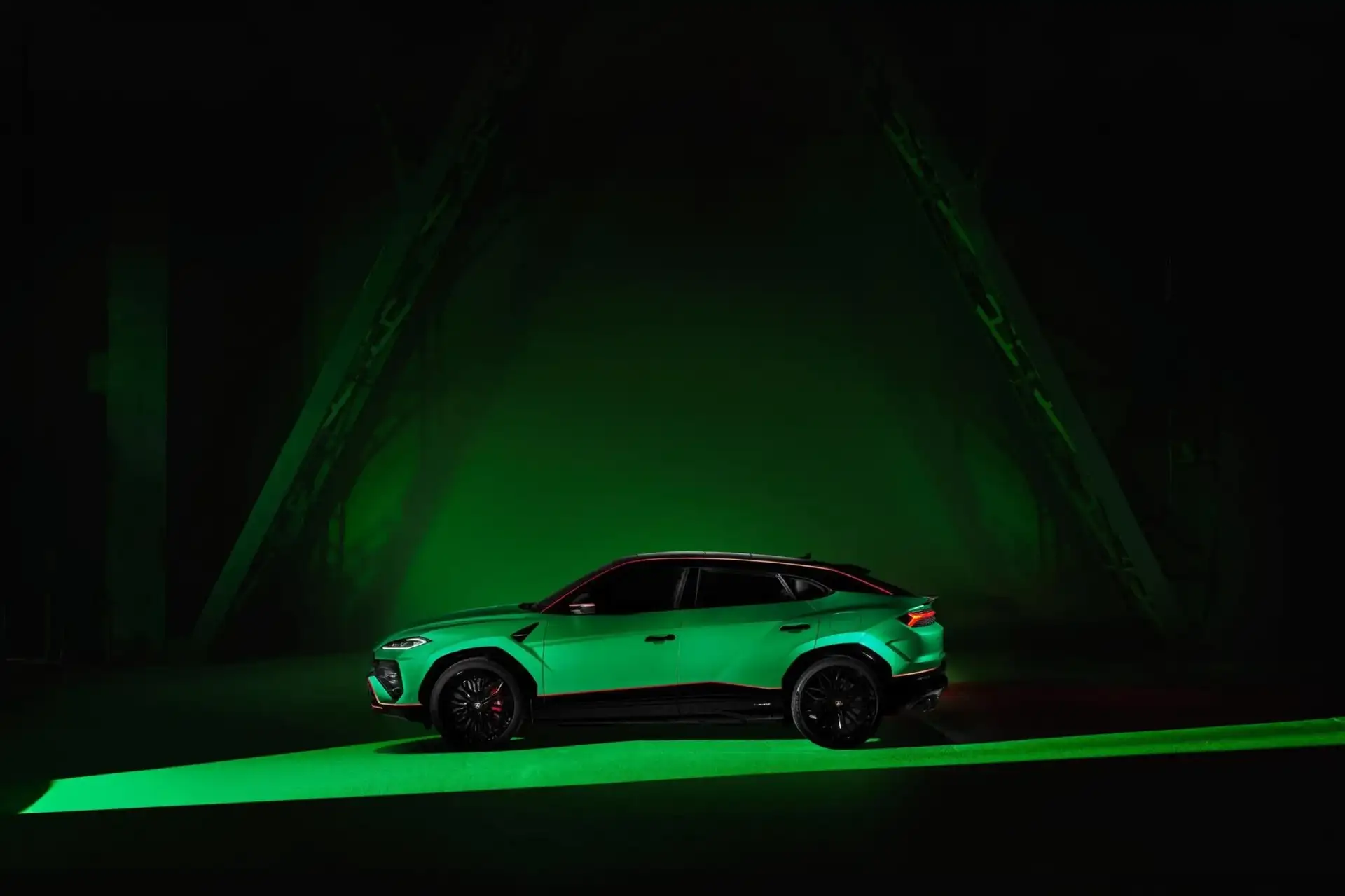
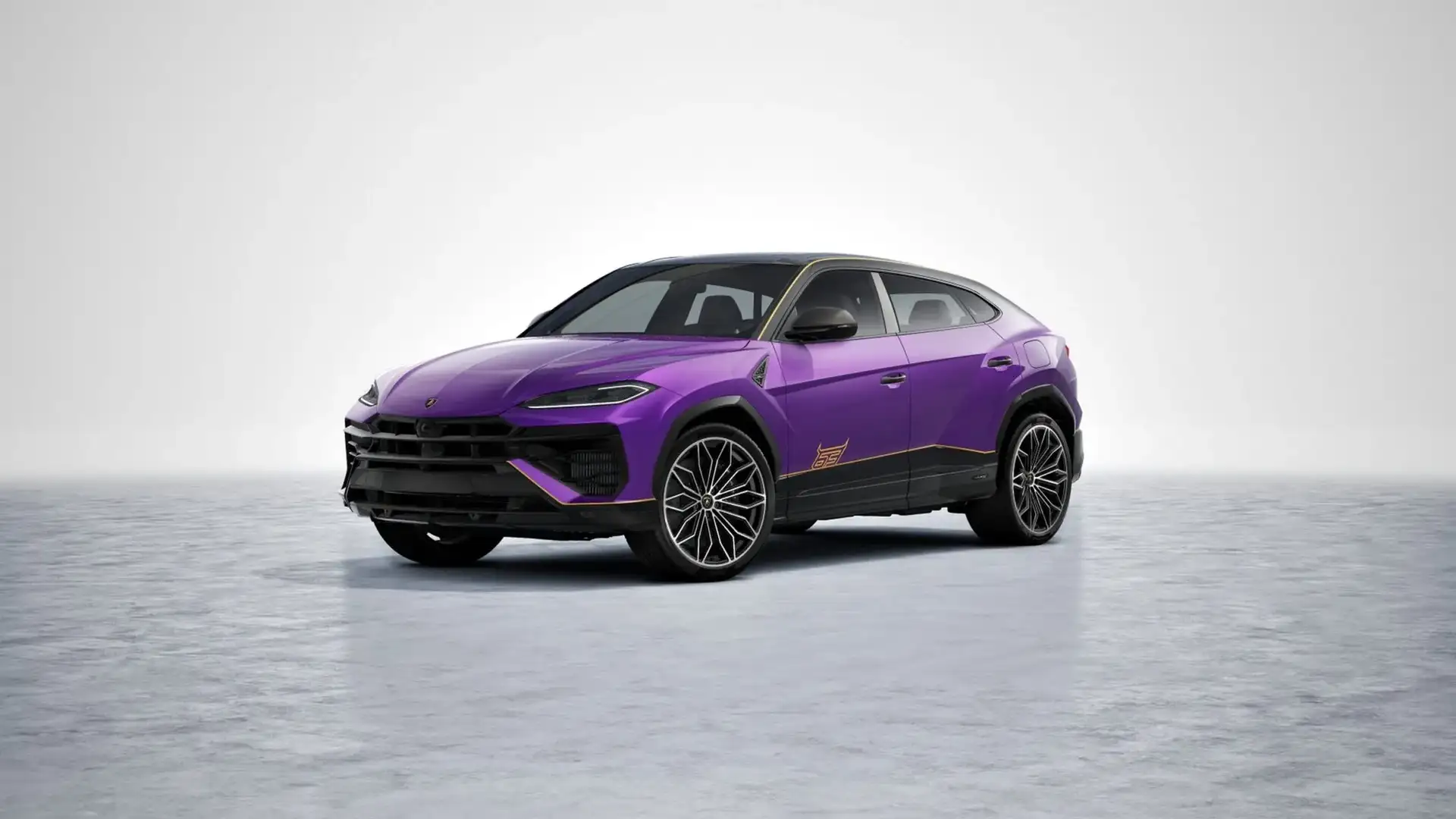
The headline technical update is not a new engine or battery pack; Lamborghini has kept the familiar Urus SE architecture intact and used it as a base for a much broader visual program. The body-color palette alone is unusually dense, with Arancio Xanto, Bianco Asopo, Grigio Telesto, Viola Pasifae, plus Giallo Tenerife and Verde Mercurius joining the lineup for the first time. Customers can then layer Nero Shiny on the upper body, roof, spoiler, and exhaust tips, before choosing from six accent colors that extend across the mirrors and the lower body line.
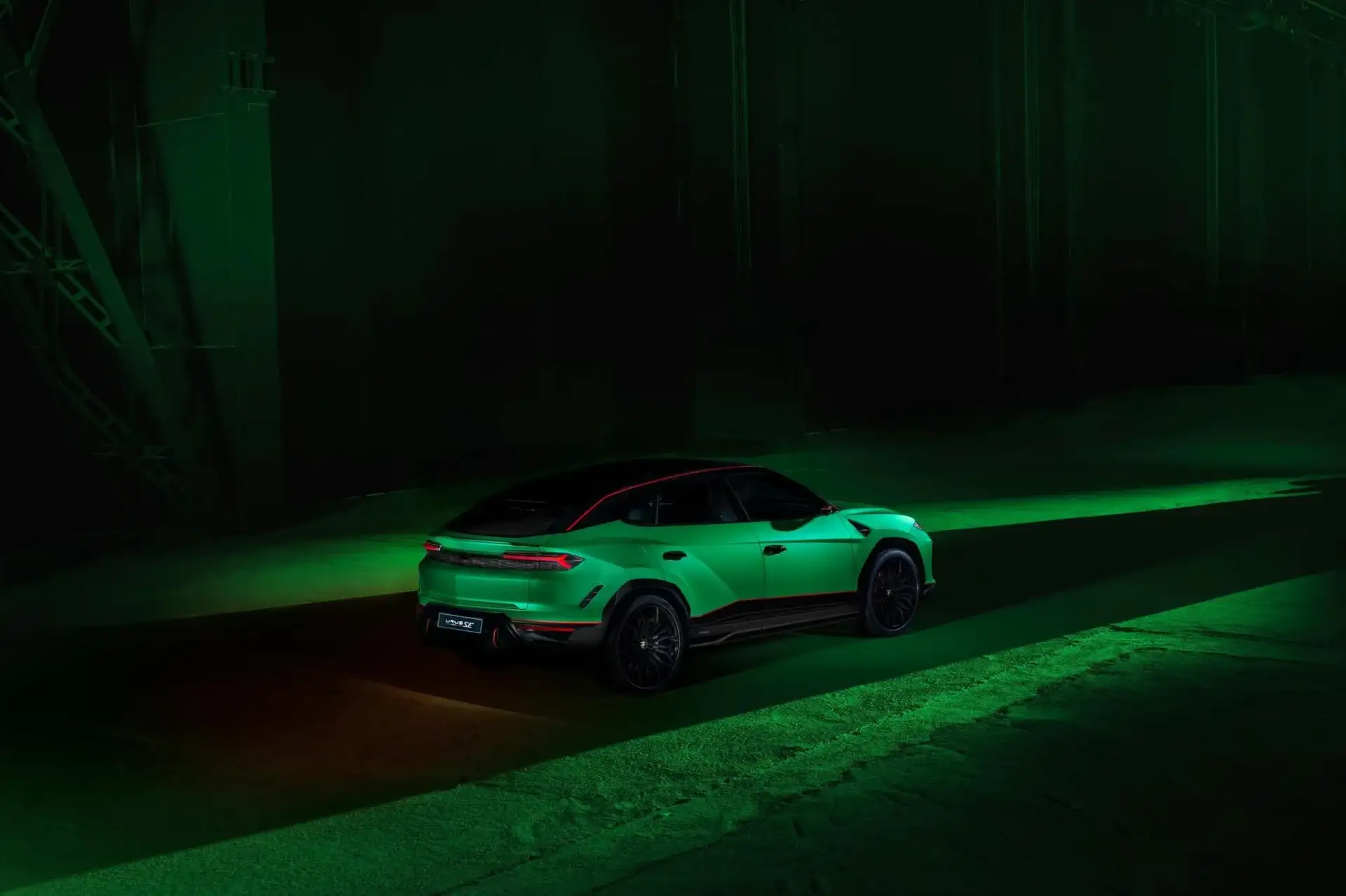
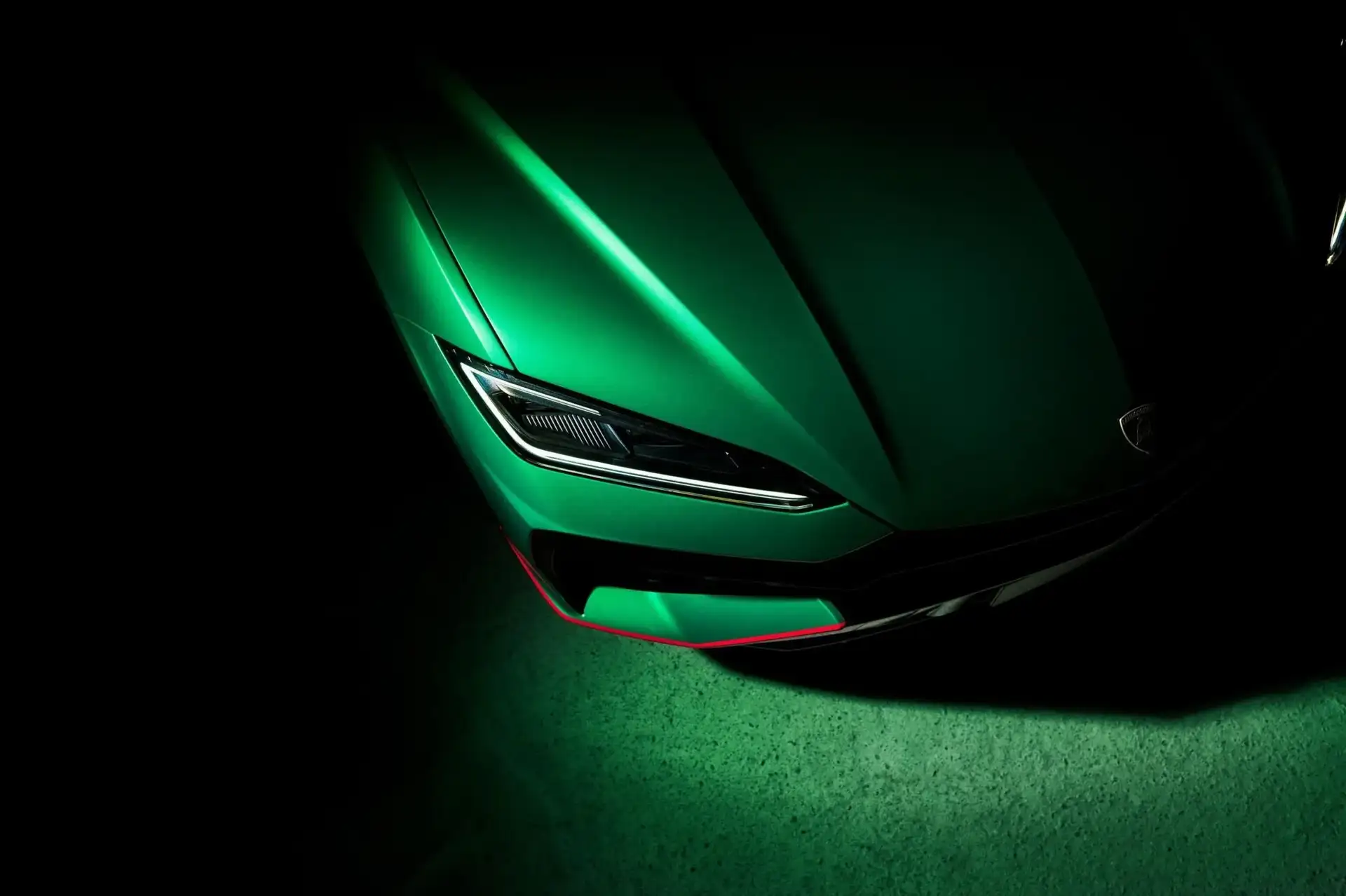
This is more than cosmetic variety. Lamborghini is effectively allowing buyers to build a two-tone super-SUV with an unusually high number of visible break points, which is where the design language becomes readable from a distance. The six accent colors, including Verde Mantis and Rosso Mars, make the car look custom even before a buyer adds the optional carbon fiber front splitter, mirror caps, or rear diffuser. For a brand whose clientele often wants instant visual hierarchy, that matters as much as the 23-inch wheel option.
Inside, the passenger dashboard carries the sharpest clue
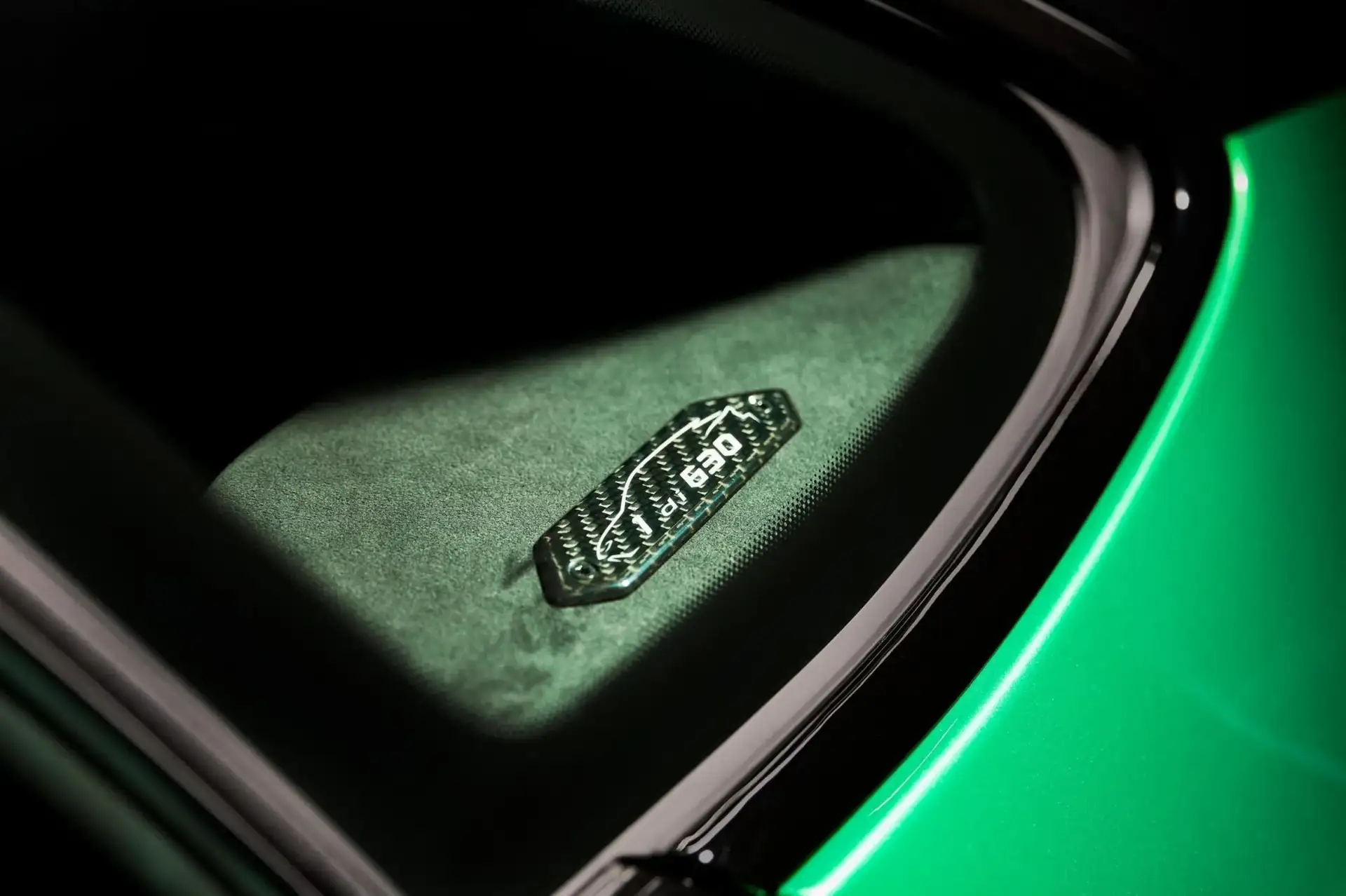
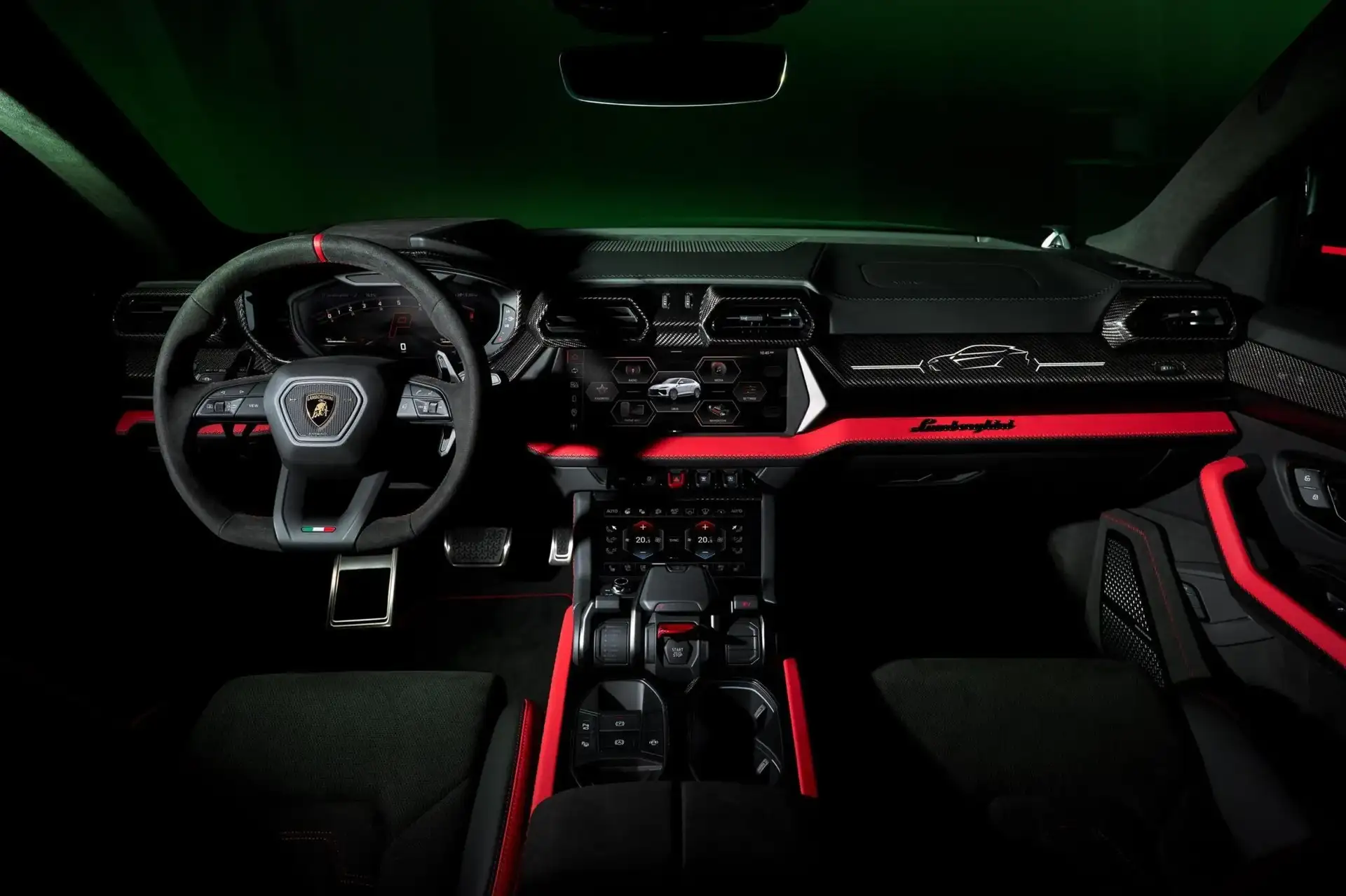
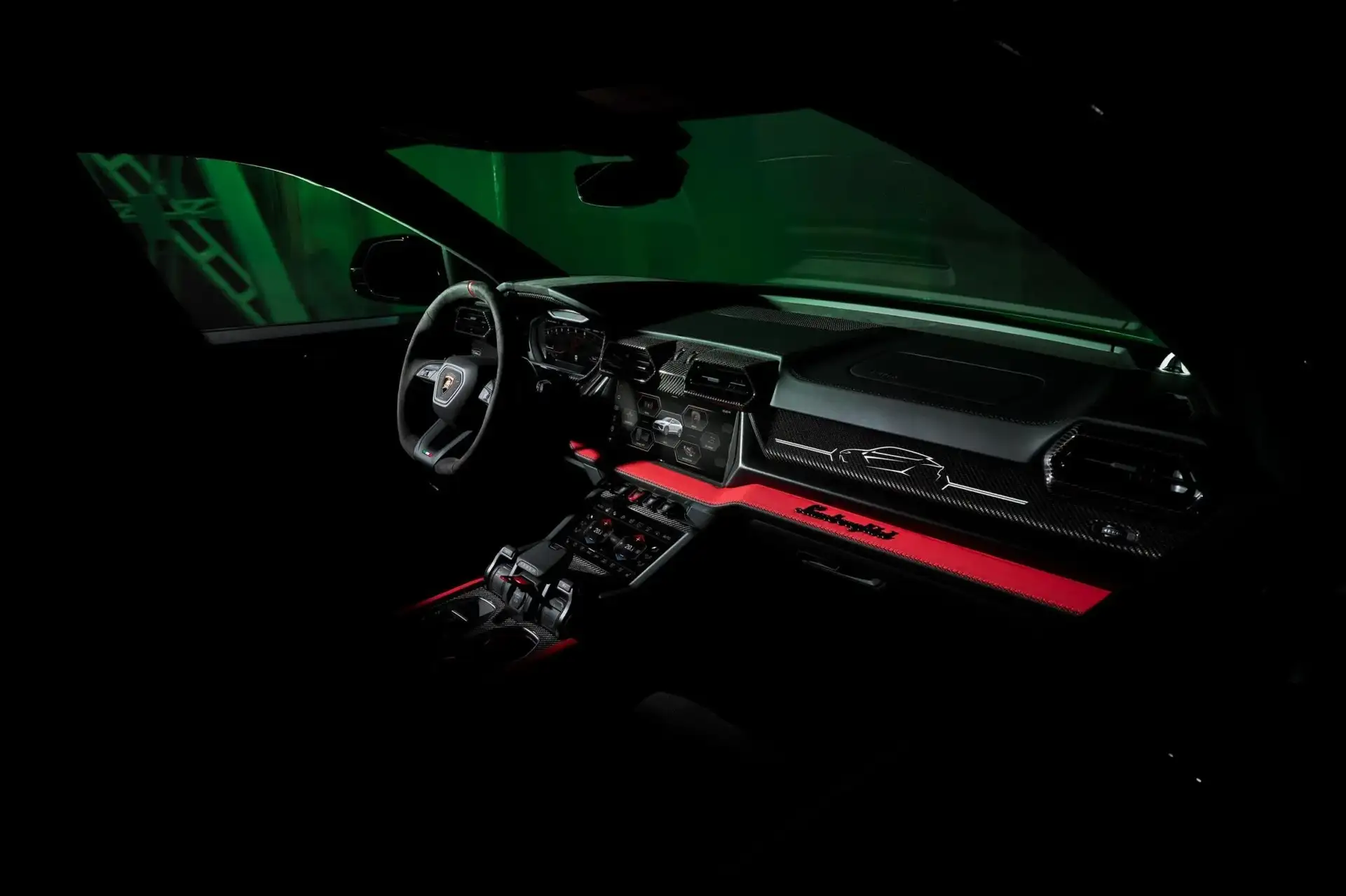
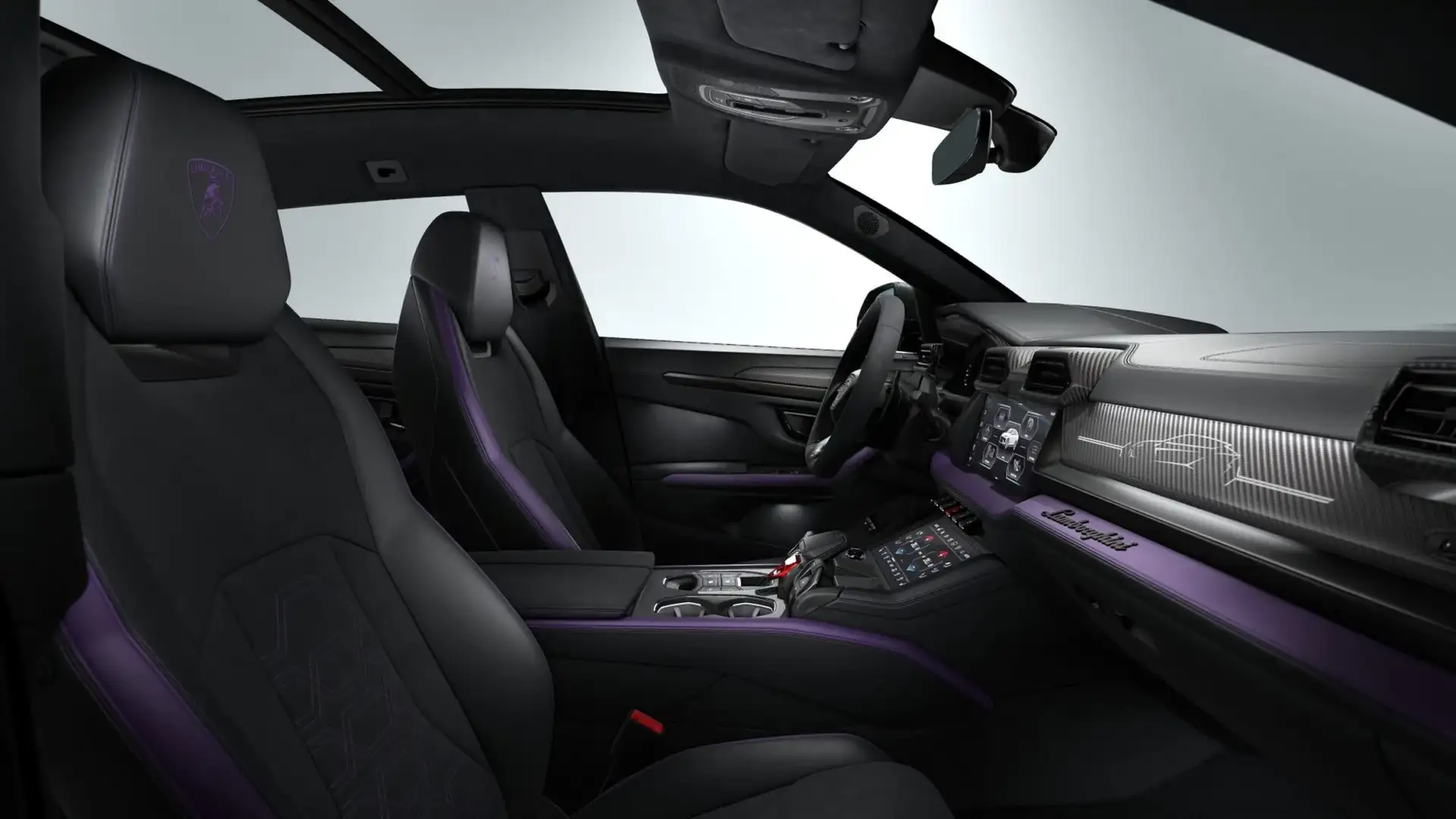
The most tasteful detail is also the one that will likely be missed in press photos: a silk-screened depiction of the Urus on the passenger-side dashboard. That graphic is paired with a carbon fiber logo plate marking the tenth anniversary of Ad Personam Studio, making the cabin feel less like a trim level and more like a commemorative atelier piece. The base interior specification is Nero Ade, using Dinamica leather and Corsa-Tex microfiber, both of which fit the Urus SE’s performance-luxury brief better than traditional glossy hides would.
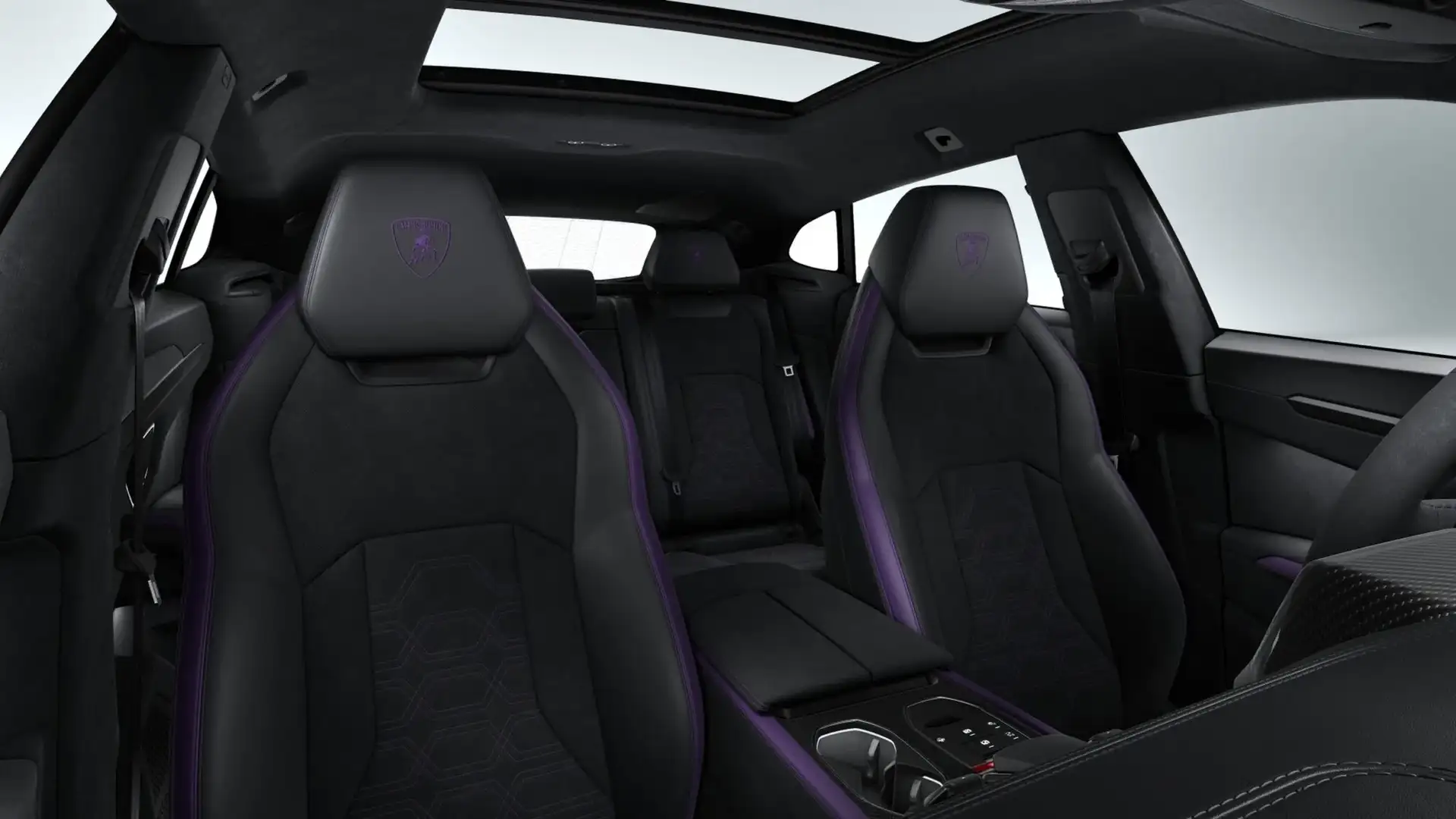
The customization depth continues with six contrast tones for the cabin, including Viola Acutus, Bianco Leda, Giallo Quercus, Arancio Dryope, Verde Viper and Grigio Octans. Lamborghini also offers 12 colors for seat, headrest and embroidery details, which means the buyer’s choices are not confined to a single accent stitch. Additional carbon fiber can be ordered for the door panels, instrument cluster, and transmission tunnel, and that is the kind of specificity serious clients expect from a sub-brand like Ad Personam.
Performance remains unchanged, and that is the point
Under the skin, the Urus SE Tettonero uses the same plug-in hybrid powertrain as the standard Urus SE. The twin-turbocharged 4.0-liter V8, electric motor, 25.9 kWh battery pack and eight-speed automatic transmission deliver 789 hp and 950 Nm, with the full system sending the crossover to 100 km/h in 3.4 seconds and on to 312 km/h. Those are still formidable figures in 2026 terms, especially for a vehicle that can also cover more than 60 km in electric mode.
What is notable here is how Lamborghini has aligned the product with current hybrid expectations without diluting the brand’s dynamic image. The electric-only range is not presented as a green talking point; it is framed as additional usability for a vehicle that can still run from rest to 100 km/h in the low 3s. That balance puts the Urus SE in the same broader performance-luxury conversation as the PORSCHE CAYENNE Coupe Elétrico Esconde 1139 cv Em Um Teto Mais Limpo, even though the execution philosophies are very different.
Why the 630-unit cap is strategically precise
Limiting production to 630 units is a clever piece of positioning because it is exclusive enough to matter, but not so small that it becomes unobtainable for the right clientele. In Lamborghini terms, 630 is also an easy number to remember and a cleaner business message than an arbitrary lower-volume run. The brand does not list pricing yet, but that omission is almost beside the point; the configurator is already live, and the real game is how many buyers will pay for rare color combinations, carbon accessories and a personalized interior that starts with Nero Ade and then branches into 12 embroidery choices.
This is exactly where Lamborghini’s approach differs from simpler “black pack” special editions. The Tettonero Capsule is not a style bundle bolted onto a mass-market SUV; it is a demonstration of how Ad Personam can turn a known mechanical platform into a much more exclusive object. For enthusiasts tracking limited-run performance cars, the comparison is useful against the ROLLS-ROYCE Project Nightingale: Conversível de 100 Unidades Revelado, where scarcity is even tighter but the emotional strategy is similarly curated.
How the Tettonero changes the Urus conversation
The Urus SE has already established itself as Lamborghini’s high-volume performance SUV, but the Tettonero Capsule shifts attention away from volume and toward curation. By mixing six base colors, six accent colors, six brake caliper finishes and 21- to 23-inch wheel choices, Lamborghini has built a configurator with enough granularity to reward repeat customers. That matters in the ultra-luxury segment, where differentiation often comes from nuanced specification rather than raw horsepower alone.
The result is a car that stands apart even before the owner reaches for carbon-fiber extras or a personalized stitching scheme. The most striking aspect is that the visual drama is anchored by a mature hybrid drivetrain, not by a theatrical power bump. For buyers who want a super-SUV that announces wealth through detail rather than pure excess, the Urus SE Tettonero is one of the clearest recent examples of that trend, and it connects naturally with the brand’s broader design-led strategy seen in the MERCEDES-BENZ E 200 EXCLUSIVE Ressurge Com O Código Do Quiet Luxury.
The market lesson behind Lamborghini’s newest capsule
The deeper business lesson is that Lamborghini now treats personalization as an engineering discipline, not a paint booth afterthought. The Tettonero Capsule proves that the company understands how to package technical credibility, 789 hp and 950 Nm, alongside emotional exclusivity, 630 units and anniversary branding. That combination is what premium buyers remember, and it is why this Urus can coexist in the same enthusiast ecosystem as more radical launches like the ZACOE Temerario Carbon Kit Dispara Fúria Na STO, where carbon fiber is the headline but identity is the real prize.
The configurator being live is the final clue: this is not a static display piece, it is a sales tool. Lamborghini knows that the rarest commodity in the luxury SUV segment is not speed, because 3.4 seconds to 100 km/h is no longer shocking. The rarest commodity is taste, and the Urus SE Tettonero Capsule is engineered to make taste visible from the first glance to the passenger-side dashboard.