
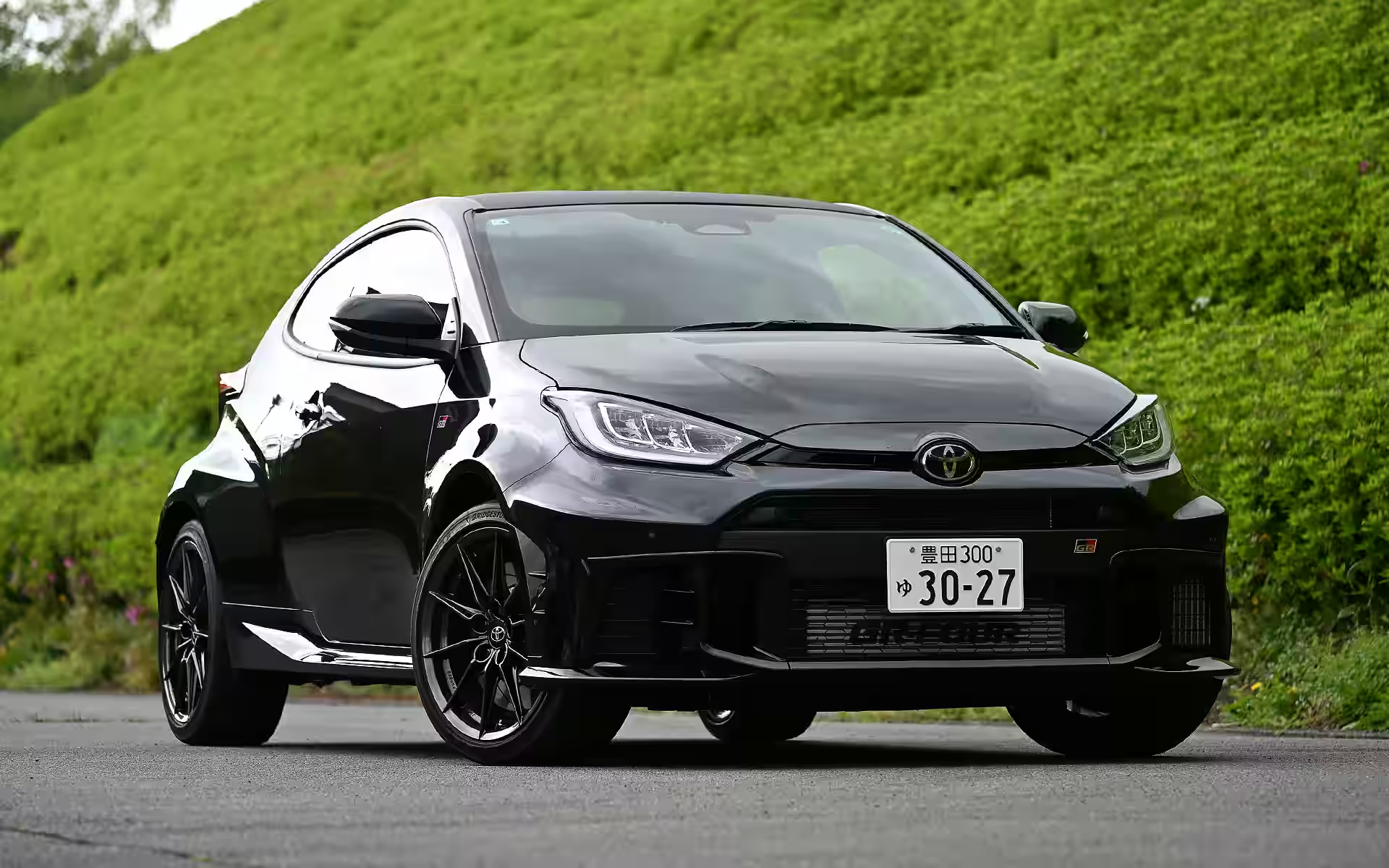
TOYOTA’s GR Yaris update is not about a headline number. It is about the hardware drivers touch first.
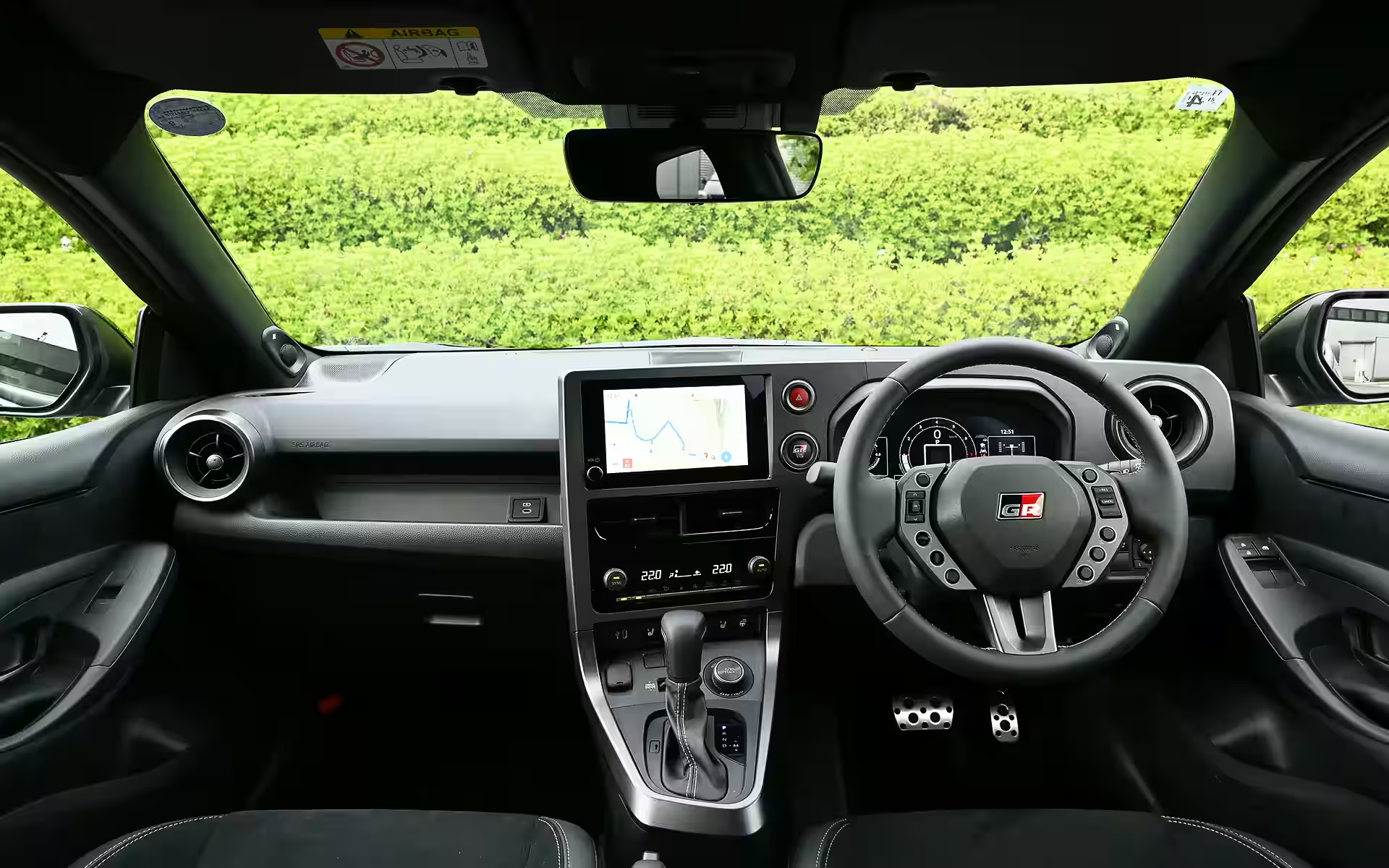
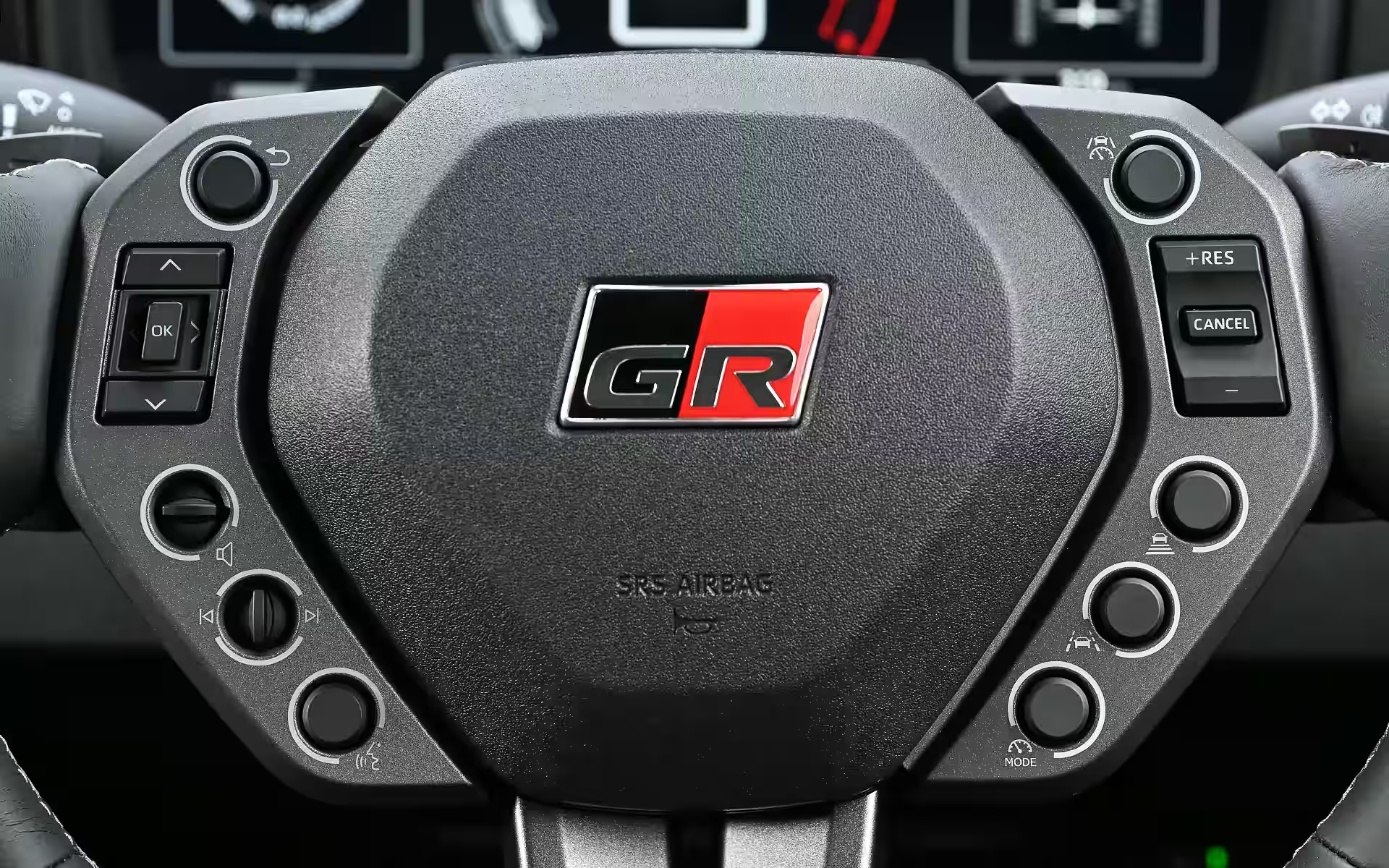
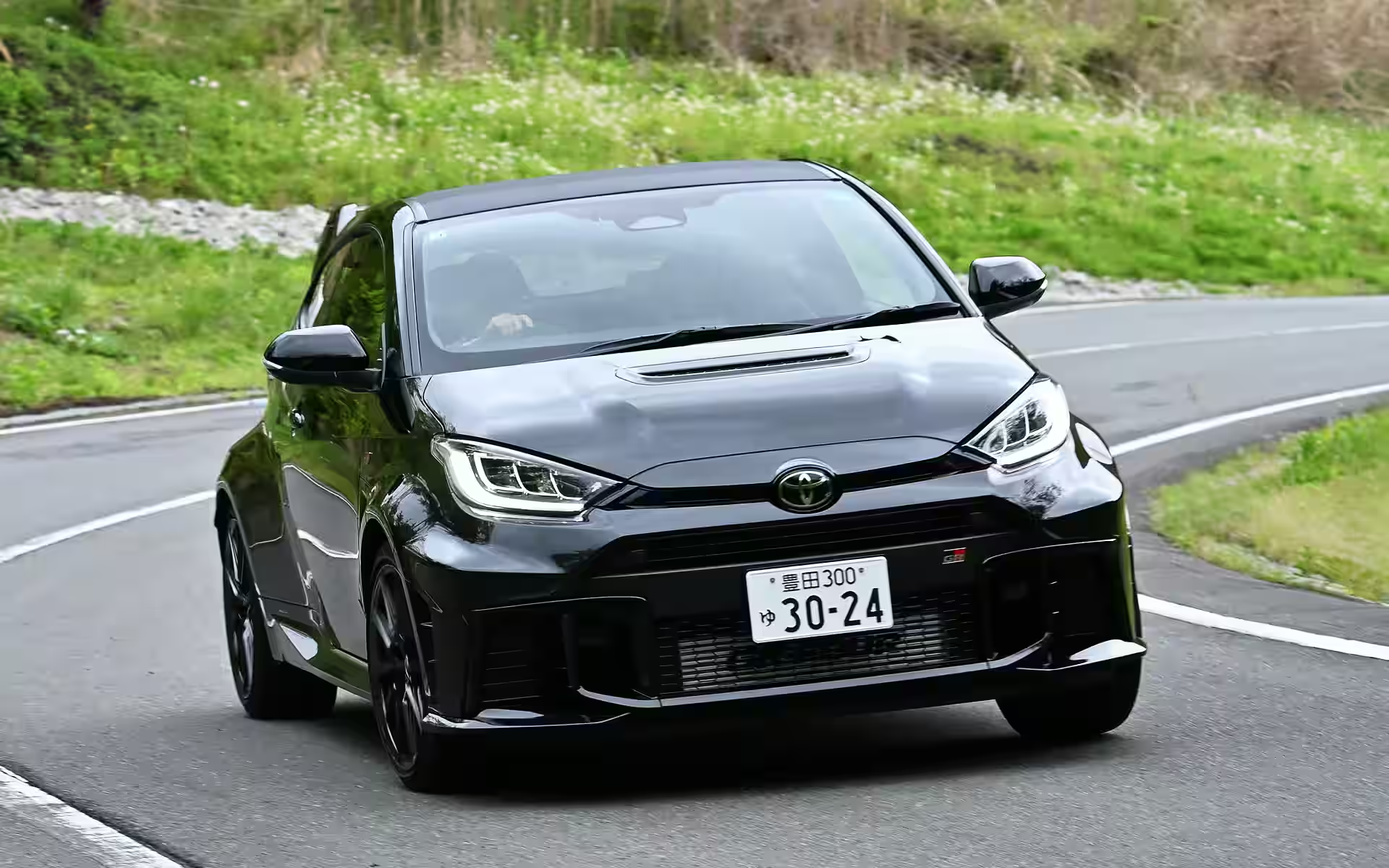
The 2026 Toyota GR Yaris arrives with one of the most meaningful changes a performance car can get: a redesigned steering wheel package that Toyota now calls GR Steering. In a car already born from rally logic, that sounds small only until you drive it. The wheel is smaller, reshaped for better palm support, and its switch layout has been cleaned up so driver-assistance controls sit to the right and audio functions to the left, out of the way of aggressive hand-over-hand inputs. It is a rare case where an interior revision directly supports pace.
| Key 2026 GR Yaris data | Figure |
|---|---|
| Engine | 1.6L turbocharged 3-cylinder G16E-GTS |
| Output | 302 PS / 222 kW (296 hp) |
| Torque | 400 Nm (295 lb-ft) |
| Transmission | 6-speed manual or GR-DAT 8-speed automatic |
| Drivetrain | GR-FOUR AWD with selectable torque distribution |
| Power increase | Up from 272 PS / 370 Nm to 302 PS / 400 Nm |
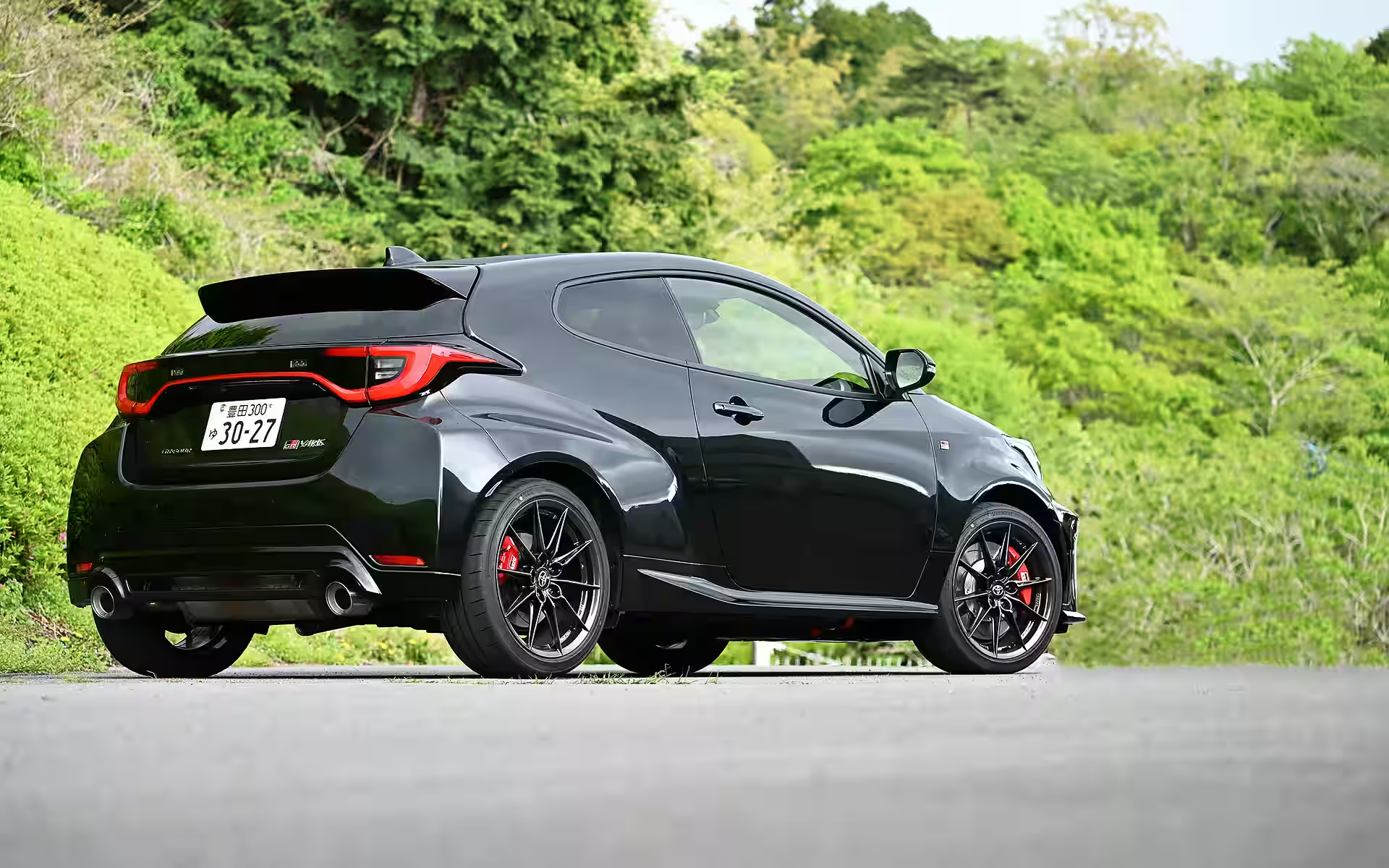
The hidden detail that connects this update to real track driving
The biggest technical step for 2026 is not the steering wheel alone. Toyota also revised EPS tuning for high-grip tires, introduced new Bridgestone Potenza Race rubber developed specifically for the GR Yaris in Japan, and retuned damper characteristics to work with the tire’s stiffer vertical behavior. That matters because the car’s balance now feels less like a compact AWD hatch with talent and more like a coherent package built around tire compliance, steering effort, and body control.
According to the source drive, the result is a cleaner sense of unity between chassis and steering, especially under quicker inputs. That is exactly where the GR Yaris has historically needed fine polishing: not outright grip, but how confidently the car lets the driver exploit it. Toyota also keeps improving the car’s body and suspension mounting stiffness, including flange bolts introduced in earlier updates to sharpen the way the suspension talks to the shell.
GR-FOUR remains the car’s defining advantage
GR-FOUR is still the reason the GR Yaris occupies a different lane from typical hot hatches. In NORMAL mode, the system sends more drive to the front axle; TRACK mode continuously varies torque from 60:40 to 30:70 depending on conditions; GRAVEL mode locks the split to 50:50. The important part is not the menu itself but the smoothness of the transitions. The previous generation’s fixed 30:70 character has been replaced by a more flexible, more intuitive control strategy that better matches what a skilled driver is trying to do in real time.
The GR-DAT 8-speed automatic also remains part of the broader performance story, and Toyota has continued to revise its sport-shift logic for circuit use. For buyers who still want a manual, the 6-speed configuration remains the purist answer, especially now that the steering, tire, and damping updates have made the chassis feel more resolved under load.
Morizo RR shows how far Toyota can go when comfort takes a back seat
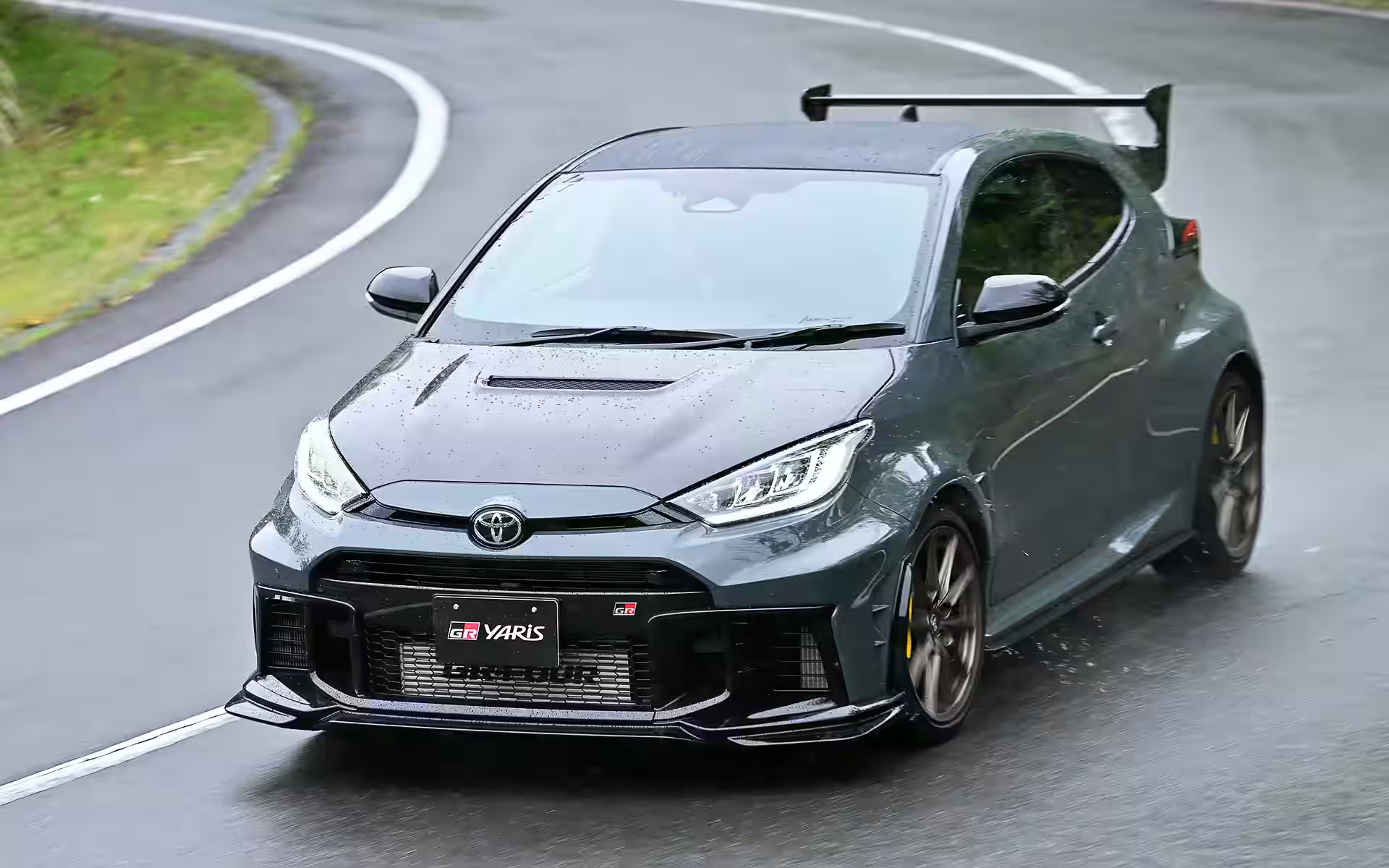
If the standard 2026 GR Yaris is the complete road-and-track package, the Morizo RR is the sharper, more focused interpretation. The brief drive described a notably flatter body motion and a remarkable ability to absorb coarse surfaces without the brittle, busy ride that often follows aggressive tuning. That is not an accident. Toyota set the dampers around the car’s aerodynamic load, including the effect of a large carbon rear wing, so vertical movement is better controlled without feeling tied down.
The steering calibration also benefits from this approach. The chassis feels as though it is working with the aero, not against it. In Japan’s performance-car landscape, that puts the Morizo RR in a small and serious category: cars developed with track conditions in mind, but still expected to survive imperfect public roads. That balance is exactly what enthusiasts look for when comparing Toyota’s rally-derived thinking with other specialist builds, such as the sharper-minded Porsche 911 GT3 and its region-specific details. Reference: https://canalcarro.com/en/porsche-911-gt3-artisan-edition-brings-japan-bound-detail/
Why this matters beyond Toyota loyalists
The 2026 GR Yaris update is important because it proves Toyota still understands that enthusiasts notice calibration changes more than badge flourishes. A better wheel, better tire behavior, sharper EPS, and revised damper control do not read loudly on a spec sheet, but they change the first impression, the last lap, and the way a car wears over time. That is the difference between a fast car and a genuinely refined performance machine.
The Morizo RR then pushes the same logic one step further. It makes clear that Toyota Gazoo Racing is not merely freezing a recipe that worked in 2020. It is still developing the car as a living motorsport product, which is why these updates feel credible rather than decorative.
FAQ
What is the biggest change in the 2026 GR Yaris?
The most consequential change is the new GR Steering setup, supported by revised EPS tuning and Bridgestone Potenza Race tires that alter the car’s response and feel at the wheel.
Did Toyota increase the engine output again?
The source references the already-updated engine state of 302 PS and 400 Nm, carried over from the major performance step that lifted output from 272 PS and 370 Nm.
Why does the Morizo RR feel so different?
Its chassis is tuned around aero load, particularly the large rear wing, which allows Toyota to prioritize flatter body control and better road following.
Is the GR Yaris still available with a manual transmission?
Yes. The 6-speed manual remains part of the GR Yaris lineup and remains the most direct way to exploit the car’s chassis updates.
What makes GR-FOUR significant in daily use?
Its continuous torque distribution logic gives the car a broad performance envelope, making it easier to drive quickly on changing surfaces while preserving traction and stability.