Audi’s Quietest Facelift Is Also Its Most Important One
Audi has not turned the 2026 Q4 e-tron into a different car, and that is precisely the point. The compact electric SUV remains rooted in the MEB architecture, keeps its familiar 4.59 m footprint, and continues to be positioned as one of the brand’s volume EVs with more than 350,000 units built across the Q4 e-tron and Sportback range. Yet this update is not cosmetic housekeeping. It brings a new APP350 rear motor, a revised battery strategy, bidirectional charging, and a cabin overhaul that addresses the exact criticisms Audi has faced on recent launches such as the MERCEDES-BENZ E-CLASS Night Edition Esconde uma Mudança Maior competitor discussion around premium value and perceived quality.
The headline figures tell the story. The Q4 Sportback e-tron performance now reaches up to 592 km WLTP, DC charging rises to 185 kW on quattro versions, and the large battery remains at 82 kWh gross and 77 kWh net. The base pack stays at 63 kWh gross and 59 kWh net, with Audi claiming around 30 km extra range for the entry model. Those numbers place the facelift squarely in the fight against newer premium EVs like the KIA EV4 Gt-Line Revela Seu Truque De Luxo Por Menos and the BMW Série 7 Recebe Facelift E A Verdadeira Guerra Da Luxo Revelada, both of which force established brands to justify every euro they ask.
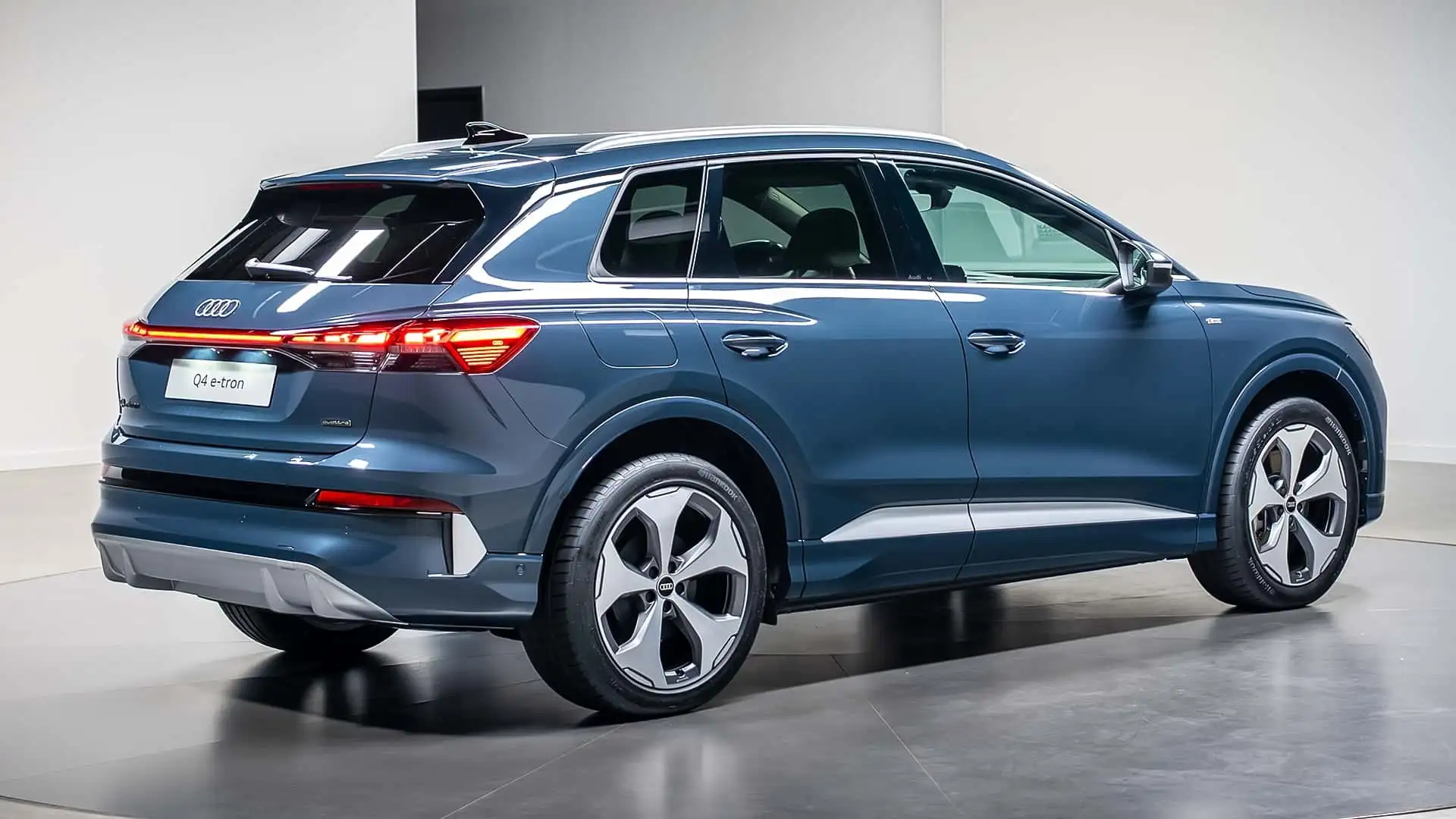
Exterior Changes Are Minimal, But The Aero Tuning Is Not
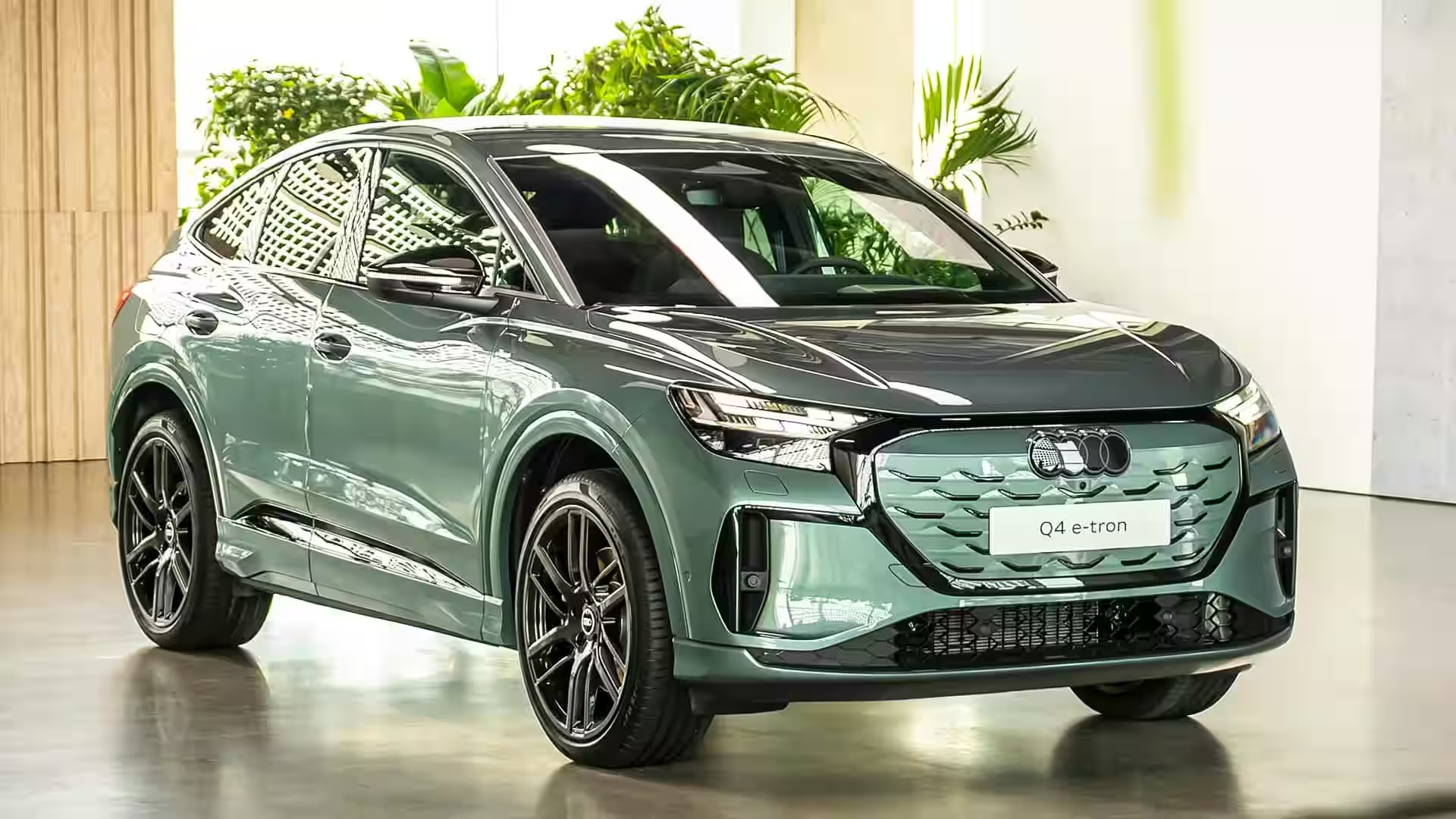
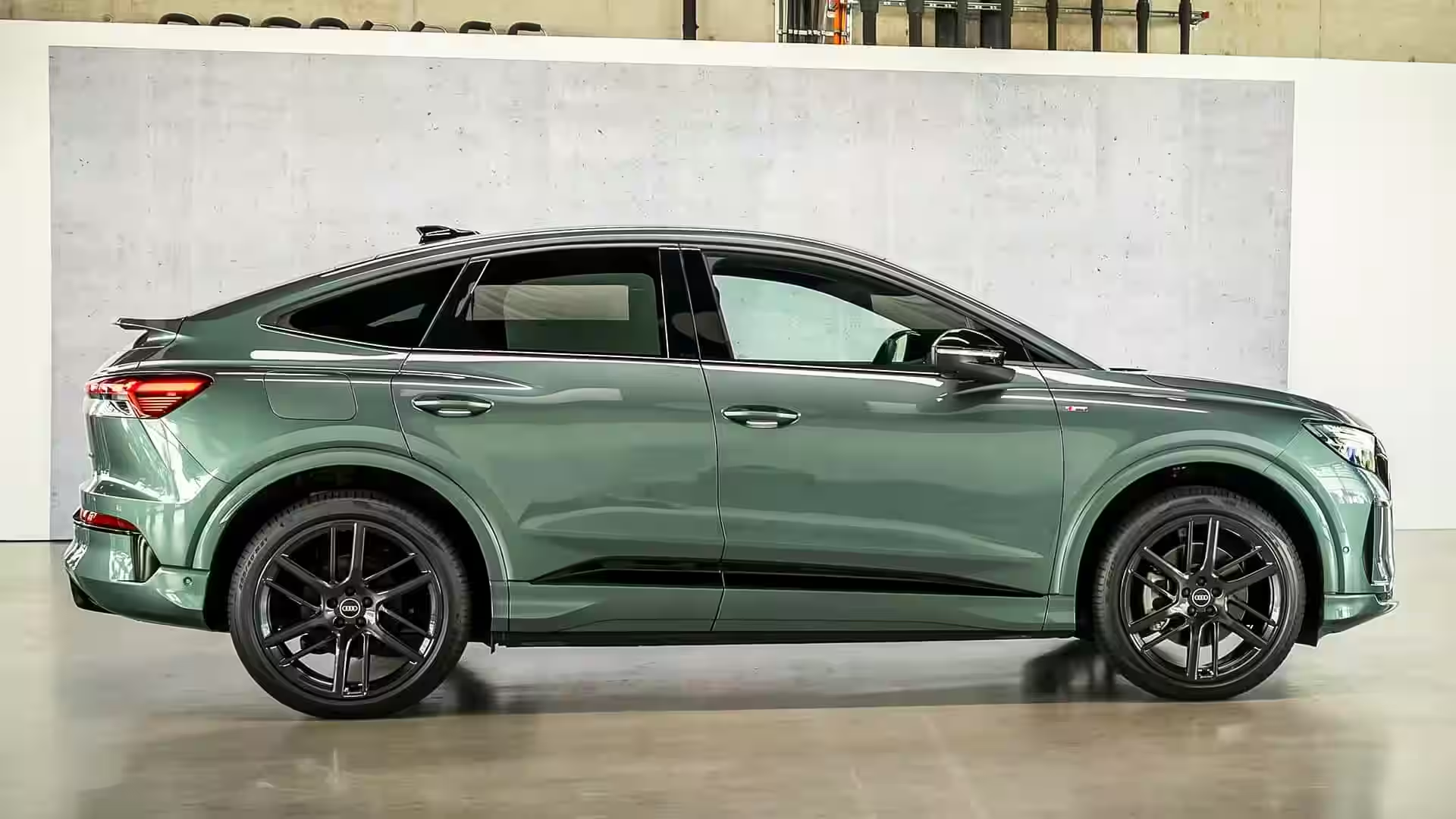
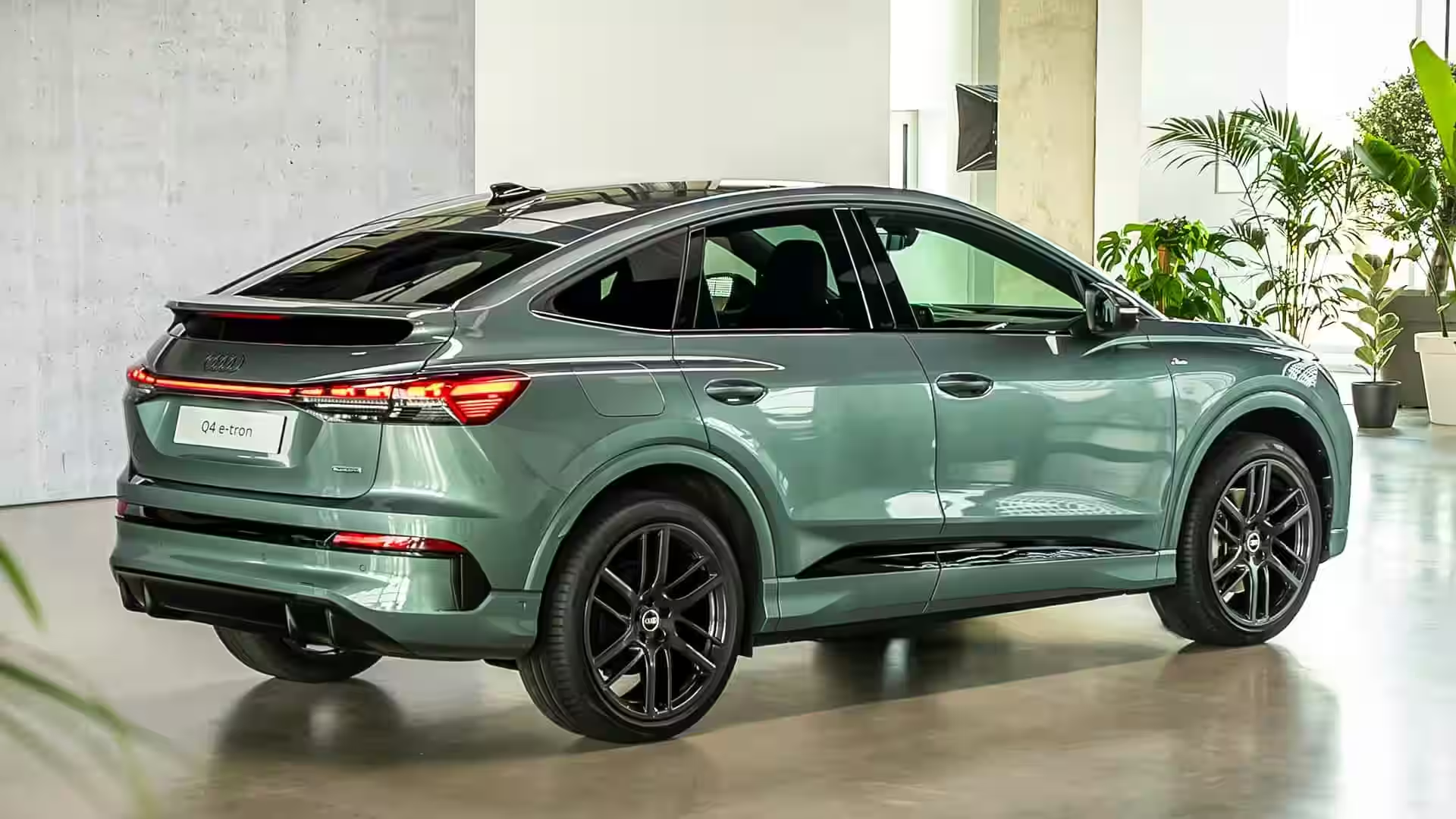
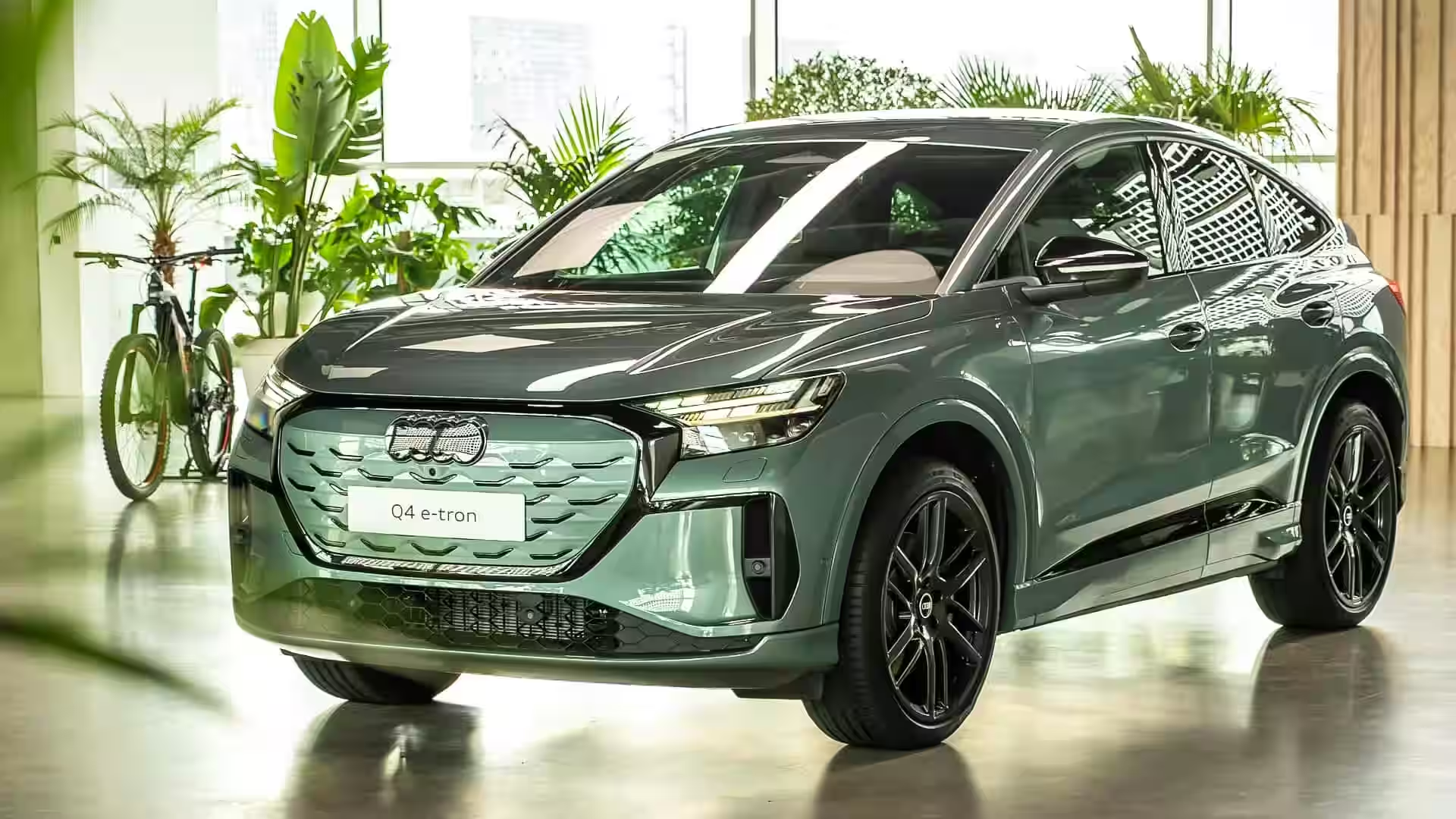
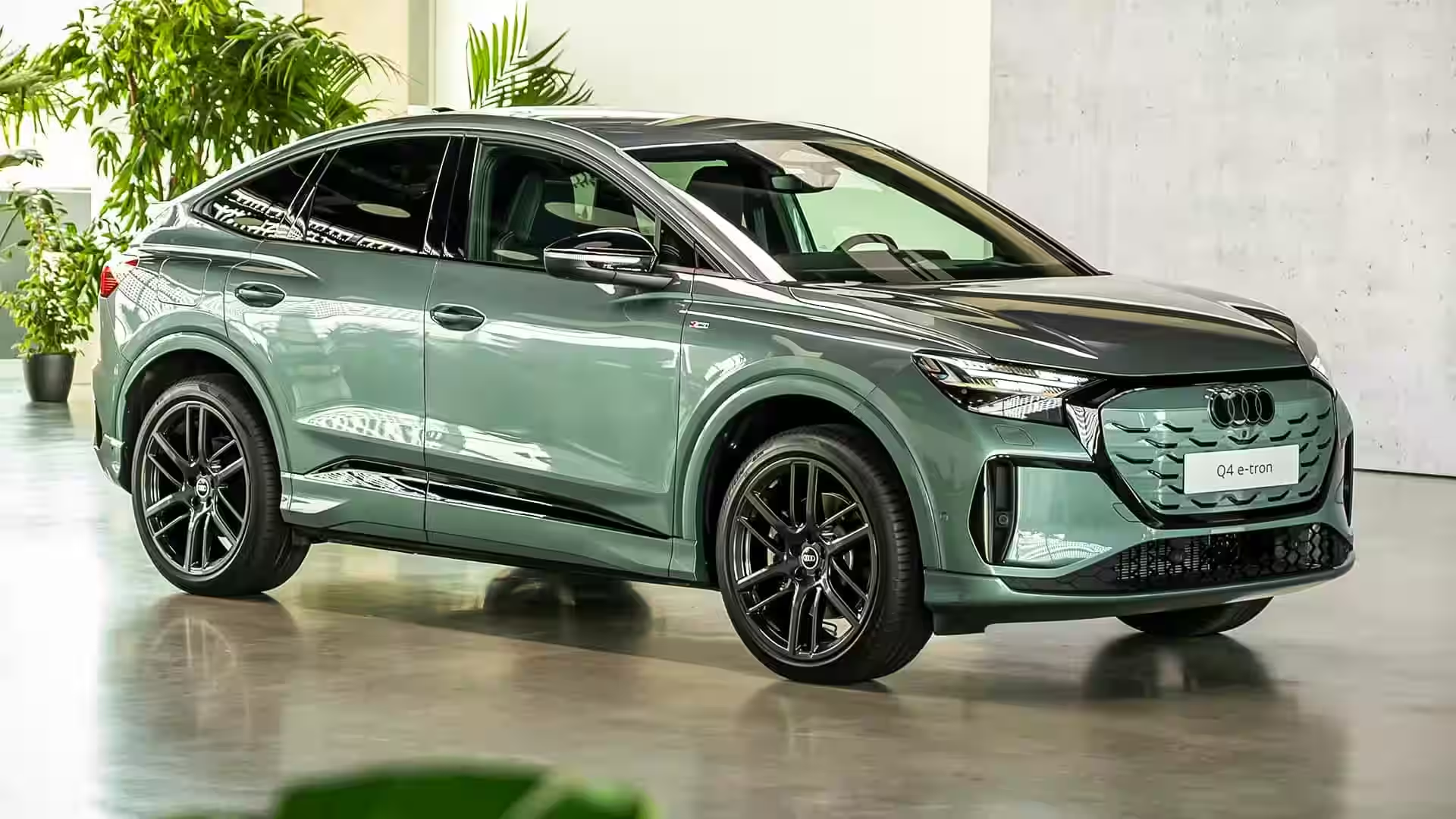
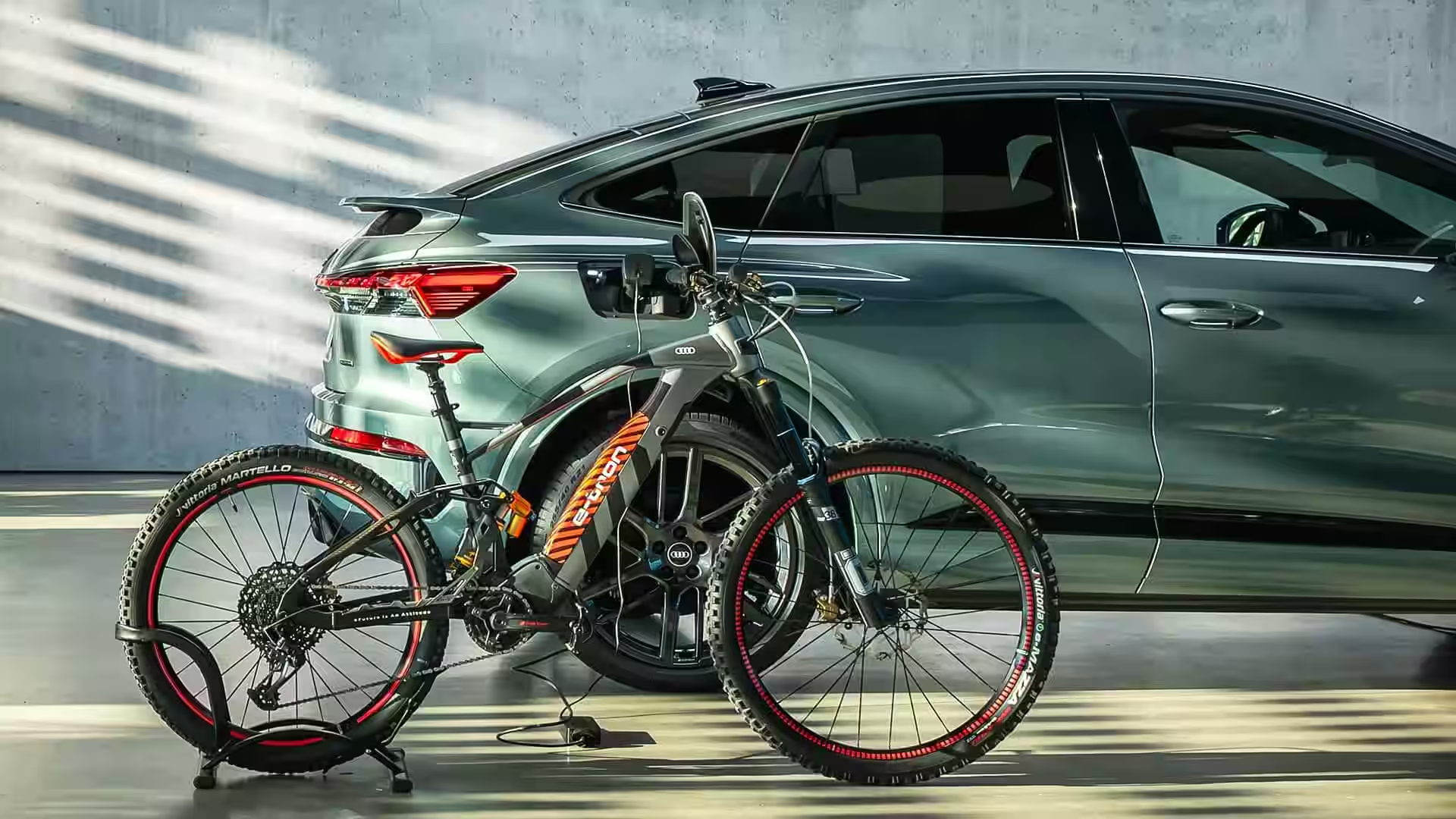
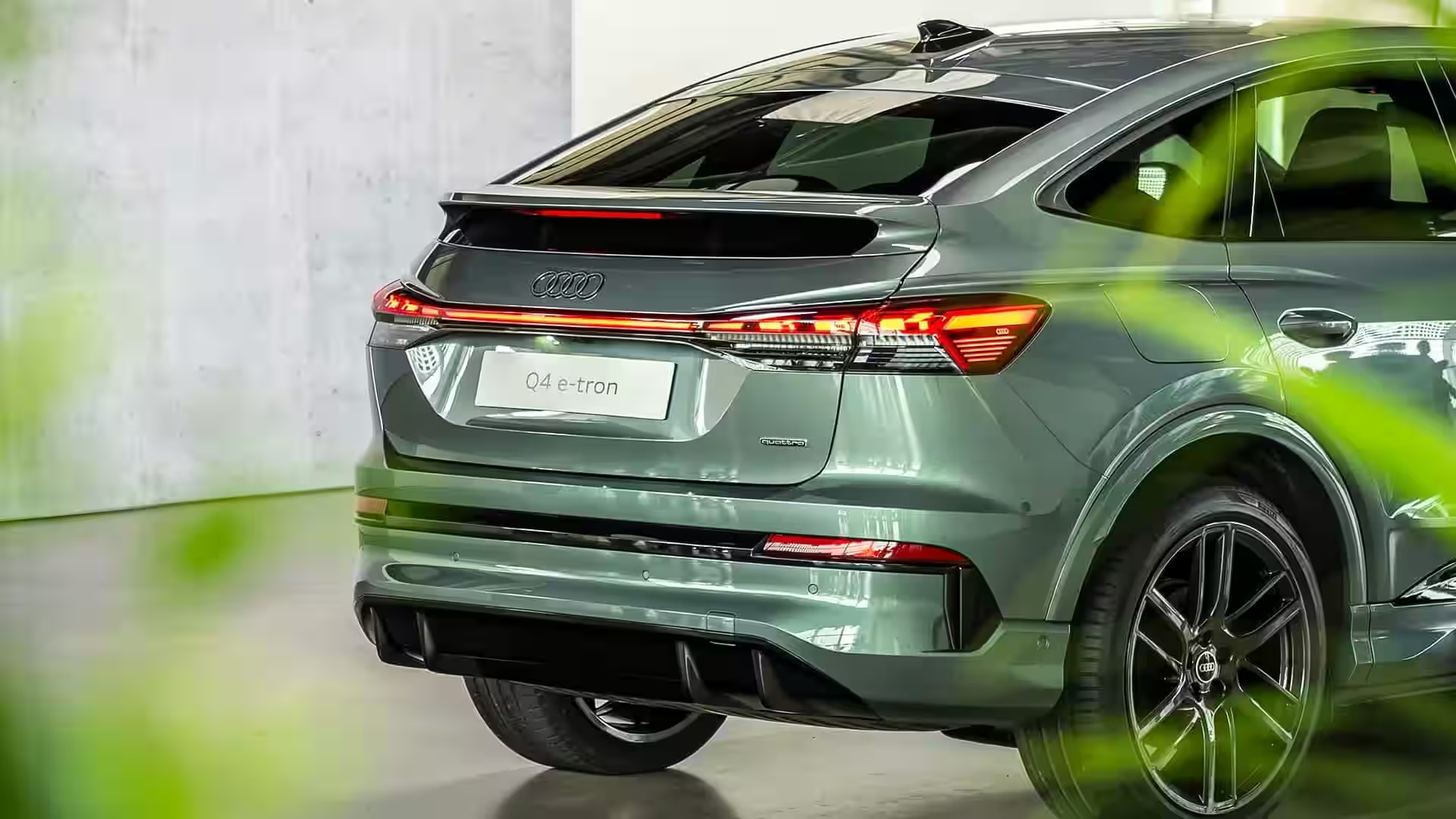
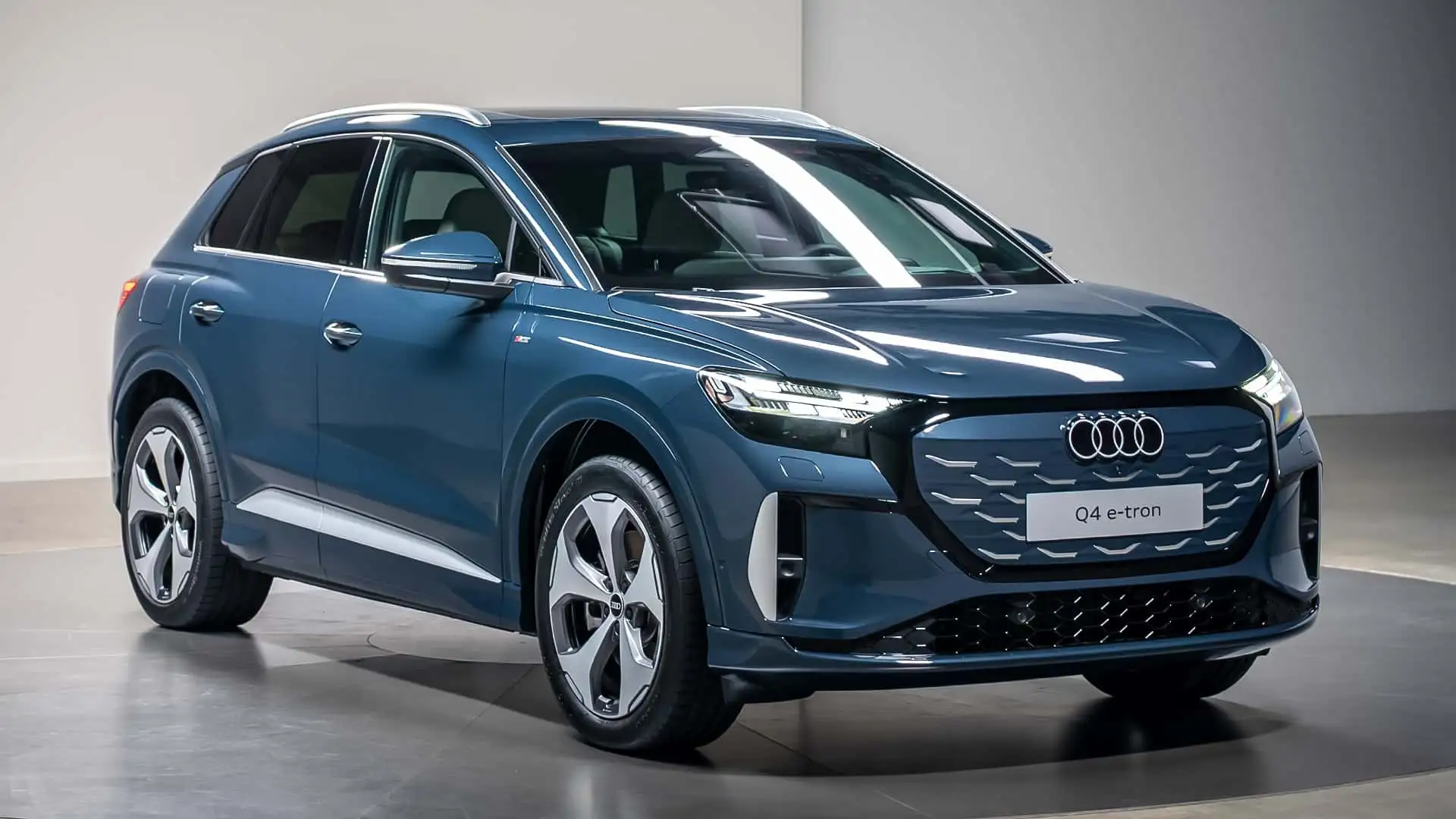
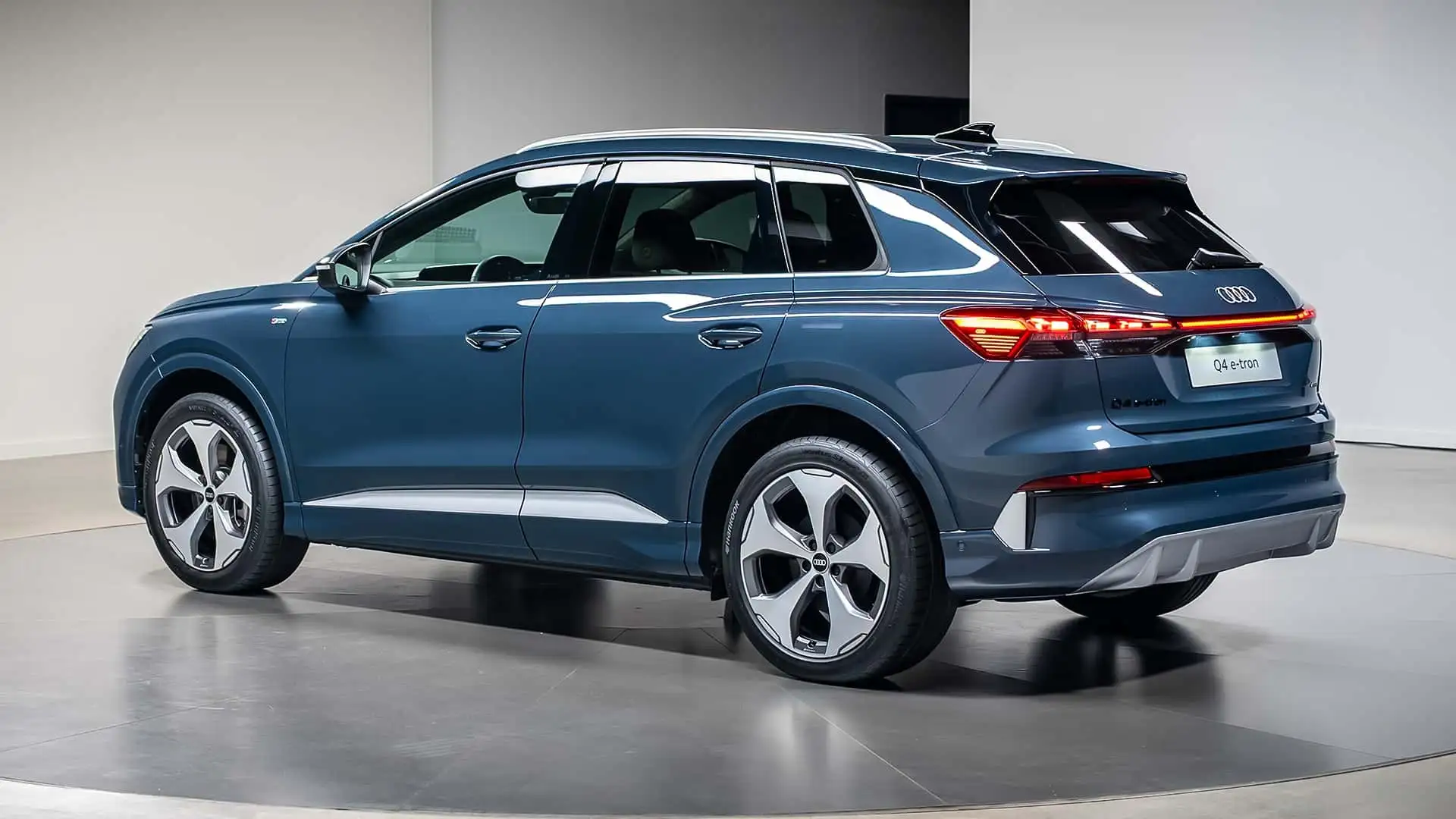
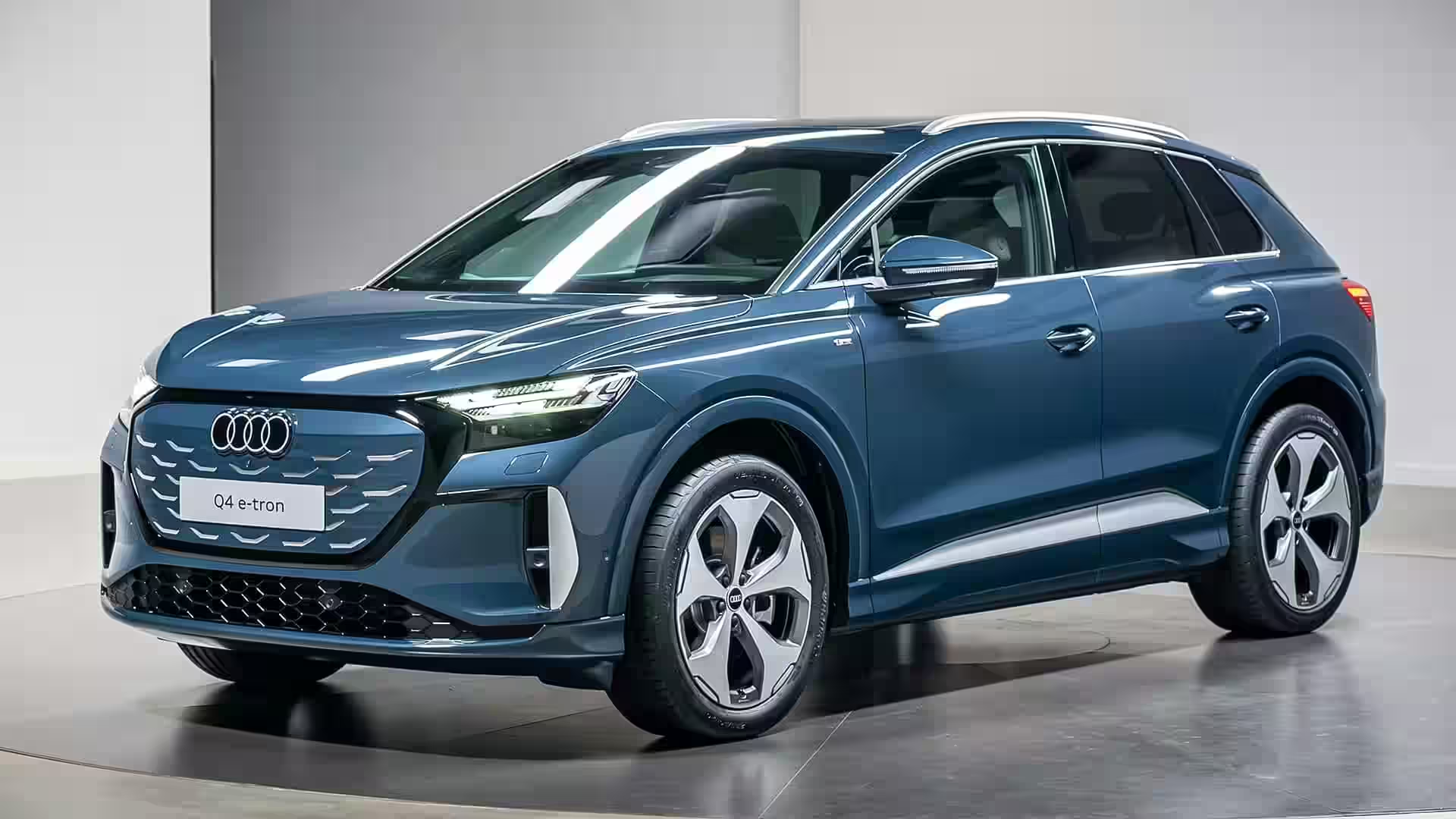
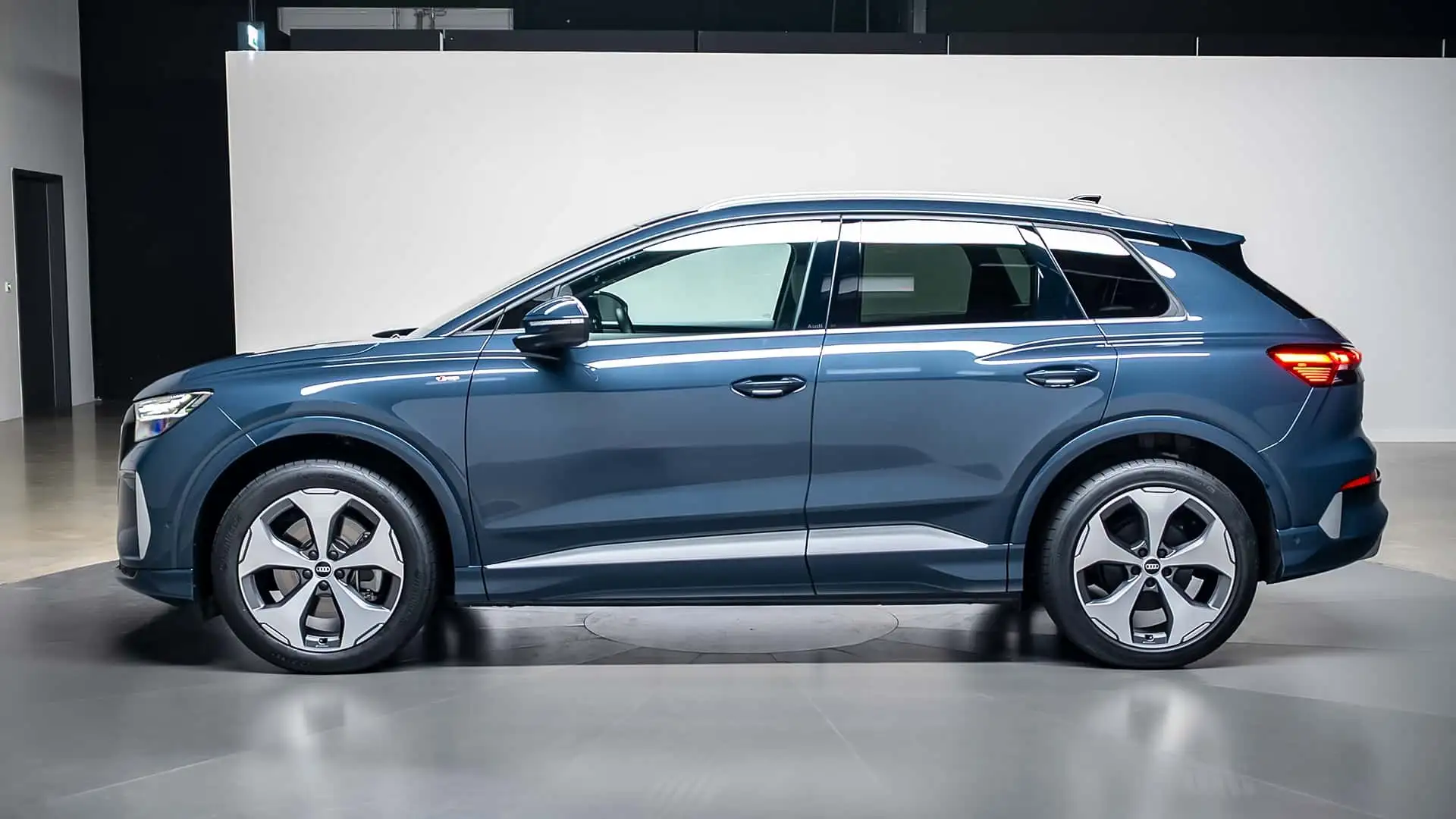
Audi has resisted the temptation to over-style the facelift. The Singleframe now comes painted in body color as standard, while S line models gain vertical blades at the front and rear in matte Selenite Silver. That sounds modest, but the real work sits in the airflow management. The SUV receives a new roof edge spoiler, while the Sportback gets a revised rear spoiler, both designed to smooth separation and reduce drag. In an EV with a 4.59 m body and an efficiency-focused rear motor, those details support the range claim more directly than a new bumper ever could.
Lighting is another place where Audi is using technology as identity. The second-generation digital OLED rear lamps now offer four selectable signatures, and they react to proximity by illuminating all OLED segments if another road user approaches within 2 m. Up front, Matrix LED headlights with segment-based daytime running lights can have their graphic signature adjusted through the infotainment system. That puts the Q4 in the same visual-tech territory as larger Audi EVs, but without forcing the driver to move up a class. The visual strategy feels closer in intent to the AUDI E7X: Preview Do SUV De 680 CV Oculta O Plano Da China, where lighting and digital branding are becoming core product tools.
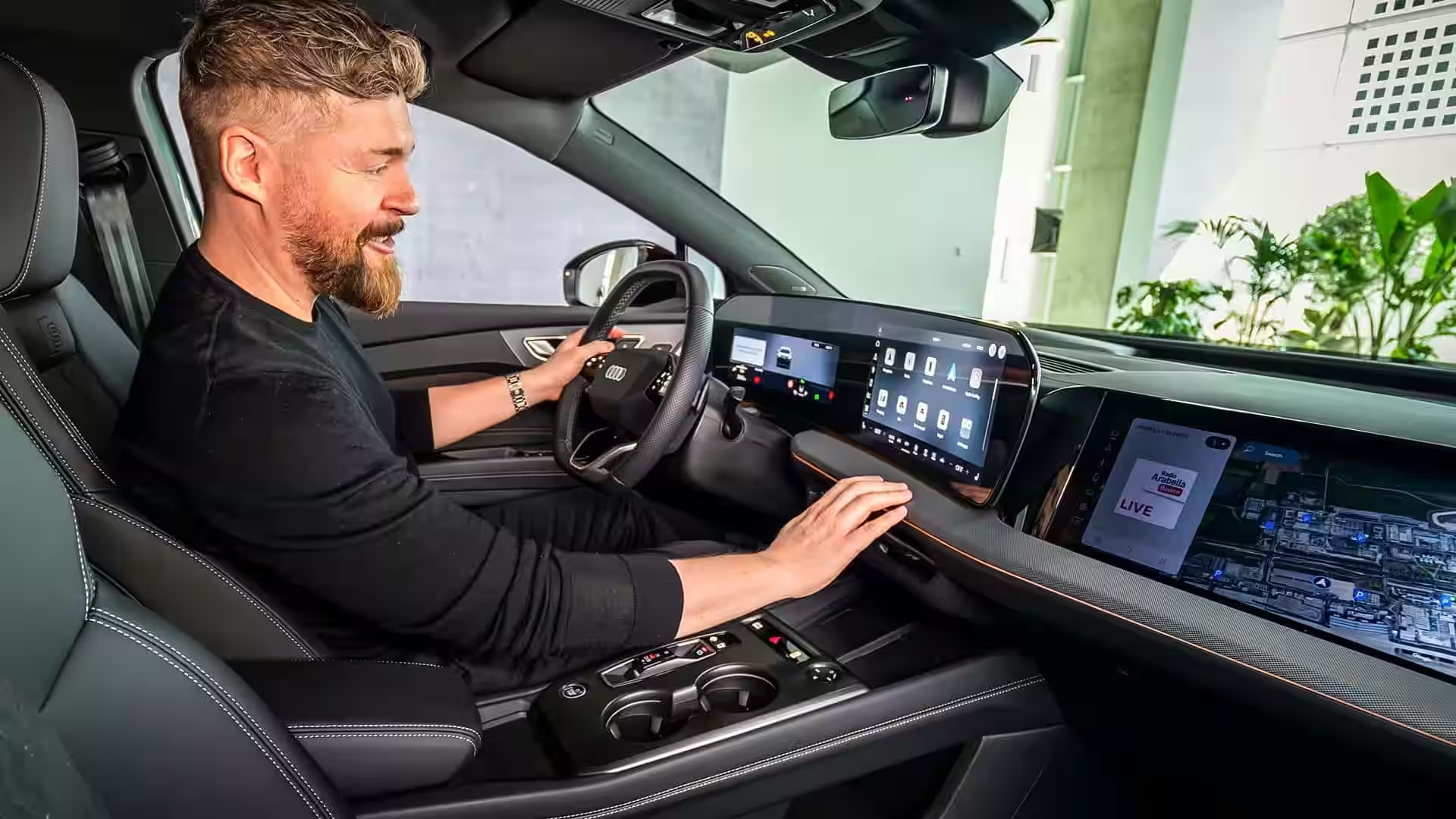
The Digital Stage Cabin Finally Feels Finished
The interior is where the facelift is most persuasive. Audi has replaced the previous setup with what it calls the Digital Stage, built around an 11.9-inch virtual cockpit and a 12.8-inch MMI Touch display under a single panoramic visual frame. The graphics are cleaner, the tile logic is more modern, and the interface is less cluttered than before. There is also a 12-inch passenger display for the first time in this segment, with a privacy mask that prevents driver distraction. That technology already exists in larger Audi models, but here it matters more because it moves the Q4 from “adequate” to “properly premium.”
Audi also integrates ChatGPT into the voice assistant. This is more than a marketing badge if executed well, because the system can handle not only climate control and navigation tasks, but also open-ended knowledge queries. The practical value will depend on response quality and language support, yet in a market where buyers expect their EVs to feel software-defined, this helps the Q4 remain relevant without requiring a full platform reset. The wider premium-EV field is moving the same way, as seen in the software-first messaging around the IM MOTORS LS6 Leva A Ambição Definida Por Software Ao Brasil.
APP350 Motor, New Battery Logic And More Usable Range
The technical heart of the update is the new rear e-motor, internally known as APP350, which is a permanently excited synchronous motor using silicon-carbide power electronics in the inverter. That matters because the car should lose less energy through switching losses, especially at partial load, which is exactly where many EVs spend much of their life. Audi’s emphasis on efficiency rather than headline output is the correct call for a family-sized SUV weighing well within the premium-EV norm, because it improves real-world consumption instead of just peak marketing numbers.
The large battery remains an 82 kWh gross pack, but Audi says the cell chemistry has been revised and the thermal-management software improved. That change also addresses one of the main weaknesses of the earlier Q4: cold-weather charging. The pack can now be preconditioned automatically via navigation or manually by the driver, which should make DC sessions more predictable in winter. On quattro versions, peak DC charging rises from 175 kW to 185 kW. The number is not class-leading, but Audi’s claim of up to 185 km gained in 10 minutes suggests a more stable curve rather than a short-lived peak. The same efficiency obsession is visible in the CATL Shenxing 3 Acaba Com O Record De 9 Min Da BYD, where charging chemistry is becoming as important as motor output.
Bidirectional Charging Gives The Q4 A New Job At Home
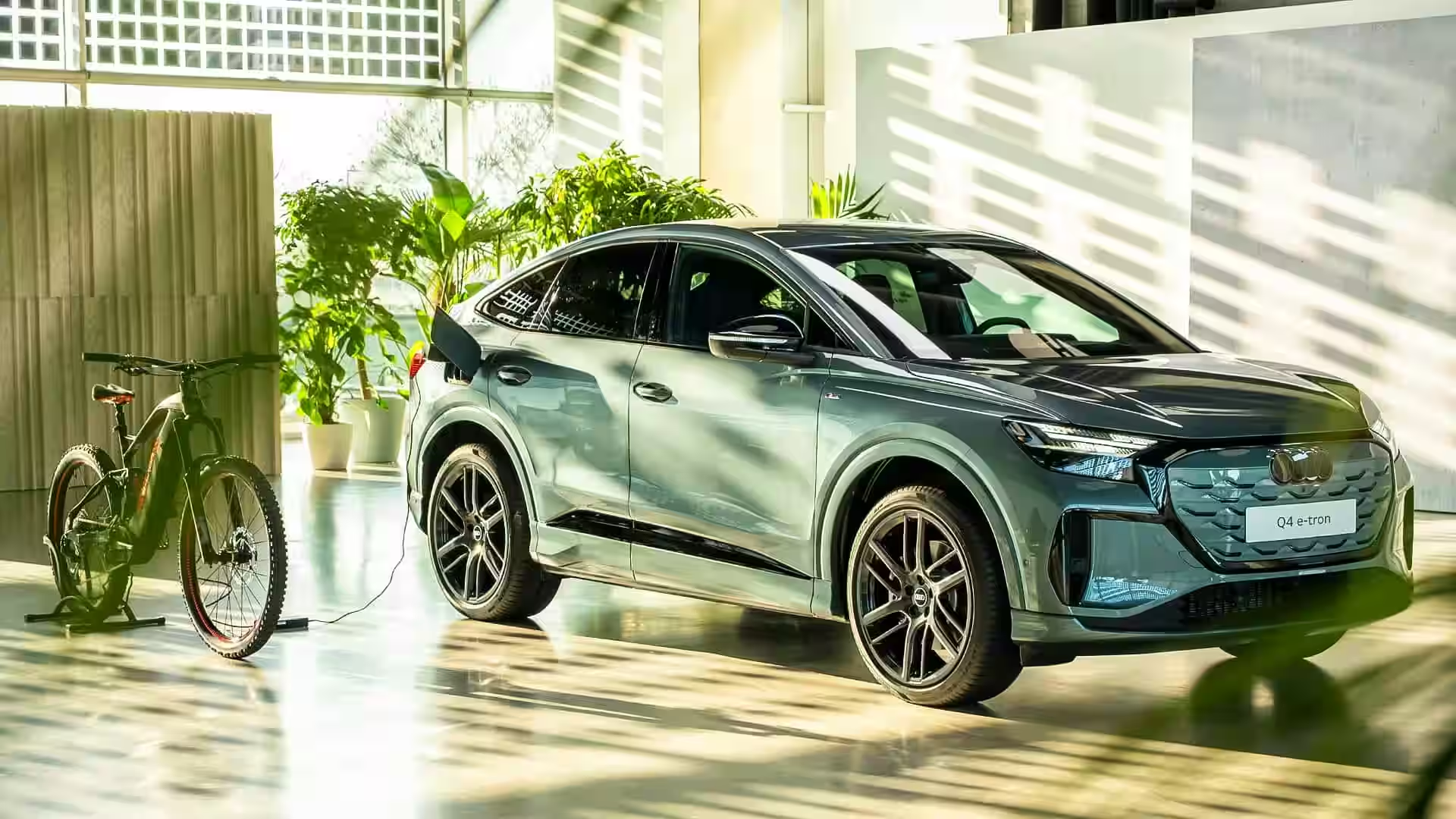
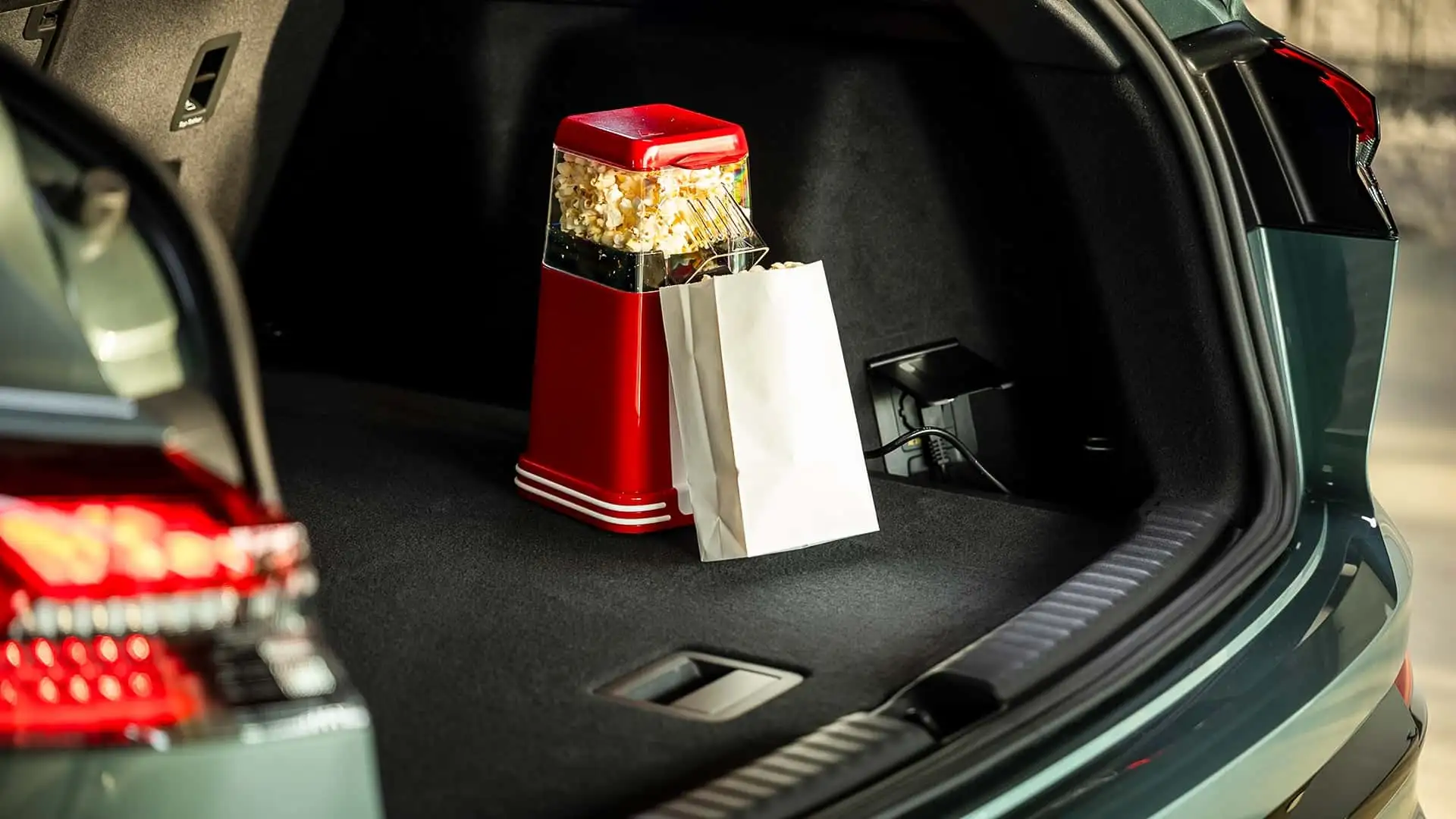
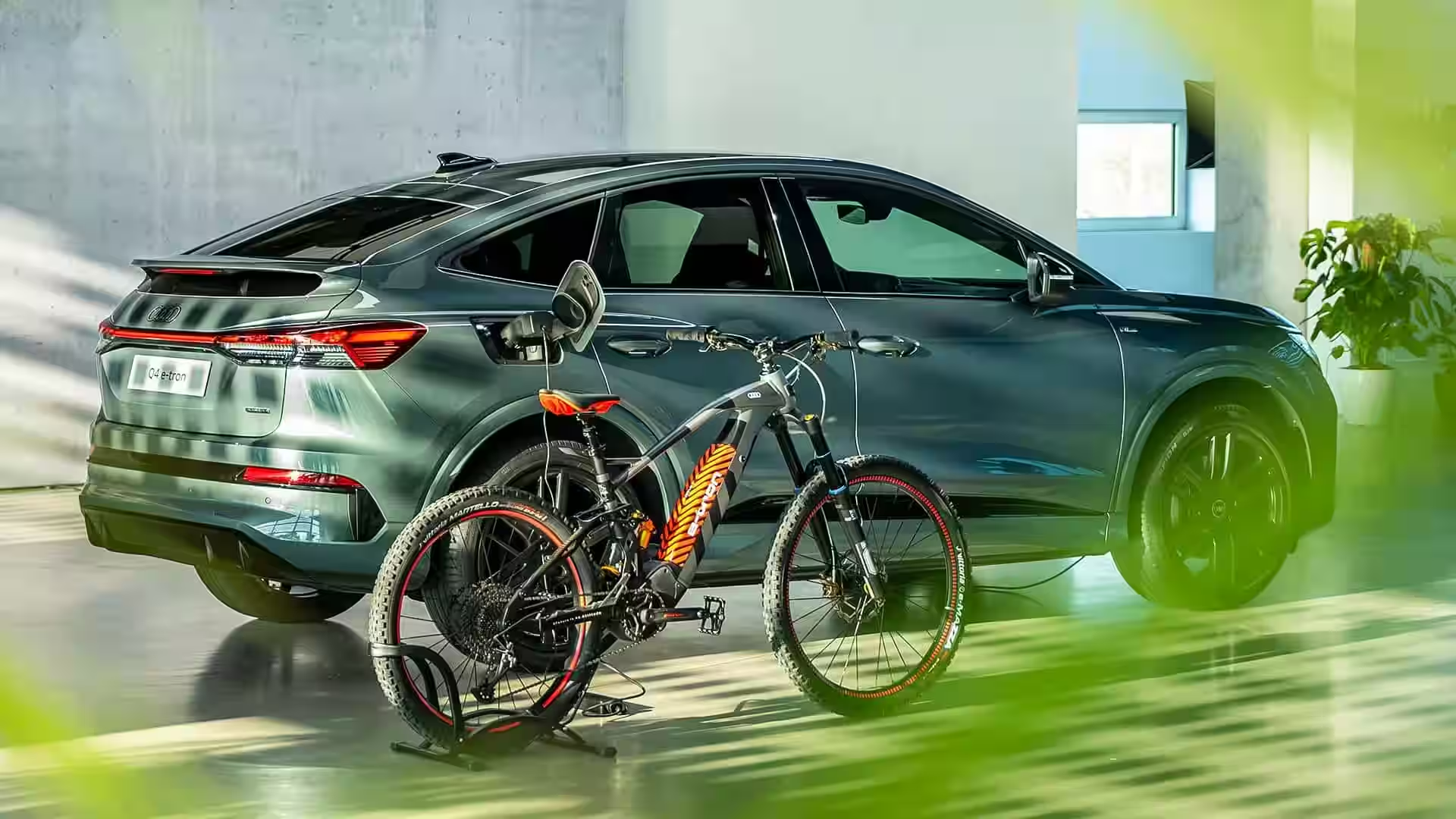
Bidirectional charging is the Q4’s most forward-looking feature. Vehicle-to-Load lets the car power external devices through a socket in the luggage area or via an adapter at the charging port, enough for equipment like e-bikes or even small appliances. Vehicle-to-Home is the more meaningful application, allowing the car to act as a stationary storage buffer when paired with a compatible wallbox. In markets with high household solar adoption, that turns the Q4 into an energy-management device as much as a vehicle.
Chassis, Towing And Everyday Usability
Audi says the suspension tune has been shifted slightly toward dynamism, while adaptive damping remains available for buyers who want more compliance. That sounds like a narrow change, but in a platform like MEB, small calibration moves often have a disproportionate effect on steering response and body control. The Q4’s practical credentials have also improved. Quattro versions now tow up to 1,800 kg, up from 1,400 kg, which makes the car more credible for caravans, trailers, and horse boxes. The power tailgate is now standard across the range, and the SUV body still offers 515 L to 1,487 L of cargo space.
For market positioning, that combination matters more than raw acceleration. Audi has kept the Q4 approachable at 47,500 euros for the 63 kWh SUV and 53,500 euros for the large-battery version in Germany, with a 1,950-euro Sportback premium. Orders open in May 2026, and first deliveries are due in summer. Those prices put the Q4 in a hard-fought zone where premium badge value must now coexist with usable range, charging intelligence, and cabin quality. That is the same market pressure shaping cars like the VOLKSWAGEN ID.3 NEO: 630KM de Autonomia e a Nova Aparência, where the whole class is being forced to get smarter, quieter, and more efficient.
Why This Facelift Matters Beyond Audi
The 2026 Q4 e-tron is not the most dramatic EV launch of the year, but it may be one of the most strategically important. Audi has taken a model that already sold in serious numbers and turned it into a more mature electric SUV without destabilizing the package. The new motor, the more intelligent battery management, the bidirectional charging hardware, and the properly reworked cabin show a company responding to criticism with engineering substance rather than cosmetic noise.
| Specification | Audi Q4 e-tron 2026 |
|---|---|
| Platform | MEB |
| Body style | SUV, Sportback |
| Length | 4,590 mm |
| Battery capacity | 63 kWh gross / 59 kWh net, 82 kWh gross / 77 kWh net |
| Rear motor | APP350 permanent-magnet synchronous motor |
| Maximum DC charging power | 185 kW |
| WLTP range | Up to 592 km |
| Towing capacity, quattro | 1,800 kg |
| Luggage capacity | 515 L to 1,487 L |
| Starting price in Germany | 47,500 euros |