
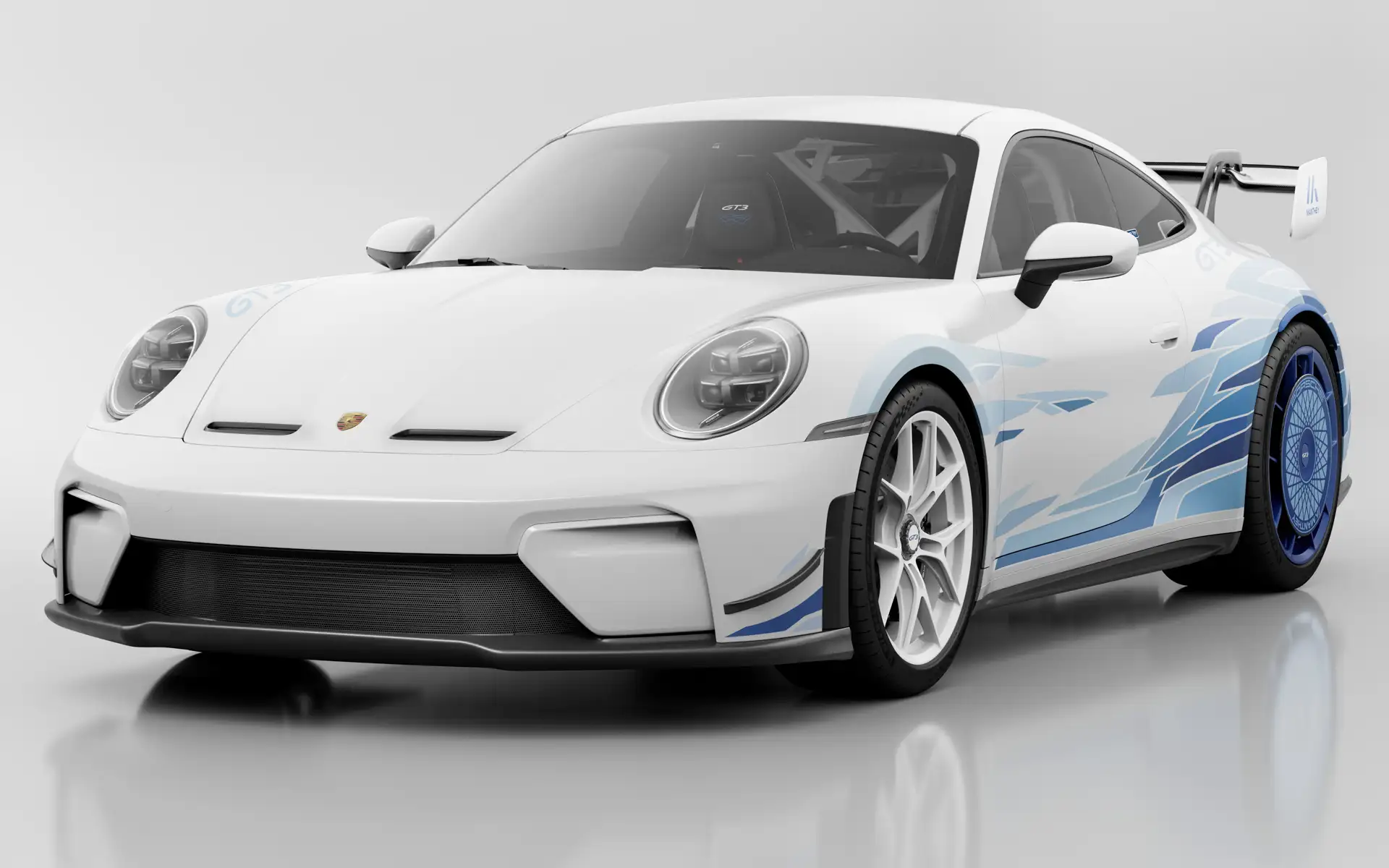
PORSCHE’S JAPAN-ONLY GT3 SPECIAL IS ABOUT MORE THAN RARITY
Porsche Japan has confirmed a 911 GT3 Artisan Edition for its market, limited to 30 units and developed in coordination with Porsche AG. That alone makes it significant, but the real point is the way it reframes the 911 GT3 as a bridge between engineering discipline and Japanese craft heritage. This is not a trim package for easy retail theatre. It is an Exclusive Manufaktur build with a cultural brief, and that is where the car becomes genuinely interesting.
The positioning matters because Japan has long been one of Porsche’s most sophisticated markets for special editions. Buyers there tend to value specification logic, visual restraint, and provenance over loud graphics or false rarity. That is why this new car lands with more credibility than many limited editions that rely only on badging. It arrives as a factory-backed statement, not an aftermarket interpretation.
| Key spec | Details |
|---|---|
| Production | 30 units, Japan market only |
| Engine | 4.0-litre naturally aspirated flat-six |
| Output | 510 PS |
| Torque | 450 Nm |
| Suspension | 4-way adjustable coilover system with Manthey kit |
| Aero | Performance aero package with large rear wing and diffuser |
THE DESIGN LANGUAGE IS BUILT AROUND JAPAN BLUE AND CONTRAST
The exterior treatment uses white as the base, then adds Club Blue paint-to-sample and pale blue accents as a direct reference to Japan Blue and the aesthetics of indigo dyeing. The side graphics are not random decoration; Porsche describes them as a gradient that evokes the flow of air and time, which is exactly the sort of conceptual detail that matters in a collector-grade special. It gives the car a narrative without forcing the message.
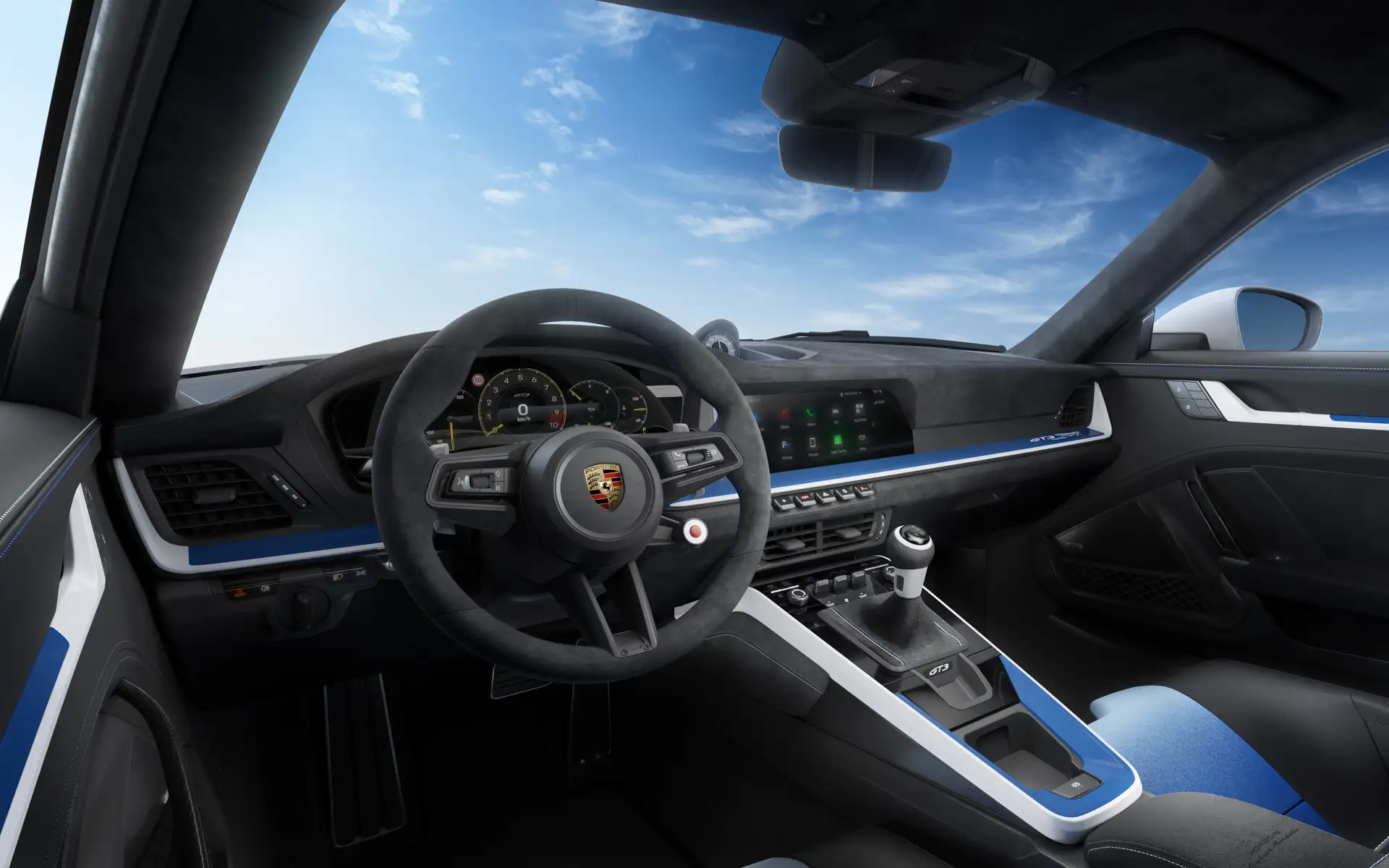
That same theme continues inside. The leather on the dashboard and doors uses double stitching in Speed Blue on the inside and white on the outside, creating a deliberate visual split between road and circuit. The illuminated brushed-aluminium door sill plates carry the GT3 Artisan Edition script, while the seat pattern draws inspiration from traditional Japanese indigo dye with layered tonal depth. The result is more than decorative coherence; it is the kind of interior specification that Porsche buyers will remember when the novelty of rarity fades.
MANTHEY HARDWARE CHANGES THE CAR’S PURPOSE, NOT JUST ITS ATTITUDE
The most important technical element is not the paintwork; it is the Manthey kit. Porsche says the 911 GT3 Artisan Edition includes a 4-way adjustable coilover suspension, steel-sleeved brake lines, and an aerodynamic package aimed at improving high-speed stability through increased downforce. That places this edition firmly in the category of a genuinely track-capable road car, not a lifestyle special.
The Manthey package for the 992-generation GT3 is designed to preserve day-to-day usability while sharpening circuit performance. The package includes aluminium shock bodies and top mounts, optimized underbody concepts, front lip and flaps, carbon aero discs, a rear diffuser, and a reinforced carbon rear wing with larger end plates. This is the hardware that changes the conversation from “special edition” to “driver’s car with engineering intent.”

For readers following Porsche’s expanding performance ecosystem, this car is also a reminder that factory-supported aero and chassis development are now part of the brand’s prestige vocabulary. The same logic is visible in the way Porsche treats flagship performance elsewhere in the range, including the electric future discussed in Porsche Cayenne Coupe Electric. The Artisan Edition, by contrast, keeps the emotional purity of a naturally aspirated GT car while adding genuine dynamic depth.
WHY THIS EDITION MATTERS TO COLLECTORS AND DRIVERS
Every limited Porsche needs a reason to exist beyond scarcity. This one has two: cultural specificity and mechanical credibility. The Japanese market gets a 30-car edition that feels designed for domestic appreciation rather than global export theatre, and it is backed by one of Porsche’s most respected naturally aspirated engines. That engine remains a core part of the GT3 identity: 4.0 litres, 510 PS, 450 Nm, and the kind of response that still defines the model against newer forced-induction rivals.
There is also a lifestyle extension that broadens the project’s reach. Porsche Lifestyle will launch a Wearable Heritage Collection from May 25, with a T-shirt, long-sleeve T-shirt, structured jacket, and a Puma Speedcat sneaker limited to 911 pairs. Prices start at ¥16,500 for the T-shirt and rise to ¥51,260 for the jacket. It is a smart move because it lets Porsche sell the design narrative beyond the car, but the real value still sits in the GT3 itself.
In a market increasingly full of loud “specials,” the Artisan Edition stands out by being selective. It does not try to reinvent the 911. It refines it through craftsmanship, color theory, and chassis hardware that actually matters when the road opens up or the track day begins.




FAQ
How many Porsche 911 GT3 Artisan Edition cars will be built?
Porsche Japan will limit production to 30 units, making this a highly exclusive Japan-only model.
What engine does the 911 GT3 Artisan Edition use?
It uses Porsche’s 4.0-litre naturally aspirated flat-six, rated at 510 PS and 450 Nm (332 lb-ft).
What makes this edition different from a regular GT3?
The car adds a bespoke Japan-blue design theme, Exclusive Manufaktur detailing, double-stitched interior treatment, and a Manthey performance package.
Is the Manthey kit only cosmetic?
No. It includes adjustable coilover suspension, steel-sleeved brake lines, and aerodynamic changes intended to increase downforce and stability at speed.
When does the related Porsche Lifestyle collection go on sale?
The Wearable Heritage Collection is scheduled to launch on May 25.