Rolls-Royce has introduced a new kind of ultra-luxury statement, and it arrives with a name that sounds as poetic as the car looks: Project Nightingale.
A New Chapter In Rolls-Royce Coachbuild
Project Nightingale is the first showcase model from the brand’s new Coachbuild Collection, a program created for clients who want something beyond standard bespoke trim. While Rolls-Royce has already built one-off masterpieces like Sweptail and Droptail, this new collection is designed to expand that hand-built magic to a slightly broader pool of collectors, though “broader” still means extremely rare.
Only 100 units are planned worldwide, making this one of the most exclusive modern Rolls-Royce projects to wear production intentions. And because the brand’s buyers are already accustomed to commissioning custom material palettes, paintwork, and architecture-inspired details, the Coachbuild formula is expected to be a playground for deeply personalized luxury.
If you follow rare-car culture, this sits in the same orbit as other high-aspiration creations such as BYD Yangwang U8L’s ultra-luxury formula and the dramatic excess of Lamborghini Revuelto by Novitec, but Rolls-Royce takes the approach in a far more formal and aristocratic direction.
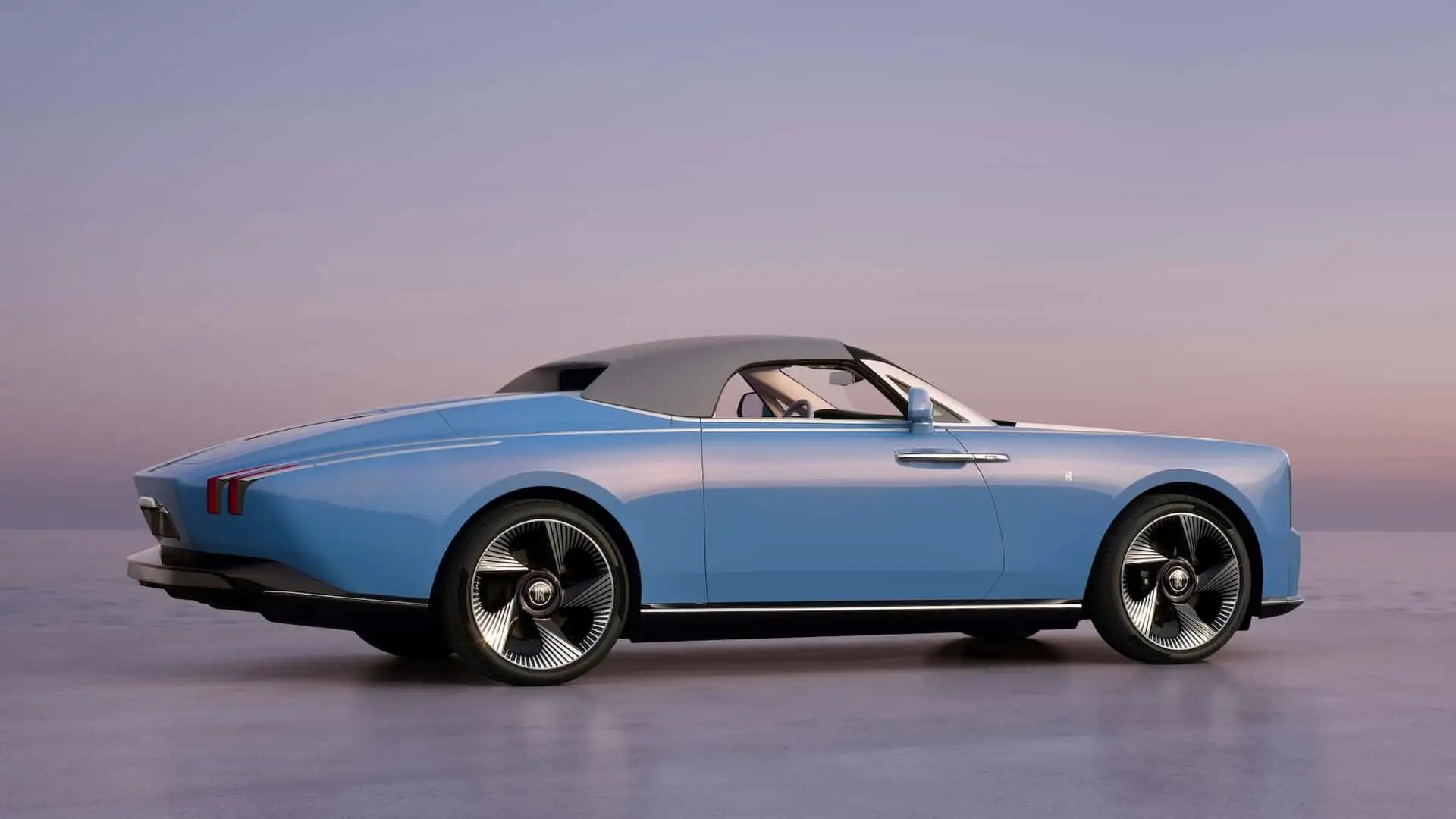
Art Deco Drama On A Spectre Electric Foundation
Under the sculpted surface, Project Nightingale is based on the fully electric Rolls-Royce Spectre. That means dual-motor hardware and, at minimum, the same 577 horsepower output as the standard model, with the possibility of even more depending on the final Coachbuild specification. Officially, the brand has not framed this as a performance car in the conventional sense. Instead, it is a statement piece that happens to be electric.
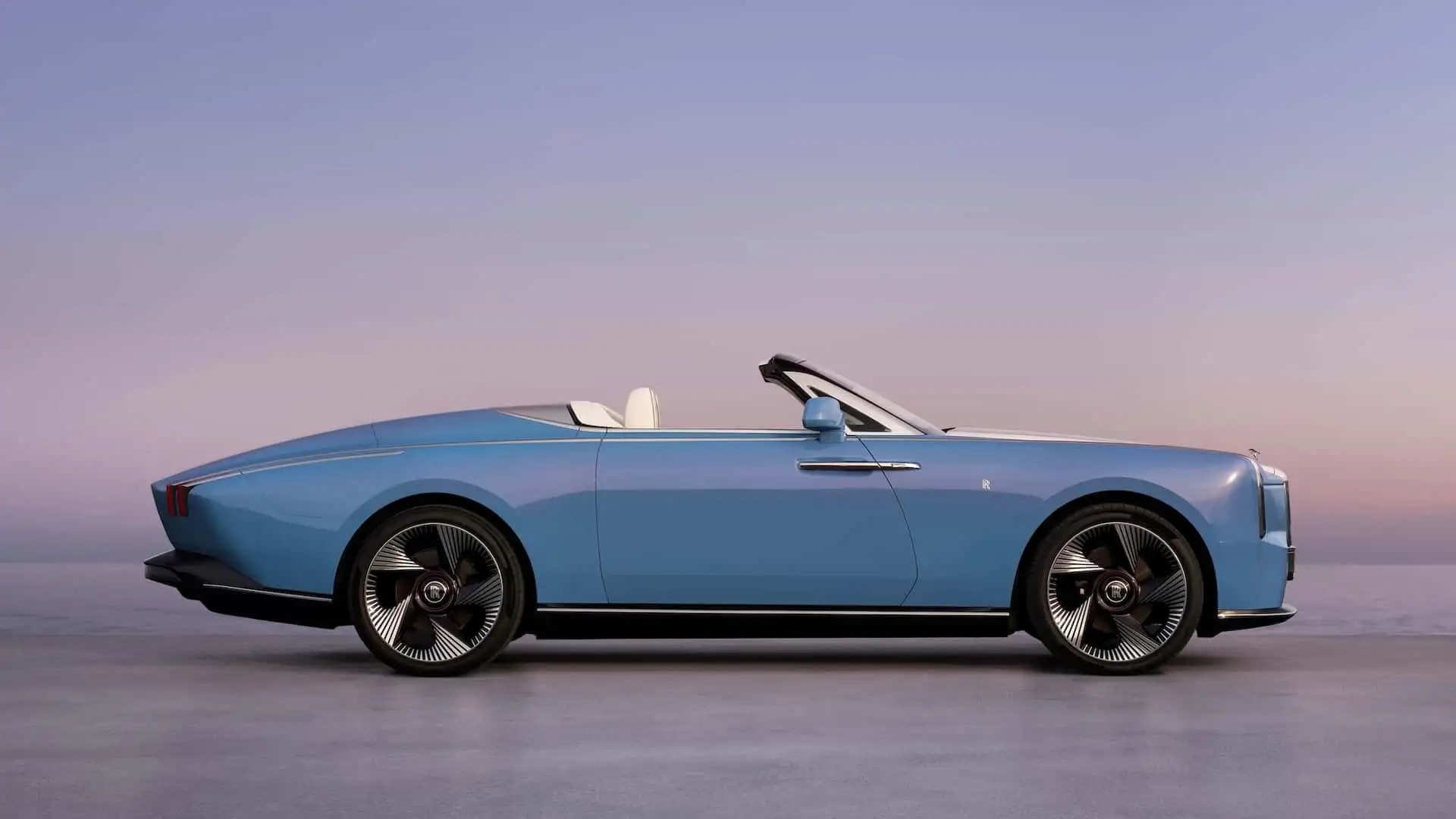
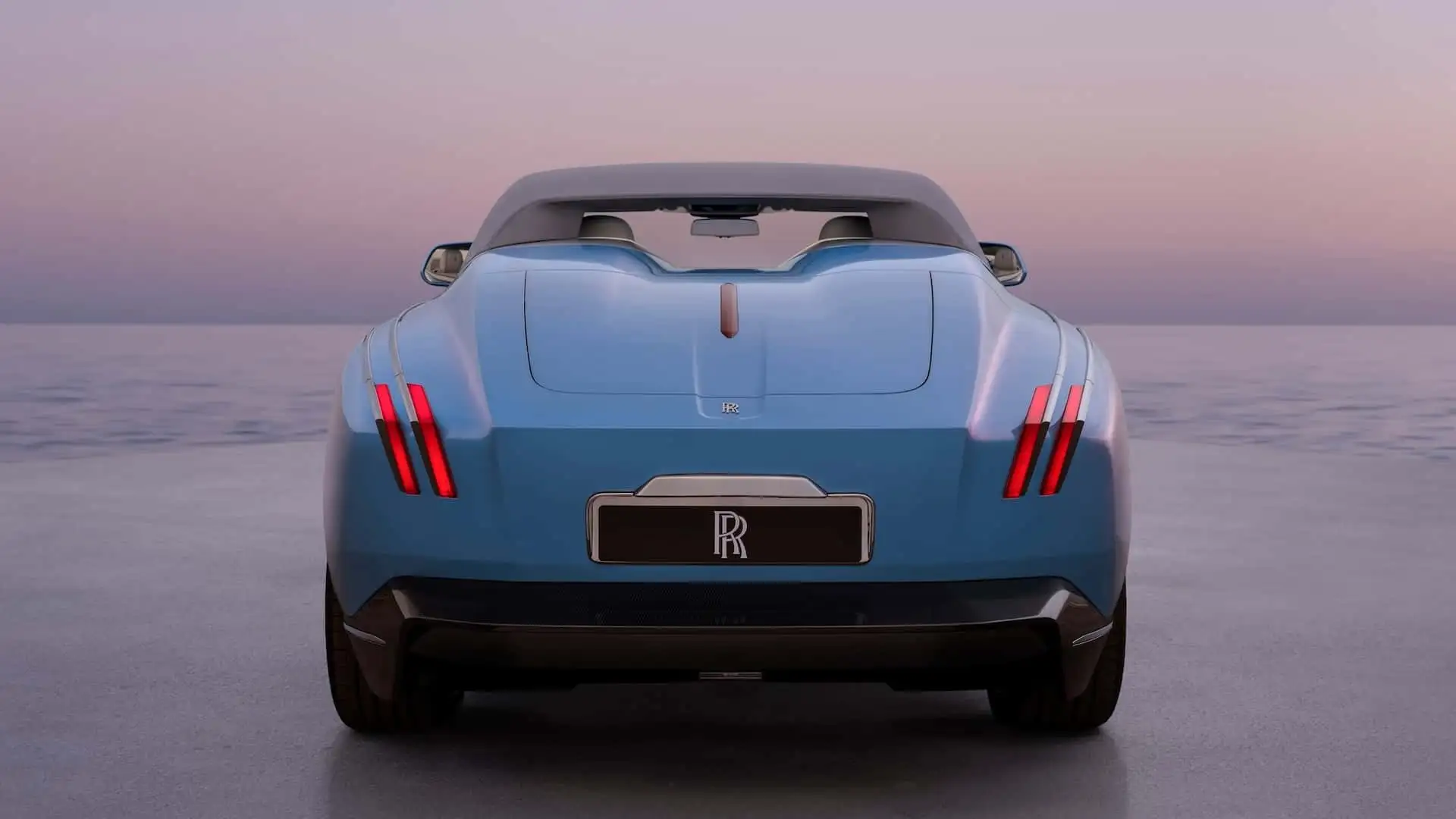
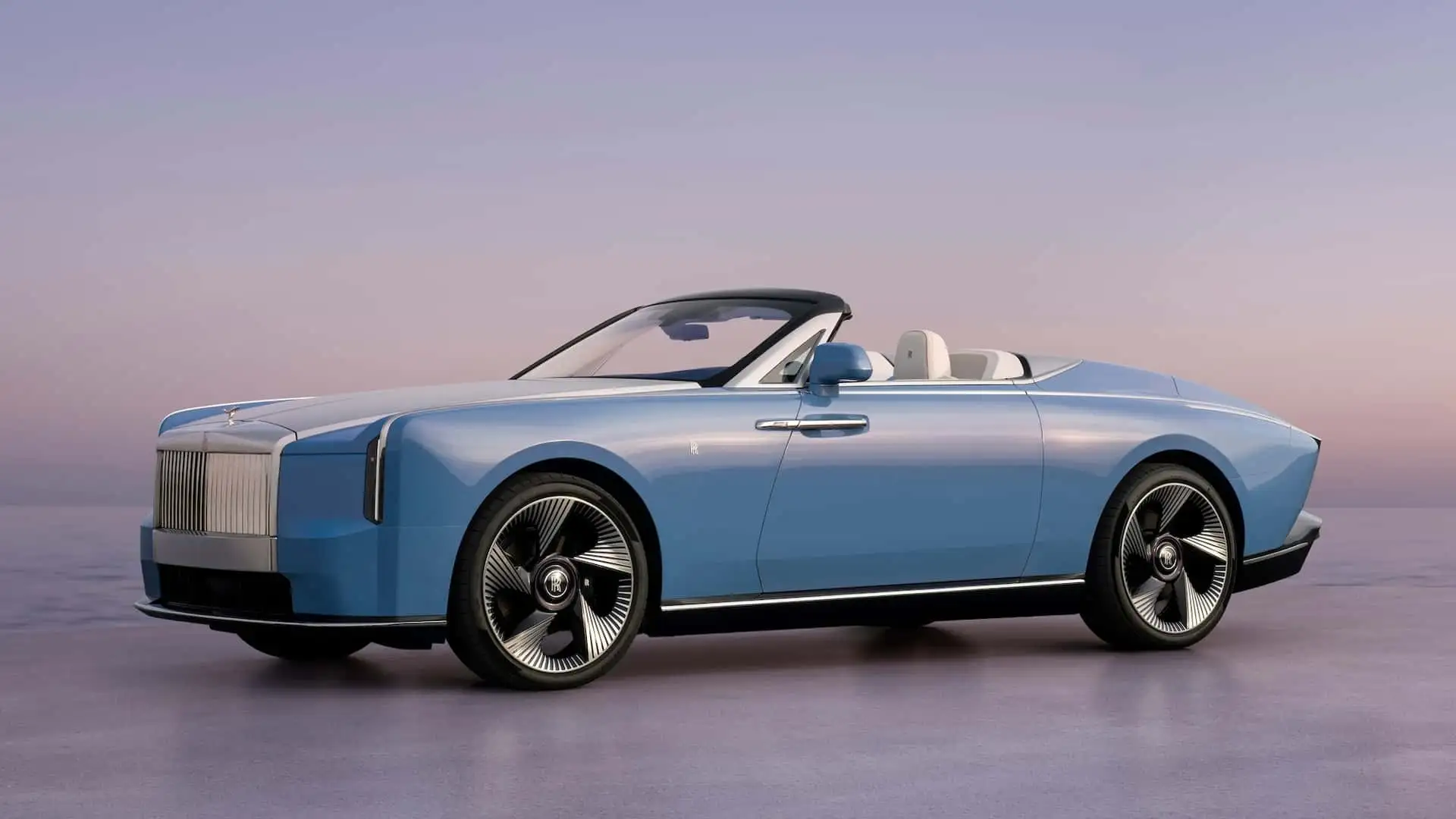
The design language borrows heavily from the Streamline Moderne branch of the Art Deco era, a style known for sweeping forms, aerodynamic elegance, and polished surfaces that suggest motion even while standing still. The result is a long, low open-top grand tourer with a visual rhythm that feels closer to a luxury yacht or a bespoke lounge than a typical EV.
The proportions are striking. Project Nightingale measures about 18.9 feet long, which puts it nearly on the same footprint as the flagship Phantom. Yet despite the size, it is configured as a two-seater, reinforcing the idea that this machine was built for private indulgence rather than practicality.
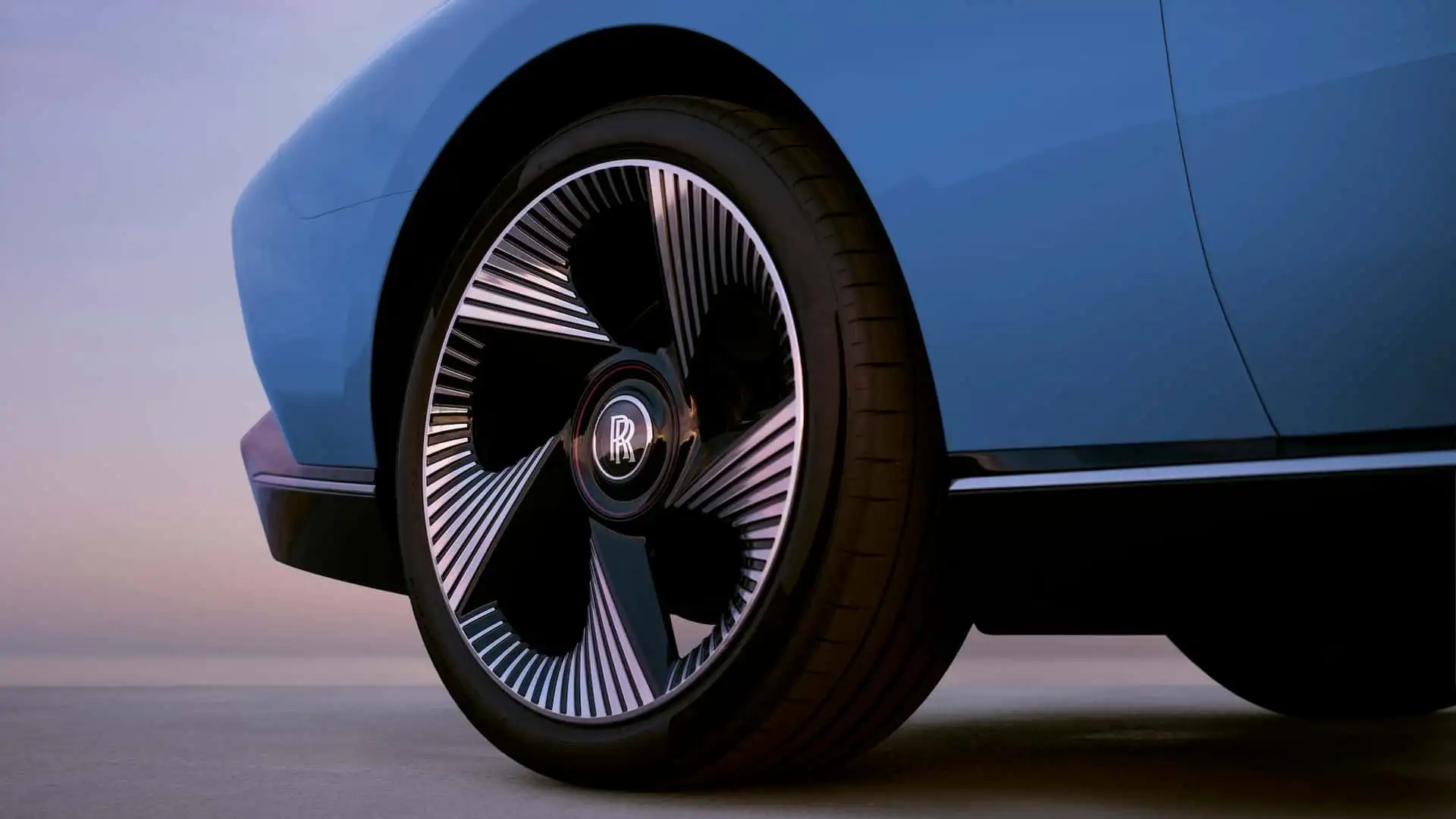
Then there are the wheels. Rolls-Royce fitted the car with massive 24-inch wheels, the largest ever installed on a production Rolls-Royce model. That alone gives the car the visual authority of something from a concept show floor, not a customer garage.
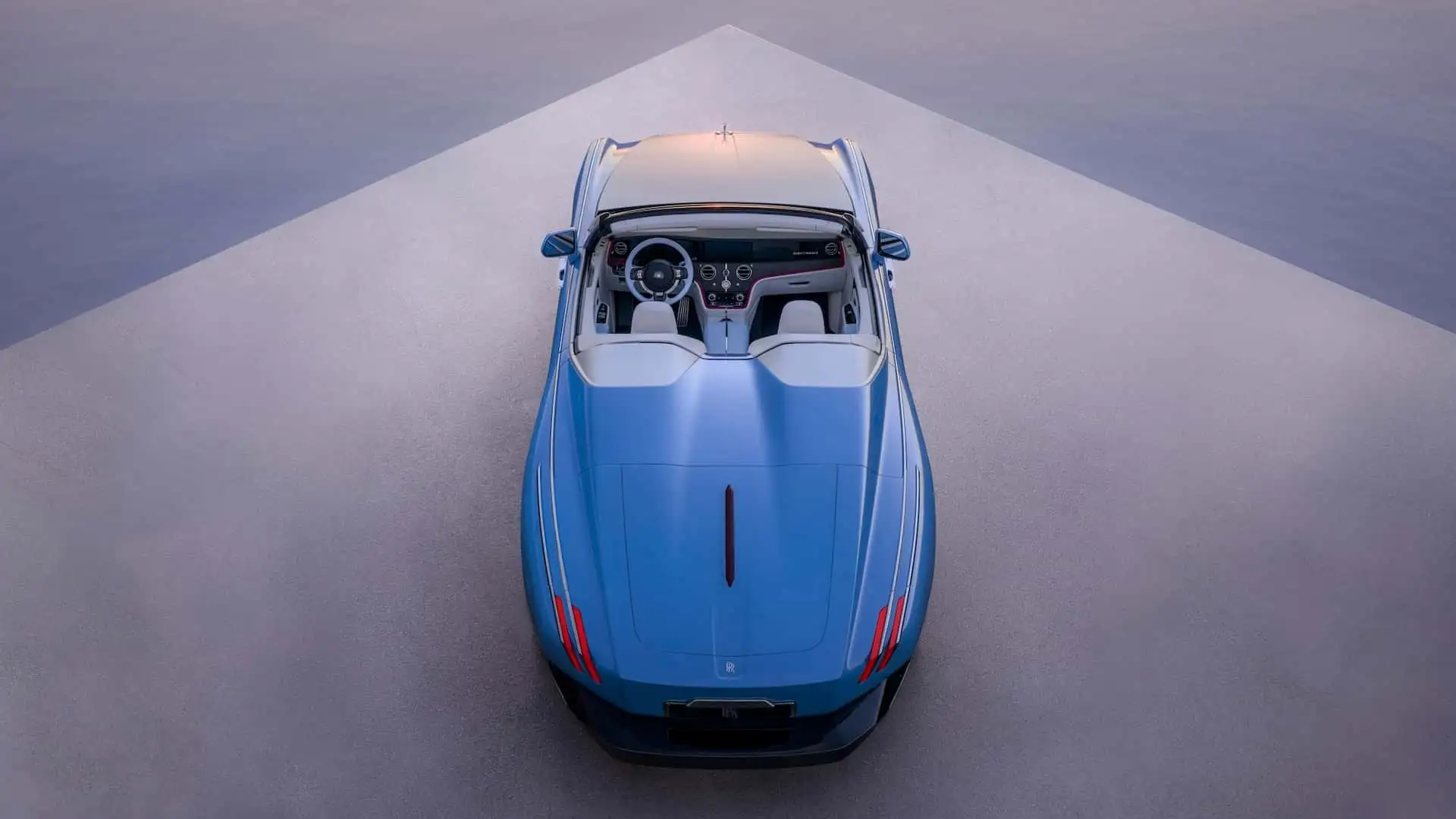
Details You Only Notice Up Close
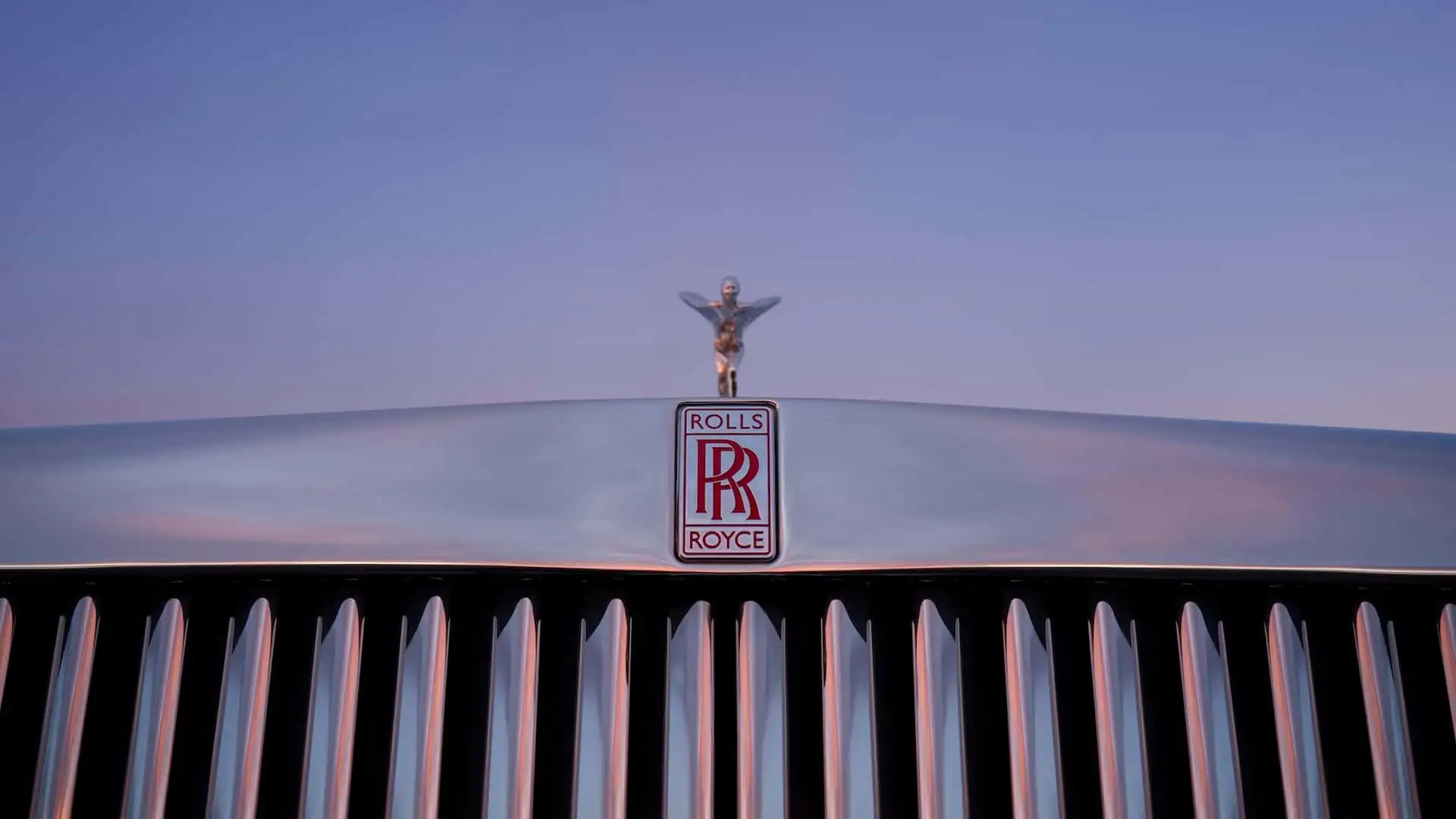
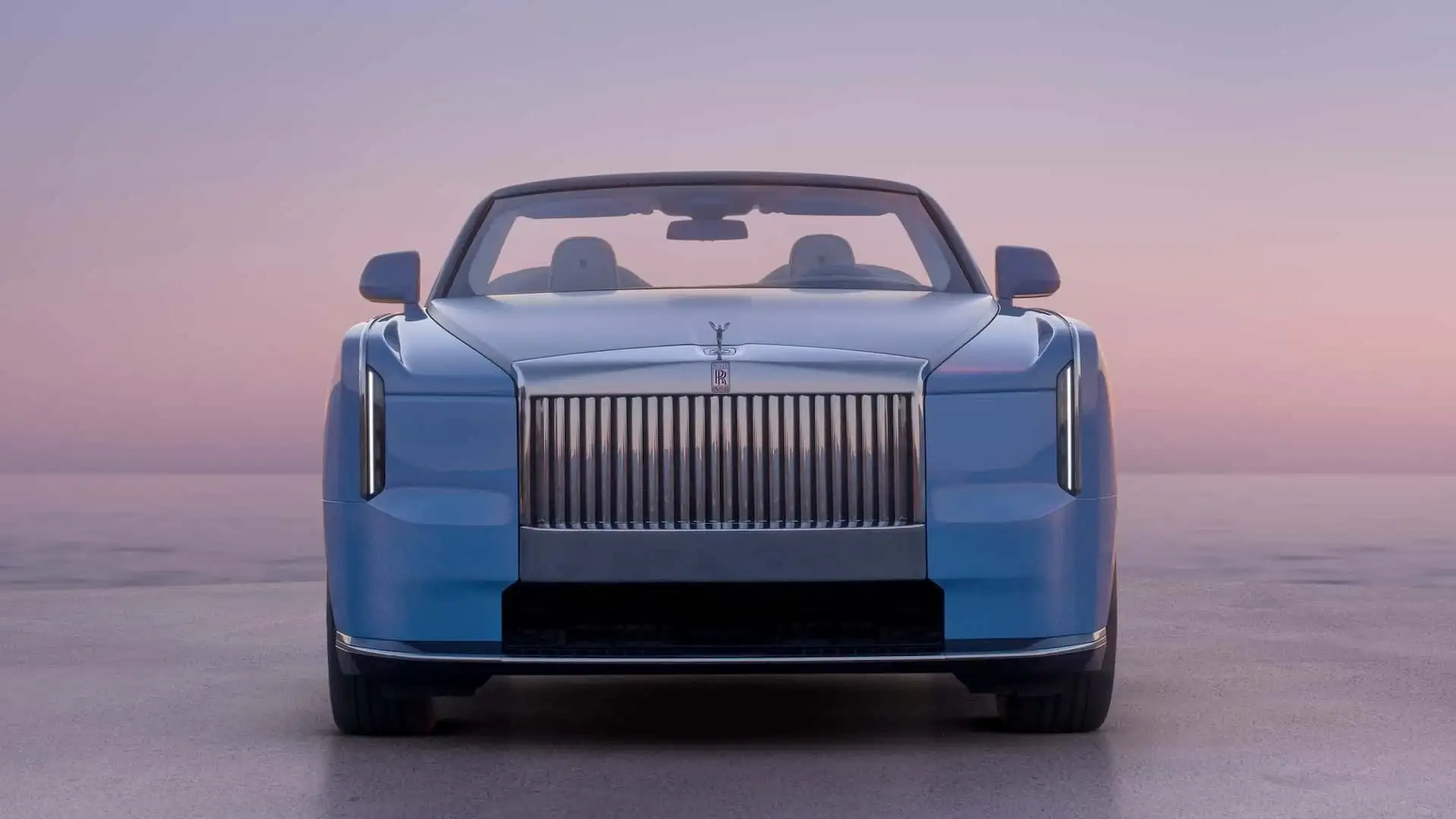
The front end avoids the usual EV tropes. Because there are no combustion-engine cooling demands, the grille and body surfaces remain clean and uninterrupted, with the brand’s signature Pantheon grille taking center stage. The grille is just over three feet wide and uses 24 vertical aluminum veins, a subtle nod to precision craft rather than aggressive performance signaling.
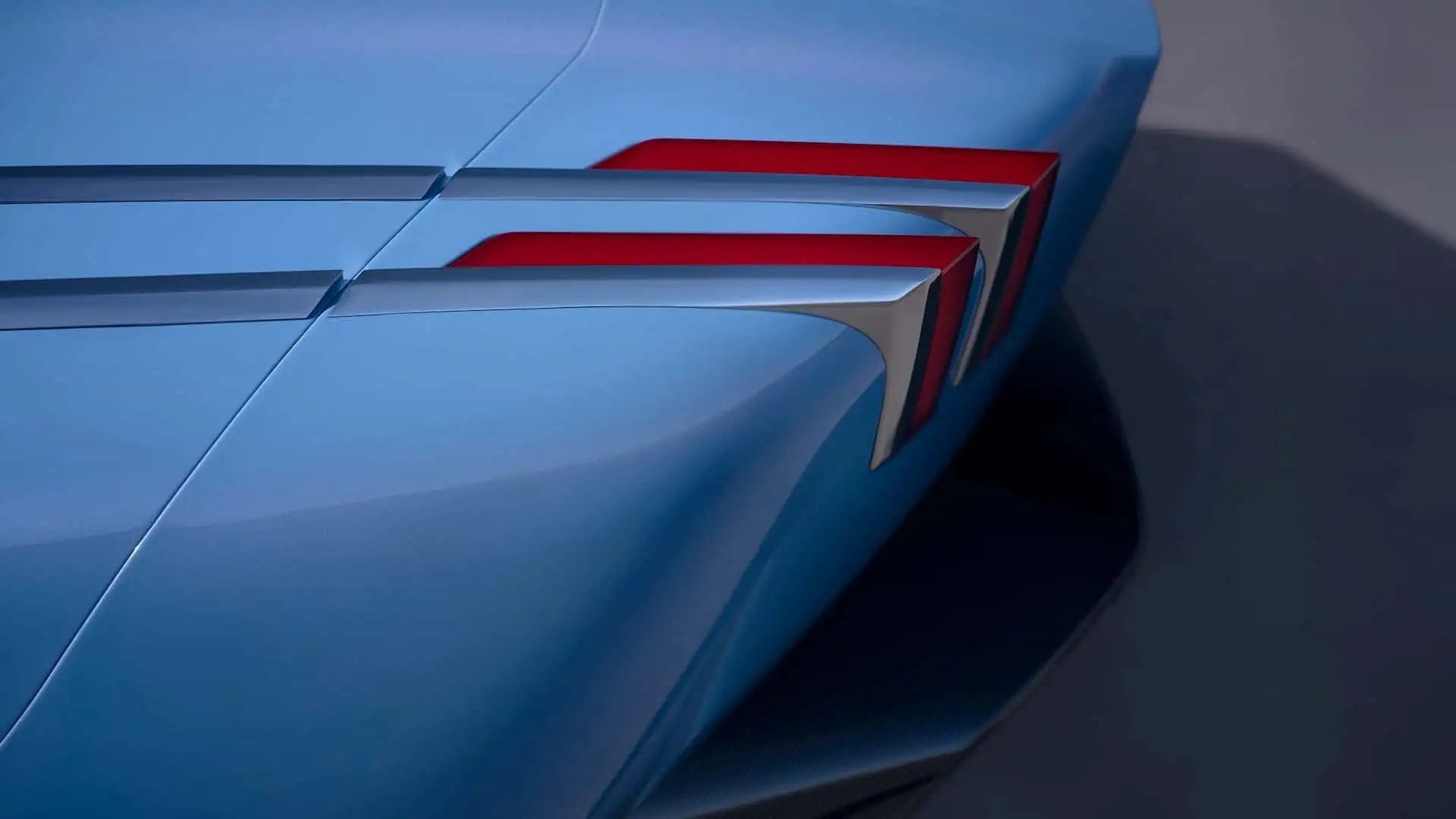
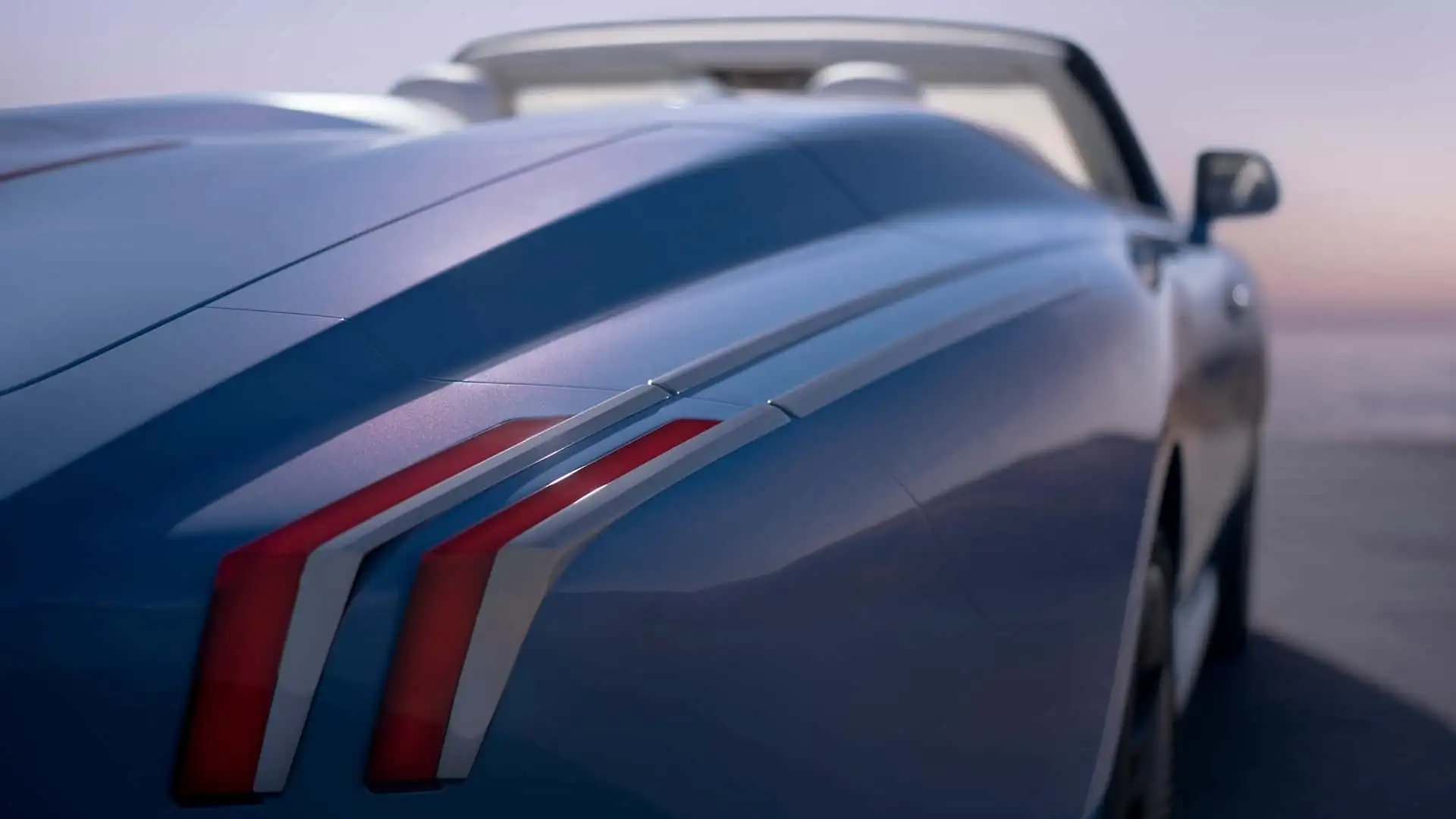
The headlights are especially distinctive. Rolls-Royce created ultra-slim, vertically oriented lighting units that are unique to Project Nightingale and intentionally difficult to mass-produce. In other words, don’t expect to see them quickly migrate to the next Spectre or any mainstream Rolls model. That scarcity matters in the luxury segment, where visual exclusivity is often as valuable as mechanical capability.
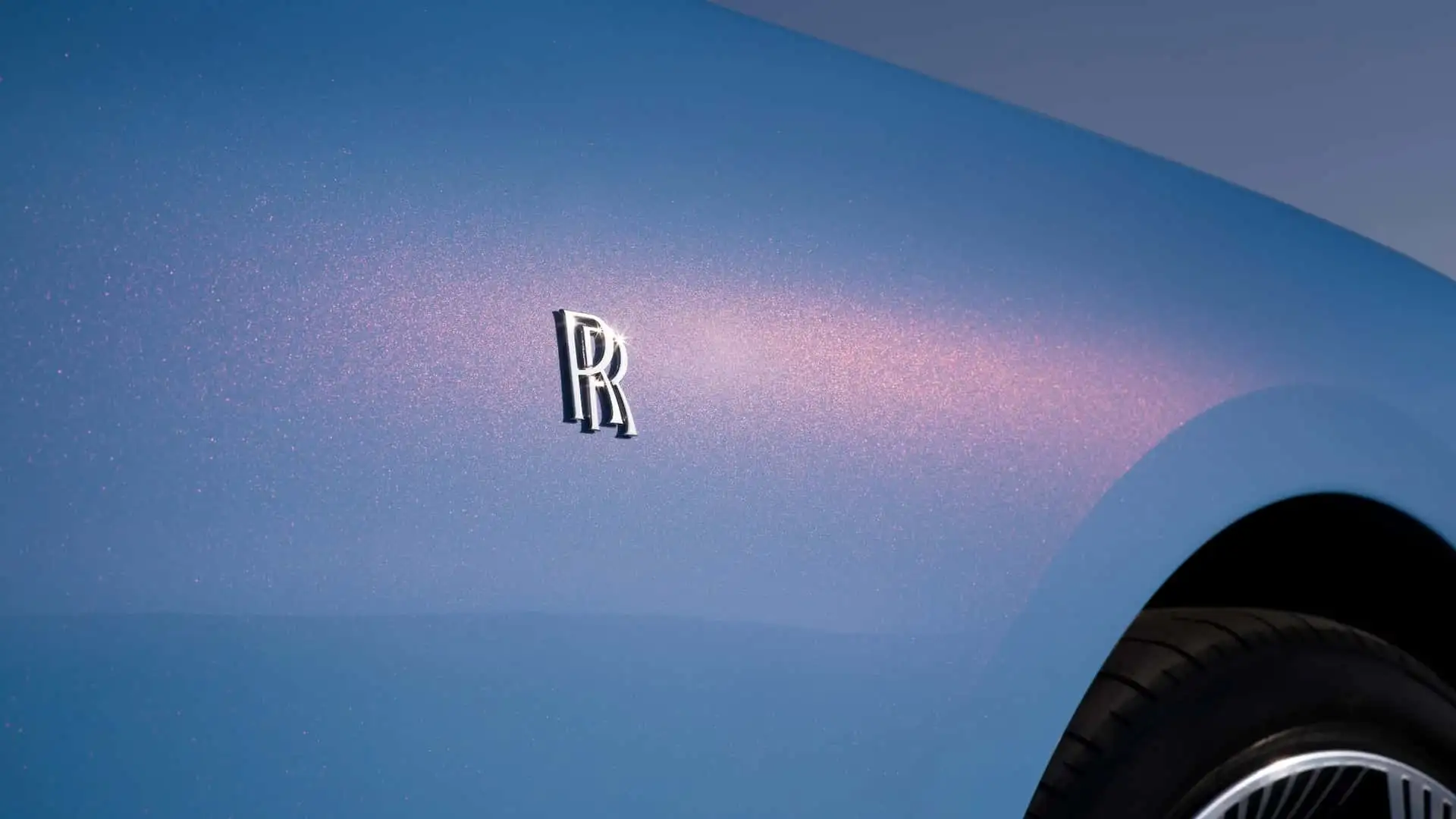
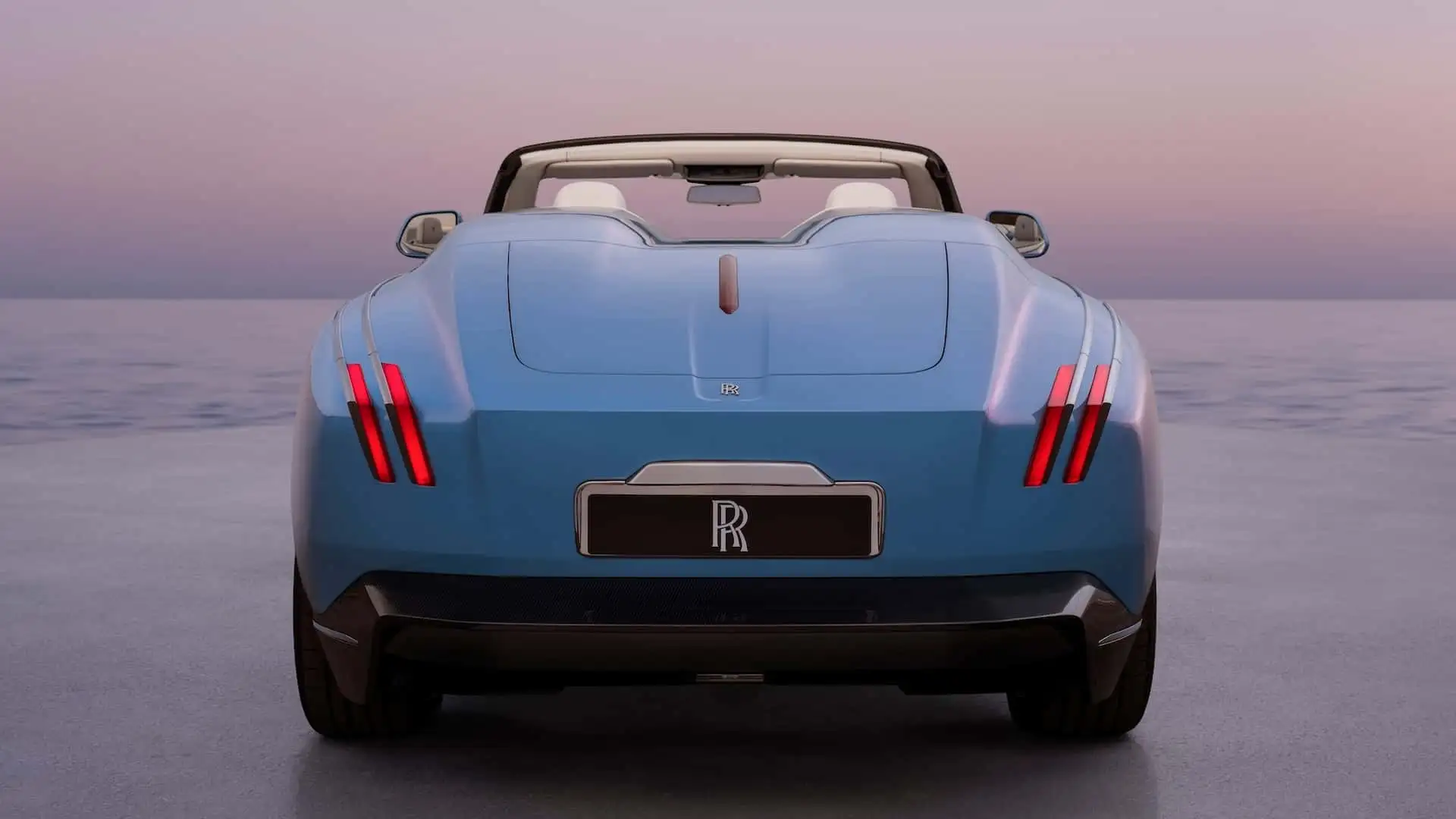
The paint finish is equally deliberate. The exterior wears a pale blue tone with delicate red metallic flecks, referencing Rolls-Royce experimental prototypes from the 1920s. A subtle blue carbon fiber finish also wraps the body, though it is used so discreetly that the effect reads more like high-end tailoring than obvious motorsport theater.
For readers tracking the broader EV luxury market, this sort of focused design can be compared with the tech-driven ambitions of models like Mercedes-Benz EQS 2027 or the premium-electric push seen in Cadillac OPTIQ 2027, though Rolls-Royce clearly aims at ceremony over efficiency bragging rights.
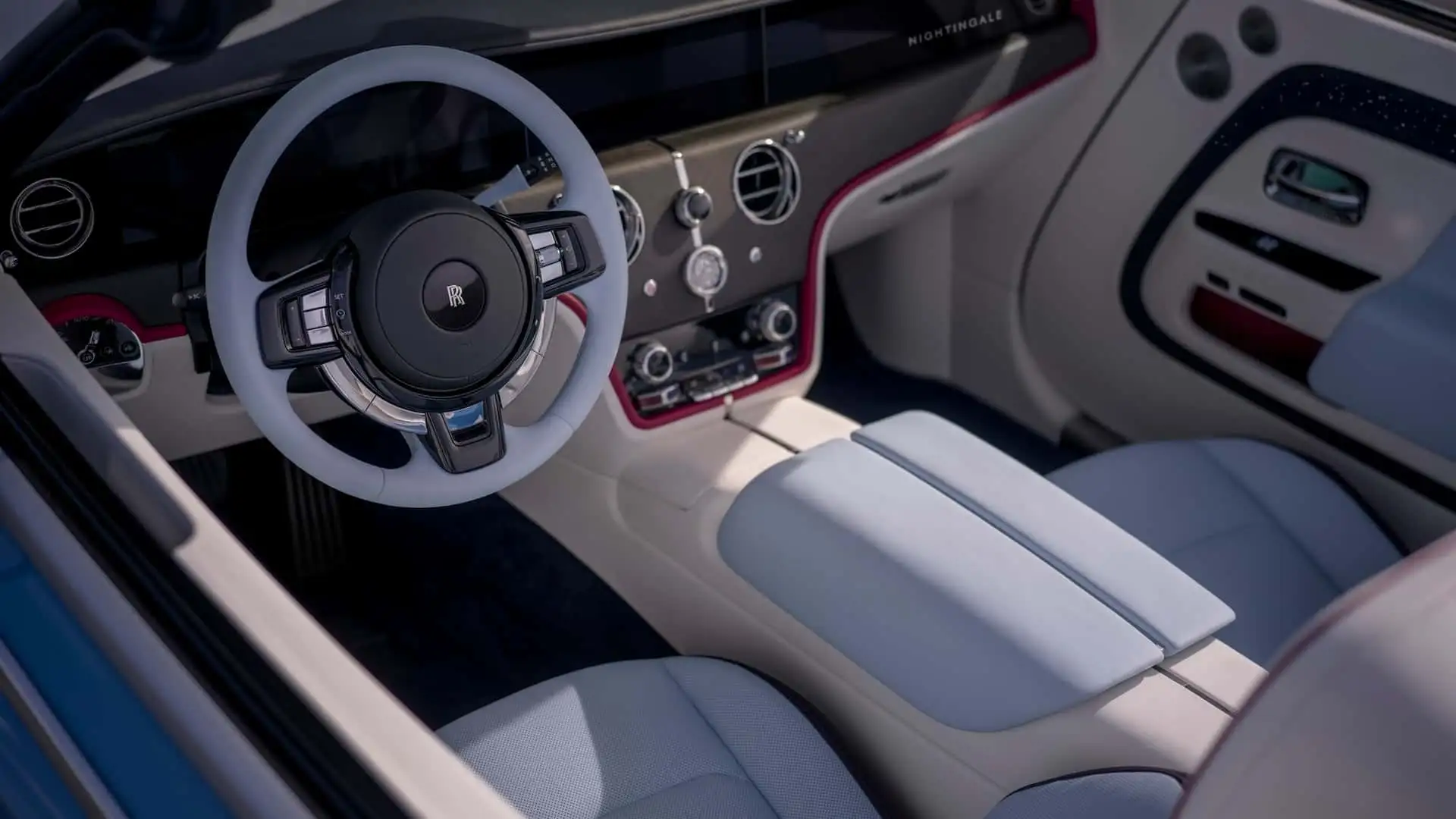
Inside The Starlight Breeze Suite
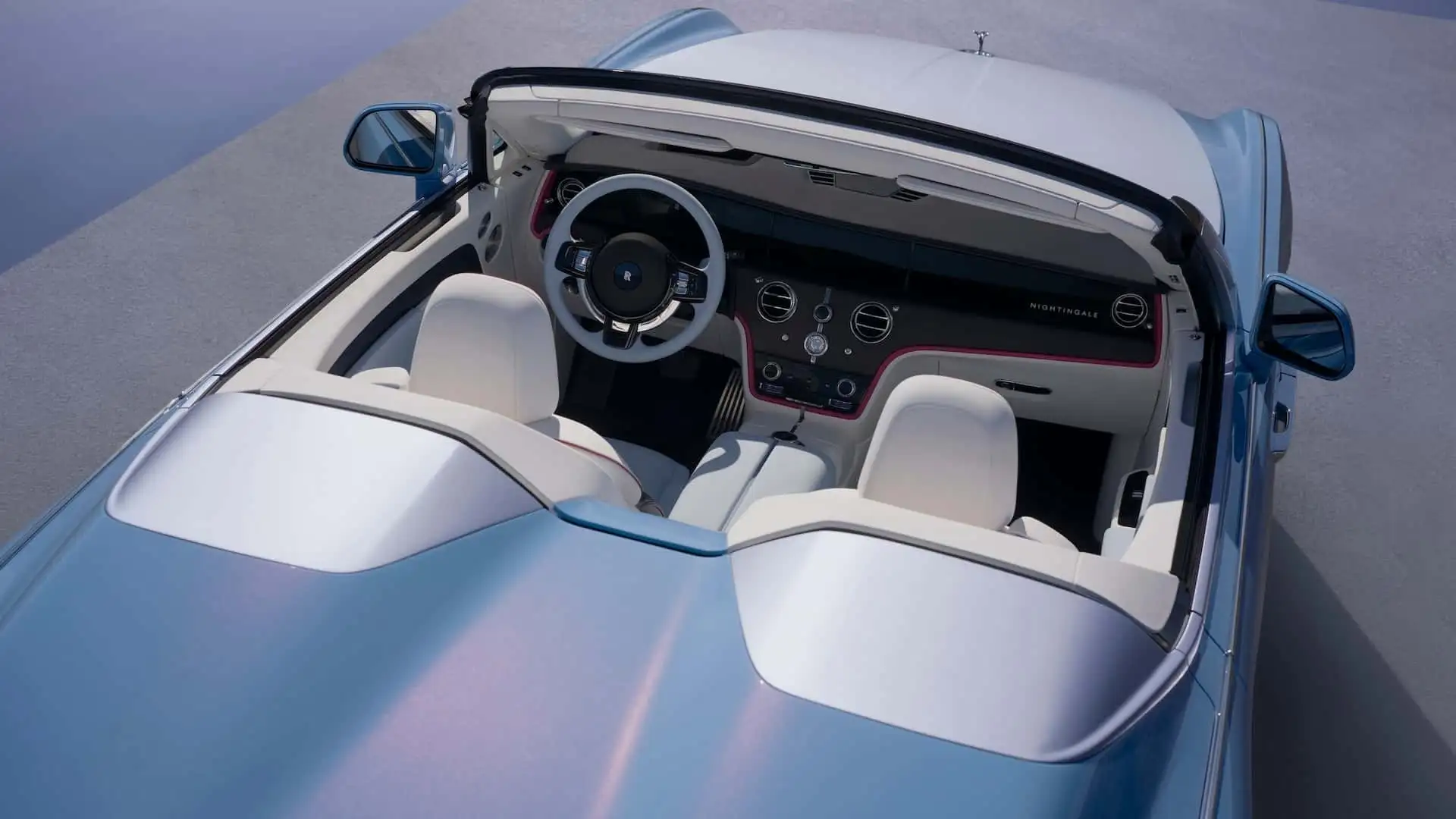
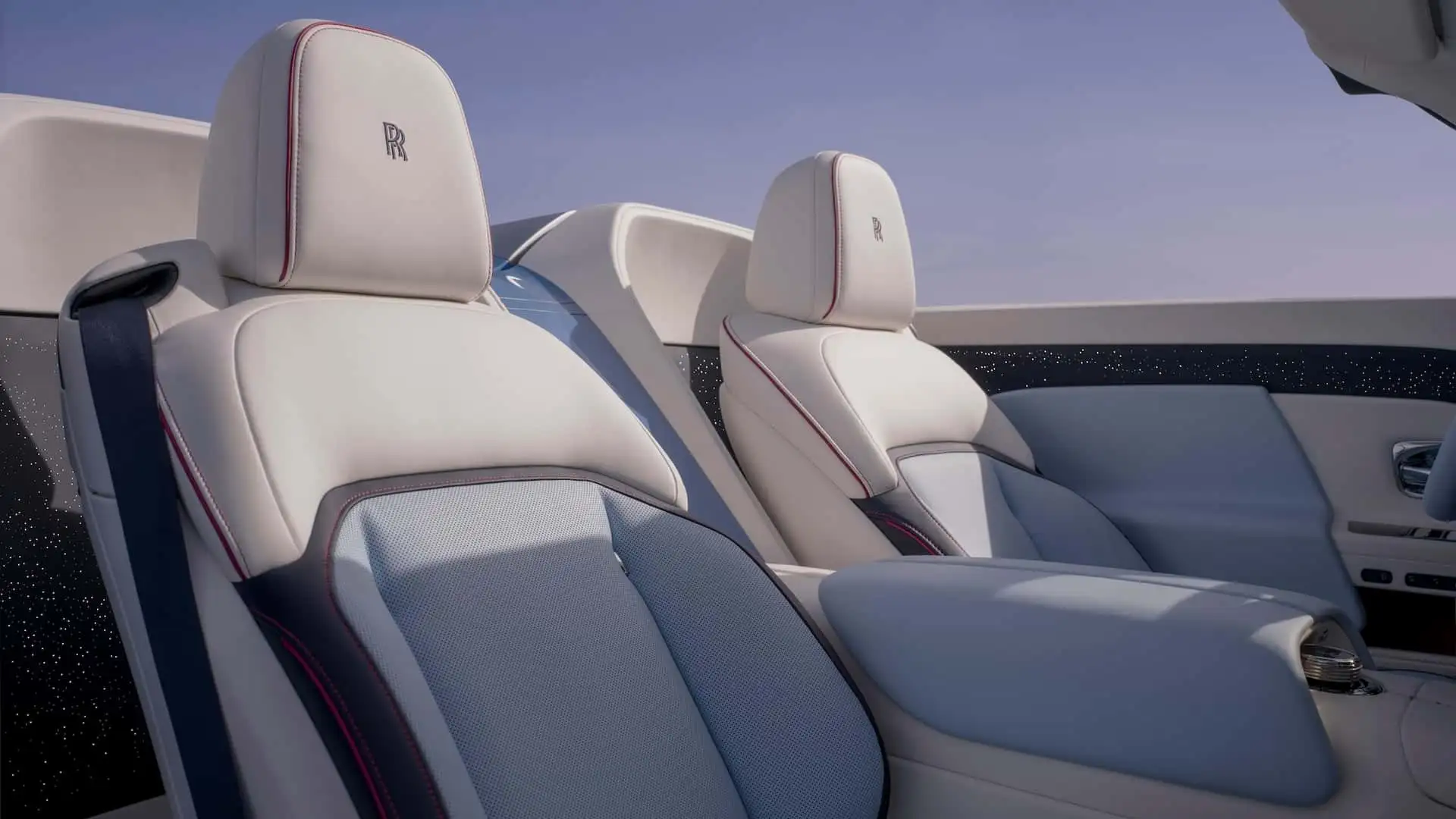
The cabin continues the theme of rarefied craftsmanship. Inside, the seats are trimmed in Charles Blue leather with Grace White accents and Deep Navy inserts. The retractable soft top is finished in a light silver tone, complementing the exterior without overpowering it.
Since there is no fixed roof, Rolls-Royce replaced its classic Starlight headliner with a new feature called the Starlight Breeze Suite. Instead of lights overhead, the design wraps 10,500 illuminated points from the door panels to the area behind the seats, surrounding the occupants in a horseshoe-shaped constellation effect. It is theatrical, yes, but also remarkably aligned with the brand’s long-running obsession with hand-finished ambiance.
That is the real story here. Project Nightingale is not trying to win a numbers race. It is using electric architecture to reimagine what open-air luxury can feel like when cost, complexity, and exclusivity are allowed to expand without restraint.
| Key Detail | Project Nightingale |
|---|---|
| Base Platform | Rolls-Royce Spectre |
| Powertrain | Dual-motor electric |
| Output | At least 577 hp |
| Body Style | Open-top two-seater |
| Production | 100 units worldwide |
| Wheels | 24-inch, largest ever on a Rolls-Royce |
For enthusiasts following the evolution of rare performance and luxury machines, Project Nightingale lands in the same conversation as the track-focused flair of Maserati GT2 Stradale or the ultra-limited energy of Aprilia RSV4 X 250th, except here the drama is quieter, richer, and considerably more expensive.
Rolls-Royce has not publicly disclosed pricing, but with the brand’s one-off cars often reaching multi-million-dollar territory, a 100-unit Coachbuild creation is still expected to sit comfortably above the million-dollar mark. In the world of ultra-luxury collector cars, that number is less a barrier than a signal: this is for buyers who want the rarest expression of the brand, not just the badge.
And that is what makes Project Nightingale so effective. It is not merely expensive. It is curated, technically polished, and visually unlike anything else in the Rolls-Royce range.