
A new electric car is forcing Brazil to rethink the price of entry.
Brazil’s Cheapest EV Just Redefined The Starting Line
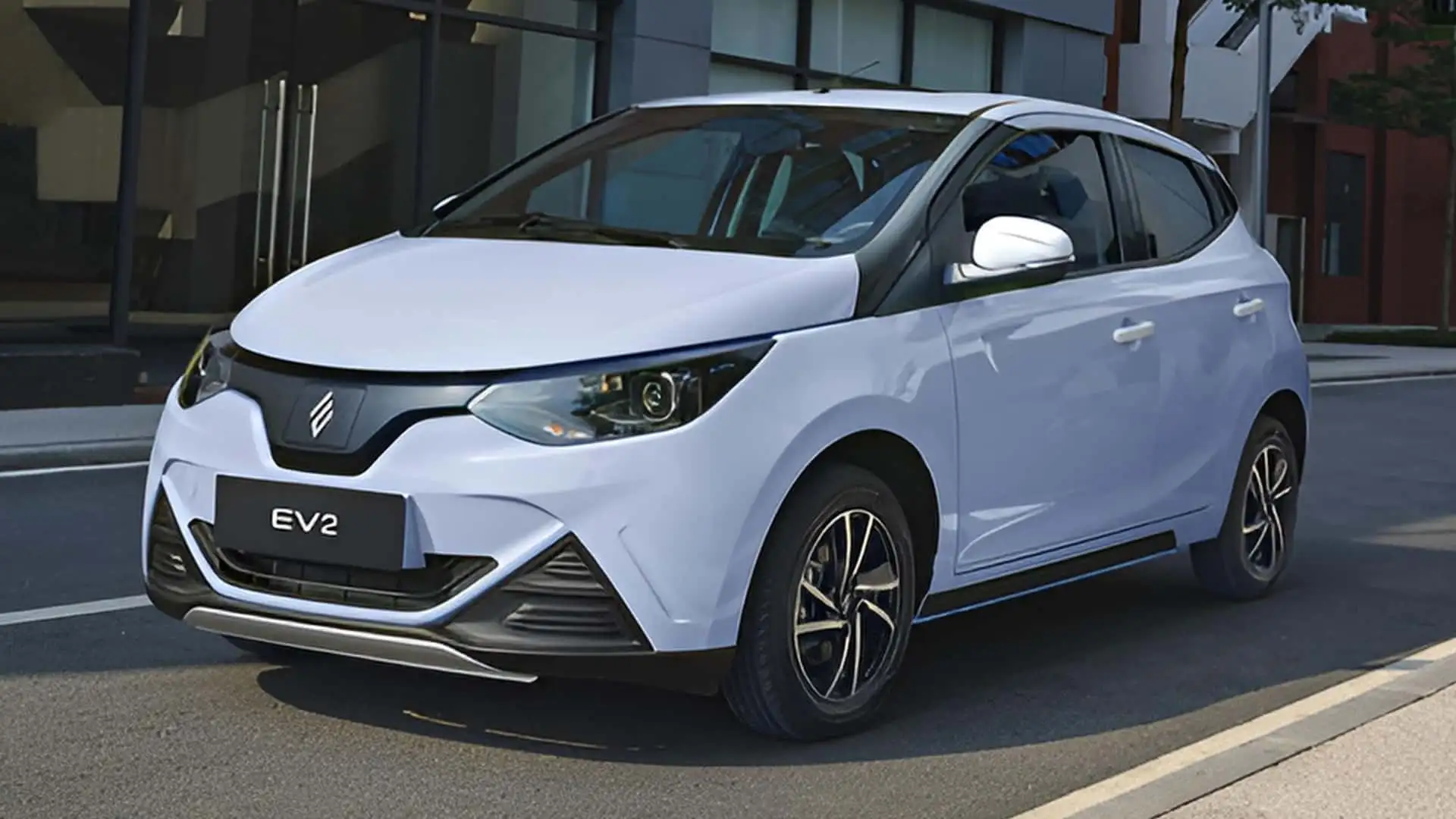
The Brazilian market has a new talking point: a compact JMEV electric car is being offered for roughly R$69,990, a figure that places it below several of the country’s most affordable gasoline cars. That alone makes it one of the most disruptive arrivals in the local EV conversation.
For years, the biggest barrier to electric adoption in Brazil was simple price. Even the cheapest new combustion models often started above the EVs that were available in the market. This changes the script. Instead of being a premium upgrade, an electric vehicle can now sit closer to the entry-level buying range where millions of consumers actually shop.
That shift matters for more than private buyers. It also opens the door for fleet operators, delivery companies, and urban mobility services that care far more about predictable running costs than badge prestige. In a country where total cost of ownership is often the real battle, a low-price EV can be more disruptive than a high-power one.
EV2 And EV3 Follow A Strictly Urban Logic
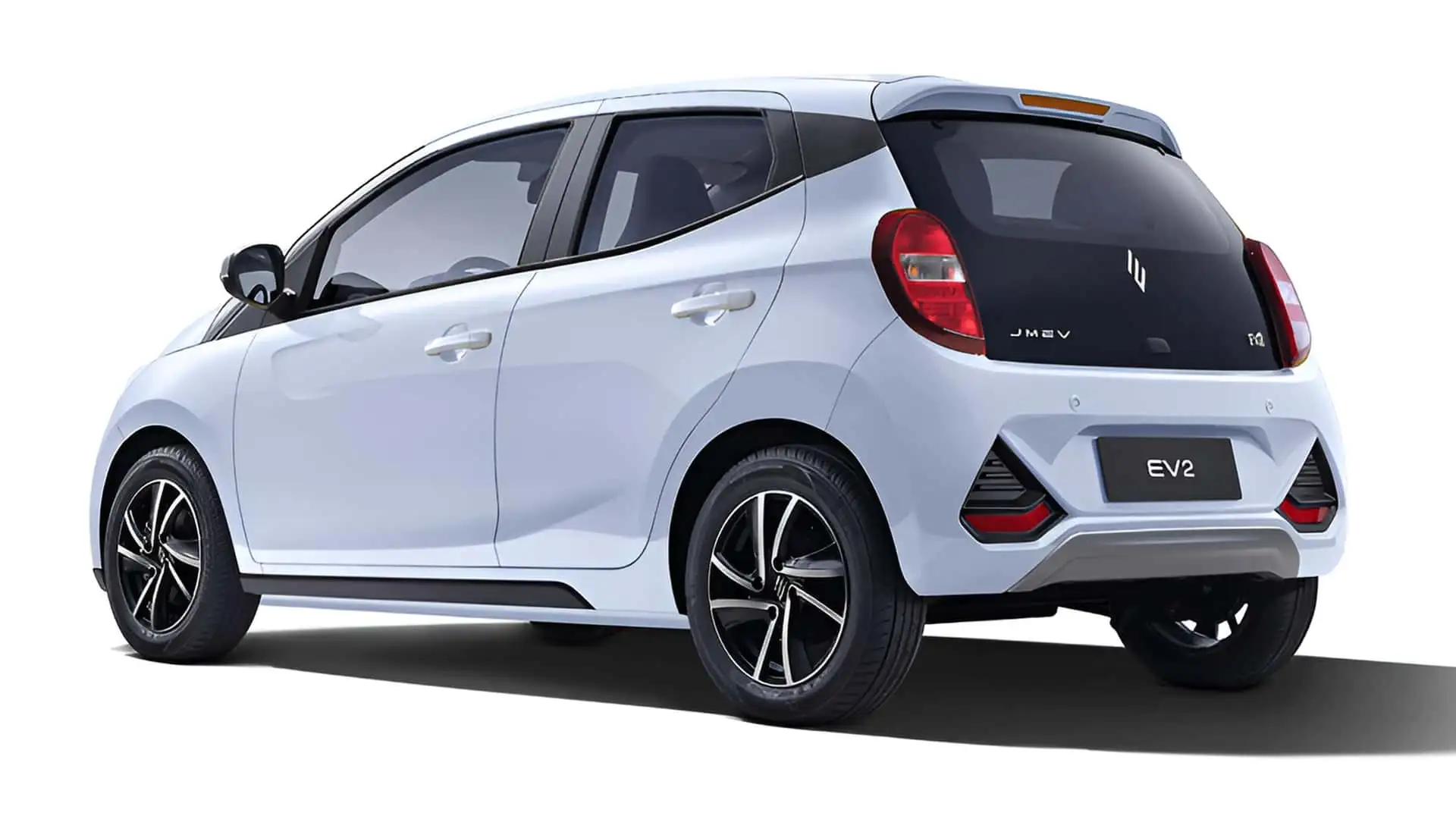
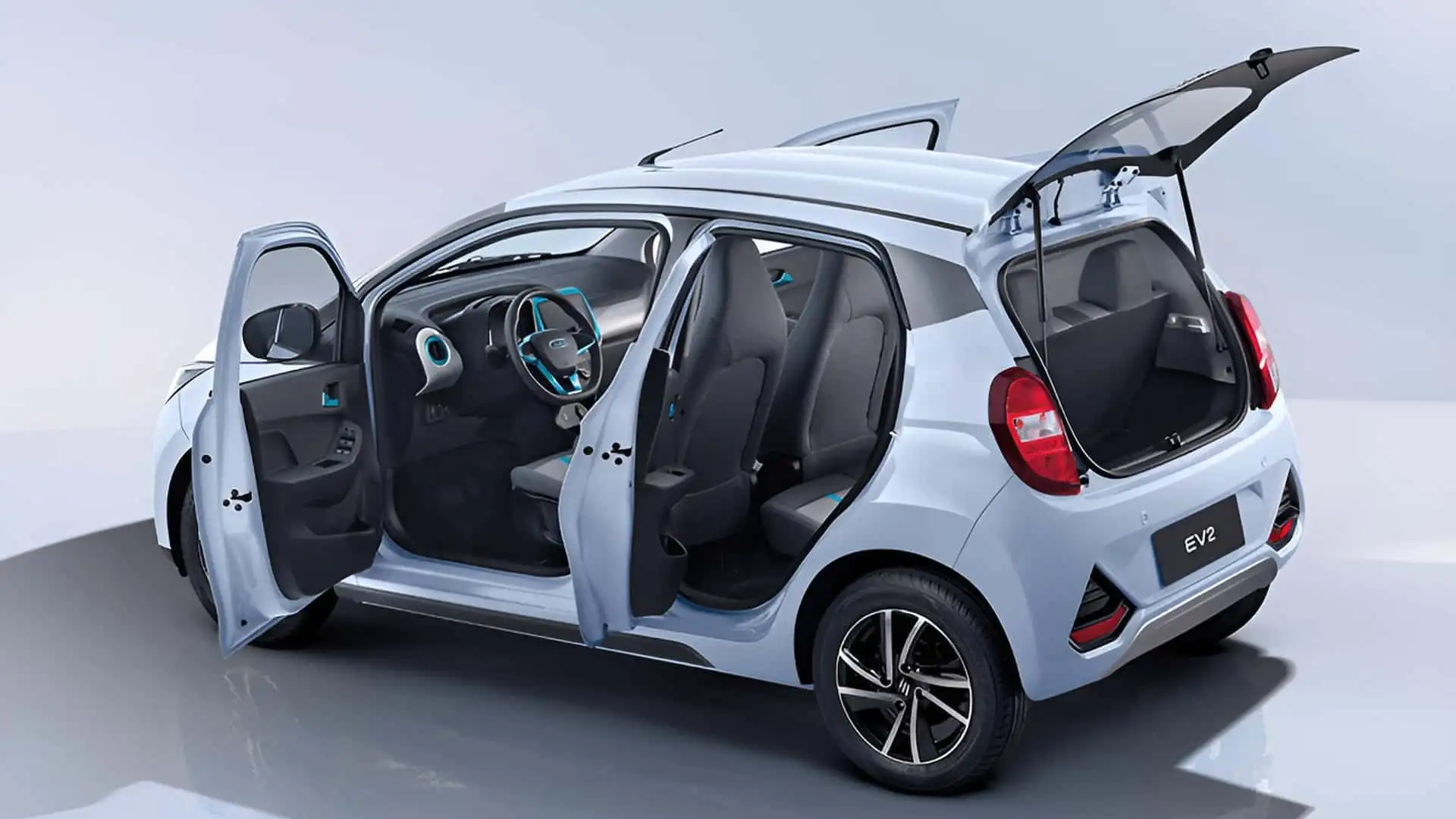
The imported line is built around two compact models, both sold through E-Motors rather than a conventional factory-backed rollout. The smaller one, the EV2, is the headline-grabber. It measures about 3.5 meters long, rides on a 2.34-meter wheelbase, and uses an electric motor rated at up to 30 kW, or about 40 hp, with 85 Nm of torque.
Its battery is a 15.9 kWh LFP pack, a chemistry known for stability and durability. The manufacturer’s declared range is close to 200 km under the Chinese test cycle, while the top speed is limited to about 100 km/h. That makes the vehicle clearly city-oriented, built for short routes, predictable traffic patterns, and low operating costs.
Above it sits the EV3, which pushes the same idea further. It grows to roughly 3.7 meters in length and about 2.39 meters between the axles, with an electric motor that can reach 50 kW, or around 67 hp. Its battery capacity is in the 30 kWh range, and the claimed autonomy rises to more than 300 km in the same measurement standard.
| Model | Power | Battery | Declared Range | Top Speed |
|---|---|---|---|---|
| JMEV EV2 | 40 hp | 15.9 kWh LFP | About 200 km | 100 km/h |
| JMEV EV3 | 67 hp | About 30 kWh | More than 300 km | Not highlighted as a performance model |
This is not a direct rival to mainstream EVs like the BYD’s mass-market electric push or better-equipped compact EVs already on sale. Instead, it occupies a lower, more utilitarian rung, almost like a bridge between a microcar and a conventional hatchback. That makes it a very specific product, not a generic “cheap EV” story.
Why This Launch Is Bigger Than The Car Itself
The biggest headline is not horsepower. It is market positioning. The JMEV approach shows how Chinese EV makers have become increasingly aggressive in segmenting electric mobility into ultra-low-cost tiers. This is the same playbook that helped electrification spread in China, where affordable city EVs became a practical alternative rather than a luxury statement.
Brazil is a harder market. Buyers want price, but they also want support, parts availability, and long-term trust. That is where this launch becomes interesting. E-Motors is using an import-led strategy instead of a fully built local infrastructure, which helps keep the sticker price low but also raises valid questions around aftersales service, parts logistics, and future resale value.
Still, the offer includes an important reassurance for early adopters: the published warranty is 8 years for the battery and 2 years for the car. For a buyer considering an entry-level EV, that kind of coverage is one of the few things that can make the leap feel less risky.
Why it matters: this is the first time an electric car in Brazil has appeared at a price that competes with, and in some cases undercuts, the cheapest combustion models.
There is also an unusual naming issue in the background. Kia has reportedly questioned the use of the EV2 and EV3 badges in Brazil, since those names are already tied to its own global electric strategy and registered locally. That dispute may stay limited to branding, but it shows how quickly the Brazilian EV market is becoming crowded with overlapping identities and aggressive new entrants.
If you want to compare this kind of market disruption with other electric and hybrid moves, it is worth looking at how brands like Geely are attacking price and range at the same time, or how the Leapmotor B10 Flex REEV is trying to win Brazil with a different formula. The pattern is clear: the next battle is no longer just about electrification, but about how cheap, usable, and believable that electrification can be.
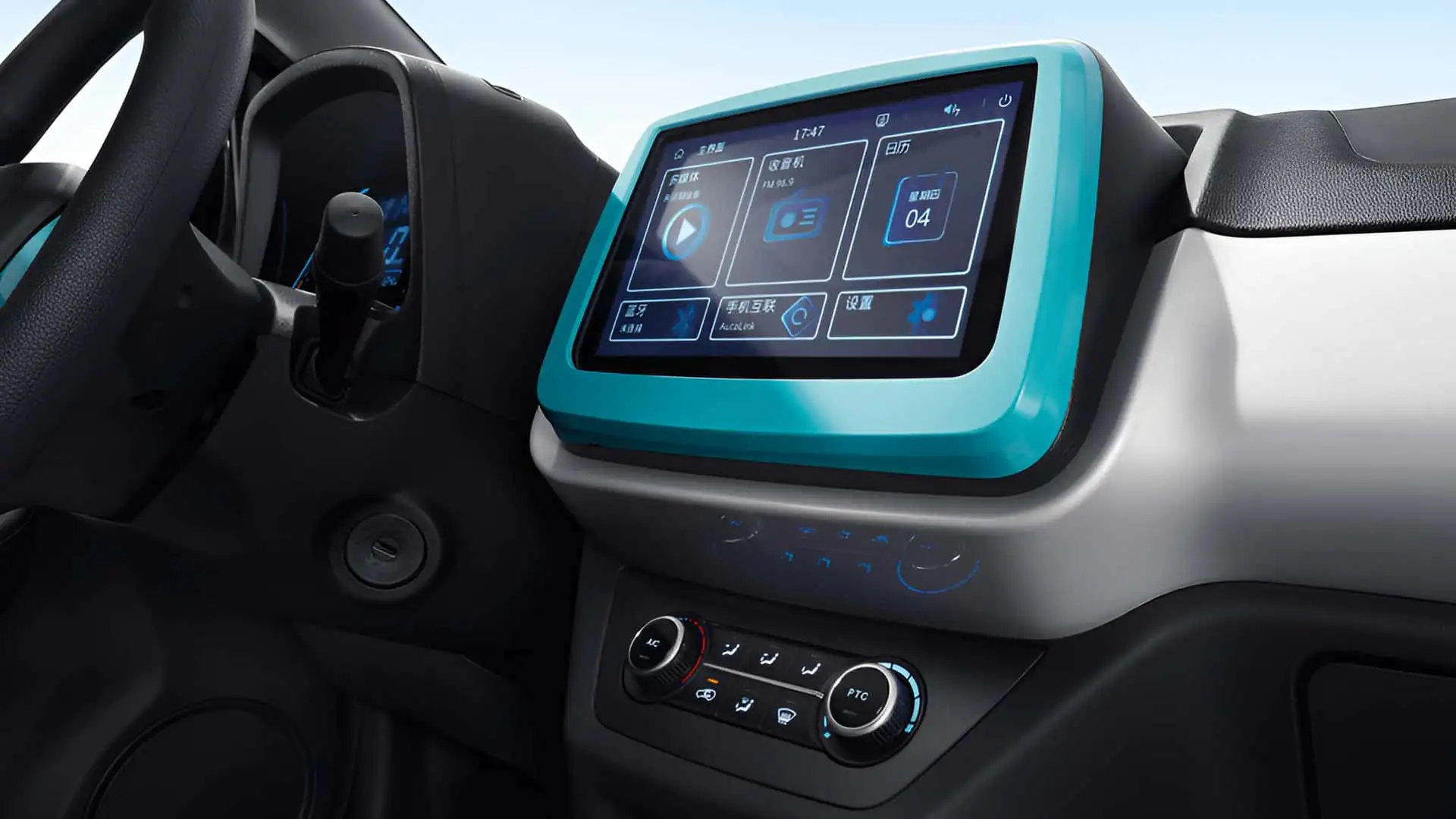
That is why the JMEV EV2 matters even if it is simple, modest, and clearly limited. It lowers the psychological barrier to EV ownership. It gives fleet buyers a reason to look again. And it suggests that the first truly disruptive electric cars in Brazil may not be the fastest or the most advanced, but the ones that finally make the entry ticket feel affordable.