Hyundai’s New STARIA Line Is Not A Simple Facelift. It Is A Portfolio Statement.
Hyundai did not launch the 2026 STARIA Electric and STARIA Limousine as isolated variants; it expanded a full MPV family to 18 configurations, stretching from Cargo to Tourer, Lounge and Limousine across LPI, hybrid and EV powertrains. That kind of breadth matters in a segment where one customer wants a 3-seat commercial van and another wants a six-seat executive shuttle with semi-aniline leather and 17.3-inch rear entertainment. The strategic message is clear: Hyundai wants one architecture to serve logistics, family travel, premium commuting and VIP transport without compromising the electrical or packaging logic of the vehicle. For context, the same kind of broad-market ambition is showing up in other segments too, which is why the Hyundai IONIQ 3 reveals such a useful comparison point for how the brand is scaling EV thinking.
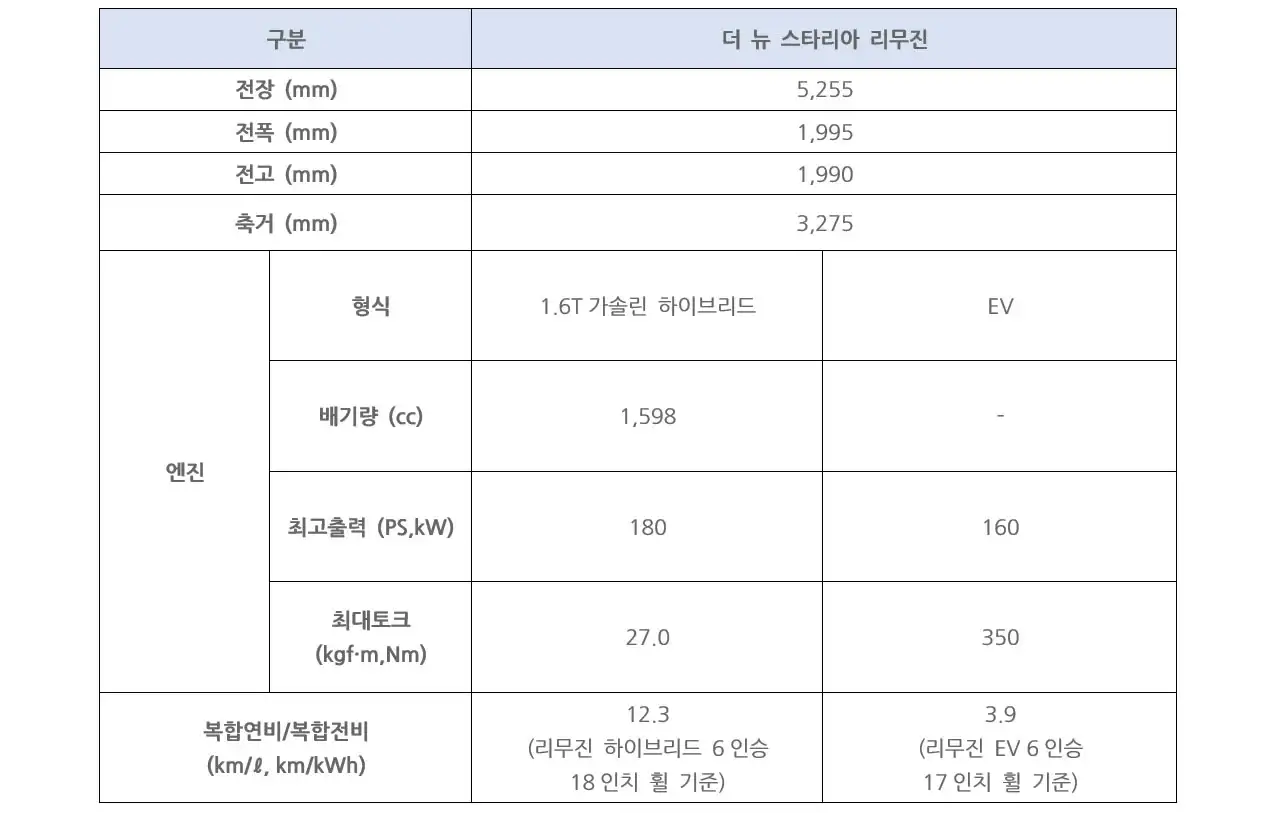
The STARIA Electric is the technical centerpiece. Its 84.0 kWh fourth-generation battery, 160 kW output and 350 Nm of torque place it squarely in the efficient, usable end of the EV van spectrum rather than the brute-force end. The official range claim reaches 387 km on the Cargo model with 17-inch wheels, while efficiency is listed at 4.1 km/kWh. Hyundai also claims 10 to 80 percent charging in about 20 minutes on an 800V system using a 350 kW charger, which is a serious operational advantage for fleet users. That combination of 800V hardware, big battery and compact frunk storage of 23.9 litres is the sort of packaging solution that turns a people carrier into a genuinely modern EV platform.
The 800V Charging Architecture Is The Real Engineering Headline
Hyundai’s 800V approach is the difference between a competent electric van and a vehicle that can plausibly rotate through demanding daily duty cycles. With a 350 kW charger, the STARIA Electric can recover from 10 to 80 percent in roughly 20 minutes, which is the sort of window that makes commercial planning realistic in a way slower architectures do not. The brand also says this is its first model with dual charging ports, one at the front and an optional rear port, with software logic preventing simultaneous opening for safety. That detail matters because it shows Hyundai thinking beyond individual ownership and into fleet operations, where charging access and bay layout are not theoretical concerns.
There is also a structural story behind the charging story. Hyundai added rear-side impact bars in the front subframe area to disperse collision energy and protect the battery pack. The steering uses R-MDPS, Hyundai’s rack-type motor-driven power steering system, to maintain stability under the mass of the battery. These are the invisible changes that separate an electrified MPV built for compliance from one engineered to survive real-world use. The STARIA Electric is not just carrying current; it is being reinforced around current.
What The STARIA Electric Gets Right On Packaging And Daily Use
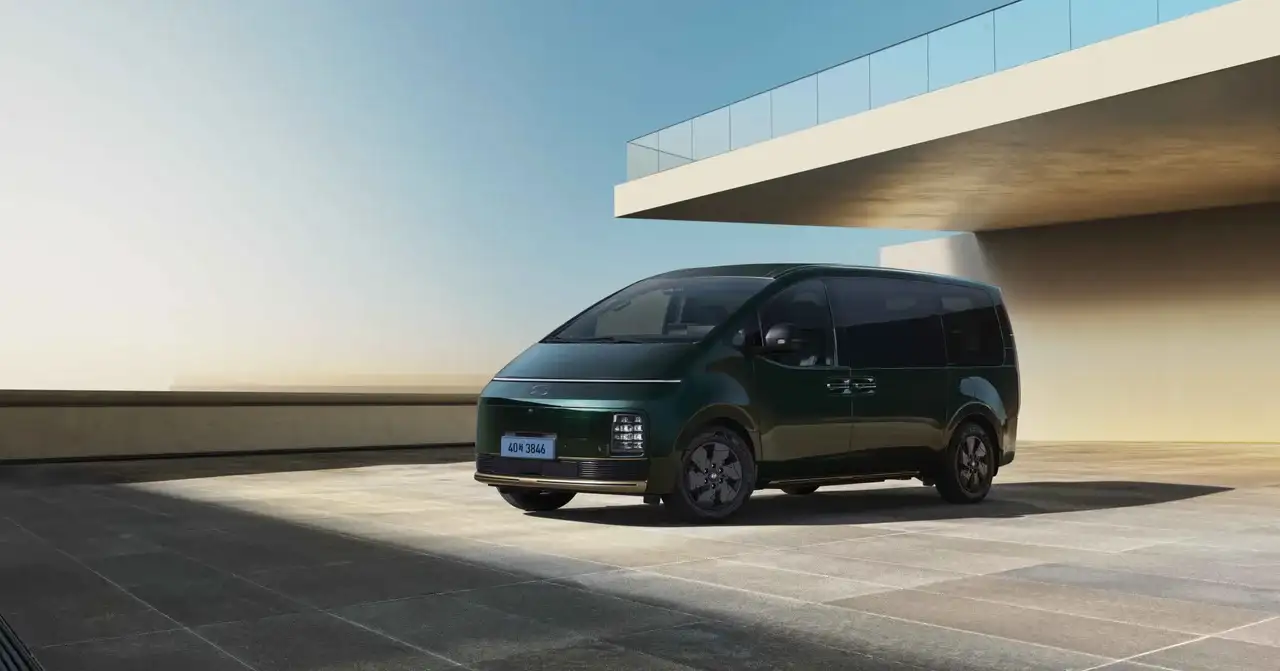
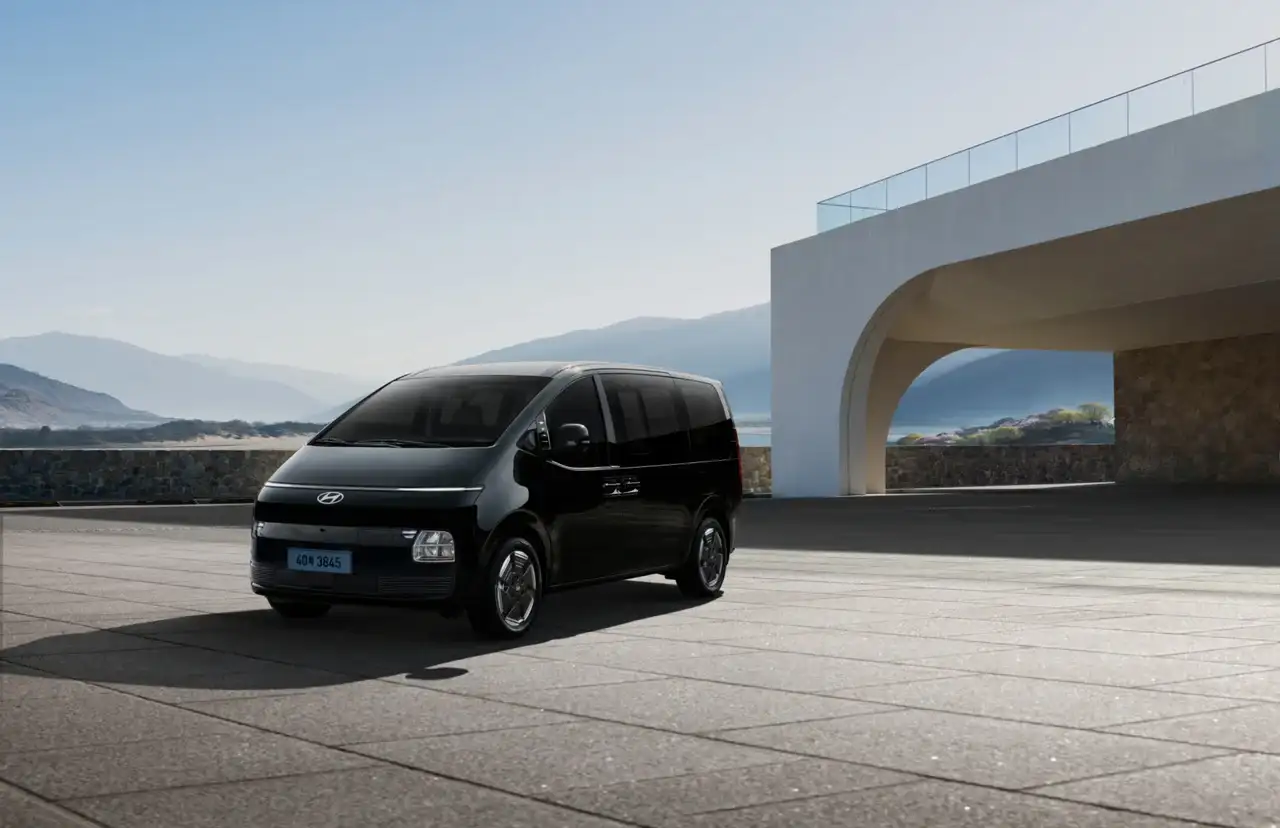
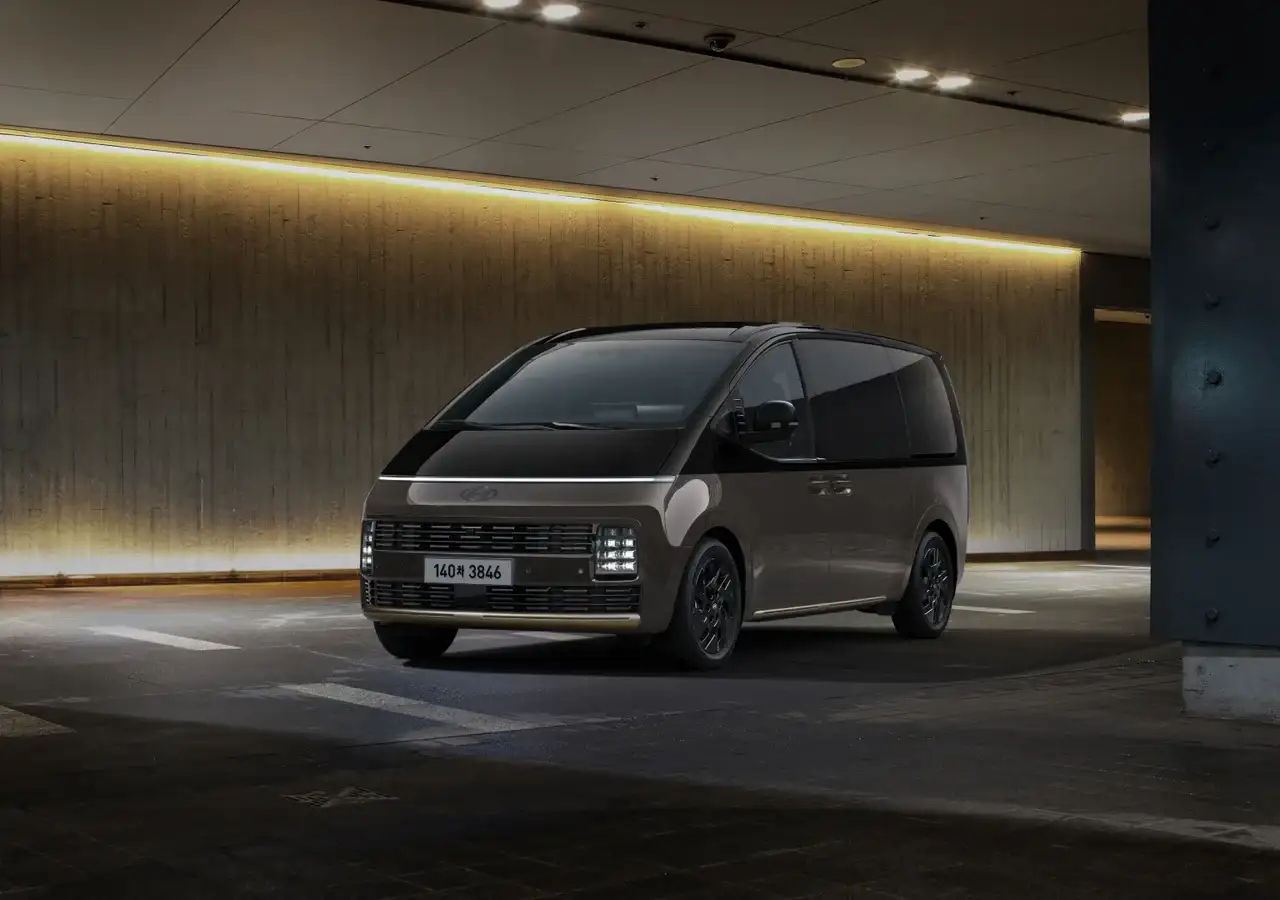
The exterior design continues the STARIA’s spaceship-like identity, but the functional details are more important than the silhouette. The horizontal front light signature, active air flaps and integrated front charging door create a cleaner nose, while the cabin remains the core product with generous second- and third-row space. The frunk at 23.9 litres is not large, but in an MPV that can be used for charging cables, emergency kits or small business equipment, it is highly practical. Hyundai’s V2L function also turns the vehicle into a mobile power source, with outlets positioned according to variant and use case in Tourer, Cargo and Lounge versions.
This is where the STARIA Electric becomes more relevant than many flashier EV launches. A family buyer gets a large cabin with long wheelbase packaging benefits, while a fleet operator gets a van that can power tools or devices on-site. The same platform logic also helps Hyundai cover multiple commercial and lifestyle use cases without splintering the product line. If you want to see how the market for high-value utility vehicles is shifting, the Ford Everest Wildtrak is another useful reference because it shows how premium utility now needs a stronger technology story.
STARIA Limousine Turns Rear Seat Luxury Into The Main Event
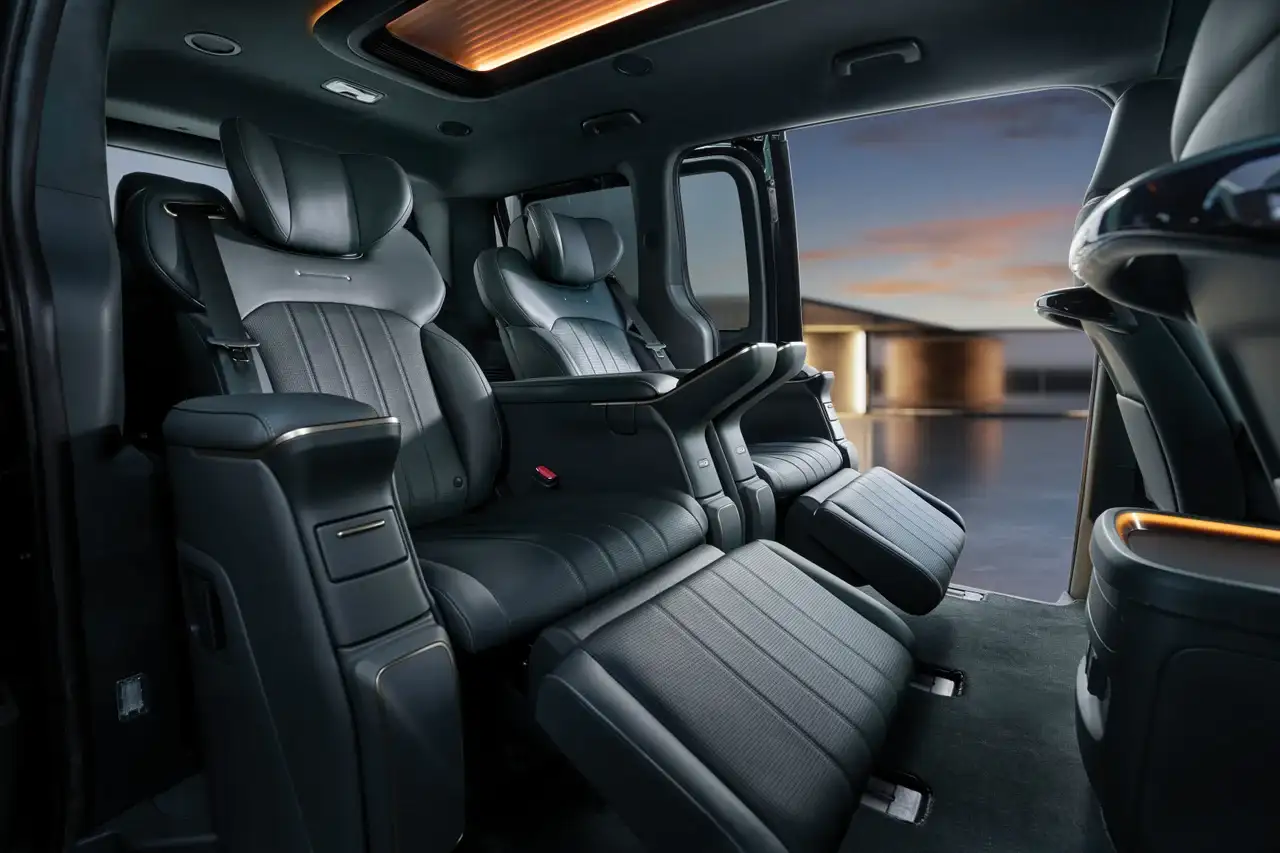
The STARIA Limousine is the more theatrical half of the launch, but it is also the most commercially strategic. Hyundai offers hybrid 6-seat and 9-seat versions, plus a six-seat EV with an 84.0 kWh battery and an estimated 364 km range on 17-inch wheels. That six-seat layout is the key because it lets Hyundai target chauffeur-driven executives, airport transfer operators and luxury leisure buyers who value rear-seat space more than maximum occupancy. In a segment increasingly obsessed with rear-cabin theater, the Limousine is Hyundai’s direct answer to the demand for genuine business-class travel.
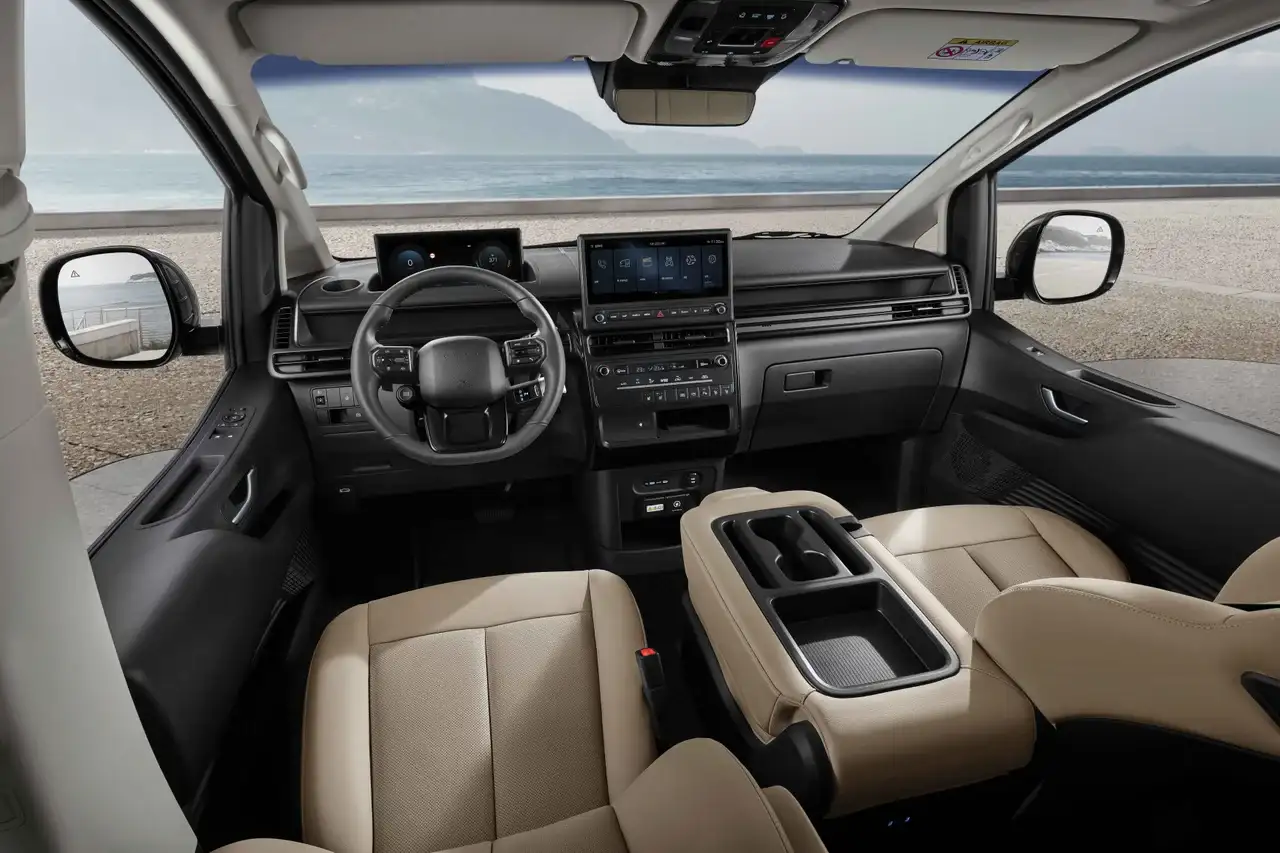
The Executive Seats are the centerpiece. Hyundai specifies semi-aniline leather, 14-way adjustment, one-touch reclining and an Air Contour Body Care massage system with 14 air cells and five modes. Rear entertainment is handled by a 17.3-inch fold-down screen, while the Panoramic Sky Roof and illuminated cabin elements create a more lounge-like environment. The details are elevated further by gold accents on the electronic shift-by-wire selector and real stitch work in the upholstery. This is not just about softness; it is about how the cabin behaves during long-distance travel when fatigue, noise and visual texture all matter.
Chassis, Noise Control And The Luxury Tuning Behind The Limousine
The Limousine’s refinement story depends on more than seat leather. Hyundai uses aluminum components in the front and rear suspension to reduce mass and improve ride quality, while dual-laminated side glass in the second row helps suppress wind and road noise. The rear shock absorber mounting structure is reinforced to cut vibration, and the platform’s tuning is clearly aimed at minimizing the body motions that spoil comfort in taller vehicles. That is especially important in a vehicle with either six or nine seats, where passengers will notice pitch, secondary ride and acoustic harshness far more than a private driver might.
This is also where the Limousine separates itself from more mainstream three-row crossovers. Hyundai is not pretending that a lifted SUV delivers the same cabin experience as a dedicated MPV with a low floor and long roofline. It is making the more honest claim that a van architecture can deliver first-class rear accommodation if the seats, suspension and acoustic treatment are properly developed. For readers tracking how premium space is being reinterpreted, the Volvo XC90 B6 Ultra and the Range Rover Sport Twenty Edition offer useful contrasts in how different brands chase comfort and presence.
Where The STARIA Fits In Hyundai’s 18-Variant Strategy
The beauty of this launch is that it is not limited to one aspirational model. Hyundai has built a matrix of Tourer, Cargo, Lounge and Limousine versions across different propulsion types, which allows it to serve commercial, family and premium transport customers from the same core engineering base. Cargo comes in 3- and 5-seat EV forms, Tourer is offered in 11-seat EV trim, Lounge is sold in 7- and 11-seat EV versions, and Limousine is positioned in six-seat and nine-seat hybrid or EV formats. That breadth gives Hyundai a defensible position against both commercial van specialists and luxury shuttle conversions.
Pricing in Korea reinforces that positioning. The STARIA Electric Cargo starts at 57.92 million won, the Tourer at 60.29 million won, and the Lounge at 65.97 million won, while the Limousine EV 6-seater is listed at 87.87 million won. Hyundai expects subsidies and tax incentives to pull some EV versions down meaningfully, with certain models effectively entering the 40-million-won zone in Seoul after support. That price ladder is important because it gives the STARIA family room to compete on value, not just novelty, which is how long-lived automotive programs are built.
How The STARIA Electric Changes Hyundai’s EV Credibility
The STARIA Electric is important because it broadens Hyundai’s EV identity beyond sedans and crossovers. With 160 kW, 350 Nm and 800V charging, Hyundai is applying its electrical expertise to a larger, more demanding body style where range loss, charging time and packaging compromises are usually exposed more harshly. That makes this launch an argument about engineering confidence, not just product expansion. It also gives Hyundai a vehicle that can be deployed in business fleets, airport services and family transport without the usual penalty of charging inconvenience.
In a broader context, this launch strengthens the idea that large-format EVs are no longer experimental. The STARIA Electric brings usable range, real charging speed and practical load-carrying potential, while the Limousine variant adds the kind of rear-cabin craftsmanship that makes premium buyers stop comparing everything to a sedan. If you want to see how rapidly this premium utility market is moving, the Denza D9 DM-i and the NIO Firefly EV show how different manufacturers are now attacking the same space from completely different angles.
Final Verdict On Hyundai’s New MPV Play
Hyundai has given the STARIA line a sharper purpose than most van families ever receive. The Electric variant is the technical anchor, built around an 84.0 kWh battery, 800V charging and real-world usability, while the Limousine is the emotional and commercial halo, with Executive Seats, massage functions and a cabin finished to genuinely premium standards. The most impressive achievement is that both versions remain credible as working vehicles rather than indulgent showpieces.
That balance is why the STARIA launch deserves attention beyond the MPV niche. It shows Hyundai understands that electrification is not only about converting drivetrains; it is about redefining how a vehicle earns its place in a customer’s life. Whether the brief is cargo duty, executive transport or long-distance family travel, the 2026 STARIA range now has the engineering depth to answer it with more than one powertrain and more than one definition of luxury.