
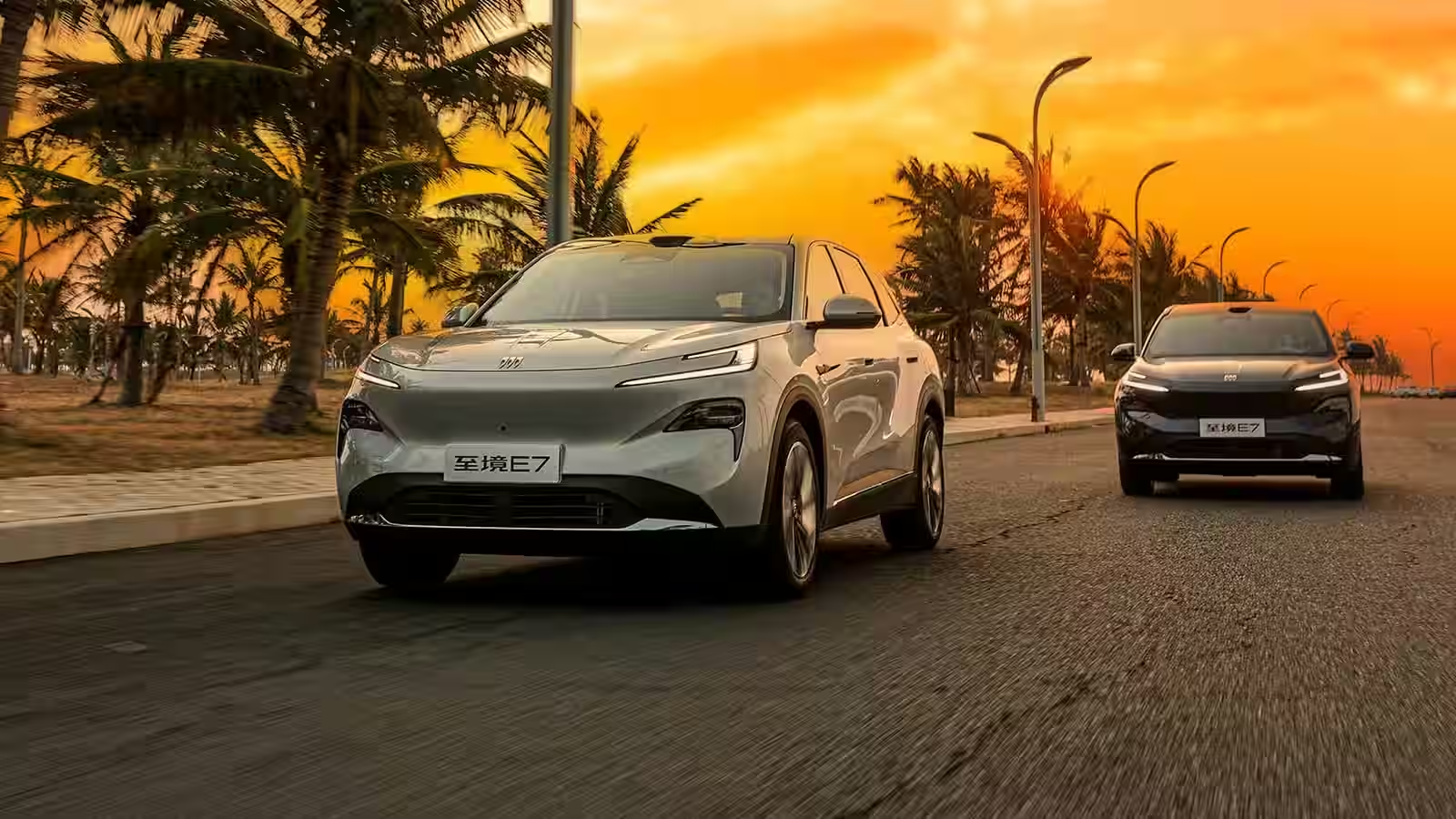
Buick’s Electra E7 is not being launched as a halo car. It is being positioned as a volume weapon for China, and that matters more than the badge on the tailgate. With a post-incentive starting price of 154,900 yuan, Buick has moved the E7 into the exact part of the market where buyers compare range, cabin tech, and ownership value with ruthless discipline rather than brand nostalgia.
| Model | Buick Electra E7 |
| Powertrain output | 165 kW |
| Electric range | 230 km CLTC |
| Combined range | 1,630 km |
| Battery capacity | 32.6 kWh |
| Starting price | 154,900 yuan after discount |
What Buick is really selling in China
The Electra E7 is a mid-size plug-in hybrid SUV built around the Zhenlong PHEV system, pairing a 1.5-liter engine with an electric motor. Buick is not trying to out-muscle the segment with brute force; it is engineering the E7 to reduce the two biggest objections Chinese buyers still have to larger family SUVs: running cost and charging dependency.
The model’s 32.6 kWh battery is the headline hardware, because 230 km of CLTC electric range is unusually strong for a mainstream plug-in hybrid. That number is especially important in urban China, where many owners want to complete the week on electricity and reserve the engine for longer intercity travel. The combined 1,630 km range is less about bragging rights than it is about removing lifestyle friction.
The hardware that makes the E7 feel local, not imported
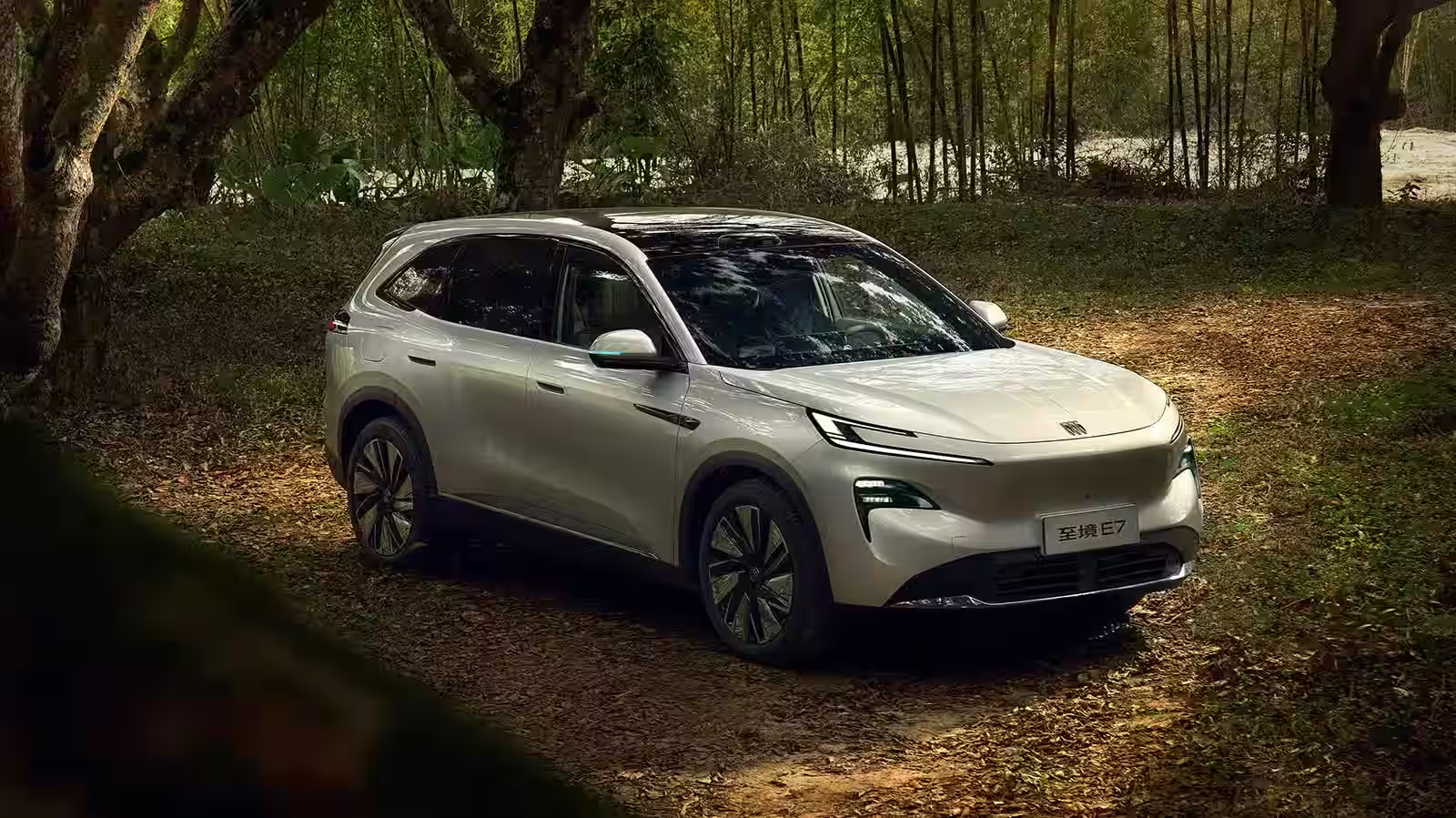
Buick has clearly studied how Chinese buyers evaluate advanced driver assistance. The Electra E7 uses 27 perception hardware units, including a roof-mounted LiDAR, and integrates Momenta’s R6 large model for highway and urban autonomous driving functions. That is not a decorative spec. It is Buick’s signal that the brand understands China’s ADAS benchmark is now defined by domestic software stacks, not just sensor count.
Inside, the cabin strategy is equally market-specific. The front passenger gets a zero-gravity recliner, which is exactly the sort of comfort feature that resonates in a family SUV aimed at daily commuting, chauffeured travel, and long-distance use. Buick also gives the E7 ByteDance’s Doubao large language model, which is designed for natural voice interaction with more human-like emotional tone. In other words, the car is being sold as a connected living space as much as a means of transport.
Why the order spike matters more than the brochure
Buick says the Electra E7 received 10,797 firm orders in the first 90 minutes after launch. That is a meaningful opening because it suggests the product is landing where it needs to: with buyers who are price-aware, spec-sensitive, and willing to commit quickly when the value equation is credible.
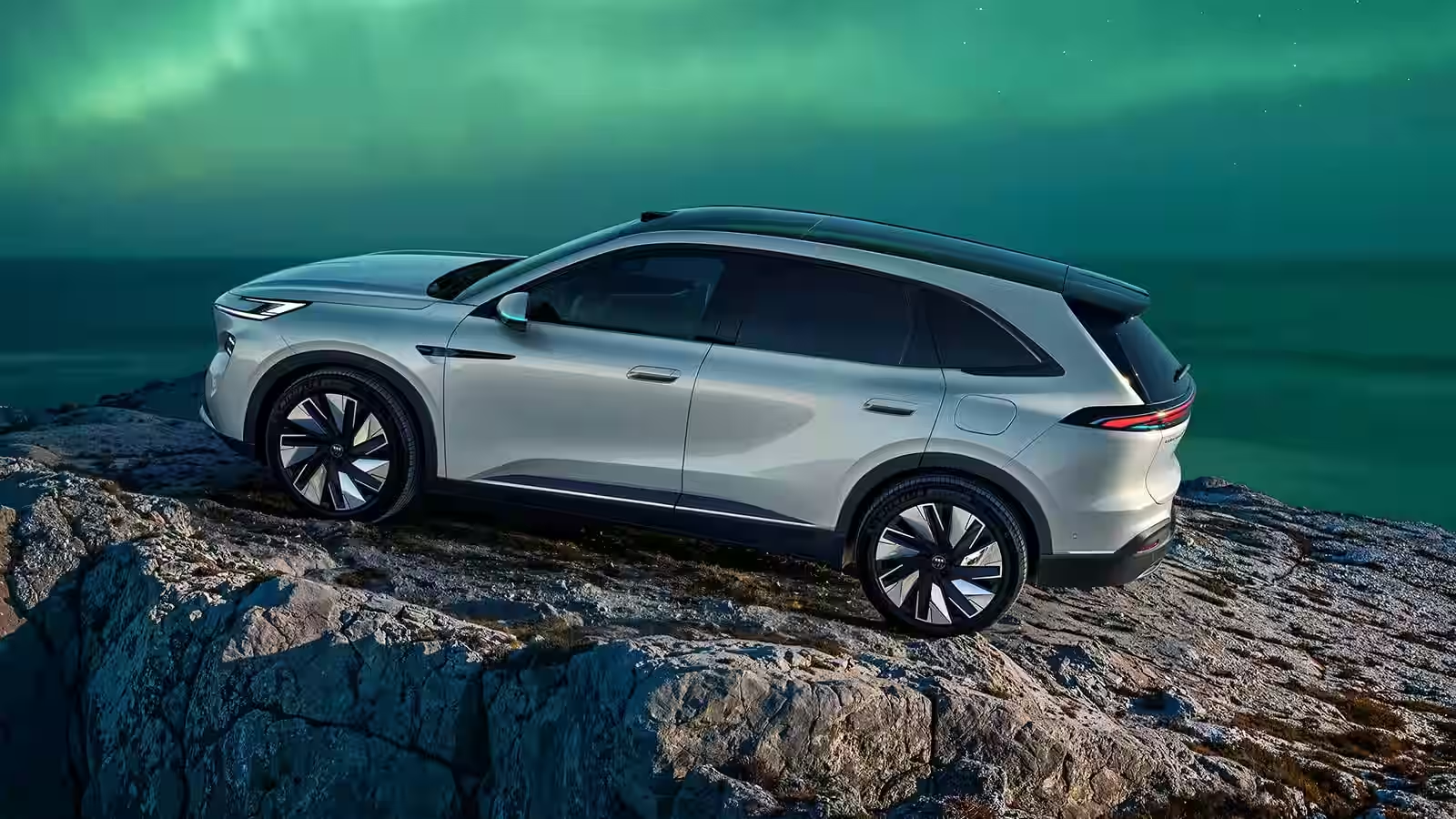
At 4,850 mm long, 1,910 mm wide, and 1,676 mm tall, with a 2,850 mm wheelbase, the E7 is sized to fight in the heart of the mid-size SUV class. It is not a compact commuter or a stretched seven-seat family bus. It is a carefully targeted five-seat alternative designed to challenge domestic rivals such as the BYD Sealion 06 and Changan Nevo Q07 on range, technology, and cabin presence.
The real question now is whether Buick can convert launch interest into sustained volume. In China, first-hour order numbers are only the start. Delivery quality, software maturity, and dealer support will decide whether the Electra E7 becomes a market player or a short-lived headline.
FAQ
How much does the Buick Electra E7 cost in China?
- The post-incentive starting price is 154,900 yuan, after a 5,000 yuan limited-time discount.
What is the electric range of the Electra E7?
- Buick claims 230 km of pure electric range under CLTC conditions.
How much total range does it offer?
- With a full charge and full fuel tank, Buick says the combined range reaches 1,630 km.
What makes its driver-assistance setup notable?
- The E7 uses 27 perception hardware units, including roof-mounted LiDAR, plus Momenta’s R6 model for highway and urban driving support.
Why is the Electra E7 important for Buick?
- It shows Buick is targeting China’s mainstream electrified SUV market with a locally tuned PHEV, not just a badge-led import strategy.