ACURA INTEGRA 2026 Sharpens the Case Without Chasing Horsepower
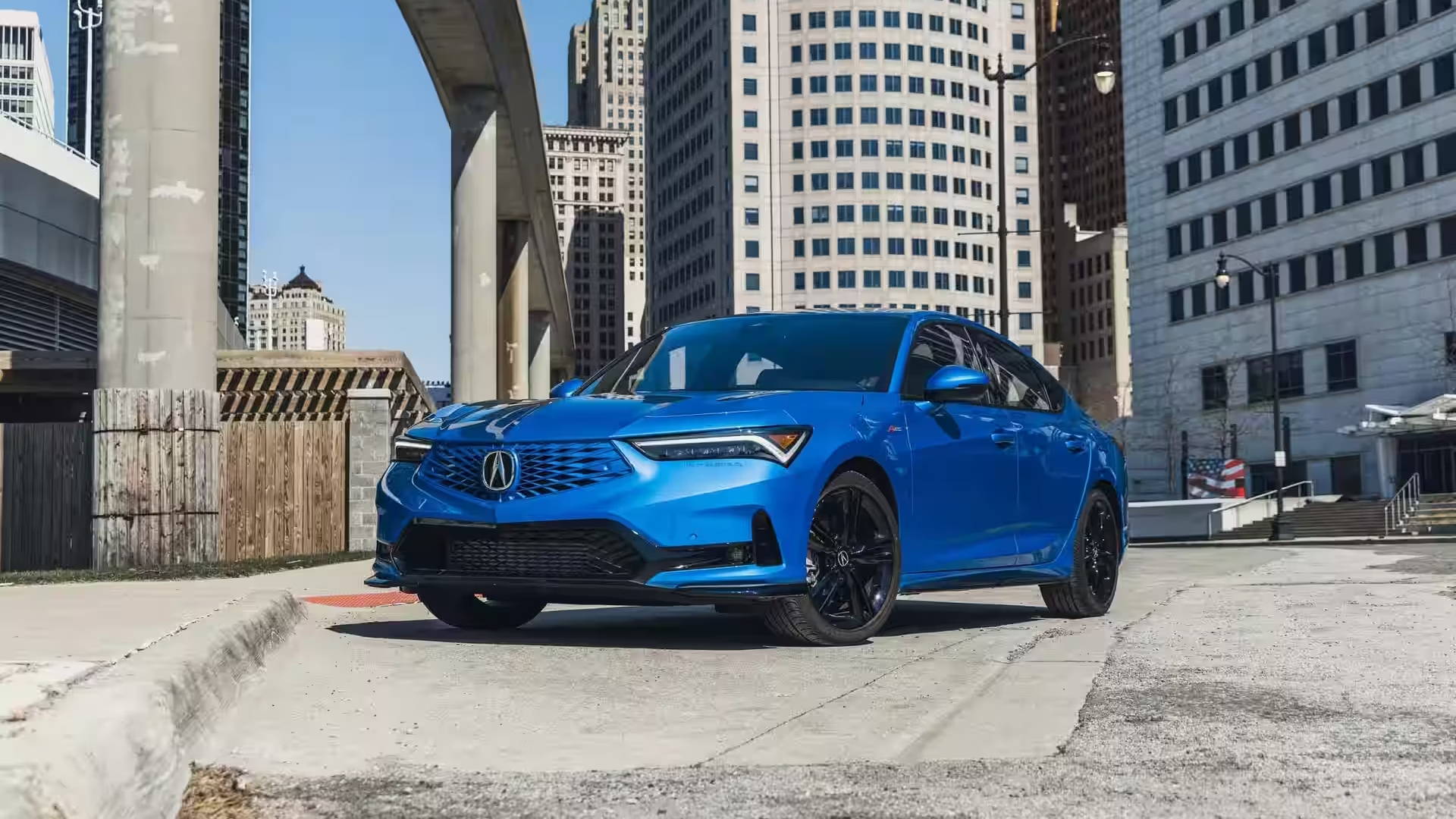
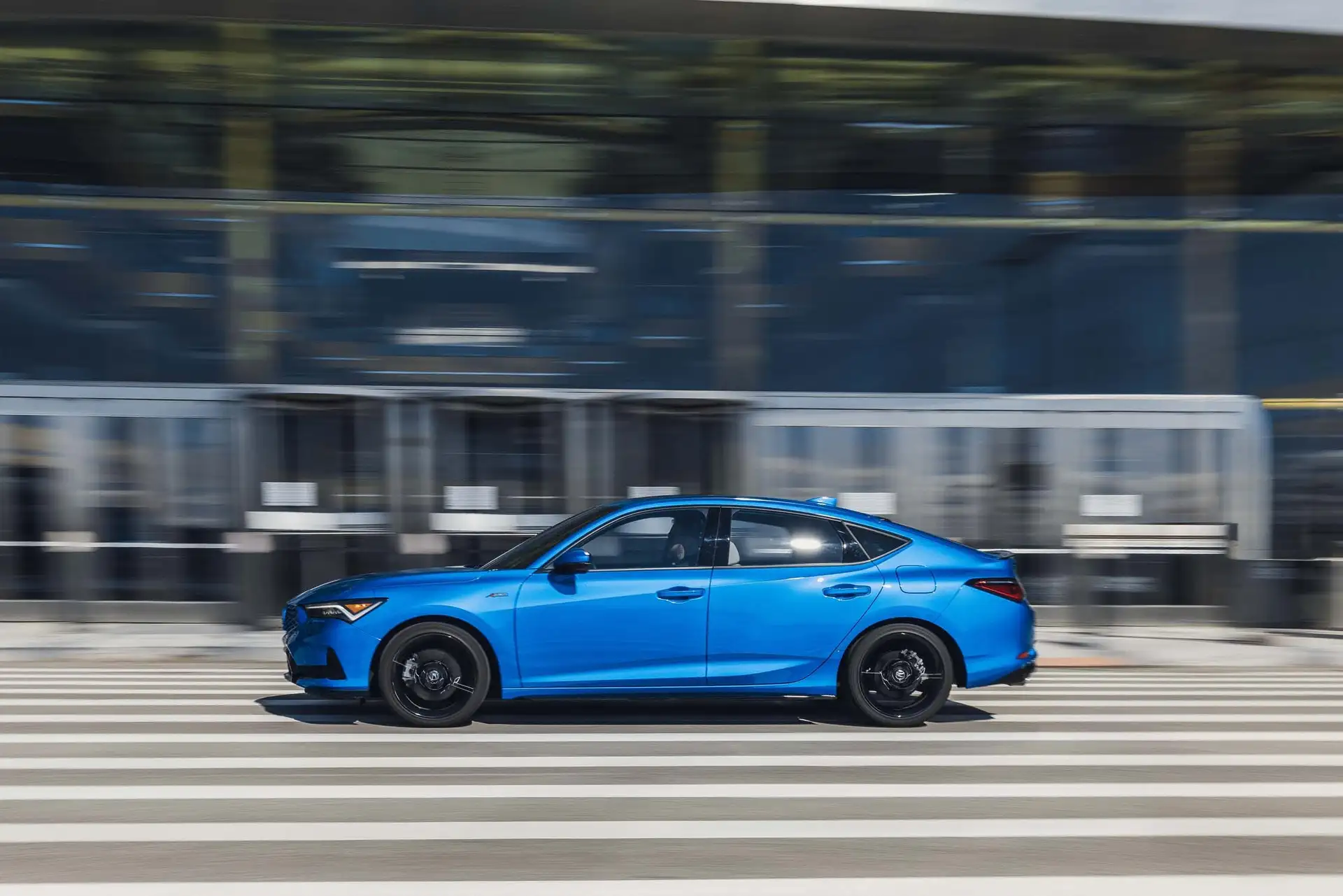
The 2026 Acura Integra is not a mid-cycle reinvention; it is a calculated correction. Acura has kept the turbocharged 1.5-liter inline-four at 200 hp and 192 lb-ft, preserved the hatchback body, and used the model year update to answer the most persistent criticism of the fifth-generation car: that too much of its appeal overlapped with the Honda Civic Si. The result is a premium compact liftback that now leans harder on design, cabin hardware, and option structure to justify its position, with the A-Spec Manual with Technology Package starting at $40,495 and our test car landing at $41,095 with Double Apex Blue Pearl paint.
That pricing still puts the Integra in the same orbit as the Civic Si, but Acura’s 2026 tweaks make the differential easier to defend. The Integra now gets a 9.0-inch touchscreen, wireless phone mirroring, inductive charging, and fresh wheel-and-grille details that visually separate it from its Honda cousin. Those changes are modest on paper, yet in a segment where shoppers cross-shop the Integra against the TOYOTA Civic Turbo Vs Supercharger Segredos De Eficiência conversation as much as against premium alternatives, the difference between “similar” and “specific” is often what closes the sale.
The Powertrain Remains the Same, Which Is Exactly the Point
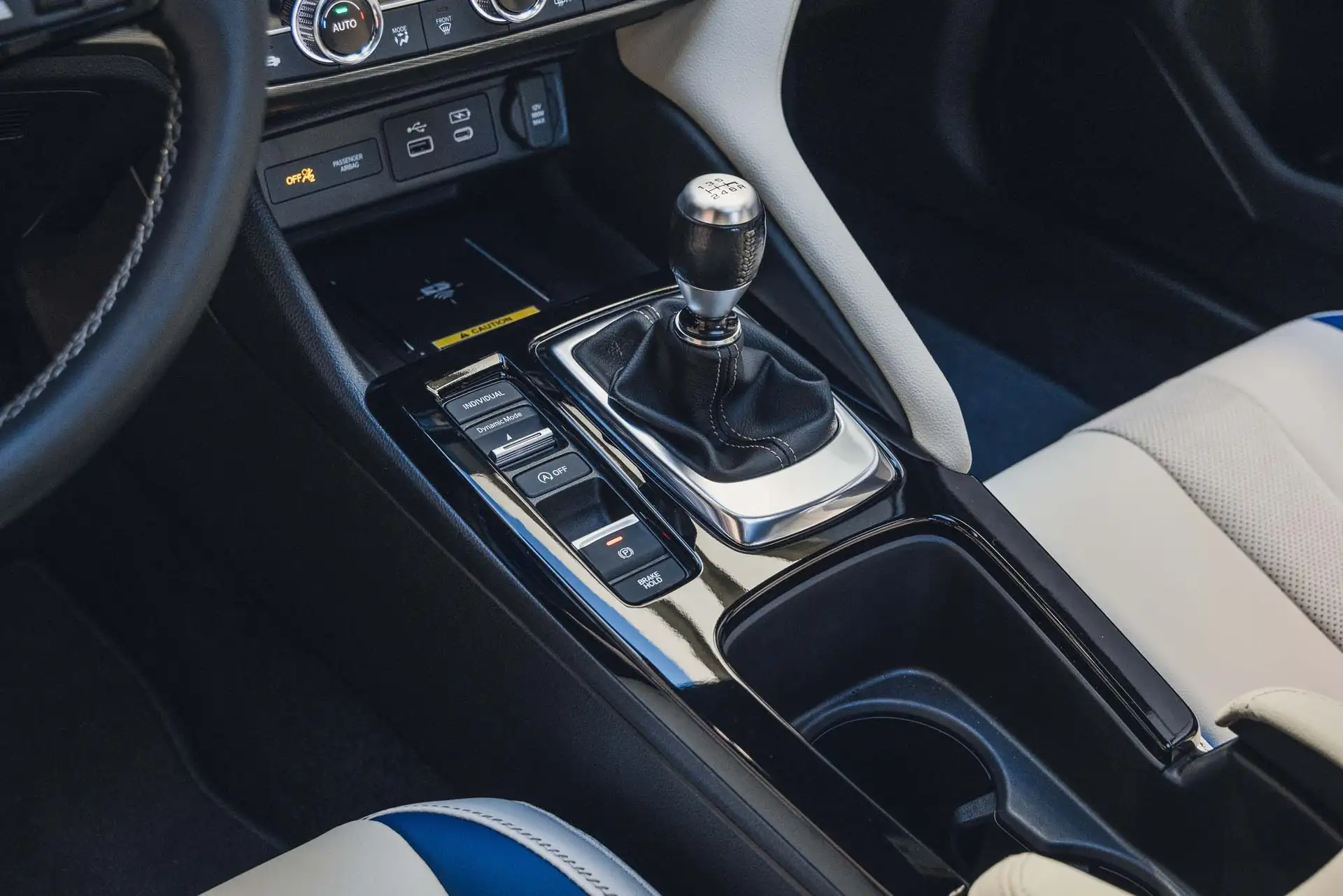
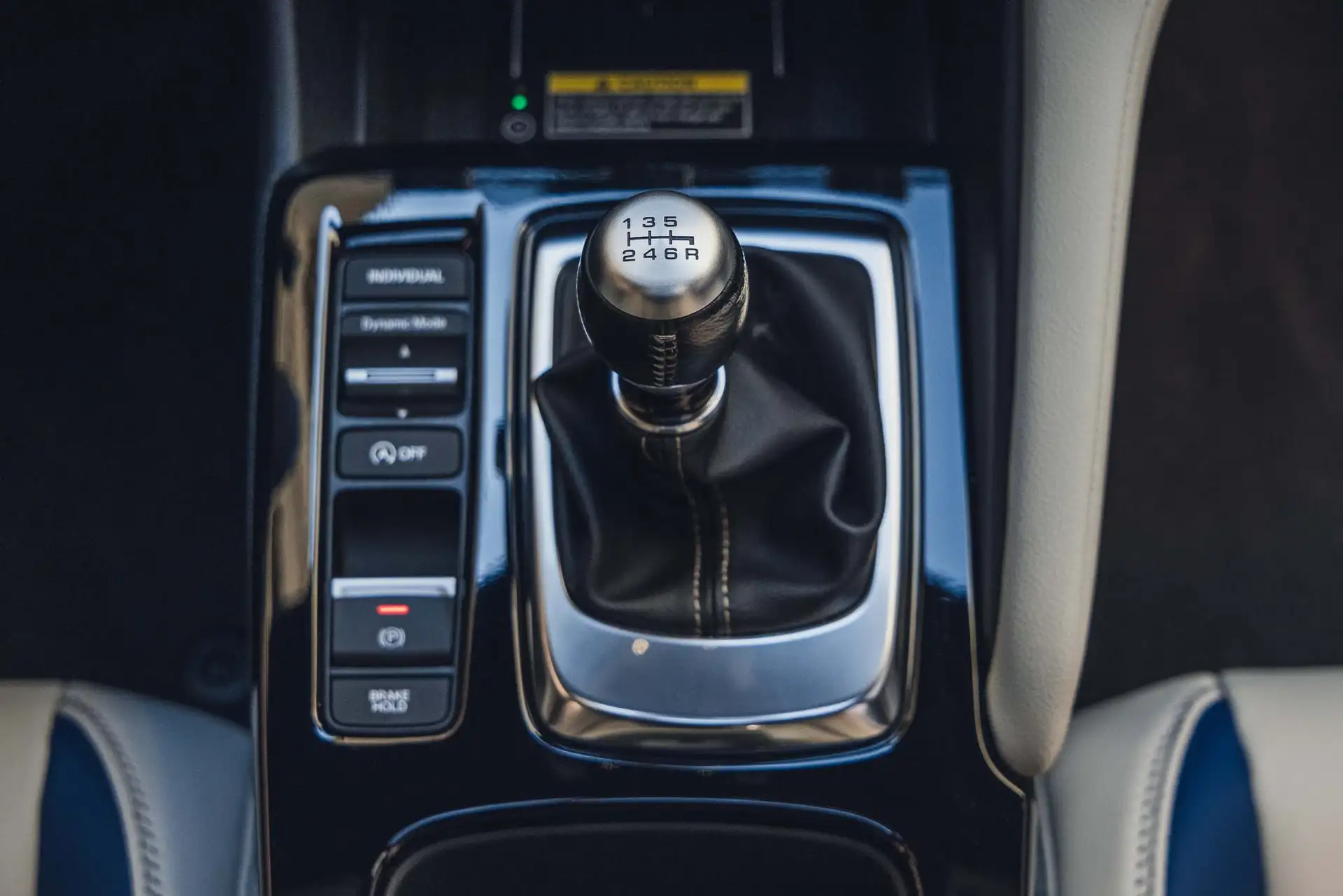
Acura did not touch the Integra’s 1,498 cm3 turbocharged DOHC 16-valve inline-four, and that restraint keeps the model’s personality intact. Output remains 200 hp and 192 lb-ft, delivered through either a CVT or, in A-Spec form with the Technology Package, a six-speed manual that remains one of the segment’s strongest selling points. The manual is not just available; it is good. The clutch take-up is easy to modulate, the shifter has a precise, mechanical feel, and the metal-topped lever reinforces the sense that Acura still understands the tactile value of a proper transmission.
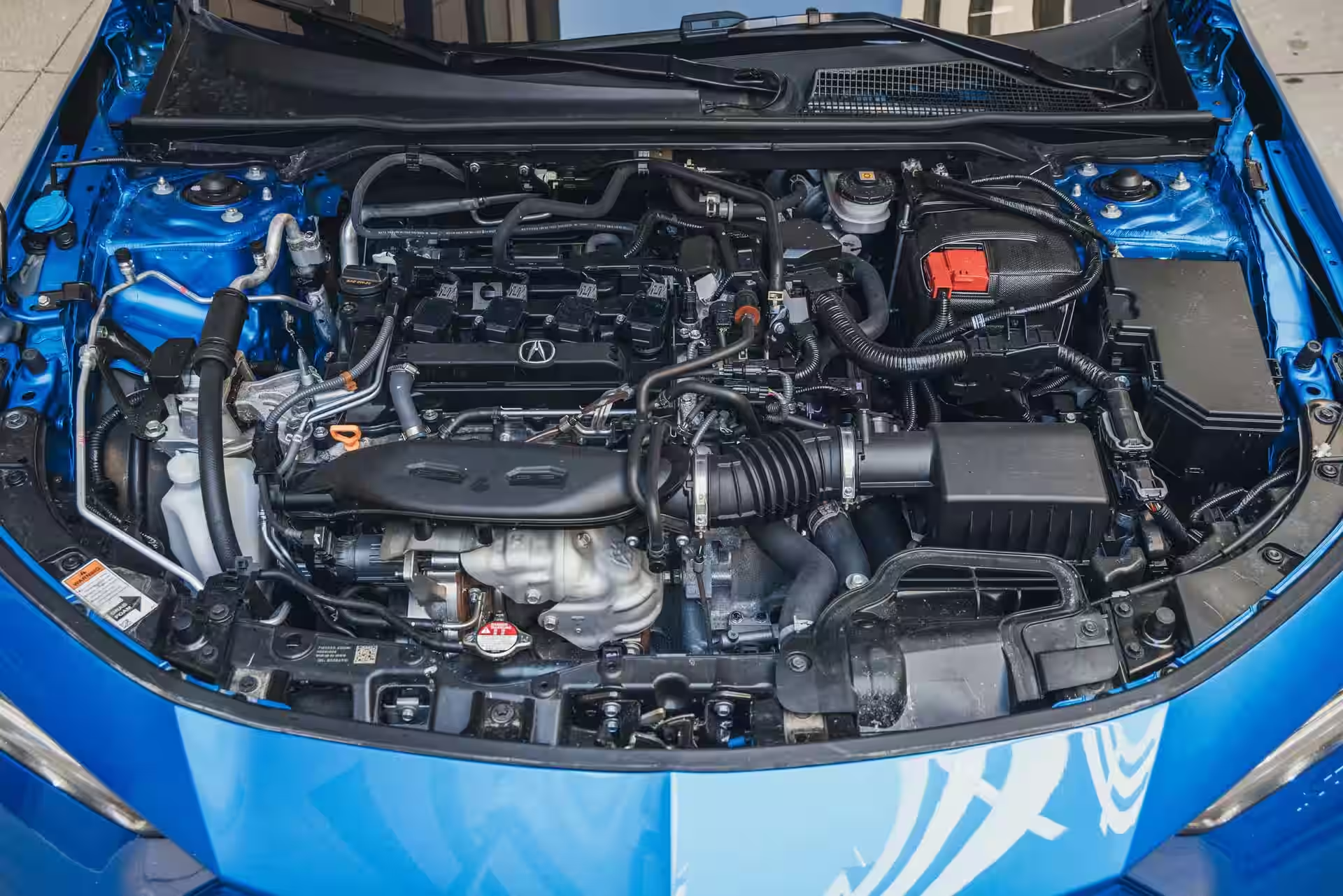
On paper, the manual car posts 0–60 mph in 6.8 seconds and a quarter-mile in 15.0 seconds at 95 mph, which places it firmly in the quick-enough daily-driver bracket without pretending to be a Type S. The CVT brings the better EPA figures at 29 mpg city and 37 mpg highway, versus 26 mpg city and 36 mpg highway for the manual, but the real-world payoff is more nuanced: our 75-mph highway test returned 40 mpg, proof that the Integra’s long-legged gearing and modest displacement can still deliver efficient cruising. For enthusiasts who want a broader look at how powertrain packaging shapes premium value, the logic here rhymes with the 2026 Ford Mustang Dark Horse SC strategy in reverse—less spectacle, more repeatable usability.
Chassis Tuning Gives the A-Spec Real Road Cred
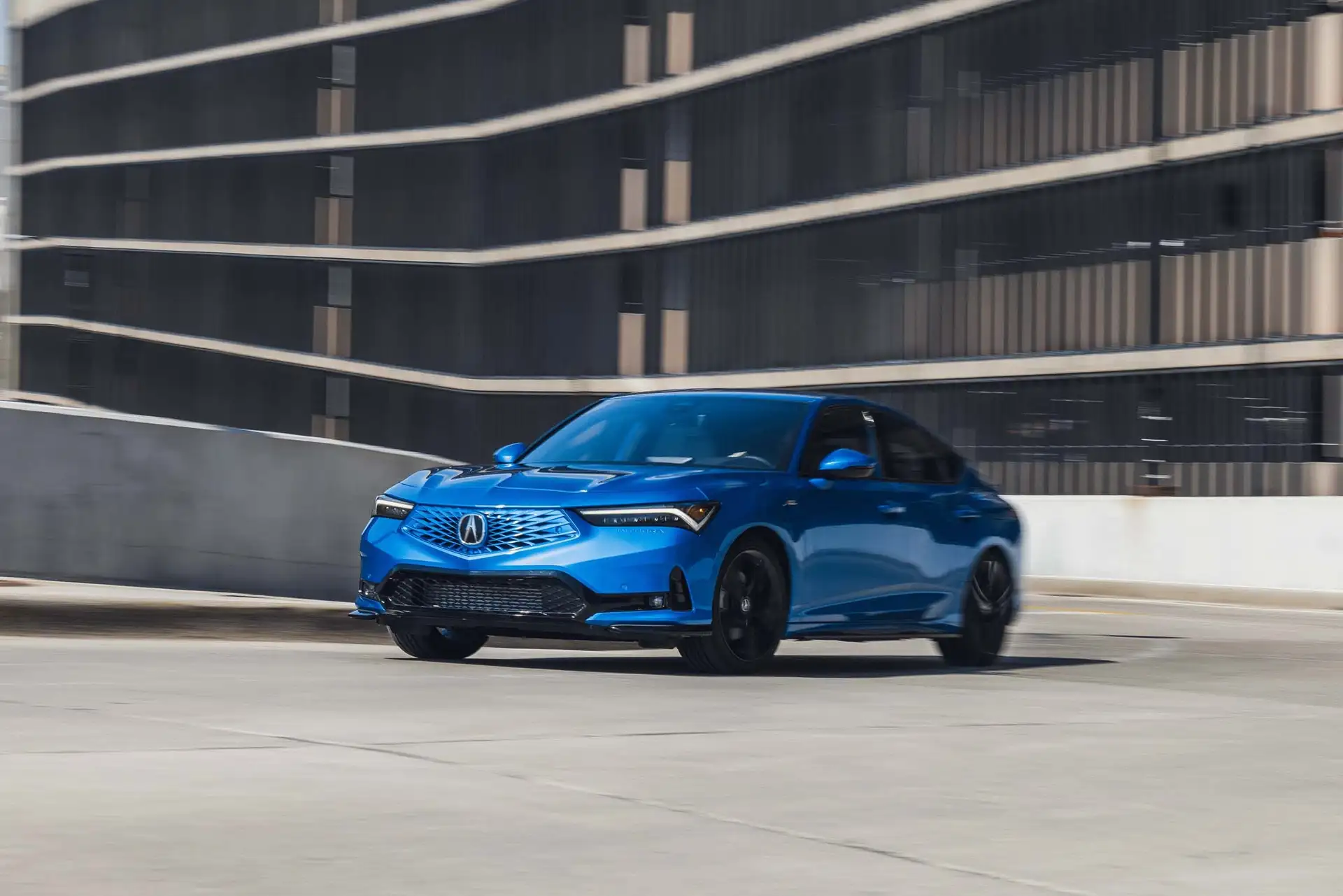
The Integra’s platform remains one of the most convincing parts of the package because Acura has resisted softening it into anonymity. The A-Spec rides on struts up front and a multilink rear suspension, with adaptive dampers helping the car cover broken pavement without giving up body control. That matters on roads like the winding coastal routes in Palos Verdes, where elevation changes, seismic cracks, and sharp pavement transitions expose lazy damping immediately. In that environment, the Integra stays composed, high enough to avoid scraping through dips and controlled enough to keep the driver focused on line choice rather than suspension rebound.
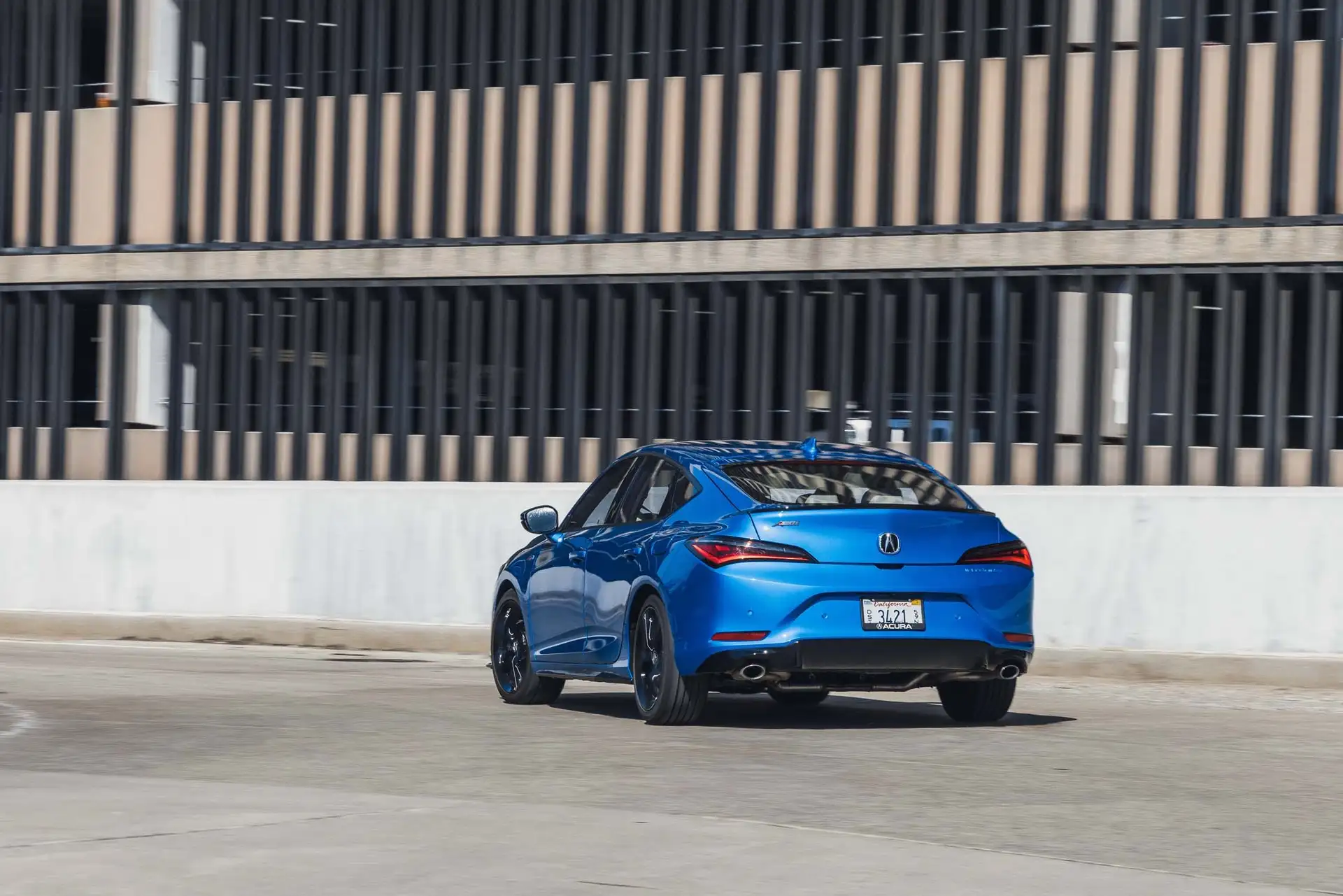
The numbers back up the feel. Our test car recorded 0.93 g on the skidpad, up from 0.88 g in a 2023 manual A-Spec, and it stopped from 70 mph in 167 feet, a meaningful improvement over the earlier test car. The Integra is not trying to imitate a hot hatch with excessive aggression; instead it aims for balance, with just a hint of understeer at the limit and enough compliance to survive the daily grind. That duality gives it a broader remit than cars that only shine in a narrow envelope, a lesson that also underpins the appeal of the Ford Ranger Raptor, even though one is a pickup and the other is a liftback.
Exterior Updates Finally Give the Integra a Clearer Face
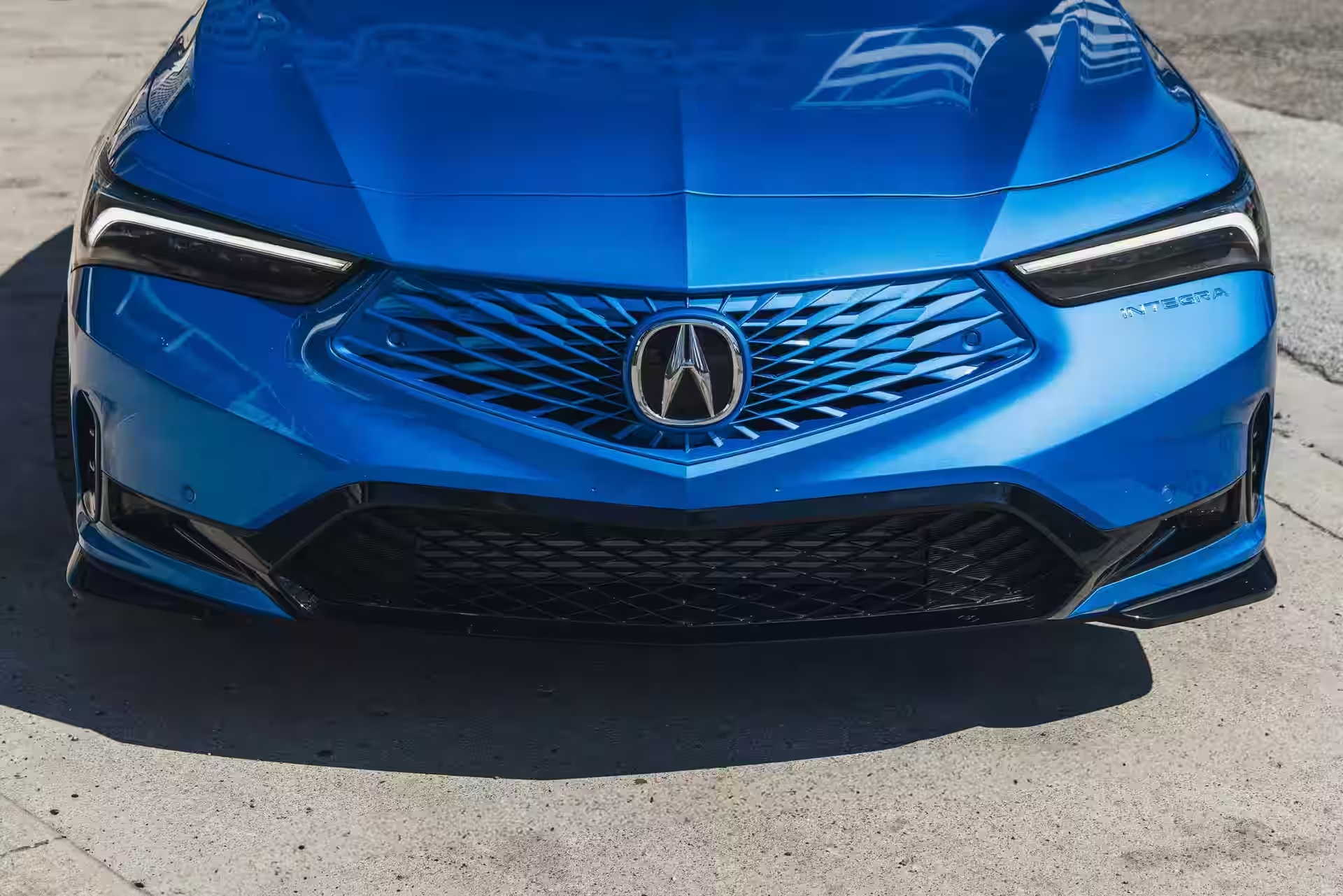
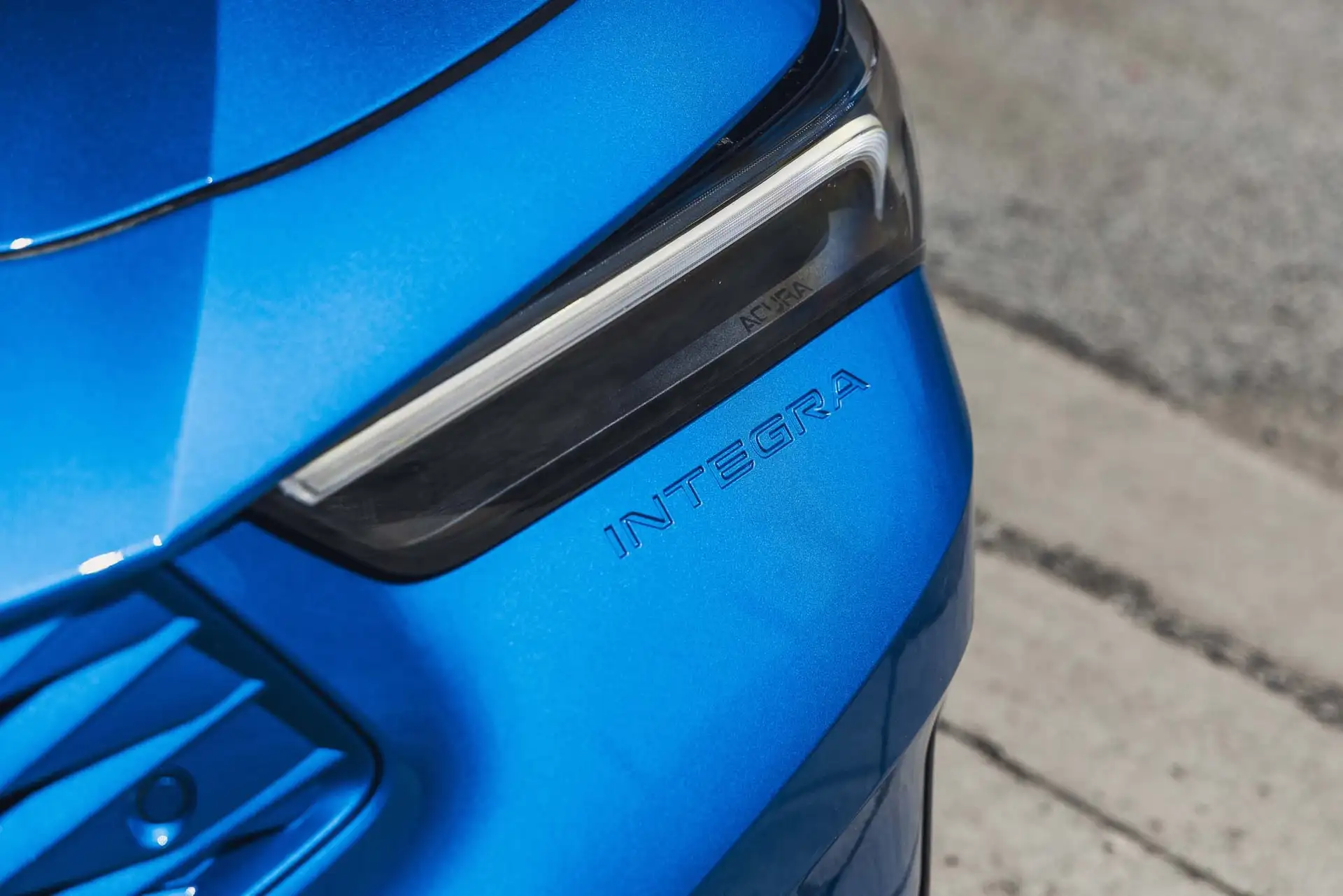
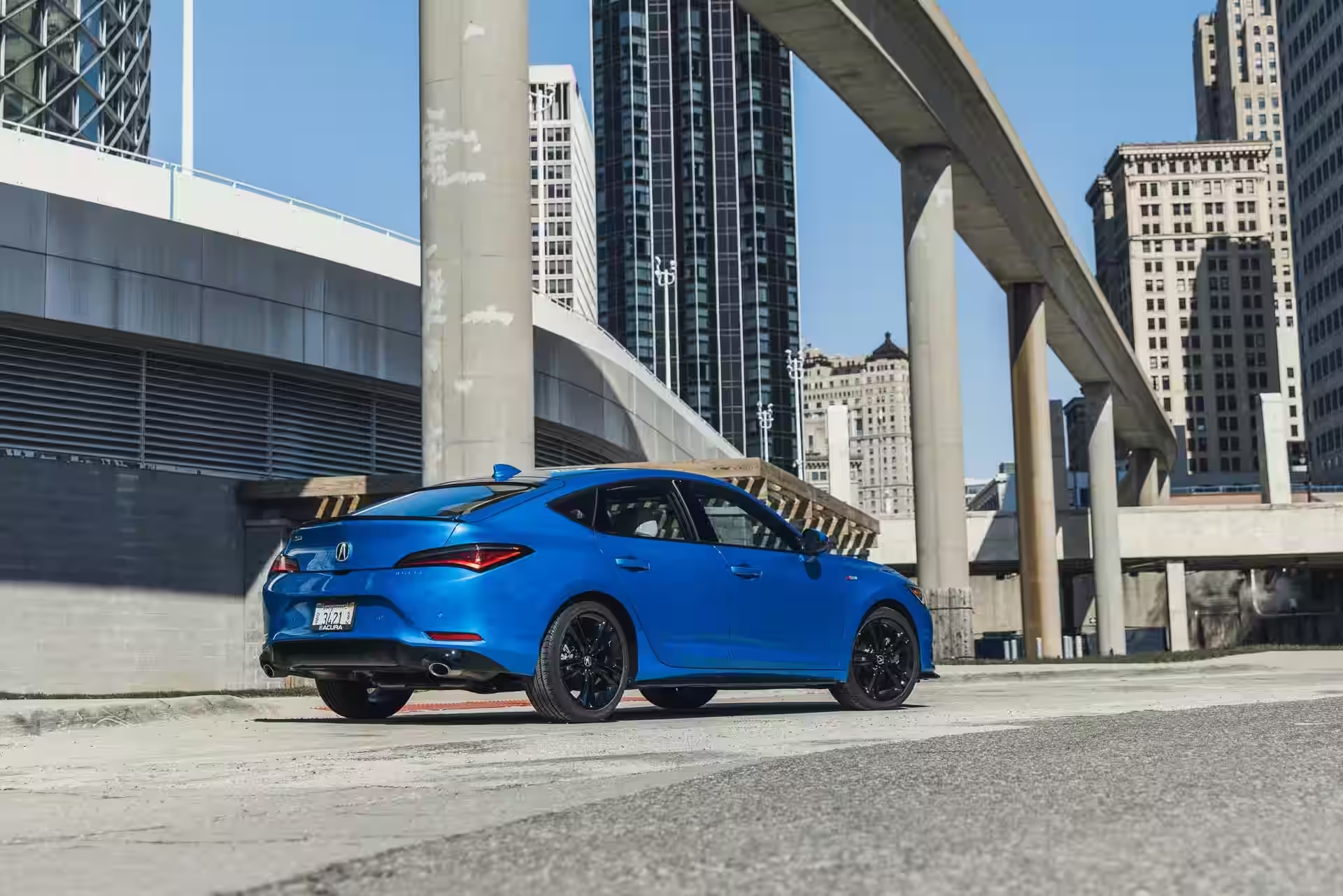
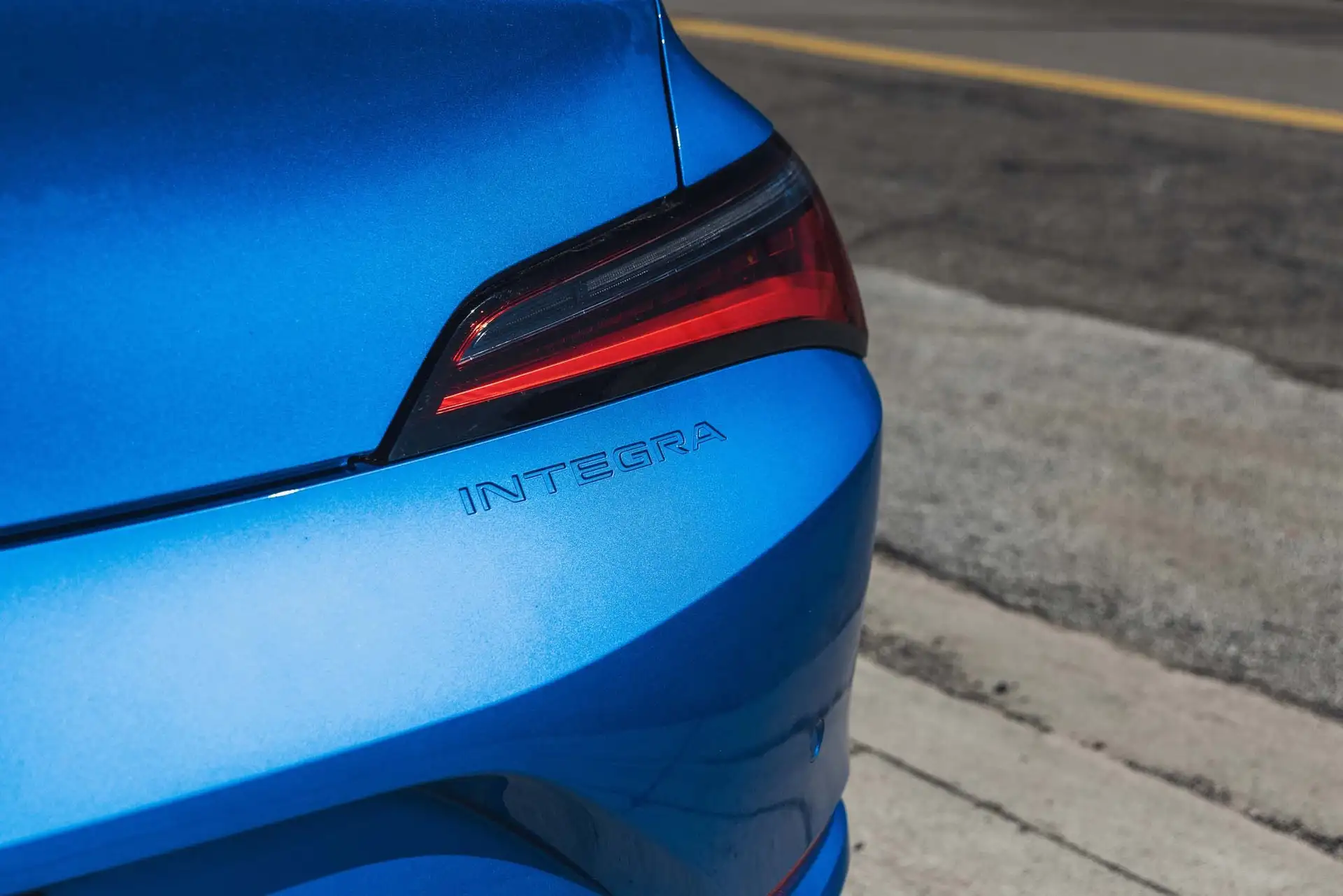
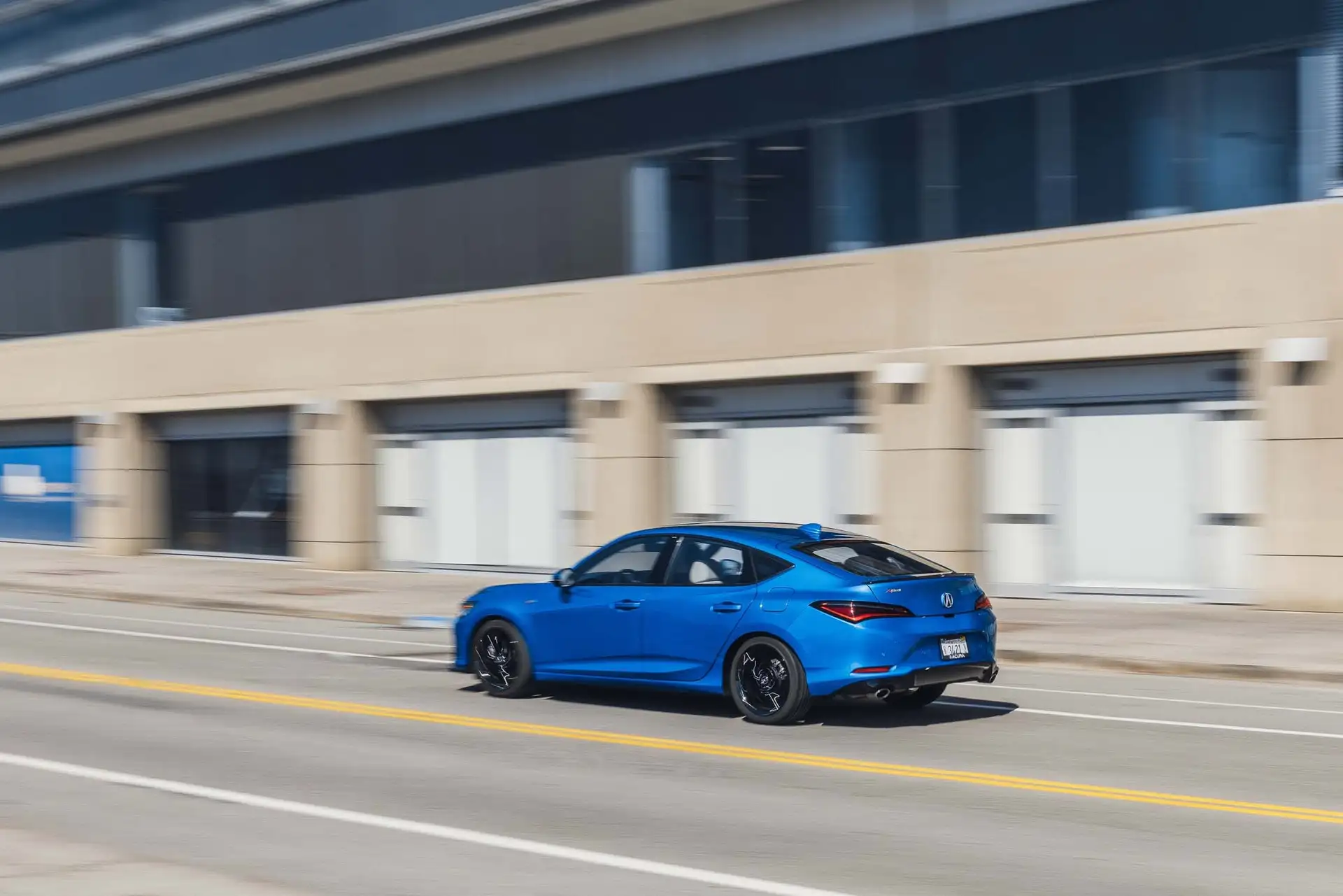
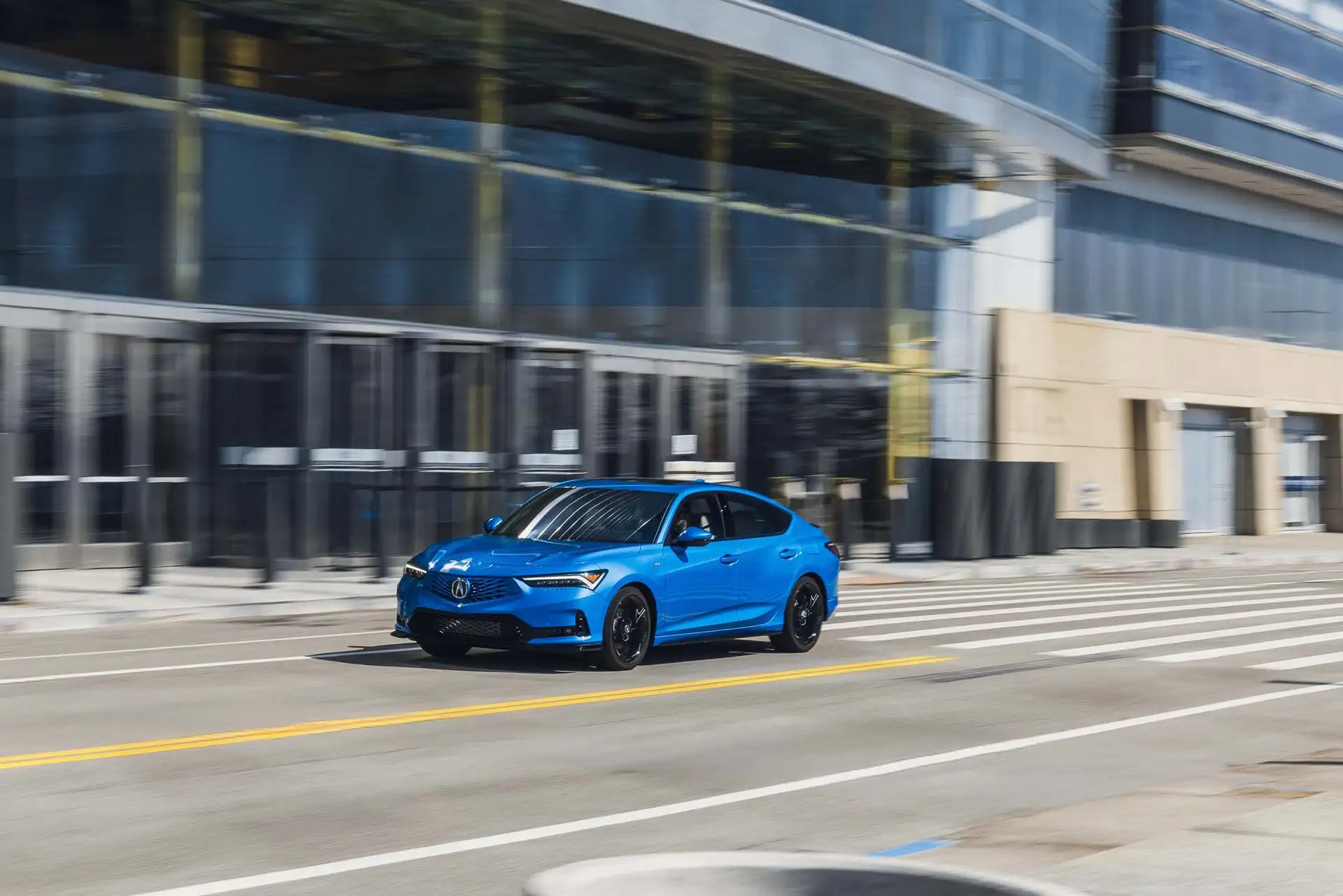
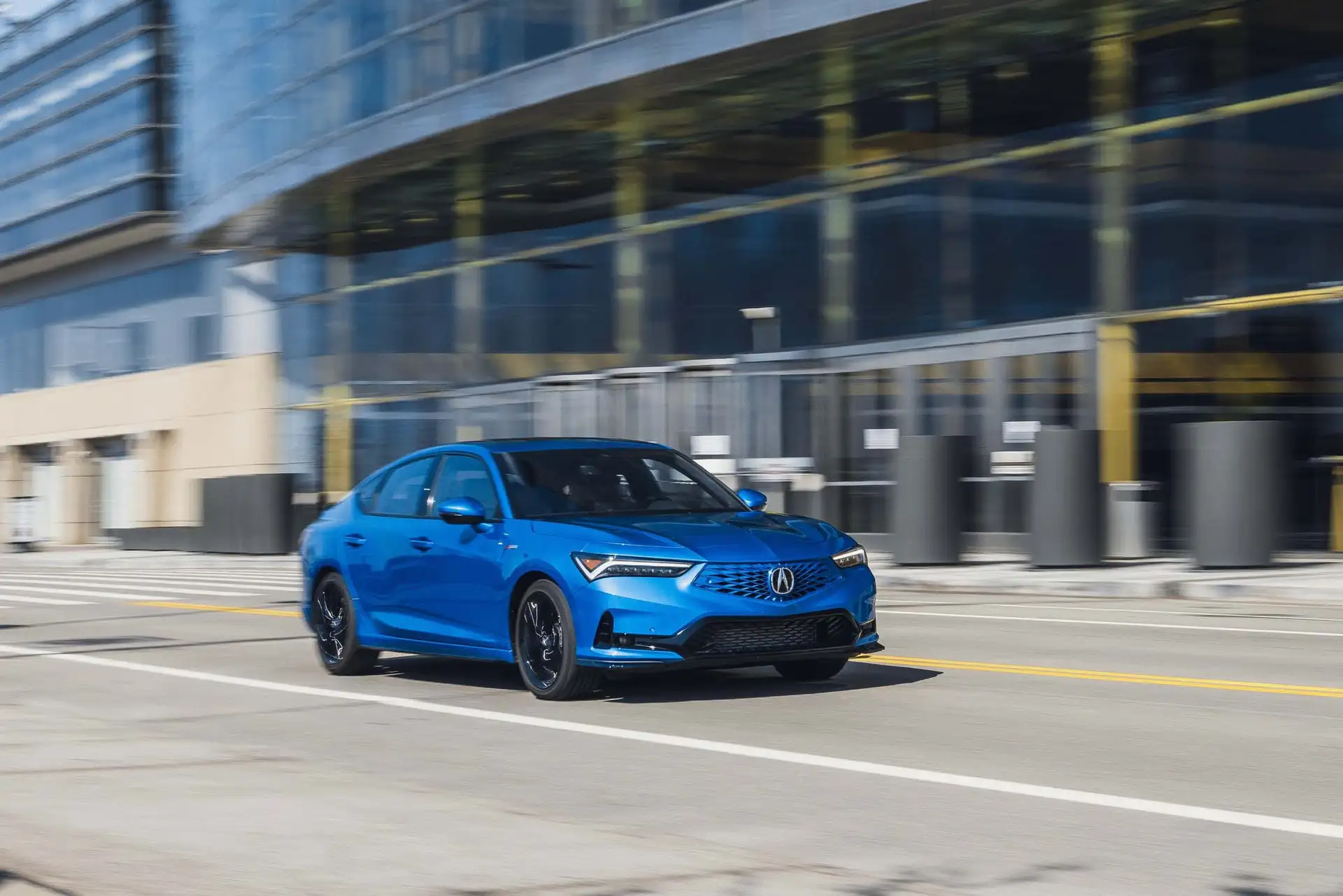
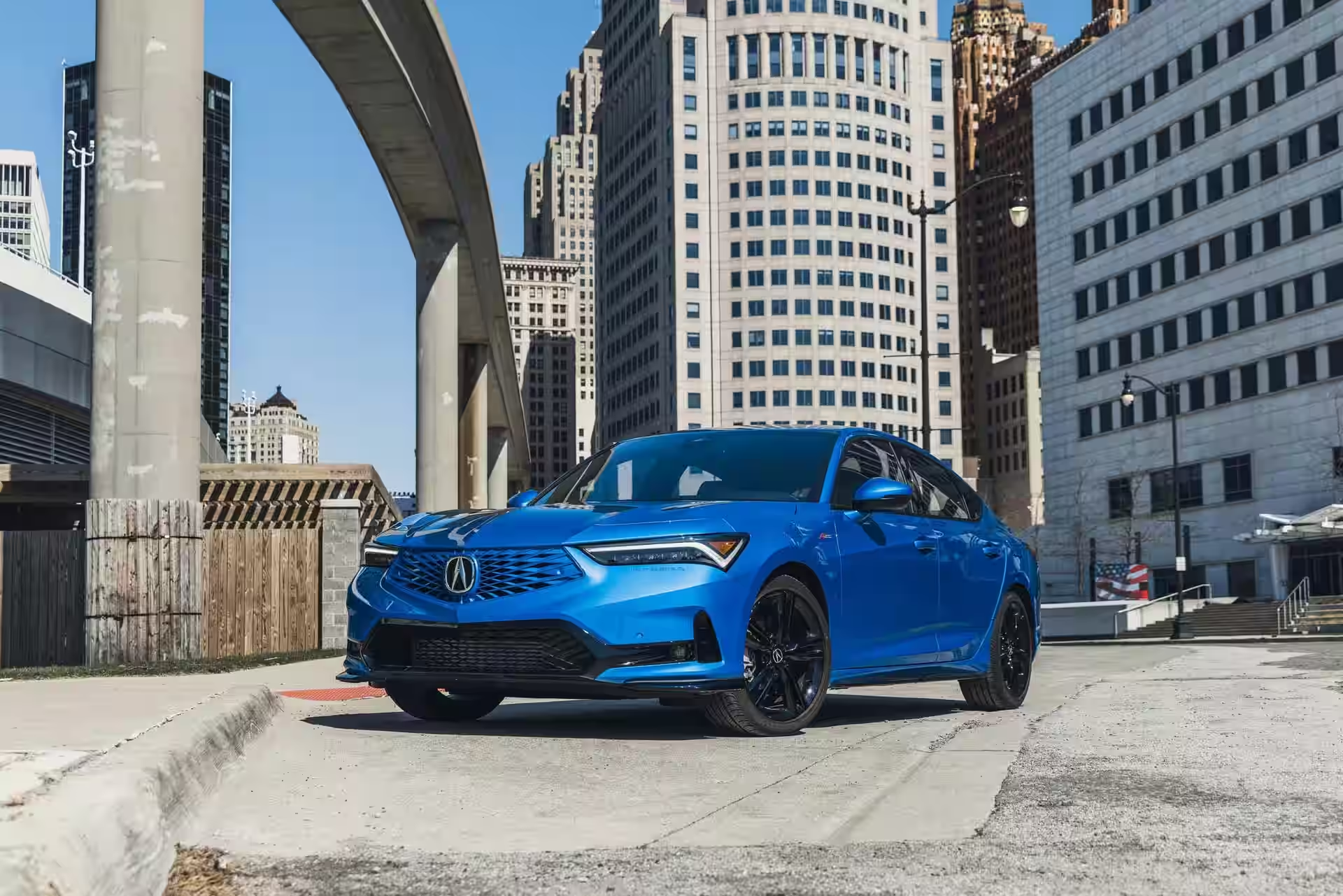
The 2026 update is most obvious from the front. On Double Apex Blue Pearl and Performance Red Pearl cars, Acura now offers a color-matched grille insert rather than the 2025 model’s gloss-black treatment. That sounds cosmetic until you see the car in person, because the color-matched nose changes the visual mass of the front end and makes the Integra read more like a standalone product. Urban Gray Pearl, Platinum White Pearl, and Majestic Black Pearl cars keep the black grille as standard, but buyers can swap in the painted version if they want a cleaner, more tailored appearance.
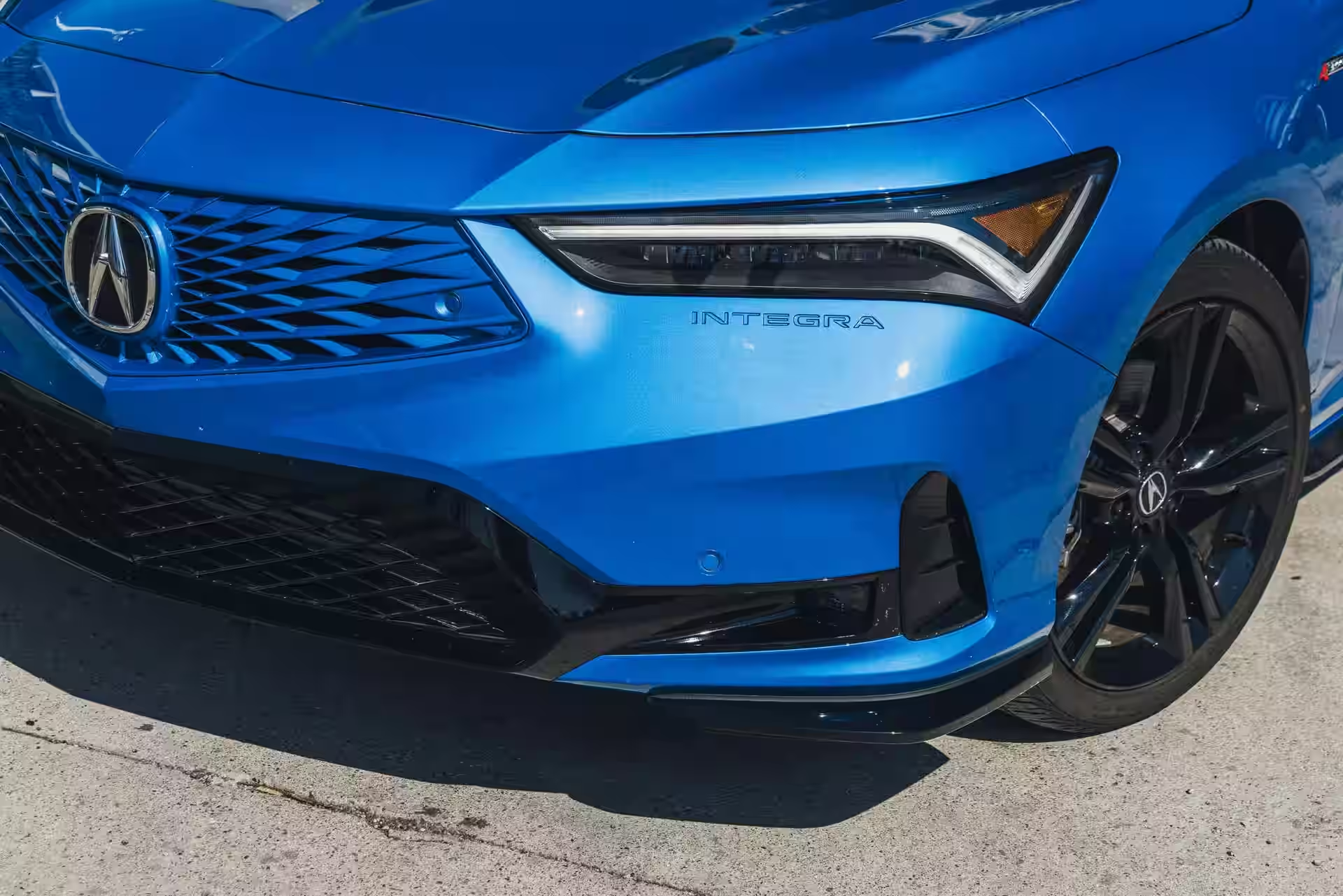
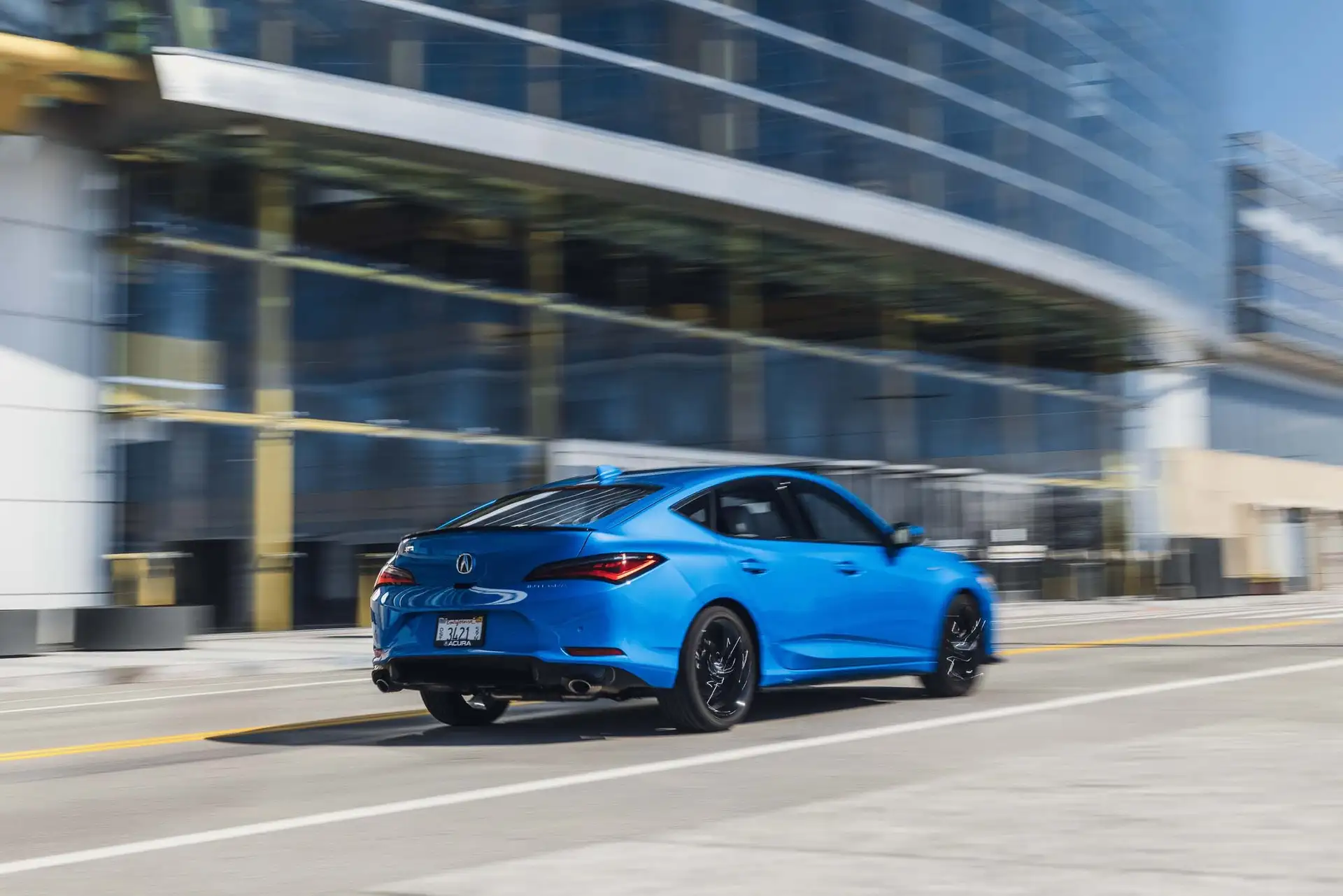
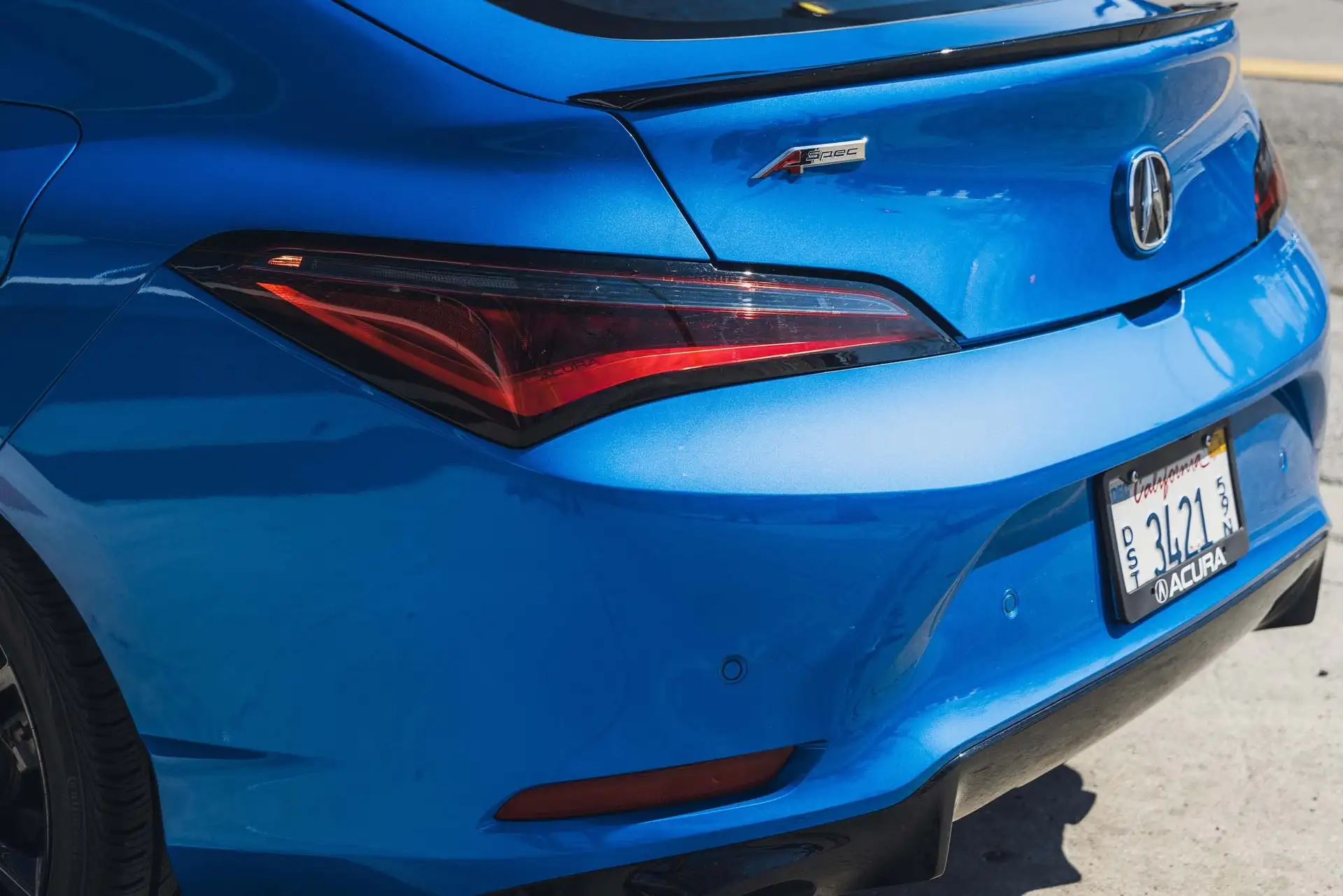
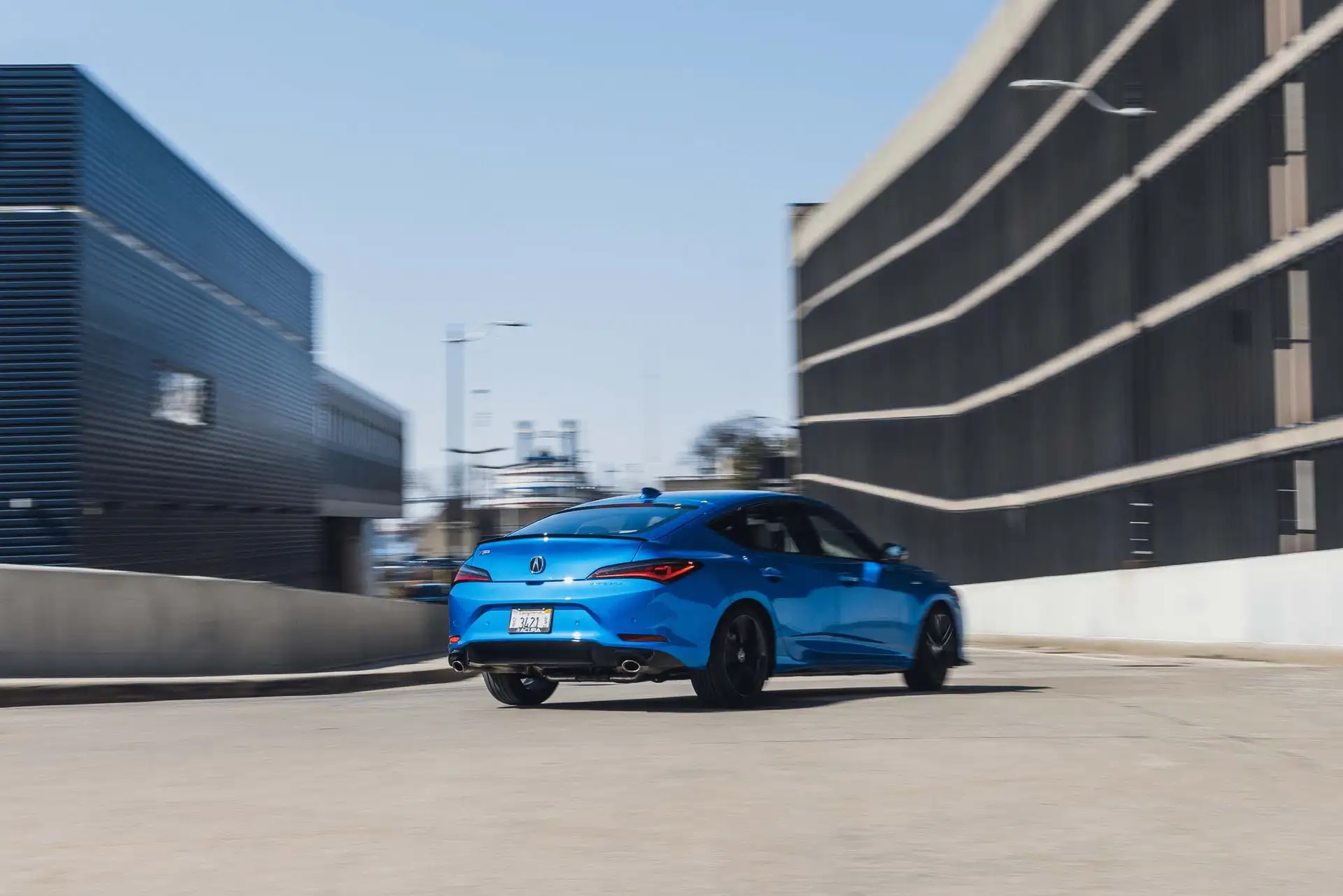
Acura also added Solar Silver Metallic to the palette and introduced new 18-inch wheel designs that sharpen the stance without making the car look overworked. On the A-Spec, a new aero body kit adds glossy black side spoilers and a subtle sill extension, pulling the lower body visually tighter to the pavement. These are not dramatic modifications, but they give the Integra a wider, more athletic posture and move it closer in attitude to the Type S without diluting the everyday usability that separates the base car from a full-bore performance variant.
Cabin Hardware and Infotainment Move the Right Direction
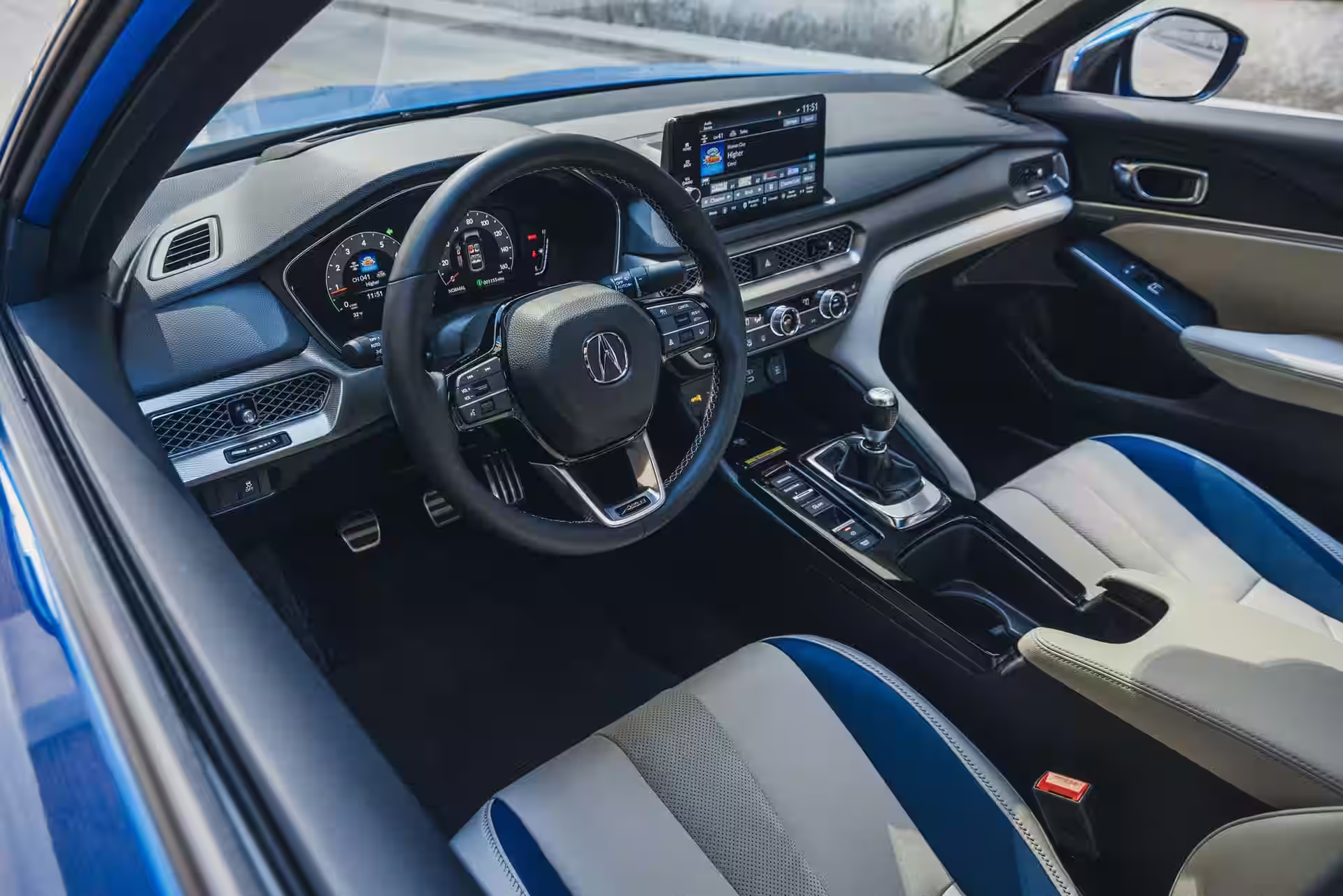
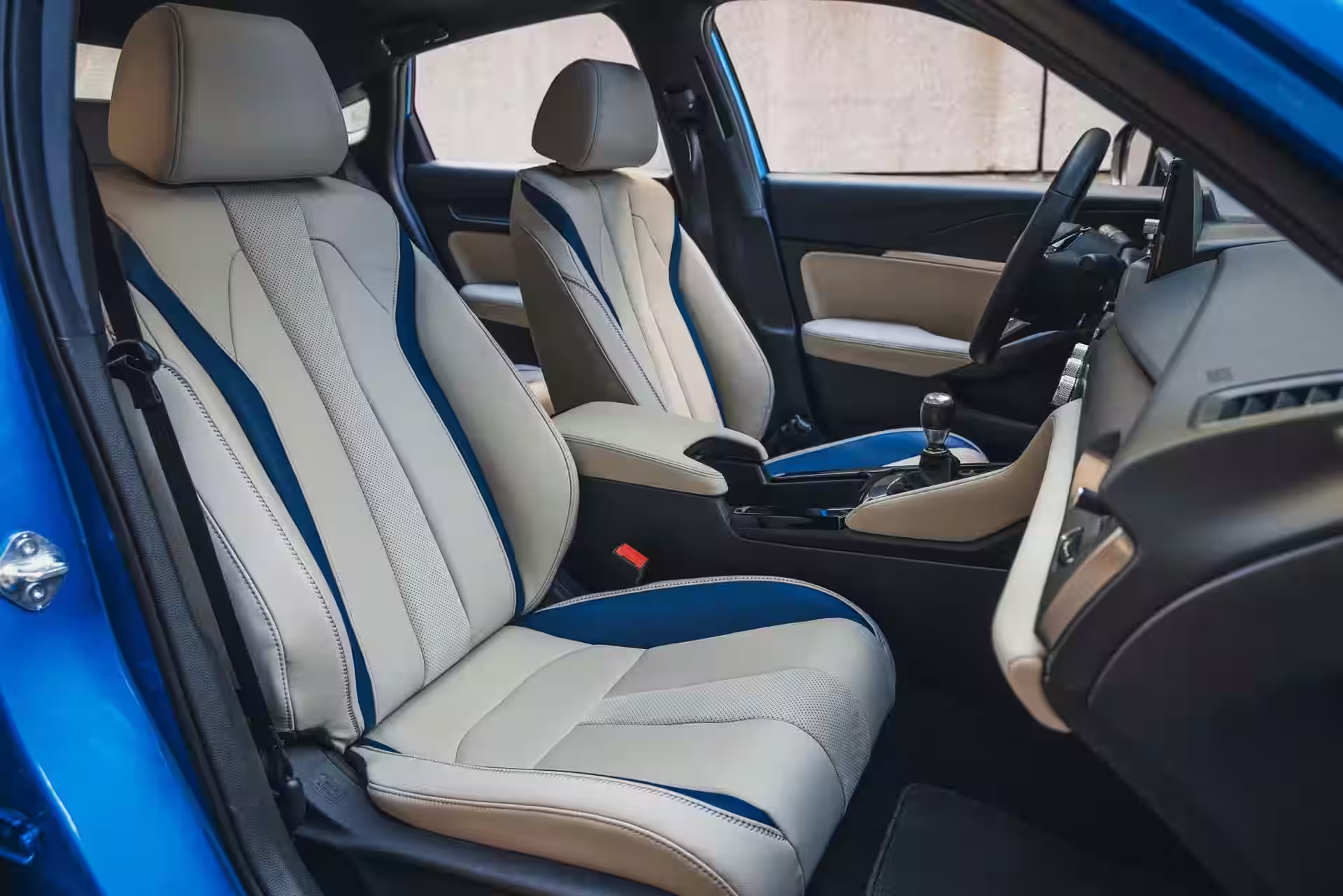
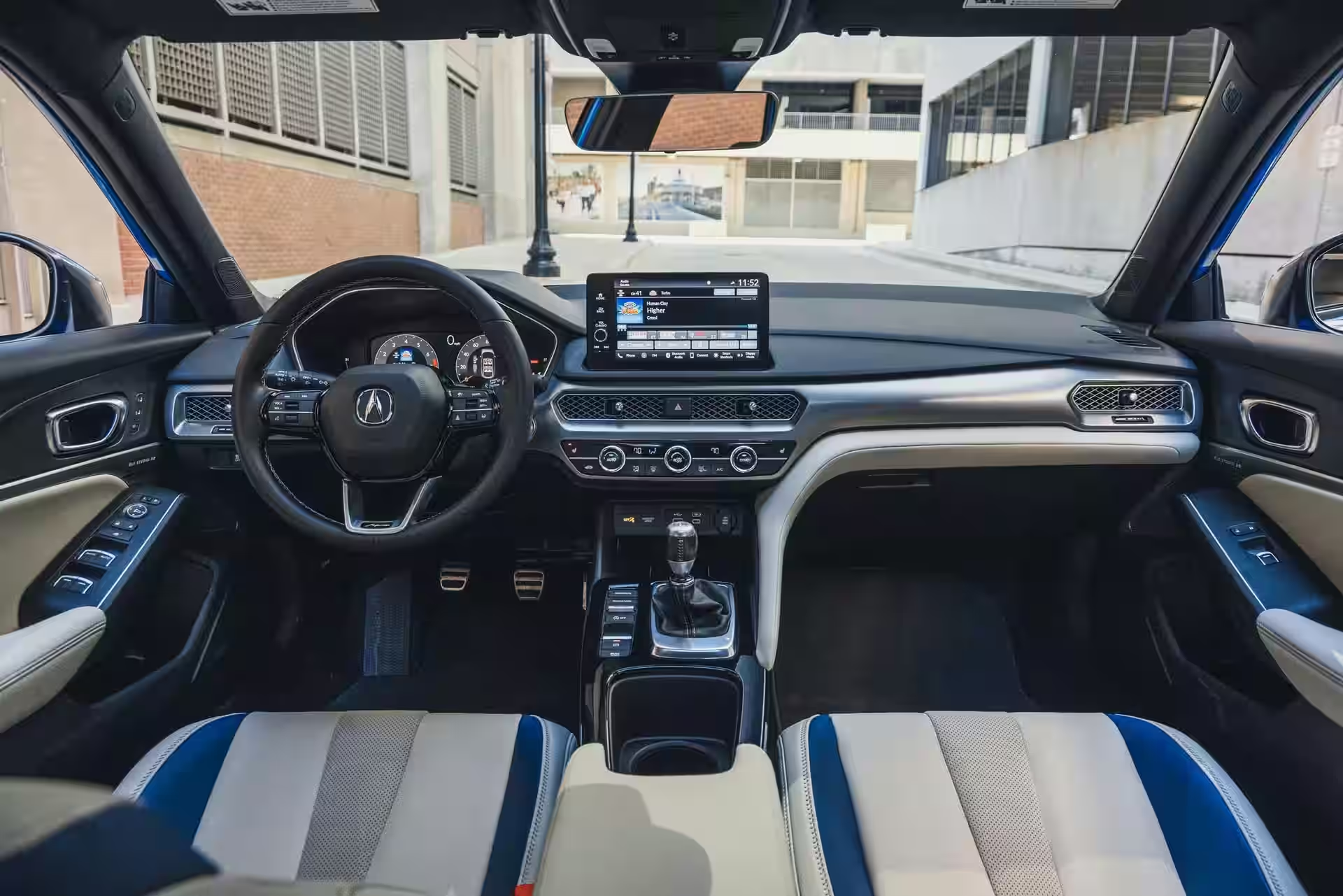
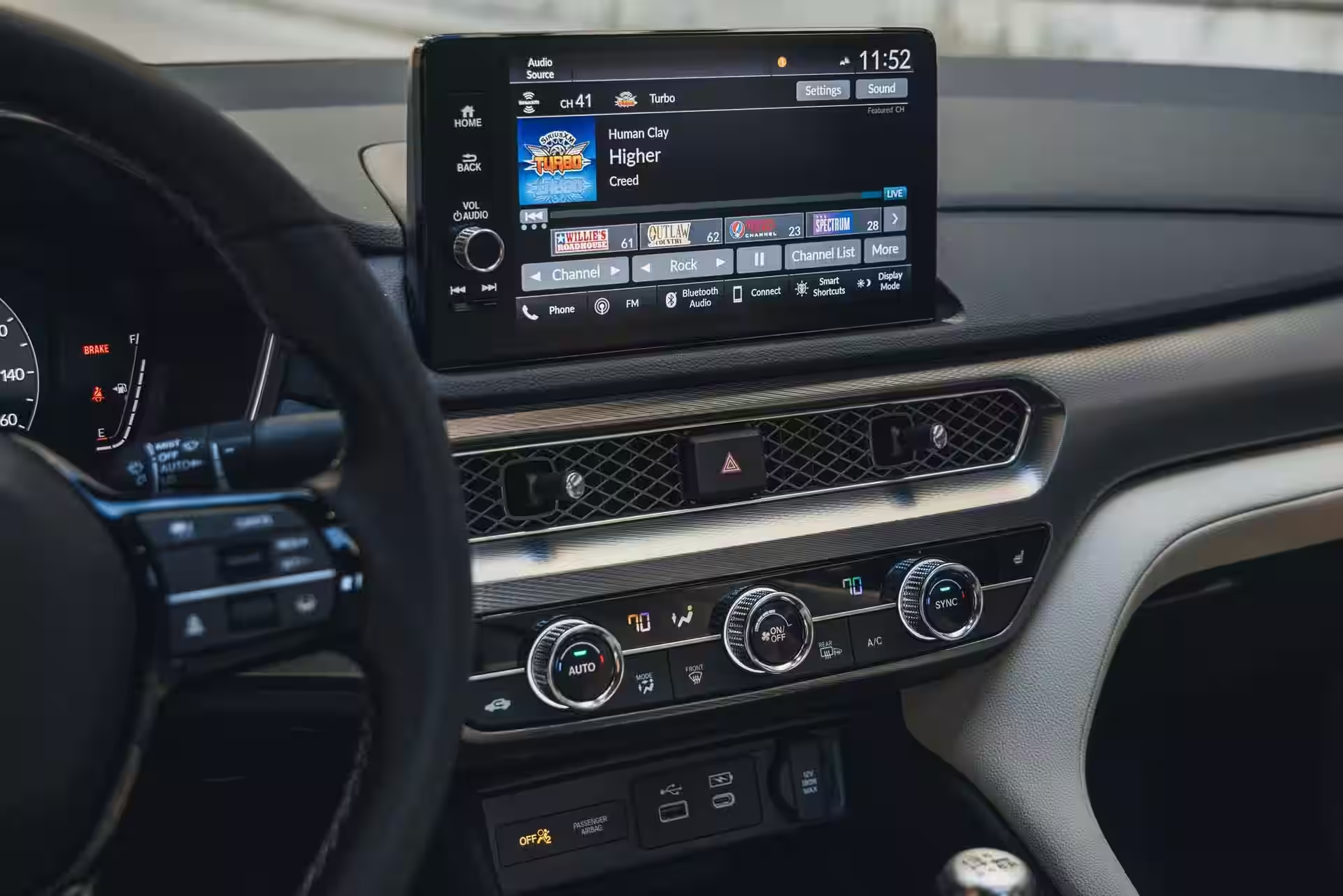
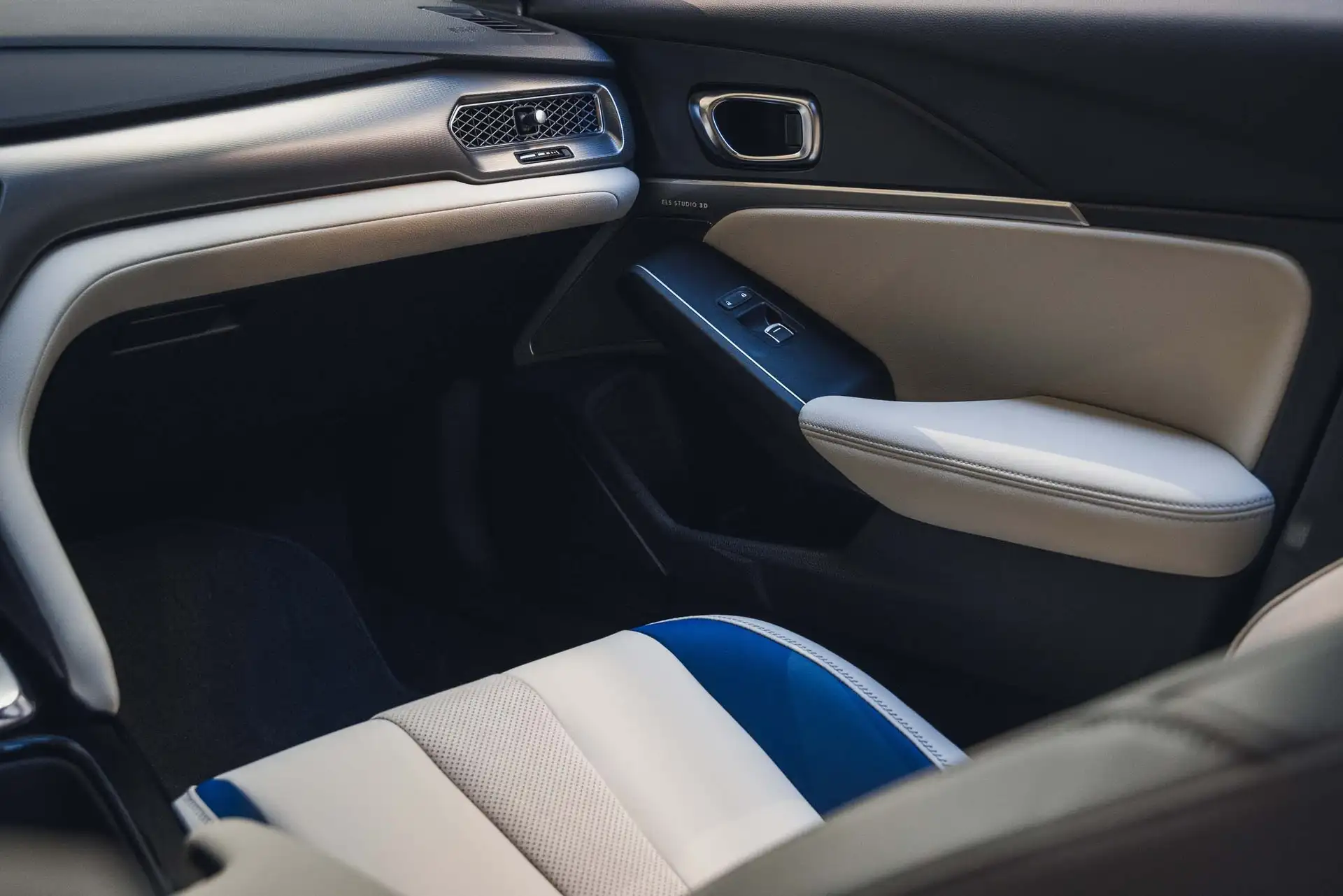
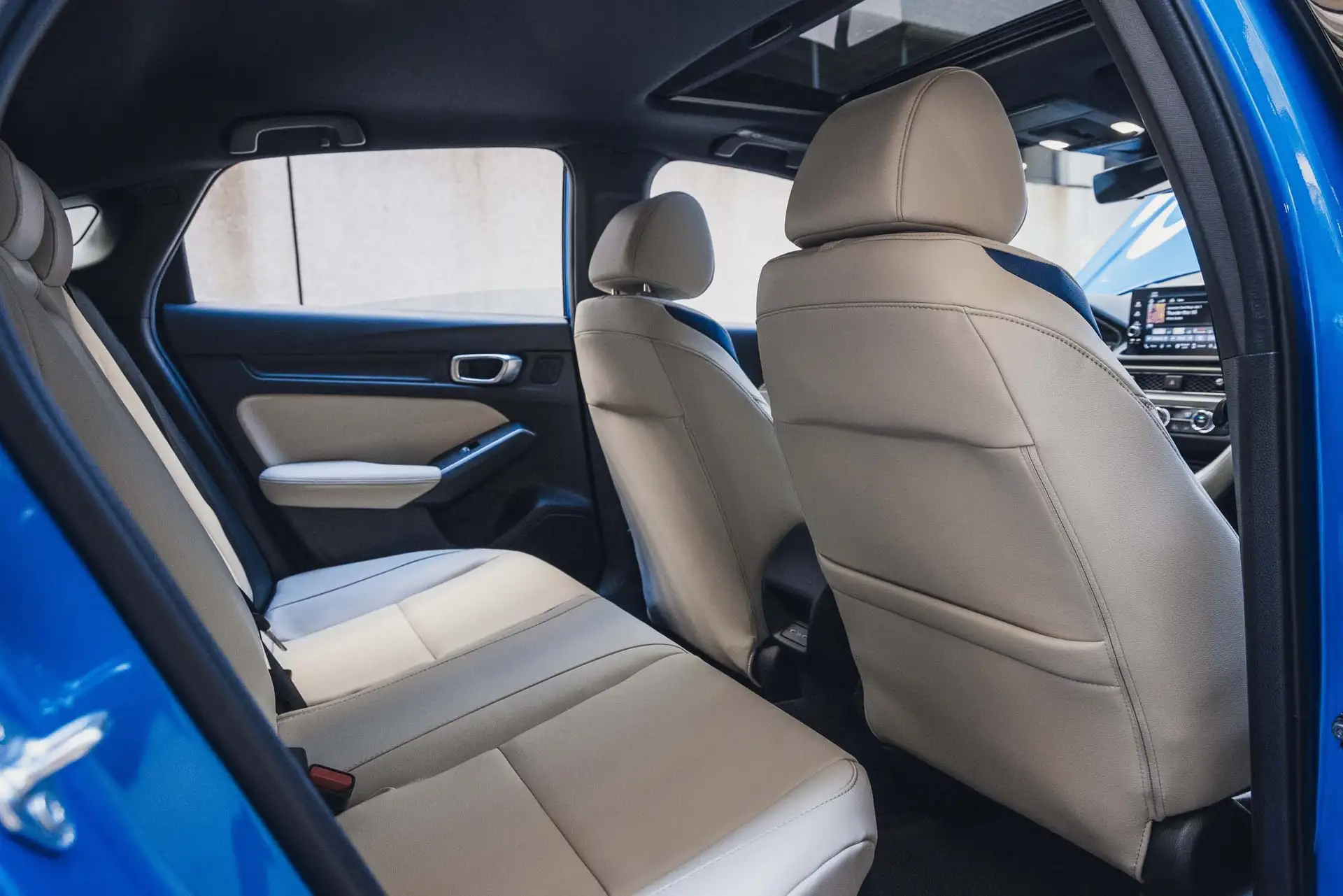
Inside, the 2026 Integra gets the most meaningful comfort-and-tech revisions of the update cycle. The A-Spec now offers three upholstery choices—black with yellow stitching, an oxblood tone, and Orchid with blue inserts—plus a new patterned dash trim that gives the cabin more depth than the 2025 model’s simpler presentation. Wireless phone mirroring and inductive charging are now included, and the 9.0-inch touchscreen replaces the previous 7.0-inch unit. That change alone should help trim the car’s “same car, more expensive badge” criticism, even if the display still feels slightly undersized because of its offset placement and the physical controls that flank it.
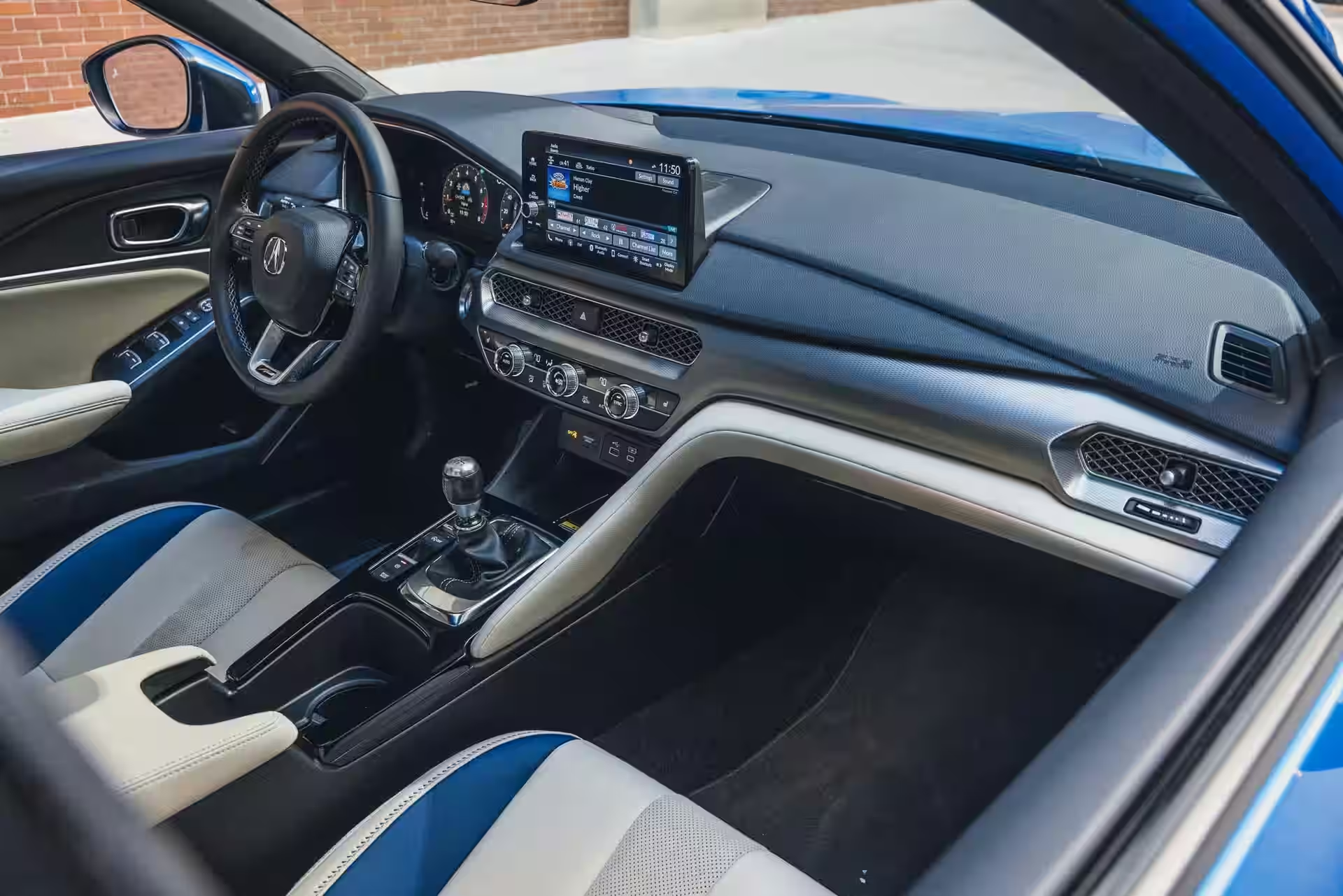
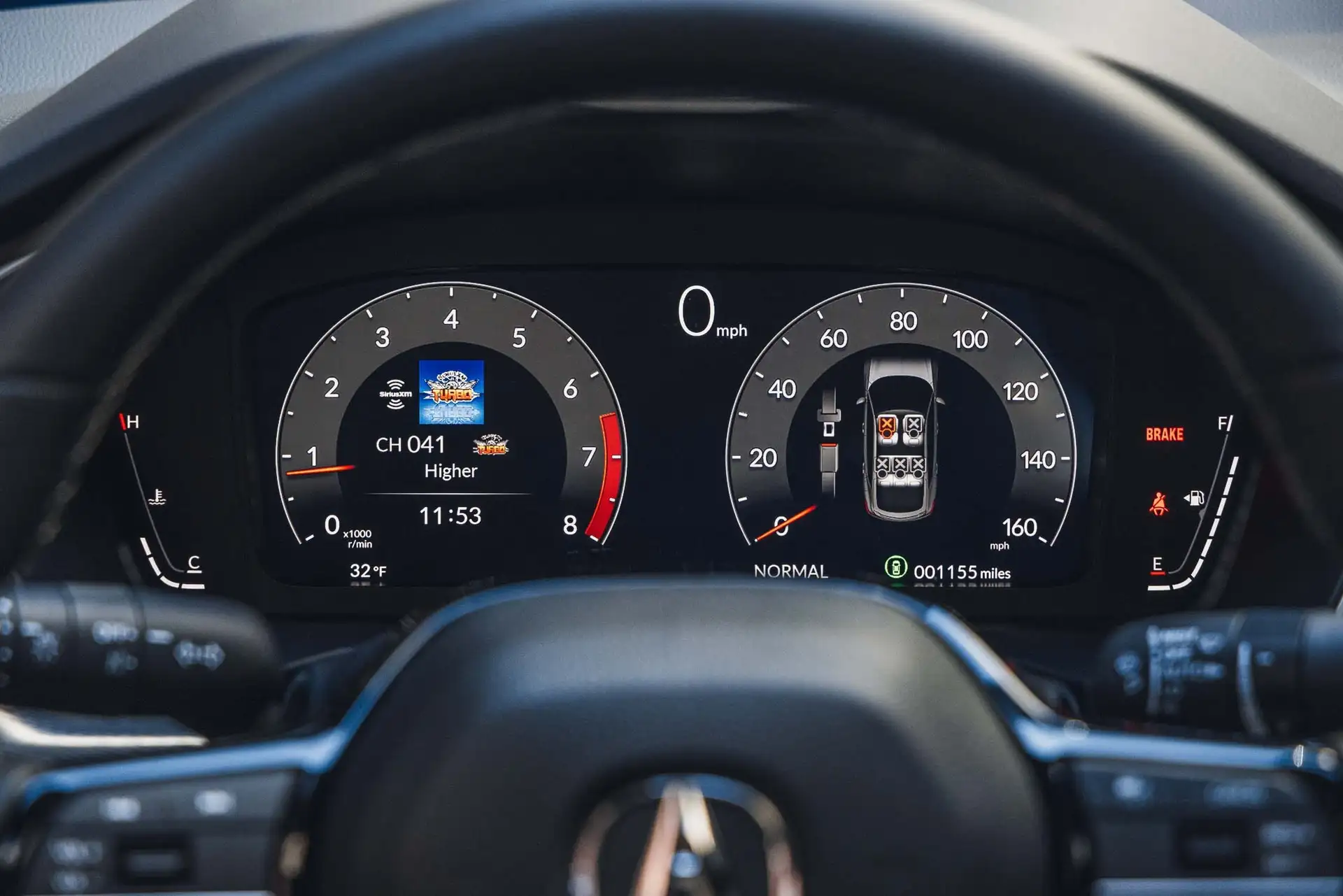
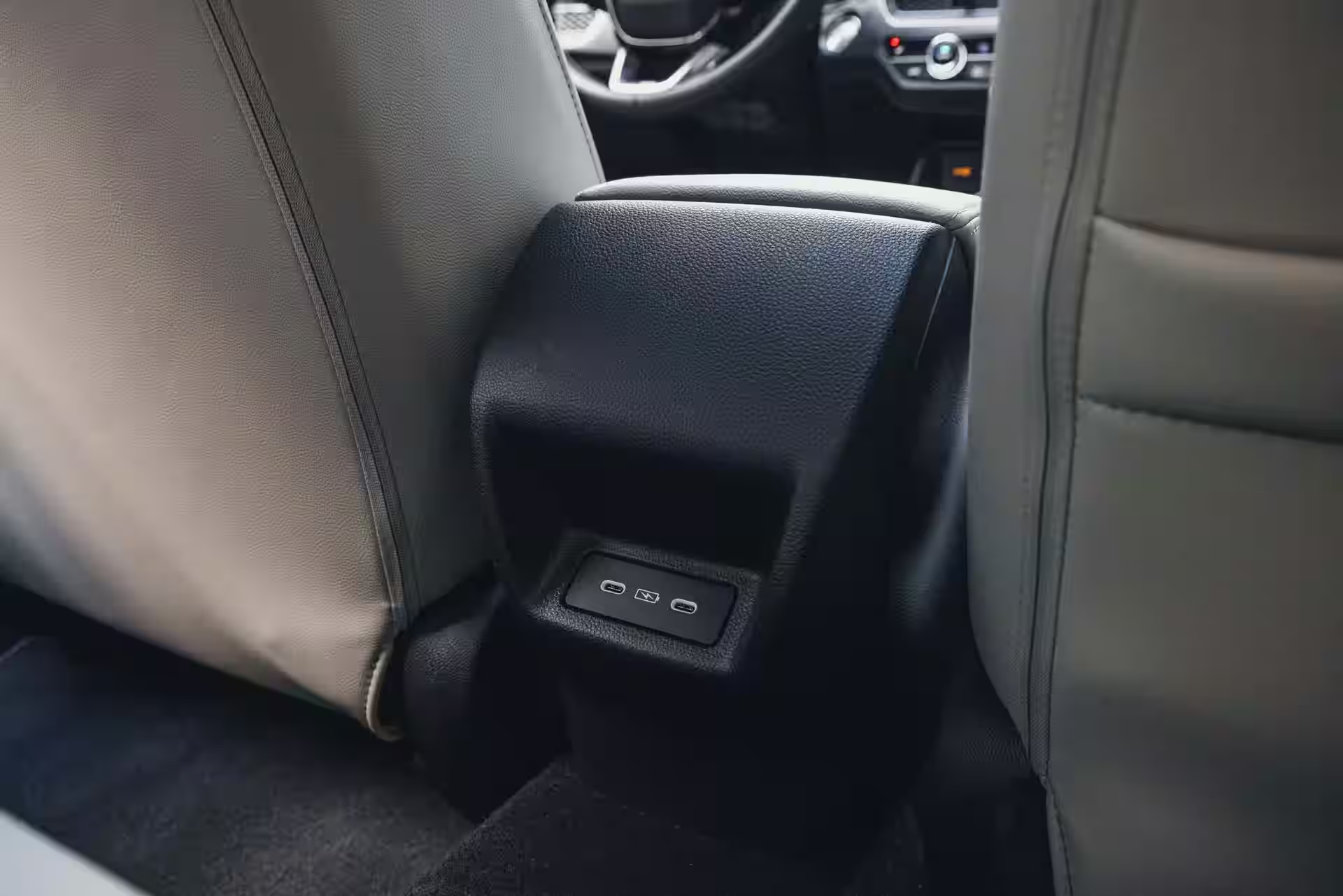
The screen is responsive and easy to navigate, but Acura still lags the sharpest displays in the segment for visual crispness. Elsewhere, the Integra remains well equipped with a standard 10.2-inch digital gauge cluster, USB-C ports front and rear, an eight-speaker audio system, and an available 16-speaker ELS Studio 3D setup in the Technology Package. If you want to see how premium brands are using digital content to change market perception, the move is philosophically similar to the Kia K8 2027 approach, where equipment density is increasingly the differentiator rather than raw power.
Space, Hatchback Utility, and the Daily-Driver Case
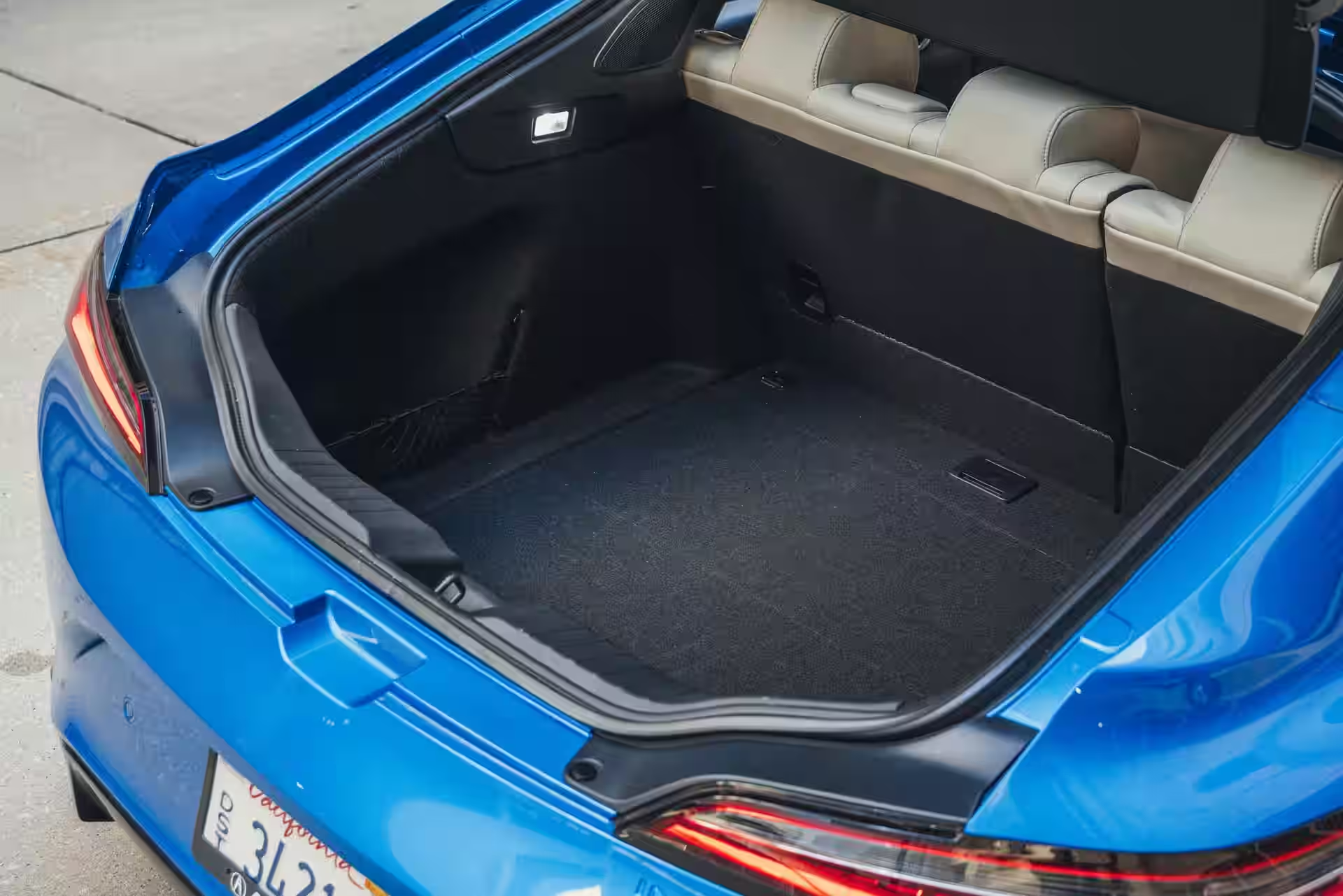
The Integra still earns its keep as a practical sport compact because it combines hatchback versatility with genuine rear-seat usability. Acura quotes 52 ft3 of front passenger volume and 43 ft3 in the rear, while cargo space measures 24 ft3, enough to handle weekend luggage, gym gear, or a full load of camera equipment without resorting to SUV logic. The rear seat is wide enough for adults and offers respectable headroom, which is not a trivial advantage in a market where many sport sedans spend more time posturing than transporting people.
That versatility is one reason the Integra remains more than a style statement. With the rear seats folded, the cargo bay becomes a long, flat load area that can swallow bulky items in a way a conventional trunk cannot. Buyers who want a similarly flexible package but with a different body style can look at the SMART #2 as a contrast in urban packaging, yet the Acura’s extra length and liftback layout make it the more convincing road-trip companion. The Integra’s 2,765 mm wheelbase and 1,830 mm width help create a stable cabin footprint, and at 1,395 mm tall it keeps the roofline low enough to preserve the car’s athletic proportions.
How the 2026 Integra Fits the Premium Compact Market
The 2026 Acura Integra is not the cheapest way into this class, and it is not trying to be. The base price remains higher than the Civic Si’s, and the gap is still large enough that every added feature has to earn its keep. Acura’s answer is to reduce the feeling of compromise: make the manual more rewarding, make the cabin more modern, make the exterior more distinct, and make the chassis feel just a bit more polished on imperfect roads. That combination gives the Integra a clearer identity than before, especially in A-Spec form with the Technology Package, where the manual transmission, 16-speaker ELS audio, and upgraded interface justify the premium more convincingly than the old 7.0-inch screen did.
From a purely rational perspective, the Civic Si still makes an excellent case for value. From an ownership perspective, the Integra now does a better job of reminding you where the extra money went. The 2026 changes are not flashy, but they are strategically placed in the exact areas that affect daily satisfaction: touchpoints, visibility, interface speed, visual distinction, and the transmission you use every time you drive. That is how Acura protects the nameplate’s relevance at 40 years old and why the Integra still feels like a car built by people who understand the difference between sufficient and satisfying.
Technical Specifications
| Specification | 2026 Acura Integra A-Spec Manual with Technology Package |
|---|---|
| Vehicle type | Front-engine, front-wheel-drive, 5-passenger, 4-door hatchback |
| Engine | Turbocharged and intercooled DOHC 16-valve inline-4, aluminum block and head, direct fuel injection |
| Displacement | 1,498 cm3 |
| Power | 200 hp |
| Torque | 192 lb-ft (260 Nm) |
| Transmission | 6-speed manual |
| Front suspension / rear suspension | Struts / multilink |
| Front brakes / rear brakes | 12.3-in vented disc / 11.1-in disc |
| Tires | 235/40R-18 Continental ContiProContact M+S |
| Wheelbase | 2,735 mm |
| Length | 4,724 mm |
| Width | 1,830 mm |
| Height | 1,410 mm |
| Curb weight | 1,396 kg |
| 0–60 mph | 6.8 sec |
| Quarter-mile | 15.0 sec at 95 mph |
| Braking, 70–0 mph | 167 ft |
| Skidpad | 0.93 g |
| Observed fuel economy | 27 mpg |
| 75-mph highway fuel economy | 40 mpg |
| EPA fuel economy | 30 mpg combined / 26 mpg city / 36 mpg highway |
Verdict The Integra Is Better Because It Sweats the Small Stuff
The 2026 Acura Integra succeeds by concentrating on the areas owners notice every day: transmission feel, interface quality, visual distinction, and suspension polish. It does not need more horsepower to become more compelling; it needs a better argument for why it exists, and Acura has made that argument stronger with a smarter grille, better cabin tech, improved wheel-and-body details, and a manual that still feels like a genuine enthusiast choice. The result is a premium compact hatchback that can handle commuting, back-road driving, and long-distance travel without losing its manners or its identity.
If the previous Integra sometimes felt too close to the Civic Si for comfort, the 2026 model finally starts to reclaim its own space. It is still not the cheapest answer in the class, but it now looks, feels, and behaves like a product that understands its audience. That is the kind of update that does not shout across a parking lot; it earns loyalty over years and miles. In a market crowded with louder ideas, that restraint may be the most premium feature of all.