
Factory rating vs real wheels. FORD MUSTANG DARK HORSE showed 420 to 465 whp on four dynos. What does 500 HP really mean? Discover now!

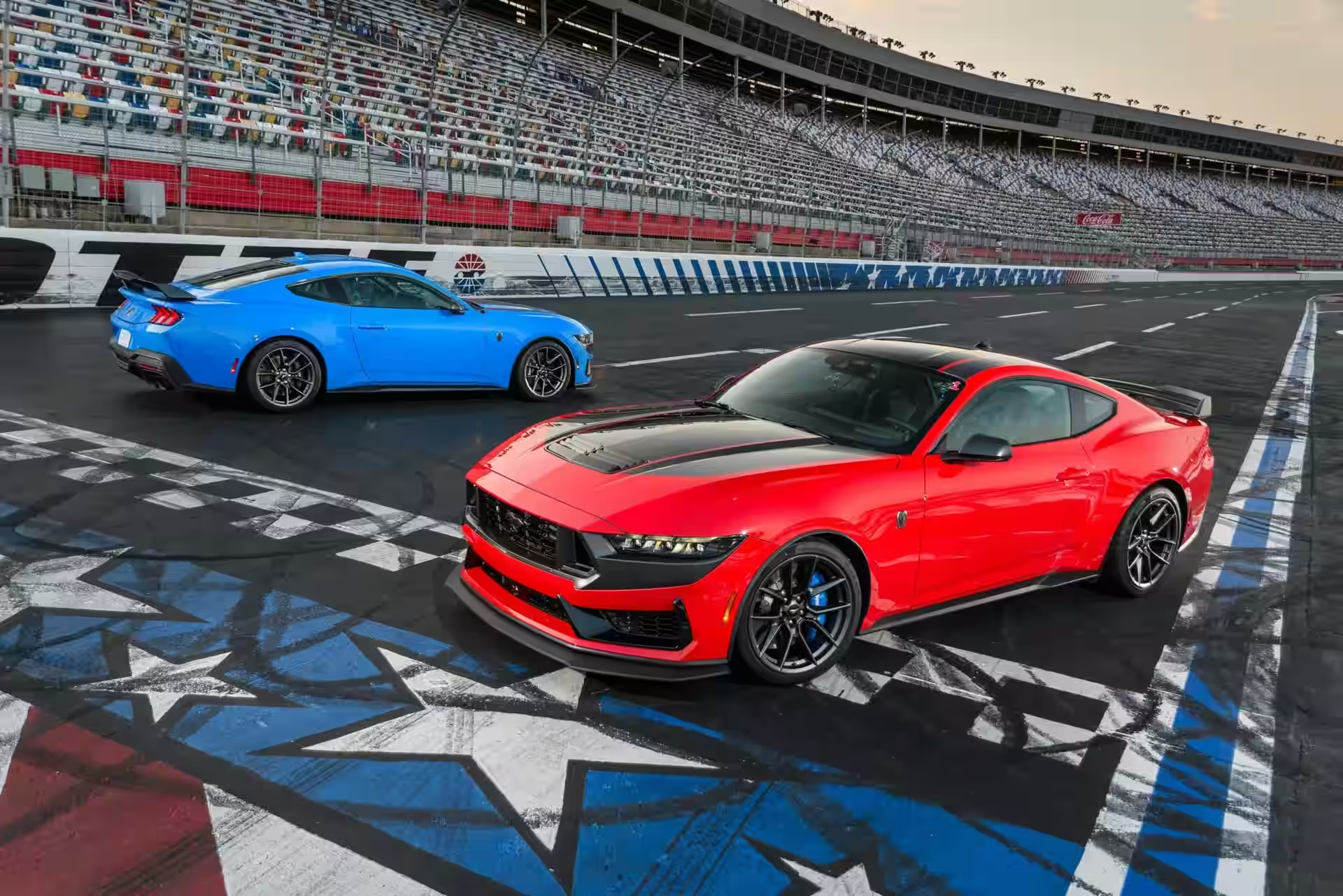
The FORD MUSTANG DARK HORSE is officially a 500-hp V8 coupe, but one real-world experiment proved that number can look radically different the moment the car touches a dyno.
Why The FORD MUSTANG DARK HORSE Delivered Four Different Power Numbers
Horsepower is one of the most powerful numbers in the automotive world. It sells sports cars, justifies price tags, wins internet arguments, and gives enthusiasts a clean way to compare machines on paper. In the case of the FORD MUSTANG DARK HORSE, Ford’s official claim is straightforward enough: 500 hp and 418 lb-ft from a naturally aspirated 5.0-liter Coyote V8.
On paper, that sounds definitive. In practice, it is not.
A recent multi-dyno comparison involving the same Mustang Dark Horse showed just how slippery the idea of “real horsepower” can be. The same car, with the same fuel, same configuration, and comparable testing conditions, reportedly produced results ranging from about 420.8 wheel horsepower to 465 wheel horsepower depending on which chassis dyno measured it. That is a spread of more than 44 hp at the wheels, large enough to completely change how owners, tuners, and buyers interpret Ford’s official rating.
To understand why that matters, it helps to separate two terms that are often mixed together in online discussions:
- Crank horsepower is the power measured at the engine before drivetrain losses.
- Wheel horsepower, or whp, is what actually reaches the tires after the transmission, driveshaft, differential, and other components absorb part of that power.
Automakers typically advertise crank horsepower. Dynos used by enthusiasts and tuning shops usually show wheel horsepower. That difference alone explains part of the gap. But the Dark Horse test shows something more important: even wheel horsepower itself is not a fixed universal truth.
Ford’s official specs for the Dark Horse are credible within the standard framework manufacturers use. The car’s fourth-generation 5.0-liter Coyote V8, unique tuning, dual throttle body setup, forged connecting rods, and performance-focused cooling upgrades all support its flagship status within the naturally aspirated Mustang range. But the minute enthusiasts try to translate those 500 hp into a wheel number, the argument becomes messy.
This is also why modern performance headlines should always be read with context. A claimed gain of 10 hp or 15 hp can sound dramatic, yet in the real world that difference may get swallowed by dyno type, tire setup, correction standards, or ambient temperature. That is the same kind of confusion that appears whenever manufacturers push incremental upgrades, just as buyers often debate whether small bumps in output are meaningful in cars like the Volkswagen Golf R 2026 with 328 hp.
For enthusiasts, the main lesson is simple. Horsepower is real, but the number you see is only as useful as the method used to measure it.
What A Dyno Actually Measures And Why Results Can Swing Wildly
A dynamometer, or dyno, is often treated like a truth machine. Strap the car down, do a pull, and the graph tells the story. But different dynos work in different ways, and each one can produce a legitimate yet different interpretation of the same car’s output.
In the Dark Horse comparison, four dynos in Southern California reportedly returned four separate answers:
| Dyno Type / Shop | Wheel Horsepower | Wheel Torque | General Reputation |
|---|---|---|---|
| SuperFlow at Westech Performance | 420.8 whp | 367.2 lb-ft | Lower-reading, often called a “heartbreaker” |
| Dynojet at HK MotorSports | 425.7 whp | Noted as mid-pack | Popular benchmark dyno in enthusiast circles |
| Dynapack hub dyno at Bisimoto Engineering | 430.9 whp | Mid-range result | Hub-mounted, removes some tire-related variables |
| Mustang AWD dyno at World Motorsports | 465 whp | 388 lb-ft | Higher-reading setup in this test |
That spread looks dramatic because it is dramatic. But it does not automatically mean one dyno was “lying” and another was “correct.” It means dynos are tools, not divine judges.
The Biggest Reasons Dyno Numbers Change
- Dyno design
Inertia dynos, load-bearing dynos, hub dynos, and AWD dynos can all load the drivetrain differently. The resistance model changes the result. - Tire and roller interaction
On a chassis dyno, tire pressure, tire compound, strap tension, and even how the car is secured can influence the reading. - Weather correction factors
Air temperature, humidity, and barometric pressure alter engine performance. Correction formulas attempt to normalize this, but different standards can change the final figure dramatically. - SAE vs STD corrections
The correction method matters. A dyno graph using SAE correction may read differently from one using STD, even for the same run. - Heat soak
A cool morning pull is not the same as an afternoon session after repeated runs. Intake air temperature can pull power down quickly. - Transmission gear selection
Pulling in the wrong gear can affect measured output and consistency.
One of the most eye-opening details from the wider dyno discussion is that correction settings alone can alter a result by nearly 100 hp in extreme examples. That sounds absurd until you remember a dyno sheet is not just raw measurement. It is also a calculation layered on top of a measurement.
This is why experienced tuners rarely worship a headline number. They focus on delta, the gain before and after a modification on the same dyno, under as similar conditions as possible. If a baseline pull shows 425 whp and the car later makes 455 whp on the same setup, that 30-hp improvement is far more useful than comparing two random dyno sheets from opposite sides of the country.
That mindset applies far beyond Mustangs. It is equally relevant when evaluating high-output machines that make bold claims, from hypercars to restomods such as the AUDI UR-QUATTRO restomod with 600 hp, where the number matters less than how repeatable and usable the performance truly is.
Dyno sheets are best used as comparison tools, not religious documents.
What 500 HP Really Means For Buyers, Tuners, And Mustang Fans
The FORD MUSTANG DARK HORSE remains exactly what Ford says it is: a factory-rated 500-hp performance Mustang positioned above the Mustang GT and below more specialized halo variants. It uses a naturally aspirated V8 in an era where turbocharging and electrification dominate, and that alone gives it a distinct identity.
But the dyno experiment changes how smart buyers should interpret that factory number.
If you expected a Dark Horse to always land around one exact wheel horsepower figure, this test is a reality check. Assuming a traditional drivetrain loss of roughly 12 to 15 percent, many enthusiasts would estimate a 500-hp Mustang should show around 425 to 440 whp. That estimate is not unreasonable. Yet the dyno spread demonstrates that real-world readings can be lower or higher without necessarily proving anything scandalous about Ford’s advertised output.
In other words, if one owner posts a 421-whp dyno sheet and another posts 465 whp, neither result automatically invalidates the other. The smarter question is:
What dyno was used, under what conditions, with what correction method, and for what purpose?
This distinction matters even more in an era where enthusiasts increasingly compare naturally aspirated performance cars with boosted rivals. It also affects resale discussions, tuning expectations, and modification planning. If you install headers, intake components, or calibration changes, the only dyno number that truly matters is the one you compare against your own baseline.
That is also why a modified car with documented test history can sometimes tell a more useful story than a factory brochure. A dyno chart tied to one car, one shop, one date, and one weather profile may not be universal truth, but it is at least traceable truth. That is valuable.
There is a broader industry takeaway here too. Every year, brands release “more powerful” updates that promise gains small enough to disappear into testing variance. For context, this is one reason buyers should be skeptical whenever a launch hinges on a narrow output bump rather than a meaningful performance transformation, whether the subject is a V8 coupe, a super sedan like the Audi A6 2027 with 362 hp, or a luxury EV where software can alter the power story overnight.
For Mustang fans specifically, the Dark Horse still offers what matters most beyond any dyno sheet:
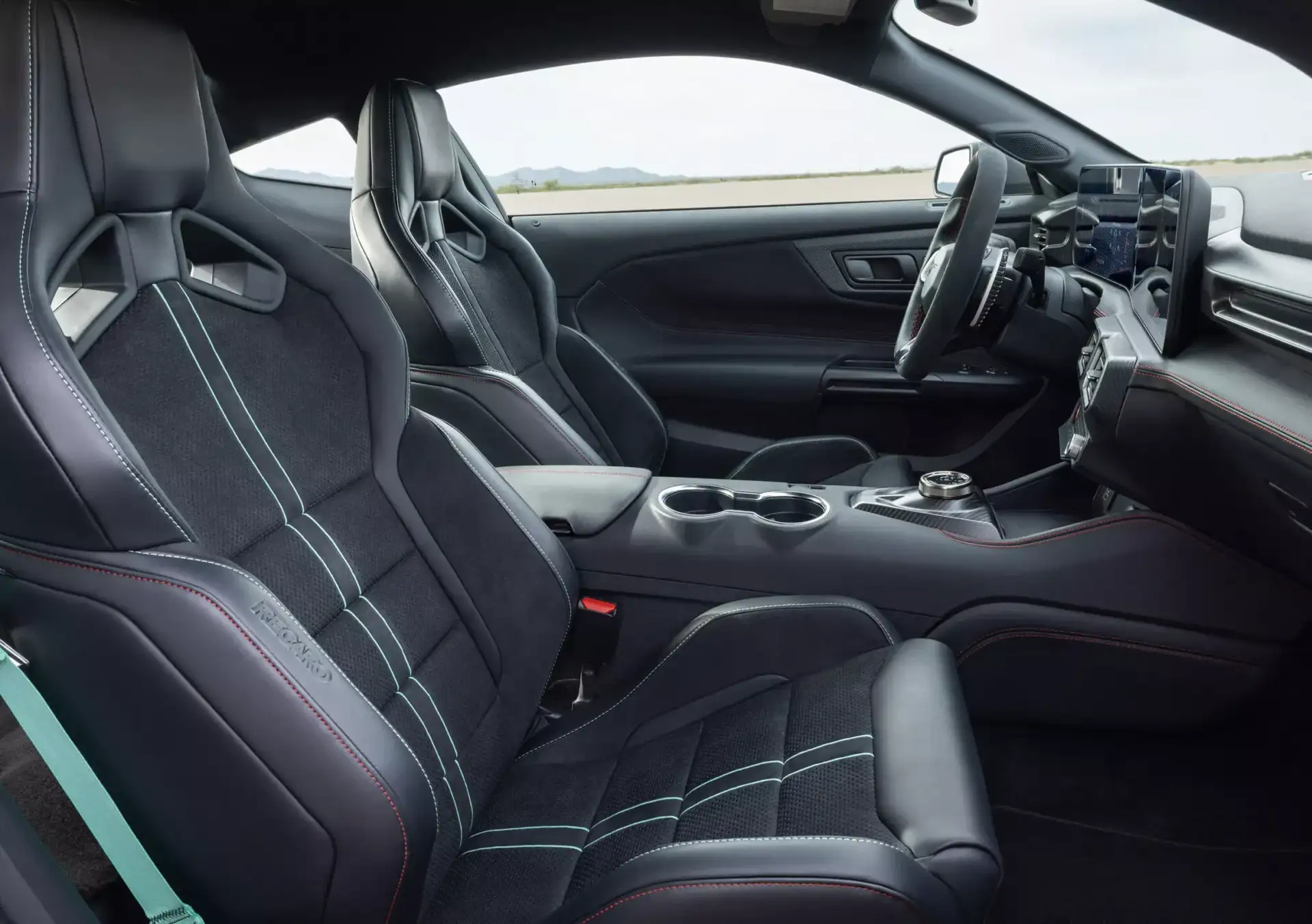
- A 5.0-liter naturally aspirated V8 with a high-revving character few rivals now deliver.
- Track-focused cooling and hardware upgrades over the standard GT.
- Available manual transmission appeal in a shrinking segment.
- A stronger enthusiast identity than many modern performance cars chasing numbers alone.
The irony is that the test does not weaken the Dark Horse story. It makes it more honest. It reminds buyers that horsepower figures are useful, but not absolute. It also shows that performance credibility comes from repeatability, transparency, and context, not just from one giant number printed in a press release.
That same obsession with numbers versus reality appears across the performance world. Buyers who chase paper specs without understanding the mechanical story behind them often miss the bigger picture, whether they are comparing coupes, trucks, or even tuning risks connected to engine health. Anyone serious about engine output should also understand failure points like stuck piston ring symptoms that quietly destroy engines, because peak power means very little if durability collapses.
And if the Dark Horse badge itself has become part of Ford’s broader identity strategy, that is no accident either. The name already carries enough cachet that Ford has extended it into branding moves beyond the coupe, including the Ford Expedition 2027 special edition inspired by Mustang Dark Horse.
So how much power does the FORD MUSTANG DARK HORSE really make?
The most accurate answer is also the least satisfying one for internet bench racers:
It makes whatever the testing method can honestly support on that day, on that dyno, in those conditions.
And that may be the most important horsepower lesson modern enthusiasts can learn.