
XPENG VLA 2.0 arrives at 732 Chinese stores with its own chip boasting 82.5% efficiency. After a 42% drop in sales, the brand is betting everything on multimodal AI that reduces errors on narrow roads by 76%. Find out if it works.
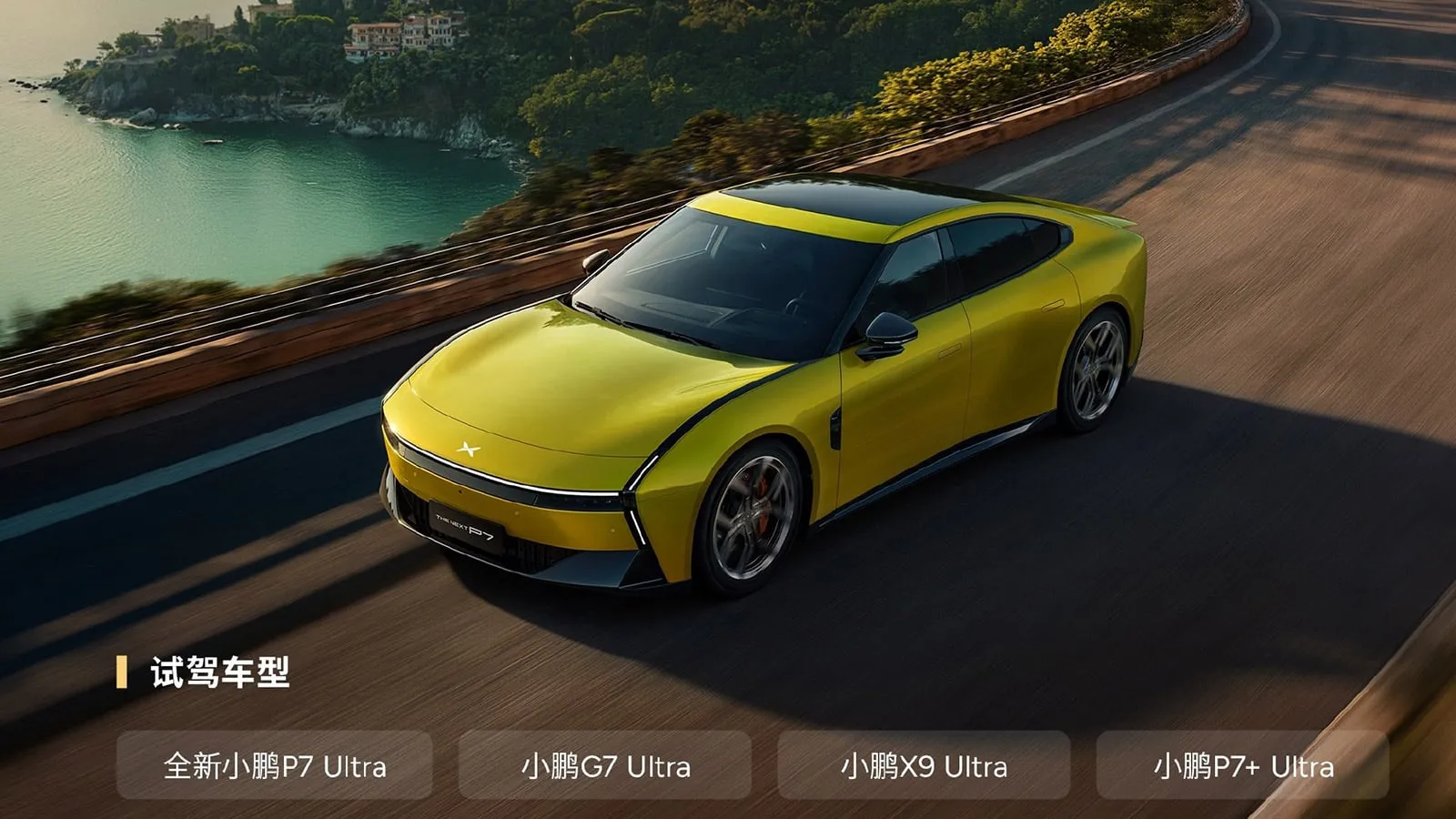
The Chinese manufacturer XPENG is about to do something few tech companies dare to do: allow ordinary consumers to test in real time an artificial intelligence system that the company itself claims is superior to experienced human drivers. Starting March 11, 2026, the second generation of the Vision-Language-Action system (VLA 2.0) will be available for test drives in 732 stores across China—a desperate and ambitious move that could define the brand’s future.
Why XPENG Is Betting Everything Now
The numbers don’t lie. XPENG started 2026 with a 42% collapse in sales in the first two months of the year compared to the same period in 2025. After delivering 37,508 units in December 2025, the company plunged to 20,011 in January and 15,256 in February 2026. For a manufacturer fiercely competing with BYD, Tesla, and other Chinese giants, this drop represents an existential threat.
The company’s answer comes in the form of a technology it calls “Physical AI”—a multimodal artificial intelligence approach developed from scratch, without relying on external partners for the system’s core. The VLA 2.0 integrates computer vision, natural language processing, and real-time decision making, all running on its own Touring chip with an impressive utilization rate of 82.5%.
“VLA 2.0 delivers a driving experience comparable to that of experienced human drivers.” — XPENG, official statement
What sets this generation apart from the previous one are the concrete performance numbers: an overall 23% increase in driving efficiency and gains of up to 76% on narrow roads — traditionally challenging scenarios for autonomous systems. The company not only invites consumers to test but explicitly requests direct comparisons with competitors like Tesla’s Autopilot system or Huawei’s solutions.
The Analysts’ Verdict: Technology That Sells or Slide Presentation?
Deutsche Bank is not being conservative in its projections. In a March 2026 report, analyst Wang Bin’s team rated VLA 2.0 as responsible for a “comprehensive leap reaching new heights in smoothness, capability across all scenarios, and efficiency”. The projection is bold: 530,000 units sold in 2026, representing 23% year-over-year growth — an impressive recovery after a catastrophic start to the year.
Morgan Stanley went even further. In a March 2 note, it described the technology as “a bold leap forward” that may finally convince investors that XPENG is more than a traditional automaker. The firm argues that the strategy of developing proprietary core models — instead of licensing third-party technology — positions the company as an AI company with manufacturing capability, not the other way around.
This distinction is critical in today’s market. While traditional automakers struggle to integrate AI assistants into their vehicles, XPENG has built an architecture where artificial intelligence is the core product and the car is just the delivery platform. The company’s CEO expressed such extreme confidence that he openly invited global competitors to come to China to experience the system.
The Launch Strategy and Volkswagen’s Bet
The distribution of VLA 2.0 follows an aggressive schedule:
| Date | Models | Format |
|---|---|---|
| End of March 2026 | P7 Ultra, G7 Ultra, X9 Ultra | Factory pre-installed |
| April 2026 | Other models in the lineup | OTA update |
| 2027 | International markets | Global expansion |
The detail that few noticed: Volkswagen will be the first external client to adopt the second generation of VLA. This partnership, the result of a platform agreement between the companies, represents an unprecedented validation of Chinese technology by a European giant. While Volkswagen tries to position its own models with differentiated technology in China, it turns to XPENG for what it considers state-of-the-art in autonomous driving.
The strategy of massive test drives in 732 stores is equally calculated. By exposing ordinary consumers to the technology before purchase — not just in promotional videos — XPENG is betting on the “wow” effect of direct experience. If the system truly delivers a 76% improvement on narrow roads as promised, digital word of mouth will do the marketing work that billions in advertising couldn’t achieve.
The risk, of course, is proportional. Advanced-level autonomous systems still face regulatory and public perception challenges worldwide. A single serious accident during the scheduled testing could destroy not only the credibility of VLA 2.0 but also the financial recovery the company so desperately needs.
For automotive market watchers, XPENG is running a high-risk experiment: turning complex technology into accessible experience, on a massive scale, with corporate survival at stake. If it works, it redefines the industry competition standard. If it fails, it may be remembered as the definitive case study on the trap of promising AI before it is truly ready for the streets.