
You are driving on a busy highway, the sun hits the glass and highlights that layer of dust and insects blocking your view; instinctively, you activate the washer, but only a tired motor sound echoes, without a single drop hitting the glass. What seems to be just a lack of fluid may actually be the final symptom of a mistake made by millions of drivers: negligent use of tap water in the reservoir.
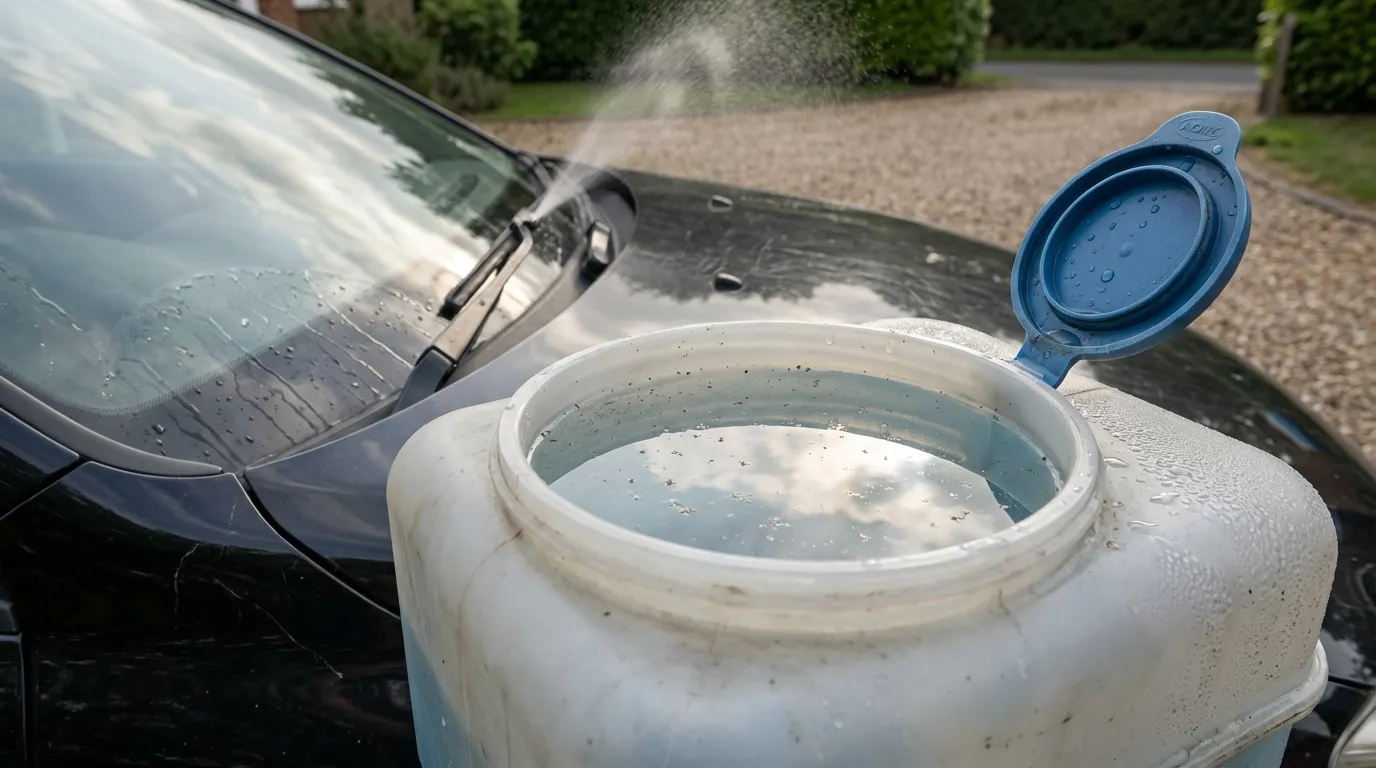
The Invisible Enemy: How Tap Water Minerals Damage the Internal System
Using regular water may seem like a harmless way to save a few dollars, but the chemistry behind this decision is relentless on modern vehicle components. Water from our taps, depending on the region, is loaded with minerals such as calcium and magnesium — what experts call hard water. When this water remains in the reservoir and passes through delicate rubber hoses and nozzles (the so-called “brucutus”), it leaves solid residues behind.
This process is identical to what happens in electric showers that clog over time or to the whitish stains that appear on glass shower enclosures. In modern cars, the problem is worsened by technological sophistication. Today’s systems are not just a bucket with a hose; they include ultra-sensitive level sensors, high-pressure pumps, and, in premium vehicles, heated nozzles for defrosting. Calcification can jam the pump, corrode electronic sensors, and fully obstruct millimeter-sized output holes, resulting in costly repairs that will make you wish you had purchased the correct fluid in the first place.
Many drivers overlook the fact that preventive maintenance is the only way to avoid catastrophic expenses. In fact, this is one of those maintenance mistakes that are making your mechanic wealthy, because replacing an original wash pump or level sensors can cost hundreds of times more than a gallon of specialized fluid. Besides clogging, standing water in the reservoir creates an environment conducive to algae and bacteria growth, forming a viscous sludge that can render the entire hose system useless.
The Danger of Extreme Temperatures and the Science Behind Freezing
Although Brazil is a tropical country, mountainous regions and the south experience severe frosts where physics does not forgive the use of pure water. Regular water freezes at 0°C and, when it solidifies, expands by about 9%. This expansion exerts a natural force that plastic reservoirs, rigid fittings, and hoses are not designed to withstand. The result? Cracked reservoirs, broken fittings, and internal pump failures.
Professional windshield washer fluids are formulated with specific alcohols and additives that lower the freezing point, often ensuring fluidity even at -40°C. Additionally, even in warm climates, tap water does not have the lubricating properties necessary for the health of the water pump. Without proper lubrication, the pump’s internal seals dry out, leading to premature leaks.
The lack of visibility caused by a frozen or malfunctioning system drastically increases the risk of accidents, especially in short trips that wear out your engine faster than you might think if thermal care is neglected. Using the correct fluid guarantees that, regardless of external temperatures, you will have a clear view in seconds, preserving the physical integrity of plastic and rubber components that suffer from sudden temperature changes.
Cleaning Efficiency and Driver Safety in Risky Situations
The function of windshield washer fluid goes far beyond just wetting the glass; it involves surface chemistry. Tap water has high surface tension, meaning it tends to form droplets instead of spreading evenly. Moreover, it lacks detergents to break down oil molecules from exhaust fumes of other vehicles or the acidic proteins of smashed insects.
Attempting to clean a greasy, dirty glass with just water usually results in a gray smear that worsens visibility, especially at night under city lights. This can lead to a dangerous phenomenon where the glass fogs up inside and out due to accumulated grease that regular water cannot remove. The correct fluid contains surfactants that reduce surface tension, allowing wipers to glide smoothly without trembling or scratching the glass.
Additionally, prolonged use of tap water can affect other external components. Minerals that dry on the windshield are eventually carried to the wiper blades and the body, potentially staining the paint permanently if exposed to strong sunlight. This is one of the invisible enemies of automotive paint that many owners only notice when attempting to polish the car and seeing signs of acid rain and mineral deposits.
If you find yourself in an emergency and need to use water, make it a temporary solution. However, for everyday use, automotive E-E-A-T experts recommend: use distilled water mixed with a high-quality cleaning concentrate. Distilled water is free of minerals, eliminating the risk of clogging. If you seek extreme economy, there are homemade fluid recipes using distilled water, a bit of isopropyl alcohol, and biodegradable neutral detergent, but never use common kitchen detergents, as they contain salts that can damage wiper blades and paint.
Maintaining the washing system with reputable products is as vital to the vehicle’s longevity as avoiding fake spark plugs or low-quality lubricants. Below is a quick comparison of the benefits of proper fluid versus the risks of tap water:
| Feature | Tap Water | Special Fluid |
|---|---|---|
| Clogging Risk | Very High (Minerals) | None |
| Freezing Point | 0°C (Expands and breaks) | Up to -40°C (Protects system) |
| Degreasing Power | None | High (Removes oils and insects) |
| Pump Lubrication | None (Leads to wear) | Present (Increases lifespan) |
| Bacterial Growth | May dry out | Maintains flexibility |
“Visibility is the most important safety feature of any vehicle. Saving pennies on the water reservoir is risking the lives of occupants and the vehicle’s mechanical assets.”
In summary, the windshield washing system is a complex network of precision engineering. Treating it like a simple garden bucket is a mistake that compromises safety and reduces the vehicle’s value. Next time the “low wash fluid” warning lights up on the dashboard, resist the temptation to use the backyard hose. Your car, your wallet, and your safety will thank you for this small habit change.