
Did you know that a simple nail caused fatal accidents? See how the invention of tubeless tires revolutionized road safety.
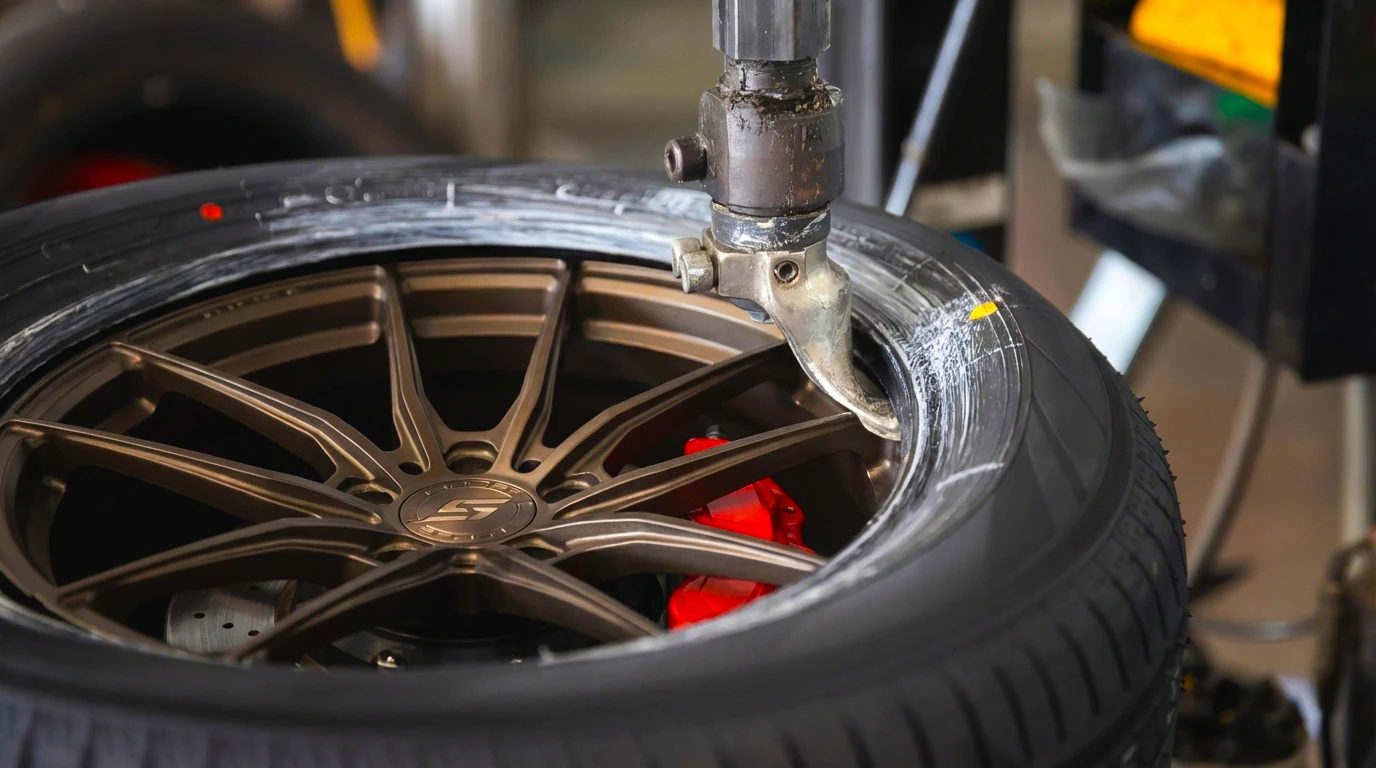
A simple nail on the road meant pulling over to change a tire that deflated in seconds. That was the reality before the great revolution of tubeless tires. Today, they are standard on virtually all modern vehicles, ensuring greater safety and convenience. But why did car tires abandon inner tubes? Let’s delve into this fascinating story of automotive innovation.
The Historical Evolution: From Wooden Wheels to the First Inflatable Tires
The journey of tires begins long before automobiles. In the 19th century, carriages were equipped with wooden and iron wheels—hard and uncomfortable. Everything changed in 1839 when American chemist Charles Goodyear invented vulcanization—a process that turned rubber into an elastic and durable material. This discovery was the springboard for modern tires.
In 1845, Scottish engineer Robert William Thomson created the first inflatable pneumatic tire, made of vulcanized rubber with an internal air chamber. However, high costs prevented its mass commercialization. It wasn’t until 1888 that John Boyd Dunlop, another pioneer, developed pneumatic tires for bicycles, popularizing the idea. For cars, the first solid rubber tires appeared in London in the 1880s, but they were rigid and transmitted all road irregularities.
The major breakthrough came in 1911, with the patent by Philip Strauss for pneumatic tires with internal air chambers (tubed tires). These chambers, separated from the outer casing of the tire, kept the air under pressure, providing comfort via an “air cushion.” For over 50 years, these tires with inner tubes dominated the automotive market. Early models were fragile: they punctured easily, deflated quickly, and generated excessive heat from friction between the chamber and the casing.
With the boom of automobiles in the 1920s and 1930s, roads improved and speeds increased. Tubed tires began to show serious limitations. At high speeds, internal friction caused overheating, leading to blowouts and total pressure loss. Flats were common, turning trips into nightmares. Statistics from that era show that tire-related incidents accounted for a significant share of road collisions across the USA and North America.
The Pioneers of Change
In 1947, American engineer Frank Herzegh, from B.F. Goodrich, invented the first tubeless tire. Patented in 1952, it eliminated the inner chamber, sealing the air directly into the tire’s casing against the wheel. Adoption was rapid: in 1954, Goodrich launched the first production car with tubeless tires, the Packard Cavalier. Other automakers followed, and by 1960, most new vehicles used this technology.
“Tubeless tires not only solved safety issues but paved the way for future innovations like run-flats and high-performance compounds.”
This transition coincided with the post-war period when the automotive industry was booming. In the US and Europe, tubeless tires became standard for practical reasons: lighter, cheaper, and easier to repair.
Critical Differences: TUBED Vs. TUBELESS And Why Change Was Inevitable
To understand the “why” behind the switch, let’s compare the technologies side by side. Use this table to see the key differences:
| Feature | Tubed Tires | Tubeless Tires |
|---|---|---|
| Construction | Separate inner tube holds the air; friction with casing | Air sealed directly into the casing; direct contact with wheel |
| Response to Punctures | Deflates instantly; high risk of losing control | Leaks slowly; allows driving to the nearest repair shop |
| Heat and Speed | Heats quickly due to friction; prone to blowouts above 60 mph (100 km/h) | Dissipates heat better; supports higher speeds safely |
| Weight and Economy | Heavier; slightly worse fuel consumption | Lightweight; improves efficiency and comfort |
| Repair | Requires full replacement of the inner tube | Simple plug or internal patch repair |
Tubed tires were dangerous: a puncture meant sudden deflation, common on roads with debris. Tubeless tires use an internal liner that self-seals small punctures, reducing accidents by up to 70%, according to studies by the NHTSA (US road safety agency).
Besides safety, practical benefits drove adoption:
- Less Weight: Approximately 2-4 lbs less per tire, improving acceleration and braking performance.
- Better Heat Dissipation: Ideal for off-road SUVs or high-performance sports cars, like those using modern ultra-sport tires.
- Cost-Effectiveness: Simpler production and cheaper repairs—a plug kit is highly affordable.
- Comfort: Fewer vibrations, smoother ride over rough pavement, including potholes across the US.
Today, tubeless tires are mandatory according to global safety standards. But what about motorcycles? Some still use tubed wheels with spokes, but the trend is tubeless on high-end models.
The Future of Tires: Run-Flats, Airless, and Radical Innovations
Although tubeless reigns supreme, evolution doesn’t stop. In the 2000s, run-flat tires emerged, featuring reinforced sidewalls that allow driving 50 miles after a complete puncture at 50 mph. Brands like Michelin and Bridgestone lead this segment, but they are sometimes criticized for a stiffer ride (reduced comfort) and higher prices (up to 50% more).
Advanced research is ongoing: Harvard University developed “crack-proof” rubber, 10 times stronger than vulcanized rubber, resistant to deep cuts. Michelin is testing airless tires (Uptis), with a flexible structure without air—immune to punctures, recyclable, and ready for electric vehicles. Imagine a heavy truck without fear of flats!
In the US market, with improving road infrastructure and increasing EV imports, tubeless tires evolve with silica compounds that improve wet grip (reducing hydroplaning). For high performance, hybrids like the Lamborghini Temerario require high-speed radial tubeless tires (ZR index).
Another trend: smart tires with integrated TPMS sensors, monitoring pressure in real-time via app. For off-road driving, such as in the Toyota Land Cruiser, tubeless tires with run-flat capability are ideal.
While airless tires are not yet dominant, tubeless remain king: safer, more efficient, and versatile. Easy maintenance? Just check pressure monthly and avoid overloading. This change was not just technical—it saved lives, reduced costs, and shaped modern automotive design. Next time you ride without flats, thank Herzegh and Goodyear. Drive safely!