
You clean the inside of the windshield, it looks perfect… and a few days later that greasy “film” reappears, clouding the brightness of headlights at night. It’s not an illusion: there is a chemical (and sometimes mechanical) cause behind this film, and it can be solved the right way.
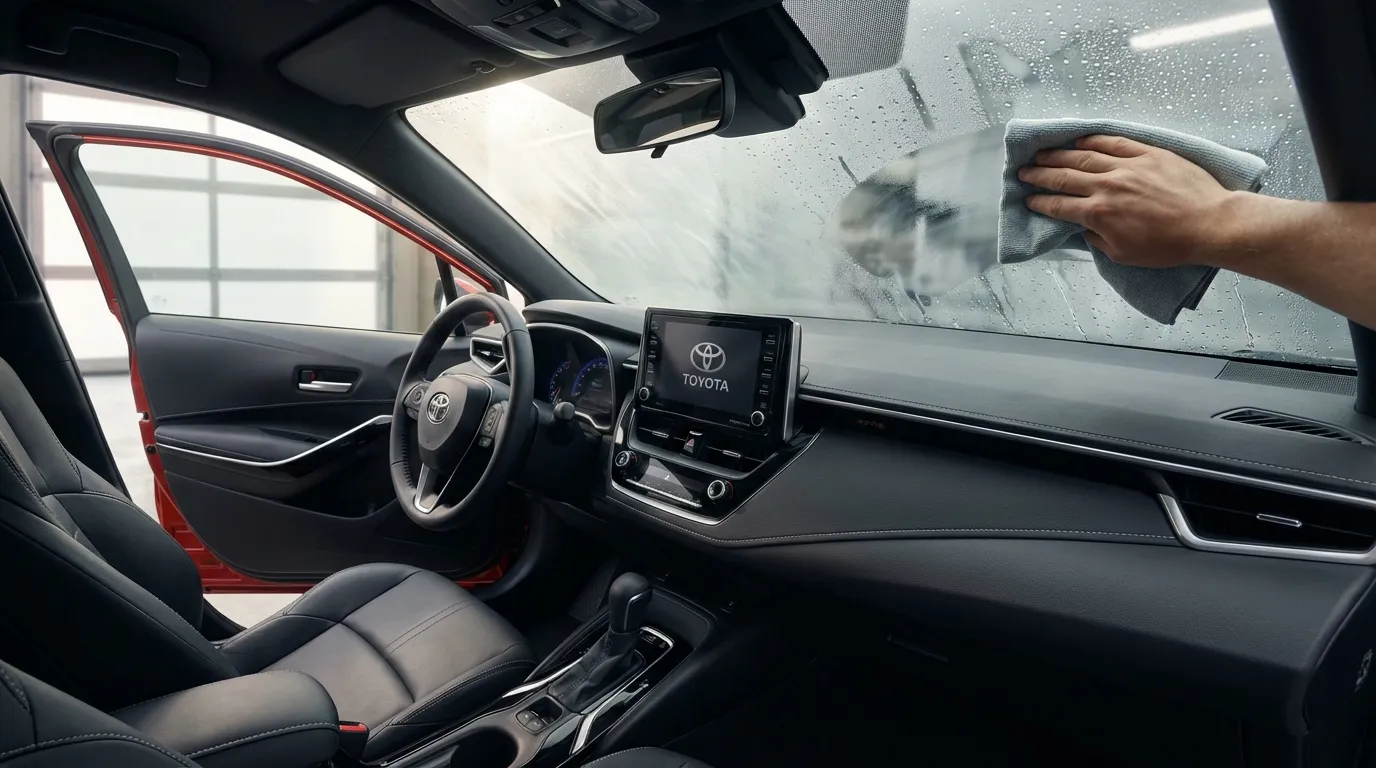
Why Does the Car Glass Develop That “Greasy” Film on the Inside?
When dirt appears quickly from the inside, it is usually not ordinary dust. In most modern cars, what you see is a combination of fine residues that adhere to the glass and create a haze (a “milky” or “smoky” appearance), greatly impairing night vision. For US drivers concerned with road safety, minimizing this haze is crucial.
The most frequent reasons are:
- Off-gassing (Volatile Organic Compound Release): Plastics, vinyl, foams, and adhesives “release” volatile molecules over time, especially when heated.
- Moisture + Particles: Air moisture condenses, captures residues, and “dries” onto the windshield surface.
- Product Contamination: Some air fresheners, silicones, and dashboard “gloss” products evaporate and deposit on the glass.
- Vaping/Smoking Residue: Aerosols and particles accumulate, forming a sticky layer.
- Mechanical Failure (Less common, but serious): Coolant vapor from leaks in the heater core can also condense on the glass.
If you want to avoid unnecessary expenses and common shop mistakes, it’s worth reading Maintenance Errors That Are Making Your Mechanic Rich and Jeopardizing Your Safety, as this “haze” can sometimes be the first warning sign of a more significant issue.
Off-gassing: The “New Car Smell” That Turns Into Film on the Windshield
Off-gassing is the term for the gradual release of Volatile Organic Compounds (VOCs) from a vehicle’s interior materials under normal use conditions. Simply put: the dashboard, console, doors, seats, and adhesives heat up, release micro-residues into the cabin air, and these residues end up condensing on the glass, particularly the windshield (which tends to be cooler and receives constant airflow).
This is why many drivers notice that:
- the film builds up more on hot days;
- the problem worsens when the car is parked in the sun;
- Recirculation Mode speeds up accumulation because molecules “circle around” inside the cabin air supply.
“If other cars’ headlights start to turn into ‘stars’ and streetlights gain halos, the culprit might be the internal film on the glass — not your vision.”
Important Health Note: VOCs can include irritating and potentially harmful substances at variable concentrations. While there’s no need to panic, this is a good reason to keep the cabin ventilated and clean, especially for those frequently driving with children, the elderly, or those spending many hours on the road.
When It’s Not Chemistry: Signs of Hot Air (Heater Core) Leaks
There is one scenario where the film is not “normal” and demands quick attention: a leak in the cooling system inside the dashboard, usually involving the heater core.
How to differentiate this from normal film?
- Sweet Smell (similar to antifreeze) when turning the heat on.
- Film that looks bubbly rather than purely oily, often feeling “sticky.”
- Excessive glass fogging when using the defroster with hot air activated.
- Coolant reservoir level drops without any visible external leaks on the ground.
In this case, cleaning the glass only resolves the issue for a few hours or days. The correct approach is professional system diagnosis. Ignoring it can lead to coolant loss, engine overheating, and costly repairs. If you want to understand how small decisions can gradually ruin your vehicle, this article offers a dose of reality: Stop Descending the Hill in Neutral: The Lie About Savings That Can Destroy Your Car’s Engine.
Other Common (and Underestimated) Culprits
Before blaming a manufacturing defect, run through this quick screening:
| Possible Cause | How to Identify | What to Do |
|---|---|---|
| Vape/Cigarette Smoke | Yellowish, sticky layer; returns very quickly | Frequent cleaning + reduce use inside the cabin |
| “Black Stuff,” Silicone, Dashboard Gloss | Oily film appearing shortly after application | Use low-VOC products and apply away from the glass |
| Air Fresheners | Fog concentrated near air vents and windshield | Remove the freshener for 2 weeks and observe the change |
| Dirty Cabin Air Filter | Musty smell, reduced airflow, visible dust buildup | Replace the filter and clean ducts (if necessary) |
| Car Parked Too Long in Sun | Worsens on hot days, strong lingering “new car smell” | Ventilate the car + use a sunshade + reduce recirculation mode |
A detail that almost no one mentions: when the cabin filter saturates, airflow patterns change, and residual deposits on the windshield can increase. If you’ve been tempted by “magic” maintenance solutions, it’s worth comparing them against other common automotive myths, such as this one: Why Overinflating Your Tire to the Max PSI is a Bad Idea.
How to Remove Interior Film From the Windshield (Without Stains or Streaks)
Most people clean incorrectly for two main reasons: using unsuitable products (which often spread oil) and using rags that “push” the dirt around instead of lifting it. The result is worse stains and reflections at night.
Quick Checklist of What to Use
- 2 Microfiber Cloths: one for removal, one for a streak-free finish.
- Initial Cleaning: Warm water solution with a few drops of neutral, mild detergent (a mild degreaser).
- Finishing: Ammonia-free automotive glass cleaner (preferred for film and tinted windows/sensitive plastics).
- Optional for Stubborn Cases: Isopropyl alcohol well diluted with water (use sparingly and avoid soaking nearby trim).
Step-by-Step Method That Really Works
- 1) Work in the Shade: Hot glass causes cleaning solutions to evaporate too quickly, leaving behind trails.
- 2) First Degrease: Apply the detergent solution to the cloth (never directly onto the glass) and clean using straight, overlapping movements across the entire windshield.
- 3) Re-clean Residue Spots: If the cloth doesn’t glide smoothly, there is still oil residue present.
- 4) Rinse Residues: Wipe down with a cloth lightly dampened only with plain water to remove all traces of detergent.
- 5) Finish Clean: Use the dedicated automotive glass cleaner and a clean, dry microfiber cloth for the final finish and streak reduction.
- 6) Anti-Streak Trick: On the exterior windshield, make the final buffing pass horizontally; on the side windows, vertically. If streaks remain, this helps you immediately identify which side they are on.
Avoid: Cheap paper towels (which shed lint), excessive use of harsh household glass cleaners, and shine products near vents. If you use heavily scented interior detailing sprays, you might be creating the exact problem you are trying to solve.
How to Reduce Internal Fog and Haze on the Glass Daily
Off-gassing cannot be “completely eliminated,” but you can significantly reduce buildup and, most importantly, restore clear night visibility.
Simple Habits That Make a Difference Within 7 Days
- Change Air Mode: Switch from recirculation to drawing in outside air for a few minutes at the start and end of your trip. This renews the air and lowers VOC concentration.
- Use A/C Smartly: The air conditioning system effectively removes humidity, helping prevent condensation that “sticks” airborne particles to the glass.
- Ventilate After Parking in the Sun: Open doors for 30–60 seconds before starting the A/C when you first enter a hot car.
- Avoid Silicone Dressings on the Dash: If you want a finish, prefer interior care products with low volatility and apply them with a cloth, well away from the glass surface.
- Clean the Inside of the Glass Regularly: Light weekly maintenance is significantly easier than removing a crusty buildup accumulated over a month.
What Many People Ignore: The Cabin Filter Controls the Air You Breathe
An old cabin air filter can increase dust, odors, and even the sensation of “heavy air” inside the car. This impacts not just comfort, but also visibility (less dirty condensation) and hygiene. If you drive frequently in large cities, construction zones, or on dirt roads, your filter may need replacement more often than the manual suggests.
Speaking of “small things that become big problems,” if you enjoy learning where your money disappears unnoticed, this article is essential reading: Shock Absorber Expenses: The Deadly Financial Trap You Ignore in Your Car’s Suspension.
Quick Questions (The Most Searched on Google)
- “Why does the windshield fog up from the inside even with the A/C on?”
Because there is existing humidity and/or a residue film on the glass. The A/C may remove moisture, but the film makes the glass “always dirty,” scattering light and creating glare/halos. - “Does cleaning with alcohol help?”
It can help break down grease, but it is best to start with neutral detergent and finish with automotive glass cleaner. Use isopropyl alcohol sparingly to avoid drying out surrounding plastic surfaces. - “Does a new car fog up more inside?”
Often, yes. New interior materials tend to release higher amounts of VOCs initially, especially under heat. - “How do I know if it’s a hot air/coolant leak?”
A sweet smell when the heat is on, excessively humid glass, a sticky film, and a dropping coolant level are strong indicators. This is a maintenance issue, not an aesthetic one.
If you want to elevate your vehicle care standards without falling for unnecessary upsells, combine this cleaning routine with a critical view of what is being “guaranteed” during service visits. A good starting point is this straightforward debate: Replace All Four Brake Pads or Just the Front Ones?.
Visibility is not a luxury: that inner film on the glass is one of the most common culprits behind uncomfortable night driving. Cleaned properly, with better ventilation, and with sources cut (silicone dressings, strong air fresheners, constant recirculation), you should notice the difference on your first night trip — especially in rain or when facing oncoming lights.