
Have you ever wondered why your windshield today almost always “sticks” instead of shattering like a regular window? The answer combines materials science, safety regulations, and industrial choices — affecting everything from repair costs to survival in accidents.
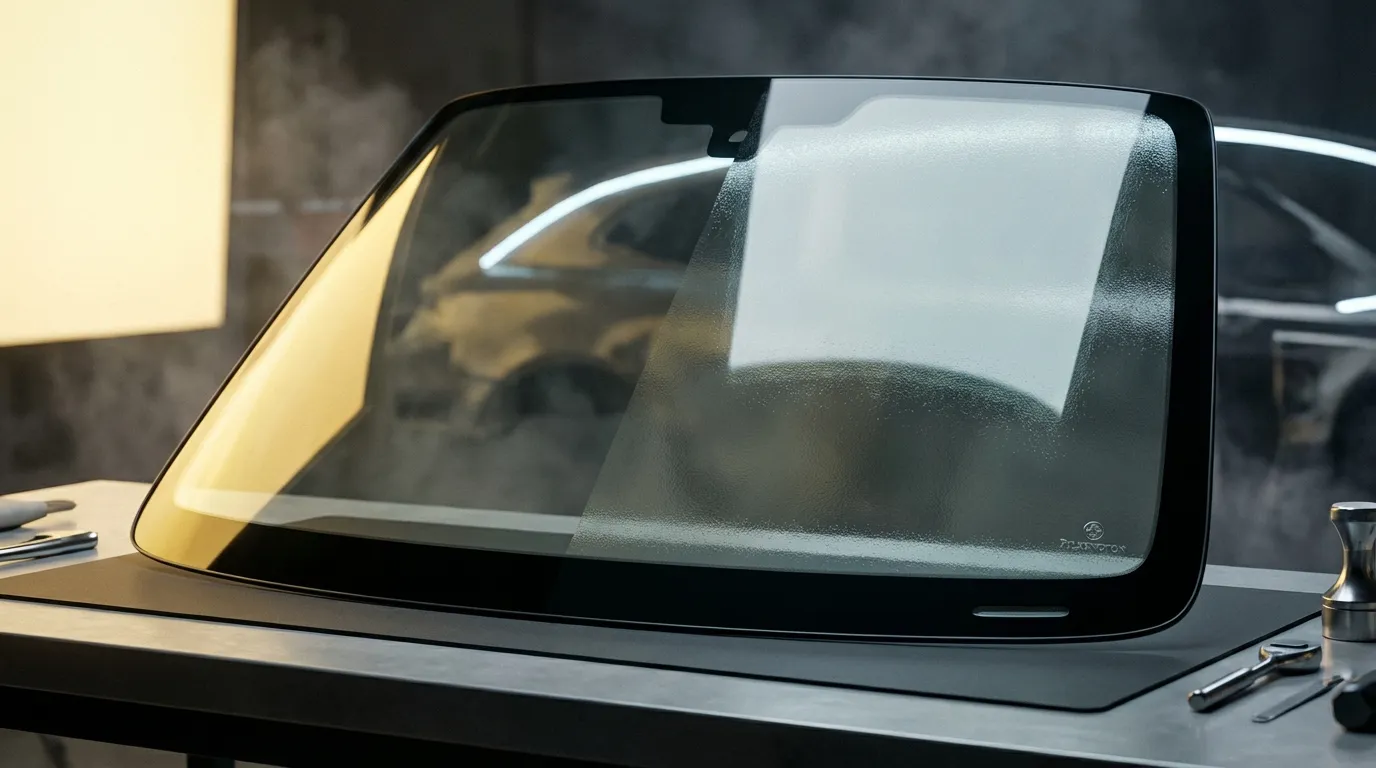
Why It Changed: Regulations, Safety, and Ejection Prevention
In practice, the major turning point occurred because traffic and safety authorities — initially in the United States with road safety laws and later in many countries — began to require windshields to be shatter‑resistant (resistant to dangerous fragmentation). In the United States, the creation of the National Highway Traffic Safety Administration (NHTSA) and FMVSS standards mandated the use of glass that minimizes shard projection into the passenger compartment.
Laminated glass performs this function: when it breaks, the shards adhere to the interlayer (a plastic film, usually polyvinyl butyral — PVB), reducing cuts and preventing occupant ejection in frontal impacts — one of the leading causes of death in severe collisions. That’s why ejection mitigation requirements have also driven the use of laminated glass in side and rear windows in many recent models.
In Brazil, although technical regulations have different names, organizations like Denatran and Inmetro participate in certifications and homologations that ensure automotive components meet safety and quality standards — reflecting the global trend of prioritizing laminated glass here as well.
Tempered vs Laminated: How Each Works and What It Means for You
Tempered and laminated are distinct processes with different results:
- Tempered glass: heated and rapidly cooled to increase its strength. When shattered, it breaks into small, rounded pieces — less sharp but dispersed. This behavior is useful for side windows in many vehicles: easy to break in rescue or theft, and it doesn’t form large blades.
- Laminated glass: two glass layers bonded by a plastic interlayer (PVB, or in high-performance applications, SentryGlas). When broken, the interlayer holds the fragments in place, maintaining the integrity of the panel.
Advantages of laminated glass:
- Passive safety: reduces the risk of cuts and keeps occupants inside during impacts;
- Sound and heat insulation: offers better acoustic insulation and greater UV filtering depending on the interlayer;
- Theft prevention: makes it harder for thieves to quickly break the window;
- Supports technology integration: easier to incorporate sensors, heaters, heads-up displays (HUDs), and conductive layers.
Disadvantages of laminated glass:
- Cost: manufacturing, repairing, or replacing is more expensive than tempered glass — increasing repair shop and insurance costs;
- Rescue difficulty: common tools (hammers, emergency chocks) that break tempered glass are less effective on laminated — requiring cutters or specialized equipment;
- Weight and complexity: laminated glass tends to be heavier and more complex to incorporate into designs with curves or multiple layers.
“Laminated glass increases the survival rate in frontal crashes but presents operational challenges for rescue and higher repair costs.”
This is why many manufacturers choose laminated glass for the windshield and tempered glass for the doors — a combination that balances safety, cost, and practicality. However, in recent years, the industry has also begun adopting laminated glass in side and rear windows: according to AAA, about 1 in 3 cars sold since 2018 come equipped with these laminated windows from the factory.
The Future of Windshields: Innovations, Costs, and What Every Driver Should Know
Automotive glass has evolved from being just a transparent obstacle. With electric vehicles, autonomous system pickups, and transforming interiors, windshields have become a technological platform.
- Heads-up displays and HUDs: laminated glass facilitates applying layers that support projecting information directly into the driver’s field of view;
- Smart glass: shading (electrochromic) technologies and UV/IR transmittance control are being integrated into laminated glass;
- Structural glass: in some electric and autonomous vehicle designs, the glass becomes part of the vehicle’s structural integrity, demanding even more rigorous specifications;
- Safety in autonomous and commercial vehicles: programs for autonomous trucks (e.g., global initiatives by manufacturers) raise requirements for resistance and embedded sensors in the glass.
However, there is a direct impact on the owner’s wallet: replacements with rain sensors, cameras, and heating require electronic recalibration — increasing costs and repair time. Before replacing a windshield, verify if the shop performs ADAS system recalibration; otherwise, features like automatic braking and lane assist may be misaligned.
Looking for practical tips? Avoid using tap water in the wiper fluid reservoir — it can clog nozzles and damage sensors — and learn how to remove the internal greasy film without damaging the glass. If interested, see this guide explaining why you should stop using tap water and also read how to resolve internal fogging issues in how to remove the greasy film without damaging anything.
For those driving more extreme vehicles: armor and military/anti-theft designs often use laminated glass with additional layers or special interlayers — explore how the armored SUV market is evolving by checking out the Rezvani Tank 2026, an example of advanced materials in heavy-duty applications.
And what about rescue? New tools and emergency protocols are being developed for rescue teams to handle laminated glass. However, in urgent situations, patience and proper technique can save lives — and it’s important for drivers to know their vehicle’s limitations: some emergency hammers simply will not work on laminated glass.
Finally, the trend is clear: more laminated glass, more sensors, and more integrated functions. This means greater active and passive safety for consumers, but higher maintenance costs. If you plan to replace your vehicle’s windshield, seek certified workshops that handle electronic system replacement and calibration — and consider insurance options that cover such repairs.
If you want to understand how these changes affect specific models and current automotive technologies, also check out reports on autonomous trucks and innovation in automotive glass, such as the proof of concept in Level 4 autonomous trucks programs — where glass is an essential part of the sensor and safety systems.
Knowing the difference between tempered and laminated, understanding standards, and choosing certified repair shops are simple steps that protect your life and wallet — and make a difference when buying, selling, or repairing a modern vehicle.