
Did you know that your old tire can become the quietest road in the world? See how the US is transforming waste into premium infrastructure.
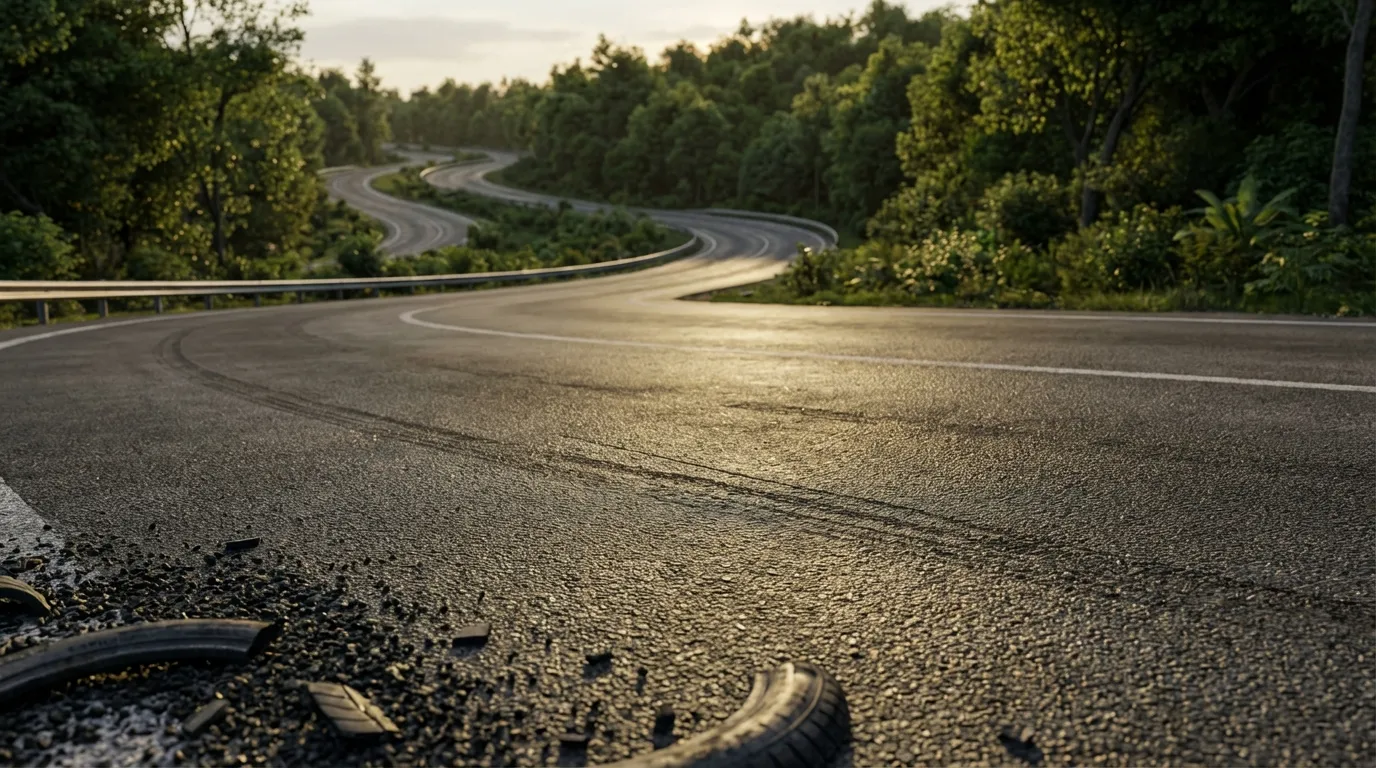
In the automotive world, where tires constantly evolve for greater safety, their final destination takes a surprising turn. Instead of rotting in landfills, these rubber bits are crushed and blended into asphalt, creating the so-called “rubberized asphalt.” This technique, pioneered in the US, uses up to 20% recycled rubber, making roads more durable and environmentally friendly. States like Arizona, California, and Georgia lead the way, driven by laws and environmental disasters that forced radical change.
California, for example, is at the forefront of this revolution. After a catastrophic tire fire in 1999 in Westley that released toxic smoke for weeks—rivaling scenes from apocalyptic cartoons—the state approved laws requiring Caltrans—its transportation department—to incorporate recycled rubber in 35% of its road projects. The result? Millions of tires diverted from landfills annually, with surfaces that last longer and cost less in the long run.
Georgia isn’t far behind: along the 18-mile stretch of Interstate 85, known as “The Ray,” engineers are testing rubberized asphalt alongside technologies like solar charging for EVs and vehicle-to-vehicle communication. In Atlanta, preparations for global events such as the FIFA World Cup accelerate its adoption on main streets, demonstrating that innovation and practicality go hand in hand.
Benefits That Make a Real Difference Every Day
Rubberized asphalt isn’t just “green”: it offers superior performance in hot climates, making it ideal for desert or tropical regions like northern Australia—or inland Brazil. A study by Charles Darwin University showed that traditional pavements crack under intense heat, but tire rubber maintains flexibility, extending lifespan by up to 50%, according to Rubcorp. In Arizona, the birthplace of the technology, some rubberized roads last over a decade without major repairs.
- Noise reduction: Rubber absorbs vibrations from moving tires, reducing noise levels by up to 4 decibels near urban highways. Residents living nearby notice the difference, and drivers experience a quieter ride inside the vehicle.
- Lower heat retention: Unlike traditional black asphalt that heats up during the day and radiates heat at night, rubberized asphalt reflects more sunlight and cools down faster, helping lower nighttime temperatures in hot cities like Atlanta or São Paulo.
- Extreme durability: Fewer cracks and potholes. Arizona DOT reports savings of millions in maintenance costs, making it a cost-effective solution for limited budgets.
- Sustainability: Each kilometer of road uses thousands of tires, preventing methane emissions from landfills and reducing the need for virgin oil in asphalt production.
These benefits tie into the world of high-performance tires, where durability and efficiency are crucial. Imagine highways that complement your properly inflated tires, reducing tire wear and improving overall grip and safety.
| Benefit | Comparative Data | Practical Impact |
|---|---|---|
| Durability | +50% vs. traditional asphalt (Rubcorp) | Less maintenance, cost savings for the public |
| Noise Reduction | -4 dB (Arizona DOT) | Enhanced comfort for nearby residents |
| Heat Retention | Lower solar absorption | Cools city environments at night |
| Recycling | 35% of projects (Caltrans) | Millions of tires recycled annually |
In Brazil, where tire landfills catch fire annually—including the significant 2023 blaze in Minas Gerais—this technology could be a game-changer. Studies by DNIT are currently testing similar mixes, though large-scale implementation remains limited. Countries like Australia and Texas demonstrate that local adaptations are effective, using rubber to withstand monsoons or extreme drought conditions.
Limitations and the Path Toward Global Adoption
Not everything is perfect: rubber performs well in heat but slips in cold conditions. Rubber that is flexible at 40°C can become brittle below freezing, making it less effective in snow or frost. Therefore, its use is limited to southern US states like Florida and Texas, far from colder regions such as Minnesota or Canada.
“It’s the right tool for the right job,” summarizes Arizona DOT. Research into advanced polymers aims to develop “all-climate” versions, but for now, focusing on tropical regions remains the best approach.
Challenges include higher initial costs (10-20% more) and the need for specialized machinery to crush tires. However, the payback period is typically 3-5 years through reduced maintenance costs. As electric vehicles become more common, quiet roads will enhance the driving experience, and Brazil has the potential to lead Latin America by recycling its 30 million discarded tires annually.
Other innovative uses include converting tires into swings, retaining walls, or planters, but paving remains the most impactful application. Companies like Michelin are investing in partnerships to scale this technology worldwide. If your next drive is on a rubberized road, you’ll notice a smoother, cooler, and more eco-friendly ride. The revolution is happening—literally—and it could come to your neighborhood soon.
Meanwhile, keep your tires properly maintained to maximize these benefits, avoiding common maintenance pitfalls that shorten tire and vehicle lifespan.