
Turbo or Supercharger? The wrong choice can cost up to US$ 3,966 in repairs. Discover which pressurization system requires more maintenance.
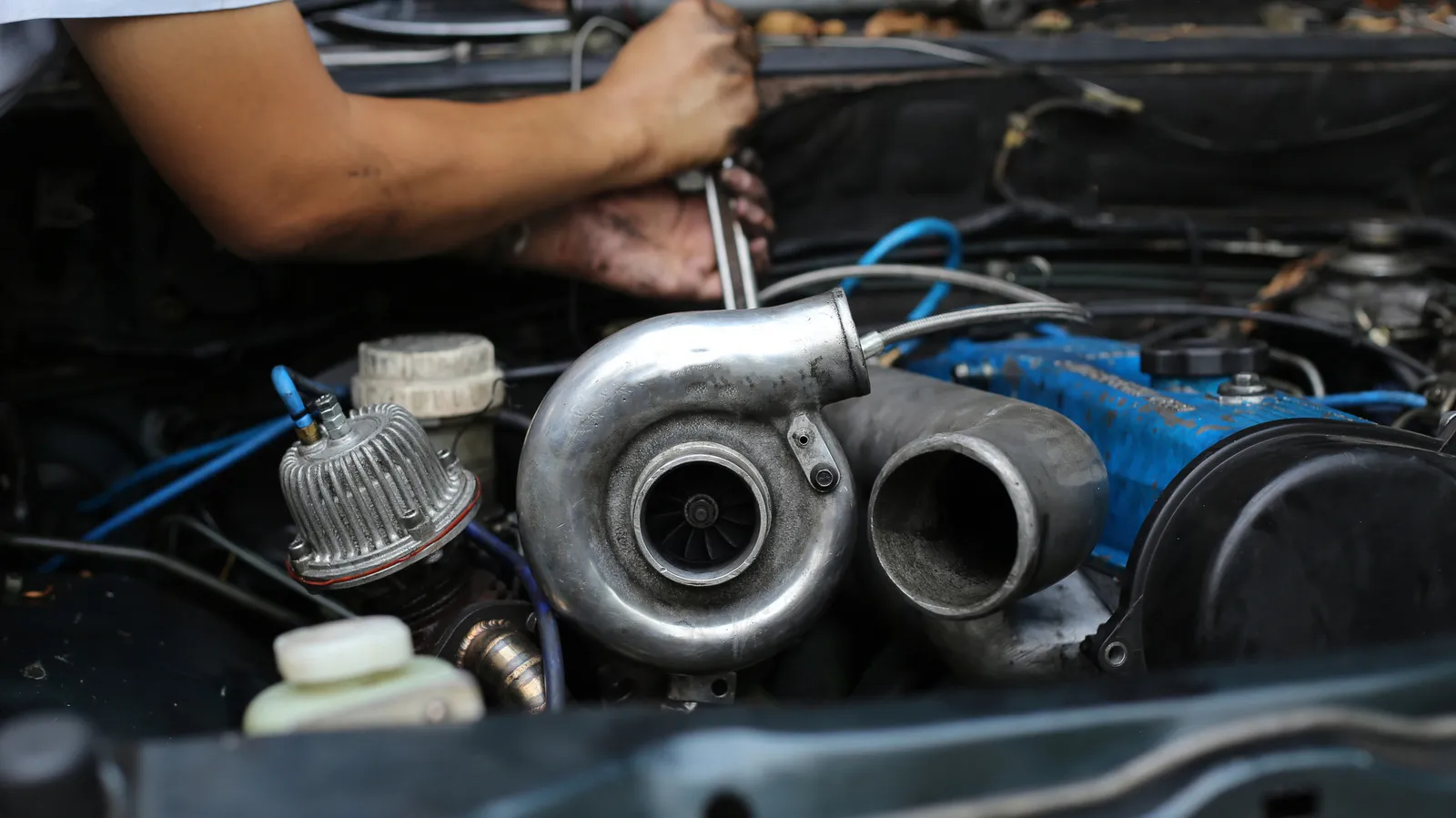
Since the first combustion engines rumbled through the streets, engineers and enthusiasts have been engaged in a silent battle: how to extract more power without sacrificing reliability. Today, this war comes down to two technologies that dominate the performance market — but one of them can turn your wallet into a battlefield.
Why the Simplicity of the Supercharger Can Save Your Workshop
The fundamental difference between these systems starts with their architecture. The supercharger operates like a traditional mechanical compressor: driven by a belt directly connected to the crankshaft, it compresses air in a linear and predictable way. This structural simplicity translates into fewer components susceptible to failure.
Unlike the turbo, which needs to integrate both into the intake and exhaust systems — as well as often requiring dedicated cooling circuits — the supercharger remains relatively self-contained. Its direct mechanical construction eliminates complex thermal variables and reduces the number of moving parts in operation.
Another crucial factor lies in lubrication management. While turbos mandatory depend on the engine oil for cooling and lubrication — demanding strict oil changes with premium lubricants — many superchargers have their own reservoir. This separation protects the system against contamination and simplifies preventive maintenance.
Operating temperature reinforces this advantage. Turbos convert exhaust gases into kinetic energy, generating extreme heat that often requires additional intercoolers. The supercharger, by its mechanical nature, operates within more controlled thermal ranges, reducing stress on materials and seals.
The Golden Trap of the Supercharger: When the Belt Becomes a Sentence
However, the simplicity of the supercharger hides its vulnerable point. The drive belt — an apparently trivial element — imposes a mandatory replacement cycle between 80,000 and 110,000 kilometers. Neglecting this interval invites a catastrophic failure.
When the belt breaks, the consequences multiply instantly. The engine loses the boost pressure, becoming “lethargic” during acceleration. Worse: depending on the calibration, the electronic injection continues supplying a rich mixture designed for pressurized operation, resulting in excessive fuel consumption and potential damage to the catalytic converter.
Here lies the paradox of the system. Because it is always driven — unlike the turbo which “sleeps” at low RPM — the supercharger imposes continuous load on the mechanical assembly. This uninterrupted operation accelerates bearing and seal wear, especially when preventive maintenance is neglected. The silent mistake that destroys 1 in every 3 engines before 100,000 km often starts with this seemingly innocent neglect.
The Price of Performance: When the Bill Arrives
Both systems share an uncomfortable truth: the cost of full replacement is enough to make any enthusiast reconsider their passion. Data from the North American market reveals that a turbocharger set can reach US$ 3,004, while average superchargers start at US$ 3,966.
The complexity of diagnosis amplifies these values. Identifying failures in pressurized systems requires extensive disassembly and specific tests that consume hours of skilled labor. In extreme cases, mechanics need to loosen engine mounts to create removal space — a procedure that turns seemingly simple repairs into major operations.
For turbos, the dependency on the engine’s lubrication circuit adds layers of complexity. Replacement requires complete system drainage, and residues of degraded oil often contaminate the new component, prematurely shortening its lifespan.
The choice between these technologies goes beyond power specifications. It reflects an attitude towards maintenance: the supercharger rewards the disciplined owner with mechanical predictability, while the turbo offers superior thermal efficiency to those who accept the rigor of intensive care. The strategic swap of the V6 for a turbo in the new 2027 Kia Telluride illustrates how manufacturers are weighing this equation in favor of efficiency — but always with hidden costs on the horizon.
Models like the BMW Alpina XB7 Manufaktur show that mechanical supercharging still seduces when the priority is immediate and linear response. Meanwhile, the rise of turbo hybrids, as revealed in the BYD Song Plus 2027, signals that turbocharging will continue to dominate segments where energy efficiency prevails over mechanical purity.
The final decision lies in automotive honesty: are you the type who schedules maintenance with surgical precision, or the one who ignores the warning light until the last breath? The answer will determine which system will be your ally — or your foe.