
TOYOTA COROLLA CROSS HYBRID combines unbeatable 19 mpg in the city with standard all-wheel drive. See why it dominates the segment.
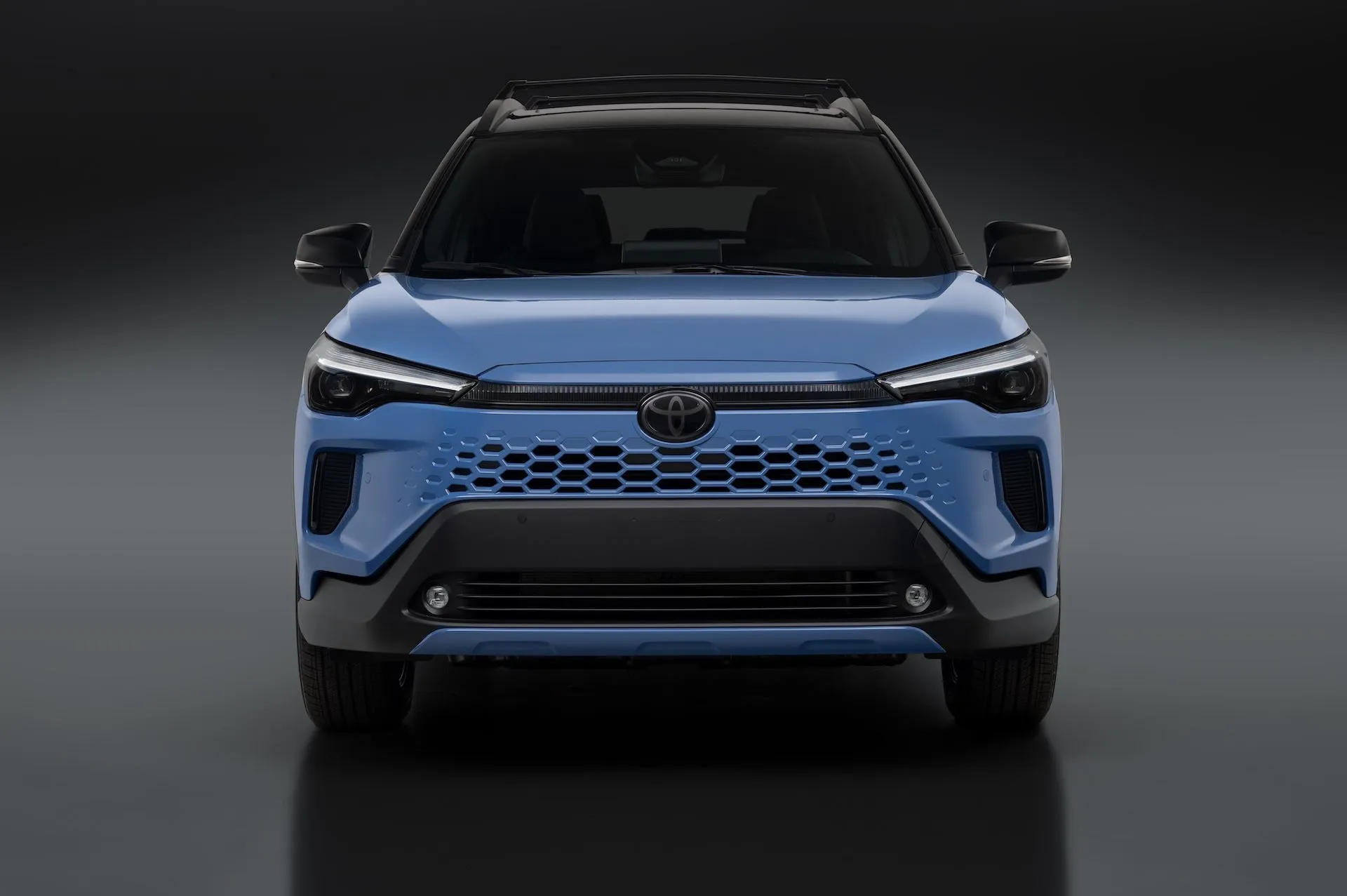
Toyota built an unshakable reputation with the Corolla name. When you think of reliability and fuel economy, the image of a practical sedan comes to mind. But what happens when that formula is applied to an SUV? The 2027 Toyota Corolla Cross Hybrid arrives on the market carrying the weight of this legacy, promising to deliver the brand’s legendary efficiency in a taller, more versatile package. However, when we dig deeply into the specifications and the vehicle’s real-world behavior, we realize the story isn’t as straightforward as marketing suggests. While it shines in fuel economy figures, there are trade-offs in the interior design and steering dynamics that may make you rethink whether this is truly the ideal hybrid for your garage.
The Hybrid System and the Reality of Performance
Under the hood, Toyota opted for a setup that prioritizes efficiency without completely giving up the need for power when passing. The 2027 Toyota Corolla Cross Hybrid is equipped with a 2.0-liter four-cylinder Atkinson-cycle engine, working together with three electric motors. The combined output is 196 horsepower. For a compact SUV, that number looks promising—especially when compared to the non-hybrid version, which is significantly slower.
All-wheel drive (AWD) is standard on every trim, which is a major safety and stability advantage, especially on rainy days or light uneven terrain. The transmission is a CVT (continuously variable transmission), which aims to keep the engine in its most efficient RPM range. In 0 to 60 mph acceleration tests (approximately 0 to 96 km/h), the XSE model clocked in at 7.3 seconds. While that’s a respectable time for the class—outpacing rivals like the Subaru Crosstrek Hybrid—the feeling behind the wheel is that the car is “too well-behaved.”
Any expectation of driving excitement, similar to what you find in the brand’s sportier models, is quickly dispelled. The steering is light, and the suspension is tuned for absolute comfort, resulting in handling that some critics describe as dull. If you’re looking for an SUV that talks to the driver in the corners, you may need to look at other options, such as the 2027 Kia Niro Hybrid, which has faced its own challenges in balancing efficiency and driving pleasure.
Towing capacity is another point to pay attention to. With a maximum limit of 1,500 pounds (approximately 680 kg), the Corolla Cross Hybrid only works for small trailers or jet skis. If your plans involve carrying heavier loads or larger boats, you’ll likely have to move up a segment, where towing capabilities are more robust.
Interior Design and Technology: The Achilles’ Heel
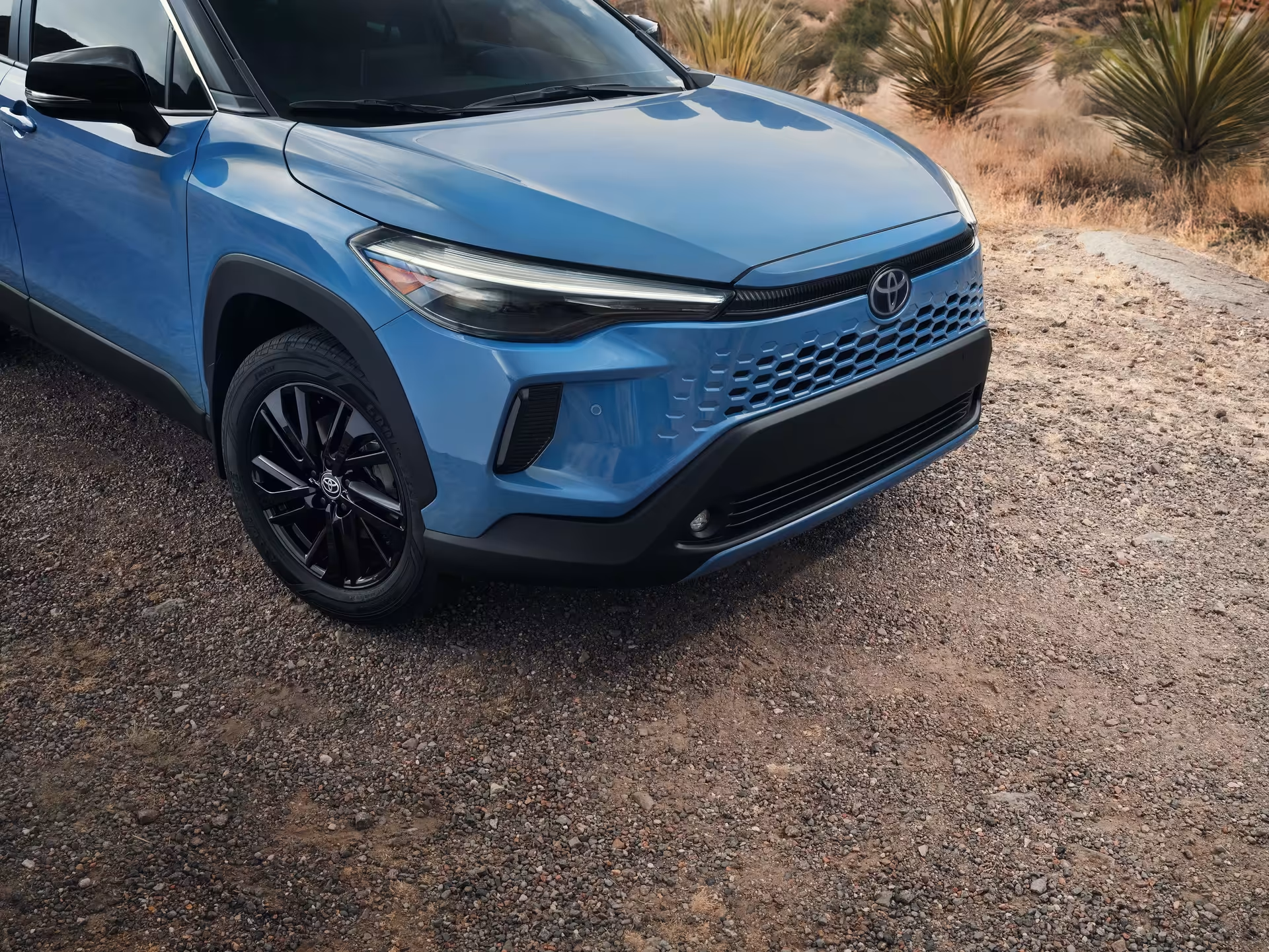
This is where the 2027 Corolla Cross Hybrid’s story meets its biggest resistance. While the engineering is praised for its smoothness, the cabin follows a conservative line that borders on dated. Toyota kept the Corolla sedan’s template, which means it’s functional, but lacks visual sophistication. The materials are durable and the build quality is solid—typical of the brand—but don’t expect the kind of luxury that competes with the new Chinese or European entrants.
Base trims are quite basic. However, if you choose the top-of-the-line XSE package, the picture improves a bit. You get seats upholstered in high-quality synthetic leather, heated front seats, a sunroof, and ambient lighting. Still, the overall feel is of a “basic and livable” space, but not inspiring.
On the technology front, the infotainment system is controlled by a touchscreen that can be either 8.0 inches (standard) or 10.5 inches (optional). Our recommendation is clear: spend the money on the bigger screen upgrade. Toyota’s interface is functional, supporting wireless Apple CarPlay and Android Auto, but the resolution and response speed don’t impress as much as the giant screens that are becoming the norm in the market. To give you a sense of the contrast, the 2027 GMC Terrain goes with a 15-inch display that dominates the dashboard—something the Corolla Cross still hasn’t dared to do.
Passenger space is competitive for the subcompact category. The second row offers enough room for two adults comfortably, but three people will feel cramped. The big advantage, however, is the cargo area. With 22 cubic feet (approximately 623 liters) behind the rear seats, it beats the Corolla sedan and the hatchback. In practical tests, it was possible to fit seven carry-on suitcases, and with the seats folded, capacity jumps to accommodate up to 19 suitcases—showing its usefulness as a family vehicle.
Fuel Economy and Real-World Value
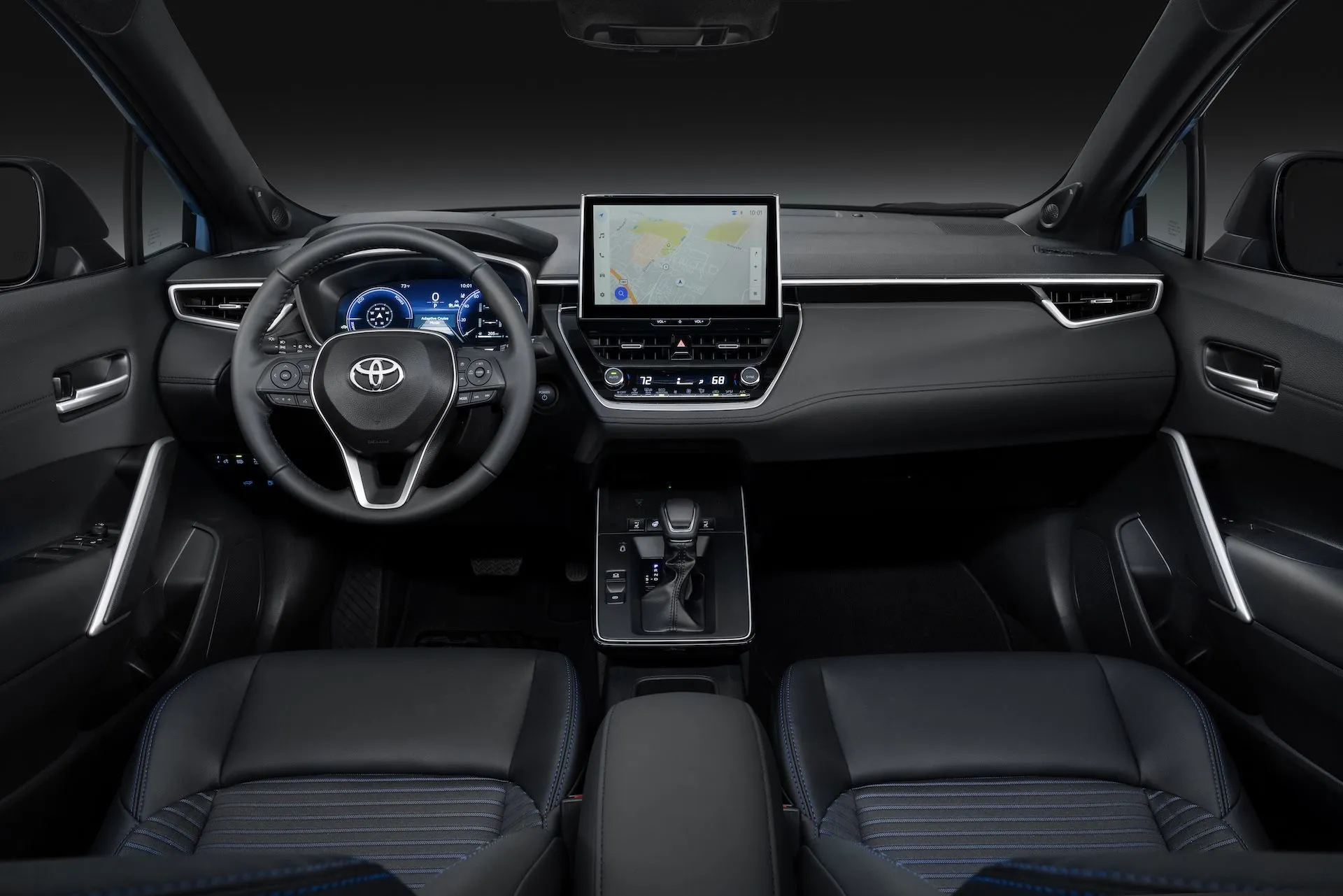
If there’s a definitive reason to buy the 2027 Toyota Corolla Cross Hybrid, it’s fuel economy. This car’s primary mission is to use very little fuel, and it does that with excellence. EPA (U.S. Environmental Protection Agency) estimates show 46 mpg in the city, 39 mpg on the highway, and 42 mpg in the combined cycle.
In real-world tests at 75 mph, the vehicle recorded 36 mpg—an impressive figure that leaves the non-hybrid version behind (which managed just 30 mpg on the same test). This efficiency makes the hybrid a smart financial choice long term, especially in heavy urban traffic scenarios where the electric system does more of the work.
In terms of pricing, Toyota’s strategy is aggressive. The base S AWD starts at around $30,445, while the SE AWD version—which we believe offers the best value for money—comes in at $31,765. The more fully equipped XSE AWD version costs $34,480. When you factor in the standard driver-assistance equipment, which includes automatic emergency braking, lane-departure alerts, and adaptive cruise control across all models, the perceived value is high.
However, the hybrid market is fierce. Competitors like the 2026 Nissan X-Trail are rolling out luxury SUV technologies to challenge the category, offering more refined interiors that can appeal to buyers who won’t tolerate Toyota’s plain finish. On top of that, the price war with Chinese brands is heating up. The 2027 BYD Song Plus, for example, reveals turbocharged engines and extended ranges—putting pressure on traditional automakers to innovate faster.
Warranty is also a factor to consider. Toyota offers a limited 3-year or 36,000-mile warranty, and a 5-year or 60,000-mile powertrain warranty. The hybrid component is covered for an extended 10 years or 150,000 miles, bringing peace of mind. However, free maintenance lasts only 2 years or 25,000 miles, which is considered basic compared to Korean rivals that often offer 100,000-mile coverage on the powertrain.
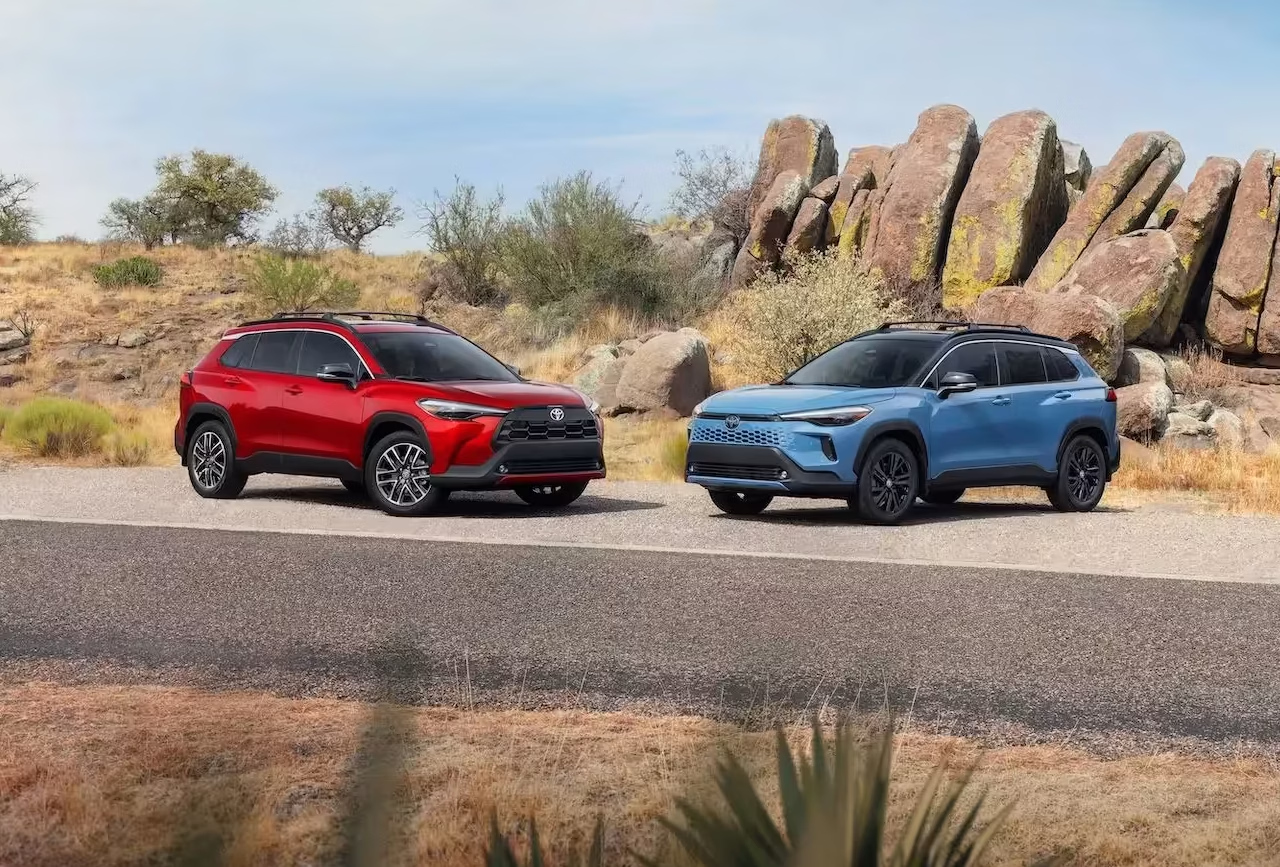
In short, the 2027 Toyota Corolla Cross Hybrid earns its place in the Corolla lineup honestly. It’s a vehicle that prioritizes function over form, offering reliable mechanics, standard all-wheel drive, and fuel economy that few can match. If you’re a pragmatic driver who values every cent spent at the gas pump and doesn’t care about a simple interior or an unexciting driving feel, this is your car. But if you’re looking for cutting-edge technology, premium finishes, or an engaging driving experience, you may end up looking at the competition and realizing that sometimes saving on fuel can be costly in other aspects of ownership.
For anyone torn between sticking with tradition or taking a chance on new technologies, it’s worth remembering that evolution doesn’t stop. While Toyota continues to refine what already works, others are trying to reinvent the wheel, as seen in the 2026 Subaru Ascent, where even louder engines can bring surprisingly big long-term savings. The final choice depends on what you prioritize: the safety of the known, or the promise of the new.