
Toyota made a small visual change that says a lot about where its electrified future is heading.
Why Toyota Ditched The Blue Badges For Its Hybrids
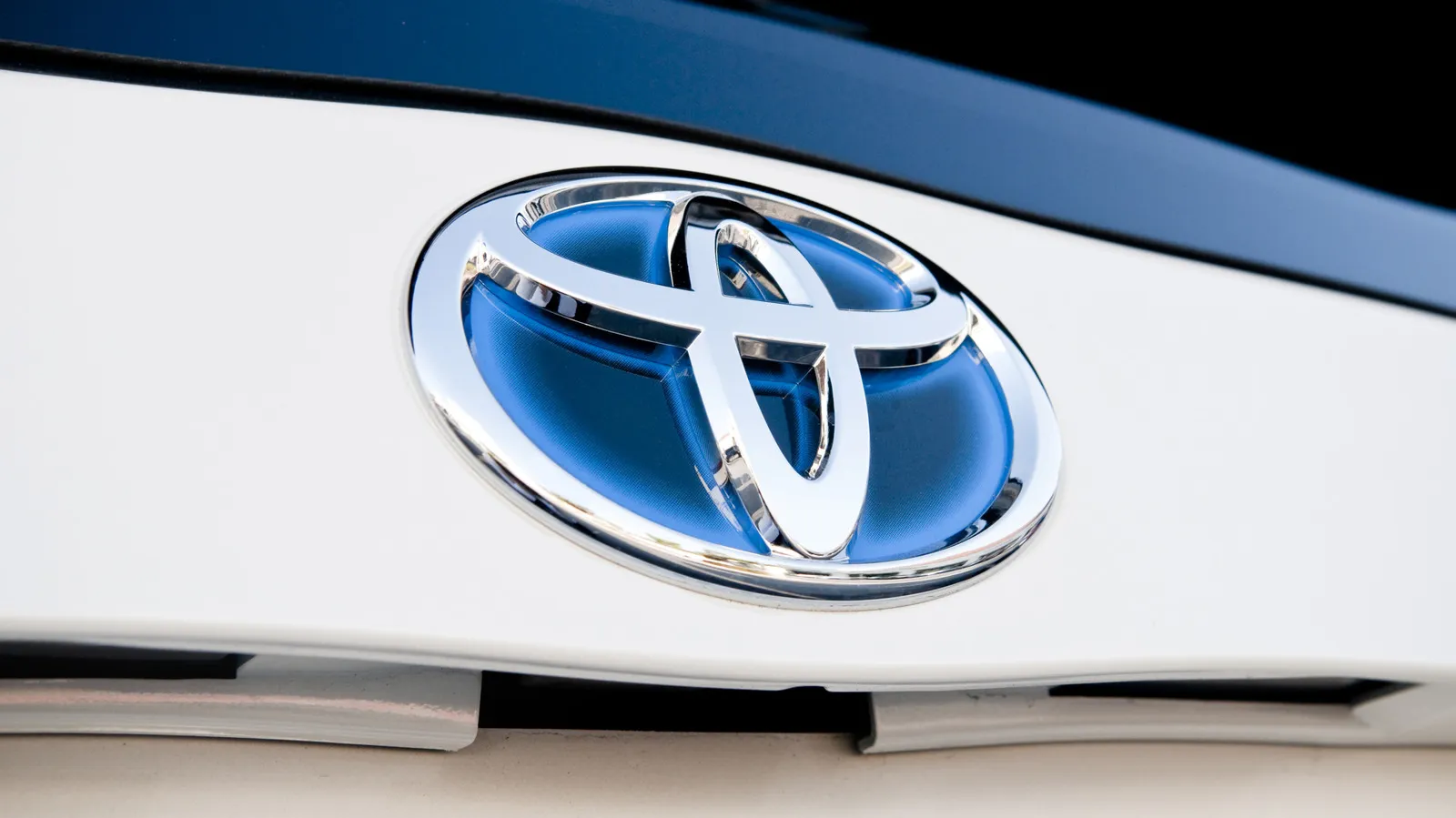
For more than a decade, Toyota’s blue-accented emblem was one of the easiest ways to spot a hybrid on the road. The design became familiar after the third-generation Prius arrived for the 2010 model year, turning the blue halo around the Toyota badge into a quiet symbol of fuel-saving technology. But that era is ending.
Starting with key 2025 launches, Toyota has been moving away from the classic blue hybrid badge. The most visible example is the 2025 TOYOTA CAMRY, which now comes exclusively as a hybrid in North America. Because there is no longer a gasoline-only Camry to distinguish from a hybrid one, Toyota no longer needs the old blue halo to signal electrification.
This is not just a styling tweak. It is a broader branding decision tied to Toyota’s expanding electrified lineup. Today, the company sells a wide range of electrified vehicles, including hybrid electric vehicles, plug-in hybrids, battery electric vehicles, and hydrogen fuel-cell models. That wider strategy now lives under one umbrella name: Beyond Zero.
From Prius Identity To Beyond Zero Strategy
The blue halo originally worked because Toyota hybrids were once a niche within a mostly combustion-powered lineup. Back then, seeing a blue badge on a Prius, Camry Hybrid, or RAV4 Hybrid instantly told buyers they were looking at the efficiency-focused version.
Now the market is different. Toyota has expanded its electrified portfolio so aggressively that the old visual language became too narrow. Instead of a one-size-fits-all hybrid look, Toyota is shifting to a more unified badge system that can cover:
- HEV models, meaning conventional hybrids
- PHEV models, meaning plug-in hybrids
- BEV models, meaning fully electric vehicles
- FCEV models, such as the hydrogen-powered Toyota Mirai
In place of the old blue-ring Toyota emblem, many electrified models now receive HEV badging and a small blue dot. That dot is designed to represent Toyota’s Beyond Zero family rather than a single powertrain type.
The message has changed from “this Toyota is a hybrid” to “this Toyota belongs to Toyota’s bigger electrified ecosystem.”
This also explains why Toyota dropped the Prime name from some plug-in hybrids. Models like the latest RAV4 Plug-In Hybrid are now branded more directly, without the older sub-label.
The 2025 TOYOTA CAMRY Made The Change Impossible To Ignore
The new Camry is where the shift became obvious. Toyota redesigned the sedan around its fifth-generation hybrid system, and the numbers are strong enough to make the badge debate feel almost secondary.
- 225 hp in front-wheel-drive form
- 232 hp with electronic all-wheel drive
That matters because Toyota is no longer selling the hybrid as the “eco compromise” version. In cars like the Camry, the hybrid is now the main event. If every Camry is electrified, the old blue halo loses its job.
This same logic is likely to spread fast across high-volume models. The RAV4 remains one of Toyota’s biggest success stories, and demand is so intense that production capacity in Kentucky, Ontario, and Japan has struggled to keep up. In 2025, Toyota reportedly moved more than 479,000 RAV4 units, making the transition to new badges highly visible on public roads.
If you follow Toyota’s broader lineup moves, this fits a pattern. The brand is simplifying how customers understand efficiency, technology, and performance. That same hybrid mainstreaming can also be seen in products that lean heavily on value and image, as discussed in this breakdown of the TOYOTA COROLLA CROSS HYBRID 2027 and in this look at the TOYOTA COROLLA FX 2026.
What The New Toyota Hybrid Badges Mean For Buyers
For shoppers, the practical impact is simple. If you are looking at a new Toyota and wondering why the familiar blue outline is missing, it does not mean the company is abandoning hybrids. In reality, the opposite is true. Toyota is making hybrid technology so common that it no longer needs a special visual badge to justify it.
The newer blue dot and HEV identification are more subtle, but they align better with a market where electrification comes in many forms. It also helps Toyota keep hybrid, plug-in hybrid, EV, and fuel-cell products under one brand language instead of splitting them into older visual categories.
That matters in an industry where branding is becoming as important as hardware. Rivals are also redefining how they present electric and hybrid performance, whether through silent luxury in the MERCEDES-BENZ GLC400 ELECTRIC, next-gen packaging in the VOLVO EX60 2027, or value-driven disruption in BYD’s aggressive EV strategy.
| Old Toyota Hybrid Identity | New Toyota Electrified Identity |
|---|---|
| Blue halo around Toyota emblem | Blue dot and specific HEV/PHEV labeling |
| Focused mainly on hybrids | Covers the full Beyond Zero portfolio |
| Useful when hybrids were niche | Better suited to a mainstream electrified lineup |
The blue badge is disappearing not because Toyota hybrids matter less, but because they matter so much more now. What once marked a special version has become part of the brand’s core identity, and that makes the old symbol feel like a leftover from an earlier phase of the hybrid revolution.