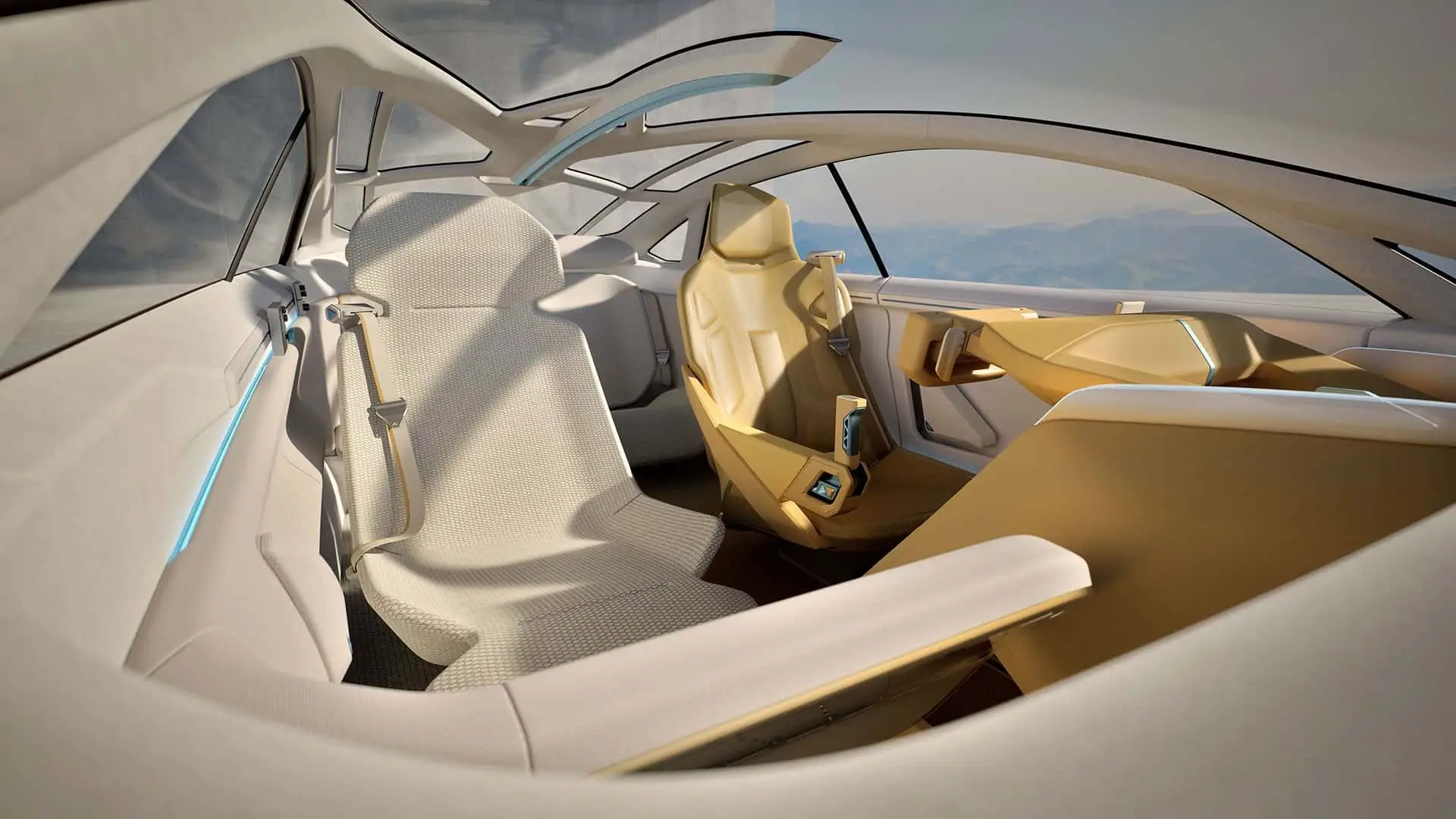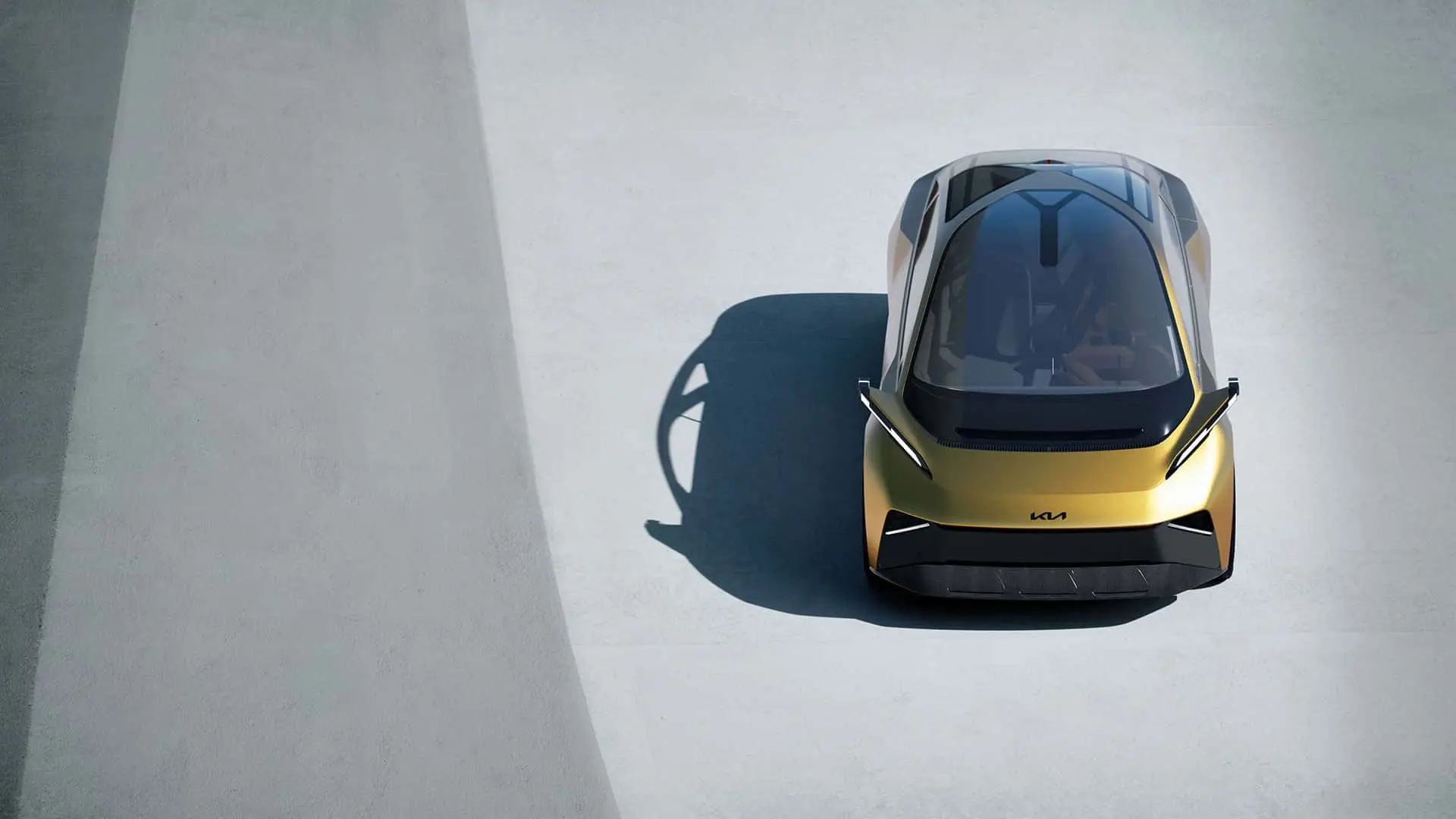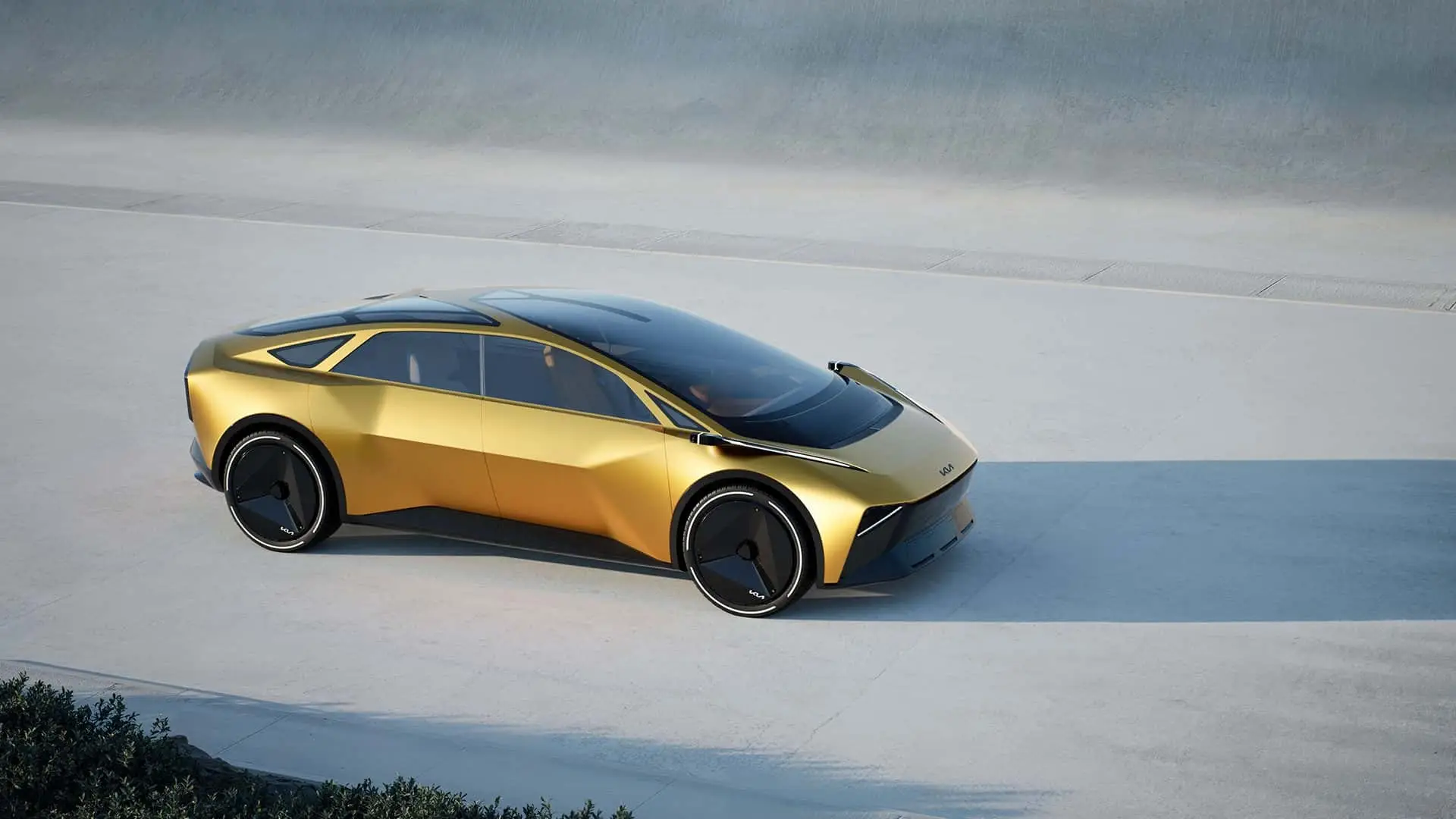
A spaceship on wheels? See the futuristic, steering-wheel-free interior and the sharp design of the KIA VISION ETO.
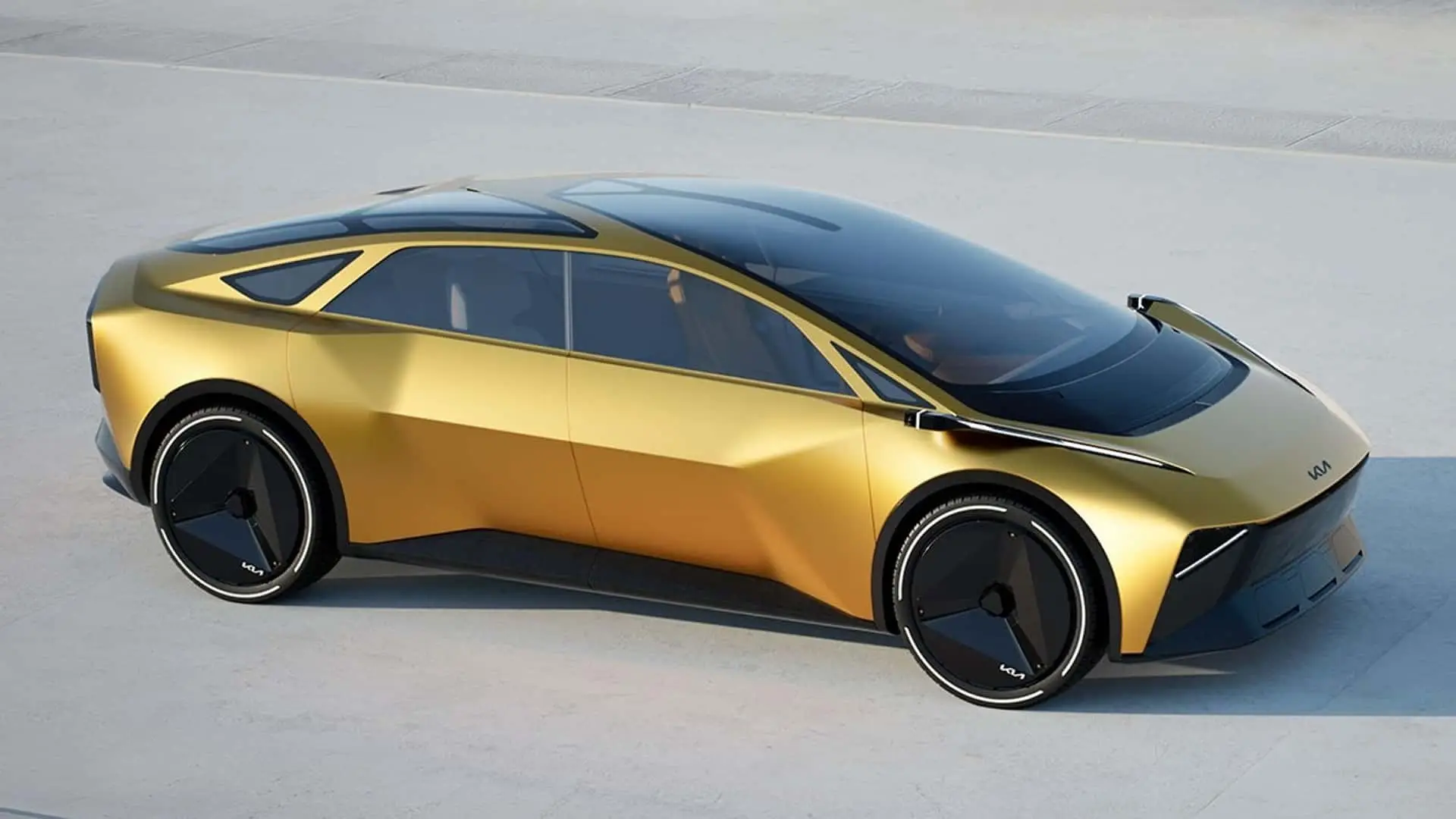
Forget everything you know about the traditional sedan. The automotive industry has just witnessed a visual watershed moment with the reveal of the KIA VISION ETO (Electric Touring Oscillator). Designed not just as a vehicle, but as a statement of intent, this concept emerges to celebrate the South Korean automaker’s historic 80th anniversary milestone. Far from being a mere nostalgic style exercise, Kia presented itself—and the world—with what they call a “vision for a new era of mobility.” With an aesthetic that defies current conventions, the model is literally described as a “spaceship on wheels,” blending the aggressiveness of classic 1960s GTs with a purely futuristic architecture.
Exterior Design: A Sharply Angled Sculpture in Motion
The most striking aspect of the KIA VISION ETO is undoubtedly its bodywork. Unlike the organic and fluid design trends dominating much of the EV market, this concept leans into “ultra-sharp” geometry. It is a symphony of acute angles and tension lines that give the vehicle an intimidating and dynamic presence, even when stationary.
Lighting plays a crucial role in this visual identity. Thin light strips slice across the front and rear, creating an unmistakable nocturnal signature. The silhouette adopts a pronounced fastback style, with a roofline that plunges dramatically toward the rear. Interestingly, despite initial rumors sparked by mysterious teasers, the concept does not feature a conventional trunk lid or a fifth liftback door, reinforcing its experimental nature.
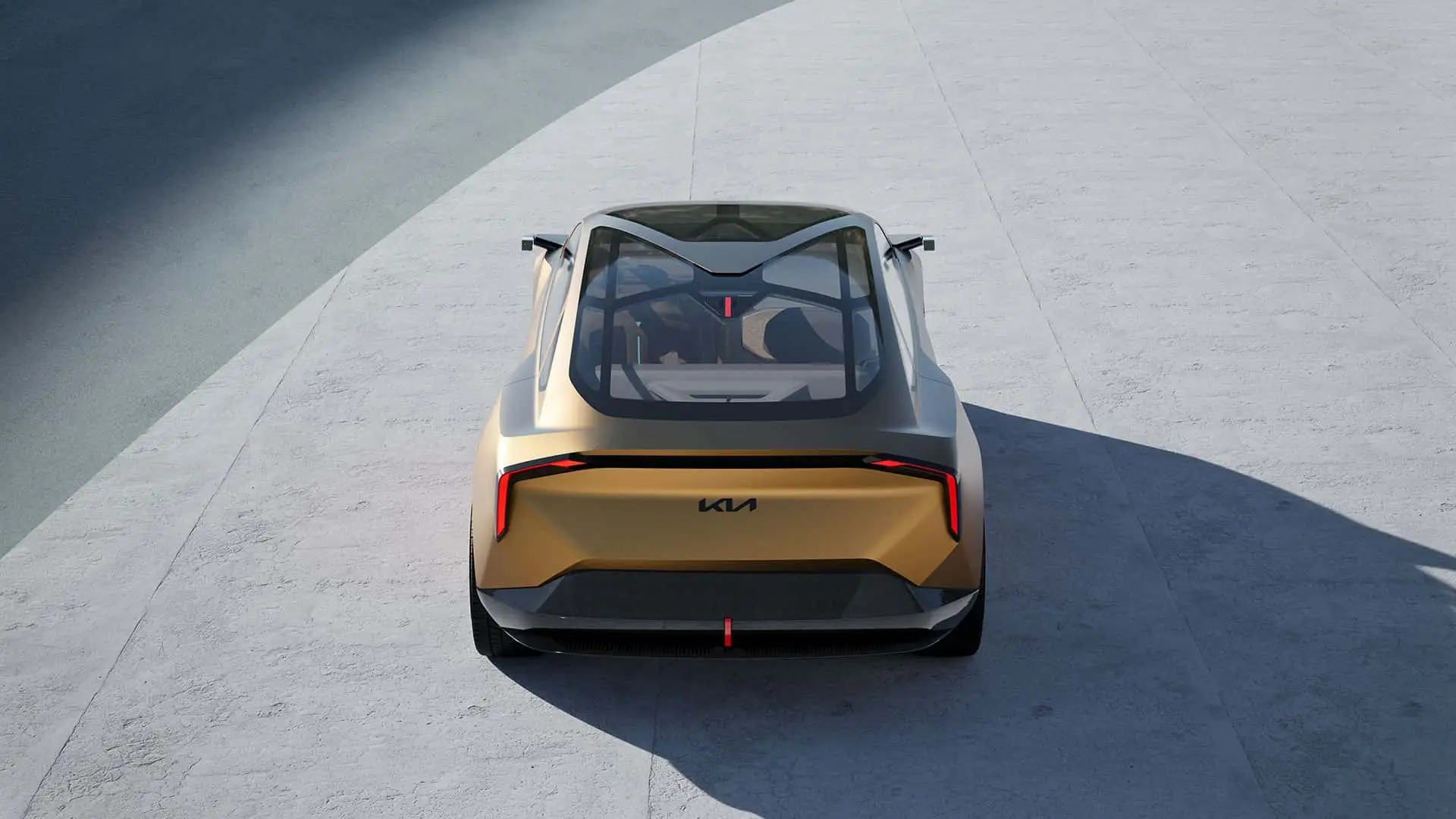
The technology embedded in the exterior design also suggests a paradigm shift. Similar to what we saw in the BMW iX3 2027 abandoning the traditional dashboard for projection, Kia appears to be exploring new forms of visual and aerodynamic interaction, eliminating unnecessary elements like B-pillars to create a sense of continuity and openness rarely seen.
Interior: The Future “Lounge” and the End of the Conventional Steering Wheel
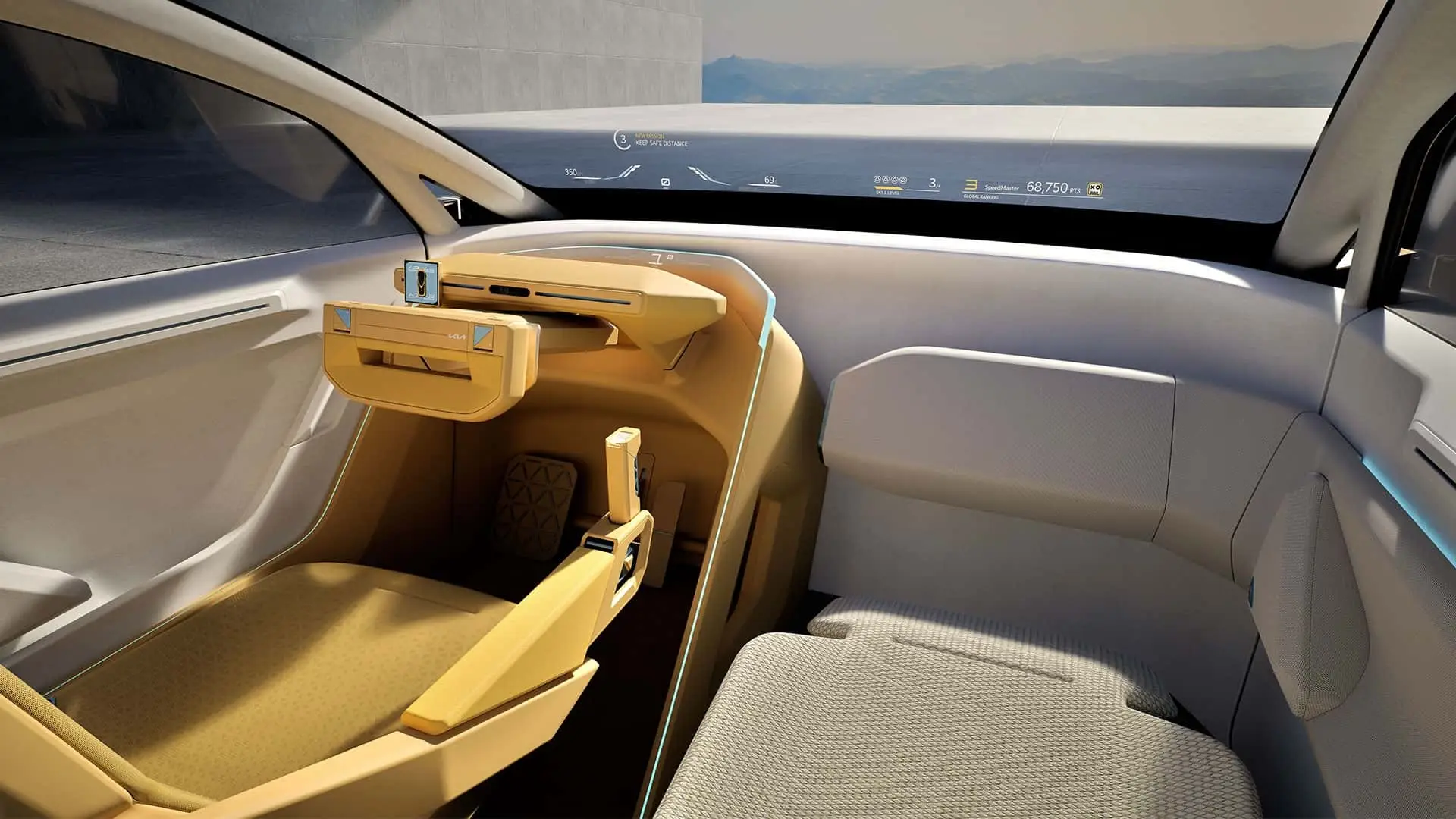
If the exterior screams speed, the interior whispers comfort and advanced technology. Upon opening the doors, we are greeted by an environment designed to emulate a luxury lounge, flooded with natural light through multiple glass panels composing the glazed area. The absence of B-pillars is not just aesthetic; it transforms accessibility and the perception of interior space.
The command center is where science fiction becomes reality:
- D-Shaped Steering Wheel: Equipped with square buttons, departing from the perfect circle.
- Projected Instrumentation: Instead of massive physical screens dominating the dash, Kia opted to project essential information, maintaining a clean design.
- Joystick Control: The most controversial and exciting detail is the joystick on the armrest, reminiscent of an aircraft control stick or a “pistol grip,” suggesting an advanced drive-by-wire system.
This minimalist, user-experience-focused approach mirrors other brands’ efforts to revitalize cockpits, as seen in the 2026 Honda Prelude, which revives the coupe spirit with a premium interior. Kia, however, takes this a step further, suggesting that autonomous driving could be a central part of this vehicle’s proposition.
Performance and the Mystery of the Stinger Successor
For months, the internet was fueled by speculation that Kia was preparing a direct successor to the acclaimed Stinger. Teaser images of a fastback sedan only poured gasoline on the fire. However, a cold analysis of the KIA VISION ETO indicates that while they share a sporty roofline, there is no direct mechanical or spiritual connection confirming the return of the Stinger as we knew it.
What we do know is that the concept is fully electric (EV). Kia promises “dynamic driving performance” but keeps the technical specifications under lock and key. If this vehicle—or a production version derived from it—reaches the streets, it will likely be positioned to compete with heavyweights of electrification. The architecture suggests something comparable to the Hyundai Ioniq 6 N, which turns the electric into a track monster, utilizing the group’s E-GMP platform to deliver brutal performance.
Kia’s strategy is bold. At a time when traditional brands are struggling to balance innovation and sales—witness the recent Porsche crisis and the issue with their electric cars—presenting such a radical concept shows confidence. The automaker, which began by manufacturing bicycles and industrial parts in 1944, is now dictating global design trends.
Although mass production of the Vision ETO is unconfirmed, it serves as a beacon. It tells us that Kia’s future will not just be about transport, but about experience, angular design, and a complete rejection of automotive boredom. It remains to be seen if the market will have the courage to embrace a spaceship in their garages.