
You love the durability and all-wheel drive of a SUBARU, but have you heard horror stories about head gaskets blowing out? This nightmare has affected specific generations, costing thousands in repairs. Let’s break down the bad years, warning signs, and solutions so you don’t fall into the trap.
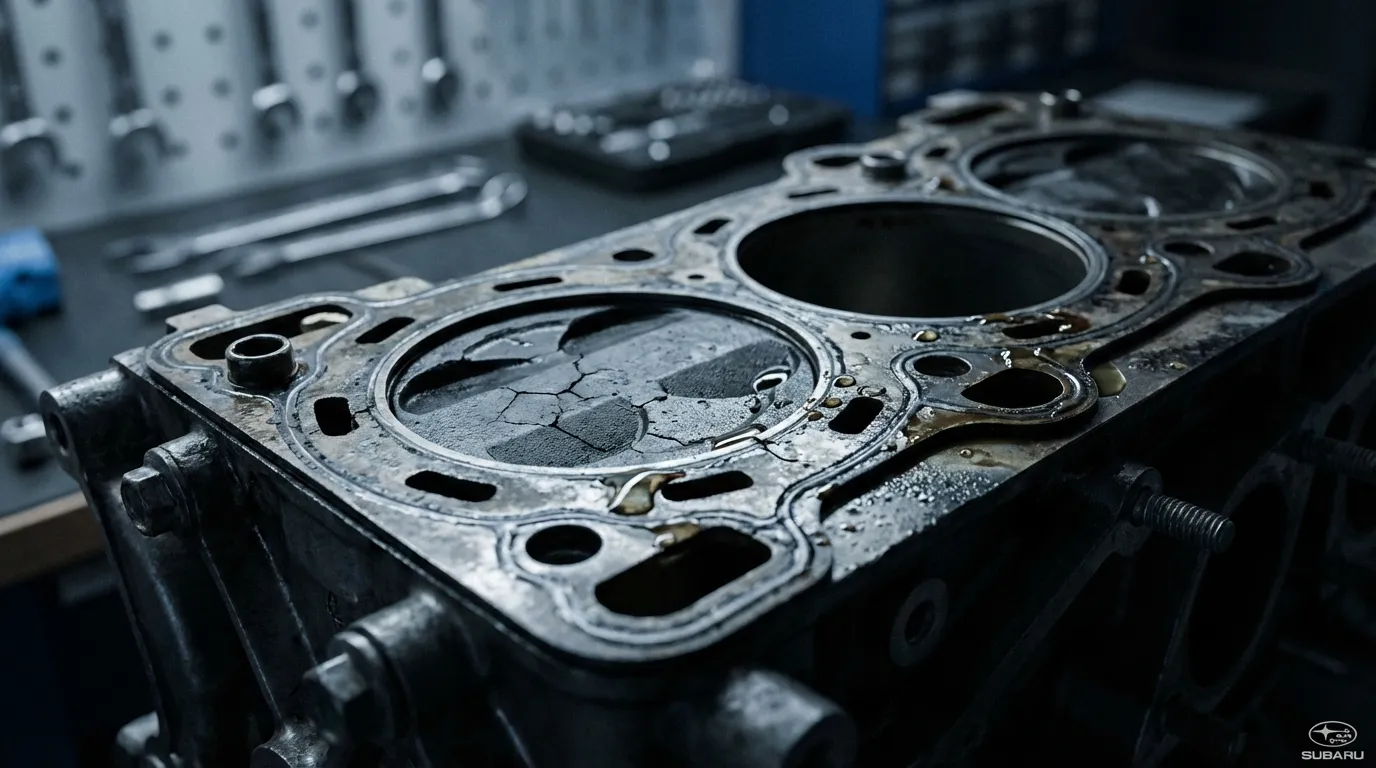
The EJ25 Engines and Successors: SUBARU’s Achilles’ Heel
SUBARU‘s reputation for reliability is legendary, but between the years 1990 and 2010, the 2.5-liter engines from the EJ family became synonymous with headaches. It all started with the 1996 EJ25, considered one of the most problematic powerplants in automotive history. This boxer engine, famous for its unique rumble and off-road performance, suffered from internal head gasket failures, allowing coolant to leak into the combustion chambers.
The first affected models were the 1996 to 1999 models: SUBARU Outback, Legacy GT, and LSi, in addition to the 1998 Forester and Impreza. The single-layer gasket, made of composite material, could not withstand the extreme pressure and temperatures of the flat-four boxer. Subaru reacted quickly in 1997 with the introduction of the more robust multilayer steel (MLS) gasket, but the damage was already done for many owners.
The problem didn’t stop there. It evolved into the EJ251, EJ252, and EJ253, naturally aspirated SOHC (single overhead camshaft) versions. Here, the failures were external, occurring between the block and the cylinder heads, causing oil and coolant mixing. This contamination is devastating: the oil loses lubrication, accelerating wear on pistons, rings, and bearings. Affected models include:
- SUBARU Legacy (2000–2009)
- SUBARU Baja (2003–2006)
- SUBARU Forester (1999–2010)
- SUBARU Outback (2000–2009)
- SUBARU Impreza (1999–2011)
These naturally aspirated engines were the most vulnerable—turbocharged versions like the EJ20 or EJ255 rarely failed. Failures typically occurred between 75,000 and 95,000 miles (120,000 and 150,000 km), but severe use (off-roading, towing, or poor maintenance) accelerated the process. If you are considering a used model from these years, check the mileage history and engine repair records.
Curiously, while this was happening, rival brands like NISSAN maintained minimal recalls thanks to strict factory controls. At SUBARU, the unique boxer configuration required specific engineering, and the transition to MLS solved most of the issues after 2010.
Warning Signs: How to Identify a Failing Head Gasket Before Disaster Strikes
Don’t wait for the engine to seize on the road. The symptoms are clear and progressive, allowing for early intervention. The most obvious is overheating: the temperature gauge climbs for no apparent reason, even in light traffic. This happens because the cracked gasket allows coolant to escape, compromising the cooling system.
Look under the hood: oil or coolant leaks around the cylinder head and block are common. Dripping on the ground? Red flag. Worse: fluid mixing. Check the oil in the reservoir—if it looks foamy or milky (like a milkshake), coolant has invaded. In the coolant, bubbles or floating oil confirm the problem.
Other indicators include:
| Sign | Why It Happens | Immediate Action |
|---|---|---|
| Exhaust with white smoke | Coolant burning in the chambers | Stop the car and call a tow truck |
| Power loss and misfires | Irregular combustion due to leakage | Diagnosis with an OBD-II scanner |
| Sweet smell from the exhaust | Coolant evaporating | Check fluid levels daily |
| Bubbling in the radiator or reservoir | Combustion gases entering the system | Urgent compression test |
These signs resemble other engine problems, such as bluish smoke from excess oil, but on a SUBARU, they point directly to the head gasket. A specialized mechanic can confirm this with a hydrocarbon test on the coolant or a compression measurement.
Average repair cost? From R$ 6,000 to R$ 15,000 in Brazil (US$ 1,200–2,500 in the US), depending on the model and collateral damage. Ignoring it can destroy the entire engine, turning it into scrap.
Definitive Solutions: Prevention and Upgrades for Your Older SUBARU
Good news: SUBARU corrected this over a decade ago. Post-2012 models with improved EJ25 or the FA/FB series are much more reliable. For affected classics, replace the gasket with OEM MLS or high-quality aftermarket options (like Cometic or Fel-Pro). Reinforce with machined heads, ARP head studs, and a 180°F thermostat.
Maintenance prevents 80% of cases: use high-performance coolant (like Subaru Super Coolant), change it every 30,000 miles (50,000 km), monitor temperature, and avoid overheating. Naturally aspirated blocks benefit from O-ringed heads for extra sealing.
If you own a Forester or Outback from these years, consider the myths about spark plugs—they influence combustion, but bad gaskets are the real culprit. For performance, add an iridium or platinum plug, reducing hot spots.
Buying used? Prioritize a full inspection. Forums like SubaruForester.org and NASIOC report that with upgrades, these Subarus last 300,000+ miles without drama. Today, rivals like the Volkswagen Jetta GLI excel in performance, but nothing beats SUBARU‘s AWD in snow or on the trail.
In summary, avoid the listed years or invest in prevention. Your SUBARU deserves longevity—and so does your bank account.