
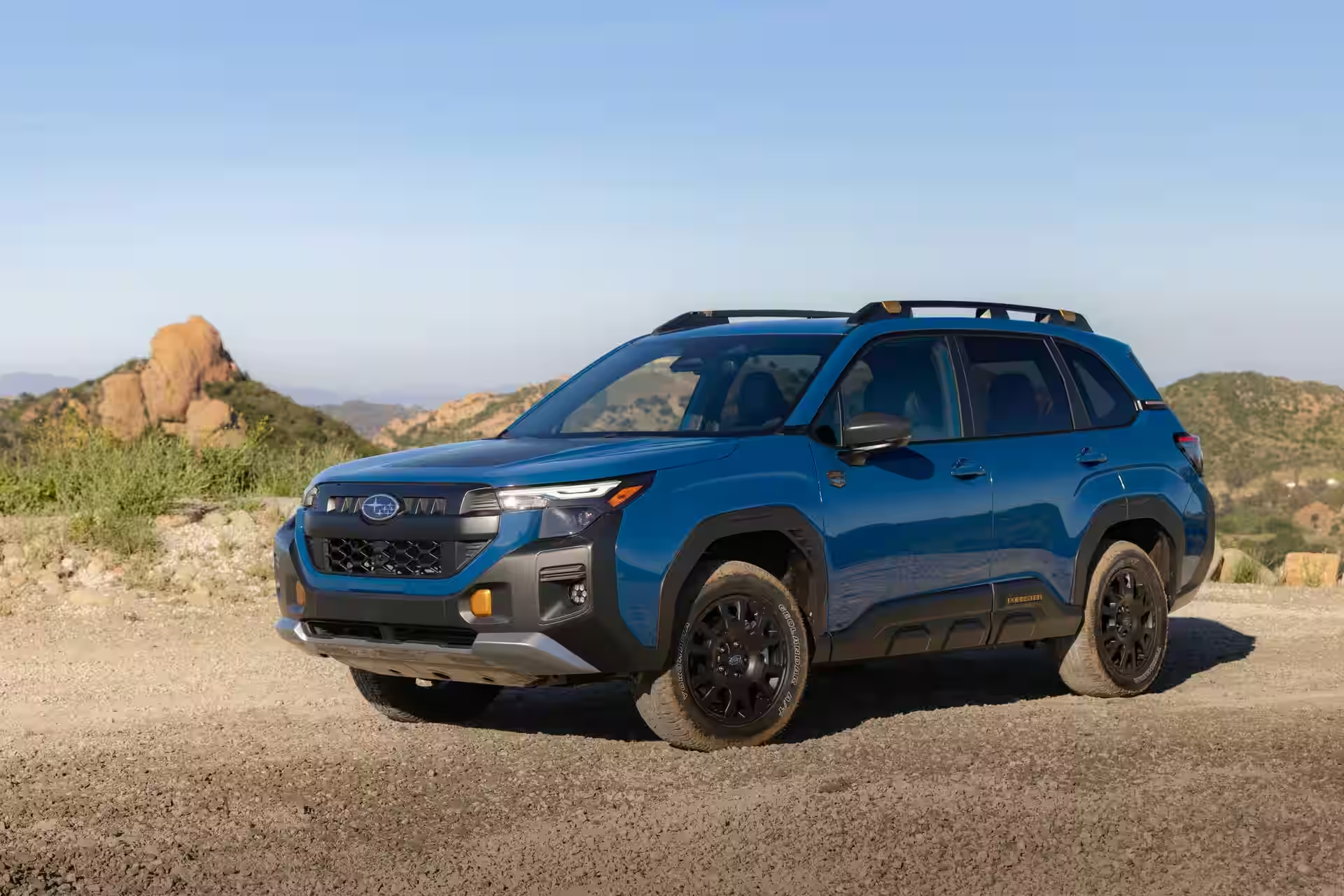
The 2027 Subaru Forester is not the SUV that tries to win a traffic light race. It is the one that quietly handles school runs, road trips, bad weather, and weekend cargo without drama. That approach has always been Subaru’s calling card, and for 2027 the Forester doubles down on it with standard all-wheel drive, a roomy cabin, and a long list of safety tech.
Why The 2027 Subaru Forester Still Matters
The compact SUV market is crowded with polished, turbocharged, and heavily marketed rivals, but the Forester still sells a very specific promise: maximum usefulness with minimum fuss. That is exactly why it keeps showing up on shopping lists for drivers who value visibility, passenger space, winter traction, and easy ownership over sporty theater.
Under the hood sits a 2.5-liter flat-four engine making 180 horsepower and 178 lb-ft of torque, paired with a CVT and Subaru’s standard AWD system. On paper, those numbers are modest. In real life, the setup is tuned for calm commuting rather than aggressive acceleration. If your daily drive is more about comfort and confidence than sprint times, the Forester makes sense almost immediately.
That also explains why the Forester’s character remains so distinct. Rival SUVs like the Honda CR-V, Mazda CX-5, Toyota RAV4, and Hyundai Tucson may feel quicker or more polished in certain situations, but the Subaru still has a practical edge thanks to its upright design, excellent outward visibility, and standard all-weather capability.
For 2027, Subaru carries the model forward without major changes after the broader redesign that arrived for 2025. That means the formula is now settled, and shoppers can focus on choosing the trim that best matches their needs rather than waiting for a major refresh.
Performance, Fuel Economy, And The Wilderness Tradeoff
Let’s be honest about the Forester’s biggest compromise: it is not built to thrill. Steering feedback is light, the CVT can let the engine drone under hard throttle, and the chassis is tuned more for a smooth ride than for sharp handling. In our testing context, the Sport trim reached 60 mph in about 8.3 seconds, while the Wilderness needed roughly 8.4 seconds. That is perfectly acceptable for family duty, but not the kind of number that will impress a performance buyer.
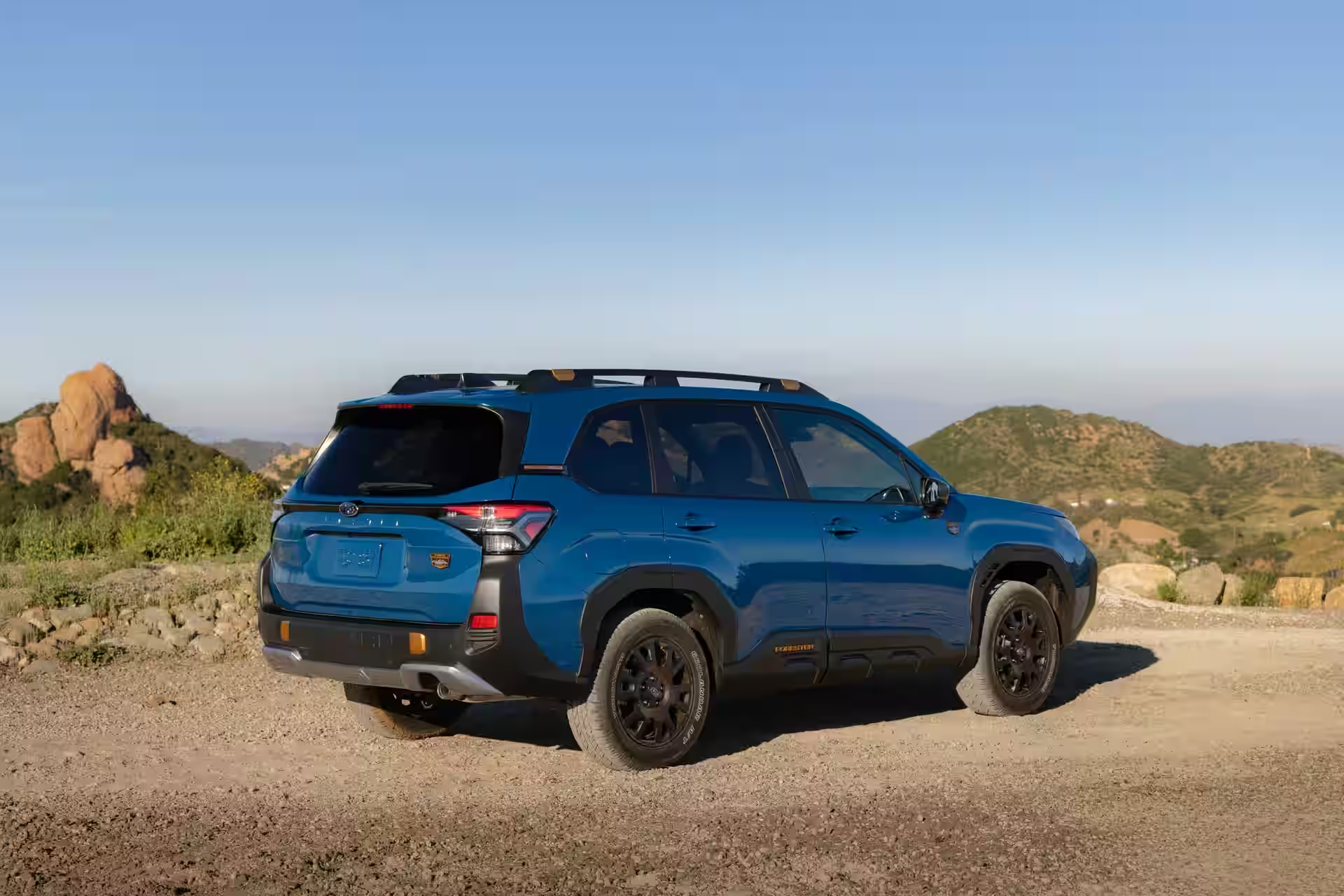
Still, there is a reason the Forester keeps a loyal audience. The ride quality is genuinely good, especially on rough pavement, and the tall body gives the SUV a planted, easygoing feel in everyday use. The Wilderness trim goes further with more aggressive all-terrain tires, a revised final-drive ratio, and extra ground clearance. It is the version for buyers who actually plan to leave the asphalt behind.
That adventure focus comes with a penalty. The Wilderness is less efficient than the rest of the lineup, returning an EPA estimate of 24 mpg city, 28 mpg highway, and 26 mpg combined. Standard trims do better at 26/33/29 mpg. If you spend most of your time in urban traffic or on the highway, the regular Sport or Touring trims make more financial sense.
For buyers who want a more efficient and slightly more responsive version, Subaru offers the Forester Hybrid, which lifts output to 194 horsepower and 199 lb-ft of torque while also improving refinement. That hybrid option is the quiet sleeper in the range, especially for drivers who want Subaru practicality without the same fuel penalty.
| Key 2027 Forester Specs | Details |
|---|---|
| Engine | 2.5-liter flat-four |
| Power | 180 hp |
| Torque | 178 lb-ft |
| Transmission | CVT |
| Drivetrain | Standard AWD |
| 0-60 mph | About 8.3 to 8.4 seconds |
| Combined Fuel Economy | 26 to 29 mpg depending on trim |
| Maximum Towing | 3,500 lb on Wilderness |
One of the most overlooked numbers is towing. The Wilderness trim is rated for 3,500 pounds, while other Forester versions are capped at 1,500 pounds. That makes the Wilderness the clear choice if you want a small SUV that can pull a lightweight camper, small boat, or trailer with more confidence.
If this kind of practical engineering interests you, you may also enjoy our look at the Subaru Forerunner Wilderness Hybrid 2027, which pushes the brand’s adventure formula in a more electrified direction.
Interior Space, Safety Tech, And Which Trim Is Worth It
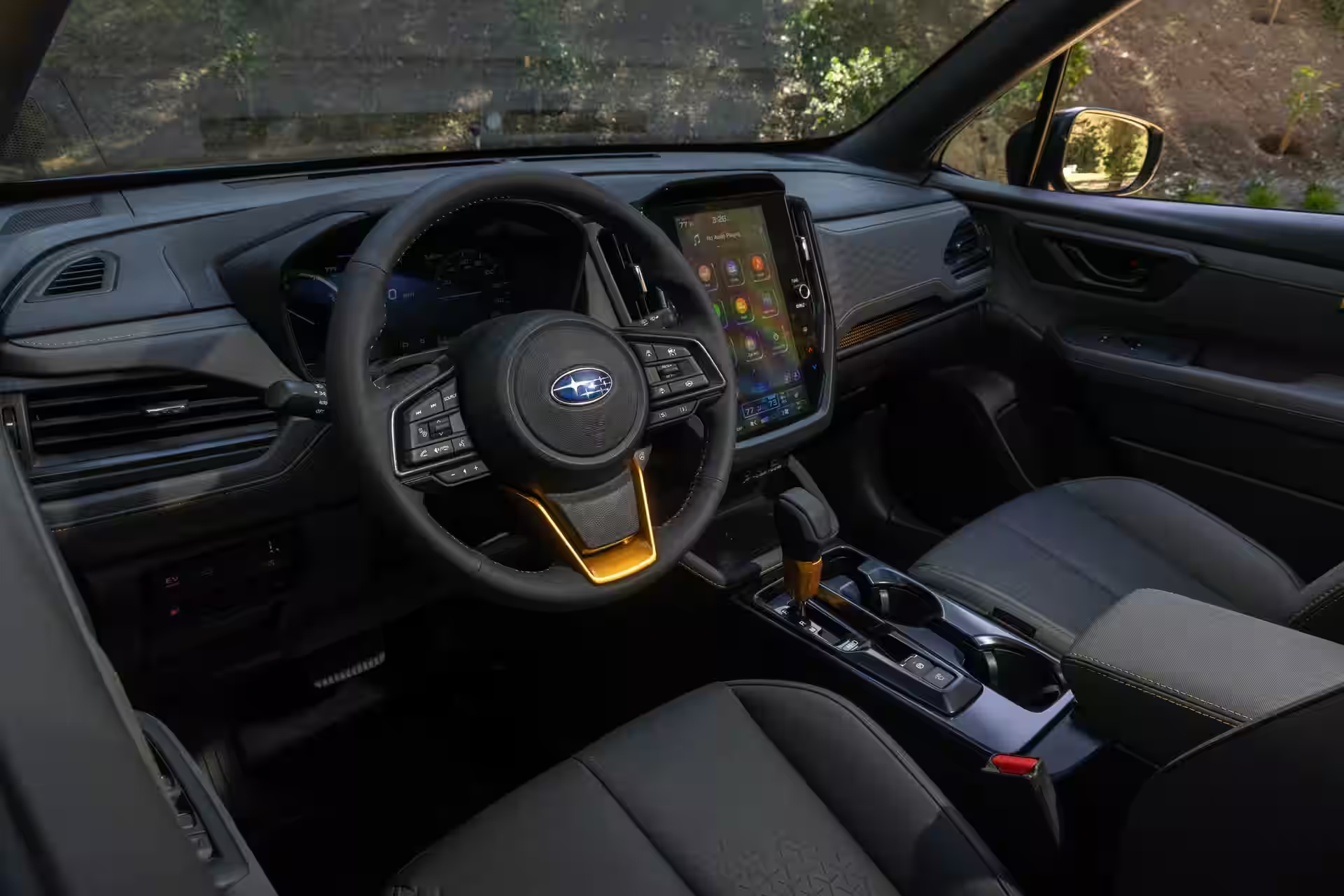
This is where the 2027 Forester earns most of its fans. The cabin is upright, bright, and genuinely spacious. Tall windows and a high roofline create a feeling of openness that many compact SUVs simply cannot match. Front passengers get generous headroom and legroom, and the rear seat is roomy enough for adults without the usual knees-up compromise.
Cargo capacity is another strong point. With the rear seats upright, the Forester offers about 30 cubic feet of storage. Fold them down and that figure expands to as much as 75 cubic feet, which puts it among the more useful options in the segment. In real-world terms, that means luggage, sports gear, groceries, and bulky home-improvement runs are all handled without much planning.
Subaru also keeps the tech straightforward. Most trims get a large 11.6-inch infotainment touchscreen, while base versions use dual 7.0-inch displays. Wireless Apple CarPlay and Android Auto are included, and wireless charging is available on higher trims. The interface is not the flashiest in the class, but it is easy to understand and built around everyday usability.
Safety remains one of the Forester’s biggest selling points. Every model includes Subaru’s EyeSight driver-assistance suite, with automated emergency braking, lane-departure warning with lane-keeping assist, and adaptive cruise control. For many buyers, that standard safety content is the real reason to choose Subaru over a competitor with a more stylish cabin but fewer confidence-building features.
For most shoppers, the Sport trim is the sweet spot. It adds bronze exterior accents, unique wheels, heated front seats, and a leather-wrapped steering wheel, which gives the Forester a more premium personality without pushing pricing too far. The Wilderness is more compelling for outdoors-focused drivers, but if you do not plan to use the extra off-road hardware, the Sport represents the smarter value.
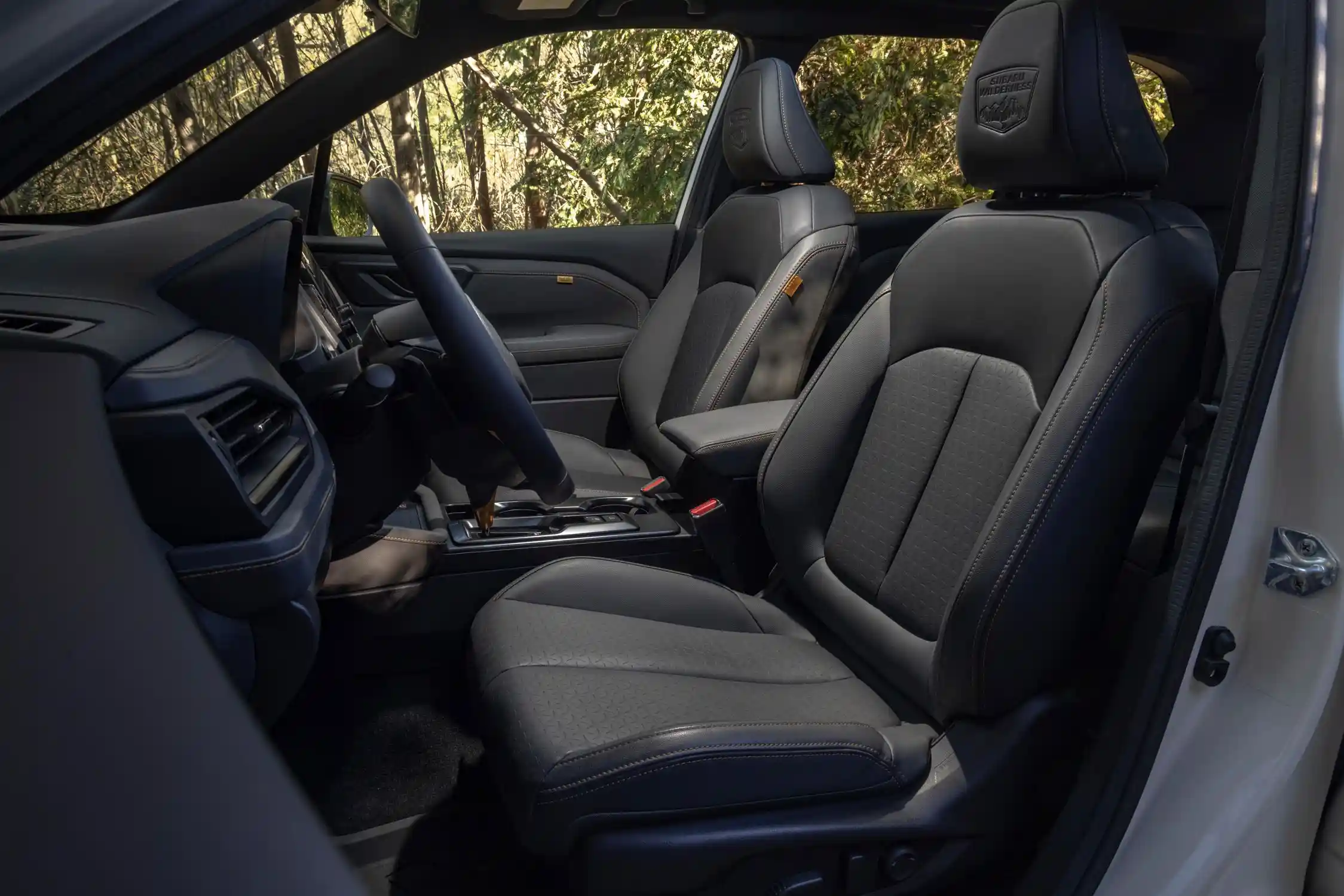
The Touring trim tops the lineup with more comfort and convenience features, while the base model is mostly about affordability. The Premium and Limited versions fill in the middle, but the Sport stands out as the one trim that best balances personality, value, and equipment.
Buying takeaway: Choose the Sport if you want the best all-around Forester. Choose the Wilderness only if the extra traction, 3,500-lb towing rating, and tougher hardware will actually be used. Choose the Hybrid if fuel savings and refinement matter more than off-road ability.
That logic mirrors what makes other recent SUVs interesting too, whether it is the Hyundai Kona 2027 sharpening value in the small-SUV class or the Toyota Corolla Cross Hybrid 2027 trying to win buyers with efficiency-first engineering.
From an E-E-A-T standpoint, the Forester is easy to recommend because its strengths are clear and consistent. It is spacious, safe, comfortable, and predictable. It is not trying to win enthusiast headlines. It is trying to be the most rational choice for families, commuters, and outdoor-minded buyers who want an SUV that simply works.
If your checklist includes standard AWD, strong visibility, a useful cargo area, and a cabin that feels bigger than the exterior dimensions suggest, the 2027 Subaru Forester deserves serious attention. If you want sharp steering, quick acceleration, and a richer driving feel, the competition still has the edge. But for buyers who prioritize real-world practicality, Subaru’s formula remains one of the smartest in the compact SUV class.