
Ruthenium or Iridium? Which spark plug delivers more power, savings, and lasts up to 190,000 km (120,000 miles)?
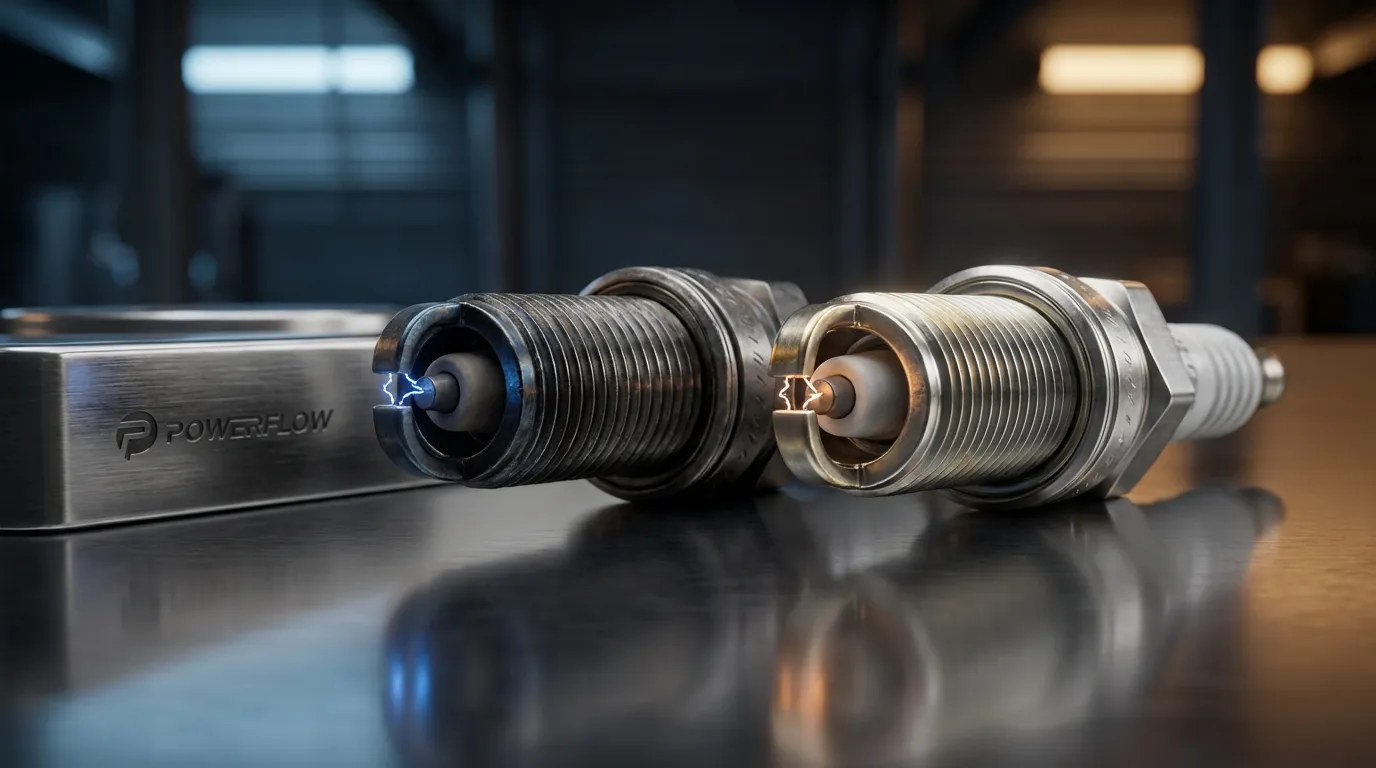
If you think all spark plugs are the same and that buying the cheapest one at auto parts stores is a good deal, get ready to open your mind — and maybe save your engine from premature wear. For decades, copper was king, followed by platinum, and more recently, iridium reigned supreme as the gold standard in automotive ignition. But while most drivers are still debating whether it’s worth paying more for iridium, a silent revolution has happened under the hoods of the most modern and demanding cars. We are talking about Ruthenium, a precious metal that is rewriting the rules of durability and combustion efficiency, leaving even the acclaimed iridium plugs behind.
The Spark Evolution: From Copper to Iridium
To understand why ruthenium is the new “holy grail” of ignition, we need to quickly look in the rearview mirror. Copper plugs, although excellent conductors, wear out quickly due to electrical erosion. The industry responded with platinum, offering greater durability but with slightly lower conductivity.
Then, iridium appeared. Iridium spark plugs became the standard for those seeking longevity and performance. With an extremely high melting point, iridium allowed the creation of thinner central electrodes, requiring less voltage to generate the spark. This translated into better fuel economy and faster startups. Iridium or Platinum in your Car? Find out which ignition plug is right for you! and understand the foundation of this technology before taking the next evolutionary step.
However, even “powerful” iridium has its limits, especially regarding resistance to corrosion and oxidation in extremely aggressive combustion chamber environments, common in modern direct-injection and turbocharged engines. This is where the game changes.
What is Ruthenium and Why Does It Surpass Iridium?
Ruthenium is not just an exotic name to increase the product’s price. It is a rare transition metal belonging to the platinum group, closely related to rhodium, palladium, and osmium. If these names sound familiar, it’s because they are vital (and very costly) components of catalytic converters.
The main chemical advantage of ruthenium over iridium and platinum is its thermal stability and resistance to corrosion. While iridium is hard, ruthenium is exceptionally stable under extreme heat and chemical attacks from exhaust gases.
The Durability Battle
The numbers don’t lie, and the difference is palpable for those planning to keep their car for a long time:
- Iridium Spark Plugs (Top of the Line): Designed to last, on average, 160,000 km (100,000 miles).
- Ruthenium Spark Plugs: Thanks to their superior wear (erosion) and oxidation resistance, they can easily surpass 190,000 km (120,000 miles), maintaining the efficiency of a new plug.
This extra longevity isn’t just about delaying a visit to the mechanic. A plug that maintains the correct “gap” (electrode clearance) for longer ensures the ignition coil doesn’t suffer overload and that the catalytic converter isn’t contaminated by unburned fuel. Speaking of critical maintenance, beware of the parallel market: FAKE SPARK PLUGS: The Hidden Blow That Can Melt Your Engine and Drain Your Wallet is a must-read before buying any part online.
Real Performance: More Than Just Durability
Niterra North America (owner of the NGK brand), a pioneer in selling ruthenium plugs, shifted its marketing focus. Instead of just saying “lasts longer,” they demonstrated that it “burns better.”
The key to ruthenium’s performance is its high ignitability. The design of the ruthenium electrode allows the flame kernel to propagate much faster and more completely within the combustion chamber. This results in:
- Faster Cold Starts: Less effort for the starter motor and battery.
- More Stable Idle: Less vibration on the steering wheel when stopped at traffic lights.
- Throttle Response: A more complete burn means that when you press the accelerator, the power delivery is immediate, with no “hesitation.”
This is crucial in V6 or V8 engines that require absolute precision in combustion. There are many myths about maintaining these large engines, but the right ignition technology eliminates numerous problems. For example, see The Myths About Ignition Plugs in the TOYOTA CAMRY V6 That You Need to Stop Believing.
NGK Ruthenium HX: Understanding the Two Versions (DFE vs. PSPE)
This is where technology gets fascinating and where you need to pay attention so you don’t buy the wrong part. Unlike standard plugs that serve for “everything,” NGK’s ruthenium plugs (Ruthenium HX) are divided into two ground electrode designs, each optimized for a particular engine type.
1. DFE (Double Fine Electrode) – For Naturally Aspirated and Efficiency
The DFE design features a ruthenium central electrode and a fine platinum tip on the ground electrode.
Recommended for: Low-temperature engines, low compression, non-turbo, and situations where idling efficiency and cold starts are priorities. It’s the ideal choice for those seeking maximum smoothness in traditional engines.
2. PSPE (Projected Square Platinum Electrode) – For High Performance and Turbo
This is the “heavy-duty” design. It uses a platinum ground electrode with a square-shaped tip (hence the abbreviation PSPE).
Recommended for: Turbocharged, supercharged, and high-compression direct injection engines. These engines generate intense heat and extreme turbulence inside the cylinder. The PSPE design prevents the spark from being “blown out” or extinguished under high pressure, ensuring stable ignition where standard plugs would fail.
If you have a modern car with a 2.0 Turbo engine or similar, this difference is significant. The comparison between large turbo engines and naturally aspirated ones is constant, and choosing the right plug can determine who wins on the road. Toyota Camry V6 Vs Honda Accord 2.0T: Do Large Engines Save More at High Speeds on the Road? The answer inevitably comes down to combustion efficiency.
Is Upgrading Worth It? Cost-Benefit Analysis
Many enthusiasts ask: “Can I remove my iridium plugs and install ruthenium?” The short answer is: Yes, and you should consider it.
Although ruthenium plugs carry a “premium” price — being slightly more expensive than iridium — the cost difference amortized over the plug’s lifespan is negligible. We are talking about a component you replace every 5 or 8 years. The savings in fuel economy (due to more complete burning of the air/fuel mixture) often offset the price difference within the first year of use.
Additionally, in hybrid vehicles, where the combustion engine turns on and off constantly (aggressive start-stop cycle), the superior ignitability of ruthenium ensures smoother transitions and less system wear. Newer models are already prepared for this reality, as shown by the NISSAN ROGUE PLUG-IN HYBRID 2026 Revealed: 248 Horsepower, 7 Seats, and The Secret the Competition Fears, where thermal efficiency is key to success.
The New Standard
Ruthenium is not just marketing; it’s applied metallurgy solving modern problems. Smaller engines are generating more power than ever, increasing pressure and heat within the combustion chamber. Iridium was a hero for years, but ruthenium is the evolution needed to withstand these extreme conditions without losing performance.
If your car manual calls for iridium, upgrading to ruthenium (respecting the part code and correct thermal grade) is one of the safest and most effective modifications you can make. You will get an engine that “wakes up” faster, runs more smoothly, and maximizes every drop of fuel. In the world of automotive performance, where every detail counts, ruthenium is undoubtedly the brightest secret hidden inside your engine.