
You brake at the traffic light, hear a sharp squeal, and the workshop already advises: “replace all four pads!”. But is this always true, or just a way to inflate the bill? Let’s demystify this once and for all.
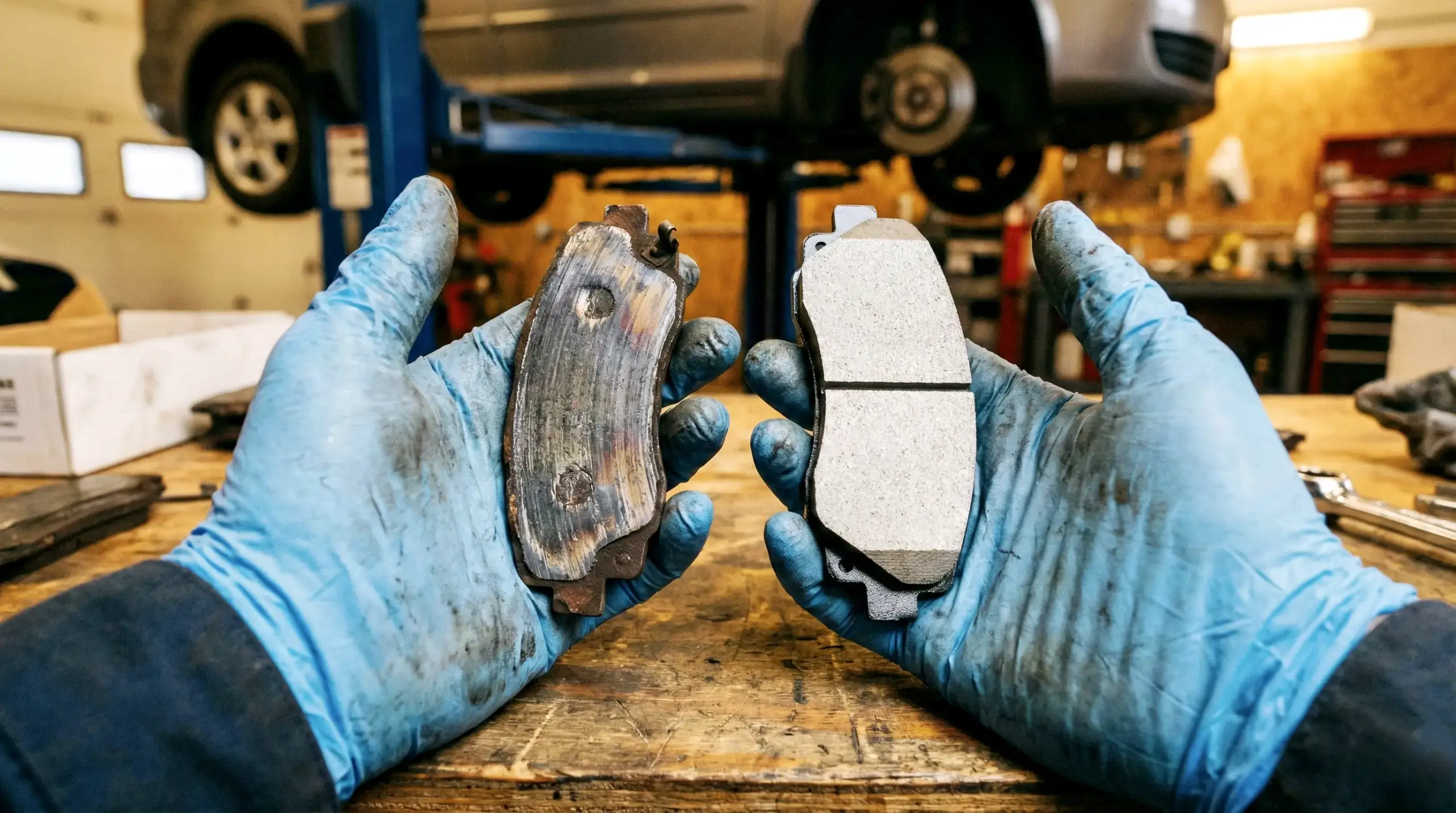
How Disc Brakes Work and Why Wear Isn’t the Same on All Wheels
Disc brakes are the heart of your car’s safety. When you press the pedal, hydraulic fluid pushes the pads against the rotor (disc), creating friction that stops the vehicle. Simple, yet brilliant. However, wear is not uniform: front pads wear up to 70% faster than rear ones due to weight transfer forward during braking.
In common cars in the US market, such as the TOYOTA CAMRY or SUVs like the Hyundai Santa Fe, this is standard. Driving in heavy, stop-and-go traffic accelerates this process. Organic pads typically last from 30,000 to 40,000 miles, while ceramic ones can go up to 70,000 miles. Factors like aggressive driving, towing, or poor road conditions can cut this lifespan in half.
The workshop golden rule: the “80% rule”. When only 20% of the friction material remains (about 3mm thick), replacement is necessary. Ignoring this leads to overheating, glazed pads (reduced friction), and worse, metal-on-metal contact – which grinds the rotors and transforms a $150 job into a $750 repair.
“Worn pads can cause overheating that results in damaged brake components” – adapted from automotive mechanics experts.
Useful Life by Pad Type: Comparative Table
| Pad Type | Average Lifespan (Miles) | Advantages | Disadvantages | Average Price (Front Set) |
|---|---|---|---|---|
| Organic | 18,000 – 25,000 | Soft, quiet | Wears out quickly under heavy use | $50 – $100 |
| Semi-Metallic | 25,000 – 37,000 | Durable, good braking | Dust on wheels, potential noise | $75 – $125 |
| Ceramic | 30,000 – 43,000 | Quiet, less dust | More expensive, may not suit extreme performance | $150 – $300 |
Choose ceramic if you prioritize longevity in city driving; semi-metallic for off-road or performance cars like the Hyundai Ioniq 6 N.
Warning Signs: When to Replace Pads Before It’s Too Late
Don’t wait for the screeching to act. Listen to your car: squeaks or chirps often indicate pads nearing their limit. Vibration in the pedal or steering wheel? Potentially warped rotors caused by neglected pads. Longer stopping distances? Imminent danger.
- Metallic grinding: Metal-on-rotor contact – stop driving immediately!
- Loud squeal: Wear indicator sensor activated.
- Brake warning light: Low fluid level or sensor issue.
- Soft or spongy pedal: Air in the hydraulic system or a leak.
- Burning smell: Pad overheating due to excessive use.
Visually inspect: remove the wheel and measure with a caliper. Less than 1/8 inch (3mm)? Time to replace. In heavy-duty vehicles, like dump trucks that might use drum brakes on the rear axles, also inspect the linings. Preventive maintenance prevents accidents: studies show poor braking systems contribute significantly to road incidents.
And the secret to maximizing their life? Perform a proper bedding-in procedure: 10 moderate stops from 40 mph down to 15 mph to seat the pads correctly. Avoid hard braking during the first 200 miles.
Replacing All Four Pads: Necessity or Workshop Strategy?
Here’s the core question: is it enough to replace only the front pads? Yes, in most cases! Experienced mechanics confirm: if the rear pads have more than 50% of their lifespan remaining, replace only the front set (or rear, less commonly). But always replace both on the same axle for balanced braking – replacing just one side causes the vehicle to pull and risks loss of control.
Pros of replacing all at once:
- Consistent performance: symmetrical braking effort.
- Long-term value: avoids machining rotors unnecessarily early.
- Convenience: one service visit handles all four corners.
Cons: Higher upfront cost. If rear pads are in good shape, replacing them is wasteful—new pads combined with old ones can create irregular wear patterns, potentially shortening the life of the new set.
In general maintenance like spark plugs, balance is key. For brakes, prioritize safety: in emergencies, milliseconds matter. Average cost: $100-$200 per axle (pads + labor). Buy original equipment manufacturer (OEM) or quality aftermarket brands like Bosch or Brembo for durability.
Pro tip: In All-Wheel Drive (AWD) or performance sports cars, replacing all four is often recommended to prevent vibrations and maintain stability. Check your DOT4 brake fluid level at every service and perform a system bleed if necessary. If rotors are scored, have them machined or replaced – do not ignore rotor damage!
Another crucial tip: cheap, low-quality pads wear out faster and release corrosive dust. Invest in quality friction material to reliably achieve 60,000 miles of trouble-free driving. In summary, evaluate actual wear: use OBD2 monitoring apps like Torque Pro for data insights. Your life (and your family’s) is worth more than the $100 you save now.
And if the car stops suddenly or malfunctions, like in the instances where Porsche Cayennes suddenly shut down unexpectedly? Contact a trusted, certified mechanic immediately. Smart maintenance keeps you on the road, safe, and surprise-free.