RENAULT BRIDGER CONCEPT combines the rugged style of the Defender with urban agility. Discover the brand’s new global off-road bet. Check it out!
The French Renault has just unveiled a machine that could rewrite the rules of the compact SUV segment. The Bridger Concept is not just another show car to fill auto show stands — it is the declaration of war from a manufacturer tired of being forgotten when it comes to genuine adventure. With lines bordering on the stylistic plagiarism of the Land Rover Defender and a proposal to democratize premium off-roading, this sub-4-meter promises to transform emerging markets in 2027 and leaves a question hanging in the air: does Europe deserve (or will it receive) this gem?
The Design That Keeps Land Rover Awake at Night
Open any specialized magazine from 2020 onward and you’ll find the same mantra: the modern Defender reinvented the segment. But there’s a problem — it remains inaccessible to the vast majority. Renault saw this gap and struck with surgical precision.
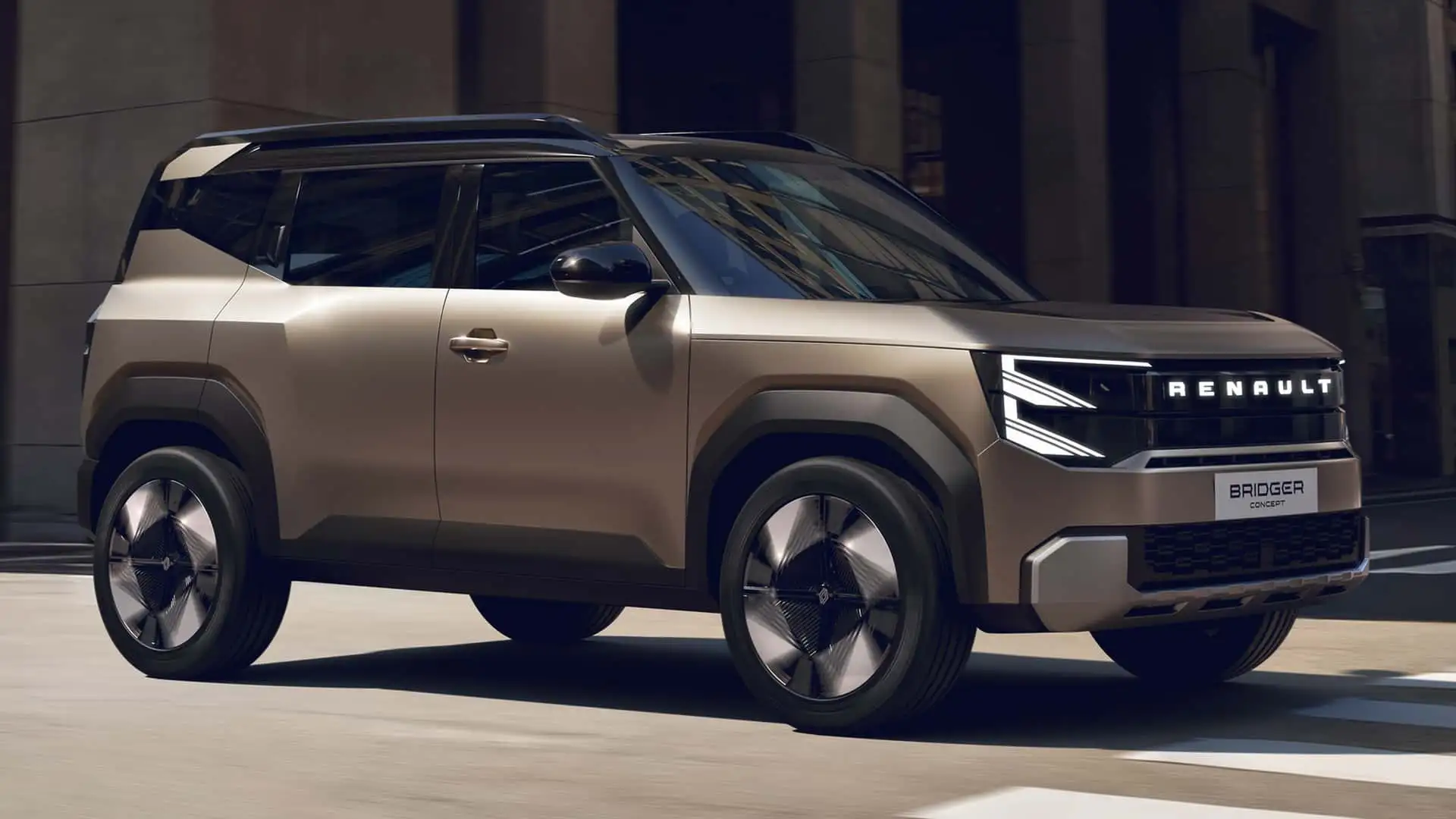
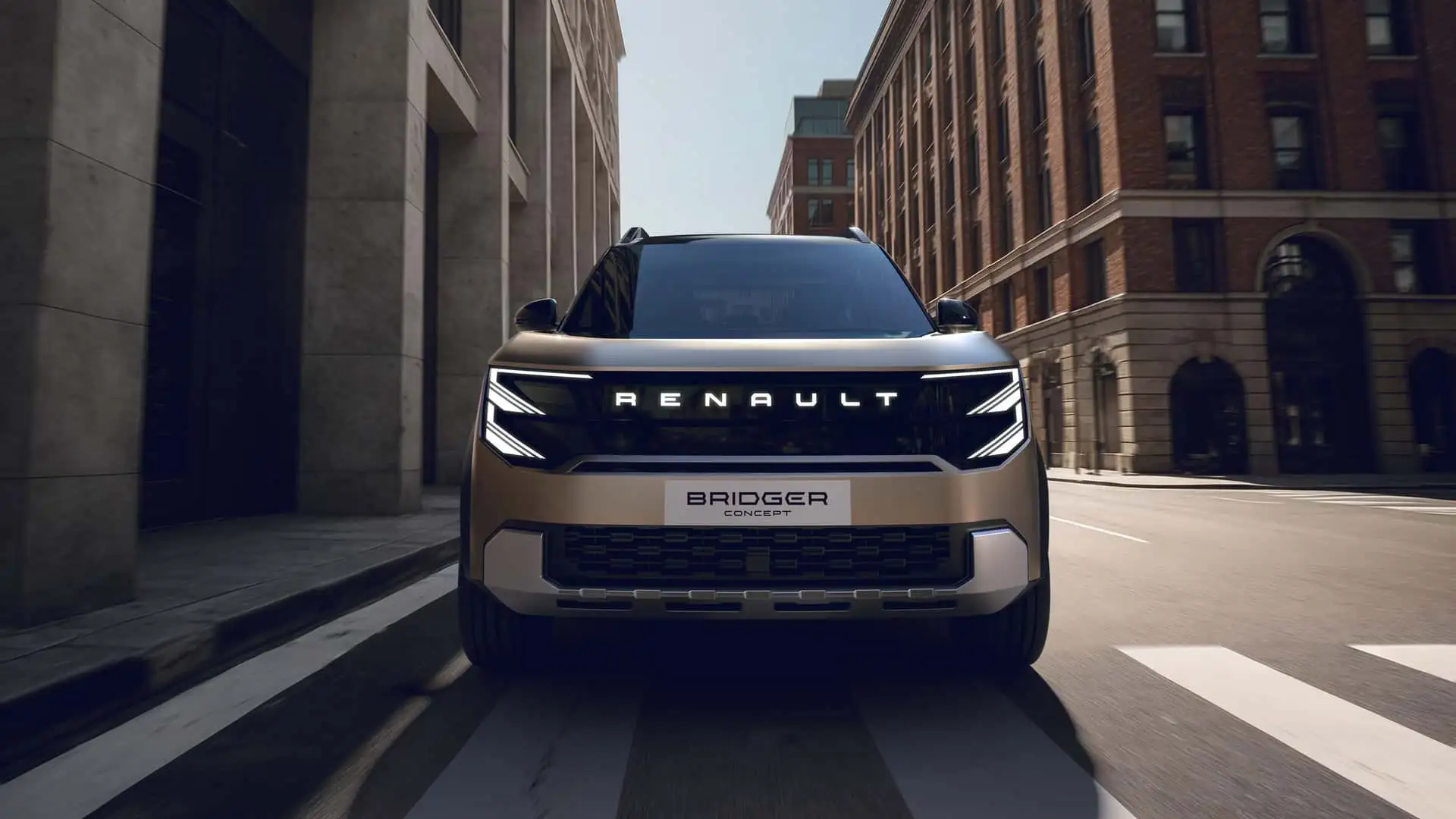
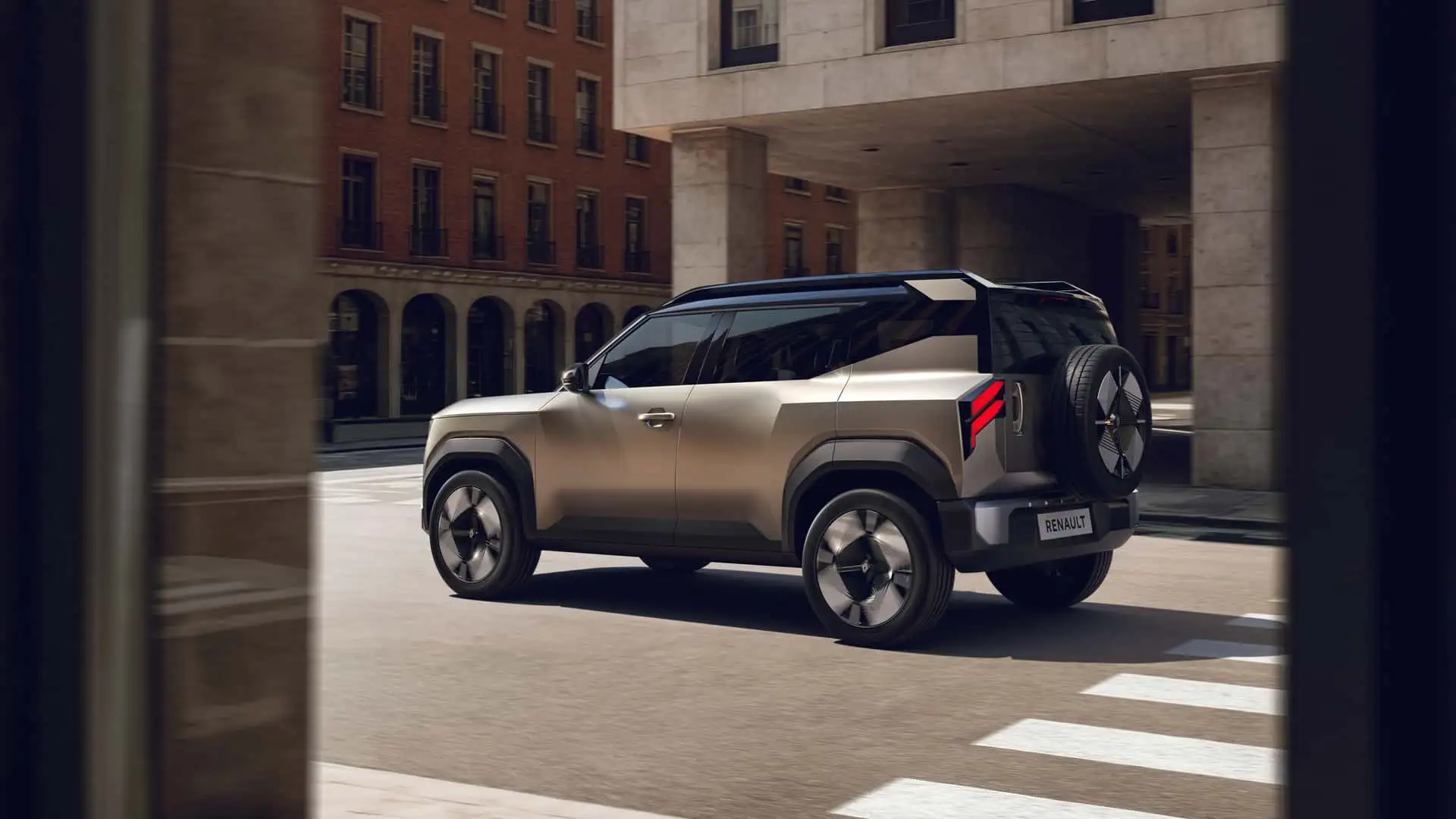
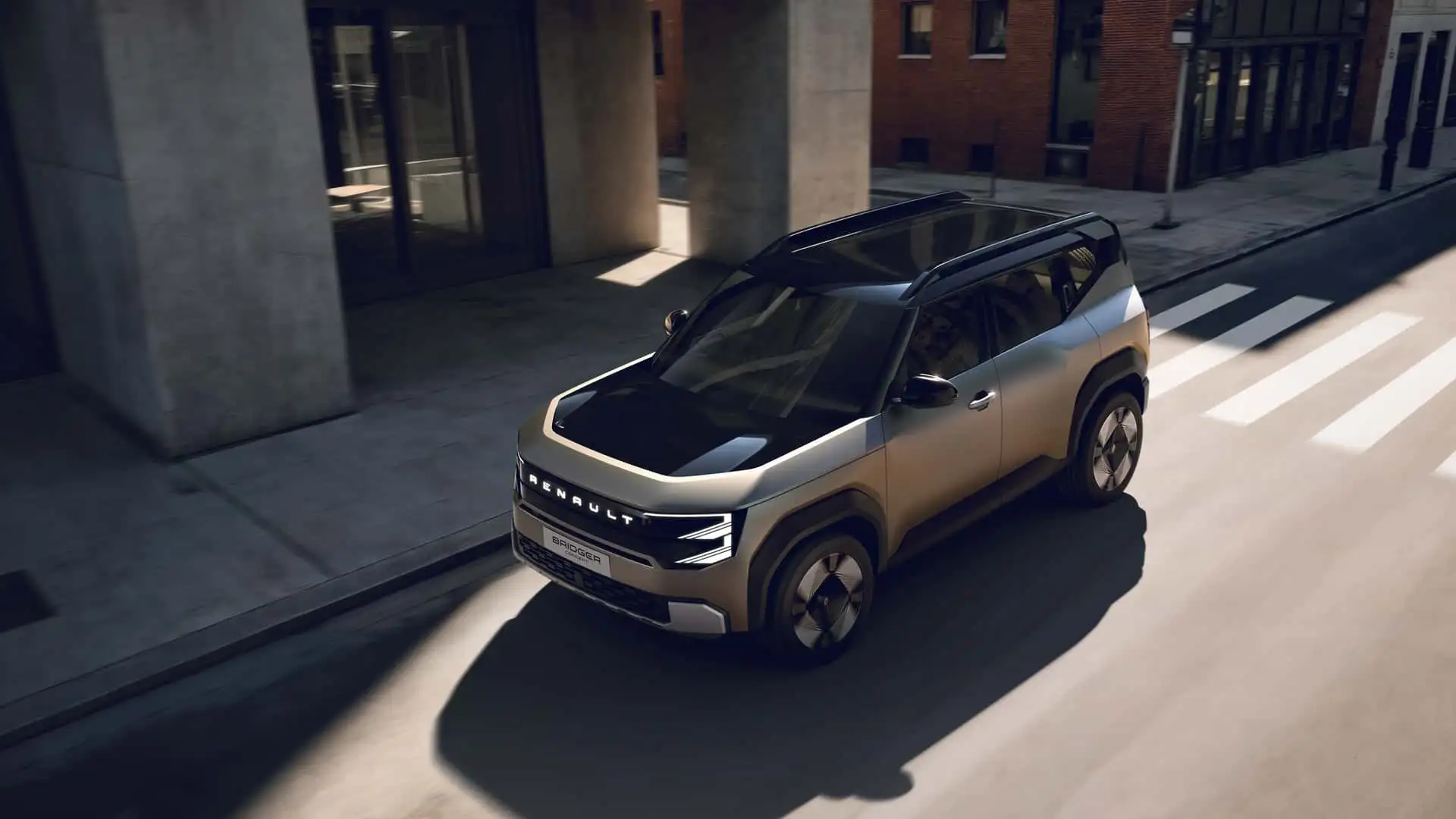
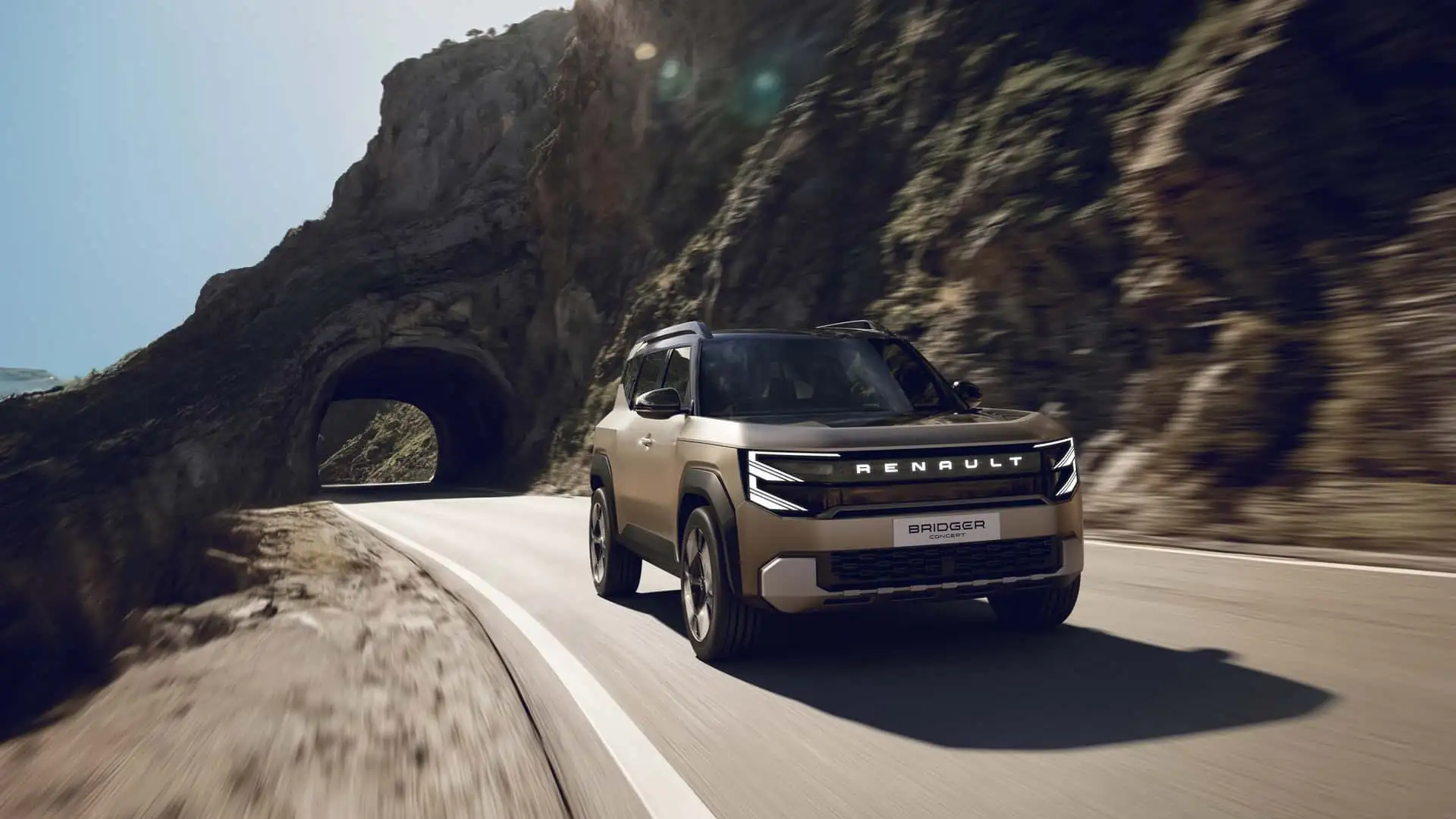
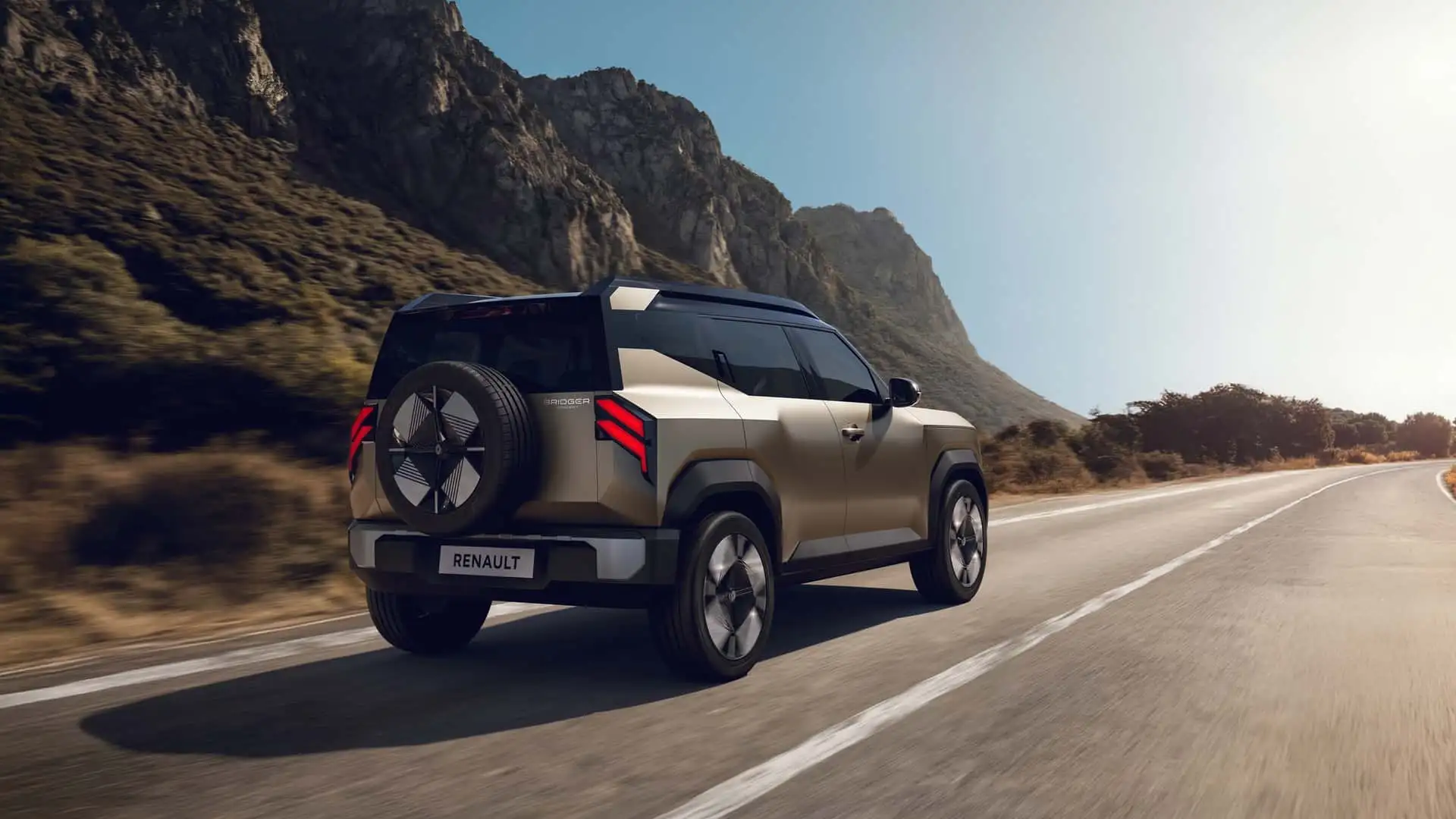
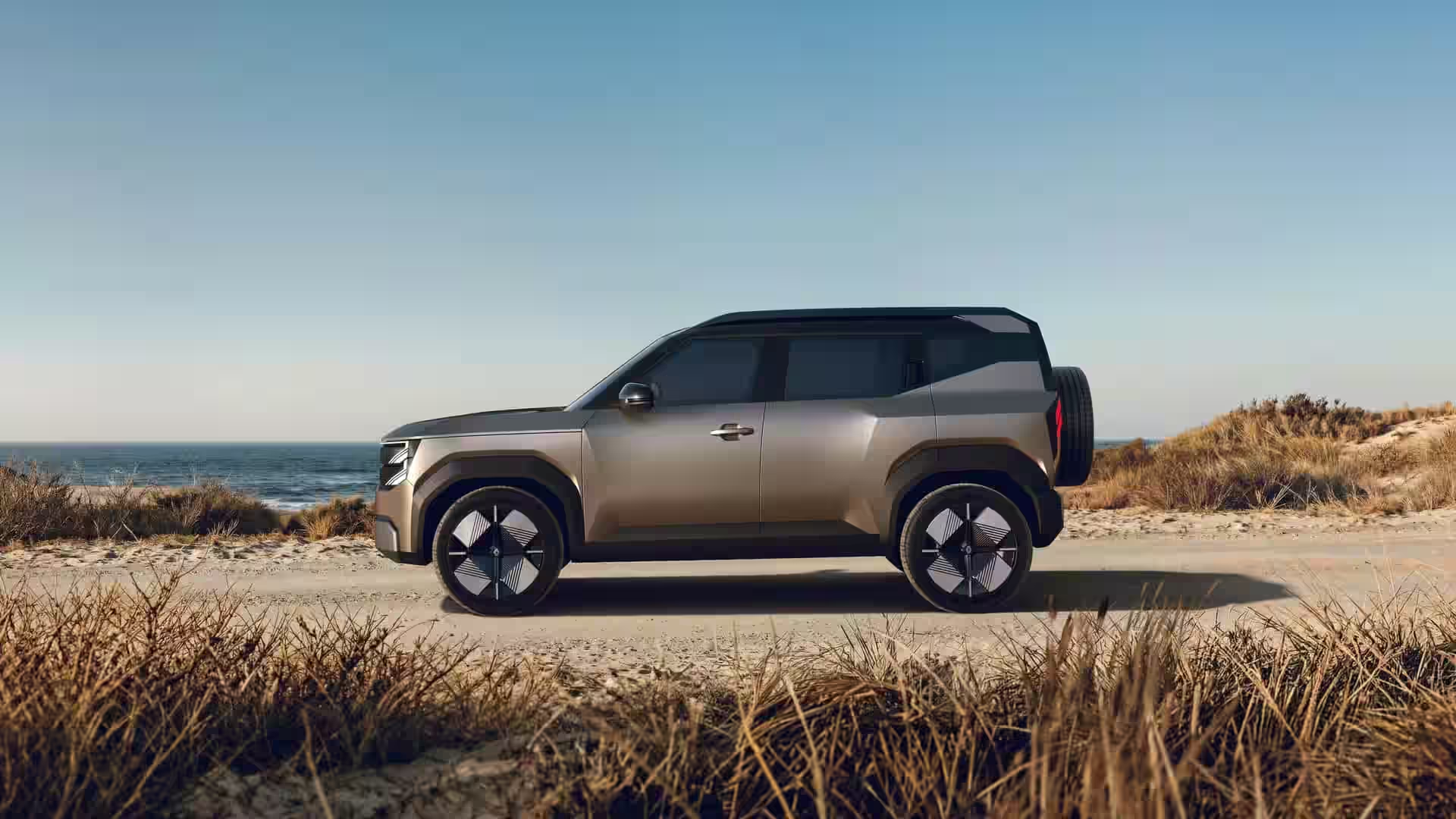
The Bridger Concept displays a silhouette that challenges any onlooker to ignore the similarities. The “Beige Dune Satin” body color — an earthy tone evoking Sahara expeditions — envelops deliberately rigid cubic forms, without the aerodynamic smoothing that turns common SUVs into eggs on wheels. The compact wheelbase hides a packaging engineering that the French brand masters like few others.
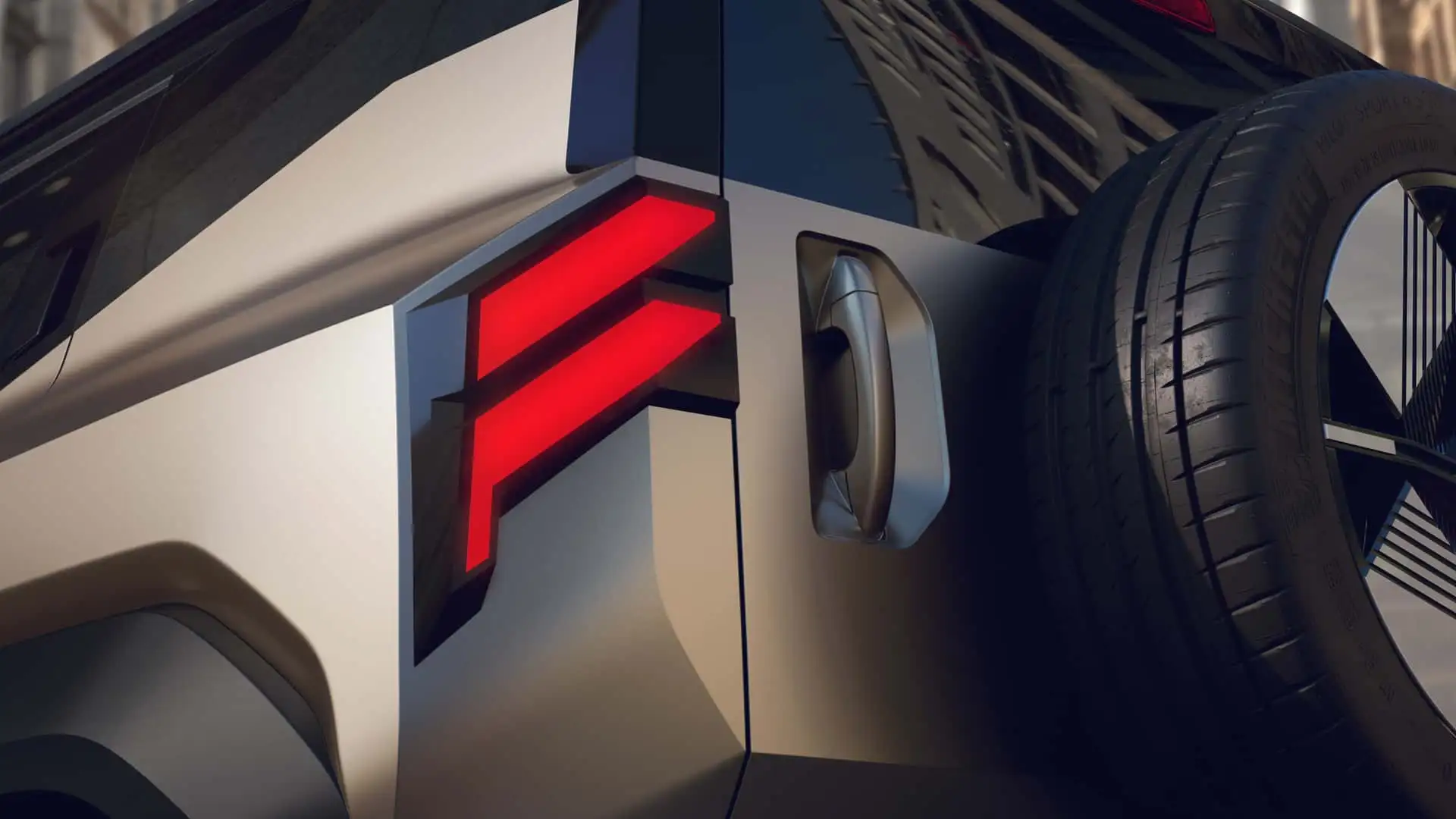
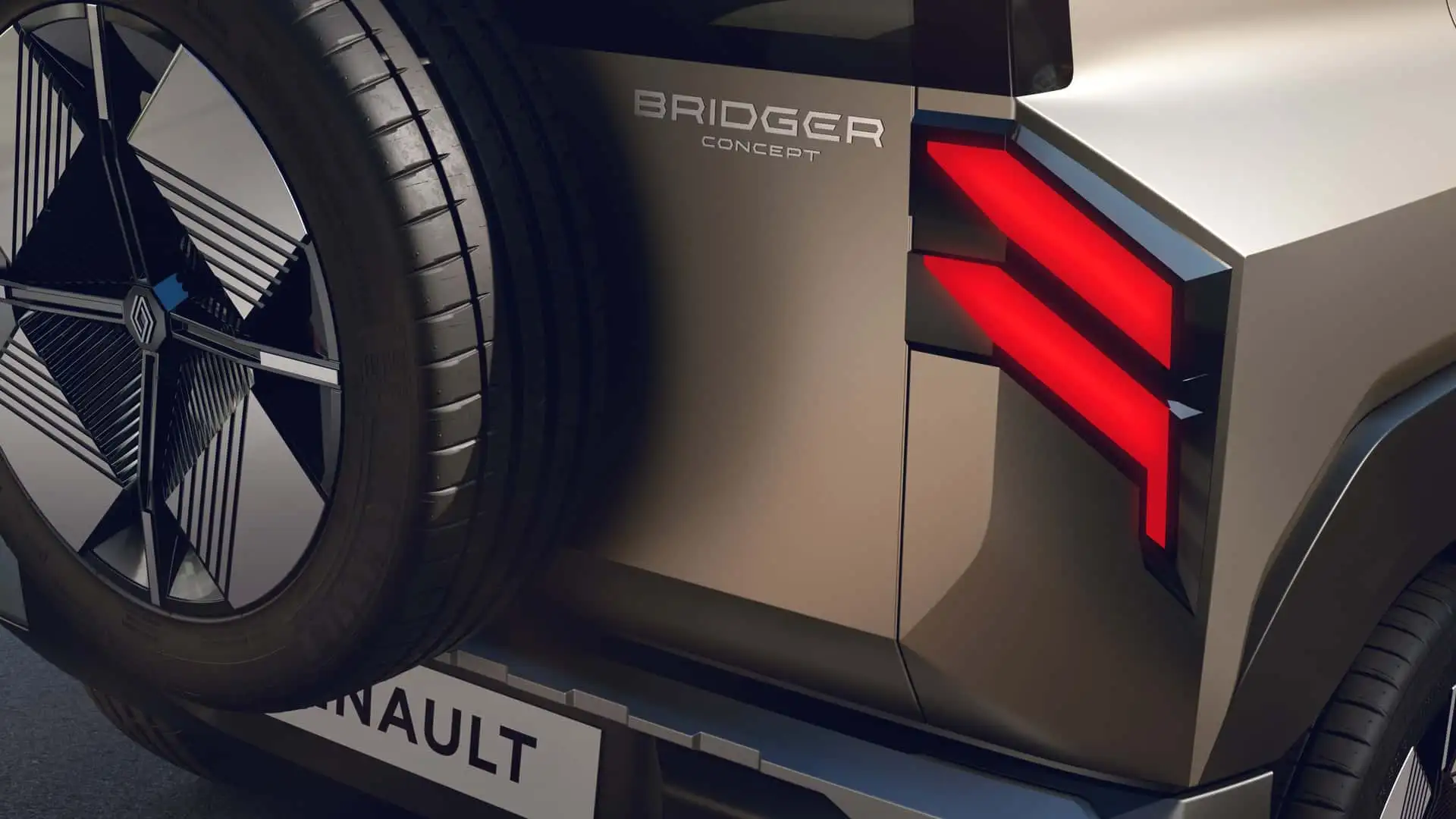
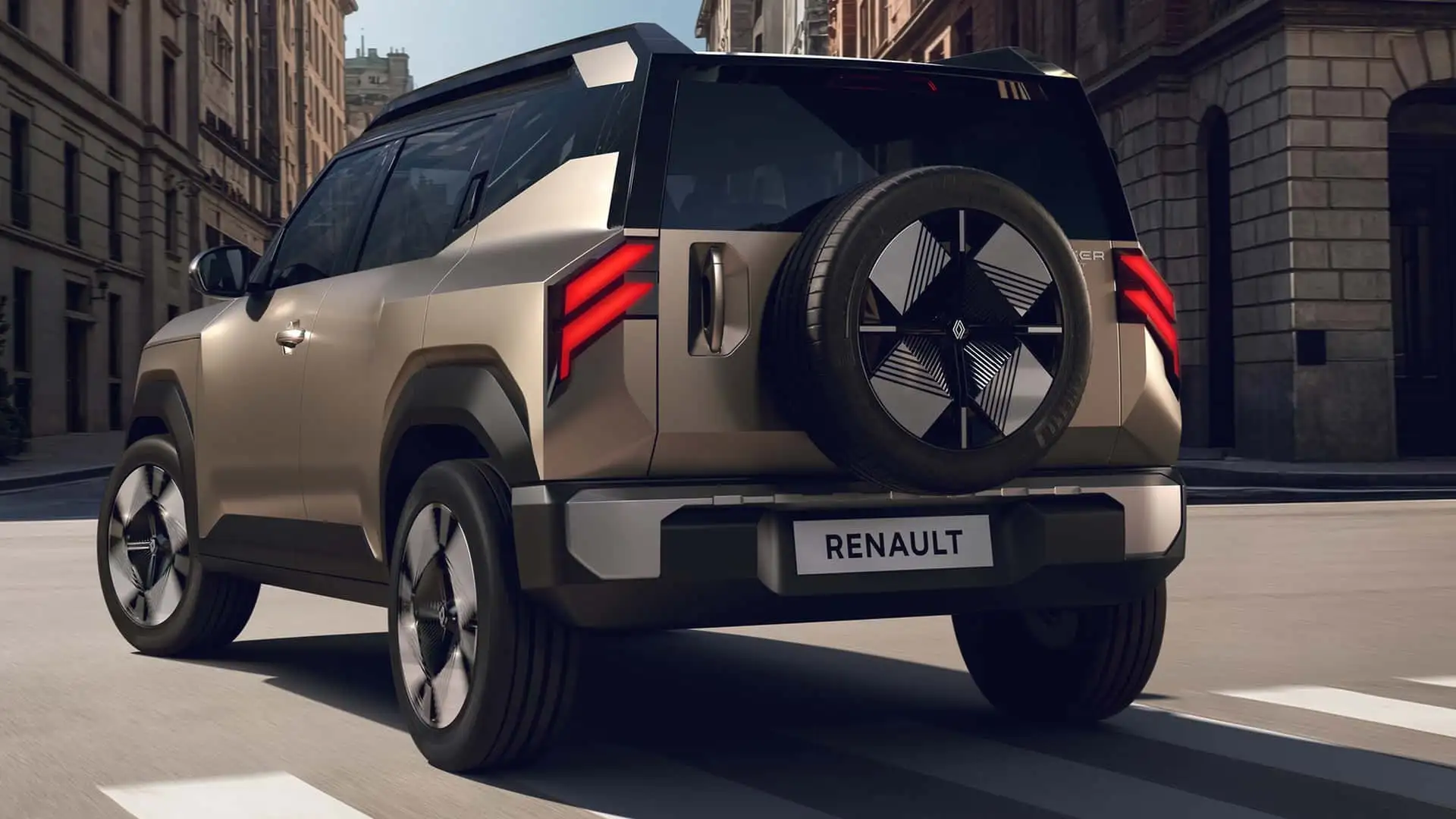
The 18-inch diameter wheels look disproportionate for a vehicle of this size — and that is exactly the desired effect. Combined with the 200 mm ground clearance, they create the predator stance that normally requires five times the investment. But the detail that seals the seductive package is at the rear: the external spare tire, positioned vertically like an off-road capability totem, makes it clear this is not a shopping mall crossover.
“The Bridger is our answer to those who want authenticity without mortgaging their apartment.”
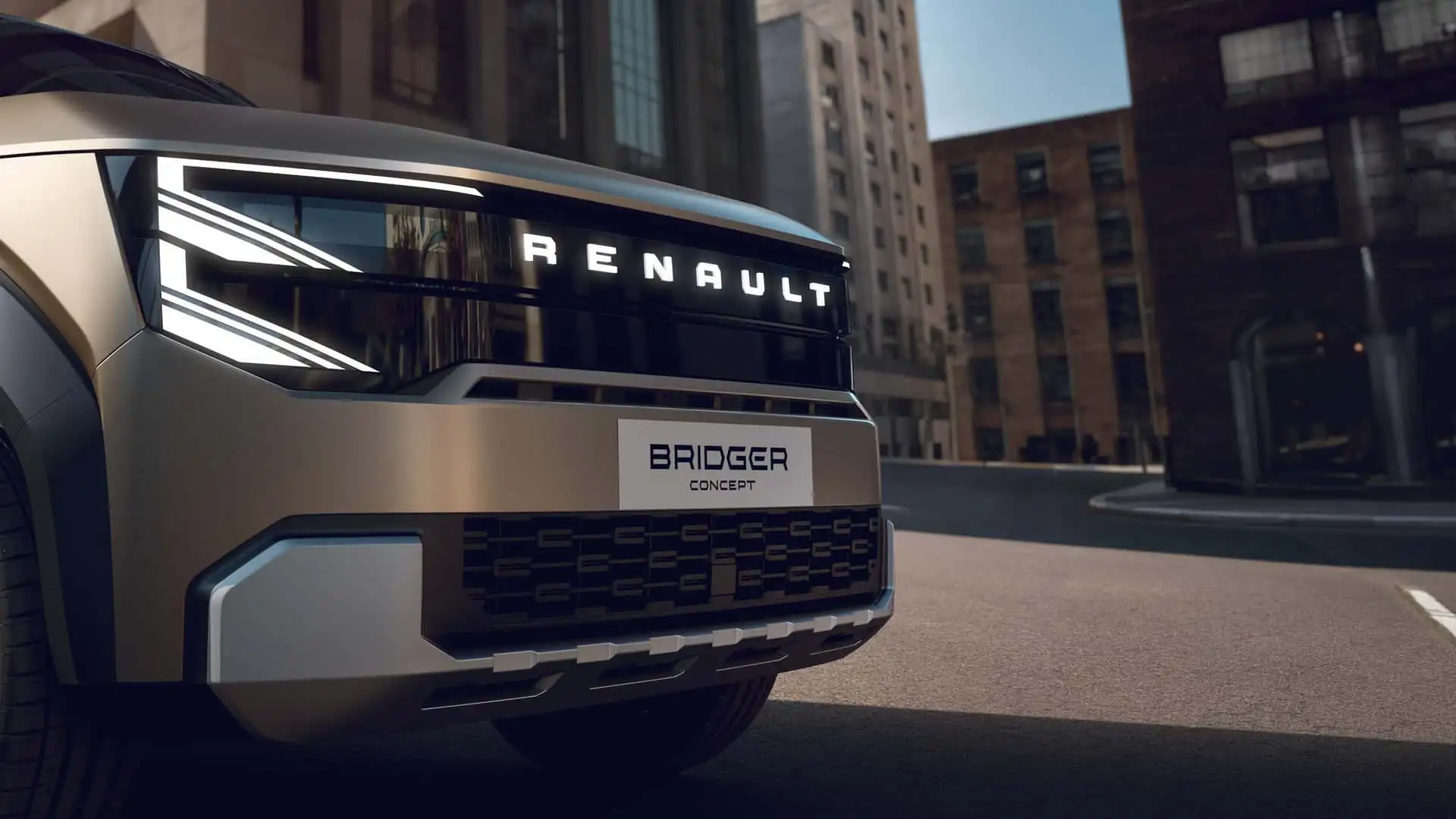
The LED signature forms geometric patterns reminiscent of classic round headlights, but without falling into forced retro style. It is contemporaneity with respect for heritage — a fine line that Renault navigates masterfully in this project.
Interior Space That Defies Physics
Here lies the true engineering of value. With less than four meters in length, the Bridger promises something that 4.5-meter European SUVs often fail to deliver: genuine habitability for five adults.
The brand announces 200 mm of rear seat knee room — a figure that, if confirmed in the production version, places the French compact in the league of executive sedans. The 400-liter trunk even surpasses some models in the C-segment, those of medium SUVs like the Kia Sportage.
This spatial efficiency is no accident. The RGMP small platform — the alliance’s new modular architecture — was developed from the start to maximize livable volume versus external envelope. The traditional longitudinal engine layout of off-road SUVs gave way to configurations allowing a forward cabin, short fenders, and generous approach angles.
The interior, not yet fully revealed, is expected to follow the functional aesthetic of the exterior. Durable materials instead of luxurious ones, washable surfaces, and a high driving position that ensures visual dominance over the terrain — all indicate that Renault deeply studied what makes Defender owners smile behind the wheel.
Three Souls For A Single Body
If there is one aspect that demonstrates the project’s global ambition, it is the propulsion flexibility. Unlike manufacturers who bet everything on a single technology, the Bridger is born multilingual:
- Combustion version: likely with engines from the TCe family, offering mechanical simplicity for markets with limited infrastructure
- Hybrid configuration: combining efficiency and range, ideal for the energy transition in developing regions
- 100% electric variant: positioning Renault as an alternative to aggressive Chinese players like BYD in emerging markets
This multifaceted strategy reflects the reality that many European automakers prefer to ignore: there is no single solution for a diverse planet. While Norway can rely on pure electrics, India — the Bridger‘s first market in end of 2027 — still depends on fossil fuels for 97% of its fleet.
The RGMP small platform enables this versatility without compromising economies of scale. Common structural components, adaptable assembly lines, and a supply chain that leverages Renault’s industrial centers in Morocco, Turkey, Brazil, South Korea, and India.
The Strategy That Could Change The Game
The Bridger is not born in isolation. It is the visible face of the “futuREady” plan, an ambitious transformation program that aims to bring Renault to more than two million units sold globally by 2030 — with half of this volume outside Europe.
To understand the magnitude of this bet, just look at the parallels with other moves from the group. While Dacia attacks with aggressive pricing in the entry segment, the main Renault positions the Bridger as an accessible aspirational — that space where premium design meets reasonable price.
India as a gateway is no coincidence. With sustained economic growth, expanding middle class, and transforming road infrastructure, the subcontinent represents the perfect laboratory to validate the concept. If successful, Bridger will move on to Latin America, Southeast Asia, and eventually European markets.
And here lies the great question: would Europe welcome this machine or not? Internally, the discussion seems heated. Product purists argue that the Defender-esque design could create brand image conflicts. Sales pragmatists point to the success of anything remotely adventurous on the continent — like the Dacia Duster itself, which sells more than many models from the parent company.
The answer will likely depend on the numbers from India. If the Bridger proves there is an insatiable demand for accessible authenticity, European resistance will fall like houses of cards. After all, Renault has already shown with the 5 E-Tech and the 4 E-Tech that it knows how to revive icons for the present — so why not create a new icon from scratch?
For those who closely follow the evolution of compact SUVs, the Bridger Concept 2026 represents something rare: a genuinely bold proposal in a segment saturated with half-measures. It is not just another raised crossover — it is a statement that adventure doesn’t need British pedigree or supercar prices. And if Renault keeps its promise to bring this formula to the markets that really matter, Land Rover may finally find a worthy competitor — not in luxury, but in what truly moves enthusiasts: the capability to go anywhere, with any budget.
The countdown to the end of 2027 has already begun. And among the 26 new products Renault promises by 2030, the Bridger might be the one that redefines not just a brand, but an entire category.