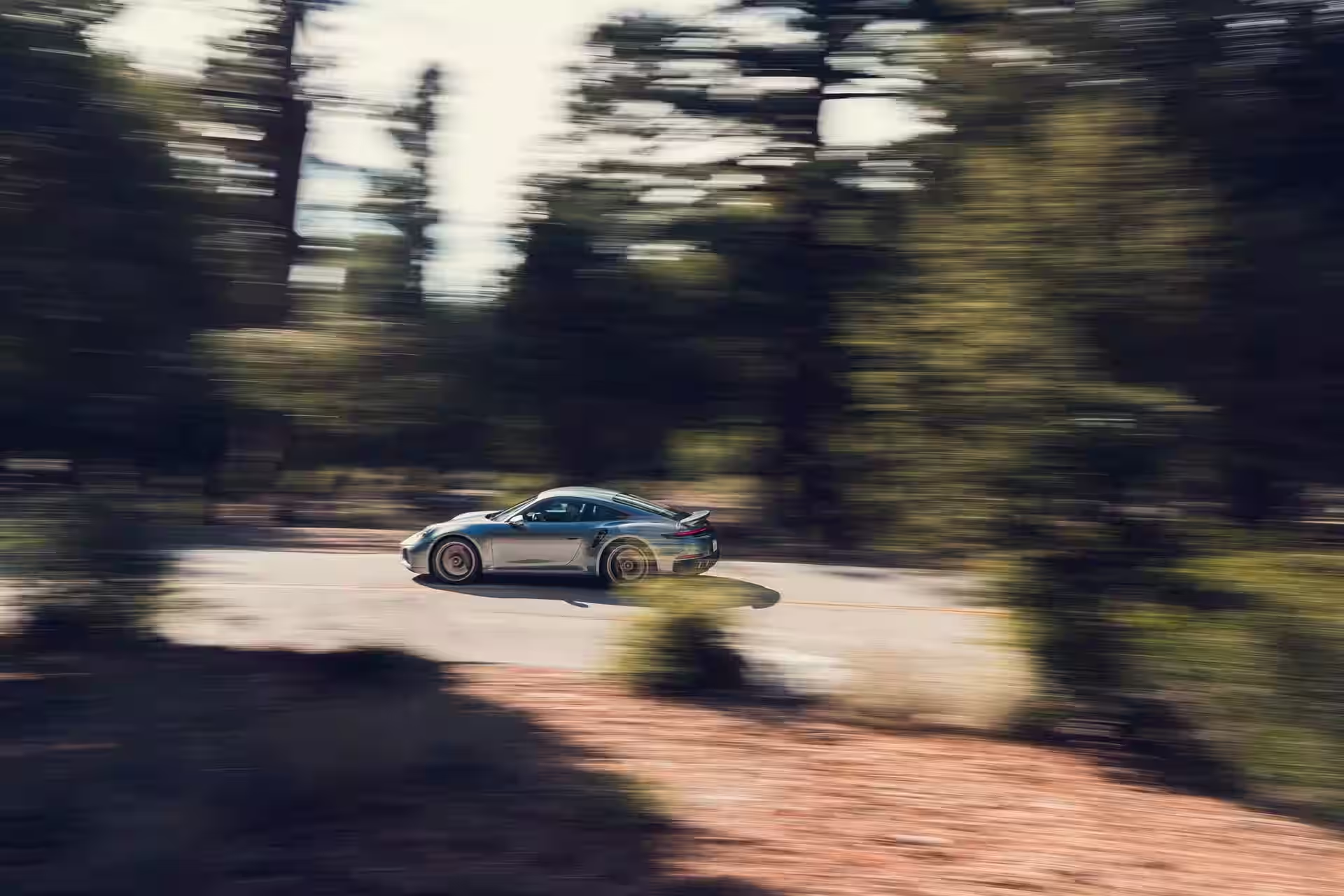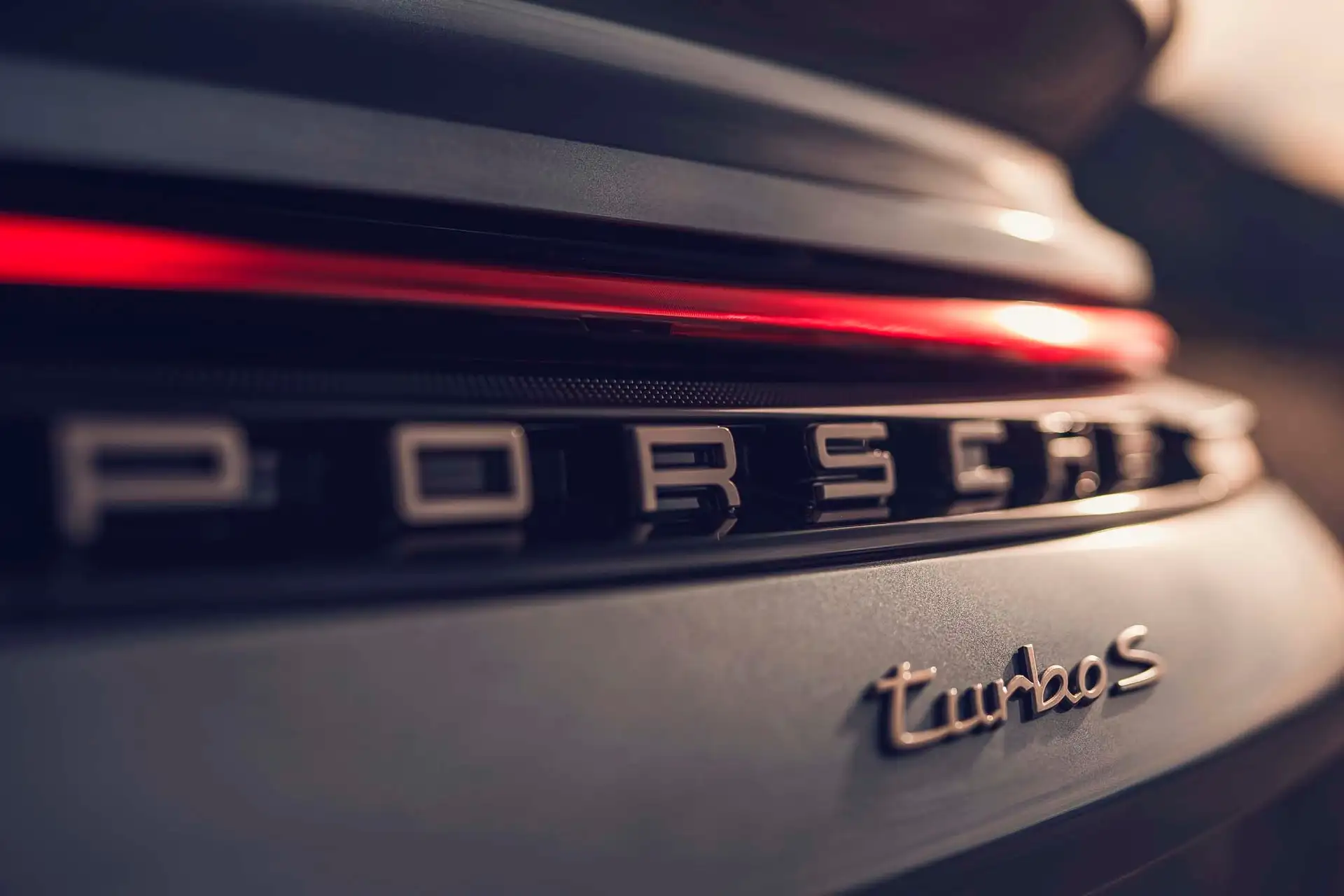
PORSCHE 911 TURBO S is now hybrid and reaches 60 mph in 2 seconds. Discover how the brand overcame the extra weight with pure power. Check it out!

In an era where 1,000 HP electric cars are multiplying like rabbits, Porsche did something that seemed impossible: it created an internal combustion engine that not only survives but dominates. The new 2026 911 Turbo S is the brand’s ultimate answer to those who doubted that the turbocharger still had a place at the top of the automotive pyramid.
The Secret Lies in the 400 Volts No One Expected
Porsche didn’t just “hybridize” the 911 Turbo S. It reinvented performance architecture. The 400-volt system — uncommon in sports cars, where 48V is standard — allows components that were previously passive to become active dynamic weapons.
The heart remains the 3.6-liter twin-turbo boxer, but now with two electronically assisted turbines. This means the turbo “lag” — that agonizing delay between pressing the accelerator and the power surge — has practically ceased to exist. The turbines are powered by electric motors until the exhaust gases take over, creating a response Porsche describes as “pneumatic” — like being propelled by a compressed air tube.
Additionally, an 80 HP electric motor sits inside the eight-speed transmission shaft, filling any torque gap instantly. The lithium-ion battery, positioned at the front of the car, not only powers the hybrid system: it balances weight distribution, turning a problem into a dynamic advantage.
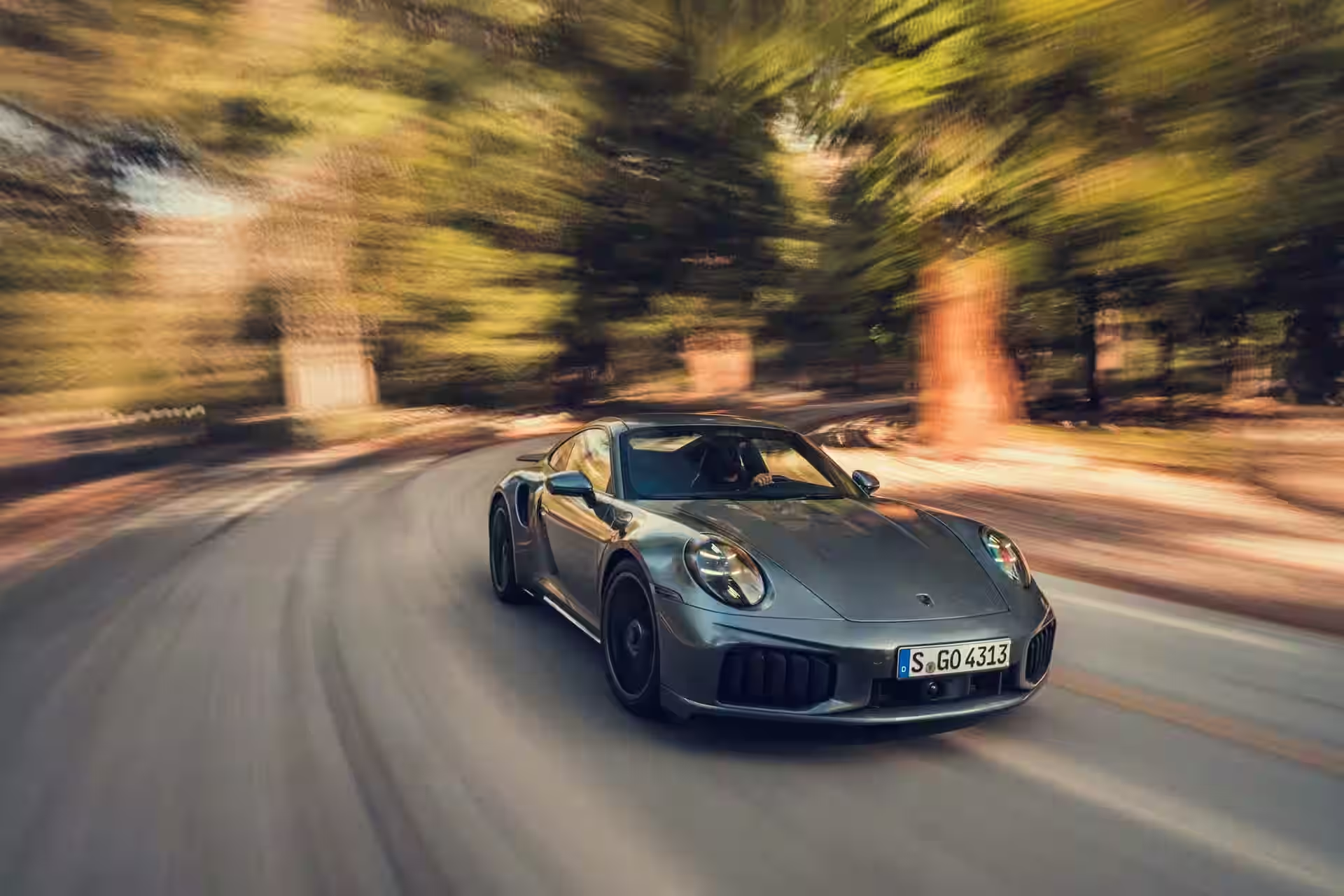
Numbers That Defy the Logic of Physics
Get ready for data that looks like typos:
- 0 to 30 mph (48 km/h): 0.8 seconds — faster than most cars take to reach 30 km/h
- 0 to 60 mph (97 km/h): 2.0 seconds — tied with the 986 HP Ferrari SF90 Stradale
- 0 to 100 mph (161 km/h): 4.8 seconds
- Quarter mile: 9.7 seconds at 228 km/h
- Top speed: 322 km/h (electronically limited)
The feat becomes even more absurd when you consider the weight of 1,738 kg. Compared to the previous Lightweight version, the new Turbo S gained 121 kg. Compared to the previous standard Turbo S, that’s 85 kg more. Porsche, in a rare moment of honesty, admits: “It gained a few kilos, but isn’t that true for all of us?”
What makes these numbers truly disturbing is the 5 to 60 mph (8 to 97 km/h) test with a rolling start — where launch control doesn’t help. Here, the new model is 0.9 seconds faster than its predecessor. Electrification is not a gimmick: it’s pure substance.
How Something So Heavy Can Be So Agile
The answer lies in three technologies that lie to physics:
1. Porsche Dynamic Chassis Control (PDCC) 400V
The active anti-roll bars, now powered by the high-voltage system, react faster and stronger than ever. In corners, they compress one suspension and extend the other within milliseconds, keeping the body absurdly flat. The result? 1.12 g of grip on the dynamometer — a race car level.
2. Four-Wheel Steering
The rear axle turns in the opposite direction of the front wheels at low speeds (making the car more agile) and in the same direction at high speeds (increasing stability). In mountains, this translates into direction changes that seem telepathic.
3. Standard vs. Sport Suspension
Here is a lesson in humility from Porsche: although offering the Sport package with a 10 mm lowering and stiffer springs, the engineers recommend the standard suspension. According to tests, the Sport version turns small imperfections into “spine-compressing impacts”. For real use, the base setup is superior.
In practice, on the San Gabriel Mountains in California, the Turbo S behaves as if it ignores its mass. The acceleration between corners is electric in delivery, but symphonic in execution — the sound of the flat boxer engine echoing while the dual-clutch transmission performs shifts that seem telepathic.

The Price of Controlled Adrenaline
The 2026 911 Turbo S starts at US$ 272,650, potentially exceeding US$ 286,000 with options. Our test unit included:
| Option | Price |
|---|---|
| Front axle lift | US$ 3,160 |
| Remote parking | US$ 2,310 |
| Basalt Black leather seats | US$ 1,890 |
| Adaptive cruise control | US$ 1,830 |
| Gloss black brake calipers | US$ 960 |
| Lightweight insulated glass | US$ 960 |
| Lane change assist | US$ 930 |
| Air ionizer | US$ 370 |
| Welcome light projectors | US$ 220 |
The curious thing? None of these options increase performance. Porsche, with its Teutonic wisdom, already delivers the car fully equipped from the factory. The extras are comfort, aesthetics, and convenience — the opposite logic of other brands that sell performance as an option.
And there is a detail enthusiasts should notice: with carbon fiber seats, rear seat deletion and without the axle lift, the Turbo S could be even faster. Porsche left this possibility hanging, as a veiled threat to its own records.

The Last Line of Defense for Combustion Engines
In a world where affordable electric cars promise to humiliate supercars, the 2026 911 Turbo S takes on an almost existential mission: to prove that internal combustion still has a place at the top.
It does not deny electrification — it embraces it. But it uses it as a tool, not as a replacement. The result is a machine that accelerates like the best EV, sounds like the best Porsche, and lasts like a true 911.
The carbon ceramic brakes — 420 mm front, 409 mm rear — are the largest ever offered on a 911. They stop the car from 62 mph in 41 meters and from 100 mph in 83 meters, two of the best results ever recorded by the American publication Car and Driver.
Fuel consumption? 15 mpg (15.7 L/100 km) in real-world use, against 18 mpg (13 L/100 km) combined by the EPA. For a car with 701 HP, those are hot hatch numbers — another gift of hybridization, which allows energy recovery and electric operation at low speeds.
The Verdict History Will Record
The 2026 Porsche 911 Turbo S is not a farewell to combustion. It is a forced evolution — proof that, when well executed, hybridization does not dilute the essence, it amplifies it.
It is heavier, yes. But it is also faster, more responsive, and more capable in any real-world scenario. Electrification here is not a concession to fashion: it is a weapon of war against obsolescence.

In a time when brands promise to save combustion engines with empty slogans, Porsche delivers concrete salvation: a car that honors its past while defining its future.
The 2026 911 Turbo S is, in the most accurate words possible, accessible madness. Accessible not in price — which is prohibitive — but in experience. Anyone skilled enough to turn a steering wheel can extract 90% of what it offers. The remaining 10%? Those require courage that few possess.
Porsche has raised the bar once again. And this time, it did so carrying 267 pounds of electrons that, paradoxically, made it lighter in spirit than ever.
“Now hybrid and more powerful than ever, the Porsche 911 Turbo S remains ridiculously fast and relevant, even in a world with 1,000 HP EVs.”
— Car and Driver, March 2026
For those who question whether investing in combustion engines is still worthwhile, the answer lies in 2.0 seconds — the time it takes for the new Turbo S to erase any doubt.