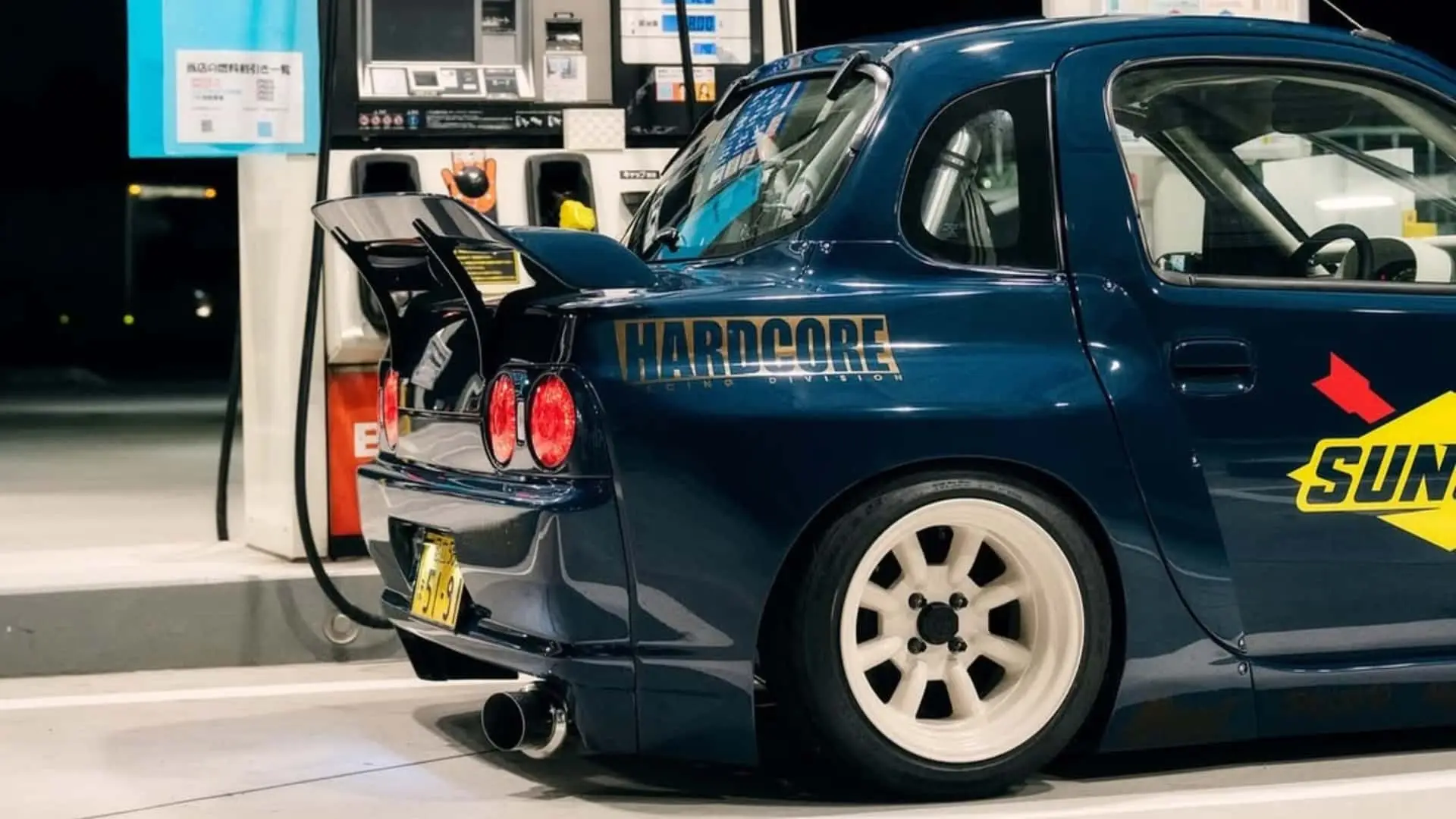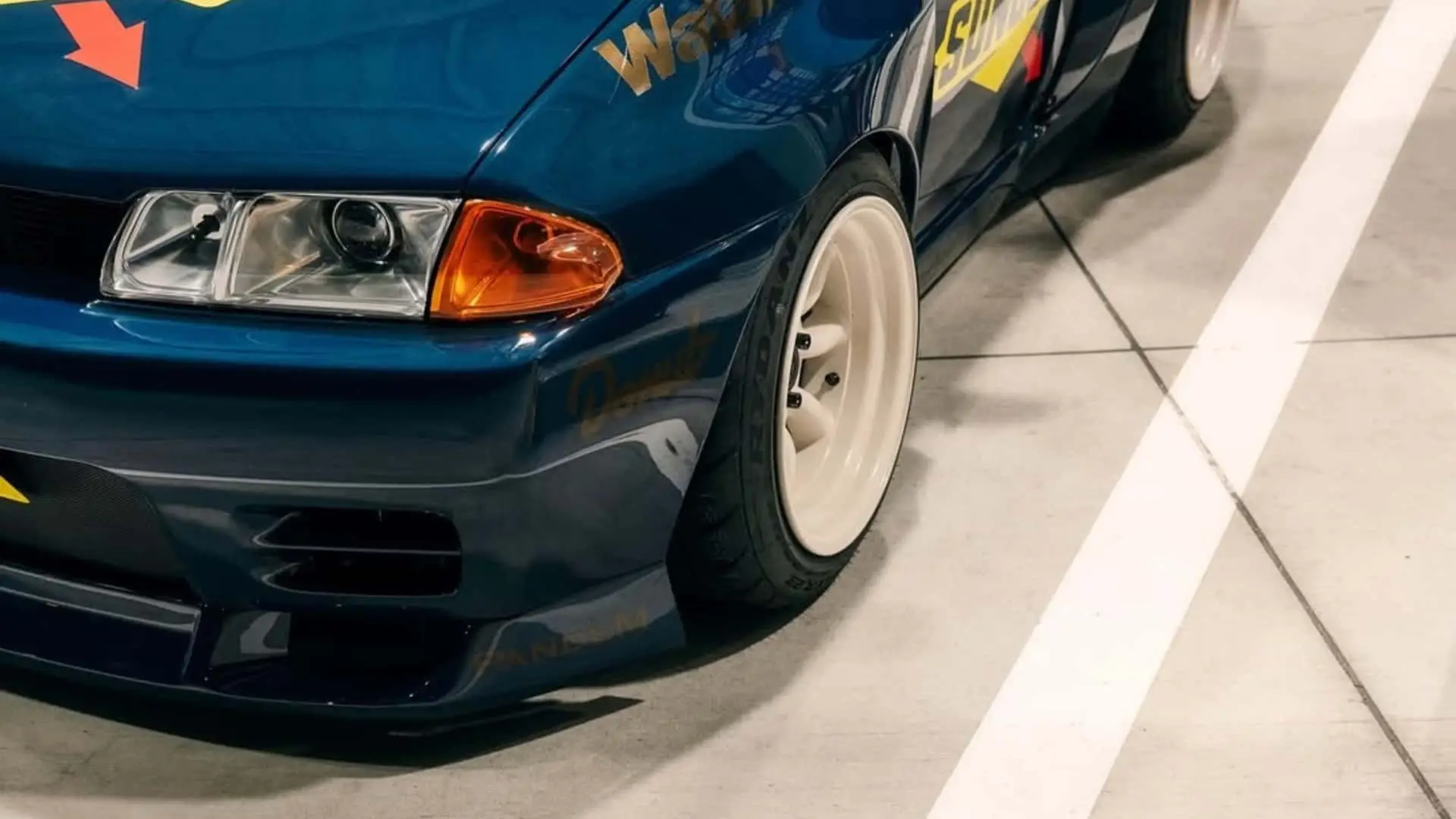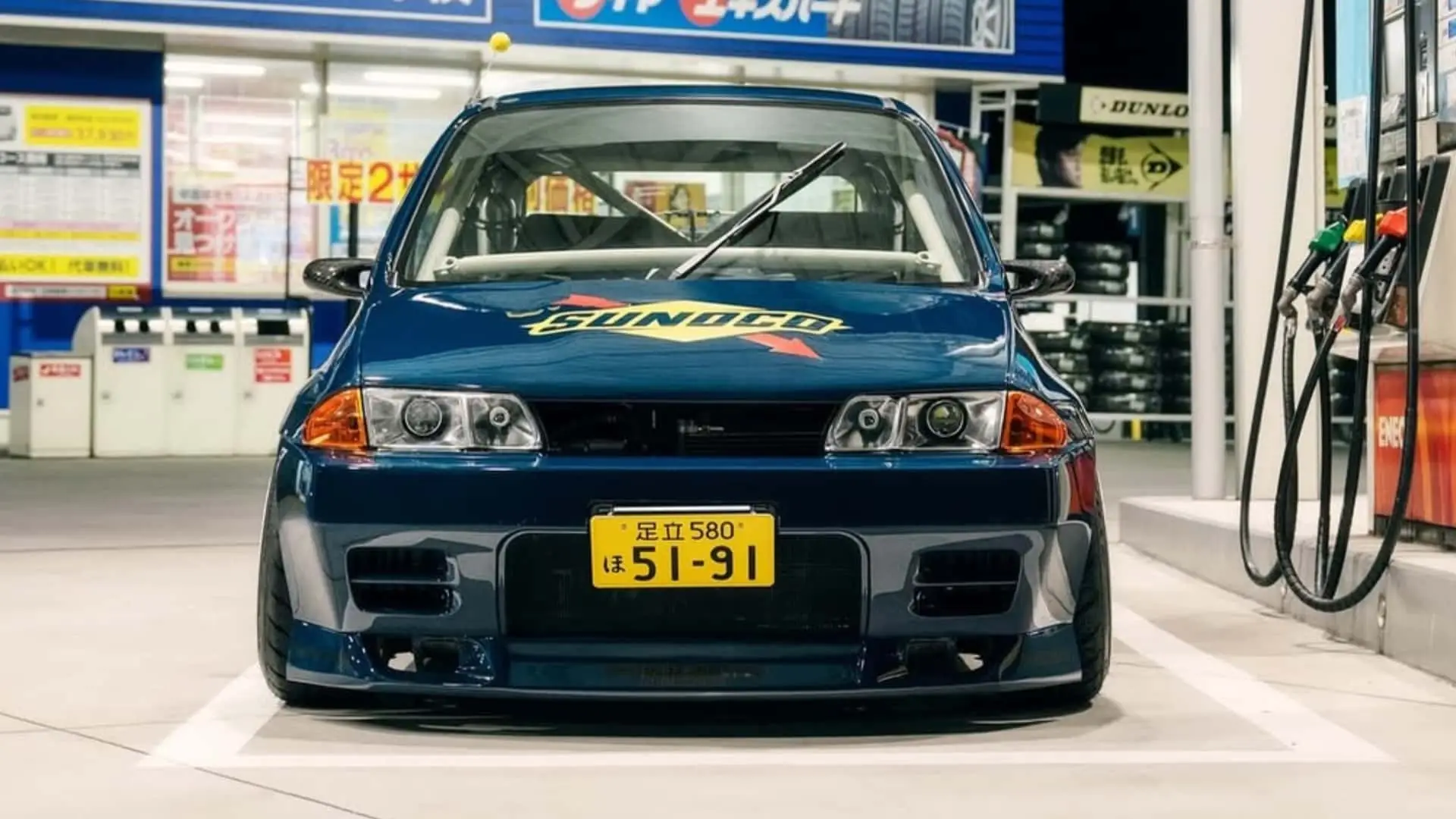
You won’t believe the look of this Suzuki Twin! The Pocket Bunny R32 GT-R project brings the soul of Godzilla to the streets.
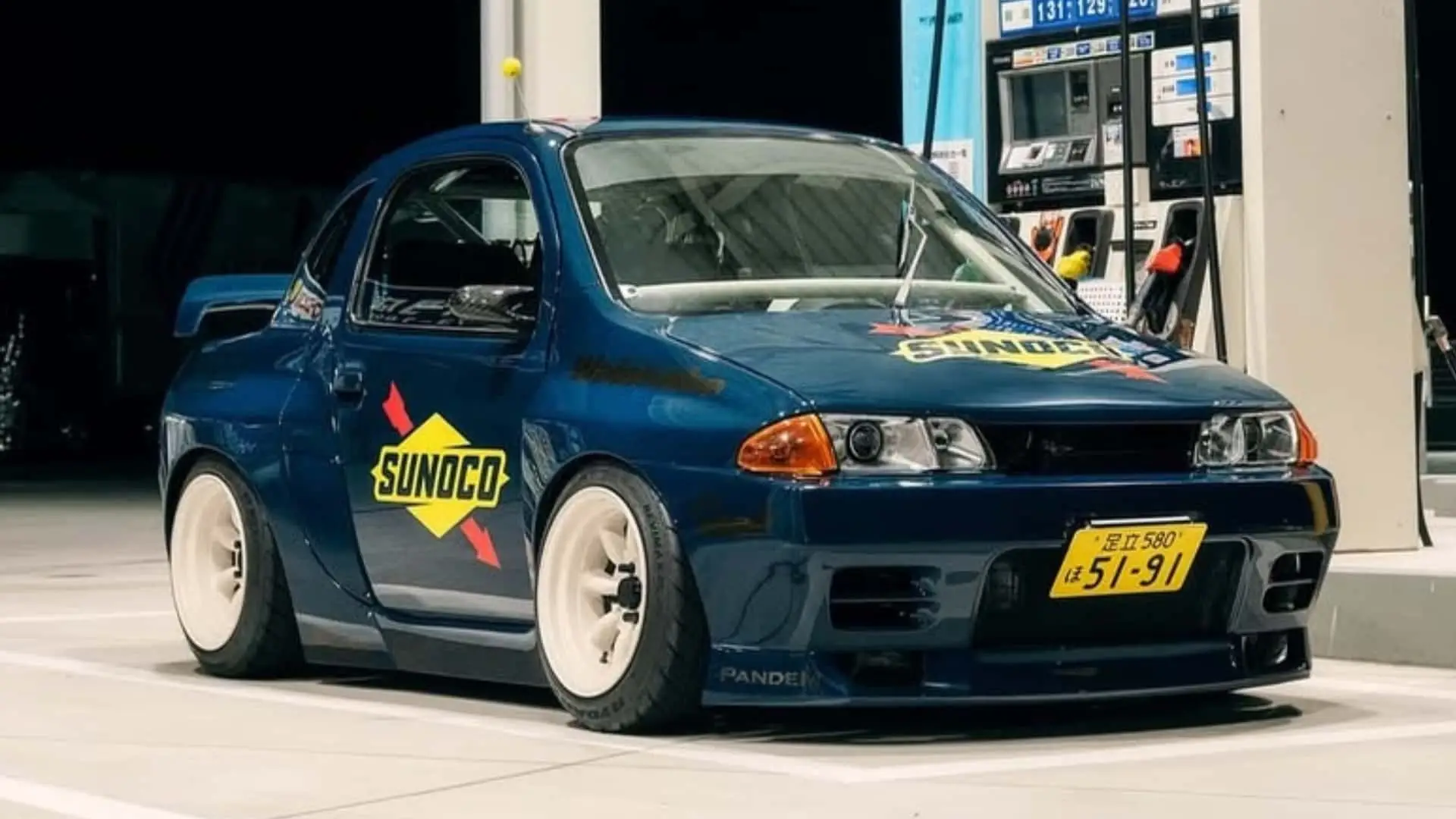
The Art of Japanese Tuning: From Suzuki Twin to Mini Godzilla
Japan is renowned worldwide for its vibrant and often eccentric car culture. At the heart of this scene, Kei Cars—microcars designed to meet specific size and engine regulations in Japan—hold a special place. However, what the Rocket Bunny builder (also known internationally as Pandem) did with the Suzuki Twin surpasses any conventional modification limits. The Pocket Bunny R32 GT-R project is not just a body kit; it is a visual homage to the iconic Nissan Skyline R32 GT-R, affectionately nicknamed “Godzilla” for its dominating presence on race tracks during the 1990s.
The Suzuki Twin, manufactured between 2003 and 2005, was originally a modest city car, with a rounded design and a focus on fuel efficiency. At just about 2.7 meters long, it seemed an unlikely candidate for a sporty transformation. However, Kei Miura, the genius behind Rocket Bunny, saw potential in the compact proportions of the Twin. By applying the aggressive aesthetic of the R32, the builder managed to create something that looks like it came straight out of a miniature racing video game. While some manufacturers aim for technical perfection in models like the Nissan Aura Nismo RS Concept 2026, the Pocket Bunny focuses on visual excitement and JDM (Japanese Domestic Market) nostalgia.
This radical transformation challenges conventional design standards, reminiscent of bold historical concepts like the Hyundai Neos 2000, which also sought to break the monotony of the streets. The Pocket Bunny R32 GT-R demonstrates that automotive passion does not necessarily depend on brute horsepower, but rather on a vehicle’s ability to tell a story and attract attention wherever it goes.
Anatomy of a Transformation: What Makes Up the Pocket Bunny Kit
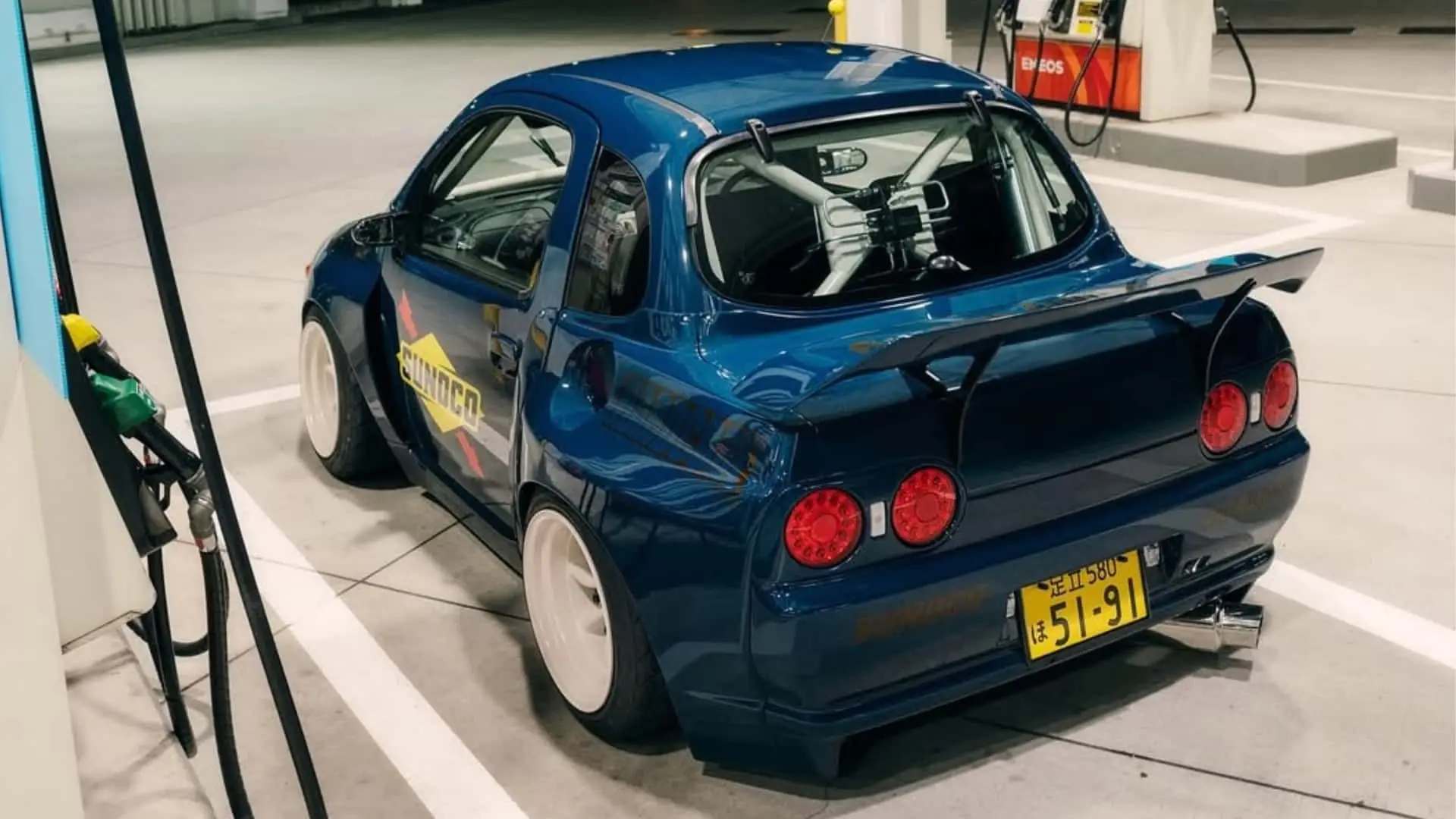
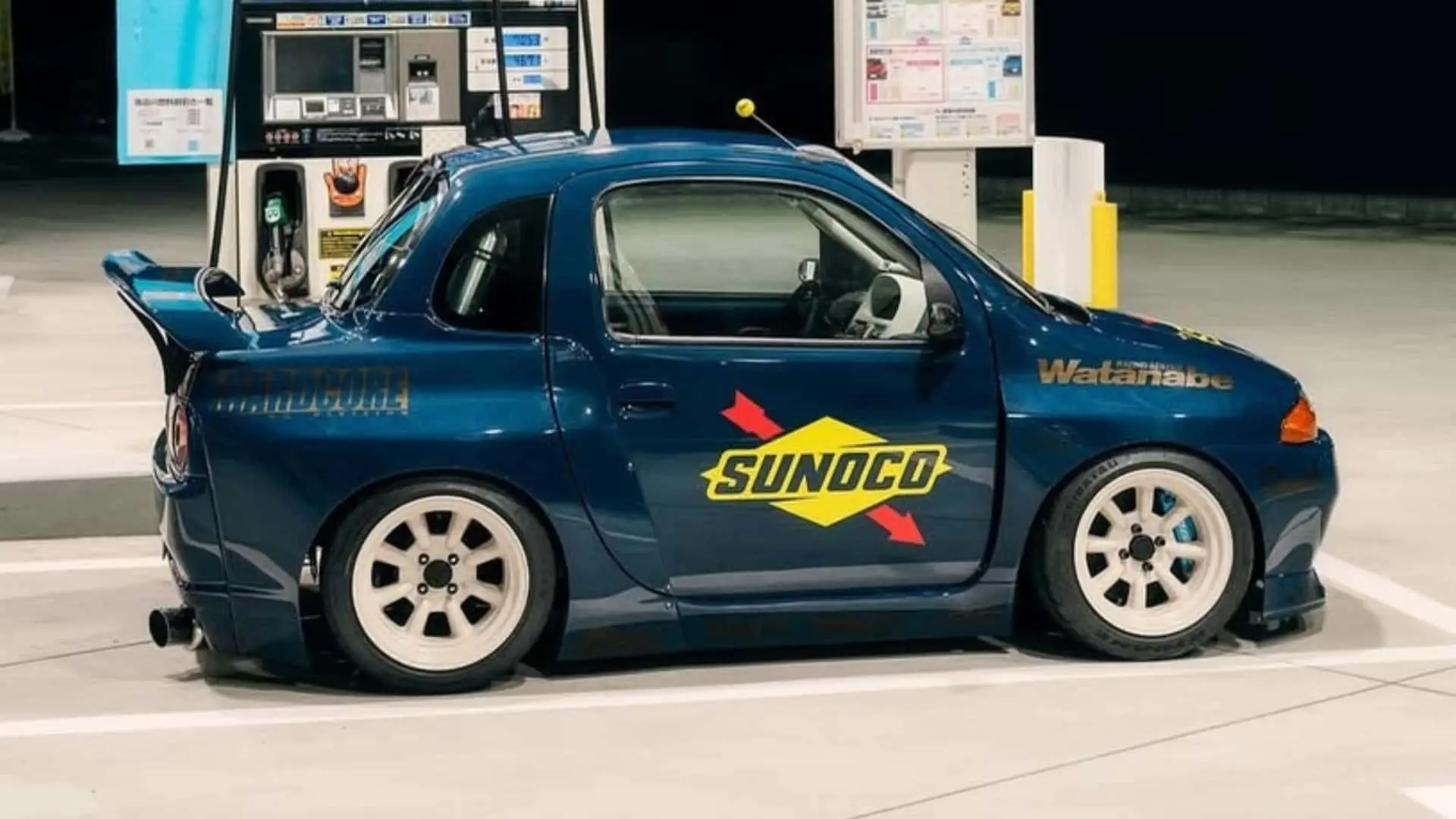
The complexity of the Pocket Bunny kit lies in its ability to completely alter the visual perception of the Suzuki Twin without modifying its core structure. Each panel has been meticulously sculpted to replicate the muscular lines of the original R32 GT-R. The front of the vehicle now displays the characteristic look of the Skyline, with rectangular headlights and a grille that commands respect despite the reduced scale. The widebody kit (wider body) adds flared fenders that give the car a robust and “planted” stance—a design element that is a trademark of Rocket Bunny.
At the rear, the aesthetic engineering work is equally impressive. The twin round taillights, an unmistakable signature of the GT-R lineage, have been perfectly integrated. To complete the racing look, a prominent wing was installed over a custom rear deck, ensuring that the “Mini Skyline” looks ready to face the Tsukuba circuit. The Sunoco paint applied to the Tokyo Auto Salon display model reinforces this racing heritage. Below, we present the main components that make this metamorphosis possible:
| Component | Highlight of Modification |
|---|---|
| Fenders | Widebody design that broadens the silhouette and allows for higher offset wheels. |
| Lighting | Faithful replicas of the Nissan R32 GT-R’s circular headlights and taillights. |
| Hood and Grille | Redesigned to eliminate the original curved look of the Suzuki Twin. |
| Aerodynamics | GT-style rear spoiler and custom rear deck. |
| Chassis/Wheels | Lowered suspension and classic Japanese-style wheels (mesh wheels). |
Despite its extremely aggressive appearance, the “heart” of this little beast remains true to its economical roots. The original 658cc engine with modest 27 horsepower continues under the hood. Though it doesn’t offer the acceleration of a RB26DETT engine, the fun here is purely visual and cultural. Even with a small engine, preventive maintenance is vital for any enthusiast, and understanding technologies such as the Ruthenium vs. Iridium Spark Plugs can be the key to keeping this small powertrain efficient and in top form.
The Phenomenon of Customized Kei Cars and JDM Culture
The launch of the Pocket Bunny R32 GT-R at the Tokyo Auto Salon was not just another tuning display; it was a milestone in elevating Kei Cars as legitimate platforms for artistic expression. In Japan, space is limited and maintaining larger cars is costly, making the Suzuki Twin the perfect base for “second car” or show vehicle projects. The contrast between its tiny size and aggressive styling creates a playful effect that strongly resonates with the current generation of social media enthusiasts, making the project instantly viral.
If you seek the opposite extreme in size and luxury, where raw performance is the focus, the BRABUS 900 SUPERBLACK redefines power in the world of supercars. However, the Pocket Bunny proves that there is a growing market for accessible and fun “cool” cars. It’s a celebration of “Show over Go,” where the joy of driving a car that makes everyone smile in the streets outweighs the need to reach 300 km/h.
The upcoming availability of the kit for order opens doors for Suzuki Twin owners around the world (or those willing to import one from Japan) to create their own Mini Skyline version. In a world where enthusiasts often look to the top of the pyramid, like the Red Bull RB17 Hypercar, for inspiration, the Pocket Bunny R32 GT-R reminds us that creativity has no size. It is living proof that, with the right kit and a bold vision, even the simplest daily driver can become an urban legend.
Rocket Bunny confirmed that the kit will go into production soon, and it is expected to become an instant collector’s item. For Nissan Skyline fans who lack space or budget for the original model, the Pocket Bunny offers an irresistible alternative: the chance to own a piece of Japanese motorsport history in a package that fits into any parking spot. This project is undoubtedly one of the most brilliant examples of how human ingenuity can transform the ordinary into something extraordinary, keeping the spirit of JDM culture alive for future generations.